
Best Red Light Therapy at Home: A Practical 2026 Guide
Which device is the best red light therapy at home, and best for what, exactly? A panel that suits facial skin may be inconvenient for a sore hamstring, while a whole-body system may offer more coverage than a buyer needs. The bigger problem is that product rankings often emphasize features before explaining the mechanism, dose, or outcome those features are meant to support.
A more useful approach starts with the target: sleep, skin, joint comfort, muscle recovery, or general wellness. Then it asks whether the device can deliver an appropriate wavelength and dose to that body area, and whether you'll use it consistently enough to learn how you respond. The evidence is encouraging, but it isn't a blank check. A 2018 systematic review identified 11 eligible studies and concluded that home-use photobiomodulation devices can be effective and safe for conditions requiring frequent applications, while also noting that most studied devices were near-infrared, pulsed LED systems dosed within WALT recommendations in the original review.
Why Choosing the Best Red Light Therapy at Home Feels Harder Than It Should
Buyers face a familiar contradiction. One guide calls a handheld device the best option, another recommends a large panel, and a third treats wavelength as the only specification that matters. Session advice varies, clinical research is often buried below marketing language, and product pages may describe “power” without clearly stating how much light reaches your skin at the treatment distance.
The solution isn't another universal ranking. It's a decision process that connects one goal, one body area, one dose, and one measurable outcome. For example, someone treating facial skin needs a different coverage pattern from an athlete targeting both quads. Someone seeking an evening wind-down may value convenient positioning more than maximum output.
Start with the outcome
Write down what you want to change before you compare devices:
- Sleep: Track how rested you feel and how easily you fall asleep.
- Muscle recovery: Track soreness, perceived readiness, and training tolerance.
- Joint comfort: Record stiffness and movement comfort in the same daily activity.
- Skin wellness: Use consistent photos and note irritation, dryness, or texture changes.
A two-week observation period can help you identify whether a routine feels useful, although it can't prove a medical treatment effect. The purpose is to replace vague impressions with repeatable observations.
A clinical-class device used in a physical therapy office may offer carefully controlled positioning, dose documentation, and professional supervision. A consumer panel in a living room depends more heavily on the user's distance, timing, exposed area, and consistency. That difference matters because “best” changes with the body area, the goal, and the routine you can sustain.
The home-use evidence is promising but limited. A 2019 follow-up review found that home photobiomodulation appears to provide effective and safe treatment across multiple conditions, while emphasizing the need for more randomized controlled trials in its review of the field. Treat that conclusion as a reason to choose carefully, not as proof that every panel delivers the same result.
How Red Light Therapy Works in the Body
Photobiomodulation, the technical term for red and near-infrared light therapy, works more like a cellular signal than a stimulant. Photons may influence how cells produce energy and coordinate repair-related communication. A useful analogy is a factory with rechargeable batteries: the light may help adjust the machinery that keeps production running, rather than forcing an instant result.
One important target is cytochrome c oxidase, a component of the mitochondrial respiratory chain. A 2026 review describes mechanisms involving mitochondrial cytochrome c oxidase, nitric oxide dissociation, ATP production, satellite cell activation, angiogenesis, and anti-inflammatory signaling in its discussion of recovery mechanisms. In plain language, light may affect cellular energy production and the signals tissues use during recovery.
Wavelength changes the target
Red wavelengths are generally selected for more superficial targets, such as skin. Near-infrared wavelengths are used when the intended target is deeper tissue, including muscle or areas around a joint. Wavelength alone does not guarantee that light will reach a particular structure or produce a specific outcome. Tissue thickness, beam angle, distance, irradiance, and treatment time all affect the dose that arrives.
A 2024 systematic review and meta-analysis found that pre-exercise photobiomodulation improved muscle endurance, with a standardized mean difference of 0.31, and improved muscle strength recovery, with an SMD of 0.24. Creatine kinase was also lower by 77.56 units versus control. The reported benefits appeared in athletes and sedentary participants, rather than physically active individuals, so the study population and training context matter in the published analysis.
Dose follows a biphasic response. Too little light may fail to create a useful signal, while too much may reduce or blunt the response. Wavelength, irradiance, distance, and exposure time therefore need to be considered together. A panel's headline wattage says less than a verified irradiance measurement at the distance you will use.
For a practical explanation of the cellular pathway, read this red light therapy benefits explained resource from MedEq Fitness.
Home Device Types and When Each One Makes Sense
A device should fit the area you'll treat repeatedly. The most expensive format is rarely the most useful if it remains stored in a closet, and the most portable format may become frustrating when you need to cover a large muscle group.
Four formats, four practical profiles
Handheld wands suit small areas. They're useful for a face, ankle, wrist, or a single localized point, and many use a single wavelength. Their trade-off is coverage. You'll need to reposition the device for larger regions, which can make long routines less appealing.
Mid-size panels are usually the most adaptable home format. A panel around 12 x 12 to 24 x 12 inches can cover a shoulder, quad, or hamstring without requiring a full installation. For many users, this is the sensible middle ground between portability and treatment area.
Full-body panels, beds, and 360-degree systems make sense when broad coverage is the priority. They require more floor space and generally cost more, but they reduce repositioning and can support a whole-body routine. A manufacturer's claim that a session takes a particular number of minutes still needs to be evaluated against the actual irradiance and dose.
Wearable wraps and belts conform to knees, ankles, or the lower back. They're convenient when flexibility and contact with a curved body area matter more than covering a large surface. Their limitations include smaller treatment zones and the need to inspect how the manufacturer documents dose at the skin.
| Device Type | Typical Coverage | Best For | Session Length | Price Range |
|---|---|---|---|---|
| Handheld wand | Small spot | Face, wrist, ankle, localized area | Depends on dose | Varies by device |
| Mid-size panel | One limb or regional area | Quads, hamstrings, shoulders, general home use | Depends on dose | Varies by device |
| Full-body panel, bed, or 360-degree system | Large or whole body | Broad wellness and recovery routines | Depends on dose | Varies by device |
| Wearable wrap or belt | Curved, localized area | Knee, ankle, lower back | Depends on dose | Varies by device |
The useful question isn't “Which format ranks first?” It's “Which format makes the correct exposure easiest to repeat?” A buyer comparing light therapy with other home fitness equipment may also benefit from this best red light therapy device guide.
Here's a visual overview of how positioning and device design affect home use:
Dosing, Session Length, and Safety Basics
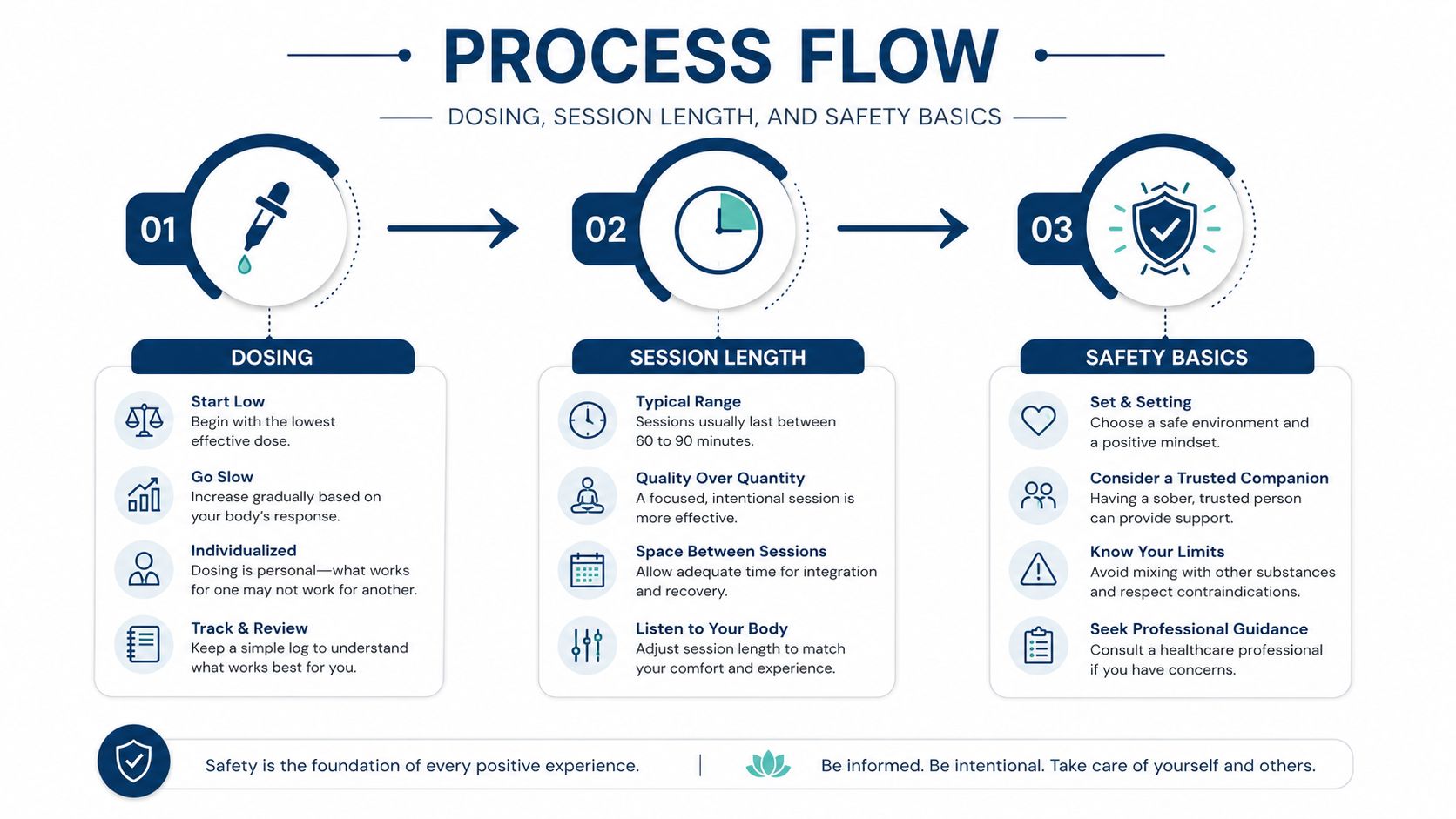
Start with a simple sequence: goal, body area, dose, exposure time. Skin-focused use generally calls for a lower dose than deeper muscle work. The 2018 home-use review noted that the devices studied were mostly near-infrared, pulsed LED systems dosed within WALT recommendations in its evidence review.
A commonly used WALT-style framework is roughly 4–20 J/cm² for superficial skin goals and 20–60 J/cm² for deeper muscle work. These are not universal prescriptions, and the 2026 at-home device review emphasized that wavelength, power, and dose duration vary by treatment goal while remaining clinically untested in many home devices in its evaluation of consumer parameters.
Convert dose into time
The basic relationship is:
Dose in J/cm² = irradiance in W/cm² × time in seconds
If a device reports irradiance in mW/cm², convert it to W/cm² by dividing by 1,000. For example, a verified reading of 50 mW/cm² equals 0.05 W/cm². Reaching 10 J/cm² at that irradiance would require 200 seconds, or about three minutes and 20 seconds. That example is a calculation, not a recommendation, and the manufacturer's measurement method matters.
Use the device at the stated treatment distance. “Peak output” or irradiance measured directly against the LEDs can overstate the dose received by your body. More exposure isn't automatically better, because the biphasic response means excessive dosing may blunt the benefit.
Safety deserves the same attention as output. Use eye protection when the manufacturer recommends it, especially with near-infrared panels, and don't treat over active malignancy without medical guidance. If you're pregnant, taking photosensitizing medication, or managing a light-sensitive condition, ask your clinician before starting. Stop if you develop persistent irritation, unusual pain, or concerning symptoms. The MedEq Fitness quick guide can provide additional routine-planning context.
Red Light Therapy Compared With Cold Plunge and Contrast Recovery
Red light therapy, cold-water immersion, and contrast therapy act through different immediate pathways. Cold exposure is commonly used to influence acute stress signaling and inflammation control, while alternating hot and cold exposure changes vascular tone. Photobiomodulation works further upstream by influencing mitochondrial and cellular signaling, so it shouldn't be treated as a direct replacement for either water-based method.
The comparison becomes clearer when the outcome is specific.
| Modality | Primary Mechanism | Best Use Case | Typical Session |
|---|---|---|---|
| Red light therapy | Mitochondrial and tissue signaling | Targeted recovery, sleep-oriented wellness, skin support | Dose-dependent |
| Cold plunge | Acute cold stress and inflammation control | Short-term alertness and post-exercise cooling | Protocol-dependent |
| Contrast therapy | Alternating thermal and vascular stimulus | A structured hot-cold recovery routine | Protocol-dependent |
A 2024 clinical appraisal found moderate evidence favoring photobiomodulation over cryotherapy for postexercise muscle recovery. The reviewed studies reported faster returns to baseline muscle torque, lower subjective soreness 24 to 96 hours after exercise, and lower creatine kinase after photobiomodulation than after cryotherapy in the appraisal. That supports a useful comparison, but it doesn't mean every athlete should abandon cold exposure.
Build a stack around timing
Use light after a shower when you want a low-friction recovery habit. Place it before bed when sleep is the target and the light source doesn't make you feel more alert. Use a plunge or contrast routine after training when the immediate sensation and thermal stimulus are the reason you're using it.
For readers combining hot and cold exposure, these contrast therapy protocols offer a separate framework. Keep the stack simple enough that you can identify which component helps and which one creates discomfort.
What to Look for When Buying a Home Red Light Device
A buyer's checklist should begin with four specifications, not an app or a product ranking. The 2026 review of at-home devices stressed that wavelength, power, and dose duration can strongly affect efficacy, while the umbrella evidence base found no outcomes supported by high-certainty evidence across all photobiomodulation use cases in the review literature.
The four specifications that matter
- Wavelength: Look for clearly stated red and near-infrared bands, commonly around 630–660 nm for more superficial targets and 810–850 nm when deeper tissue is the intended focus. A device should explain whether it delivers those wavelengths simultaneously or separately.
- Irradiance at treatment distance: Ask for measurements in mW/cm² at the distance you'll use. A peak figure without a distance, meter method, or testing information doesn't let you estimate dose reliably.
- Coverage: Match the panel to the area you'll treat most. A small device may be appropriate for a knee or face, while a larger system reduces repositioning for quads, hamstrings, or broad wellness routines.
- Regulatory and quality information: FDA clearance can serve as a baseline quality signal for a specific cleared use, but it isn't proof that the device is effective for every wellness claim on a product page. Review the intended use and the manufacturer's safety documentation.
Ignore impressive features without dose data
Bluetooth controls, elaborate apps, and named “recovery modes” may improve convenience, but they don't substitute for a published dose. Proprietary wavelength names are also less useful than the actual nanometer values and irradiance measurements. A panel with fewer modes and transparent specifications may be easier to evaluate than a feature-heavy device with unclear output.
If you're comparing light therapy with broader home recovery equipment, this 2026 home exercise equipment guide can help you think about equipment selection by training objective and available space. For a more focused review of device characteristics, consult the MedEq Fitness guide to red light therapy.
A simple matching guide looks like this:
- Sleep: Prioritize convenient positioning, documented dosing, and a routine you can use consistently in the evening.
- Skin: Consider red wavelengths, face-friendly coverage, and careful control of exposure.
- Sore quads: Choose enough panel coverage to reach the muscle group without constant repositioning, with near-infrared output and distance-based irradiance data.
- Knee or lower back: A wrap may fit better than a flat panel if contact and alignment are difficult.
What the Evidence Does and Does Not Support
What outcome are you trying to improve, and how much confidence should a home device earn before you buy it? Red light therapy has a plausible biological mechanism and a growing clinical literature, yet consumer claims often run ahead of the evidence. The 2019 home-use review reported a positive safety and efficacy signal across several conditions while calling for stronger randomized controlled trials in its conclusions. Home photobiomodulation is therefore a clinically studied option, not a universal treatment.
Sleep and exercise recovery require separate judgments. A 2025 systematic review of five studies involving 105 physically active participants reported some sleep-related signals, including higher serum melatonin and lower nocturnal heart rate. It found no evidence of improvement in fatigue biomarkers or exercise performance in the review. A device that supports a sleep routine should not automatically be marketed as a performance enhancer.
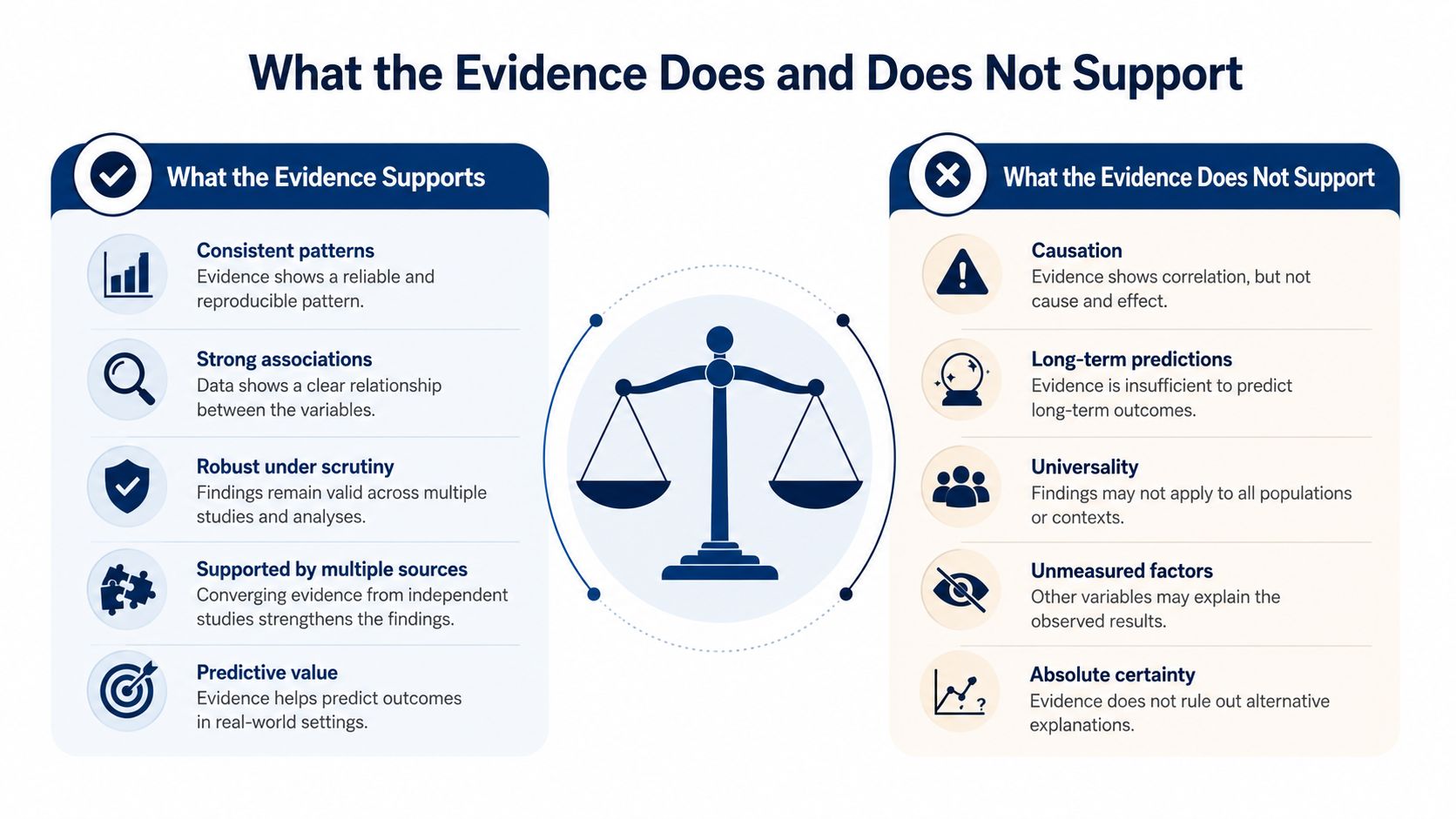
Use confidence levels, not absolute promises
A 2024 meta-analysis found improvements in selected muscle outcomes, while results differed by participant group. That variation shows why the target population matters as much as the device category. A 2025 meta-analysis of 19 studies and 672 participants found low-certainty evidence that pre-exercise photobiomodulation reduced soreness by 12.27 points on average at 24 hours after exercise-induced muscle damage and improved muscle performance at that time point in the published review.
Skin rejuvenation, mild-to-moderate acne, wound healing, and short-term muscle or joint discomfort may be reasonable areas to investigate. Evidence strength still varies with the condition, device, and dose. Fat-loss claims have weaker support, while mood and thyroid applications remain under-investigated at home-relevant doses. Preliminary findings do not establish lasting changes in body composition.
Responder variation also matters. Dose-response curves are not flat, and benefits may be modest rather than transformational. Use evidence as a confidence-calibration tool: stronger support justifies a more realistic trial, while uncertain claims call for lower expectations and closer monitoring. The best device depends on the outcome, delivered dose, and quality of evidence, not on the longest feature list.
A Practical Two-Week Starter Protocol and Where to Go Next
Choose one body area and one outcome first. Quads, a lower back region, or a single knee are easier to monitor than an undefined whole-body routine. Record sleep quality, soreness, and perceived recovery in a notebook or app, using the same simple scale each day.
Days one through fourteen
For the first two weeks, use 10-minute sessions three to five times per week, positioned around 8–12 inches from the device if that distance matches the manufacturer's instructions. Expose the intended area consistently, keep the treatment time stable, and avoid changing supplements, training load, cold exposure, and sleep schedule all at once if you want a clearer personal comparison.
During the second week, add a second area or extend sessions to 15–20 minutes only if the initial routine is comfortable and the device's dose data supports that change. Watch for persistent warmth, redness, dryness, irritation, eye discomfort, or worsening symptoms. If those appear, reduce exposure, increase distance, pause treatment, and seek medical advice when the reaction doesn't resolve.
Practical rule: Change one variable at a time. A longer session isn't automatically a better session.
Escalate to a clinician when pain is severe, unexplained, worsening, associated with swelling or neurological symptoms, or interfering with normal activity. Red light therapy shouldn't delay evaluation for an injury or medical condition. It's a wellness or adjunctive tool, not a substitute for diagnosis, rehabilitation, sleep, nutrition, or sensible training progression.
Once your baseline is clear, explore the MedEq Wellness Journal for deeper reading on photobiomodulation and recovery routines. Readers building a broader home setup can also review MedEq's hyperbaric oxygen chambers as a complementary modality to research alongside light therapy. Keep the same standard for every addition: define the goal, verify the specifications, and measure whether the routine is worth continuing.
MedEq Fitness offers home and professional recovery equipment, including red light therapy systems designed for targeted and full-body use, alongside hyperbaric chambers and other wellness tools. Visit MedEq Fitness to compare equipment by recovery goal, available space, and the level of support you want for building a consistent home routine.