

Contrast Therapy: A Guide to Faster Workout Recovery and Enhanced Wellness
You’ve seen it everywhere, from pro athlete training rooms to your favorite wellness influencer’s Instagram feed. The practice of jumping from a steaming sauna into an ice-cold plunge isn't just a trend—it's contrast therapy, a powerful, science-backed method for supercharging your body’s recovery and overall health.
So, what’s actually happening when you make that switch?
It’s all about creating a "vascular pump." The heat from a sauna or hot tub causes your blood vessels to open up (vasodilation), while the shock of the cold plunge makes them clamp down (vasoconstriction). By rapidly alternating between the two, you’re essentially forcing your circulatory system into high gear. This powerful pumping action flushes out metabolic waste like lactic acid and floods your tired muscles with fresh, oxygen-rich blood, kickstarting the healing and wellness process.
What Is Contrast Therapy and Why Is It Everywhere?
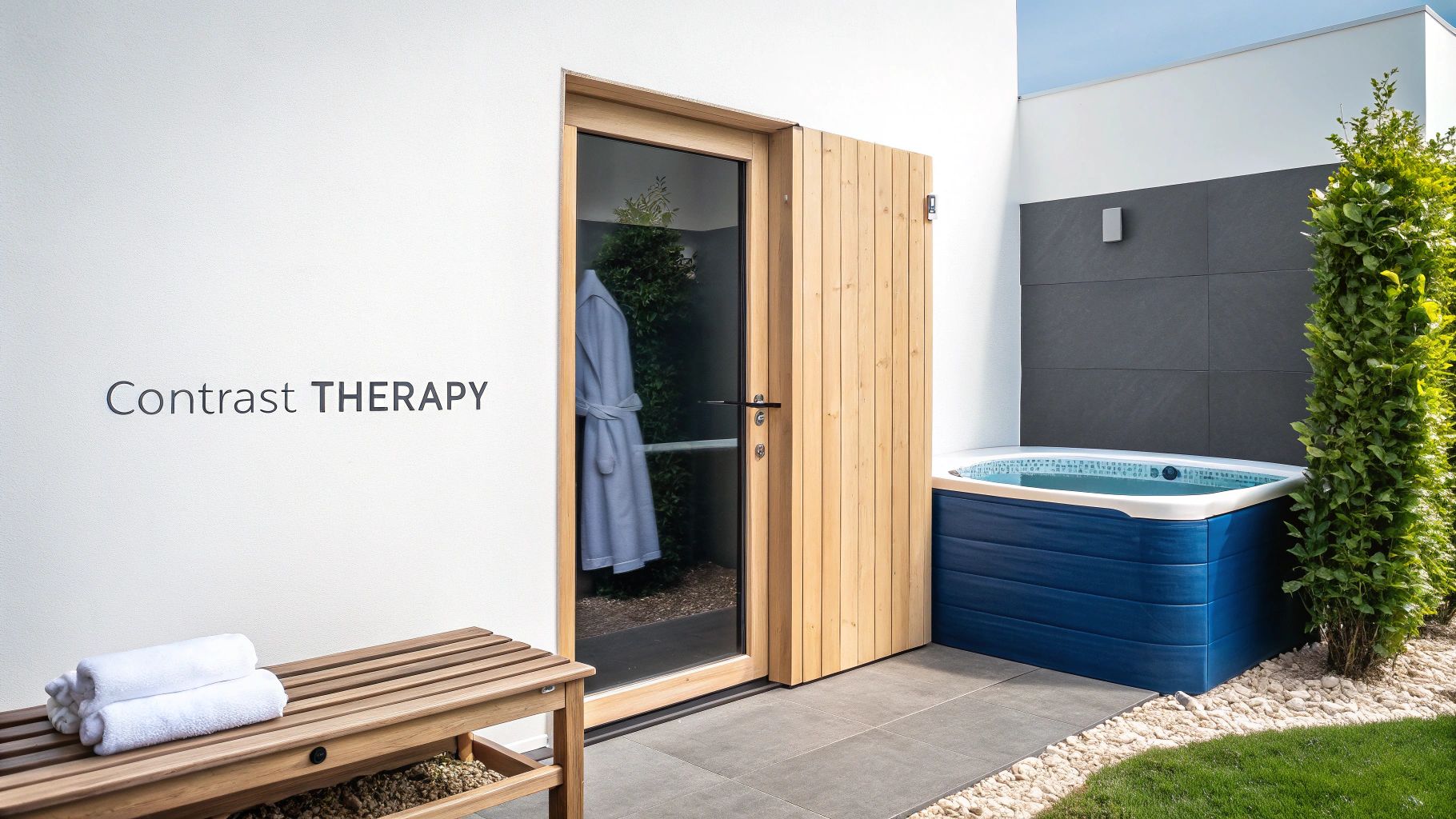
This centuries-old technique has exploded in popularity for one simple reason: it works. The invigorating feeling is backed by fundamental physiological responses that make it an incredibly efficient tool for optimizing workout recovery, boosting wellness, and simply feeling your best.
The principle is simple. Think of it like wringing out a sponge. The cycle of expansion and contraction efficiently pushes inflammation-causing byproducts from your muscles and then pulls in the fresh, nutrient-dense blood needed to repair and rebuild that tissue. It’s an active recovery process, driven by temperature.
The Driving Force Behind the Trend
The boom in contrast therapy isn't just word of mouth; it’s a direct response to a growing focus on smarter, faster recovery for a healthier life. As more of us push our limits with high-intensity training, we're realizing that how we recover is just as important as how we train.
The market data tells the same story. The global contrast therapy units market hit USD 15.4 billion and is on track to reach USD 21.82 billion by 2029. That kind of growth is fueled by a deeper, more widespread understanding of how critical recovery is for performance and wellness. North America is leading the charge, which makes sense given its advanced health infrastructure and huge sports culture. At the end of the day, people who perform at a high level are investing in tools that help them bounce back faster. You can dig deeper into the market growth of contrast therapy units and its drivers.
Contrast therapy acts as a natural reset button for your body. The alternating temperatures don’t just address surface-level soreness; they initiate a deep, systemic response that reduces inflammation, enhances circulation, and accelerates your body's innate healing mechanisms.
This powerful combination of health benefits is exactly why contrast therapy has become a cornerstone of modern recovery and wellness protocols.
To make it even clearer, here’s a quick look at the main benefits and the science making it all happen.
Contrast Therapy At a Glance: Benefits vs. Mechanisms
| Health Benefit | Physiological Mechanism |
|---|---|
| Reduced Muscle Soreness | Alternating vasoconstriction and vasodilation flushes lactic acid and other metabolic byproducts from muscle tissue. |
| Decreased Inflammation | Cold exposure constricts blood vessels, limiting the flow of inflammatory cells to injured or overworked areas. |
| Accelerated Workout Recovery | Enhanced blood flow delivers more oxygen and essential nutrients to damaged tissues, speeding up the natural repair process. |
| Improved Circulation | The "vascular pump" effect trains blood vessels, improving their elasticity and overall circulatory efficiency over time for better cardiovascular wellness. |
Ultimately, this is a straightforward method for feeling better and performing at your absolute peak. To explore more advanced recovery strategies and wellness insights, be sure to check out the MedEq Wellness Journal.
How Hot and Cold Therapy Unlocks Peak Performance
To really understand what makes contrast therapy so powerful, you have to look at the simple, direct science behind its health benefits. This isn't some abstract biology lesson—it's a physical response your body has to temperature that you can use to recover faster, feel better, and perform at your best.
At its heart, contrast therapy is basically a workout for your entire circulatory system. When you step into a sauna or a hot tub, your blood vessels open up. This is called vasodilation, and it rushes blood flow out to your skin and limbs.
Then, you plunge into cold water. Your body’s survival instincts immediately take over, and your blood vessels clamp down in a process known as vasoconstriction. This sends blood away from your extremities and toward your core to protect your vital organs and conserve heat.
Switching back and forth between hot and cold creates a powerful "vascular pump." Think of it like squeezing and releasing a sponge over and over—that's exactly what you're doing to your circulatory and lymphatic systems.
The Vascular Pump in Action
This pumping action is the real secret behind most of contrast therapy’s wellness benefits. It forces your circulatory system to become incredibly efficient, kicking off a chain reaction of positive effects that speed up healing and boost performance.
With every single cycle of hot and cold, you're actively flushing out metabolic waste—like the lactic acid that builds up after a brutal workout—and pulling in fresh, oxygen-rich blood. This isn't a passive process. It's a dynamic, full-body cleanse that gets right down to the cellular level.
Think of it this way: after a tough training session, your muscles are full of cellular debris from all those microscopic tears. This debris is what causes inflammation and the dreaded delayed onset muscle soreness (DOMS). Contrast therapy is like calling in a high-powered cleaning crew to clear out the waste so your body can get down to the business of repair.
By systematically improving the delivery of oxygen and nutrients to tired muscles, you're not just masking soreness—you're directly accelerating the tissue repair cycle. This means less downtime and a quicker return to peak workout performance.
This is exactly why so many athletes swear by it. It’s a direct intervention that helps shorten the body’s natural recovery timeline.
Dampening Pain and Calming the Nervous System
The health benefits don't stop at circulation. The rapid temperature swings also have a major impact on your nervous system, offering immediate, noticeable relief and promoting mental wellness.
The intense shock of cold water essentially overloads your nerve endings. This powerful sensation can interrupt the pain signals trying to reach your brain, creating an analgesic, or pain-numbing, effect. It’s the same principle as rubbing your elbow after you bang it—the new sensation distracts from the pain.
Here’s a quick breakdown of how your nervous system gets involved:
- Cold Exposure: Triggers a release of norepinephrine, a hormone that helps crush inflammation and sharpen your focus. It also fires up cold receptors that can override pain signals.
- Heat Exposure: Eases you into a state of relaxation by soothing tense muscles and activating your parasympathetic nervous system—your body's "rest and digest" mode. This helps bring down stress and anxiety.
This one-two punch dulls immediate pain while promoting a deep sense of calm, making it an incredible tool for both physical and mental recovery. If you want to dive deeper into the specifics of cold exposure, our guide on the benefits of cold plunge therapy covers it all in more detail.
By turning this complex physiology into a practical routine, you can use contrast therapy with confidence, knowing you’re giving your body exactly what it needs to heal and perform.
Actionable Protocols for Maximum Results
Knowing the "why" behind contrast therapy is great, but the real magic happens when you know the "how." Moving from theory to practice means dialing in specific, evidence-backed protocols that get you the health benefits you're after.
Whether you're an athlete focused on workout recovery or just looking for a general wellness boost, the right mix of time and temperature is everything. Think of these protocols as recipes for your body—each one designed for a different outcome.
This back-and-forth is the core of contrast therapy, creating what’s known as the “vascular pump.” The heat expands your blood vessels, and the cold constricts them.
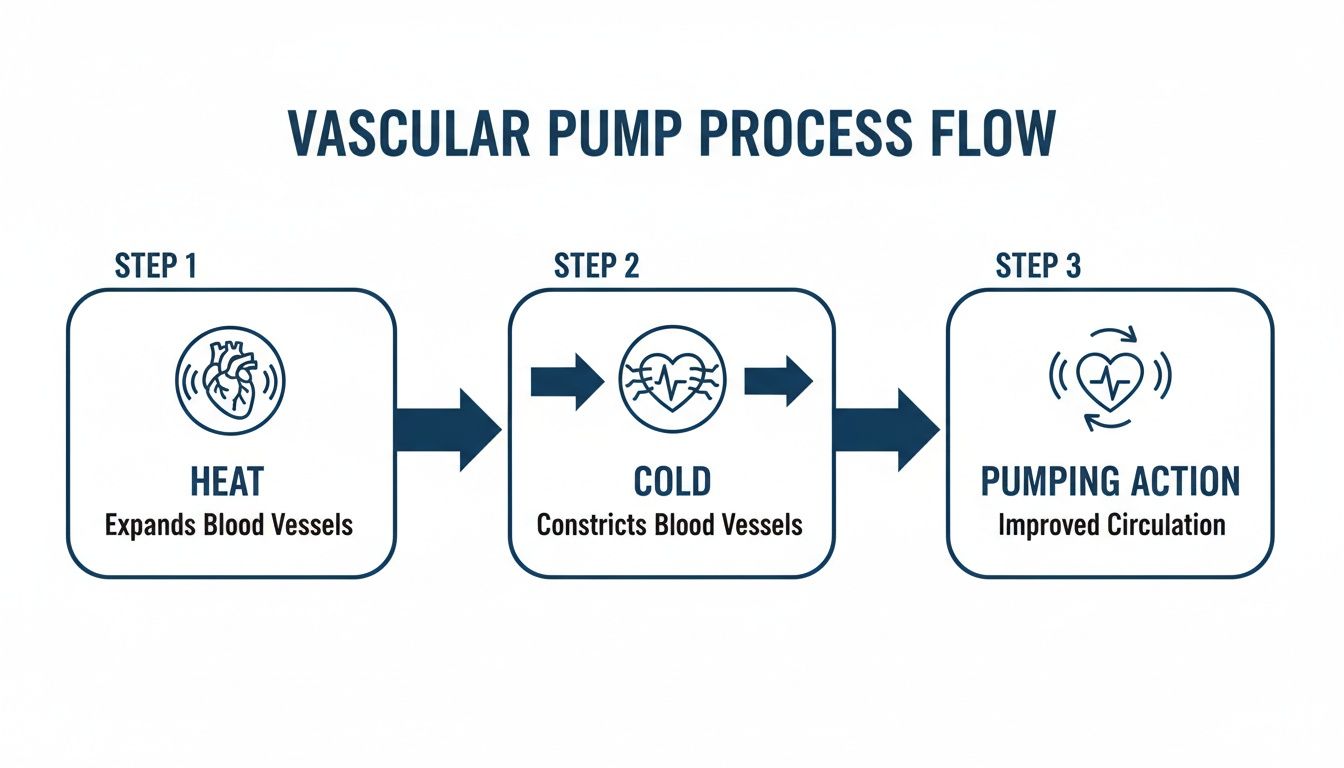
It’s this simple, powerful cycle that flushes out metabolic waste and floods your tissues with fresh, nutrient-rich blood, accelerating your health and wellness journey.
Workout Recovery Protocol
After a tough workout, the goal is clear: control inflammation and clear out metabolic waste like lactic acid. To achieve this, you need a protocol that emphasizes the vasoconstriction power of the cold, which is crucial for effective workout recovery.
The go-to ratio for athletes is 3:1 hot-to-cold. This gives your body enough time in the heat to get the blood flowing and relax your muscles, followed by a sharp, effective blast of cold to shut down swelling. It's a challenging but highly effective review of your limits.
- Heat Exposure: 3 minutes
- Cold Exposure: 1 minute
- Cycles: Repeat this 3 to 5 times.
- End On: Always finish with cold. This is non-negotiable for maximizing the anti-inflammatory benefits of your workout recovery.
This is the bread and butter for athletes because it directly tackles the aftermath of a hard session. By flushing out all that cellular debris, you can significantly reduce delayed onset muscle soreness (DOMS) and speed up tissue repair. For athletes looking to build the ultimate recovery stack, check out the best recovery tools for athletes for more game-changing strategies.
General Wellness and Circulation Protocol
If your goal is more about boosting circulation, enhancing your energy levels, and supporting your overall health and wellness, a more balanced approach is the way to go.
A 1:1 hot-to-cold ratio is perfect for general wellness. It gives your entire vascular system a solid workout without putting all the focus on inflammation. This balanced cycle trains your blood vessels to be more resilient and efficient, which pays huge dividends for your long-term cardiovascular health.
Think of it this way: The 1:1 ratio is like taking your blood vessels to the gym. It improves their elasticity and responsiveness, making your body better at delivering oxygen everywhere it needs to go, a key component of long-term wellness.
This protocol is ideal for rest days or for anyone who wants to tap into the mental and physical health benefits of contrast therapy as a regular part of their routine.
Contrast Therapy Protocol Comparison
To make it dead simple to pick the right routine for your goals, here's a side-by-side look at the two main protocols.
| Protocol Goal | Hot Temperature Range | Cold Temperature Range | Timing (Hot:Cold) | Total Session |
|---|---|---|---|---|
| Workout Recovery | 100°F–110°F (38°C–43°C) | 50°F–59°F (10°C–15°C) | 3:1 | 15–20 minutes |
| General Wellness | 100°F–110°F (38°C–43°C) | 50°F–59°F (10°C–15°C) | 1:1 | 10–15 minutes |
Following these targeted protocols turns contrast therapy from a random habit into a precision tool. You’re no longer just guessing—you’re actively guiding your body toward better health and performance.
Creating Your Ultimate Home Recovery Hub
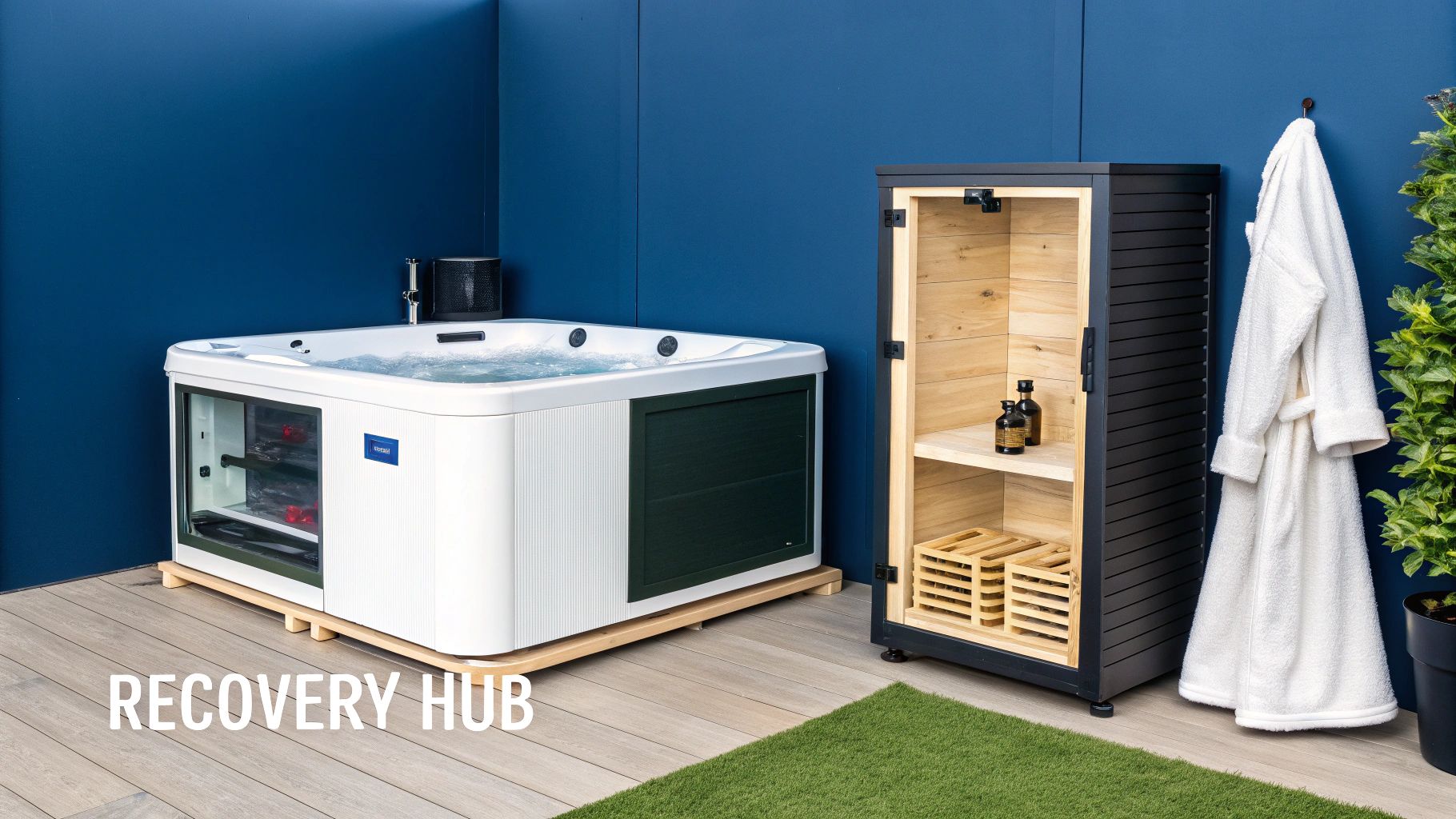
Imagine having the power of an elite recovery facility just a few steps from your living room. Building a dedicated space for contrast therapy isn't some far-off luxury for pro athletes anymore—it’s a smart, practical investment in your long-term health, wellness, and performance. This is about creating your personal sanctuary, a place where you can tap into the health benefits of hot and cold therapy whenever you need it.
Setting up a proper home hub means graduating from lukewarm showers and bags of ice. Real, lasting results from contrast therapy come from consistency and control. A precise sauna and a dedicated cold plunge offer a review of what professional-grade therapy feels like.
Investing in Quality Equipment
When you're looking at gear for your home wellness station, a few key things separate the good from the great. Investing in durable, well-built equipment doesn’t just get you better results; it ensures a safer and more reliable experience for years to come.
Here’s what really matters:
- Precise Temperature Control: The ability to dial in and hold specific temperatures is everything. MedEq Fitness saunas and cold plunges come with digital controls that take out all the guesswork, so you can hit those optimal hot and cold ranges every single time.
- Durable Construction: Your recovery tools need to be tough. Look for high-quality materials—think stainless steel for cold plunges and premium wood for saunas that can handle constant temperature swings and moisture.
- Efficient Operation: Professional-grade units are built for performance. That means faster heating and cooling, better insulation to hold those temps, and quieter operation, so your recovery and wellness sessions stay peaceful and focused.
Having these tools at your fingertips removes all the friction. No more scheduling appointments or driving to a wellness center. That convenience is a total game-changer for consistency, which is how you unlock the full health benefits.
An at-home setup transforms contrast therapy from an occasional treat into a foundational wellness habit. It’s an investment in a high-performance lifestyle, providing unparalleled access to workout recovery whenever your body demands it.
The Rise of At Home Wellness
This move toward home-based wellness is part of a much bigger trend. People are taking control of their health, and the rapid growth of home healthcare is fueling the adoption of contrast therapy. Athletes and families alike would rather have convenient recovery setups at home than make clinic visits.
The market, currently valued at USD 14.5 billion, is expected to double to USD 29.2 billion by 2031. That’s a clear signal of massive consumer demand for more personal control over health and workout recovery.
Designing Your Sanctuary
Creating your own wellness hub doesn't have to be a headache. MedEq Fitness makes it simple by offering a curated lineup of clinic-quality gear designed for home use. We even include free shipping and have a dedicated U.S.-based support team to guide you. Keeping up with medical equipment news and updates can also give you great insights as you design your space.
Pairing a premium sauna with a cold plunge creates a powerful, synergistic system. This setup allows for seamless transitions and the perfect temperature differential to maximize that vascular pump effect. To get a deeper dive into the specifics, check out our article on sauna benefits for athletes.
Ultimately, your home hub becomes more than just a room with equipment. It’s a beautifully functional space dedicated to your renewal and wellness.
Safety First: Guidelines and Best Practices
Before you can unlock the full potential and health benefits of contrast therapy, you have to put safety first. This isn't just about getting the best results—it's about protecting your health so every session leaves you feeling restored, not run down. By understanding the guidelines and learning to listen to your body, you can make contrast therapy a powerful, sustainable part of your wellness routine.
While contrast therapy is safe for most people, it's definitely not for everyone. The rapid shifts between hot and cold trigger big changes in your blood pressure and heart rate, which can be risky if you have certain health conditions. This is exactly why a physician-led, safety-first approach is non-negotiable.
Key Health Considerations
The first step is knowing the contraindications. This intense vascular workout isn't suitable for every system, so talking to a healthcare professional is absolutely essential if you have any pre-existing conditions.
Pay close attention if you have any of the following:
- Cardiovascular Disease: Anyone with heart disease or uncontrolled high blood pressure needs medical clearance. The strain of rapidly constricting and dilating blood vessels can be dangerous.
- Raynaud's Syndrome: This condition causes an extreme, painful reaction to cold, leading to numbness and poor circulation in your hands and feet. Contrast therapy can make these symptoms much worse.
- Open Wounds or Infections: Never submerge open cuts or skin infections. This can disrupt healing and introduce bacteria.
- Pregnancy: It’s best to avoid extreme temperature therapies during pregnancy due to changes in circulation and core body temperature regulation. Always get an okay from your doctor first.
Best Practices for Safe and Effective Sessions
Once you've gotten the all-clear, following a few best practices will make sure you have a positive and safe experience every single time. These simple steps make a world of difference for your health and wellness.
First, stay hydrated. Drink plenty of water before, during, and after your session to help your body manage the circulatory demands and detoxification processes. Dehydration makes you far more likely to feel dizzy or lightheaded.
Always listen to your body. Discomfort is one thing, but sharp pain, dizziness, or nausea are clear signals to stop immediately. Pushing through these warnings is how injuries happen and completely defeats the purpose of the therapy.
It's also a good idea to have someone nearby, especially when you're just starting out. Don't go it alone until you're completely comfortable and know how your body will react. Start with less extreme temperatures—you don’t have to jump into ice-cold water on day one. Gradually make the cold colder and the heat hotter as your body adapts. This progressive approach builds tolerance and makes the entire experience more sustainable.
By putting these guidelines into practice, you can confidently use contrast therapy to enhance your workout recovery and overall wellness. For more expert-driven health tips, explore the comprehensive articles on the MedEq Wellness Journal.
Common Questions About Contrast Therapy
As more people discover the health benefits of contrast therapy, a lot of the same questions pop up. Getting the details right is the key to making this practice work for you, so we’ve put together answers to the most common queries we hear.
How Often Should I Do Contrast Therapy?
There's no single magic number here—the right frequency really depends on your goals and your workout recovery needs. Consistency is always more important than intensity, especially when you're just getting started.
For athletes in the middle of a heavy training block or coming off a competition, more frequent sessions are a game-changer. Hitting contrast therapy 3 to 4 times a week can seriously speed up muscle recovery and cut down on inflammation, keeping you ready for the next big effort. It’s the perfect tool for managing the cumulative stress of intense training.
If your aim is more about general wellness—improving circulation, boosting your energy, and just feeling better overall—you don't need to go as often. Aiming for 1 to 2 sessions per week is a great target. That’s enough to give your circulatory and nervous systems a consistent, healthy jolt without overdoing it.
The golden rule? Listen to your body. Pay close attention to how you feel after a session. If you’re energized and clear-headed, you've found your rhythm. If you feel wiped out or stressed, that’s a sign to dial back the frequency or intensity.
Should I End on Hot or Cold?
This is one of the most important questions, and for workout recovery, the answer is almost always the same: end with cold. There’s a solid physiological reason for this that maximizes health benefits.
Finishing with a cold plunge locks in all the benefits you just worked for. It prolongs vasoconstriction (the tightening of your blood vessels), which is exactly what you want for tamping down inflammation and muscle swelling. Think of it as shutting the door on the inflammatory processes kicked up by your workout, which helps minimize soreness later.
Ending on hot does the exact opposite. Heat causes vasodilation, opening the blood vessels right back up. While that's great for relaxation during the session, finishing that way can let inflammation and fluid seep back into the tissues you just flushed out. The cold finish is your insurance policy for a more effective workout recovery.
Can I Just Use a Hot Shower and a Cold Bath?
Absolutely. You don't need a pro setup to get started. While dedicated equipment like the saunas and cold plunges from MedEq Fitness offer precision and a much more powerful experience, a simple hot shower and a cold bathtub at home are a perfect way to begin exploring the health benefits.
The core principle is the temperature shift. That rapid switch from hot to cold is what creates the "vascular pump" effect, and you can definitely achieve that with what you already have.
Here’s a simple way to make it work:
- Hot Cycle: Get your shower as hot as you can comfortably stand. The goal is to get your body thoroughly warm and open up your blood vessels.
- Cold Cycle: Fill your tub with the coldest water from the tap. To really level it up, throw in a few bags of ice to drop the temperature even more.
- Follow the Protocol: Just alternate between the hot shower and cold tub using the same timings you would with professional gear (like 3 minutes hot, 1 minute cold for workout recovery).
This DIY method is a fantastic, low-barrier way to feel the benefits for yourself. Down the line, you might find that investing in a dedicated cold plunge and sauna gives you better temperature control and deeper therapeutic effects, making it easier to stay consistent with your wellness journey.
What Are the Biggest Mistakes to Avoid?
To really get the most out of contrast therapy—and stay safe—it's worth knowing the common pitfalls. Avoiding these mistakes will make your sessions way more effective for your health and wellness.
The number one error we see is going too extreme, too soon. It’s easy to get excited and jump into a 35°F plunge and a 200°F sauna, but your body needs time to adapt. Start with more moderate temps, like a cool bath instead of an ice bath, and gradually push the intensity as you get comfortable. This keeps you from shocking your system and makes the whole thing feel more manageable.
Another big mistake is using the wrong timing ratios for your goal. If you’re an athlete trying to recover, ending on hot or using a 1:1 hot-to-cold ratio just won't cut it. A 3:1 ratio that finishes cold is designed specifically to maximize workout recovery. Knowing why you're following a certain protocol is key.
Finally, and most critically: don't ignore what your body is telling you. A little discomfort is part of the deal, but actual pain, dizziness, or uncontrollable shivering are clear signs to stop. Pushing through those warnings is counterproductive and can be unsafe.
For more deep dives and advanced wellness strategies, check out the resources on the MedEq Wellness Journal.
At MedEq Fitness, we believe that optimized recovery is the key to unlocking peak performance and lifelong wellness. Our physician-led selection of cold plunges, saunas, and other professional-grade wellness equipment is designed to bring the power of science-backed recovery right into your home or clinic. Explore our curated collection and build your ultimate recovery sanctuary today.


