Your Guide to the Best Red Light Therapy Devices for Health and Wellness
What if you could soothe sore muscles after a grueling workout or smooth out fine lines, all without invasive treatments or pricey creams? It sounds like something from the future, but the best red light therapy devices are making this a reality, bringing powerful, science-backed technology right into our homes. For more wellness insights, visit our blog at https://medeqfitness.com/blogs/medeq-wellness-journal.
Why Red Light Therapy Is a Modern Wellness Essential
Red light therapy, also known as photobiomodulation, is quickly becoming a non-negotiable part of modern health and recovery routines. It delivers real, tangible health benefits for everything from cellular health and workout recovery to skin vitality—all without harsh chemicals or going under the knife.
So, how does it work? It’s surprisingly simple. RLT delivers very specific wavelengths of light directly to your cells, kickstarting their energy production. Think of it like giving the power plants inside your body a massive upgrade, allowing every system to run more efficiently. This fundamental boost is why its applications are so incredibly broad.
A Growing Movement in Health
The whole wellness world is shifting toward proactive, at-home solutions, and red light therapy is at the forefront of this movement. People are actively looking for effective, scientifically-proven ways to manage their own health, whether that means boosting athletic performance or improving their skin.
The market numbers tell the same story. In 2021, the global market was valued at a cool $272.98 million, and by 2024, it’s expected to climb to $361.5 million. That's not just random growth; it’s a direct reflection of a growing awareness of RLT’s power for skin rejuvenation, pain relief, and muscle recovery. Projections show it hitting $380.8 million by 2025, and it’s not slowing down.
Core Benefits for Your Lifestyle
Okay, what does all this actually mean for you? Bringing red light therapy into your routine can level up several key areas of your well-being. This isn't just for pro athletes or exclusive spas anymore; it's a powerful tool for anyone serious about their health and wellness.
Here’s where it really shines:
- Enhanced Workout Recovery: RLT helps dial down inflammation and that dreaded delayed onset muscle soreness (DOMS), getting you back to training faster. For an even greater recovery boost, it can be combined with cold therapy in a practice known as contrast therapy, which accelerates healing by promoting circulation and reducing swelling.
- Skin Vitality and Anti-Aging: By firing up collagen production, red light helps soften fine lines, even out skin tone, and leaves you with a healthier, more vibrant complexion.
- Pain Management: It's a fantastic non-drug option for easing joint pain, arthritis, and chronic aches by boosting circulation and calming inflammation right at the source.
The MedEq Fitness team put this guide together to help you cut through the marketing noise and find a device that truly fits your goals. We'll unpack the science, lay out the options, and give you the clarity you need to make a smart investment in your health. To dive deeper into the core advantages, check out our article on the benefits of red light therapy.
How Red Light Therapy Supercharges Your Cells
So, how does just light actually get your body to heal and recover? It all comes down to a process called photobiomodulation. That’s a mouthful, but the concept is actually pretty simple if you think of your cells as trillions of tiny, rechargeable batteries.
At the core of every cell are the mitochondria—you probably remember them as the cellular "power plants" from high school biology. Their job is to create Adenosine Triphosphate (ATP), which is the literal energy currency for everything your body does, from flexing a muscle to repairing a cut. But things like stress, injuries, and just getting older can make these power plants run less efficiently, leaving your cells feeling sluggish.
Fueling Your Cellular Engines
This is exactly where red light therapy comes in. Specific wavelengths of red and near-infrared light act like a turbo-charge for those tired mitochondria. When the light penetrates your skin and tissue, it’s absorbed by a special photoreceptor inside the mitochondria, essentially kicking them into a higher gear.
This boost sets off a chain reaction of positive health benefits. The most critical one is a major spike in ATP production. With more ATP on hand, your cells have the raw energy they need to repair damage, regenerate, and just plain work better. It’s like swapping out the dim, dying batteries in a flashlight for fresh, high-performance ones—everything just lights up.
At its heart, red light therapy is about boosting cellular energy. By ramping up ATP production, it gives your body the fundamental resources to fight inflammation, improve circulation, and speed up its own healing processes from the inside out.
From Microscopic Actions to Real-World Results
This surge in cellular energy isn't just happening on a microscopic level; you feel it in very real ways. The extra ATP helps your body fight back against oxidative stress, a major driver of aging and disease, by cleaning up harmful free radicals. At the same time, it dials down inflammation, which is the culprit behind sore muscles, aching joints, and many skin issues.
For example, after a tough workout, your muscles are full of tiny micro-tears. The supercharged cellular energy from red light therapy helps repair that damage faster, which is why you feel less sore the next day. The same goes for your skin. The process prompts cells called fibroblasts to create more collagen and elastin, leading to skin that looks and feels firmer and smoother. To really dig into the science, it helps to understand the scientific mechanisms behind how LED light therapy works.
The infographic below shows how this one core function supports several pillars of wellness.
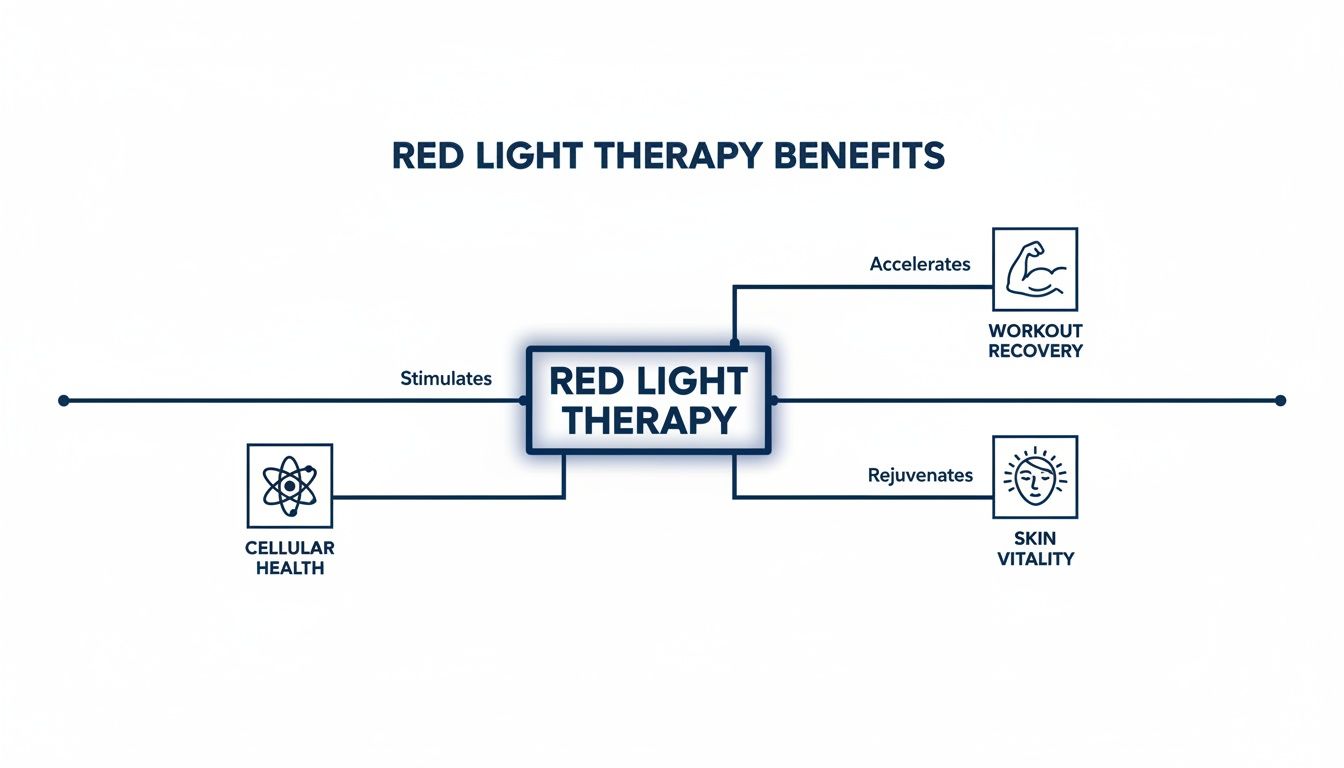
It’s a great visual for how one simple mechanism—better cell function—can branch out to improve everything from how you recover to how you look.
Choosing the Right Wavelengths for Your Goals
Not all light is the same. The effectiveness of the best red light therapy devices comes from using very specific wavelengths that can reach different depths in the body. Each one has a different job.
- Red Light (approx. 660nm): This one doesn’t go as deep, so it’s primarily absorbed by the surface layers of your skin. This makes it perfect for cosmetic goals like boosting collagen, smoothing out fine lines, and evening out skin tone.
- Near-Infrared Light (approx. 850nm): This is the deep diver. NIR light can penetrate all the way to your muscles, joints, and even bone. It’s the powerhouse for speeding up workout recovery, calming deep inflammation, and soothing joint pain.
Most of the top-tier devices on the market wisely combine both red and near-infrared LEDs. This way, you get a full-spectrum treatment that tackles skin health on the surface and deep tissue repair at the same time. Knowing this helps you pick a device that’s truly built for what you want to achieve. For a more detailed look, you can dive deeper into how red light therapy works on a technical level.
Choosing the Right Device for Your Wellness Goals
Diving into red light therapy can feel a bit overwhelming at first. You'll see terms like "irradiance," "wavelengths," and "EMF" thrown around, and it's easy to get lost in the jargon. But here’s the thing: understanding these key features is what separates a smart purchase from a wasted one. It's how you find one of the best red light therapy devices that will actually get you the results you’re after, whether that’s faster workout recovery or healthier, smoother skin.
Think of it like buying any other piece of high-performance equipment. You wouldn't use a screwdriver for a nail, right? The same logic applies here. Matching a device’s specs to your specific wellness goals ensures you get a real return on your investment. Let’s cut through the noise and break down what really matters.
Power Density: The Secret Sauce of Effective Treatment
If there's one spec to pay attention to, it's power density, also known as irradiance. This is the metric that tells you how much light energy is actually hitting your body, typically measured in milliwatts per square centimeter (mW/cm²). Higher irradiance means more light photons reach your cells in less time, making your treatment far more efficient.
Here's a simple analogy: imagine you’re watering a thirsty plant. A weak dribble of water will take ages to saturate the soil, and a lot of it will just evaporate. But a strong, steady stream gets the job done quickly and effectively. That's exactly how irradiance works for your cells. A device with strong power density delivers a therapeutic "dose" of light efficiently—something that’s absolutely crucial for deep tissue repair.
For instance, an athlete trying to speed up muscle recovery needs a device with high irradiance to punch that light deep into the muscle tissue. On the other hand, someone focused on surface-level skin improvements can get great results with more moderate intensity.
Wavelengths: Targeting Your Specific Needs
As we've covered, not all light is the same. The specific wavelengths a device uses determine how deep the light can travel into your body and what kind of biological response it triggers. The two most proven and effective wavelengths you’ll see are:
- Red Light (around 660nm): This wavelength is mostly absorbed by your skin, making it the MVP for aesthetic goals. It’s fantastic for firing up collagen production, smoothing out fine lines, and improving overall skin tone.
- Near-Infrared Light (around 850nm): NIR is the deep diver. It penetrates past the skin to reach muscles, joints, ligaments, and even bone. This is the powerhouse wavelength for accelerating workout recovery, taming inflammation, and managing pain from conditions like arthritis.
You'll find that the best red light therapy devices almost always use a combination of both red and NIR LEDs. This dual-wavelength strategy is the smartest approach, letting you tackle skin health and deep tissue repair at the same time.
Device Size and Treatment Area
The physical size of the device is all about practicality. It determines how you’ll use it and whether it fits your lifestyle and goals. The market has something for everyone.
A device's true value isn't just in its power, but in how seamlessly it fits into your daily routine. The best device is the one you will use consistently.
Let’s look at the most common types:
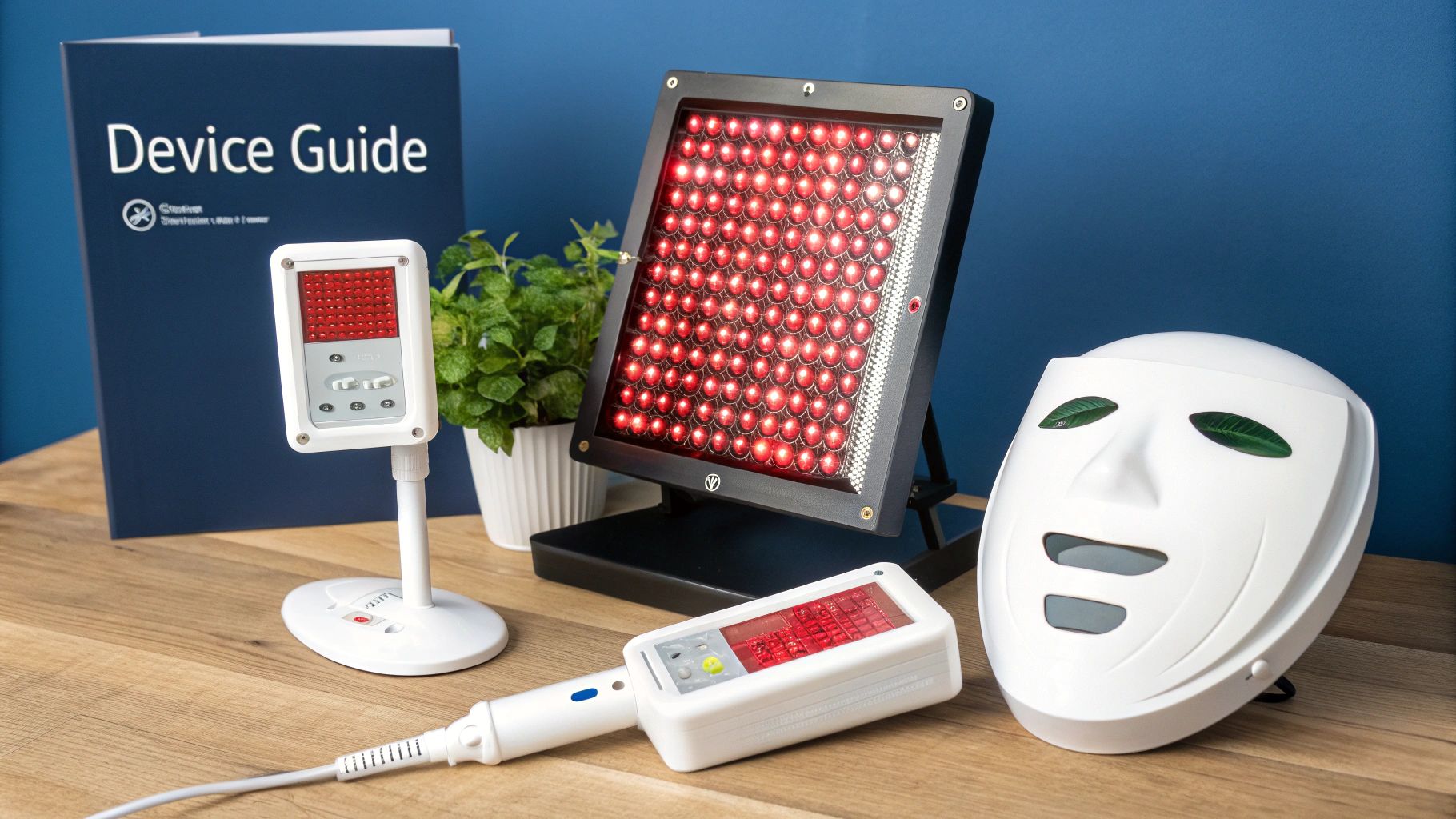
- Full-Body Panels: These are the big guns. Large, stand-alone units perfect for athletes or anyone looking for systemic benefits like reduced inflammation body-wide. They cover you from head to toe, making treatments incredibly efficient.
- Targeted Panels: A great middle ground. Smaller panels are perfect for zeroing in on specific areas like your back, legs, or shoulders. They deliver a potent dose of light right where you need it most.
- Wearable Masks and Wraps: Designed for pure convenience. These are ideal for facial skin treatments or for wrapping around a sore knee or elbow while you multitask.
- Handheld Wands: The ultimate in portability. These small wands are great for spot-treating a blemish, a sore wrist, or for taking on the road so you never miss a session.
This versatility is a huge reason why red light therapy is booming. In fact, it's projected to capture a massive 36.0% of the total light therapy market share in 2025. People are realizing just how effective it is for skin health, inflammation, and muscle recovery. You can dig into the numbers and market trends by checking out these insights from Coherent Market Insights.
And for more practical wellness advice, be sure to explore our MedEq Wellness Journal.
This table breaks down the key specs across different device types, helping you pinpoint the best fit for your routine and recovery goals.
Red Light Therapy Device Feature Comparison
| Feature | Full Body Panel | Targeted Panel | Wearable Mask/Wrap | Handheld Wand |
|---|---|---|---|---|
| Primary Use | Systemic benefits, full-body recovery | Localized pain, specific muscle groups | Facial skin, targeted joint therapy | Spot treatments, travel |
| Treatment Area | Entire body | Large sections (back, legs) | Face, knee, elbow | Small, specific points |
| Irradiance | High (over 100 mW/cm²) | Medium to High | Low to Medium | Varies (check specs) |
| Wavelengths | Dual (Red + NIR) | Dual (Red + NIR) | Usually Red, some dual | Often single or dual |
| Convenience | Requires dedicated space | Moderately portable | Highly convenient, hands-free | Most portable |
| Best For | Athletes, biohackers, clinics | Home users with specific pain | Skincare enthusiasts, joint pain | On-the-go use, minor issues |
Ultimately, the best device is the one that aligns with your specific needs—from the power it delivers to how easily it integrates into your life. For more tips, visit https://medeqfitness.com/blogs/medeq-wellness-journal.
Accelerating Workout Recovery and Performance
For anyone serious about fitness, pushing your body is only half the battle. Real progress is carved out during recovery. This is where red light therapy becomes a game-changer for workout recovery, helping you bounce back faster and train harder by going straight to the source: your cells.
Unlike treatments that just mask pain, red light therapy promotes your body's natural repair systems. It fires up cellular energy production, a key health benefit for athletes. The result? Less downtime and more time hitting your goals.
Priming Muscles for Peak Performance
Most people see red light therapy as something you do after a workout, but its benefits kick in long before you even start sweating. Using it beforehand acts like a dynamic warm-up on a cellular level, getting your muscles ready for the work ahead.
This pre-conditioning boosts blood flow, which means more oxygen and nutrients are delivered right where they’re needed. It also helps fend off the oxidative stress that comes with intense exercise. You’ll feel the difference in your endurance and might even find you can push harder before fatigue sets in.
Think of it this way: just as you stretch your muscles to prepare them for movement, a pre-workout RLT session prepares your cells for the energy demands of exercise. This simple step can make a noticeable difference in your performance and resilience.
It's no surprise that at-home wellness tech is booming. North America is leading the charge in the red light therapy market, and the numbers speak for themselves. The US market alone is set to skyrocket from $0.59 billion in 2025 to $1.32 billion by 2031, growing at a blistering 14.2% CAGR. This explosion is fueled by a better understanding of how light impacts our bodies and a major cultural shift toward non-pharmaceutical health solutions. You can dive deeper into the US red light therapy market growth from Mobility Foresights.
Reducing Soreness and Inflammation After Workouts
For many athletes, the real magic happens once the workout is done. A session with one of the best red light therapy devices can take the edge off delayed onset muscle soreness (DOMS) and quiet down exercise-induced inflammation.
Red light helps your body clear out the metabolic junk that makes you sore by boosting circulation and cellular repair. It also helps keep your inflammatory response in check, so it stays helpful instead of becoming a problem. This translates to less pain, better mobility, and a faster return to your next training session. To nail down the perfect timing for your routine, check out our guide on using red light therapy before or after a workout.
The Power of Contrast Therapy
Want to take your workout recovery to the absolute next level? Try combining red light therapy with cold therapy. This one-two punch is known as contrast therapy, and it creates a powerful synergy that maximizes the health benefits of both. This is a cutting-edge approach to wellness.
Here’s the breakdown:
- Cold Therapy (Cold Plunge/Ice Bath): The cold shock triggers vasoconstriction, tightening your blood vessels to flush out metabolic waste and slash acute inflammation.
- Red Light Therapy: Following up with RLT flips the switch to vasodilation, opening those vessels back up. This floods your tissues with oxygen-rich blood, nutrients, and the cellular fuel (ATP) needed for rapid repair.
This advanced technique supercharges your body's healing engine and is a staple for elite athletes looking to minimize downtime and stay in peak condition. For more pro-level recovery strategies, head over to the MedEq Wellness Journal.
Boosting Skin Health and Holistic Wellness
While red light therapy is a beast for athletic recovery, its health benefits stretch way beyond the gym, making it a true cornerstone of holistic wellness. This isn't just about bouncing back from a tough workout. We're talking about incredible results for skin rejuvenation, managing chronic pain, and even improving sleep quality—all showing how better cellular health creates real, tangible improvements you can see and feel every day.
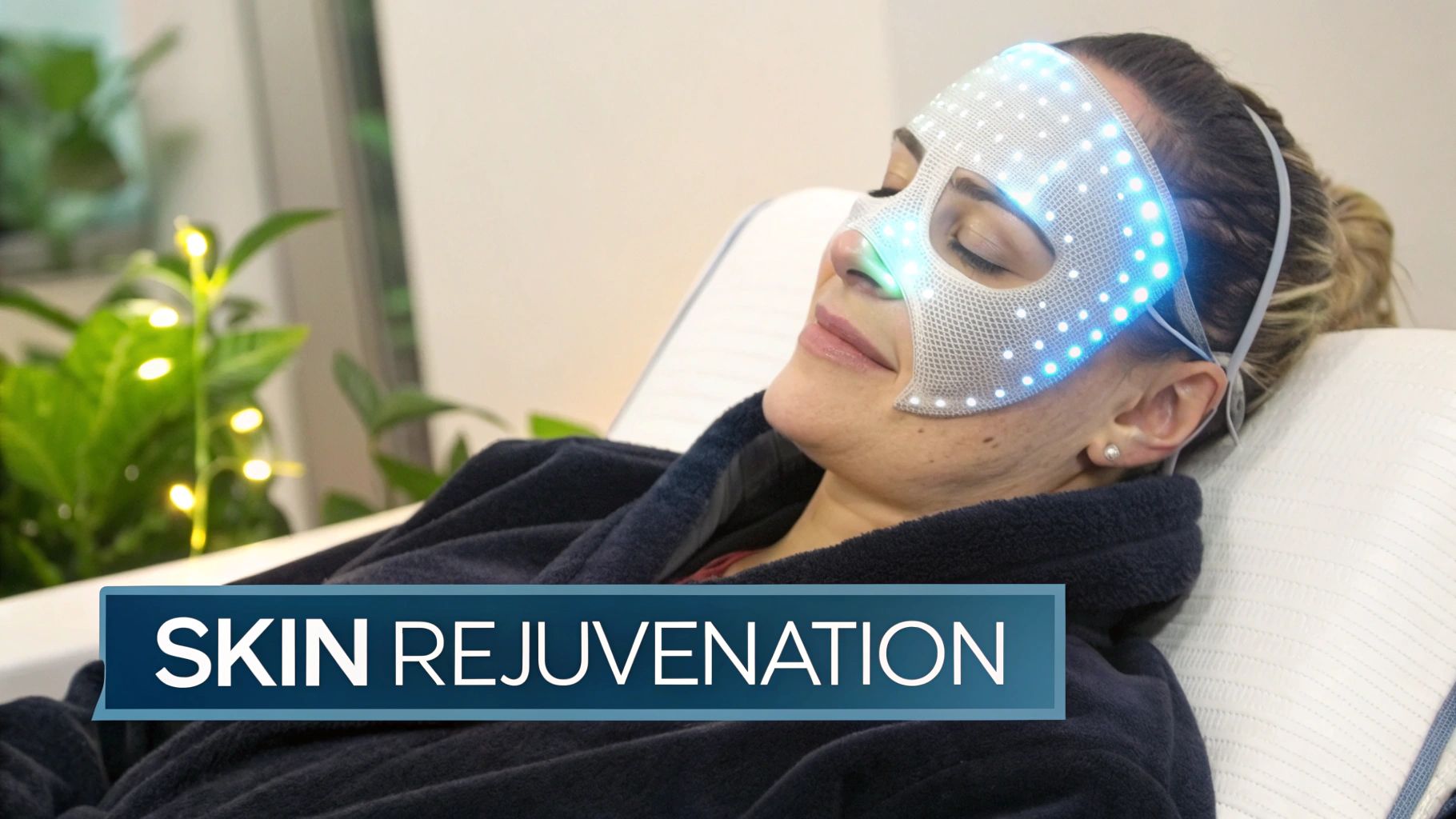
The magic behind its skin-enhancing power is its ability to fire up the production of collagen and elastin. These are the two proteins that give your skin its structure and bounce. As your body produces more, you start to see a real difference: fine lines soften, skin tone evens out, and blemishes or sunspots begin to fade. It’s like restoring your skin’s youthful glow from the inside out.
A Daily Ritual for Radiant Skin
Working red light therapy into your existing skincare routine is surprisingly simple and incredibly effective. Many of the best devices on the market are designed for exactly this, giving you a non-invasive way to get clinic-level results right at home.
Here’s how people are using it:
- LED Face Masks: A hands-free mask used for just 10-15 minutes daily can treat the entire face, smoothing wrinkles and calming the inflammation that comes with acne.
- Handheld Wands: These are perfect for zeroing in on specific trouble spots, like crow's feet or that one stubborn blemish that just won't quit.
- Targeted Panels: A small panel works wonders on the neck and décolleté—areas that show age just as much as the face but are often forgotten.
This focused approach to skin health has made RLT a go-to for anyone looking for natural, effective anti-aging solutions. If you're curious about other advanced options, check out the top skin rejuvenation treatments available today.
Soothing Chronic Pain and Aches
Beyond the mirror, red light therapy offers serious relief for those battling chronic pain. Because the light can penetrate deep into your tissues, it’s a fantastic tool for managing discomfort from conditions like arthritis or nagging joint inflammation.
By boosting blood flow and dialing down inflammatory markers right at the source, RLT helps soothe aching joints and restore mobility. For example, using a panel on a sore knee or lower back for 15-20 minutes can bring noticeable relief without reaching for medication, making it a powerful part of any long-term pain management plan.
Red light therapy tackles pain differently. It's not about masking symptoms like a pill or cream. It works on a cellular level to calm inflammation and support your body’s own healing mechanisms, offering a much more sustainable path to feeling good.
Enhancing Sleep Quality for Better Days
A solid night's sleep is the foundation for everything, and red light therapy can play a key role here, too. A little exposure to red light in the evening helps regulate your body's internal clock, or your circadian rhythm.
Unlike the harsh blue light from our screens that tricks our brains into staying awake, red light is calming and doesn’t interfere with melatonin production. A short, full-body session before bed can help you relax and signal to your body that it’s time to wind down. The result? Deeper, more restorative sleep that can make a huge difference in your energy and mood the next day. For more on health, visit https://medeqfitness.com/blogs/medeq-wellness-journal.
Your Smart Buyer's Checklist for Red Light Therapy
Alright, you've done the research. Now it's time to make a decision. This checklist is designed to cut through the noise and help you select a red light therapy device that truly fits your needs and delivers on its promises.
This isn't about finding some mythical "best" device. It's about finding the right one for you. Let's walk through the key questions to ask so you can invest with total confidence.
Define Your Primary Wellness Goal
First things first: what are you trying to accomplish? Your main goal is the single most important factor, as it dictates the specs that actually matter.
- Workout Recovery & Performance: If you're looking to bounce back faster from workouts and slash inflammation, you need power. Look for a device with high irradiance and deep-penetrating near-infrared (NIR) wavelengths. A targeted panel or a full-body setup is your best bet here.
- Skin Health and Anti-Aging: For goals like smoothing out fine lines, evening skin tone, or tackling acne, your focus should be on pure red light wavelengths. A quality LED mask or a handheld wand gives you the precise, targeted coverage you need for fantastic results.
Match the Device to Your Lifestyle
Here’s a simple truth: the best device is the one you actually use. Consistency is everything, so be realistic about what fits into your daily life.
A large panel is a powerhouse of efficiency, but it needs a dedicated spot in your home gym or clinic. On the other hand, a portable wand or a flexible wrap offers the freedom to treat specific areas while you're on the go or even just watching TV.
The most effective device is the one you’ll use regularly. Prioritize convenience and ease of use to ensure your red light therapy sessions become a consistent habit, not a chore.
Verify Technical Specs and Safety
Don't let slick marketing fool you. The numbers are what guarantee an effective and safe experience.
- Wavelengths: Stick to the proven players. Look for devices offering clinically studied wavelengths—typically 660nm (red) for skin health and 850nm (near-infrared) for reaching deeper tissues.
- Irradiance: This is the light's power output. For efficient sessions that get the job done, make sure the device delivers a potent dose, ideally over 100 mW/cm² at the treatment surface.
- Safety Certifications: Non-negotiable. Always prioritize devices that are FDA-cleared. This is your assurance that the device meets strict federal standards for safety and quality.
Investing in a high-quality device is an investment in your long-term health. For more tips on optimizing your wellness routine, explore the expert advice on our MedEq Wellness Journal.
Your Red Light Therapy Questions, Answered
Jumping into a new wellness routine always brings up a few questions. We get it. Here are some straightforward answers to the most common things people ask about red light therapy, so you can start your first session feeling completely confident.
We’ll break down how often to use your device, safety need-to-knows, and when you can realistically expect to see results.
How Often Should I Use My Red Light Therapy Device?
With red light therapy, consistency trumps intensity every time. Think of it as building momentum at the cellular level.
For general wellness and skin rejuvenation, a daily session of 10-15 minutes is the sweet spot. If you’re targeting deeper muscle recovery or specific aches, aim for slightly longer sessions of 15-20 minutes, about 4-5 times a week.
Always start with the manufacturer's guidelines—the ideal time can vary a bit depending on your device's power and what you’re trying to achieve.
Is Red Light Therapy Safe For My Eyes And Skin?
Yes, it's widely considered very safe with almost no reported side effects. The most important thing to know is that it does not use damaging UV light. You won't get a tan or cause the kind of damage associated with sun exposure.
Red light therapy is gentle and non-invasive. The light is powerful and bright, though, so we always recommend using the protective eyewear that comes with your device, especially for facial treatments.
If you have a known photosensitivity, are pregnant, or have active cancer, it’s best to chat with your doctor before starting. And to be sure you're getting a device that meets federal safety standards, always choose one that is FDA-cleared.
When Will I Start Seeing Results From Red Light Therapy?
This really comes down to your goals and how consistent you are. The timeline for results varies.
For immediate issues like post-workout muscle soreness, many people feel a difference after just one or two sessions. For skin benefits like fewer fine lines or a more even tone, you’ll likely start noticing visible changes after 8-12 weeks of dedicated use.
Deeper tissue repair and chronic pain relief can take a few months to become fully apparent. The key is patience and sticking with your routine—that’s how you unlock the long-term health benefits.
Ready to bring the power of red light therapy into your wellness routine? Explore the curated selection of professional-grade devices at MedEq Fitness and find the perfect tool to accelerate your recovery and elevate your health. Discover our collection at https://www.medeqfitness.com. And don't forget to check out our blog for more wellness tips: https://medeqfitness.com/blogs/medeq-wellness-journal.