

How often can you use red light therapy? A Quick Guide
For most people, a great starting point for red light therapy is 3-5 times per week for 10-20 minutes per session. This balanced approach is key to tapping into the incredible health benefits of red light, from enhanced workout recovery to rejuvenated skin, without overdoing it. Think of it as a cornerstone of your wellness routine: a steady, regular schedule delivers far better results than sporadic, intense sessions.
Finding Your Red Light Therapy Sweet Spot
Red light therapy is a powerful wellness tool, but unlocking its full potential depends on finding the right frequency for your health goals. The objective isn't to blast your cells with as much light as possible, but rather to find the optimal dose that gently stimulates them into a state of peak performance and repair.
This principle is known as the biphasic dose response—a scientific term for a simple wellness concept: there’s a 'sweet spot' for light exposure.
Too little light, and you won’t see significant health benefits. But too much can actually backfire and diminish the positive effects. That's why a consistent, moderate schedule is superior to infrequent, marathon sessions. Understanding this concept is the first step toward creating a personalized routine that truly enhances your well-being.
You can get a deeper look at the science behind this in our guide on how does red light therapy work.
The Power of a Consistent Routine
Consistency is the bedrock of a successful red light therapy plan. I like to think of it as cellular fitness. You wouldn't go to the gym once a month and expect major changes in your strength or recovery, would you? Your cells respond in the same way—they thrive on regular, predictable exposure to therapeutic light.
This steady application fuels crucial health processes, such as boosting collagen production for healthier skin, taming inflammation for pain relief, and accelerating muscle repair for better workout recovery.
Experts across the wellness and medical fields recommend a starting protocol built on this principle.
Clinical insights point to a starting routine of 3-5 days per week, with each session lasting 5-20 minutes per body area. This creates the ideal environment for cellular repair. For athletes, even three sessions a week can kickstart workout recovery, with tangible benefits often appearing after just two to four weeks of consistent use.
This balanced frequency provides your body with a clear signal to make positive changes without becoming overloaded. Interestingly, you'll find similar advice for optimal infrared sauna usage frequency, which also underscores the importance of consistency for wellness. This is how you transform a powerful device into a transformative daily health habit.
Red Light Therapy Quick Start Guide
To simplify your journey, we've created this quick-start guide. Think of it as your cheat sheet for getting started, tailored to your primary health and wellness goals.
| Goal | Recommended Frequency | Session Duration | Health Benefits |
|---|---|---|---|
| Skin Health & Anti-Aging | 4-5 times/week | 10-15 minutes | Boosting collagen, reducing fine lines, improving skin tone. |
| Workout Recovery & Performance | 3-4 times/week | 15-20 minutes | Pre-workout to prime muscles, post-workout to speed up repair. |
| Pain Relief & Inflammation | 5-7 times/week | 10-20 minutes | Targeting specific joints or areas of chronic pain. |
| General Wellness | 3 times/week | 10-15 minutes | Supporting energy levels, sleep, and overall cellular health. |
This table provides a solid foundation. Remember, these are starting points—the best wellness routine is one you can maintain consistently. Listen to your body and adjust as you go.
The Four Factors That Shape Your RLT Schedule
So, why isn't there a single magic number for how often to use red light therapy? Because a truly effective routine is about more than just time—it's a dynamic interplay between four key factors. Optimizing these variables is what transforms a generic recommendation into a personalized protocol that delivers significant health benefits.
Think of it like tuning a high-performance engine for optimal output. Each of these elements must be perfectly dialed in to achieve your goals, whether that's accelerated workout recovery, clearer skin, or reduced inflammation. Let's break them down.
1. Wavelength: The Right Tool for the Job
First up is wavelength, measured in nanometers (nm). This is about choosing the right tool for the specific health benefit you're seeking. Different wavelengths of light penetrate your body to different depths, targeting specific cellular processes along the way.
- Shorter Wavelengths (e.g., 630-660 nm): These are ideal for surface-level benefits. They are primarily absorbed by your skin, making them perfect for stimulating collagen production, evening out skin tone, and promoting overall skin health.
- Longer Wavelengths (e.g., 810-850 nm): These wavelengths penetrate deeper into the body. They can reach muscle, joints, and even bone, making them the superior choice for enhancing workout recovery, providing pain relief, and calming deep-seated inflammation.
Selecting the right wavelength ensures that the therapeutic light energy is delivered precisely where your body needs it most, forming the foundation for tangible health improvements.
This chart breaks down the core principles of a solid RLT routine, including the sweet spot for frequency and duration.
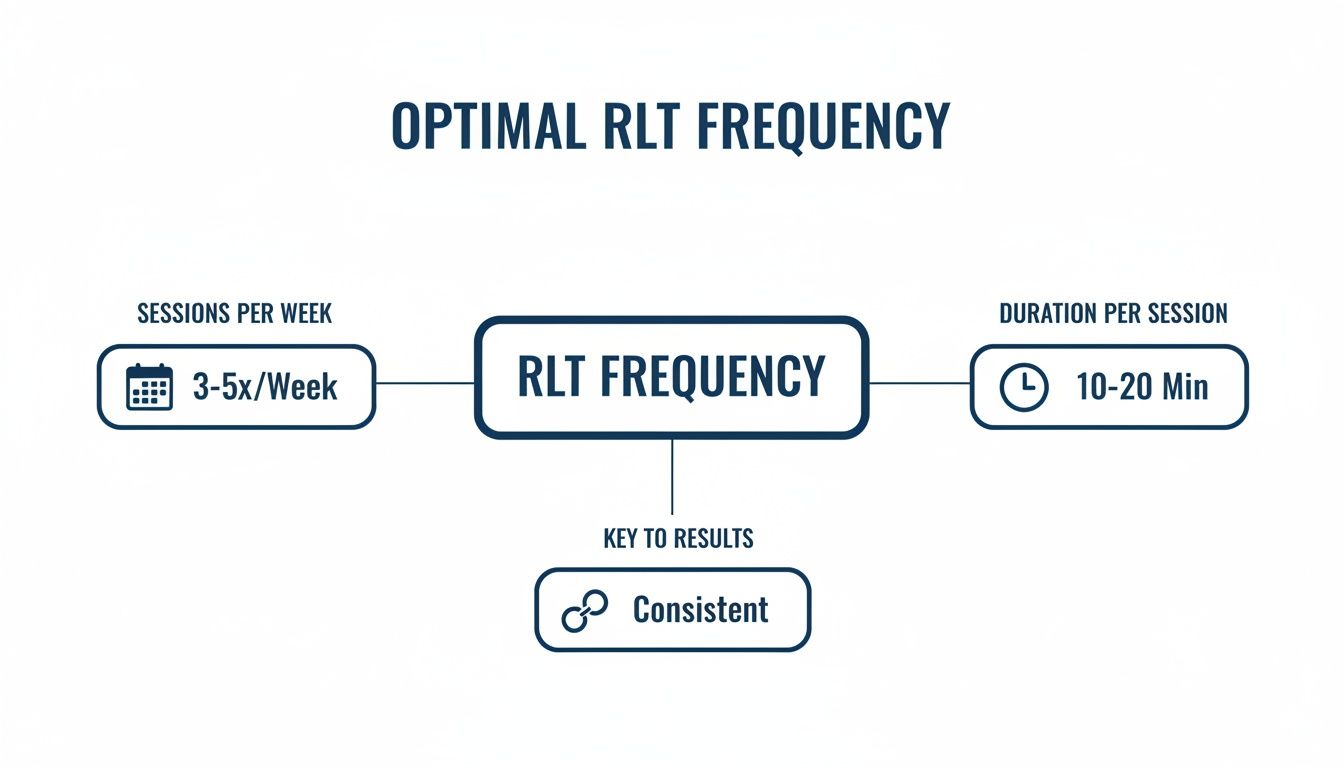
As you can see, a consistent schedule of 3-5 weekly sessions, with each lasting 10-20 minutes, is the backbone of most successful RLT protocols for general wellness.
2. Irradiance: The Power Behind the Light
Next is irradiance, which is the power density of the light, measured in milliwatts per square centimeter (mW/cm²). The simplest way to understand this is to picture a garden hose—irradiance is like the water pressure. A high-power device delivers a therapeutic dose of light much faster, just as a high-pressure hose fills a bucket in a fraction of the time.
A device with higher irradiance allows you to achieve the desired health benefits in shorter sessions, which is a major advantage for busy athletes and professionals focused on efficient workout recovery and wellness. This detail is a key differentiator between basic consumer gadgets and the professional-grade panels we feature and discuss on the MedEq Wellness Journal.
3. Session Duration: Your Time Under the Light
This one is simple: session duration is how long you spend in front of the light. However, it works in tandem with irradiance to determine the total energy dose your body receives, which is what drives the health benefits.
The total dose of light energy is what actually drives results. A shorter session with a high-irradiance device can deliver the exact same effective dose as a much longer session with a low-power one. This is why knowing your device's specs is non-negotiable for an effective wellness routine.
4. Your Treatment Goal: The Destination on Your Map
Finally, and most importantly, is your personal treatment goal. What health outcome are you aiming for? Are you an athlete looking to slash workout recovery time, or are you focused on achieving smoother, more vibrant skin?
Your goal dictates how you combine the other three factors. Someone using RLT for targeted pain relief might use a high-irradiance, near-infrared device daily on a specific joint. In contrast, a person aiming for general wellness might use a combination-wavelength panel just three times a week. Your destination determines the route you take to get there.
Actionable Protocols for Top Wellness Goals
Theory is great, but let's get practical. Here, we translate the science into real-world routines for the most common red light therapy goals. Whether you're pursuing better skin, faster workout recovery, or relief from persistent pain, consider these protocols your evidence-based starting point for improved health.
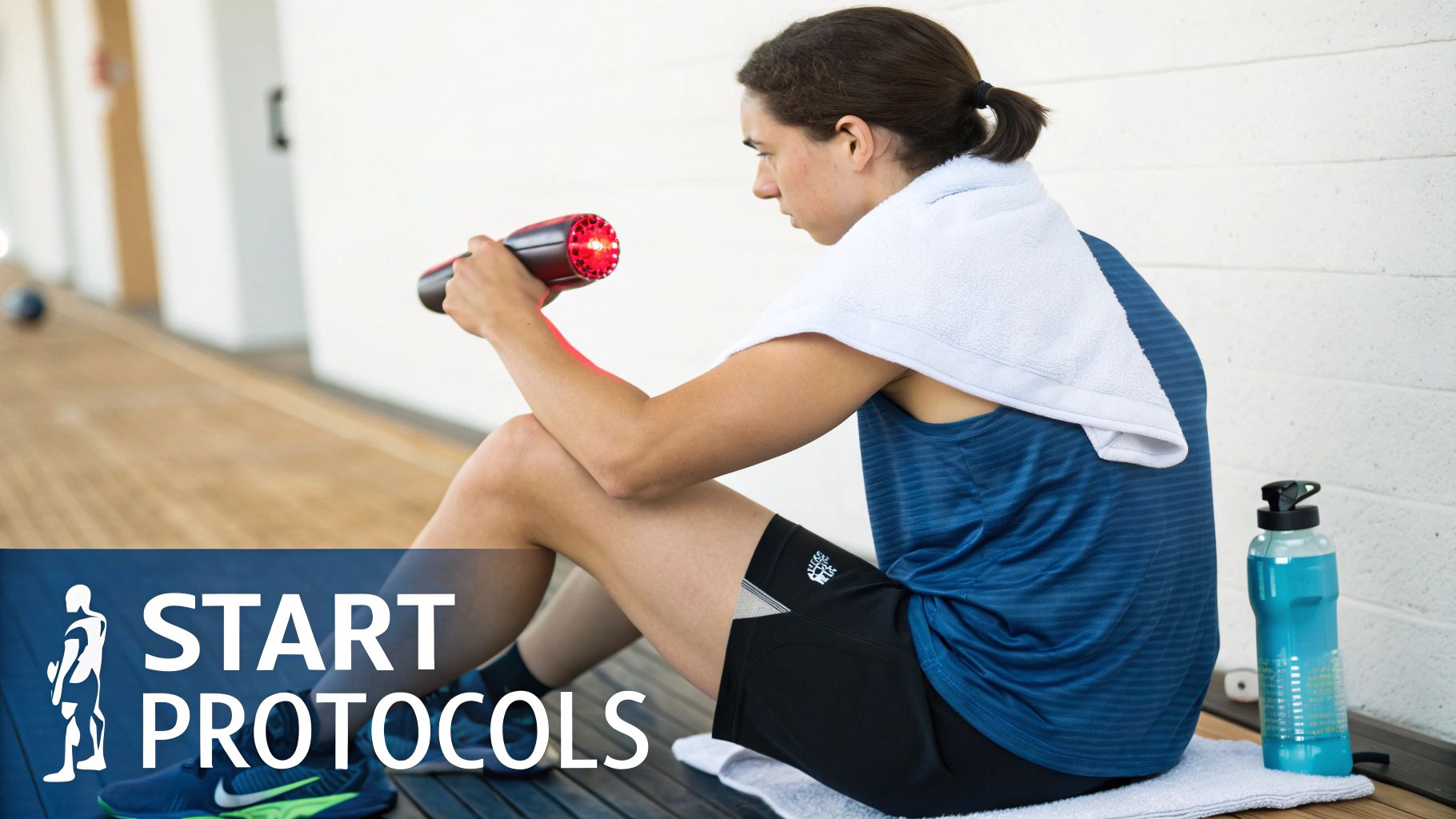
These are powerful guidelines, not rigid rules. The real magic of wellness happens when you start here and then listen to your body, adjusting as you go.
Protocol for Skin Rejuvenation and Anti-Aging
If your goal is a vibrant complexion and smoother skin, consistency is key. The aim is to gently stimulate collagen and elastin production without overwhelming your skin's natural repair cycles. This dedication leads to significant skin health benefits.
A fantastic starting point is 4-5 sessions per week, with each session lasting 10-15 minutes. Position yourself about 12-24 inches from your device. This frequency provides your skin with a steady, therapeutic dose of light to enhance cell turnover and reduce inflammation.
This is the sweet spot for achieving that sought-after healthy glow. In one study with 90 patients who used RLT twice a week for four weeks, over 90% experienced positive changes. It’s a powerful reminder of how a structured schedule delivers tangible health results.
Protocol for Workout Recovery and Performance
For athletes and fitness enthusiasts, red light therapy is a game-changer for reducing muscle soreness and accelerating the return to training. This health benefit is achieved by down-regulating inflammation and oxidative stress in muscle tissue—the primary causes of post-workout soreness.
The ideal schedule for workout recovery is 3-5 times per week, targeting the muscles you've trained.
- Pre-Workout: A brief 5-10 minute session can prime your muscles for action, potentially boosting performance and endurance.
- Post-Workout: A longer 15-20 minute session is perfect for kickstarting repair and minimizing delayed onset muscle soreness (DOMS). Get a bit closer for this one—about 6-12 inches away—to allow the light to penetrate deep into the muscle for maximum recovery benefits.
This is one of the most well-documented red light therapy uses for anyone looking to optimize their physical performance and enhance their wellness journey.
Protocol for Pain and Inflammation
When dealing with chronic pain or inflammation in joints and deep tissues, a more frequent approach often yields the best health benefits. The goal here is to consistently soothe inflammatory responses and support the body's natural healing process day after day.
For targeted pain relief, like an arthritic knee or a stiff lower back, daily use can be incredibly effective. We recommend starting with 5-7 sessions per week for 10-20 minutes each. Focus the light directly on the source of your discomfort from about 6-12 inches away.
After an initial period of 2-4 weeks, many people find they can transition to a maintenance schedule of 3-4 times per week as their symptoms improve. This consistent application is key to finding meaningful relief and reclaiming your quality of life and overall wellness.
How to Know If You Are Overdoing It
When it comes to red light therapy, it's easy to fall into the "more is better" trap. But the real magic happens with a balanced, consistent approach. The key is learning to listen to your body to get the best results safely and avoid hitting a point of diminishing returns.
The first step is knowing what to look for. While RLT is incredibly safe and has very few side effects, overstimulation can happen. Catching these subtle signals early lets you tweak your routine for optimal recovery and wellness.
The Biphasic Dose Response Revisited
We’ve mentioned the biphasic dose response before, and this is where it really clicks. Picture a bell curve. There's a sweet spot where the right amount of light energy supercharges your cells to repair and regenerate. But if you push past that peak, you can actually cause a mild stress response that negates the benefits.
This is exactly why pulling back on your session time or frequency can often be more effective than pushing harder. It gives your cells the perfect amount of stimulation without overwhelming them, keeping you on the right track.
Common Signs of Overuse
So, how do you know if you've gone a little too far? The signs are usually mild and don't last long, but they're your body's way of giving you feedback.
Keep an eye out for these signals:
- Temporary Redness or Tightness: A little warmth during your session is perfectly normal. But if your skin stays red for a long time afterward or feels tight and uncomfortable, it’s a good hint to dial back your next session.
- Mild Irritation: If you're using RLT for skin health, a bit of unexpected irritation or even a small breakout can mean the area is getting too much stimulation.
- Unexplained Fatigue: This one might seem counterintuitive, but feeling drained after a session—especially if you're using RLT for energy—is a classic sign of overdoing it. Your cells are putting in work, and too much light can be tiring.
A Mindful Approach to Your RLT Practice
The best way to avoid overuse is to simply be mindful. When you get a new device, start slow and pay close attention to how you feel. Don't just look at the area you're treating; notice your overall energy and wellness.
A mindful approach ensures your RLT practice remains a powerful tool for wellness, not a source of stress. Monitor metrics beyond the mirror, such as your sleep quality, daily energy levels, and even post-workout muscle soreness.
If you spot any of these signs, don't worry. Just take a day or two off. When you start again, try a shorter session or move a little further away from the panel. This simple cycle of listening to your body and adjusting is what turns a good routine into a great one. For more ideas on building a smart wellness practice, check out the articles on the MedEq Wellness Journal.
Pairing RLT with Your Existing Wellness Routine
Red light therapy isn’t a solo act; it’s a powerful team player that can amplify the health benefits of your other wellness practices. By strategically sequencing your RLT sessions, you create a synergy that boosts your overall health, fitness, and workout recovery. It’s all about making your entire routine work smarter, not harder.
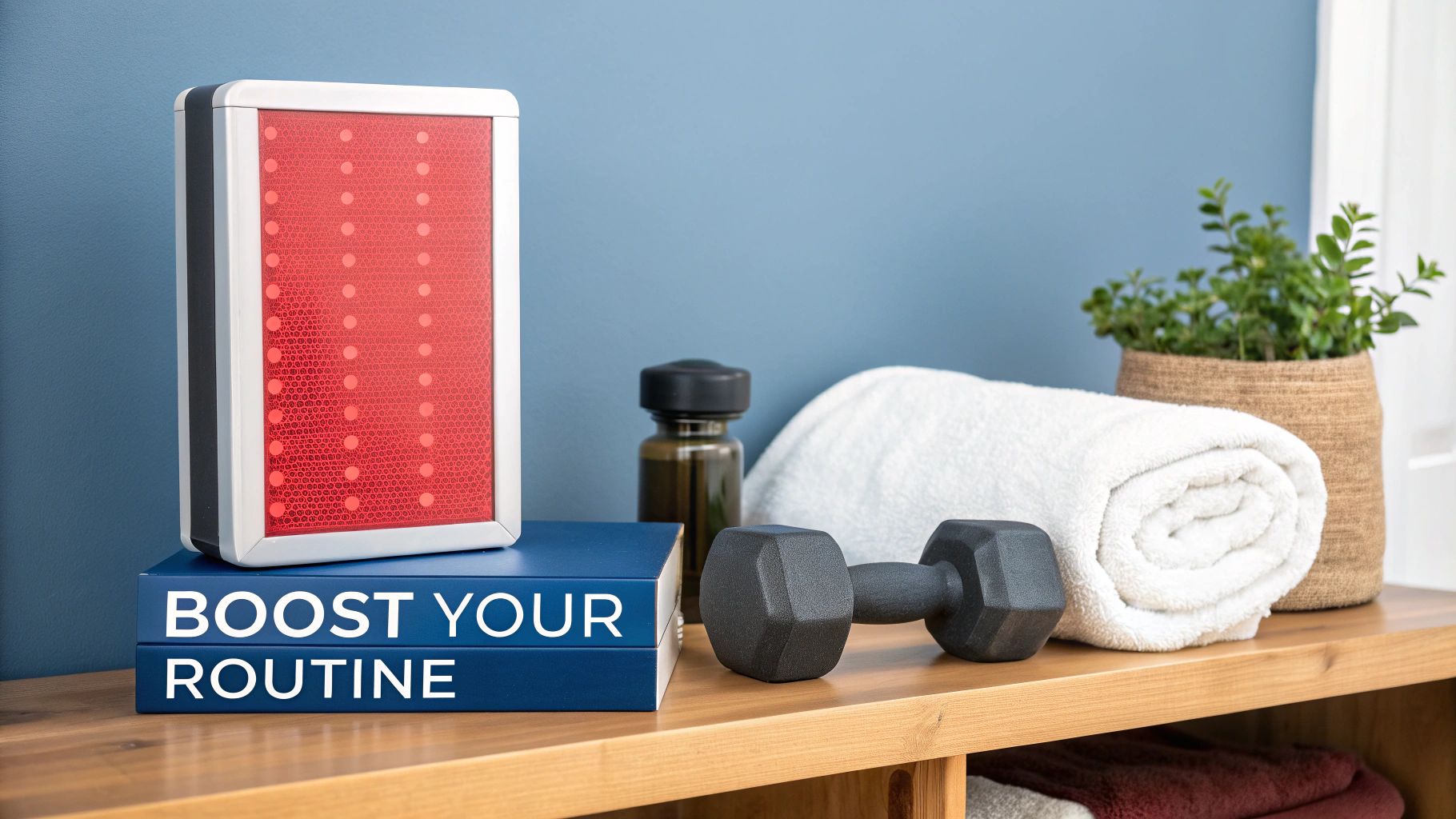
Think of it like adding a supercharger to an already great engine. Every part of your wellness stack—from workouts to cold plunges—gets an extra kick when paired intelligently with red light. This creates a powerful ecosystem where every single activity builds on the last.
Timing RLT with Workouts for Maximum Impact
For athletes and fitness buffs, timing is everything. Using red light before a workout can prime your muscles for peak performance, while a session afterward slams the brakes on soreness and speeds up recovery.
- Pre-Workout Boost: A quick 5-10 minute session gets the blood flowing, waking up your muscle tissue for the work ahead. This can lead to better endurance and more power during your training.
- Post-Workout Recovery: This is an absolute game-changer. A 15-20 minute session after you’re done helps shut down inflammation and reduces that dreaded delayed onset muscle soreness (DOMS). That means you can get back to training faster and with way less discomfort.
This one-two punch is a cornerstone strategy for anyone serious about optimizing their physical conditioning.
Creating Contrast Therapy for Enhanced Recovery
One of the most potent pairings for wellness is combining RLT with cold therapy, like a cold plunge. This practice, known as contrast therapy, leverages the benefits of both heat (from infrared light) and cold to create a powerful cocktail for workout recovery.
The rapid swing from cold to warm light exposure sends your circulation into overdrive.
Using red light therapy right after a cold plunge helps drive blood flow back into your muscles and tissues. This dynamic process flushes out metabolic waste and delivers a fresh wave of oxygen and nutrients, dramatically speeding up the body's natural repair cycle.
This combination is exceptional for taming system-wide inflammation and kicking cellular repair into high gear, providing immense health benefits for your entire body. To get the full picture of setting up your wellness space, check out our guide on using red light therapy at home.
Integrating RLT with Other Wellness Modalities
Beyond the gym, RLT can be woven into just about any part of your wellness routine. The trick is to think about your goals and how light therapy can support them.
Consider these powerful combinations for health benefits:
- Before Meditation or Yoga: A 10-minute session beforehand can help calm your nervous system, allowing you to sink into a much deeper state of relaxation.
- After a Sauna Session: Following up a sweat session with RLT can support the cellular repair processes that are already fired up.
- Before a Massage: Hitting sore or tight spots with red light first can help the muscles relax, setting the stage for a more effective and therapeutic massage.
By thoughtfully slotting RLT into your day, you transform individual activities into a connected, high-impact wellness strategy. Find more tips and tricks on the MedEq Wellness Journal.
Your Blueprint for Lasting Red Light Therapy Success
Alright, let's pull all of this together. Finding your perfect red light therapy frequency is less about a rigid formula and more about a personal wellness journey. The path to getting there, though, is clear. The core idea is simple: start with a consistent schedule and adjust based on your health goals and how your body responds.
Mastering this isn't about blind repetition or chasing the highest possible intensity. It's about intelligent, mindful application. Real success comes from finding that sustainable sweet spot—the routine that unlocks your body’s potential for healing, workout recovery, and overall wellness.
Your Final Checklist for Success
As you move forward, keep this simple checklist in mind. Think of it as your blueprint for turning red light therapy into a lasting, effective part of your wellness practice.
- Define Your Goal: What health benefits are you seeking? Workout recovery, better skin, or pain relief? Your primary objective is the compass that guides everything else.
- Understand Your Device: Get familiar with its power (irradiance) and wavelength. A high-quality panel delivers therapeutic doses more efficiently, meaning shorter, more powerful sessions.
- Start Conservatively: The golden rule is to begin with 3-5 sessions per week, each lasting between 10-20 minutes. This gives your body time to adapt without overdoing it.
- Listen to Your Body: This is crucial. Pay close attention to your energy levels, sleep quality, and soreness. This is your body's direct feedback—use it to tweak your routine for optimal wellness.
- Be Consistent: Honestly, this is the most important part. Sporadic sessions just won't deliver the cumulative health benefits you're after. Stick to your schedule to see real, lasting results.
The Power of Consistent Application
Consistency is what separates mediocre results from exceptional ones. This isn't just an opinion; it's a fact backed by solid research. For home gym owners, this means weaving your MedEq panel into your existing workout recovery routine. A great example is using it three times a week to support energy restoration—a practice that lines up perfectly with the HRV gains our users keep telling us about.
A landmark trial really drives this point home. Subjects who received treatments just twice a week with 611-650 nm light saw their skin outcomes improve by 40-75% compared to the control groups. It’s a powerful reminder that a steady, moderate schedule can produce incredible health benefits. Discover more insights on light therapy research.
This approach ensures you’re continuously supporting your body's cellular functions, whether it's for healthier skin or faster recovery after a brutal workout. Your journey is about building a sustainable habit that pays dividends in your health and performance for years to come.
Ready to dive deeper? Continue your journey and find more expert guides on the MedEq Wellness Journal.
Answering Your RLT Frequency Questions
As you start to dial in your red light therapy routine, you're bound to have questions. Let's tackle some of the most common ones we hear from our community.
Can I Use Red Light Therapy Every Day?
It’s tempting to think more is always better, but that’s not the case here. For general wellness, skin health, and workout recovery, the sweet spot is usually 3-5 sessions per week.
This schedule respects your body’s natural rhythm. It gives your cells the stimulus they need, plus the downtime required to repair and adapt. Think of it like a workout—rest days are when the real progress happens. Pushing too hard, too often, can just lead to fatigue.
That said, if you're dealing with an acute injury or a specific pain point, a short burst of daily, targeted sessions can be a game-changer.
What Is the Best Time of Day to Use RLT?
Honestly, the best time is the time you can actually stick to. Consistency beats everything.
But if you want to optimize for specific health benefits, here’s how different times of day can support your goals:
- In the Morning: A morning session can help sync up your internal clock (circadian rhythm), making you feel more awake and energized for the day.
- Post-Workout: This is a classic for athletes. Using RLT right after training helps kickstart workout recovery, eases muscle soreness, and gets you ready for your next session faster.
- In the Evening: Winding down with red light can be incredibly calming. It helps soothe the nervous system, making it a great addition to a pre-sleep routine for better rest and enhanced wellness.
How Long Until I See Results?
This is where patience and consistency really pay off. The timeline is different for everyone, depending on your body, your health goals, and how often you're using the light.
You might feel some immediate benefits, like reduced inflammation or a sense of calm, after just a few sessions. But the big, lasting changes—like smoother skin, less chronic pain, or faster workout recovery—build up over time. Give it several weeks to a few months of consistent use to really see the difference.
Trust the process and stick with it. Your body is doing the work.
Ready to build your perfect wellness routine? The team at MedEq Fitness is here to help you find the professional-grade red light therapy devices and recovery tools you need to perform at your best.
Explore our full collection of science-backed wellness equipment and discover more expert guides at the MedEq Wellness Journal.


