

A Guide to Red Light Therapy Uses for Skin Health, Pain Relief, and Wellness
Red light therapy is a straightforward, non-invasive treatment that uses targeted wavelengths of red and near-infrared light. The goal? To kickstart cellular repair, dial down inflammation, and boost circulation. Its uses are surprisingly diverse, from improving skin health and enhancing overall wellness to accelerating workout recovery and offering natural pain relief.
How Red Light Therapy Actually Works
Ever wondered how shining a specific color of light on your body can produce real, tangible health benefits? It’s not magic—it's biology. The whole process comes down to how our cells react to certain wavelengths of light, a phenomenon called photobiomodulation (PBM).
Think of your body's cells as tiny engines. Inside each one are the true powerhouses: the mitochondria. They’re responsible for generating the energy currency of the cell, adenosine triphosphate (ATP), which fuels literally everything your body does, from muscle contractions to healing a cut. When cells get stressed from injury, illness, or even a hard workout, their ability to produce that vital energy drops.
A Cellular Recharge
This is precisely where red light therapy comes in. Specific wavelengths of red and near-infrared light—typically in the 630 to 850 nanometer range—are able to penetrate through the skin and get absorbed directly by the mitochondria. This absorption acts like a jump-start for your cellular engines, revving them up to produce ATP more efficiently.
This sudden surge in cellular energy creates a powerful domino effect, setting off a few key biological processes that explain RLT's wide-ranging wellness benefits:
- Better Cell Regeneration: With more fuel in the tank, cells can repair themselves and multiply more effectively. This is crucial for healing wounds and bouncing back from exercise.
- Reduced Inflammation: RLT helps lower the levels of inflammatory markers in your tissues, which calms irritation and reduces swelling in joints and muscles.
- Increased Circulation: The therapy encourages the formation of new capillaries, which improves blood flow. Better circulation brings more oxygen and nutrients to damaged areas while flushing out metabolic waste.
This graphic breaks down how those light waves trigger changes at the cellular level, leading to more energy and better tissue repair.
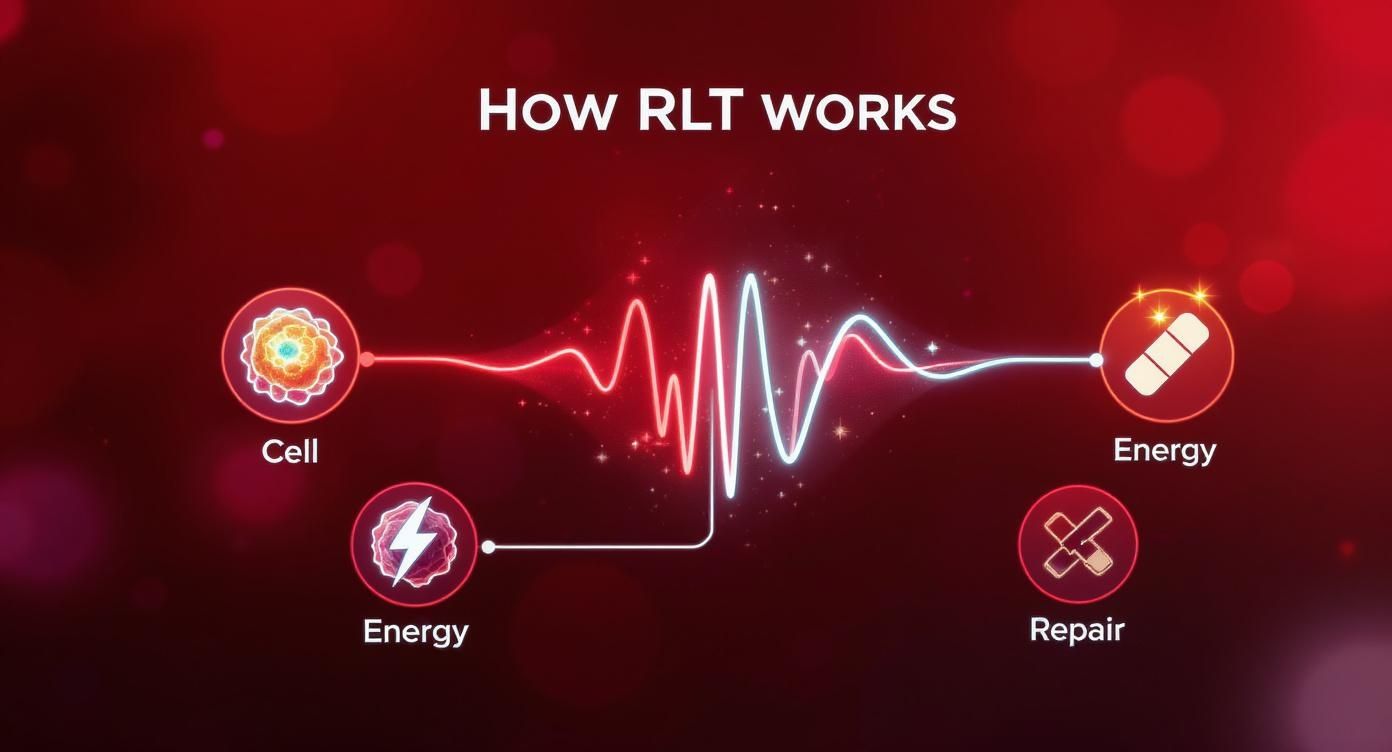
As you can see, the core mechanism is a simple but potent chain reaction. It starts with light and ends with real-world wellness benefits.
The table below summarizes how these core mechanisms translate into some of the most common and effective uses for red light therapy.
Key Uses and Health Benefits of Red Light Therapy at a Glance
| Primary Use | Biological Mechanism | Key Benefit |
|---|---|---|
| Skin Rejuvenation | Increased collagen and elastin production | Reduced wrinkles, improved skin tone & texture |
| Pain & Inflammation | Decreased inflammatory markers, improved circulation | Relief from joint pain and muscle soreness |
| Workout Recovery | Enhanced ATP production and reduced oxidative stress | Faster recovery and reduced post-exercise soreness |
| Wound Healing | Accelerated cell regeneration and new blood vessel growth | Quicker closure of wounds and reduced scarring |
| Sleep Quality | Regulation of melatonin production | Improved sleep cycles and deeper rest |
This quick overview shows the direct line from cellular action to tangible health outcomes, which is the foundation of RLT's effectiveness.
From the Lab to Your Life
Once you grasp this foundational process, it’s easy to see how one single therapy can offer such a broad spectrum of benefits. Whether you're trying to smooth out fine lines, soothe a sore knee, or get back to the gym faster after a grueling session, the principle is identical: you’re giving your cells the energy they need to do their jobs better.
This growing understanding, paired with a demand for non-invasive treatments, is why the global light therapy market, valued at USD 1.1 billion in 2025, is projected to hit USD 1.7 billion by 2035. You can find more insights on the growing demand for light therapy on Nordvik Outdoors. For more deep dives into wellness technologies, the MedEq Wellness Journal is an excellent resource.
Achieving Youthful Skin with Red Light Therapy
Of all the applications for red light therapy, its ability to rejuvenate skin is easily one of the most celebrated health benefits. Forget topical creams that only work on the surface; this therapy gets right to the source, penetrating into the deep dermal layers to address the root causes of aging from the inside out. It's a gentle, effective way to get a more vibrant, youthful complexion.
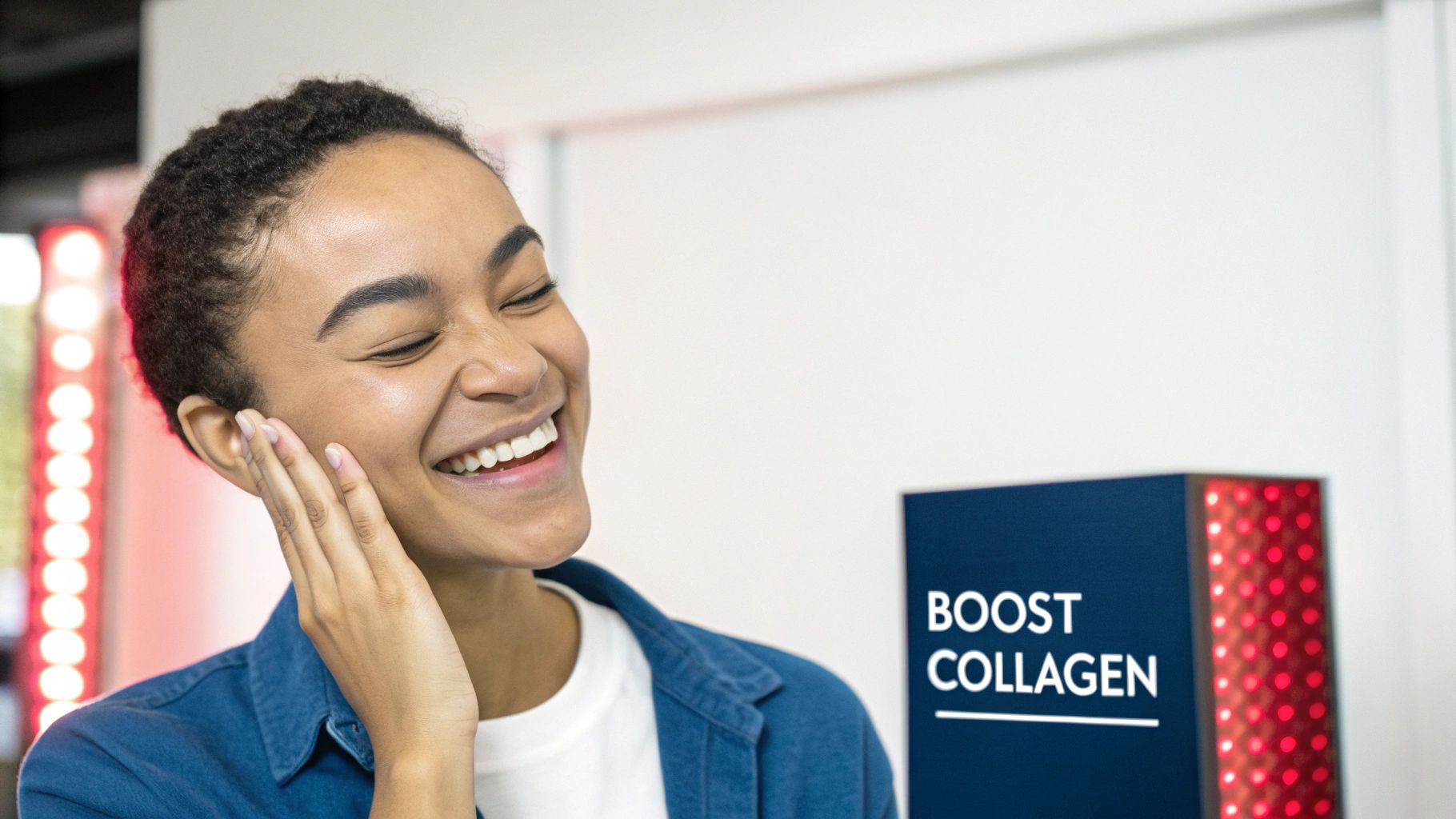
The real magic happens when red light awakens dormant cells called fibroblasts. Think of these as tiny factories inside your skin that produce two critical proteins: collagen and elastin. Collagen gives skin its firmness and structure, while elastin is responsible for its bounce and elasticity.
As we get older, these little factories naturally slow down their production, which is why we start to see fine lines, wrinkles, and sagging. Red light therapy acts like a natural wake-up call, signaling these cells to ramp up production once again.
Restoring Your Skin’s Natural Foundation
With consistent use, most people notice a real increase in their skin's density and firmness. By rebuilding this underlying protein matrix, red light therapy helps smooth out wrinkles and soften fine lines, especially those stubborn ones around the eyes and mouth. The end result is a complexion that looks and feels healthier, plumper, and more resilient.
One of the biggest advantages here is that this is a completely non-invasive approach. Aggressive treatments like chemical peels or lasers essentially create controlled damage to force a healing response. Red light therapy does the opposite—it supports and enhances your body's own regenerative processes without any harm or downtime.
This gentle mechanism makes it an incredible tool for long-term skin maintenance. It doesn't just mask the symptoms of aging; it helps restore the very cellular functions that keep skin youthful in the first place. You can dive deeper into the full spectrum of these positive effects in our detailed guide on the benefits of red light therapy.
Calming Inflammatory Skin Conditions
Beyond its anti-aging power, red light therapy is also a fantastic ally for managing inflammatory skin conditions. Its ability to reduce inflammation and boost circulation can bring serious relief for those dealing with acne and rosacea.
For anyone struggling with acne, red light works in two main ways:
- Reduces Inflammation: It helps calm the redness and swelling that make breakouts so noticeable and painful.
- Targets Bacteria: While blue light is more famous for killing acne-causing bacteria, red light also helps create a healthier skin environment that’s less hospitable to bacterial overgrowth.
It’s a similar story for people with rosacea, which is often defined by persistent redness and flushing. By enhancing cellular repair and calming overactive inflammatory responses, red light therapy can visibly reduce redness and promote a more even, balanced skin tone.
What to Realistically Expect from Treatments
Patience and consistency are everything when using red light therapy for your skin. The changes are happening at a cellular level, so they build up over time. Most people start seeing initial improvements in skin texture and tone within a few weeks of regular sessions.
More significant changes, like a visible reduction in fine lines and wrinkles, typically show up after 8 to 12 weeks of consistent use. For results that last, you have to treat red light therapy like any other part of your wellness routine—just like exercise or a healthy diet. It's a long-term commitment to supporting your skin’s health from the inside out. For more health and wellness tips, visit the MedEq Wellness Journal.
Level Up Your Workout Recovery and Performance
Any serious athlete knows that gains aren't just made in the gym—they're solidified during recovery. What you do between workouts is what truly dictates your performance, prevents injuries, and builds long-term resilience. This is where red light therapy comes in, not as a passive treatment, but as an active tool to fundamentally improve how your body bounces back.
So, how does it work? Intense exercise creates micro-tears in muscle fibers and kicks up oxidative stress, which is what causes that familiar delayed onset muscle soreness (DOMS). Red light therapy gets right to the source, penetrating deep into muscle tissue to directly energize the mitochondria, your cellular power plants.
By stimulating these mitochondria, red light therapy ramps up the production of ATP (adenosine triphosphate)—the fuel your cells run on. This energy surge helps muscle cells repair themselves faster, brings down inflammation, and clears out metabolic junk. The end result? Less soreness, faster recovery, and the ability to get back to training sooner and with more intensity.
Pre-Conditioning for Peak Performance
One of the smartest ways athletes use red light therapy is as a pre-conditioning tool. Using it before a workout primes your muscles for the stress to come, kind of like a warm-up at the cellular level.
This pre-workout session boosts blood flow, getting more oxygen and nutrients to your muscles right when they're about to need them. It also seems to have a protective effect, making your cells more resilient against the damage that happens during a tough workout. Studies even suggest this can lead to greater strength and endurance during training, while potentially lowering your risk of strains.
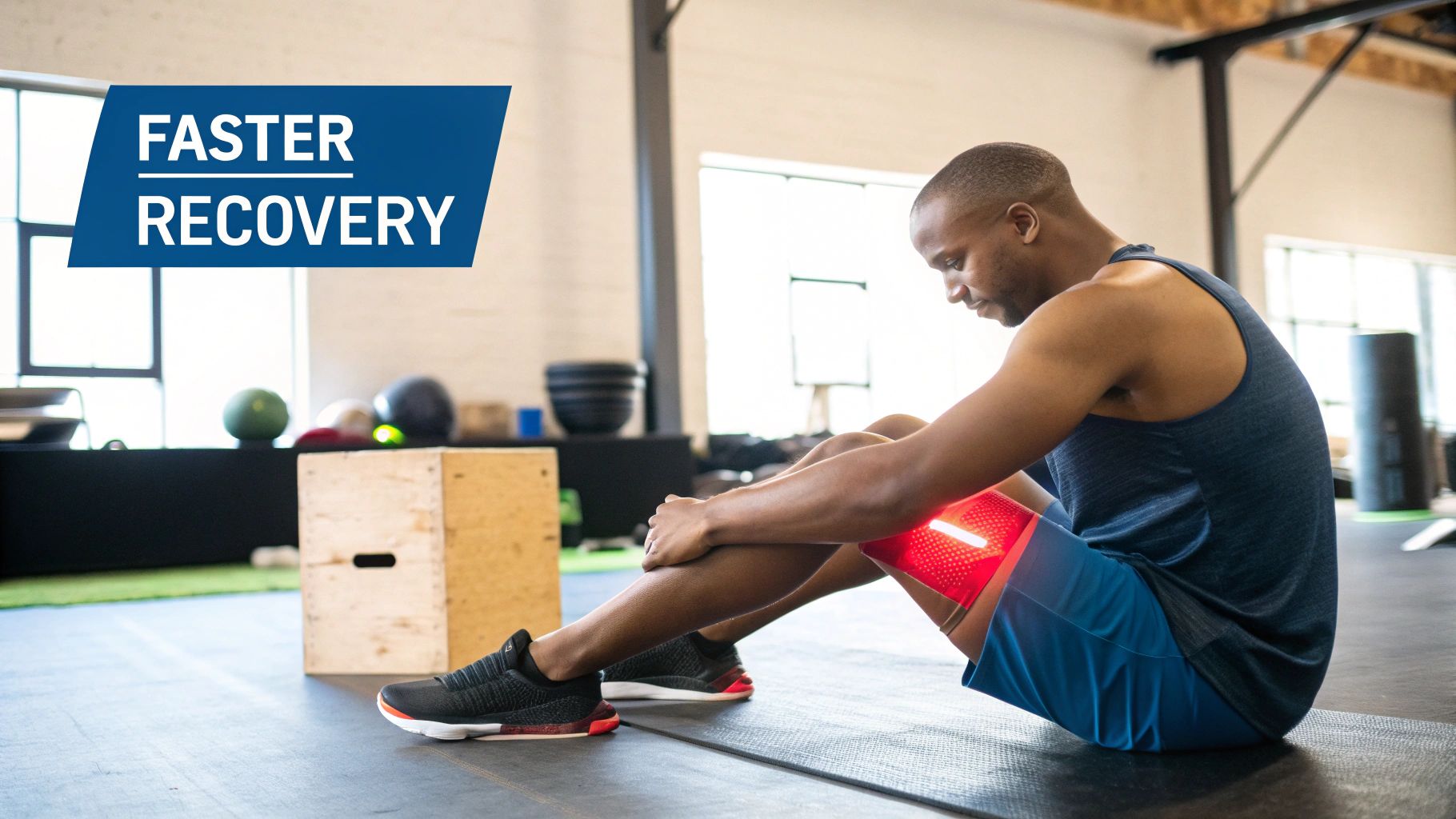
Powering up these tiny cellular engines is the core mechanism behind RLT's proven ability to cut down on muscle fatigue and kick workout recovery into high gear.
The Power of Contrast Therapy
If you really want to elevate your recovery game, try pairing red light therapy with a cold plunge. This combination, known as contrast therapy, creates a powerful push-pull effect on your circulatory system that can dramatically accelerate healing.
Here’s how they work in tandem:
- Red Light Therapy (Warmth): A session before or after training triggers vasodilation, widening your blood vessels. This cranks up blood flow, flooding your tissues with oxygen-rich blood to get the repair process started.
- Cold Plunge (Cold): Following up with cold exposure causes vasoconstriction, or the narrowing of blood vessels. This action helps flush out metabolic waste products like lactic acid and puts a serious damper on inflammation.
Alternating between the two creates a "pumping" action that powerfully boosts circulation and nutrient delivery while clearing out the debris from muscle damage. For a deeper dive into how elite athletes use this stack, check out our guide on red light therapy for athletes over on the MedEq Wellness Journal.
Timing Your Sessions for Maximum Impact
When you use red light therapy can change the benefits you get. While there's no single "right" way, here are some solid guidelines for working it into your routine:
- Pre-Workout (10-20 minutes before): Perfect for prepping muscles, fighting fatigue during your workout, and possibly preventing injury.
- Post-Workout (within a few hours): The ideal window for speeding up repair, minimizing DOMS, and tackling inflammation head-on.
- On Rest Days: A great way to promote systemic recovery, manage chronic inflammation, and support ongoing tissue regeneration.
When you add red light therapy to your training regimen, you’re not just treating soreness. You're giving your body a fundamental tool to repair, rebuild, and perform at its absolute peak. Find more wellness insights at the MedEq Wellness Journal.
Tapping into Natural Relief for Pain and Inflammation
Beyond the gym and the mirror, one of the most profound health benefits of red light therapy lies in managing chronic pain and inflammation. For millions looking for a drug-free, non-invasive alternative to the usual pain relief cycle, this therapy offers a way to get to the biological root of the problem. It sends specific wavelengths of red and near-infrared light deep into tissues, reaching the very joints, muscles, and nerves where pain starts.
The mechanism is surprisingly direct. When these light waves hit the tissue, they set off a chain reaction of positive cellular events. One of the biggest is a major boost in local circulation. The light energy encourages the growth of new capillaries and widens existing blood vessels in a process called vasodilation. This improved blood flow is a game-changer for healing—it rushes oxygen and nutrients to damaged areas while clearing out the metabolic junk that contributes to pain.
Dialing Down the Inflammatory Response
At the same time, red light therapy helps calm down the body's inflammatory alarms. Chronic inflammation is the engine behind persistent pain from conditions like arthritis, tendinitis, and fibromyalgia. RLT gets to work by lowering the levels of key inflammatory markers, known as cytokines, right where you apply the light.
By soothing this overactive inflammatory process, red light therapy doesn't just put a band-aid on the pain—it helps resolve the underlying issue causing it. This one-two punch of boosting circulation and tamping down inflammation creates the perfect environment for your tissues to repair and regenerate, leading to real, lasting relief.
Think of it like a traffic jam on a highway that’s keeping first responders from an accident. Red light therapy acts as the traffic controller, clearing the congestion (inflammation) and opening up new lanes (better circulation) so the body's natural repair crews can get to the scene and do their job.
This isn't just a niche wellness trend; the market reflects a growing mainstream acceptance. Fueled by consumer awareness of its benefits for pain, skin, and recovery, the global red light therapy device market is projected to hit USD 4.2 billion by 2025. You can dig into the numbers and see what's driving this market growth on Archive Market Research.
How This Looks in Real Life
The science is cool, but what matters is how it translates into practical relief. People dealing with nagging joint discomfort or stubborn muscle aches can easily work this therapy into their daily routine and see measurable improvements in how they move and feel.
Here are a few common ways red light therapy makes a real difference:
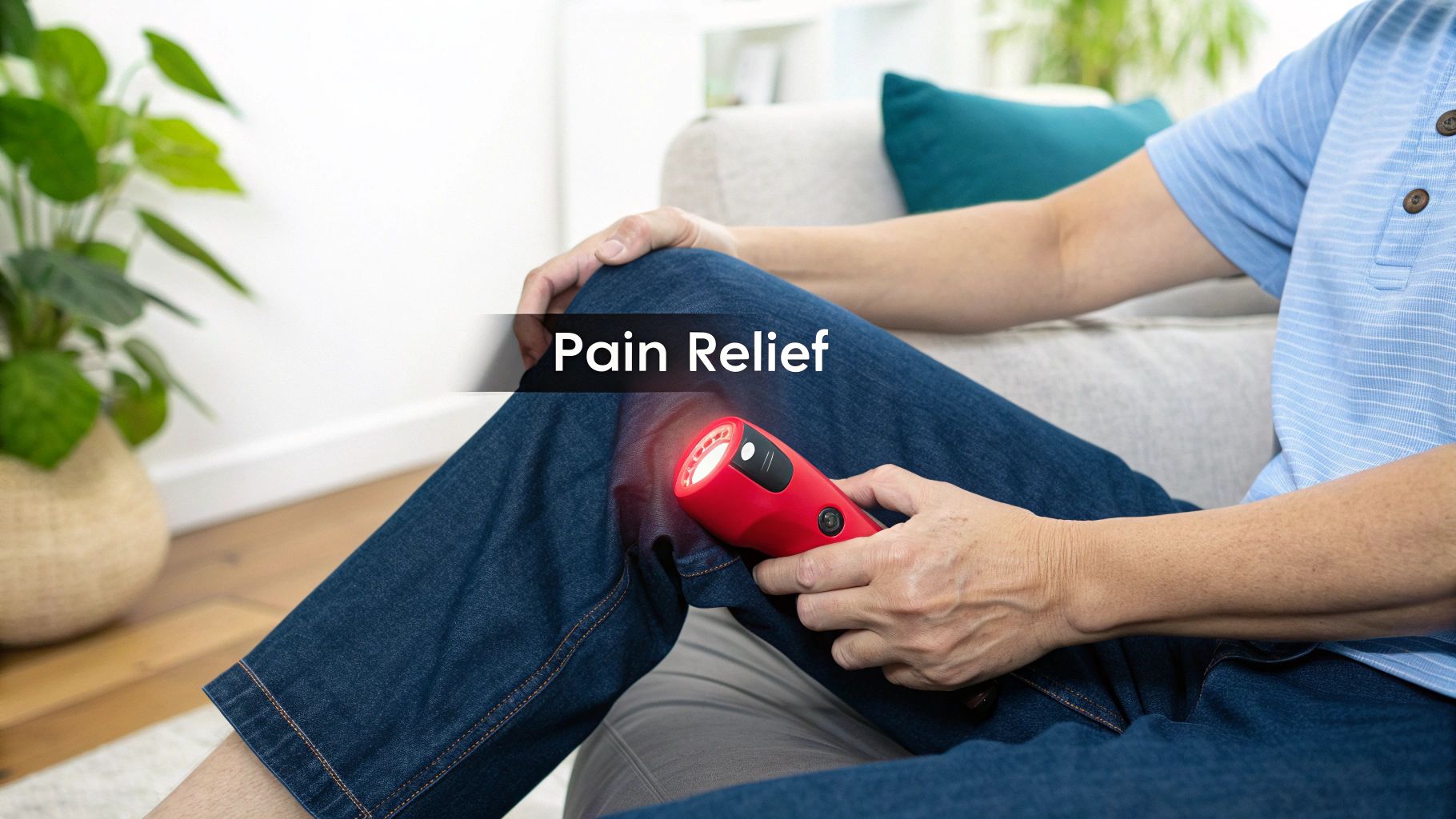
- Arthritic Knees: For someone with osteoarthritis, a daily 15-minute session focused on the knee can help dial back the localized inflammation and stiffness that make every step a chore. Over time, that often means better flexibility and less need for pain medication.
- Lower Back Pain: Whether it’s from a muscle strain or disc issues, that constant ache in your lower back almost always involves inflammation. Using a larger red light panel to cover the entire area can drive blood flow deep into the muscles, easing spasms and kickstarting healing.
- Fibromyalgia: Since fibromyalgia creates widespread pain, full-body red light therapy beds can offer systemic relief. By treating multiple tender points at once, they can help calm the nervous system and lower overall pain perception.
- Post-Surgical Healing: Applying red light therapy around an area recovering from surgery can be incredibly helpful. It helps manage post-op pain and swelling while speeding up the healing of both the incision and the underlying tissues.
By offering a gentle but effective tool for managing pain and inflammation, red light therapy gives people more control over their own wellness. For more practical health solutions, check out the insights on the MedEq Wellness Journal.
How to Choose the Right Red Light Therapy Device
So, you're ready to bring the power of red light therapy home. That’s a fantastic move for your personal wellness. But stepping into the world of personal devices can feel like learning a new language, with all the technical specs and marketing claims flying around.
Let's cut through that noise. This guide will walk you through exactly what to look for, so you can make a smart, confident investment in a device that actually works for your specific goals.
What Really Matters: The Core Tech Specs
Forget the flashy marketing for a moment. The effectiveness of any red light therapy device boils down to two critical numbers: wavelength and power density. Get these right, and you’re on your way to real results.
-
Wavelength (in nanometers, or nm): This is simply the color of the light, which determines how deep it can travel into your body's tissues. Think of it like this: different wavelengths have different jobs.
- Red Light (around 630-660 nm): This is your go-to for skin health. It works closer to the surface, making it perfect for boosting collagen, smoothing out fine lines, and evening your skin tone.
- Near-Infrared (NIR) Light (around 810-850 nm): These wavelengths are invisible and penetrate much deeper. They can reach muscles, joints, connective tissues, and even bone. This is the range you need for muscle recovery, joint pain relief, and tackling deep inflammation.
-
Power Density (in mW/cm²): Also called irradiance, this number tells you how much energy the light is actually delivering to your skin. A powerful device gets the job done faster.
A device can have the perfect wavelength, but if the power is too low, you’ll be sitting there forever without getting a therapeutic dose. For effective sessions, look for a device that delivers at least 100 mW/cm² from the recommended treatment distance.
Targeted Panels vs. Full-Body Systems
With the tech specs down, your next choice is about size and coverage. This decision really hinges on your goals, your space, and your budget. Are you targeting a nagging knee injury, or are you looking for a full-body wellness boost?
Some advanced systems, like the VitalGlow Professional 360 Multi-Spectrum Red Light Therapy System, are designed to deliver systemic benefits from head to toe. But for most users, the choice comes down to a panel versus a full-sized clinical bed.
Here’s a simple breakdown to help you decide.
Home Panels vs. Clinical Beds Comparison
| Feature | At-Home RLT Panels | Clinical RLT Beds |
|---|---|---|
| Coverage Area | Targeted—perfect for the face, a specific joint, or a muscle group. | Full-body, systemic coverage in one session. |
| Primary Use Case | Great for skin health, localized pain relief, and targeted recovery. | Best for overall wellness, chronic conditions, and peak athletic performance. |
| Session Time | Typically 10-20 minutes for each area you treat. | A single 10-20 minute session covers the entire body. |
| Cost | Far more affordable and accessible for personal, in-home use. | A significant investment, usually found in professional clinics. |
| Space Required | Very compact. Most can be hung on a door or set up on a stand. | Requires a dedicated room or a large, open space. |
For most people just starting their red light therapy journey, a high-quality targeted or half-body panel is the sweet spot. It gives you the power and precision to address specific issues—like facial skin or a sore shoulder—without a huge initial investment or the need for a dedicated room.
As your wellness goals evolve, larger systems might make more sense. The key is to start with a device that fits your life and needs right now. For more guidance, explore the MedEq Wellness Journal.
Your Red Light Therapy Questions, Answered
https://www.youtube.com/embed/ee4GsKxSstk
Diving into red light therapy always brings up a few questions. As you think about adding this to your wellness routine, it's completely normal to want clear, straight-up answers.
This final section is all about tackling the most common questions we hear. The goal is to get you started on your journey with total confidence, knowing exactly what to expect.
Is Red Light Therapy Safe for Everyone?
For the vast majority of people, the answer is a resounding yes. Red light therapy is incredibly safe and well-tolerated. It's nothing like the ultraviolet (UV) light from the sun or tanning beds—it doesn't damage skin or carry a risk of cancer. Devices cleared for home use are designed to deliver targeted light without any nasty side effects.
That said, there are a few situations where you'll want to be cautious. It's always a good idea to check in with a healthcare professional before starting something new, especially if you have an underlying health condition.
Here are the main things to keep in mind:
- Pregnancy: There just isn’t enough research on how RLT affects pregnancy, so it’s generally recommended to hold off.
- Active Cancer: While the science is still developing, it’s best to avoid using RLT directly over any active cancerous lesions.
- Photosensitivity: If you’re on medications that make your skin sensitive to light (like certain antibiotics or acne treatments), RLT could potentially trigger a skin reaction.
How Long Does It Take to See Results?
This is the big one, and the honest answer is: it really depends on your goal. Red light therapy isn't a magic bullet; it works by giving your body’s natural healing and regeneration cycles a major boost. Your best friends here are patience and consistency.
The timeline for seeing results changes based on what you're trying to achieve.
Think of it like watering a plant. You don't see it sprout overnight, but with consistent watering, it grows strong over weeks and months. RLT provides that same consistent "energy" your cells need to repair and rejuvenate.
For surface-level goals like better skin, you might notice an improved tone and texture in as little as four to six weeks.
For deeper work, like reducing fine lines or speeding up workout recovery, a more realistic window is eight to twelve weeks of consistent use. Chronic pain often follows a similar path, with gradual improvements as inflammation calms down and tissues heal from the inside out.
Can I Use Red Light Therapy Every Day?
Getting your treatment schedule right is the key to unlocking the best health benefits. While daily sessions can be great for some goals, it’s not always necessary. Sometimes, less is more. Your body needs time to actually use that cellular energy boost to do its repair work.
Here’s a general guide to help you dial in your schedule:
- For Skin Health: A daily session of 10-15 minutes is a sweet spot for boosting collagen and getting that glow.
- For Workout Recovery & Pain Relief: Daily use can be a game-changer, especially after intense training or when pain flares up. A 15-20 minute session aimed at the target muscle or joint is perfect.
- For General Wellness: To support your overall health and energy, 3-5 sessions per week is usually more than enough to keep your cells firing on all cylinders.
Ultimately, you have to listen to your body. The goal is to give it a steady, therapeutic dose that supports healing without ever overwhelming the system.
For a deeper dive and to continue your wellness education, check out the guides and articles on the MedEq Wellness Journal.
At MedEq Fitness, we are dedicated to providing science-backed wellness equipment to help you hit your peak performance and recovery goals. Discover our curated selection of professional-grade red light therapy devices and other recovery tools built to elevate your daily capacity.


