

Your Guide to a Hyperbaric Chamber for Home Use
A hyperbaric chamber for home use is essentially a personal wellness pod designed to flood your body with one of nature's most powerful healing agents: oxygen. By combining mildly increased air pressure with concentrated oxygen, it allows your system to absorb far more O2 than you could ever get from just breathing. The goal? To supercharge your natural recovery processes and enhance your overall well-being right from the comfort of home.
The Rise of At-Home Hyperbaric Oxygen Therapy
Not long ago, hyperbaric oxygen therapy (HBOT) was something you’d only find in hospitals or specialized clinics, mainly for treating serious medical issues. But that’s all changed. What was once complex, clinical-grade hardware has now found its way into the mainstream wellness world, becoming a sought-after tool for elite athletes, biohackers, and anyone serious about optimizing their health and recovery.
The core concept is surprisingly simple, yet incredibly powerful. Think of your circulatory system as a delivery route. Normally, oxygen hitches a ride inside your red blood cells. But inside a hyperbaric chamber, the increased pressure literally dissolves extra oxygen directly into your blood plasma—the liquid part of your blood.
This “super-oxygenated” plasma can squeeze into places that red blood cells might struggle to reach, delivering a potent dose of healing power directly to tissues that need it most.
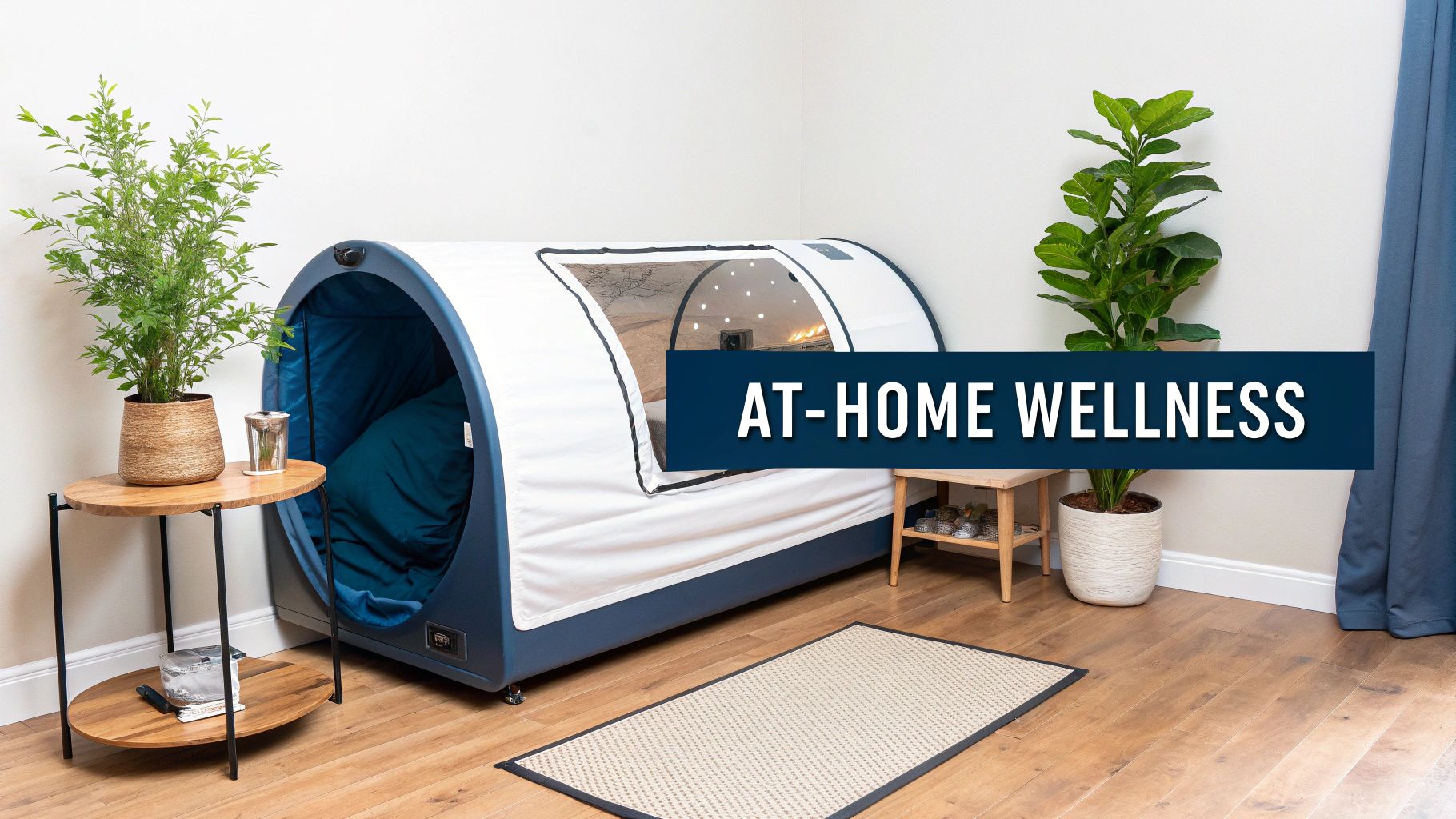
Why Is Home HBOT Becoming So Popular?
The real draw of having a hyperbaric chamber for home use comes down to convenience and a modern focus on proactive wellness. Forget scheduling appointments and traveling to a clinic. Now, you can integrate powerful recovery sessions right into your daily routine—maybe right after a tough workout or just before bed to enhance your sleep.
This isn't just a niche trend; the market reflects this shift. Technology has made these chambers smaller, safer, and more affordable than ever, empowering individuals to take a hands-on approach to their health.
At its heart, bringing hyperbaric therapy home is about taking full control of your recovery and wellness. It's a direct investment in your body's innate ability to heal, giving you a powerful edge in both physical and mental performance.
So, why are people bringing this tech into their homes? Here’s a quick look at the main wellness-focused reasons.
Why Invest in a Home Hyperbaric Chamber
This table summarizes the primary health and wellness benefits driving people to purchase a home hyperbaric chamber.
| Benefit Category | Key Advantage |
|---|---|
| Accelerated Recovery | Athletes can bounce back from intense training faster, reducing muscle soreness and repairing tissue damage more quickly. |
| Enhanced Wellness | Users often report a significant boost in energy, sharper mental clarity, and deeper, more restorative sleep. |
| Convenience & Control | You can use it on your own schedule, eliminating the time and cost of clinic visits for consistent therapy. |
| Support for Healing | Creates an optimal internal environment for the body to repair itself, complementing other wellness practices. |
These advantages make a home chamber a compelling tool for anyone looking to go beyond surface-level wellness.
To really appreciate what these chambers can do, it helps to understand the basics. We break down the science in our detailed guide on what hyperbaric oxygen therapy is. And for more expert-driven content on optimizing your health, be sure to explore the MedEq Wellness Journal.
How Hyperbaric Chambers Boost Your Health and Recovery
You don’t need a degree in physiology to grasp how a hyperbaric chamber for home use works. The science is actually pretty straightforward. Think of your bloodstream as a highway and oxygen as the vital cargo every single cell in your body is waiting on to function, heal, and create energy.
Normally, this delivery system does a decent job, but it has its limits. Oxygen is mostly carried by red blood cells, and that highway can get congested. Hyperbaric Oxygen Therapy (HBOT) is like opening up a brand-new express lane. Inside a pressurized chamber, your lungs can absorb far more oxygen than they ever could at normal atmospheric pressure.
This super-saturated oxygen doesn't just hitch a ride with red blood cells anymore. It dissolves directly into your blood plasma, which allows it to flow freely and reach every corner of your body—especially areas that are starved for oxygen due to injury, inflammation, or just plain fatigue.
Supercharging Workout Recovery and Healing
The real magic happens when this extra oxygen gets to work. It’s like giving your body's internal repair crew a major upgrade, arming them with everything they need to work faster and more efficiently.
This has a massive impact on workout recovery. After a tough session, your muscles are riddled with micro-tears. The flood of oxygen from an HBOT session dials down the inflammation that causes soreness and provides the raw fuel your cells need to rebuild. You bounce back faster and can get back to training sooner. For a deeper dive on this, check out our guide to hyperbaric chamber benefits for athletes.
Think of it like this: the pressurized environment flips a biological switch, shifting your body from a state of stress and breakdown into one of high-speed repair and rejuvenation.
But the benefits go way beyond just muscle soreness. The same principle of enhanced oxygenation supports a whole host of wellness goals.
A Spectrum of Wellness Benefits
While athletic performance is what brings many people to hyperbaric therapy, the overall wellness advantages are just as powerful. Users often report a domino effect of positive changes that enhance their quality of life.
- Reduced Systemic Inflammation: Chronic inflammation is the enemy of long-term health. HBOT helps constrict blood vessels and reduce swelling, calming down an overactive inflammatory response that can cause pain.
- Enhanced Mental Clarity: Your brain is an oxygen hog, using about 20% of your body's total supply. Saturating it with more oxygen can lead to sharper focus, better concentration, and that feeling of being "switched on."
- Improved Sleep Quality: Many people find that regular sessions get their sleep cycle back on track. By lowering physical stress and promoting a sense of calm, HBOT can help you get the kind of deep, restorative sleep that actually leaves you feeling rested.
- Boosted Skin Health: Oxygen is a key ingredient for producing collagen, the protein that keeps skin firm and healthy. Better oxygen flow supports skin cell regeneration, contributing to a more vibrant complexion.
Together, these health benefits build a strong foundation for your overall well-being, making a chamber a true cornerstone of any serious wellness routine.
Complementing Your Wellness Stack with Contrast Therapy
A hyperbaric chamber is powerful on its own, but it plays incredibly well with other recovery tools. It's a key part of what we call a wellness "stack," where you combine modalities to get an even greater effect. One of the best pairings is with contrast therapy—alternating between a sauna and a cold plunge.
Here's how that one-two punch works:
- Contrast Therapy: First, you use the hot and cold to create a vascular "pump." The rapid expansion and contraction of your blood vessels flushes out metabolic waste and inflammation from your tissues.
- Hyperbaric Oxygen Therapy: Then, you follow it up with an HBOT session. You're taking that freshly cleansed system and flooding it with pure, healing oxygen, delivering it right where it's needed most for repair.
You clear out the garbage, then deliver the good stuff. It makes each therapy far more effective than it would be alone. By stacking these practices, you create a seriously efficient system for optimizing both your workout recovery and your general wellness.
Choosing Your Chamber: Soft Shell vs. Hard Shell Models
When you start looking into at-home hyperbaric therapy, you'll quickly see that not all chambers are created equal. The first big decision is whether to go with a soft-shell or a hard-shell model. This choice is fundamental—it dictates everything from the pressure levels you can reach to the total cost, so getting a handle on the differences is your first step.
Think of it like choosing a vehicle. A soft-shell chamber is like a reliable daily driver, perfect for boosting general wellness and maintaining your health. A hard-shell chamber, on the other hand, is more like a high-performance SUV—built for more demanding therapeutic goals and capable of reaching much higher specs.
The biggest difference comes down to the operating pressure, which we measure in atmospheres absolute (ATA). This one factor really defines what the chamber is best used for.
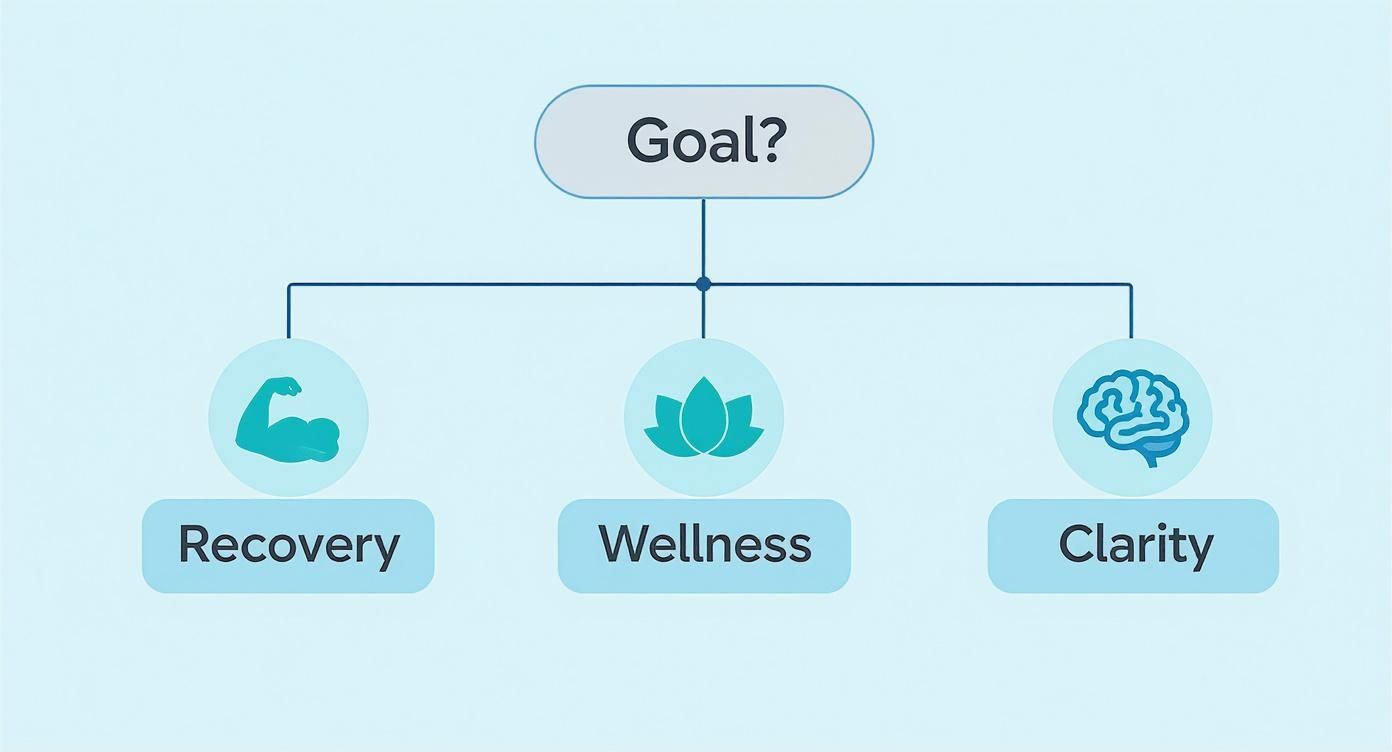
As you can see, figuring out your primary goal—whether it's speeding up workout recovery, promoting overall wellness, or sharpening your mental clarity—is the best way to start narrowing down your options.
The Accessible Choice: Soft Shell Chambers
Soft-shell chambers are what most people picture when they think of a hyperbaric chamber for home use, and for good reason. They're made from durable yet flexible materials, kind of like a high-tech inflatable, which is why they're often called "mild hyperbaric" or mHBOT chambers.
These units are designed to be portable, relatively affordable, and easy to set up right in your home. Most soft-shell models operate at pressures between 1.3 ATA and 1.5 ATA. This gentler pressure is fantastic for general wellness goals like reducing inflammation, accelerating post-workout recovery, and even improving sleep quality.
- Best for: General wellness, athletic recovery, better sleep, and enhanced mental focus.
- Construction: Typically made from reinforced, medical-grade TPU or similar durable fabrics.
- Cost: The more budget-friendly option, making them a great entry point into home HBOT.
Their accessibility and wellness focus make soft chambers a go-to for athletes and health enthusiasts looking for a consistent edge. For example, our TimeCapsule Air 1.5 Soft Capsule is a really popular choice for people chasing those exact benefits.
But if you have more intensive needs, you'll probably want to look at a more powerful option.
The Powerful Option: Hard Shell Chambers
Hard-shell chambers are the kind you'd traditionally find in a clinic, but today's advanced models are built with home use in mind. Constructed from tough materials like steel and acrylic, these rigid chambers can safely handle much higher pressures—often reaching up to 2.0 ATA and beyond.
That higher pressure capability allows for a much greater saturation of oxygen in the body. This makes hard-shell chambers suitable for more specific, FDA-recognized therapeutic uses, like helping to heal stubborn wounds. They're a bigger investment, no doubt, but what you get in return is clinical-grade performance.
- Best for: Addressing specific health conditions, intensive therapeutic protocols, and achieving clinical-grade results.
- Construction: Made from rigid steel and acrylic, ensuring long-term durability and the ability to tolerate high pressures.
- Cost: A higher-tier investment reflecting their robust build and advanced capabilities.
Soft Shell vs Hard Shell Chamber Comparison
To help you decide which type of home hyperbaric chamber best fits your needs, here's a side-by-side look at the key differences.
| Feature | Soft Shell Chamber (mHBOT) | Hard Shell Chamber (HBOT) |
|---|---|---|
| Pressure Range | Mild pressure, typically 1.3–1.5 ATA | Higher pressure, often 1.5–2.0+ ATA |
| Primary Use | General wellness, athletic recovery, sleep, focus | Specific therapeutic protocols, clinical-grade applications |
| Construction | Flexible, medical-grade TPU or nylon | Rigid steel and acrylic |
| Portability | Portable and easy to set up/break down | Stationary, requires a dedicated space |
| Cost | More affordable, lower initial investment | Higher-end investment for advanced performance |
| Oxygen Delivery | Typically uses an oxygen concentrator (up to 96% O2) | Can use a concentrator or medical-grade oxygen tanks (100% O2) |
Ultimately, choosing between a soft-shell and a hard-shell chamber comes down to aligning the machine's capabilities with your personal health ambitions. One is perfect for proactive wellness, while the other offers a more powerful, targeted approach.
For detailed information on choosing the best hyperbaric chamber for your home review our hyperbaric chamber buyer's guide.
Critical Factors to Consider Before You Buy
Once you’ve settled on a soft or hard-shell chamber, it's time to get into the details. Picking the right hyperbaric chamber for home use is a major investment in your health, and the small things can make a huge difference. This is your essential checklist for making a smart, confident decision.
First thing's first: where are you going to put it? Measure your space, and don't forget to account for the support equipment like the compressor and oxygen concentrator. You'll need to check ceiling height and the width of your doorways to make sure you can even get it in the room.
Then, think about the interior. Are you going to be comfortable? If you're on the taller side, you’ll want a chamber with extra length. If you plan on sitting up to read or work, a wider diameter is a must.
Oxygen Delivery System
The heart of any hyperbaric setup is the oxygen delivery system. This component is what drives the effectiveness of your sessions, so it’s a critical choice. For home use, you're looking at two main options.
- Oxygen Concentrators: This is the go-to for almost all home setups. The machine simply pulls in regular air from the room, filters out the nitrogen, and sends a continuous flow of highly concentrated oxygen—typically up to 96% pure—into the chamber. It's a safe, self-contained system with no tanks to refill.
- Tanked Oxygen: While this delivers 100% pure medical-grade oxygen, it’s much less practical for home wellness. You're dealing with heavy tanks, constant refills from a medical supplier, and much stricter safety protocols. A high-quality concentrator is more than enough for most applications.
For the vast majority of users, an oxygen concentrator hits the perfect balance of performance, safety, and convenience.
Material Quality and Safety Certifications
The materials used to build a chamber are directly linked to its safety and durability. Don't just skim the spec sheet on this. For soft-shell chambers, look for medical-grade thermoplastic polyurethane (TPU). This stuff is incredibly strong, nontoxic, and built to handle repeated pressurization.
Safety certifications are just as important. A reputable manufacturer will have their equipment validated by a third party. You want to see certifications confirming the chamber's structural integrity, the electrical safety of its parts, and that the materials are non-toxic.
A well-built chamber isn't just about lasting a long time—it's about your peace of mind. Investing in a unit with proven materials and certifications ensures every session is both effective and safe.
Compressor Noise and Overall Comfort
Your time in the chamber should be restorative, not irritating. The noise from the air compressor can make or break the experience. Look for models that are specifically designed for quiet operation, usually measured in decibels (dB). A quieter compressor lets you meditate, listen to music, or just zone out without a constant drone in the background.
Also, consider the little things. Window placement, the quality of the interior mat, and how easily you can seal the chamber from the inside all add up. These details make a huge difference in your day-to-day use.
Warranty and Customer Support
Finally, never overlook the warranty and customer support. A manufacturer’s warranty tells you how much they stand behind their own product. You should be looking for comprehensive coverage for at least one to three years.
And before you pull the trigger, check out their support. Can you actually call someone in the U.S. if you have a problem? Is their team available when you are? Solid support is invaluable for setup, troubleshooting, and any maintenance questions that pop up. For more expert insights on wellness technology, see what we're covering on the MedEq Wellness Journal.
Safety Protocols for Using Your Chamber at Home
Bringing a hyperbaric chamber into your home is a serious commitment to your health and recovery. But just like any powerful tool, knowing how to use it safely is paramount. When you follow the right procedures, home hyperbaric therapy is an incredibly secure and effective practice. Think of safety as the foundation that makes all the health benefits possible.
The most critical part of any session is managing the pressure change. You have to go slow. A controlled, gradual pressurization and depressurization is key. It's just like the feeling you get when a plane takes off or lands—you need to give your body, especially your ears, time to acclimate to prevent any discomfort or barotrauma. Simple tricks like yawning, swallowing, or gently pinching your nose and blowing can help equalize that pressure.
Pre-Session Safety Checklist
Before you even think about getting inside, running through a quick mental checklist will head off most common issues. These aren't just suggestions; they are essential steps for a safe and effective session.
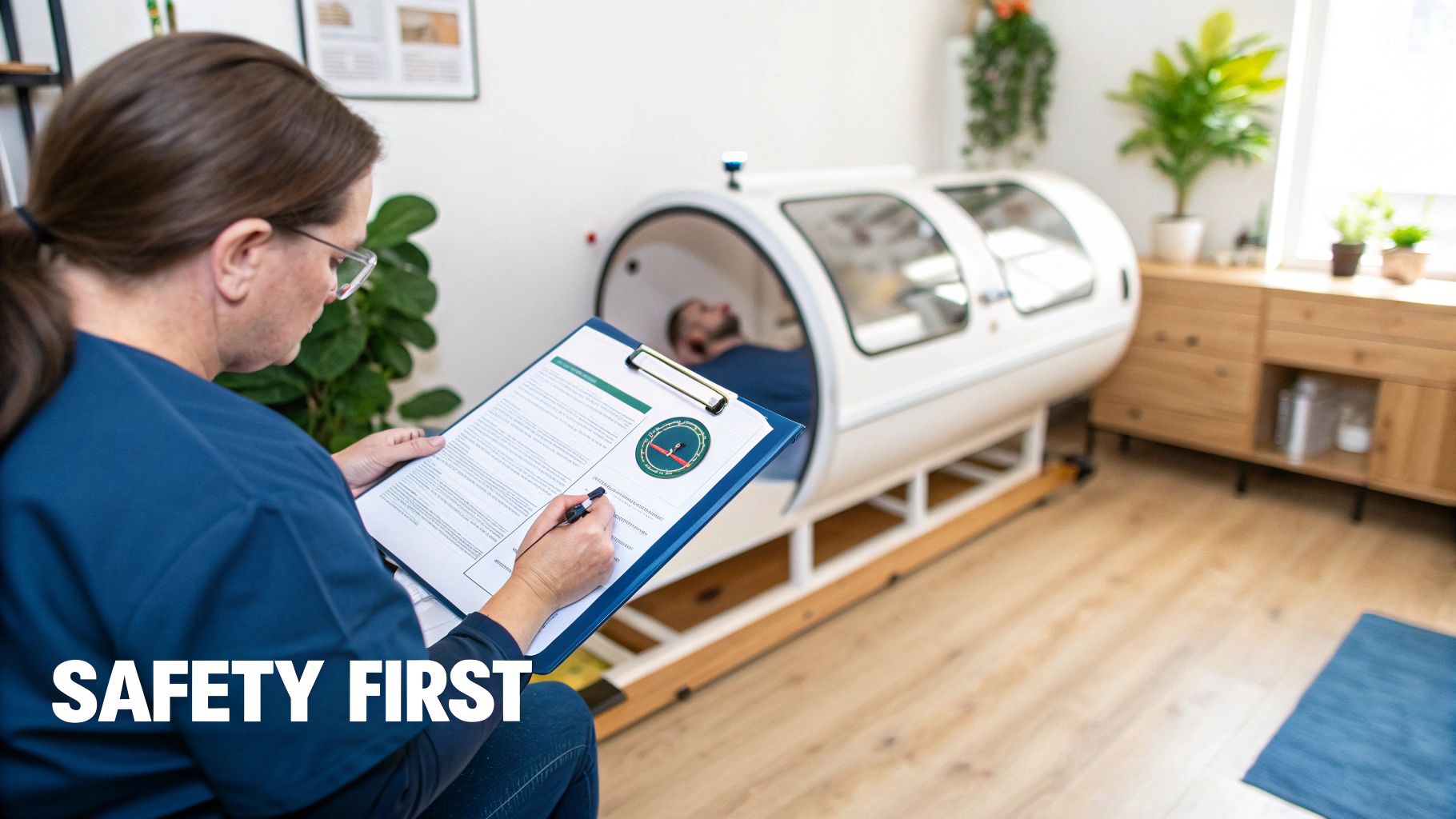
- Consult Your Doctor: This one is non-negotiable. Always discuss starting HBOT with a healthcare professional who understands your specific health profile. They can give you the green light and confirm it’s a safe choice for you.
- Know the Contraindications: Hyperbaric therapy isn't for everyone. Certain conditions, like specific lung issues, a collapsed lung (pneumothorax), or recent ear surgery, are absolute contraindications. Your doctor will have the full list.
- Choose Certified Equipment: Never, ever cut corners here. A professionally manufactured chamber will have the safety certifications to prove it can handle the pressure safely. DIY or uncertified units are a massive risk.
What to Bring Inside and What to Leave Out
The oxygen-rich environment inside the chamber means you have to be mindful of what you bring in with you. It’s all about creating a secure, neutral space for your therapy.
For starters, your clothing matters. Stick with clean, 100% cotton garments. Synthetics like nylon can create static electricity—something you definitely want to avoid. It’s also best practice to remove all jewelry, watches, and even hair products before a session.
Think of your chamber as a tech-free zone for relaxation and recovery. Simplicity is key to safety. The goal is to create a neutral environment free of potential hazards.
There are also items that should never enter the chamber. The list is short but strict:
- Electronics of any kind—phones, tablets, laptops.
- Flammable items like lighters, matches, or even hand warmers.
- Oil-based skincare products or anything with petroleum jelly.
This is where the design of mono-place chambers really shines. Built for a single user, they are perfectly suited for home safety protocols and make up over 61% of the market share for a reason. Their compact, efficient design simplifies the process of managing a safe, pressurized oxygen environment. You can dig into the numbers and trends in this market report from Future Market Insights.
Sticking to these guidelines ensures your hyperbaric chamber for home use remains a powerful asset for your wellness. For more insights on building a safe and effective home recovery routine, check out the MedEq Wellness Journal.
Common Questions About At-Home Hyperbaric Therapy
Thinking about adding a hyperbaric chamber to your home wellness setup? It's a big step, and you probably have a few questions. Let's get them answered so you know exactly what to expect.
How Long Should a Typical Session Last?
For most recovery and wellness goals, a session in a home chamber will run between 60 and 90 minutes. That's the sweet spot for your body to really soak up the oxygen and get those healing processes humming.
Athletes often find a 90-minute dive after a hard workout is perfect for speeding up muscle repair and cutting down on soreness. For general wellness goals like better energy or deeper sleep, a routine of 3-5 sessions a week usually provides significant health benefits. It's often best to start with 60-minute sessions to let your body adjust, then increase the time as you feel comfortable.
What’s It Actually Like Inside?
Most people are surprised by how relaxing it is. As the chamber pressurizes, you'll feel a bit of fullness in your ears—just like you'd feel on an airplane taking off or landing.
You can easily clear this pressure by yawning, swallowing, or pinching your nose and gently blowing. Once the chamber hits its target pressure, that feeling vanishes. All you're left with is the gentle hum of the equipment, which creates a quiet space to meditate, read, or just rest.
It’s a great opportunity to disconnect and focus completely on your body and mind for optimal wellness.
Do I Need a Prescription to Buy One?
This really comes down to the type of chamber. Mild hyperbaric chambers (mHBOT), the kind that operate at lower pressures like 1.3 to 1.5 ATA, are usually sold as wellness devices and don't require a prescription.
On the other hand, hard-shell chambers that can reach higher, medical-grade pressures closer to 2.0 ATA almost always need a doctor's sign-off. They're in a different class because of their power. Always double-check the requirements with the manufacturer and, more importantly, talk to your doctor to make sure a hyperbaric chamber for home use is the right move for your health goals.
For more deep dives into wellness tech, head over to the MedEq Wellness Journal.


