Red Light Therapy for Athletes: The Ultimate Wellness Guide for Peak Performance and Recovery
For anyone serious about their performance—from professional athletes to dedicated weekend warriors—the real gains are often made after the workout is over. True progress hinges on how well you recover. This is where red light therapy enters the picture, offering a way to supercharge your body's natural repair processes right at the cellular level for enhanced wellness.
It’s not just about soothing sore muscles; it's a science-backed method for accelerating healing, reducing downtime, and ultimately, amplifying the results of your hard work. By focusing on your body's health, you unlock new levels of performance.
Unlocking Your Athletic Potential with Red Light Therapy
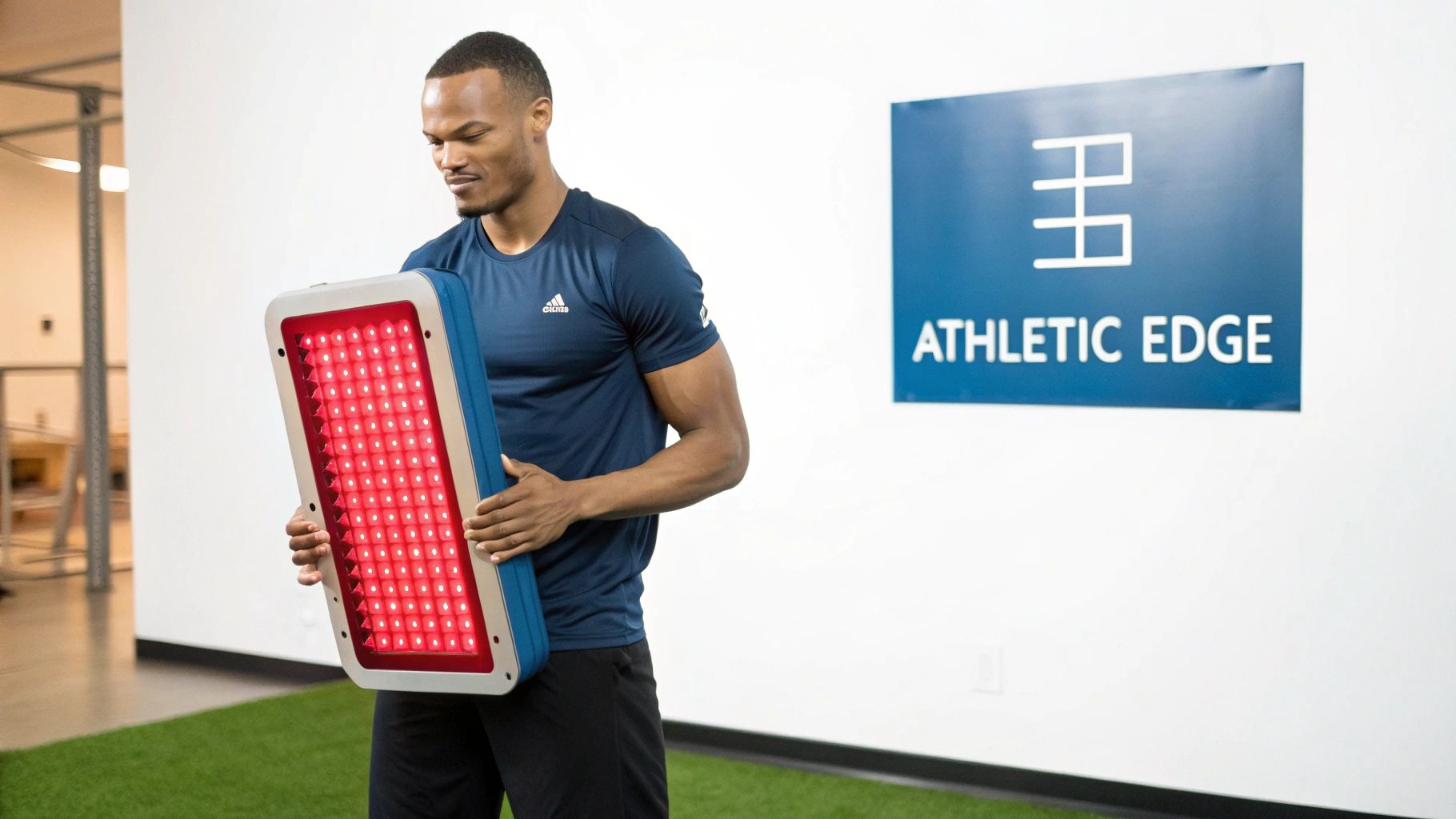
In high-level sports, the difference between first and second place can be measured in fractions of a second. Athletes are always searching for that safe, effective wellness edge that helps them train harder and bounce back faster. That's why red light therapy, also known as photobiomodulation, has become such a staple in modern sports medicine.
Instead of just masking pain, red light therapy gets to the root cause of workout recovery. It uses specific, targeted wavelengths of red and near-infrared light that penetrate deep into your tissues to energize your cellular powerhouses: the mitochondria. You can think of it as a direct charge-up for your cells, enabling them to repair damaged tissue, fight inflammation, and simply function better.
A Foundation for Peak Performance and Health
We're going to break down how red light therapy can become a non-negotiable part of your training and wellness strategy. This guide covers the health benefits that truly matter for athletes, showing you how to sync this technology with your training and recovery cycles for maximum impact.
Here's what we'll get into:
- Accelerated Muscle Repair: Learn how to significantly reduce that dreaded delayed-onset muscle soreness (DOMS) and get back to your next session feeling stronger and healthier.
- Enhanced Performance Output: Discover the science behind using red light therapy before a workout to boost your endurance, power, and overall capacity.
- Actionable Protocols: We'll give you clear, evidence-based guidelines for using your device, whether you're pre-conditioning for a big event or focusing on workout recovery.
- Holistic Wellness Integration: Find out how to "stack" red light therapy with other wellness tools like contrast therapy (hot/cold plunges) to create a powerful, synergistic effect.
Red light therapy is increasingly popular for improving muscle performance, boosting endurance, and shortening recovery times. Research suggests it helps lower the levels of enzymes associated with muscle damage and soreness after intense physical activity, promoting better overall health.
Ultimately, using red light therapy for athletes is about building a more resilient, powerful body from the inside out. By giving your cells the energy they need to thrive, you lay the groundwork for consistent, long-term athletic success. For more deep dives into advanced wellness strategies, be sure to check out the MedEq Wellness Journal.
How Red Light Fuels Cellular Recovery
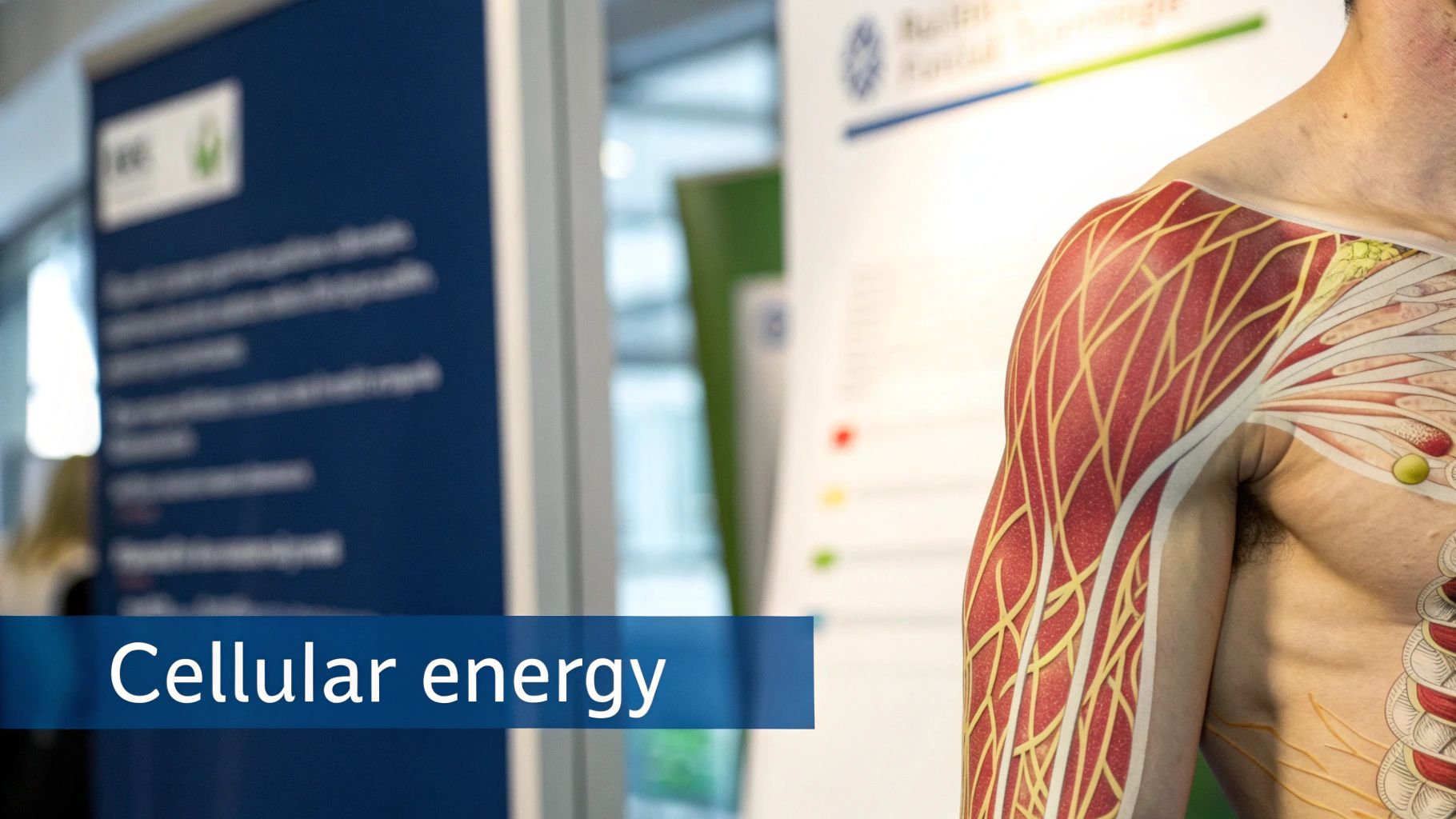
To really get why red light therapy is such a game-changer for athletes, we have to zoom in—way in. Down to the cellular level. This is the foundation of workout recovery and long-term wellness.
Imagine your body is made of trillions of tiny engines. These are your cells, and they all run on a single type of fuel: a molecule called adenosine triphosphate (ATP). ATP is the universal energy currency for literally everything you do, from contracting a bicep to repairing a strained muscle.
When you go all out in a workout, you’re putting a massive strain on those little engines. This stress is what causes muscle damage, inflammation, and that familiar feeling of fatigue. The faster your body can churn out more ATP, the faster it can get to work on repairs, helping you bounce back stronger and with less nagging soreness.
This is precisely where red light therapy steps in.
Powering Up Your Cellular Engines
The real magic happens inside the mitochondria, often called the "powerhouses" of our cells. They are the specific organelles tasked with producing all that critical ATP. What researchers discovered is that red and near-infrared light can actually penetrate through the skin and are absorbed by special receptors right inside the mitochondria.
Think of it like giving a high-performance fuel additive to your cellular engines. The light energy essentially excites the mitochondria, kicking them into a higher gear and prompting them to produce ATP far more efficiently. This surge in available energy is the foundation for all the health benefits athletes are seeing.
A cell with plenty of energy just works better. For an athlete, that means:
- Faster Muscle Repair: Damaged muscle fibers get rebuilt more quickly.
- Reduced Inflammation: The body can manage the post-exercise inflammatory response much more effectively.
- Quicker Regeneration: Cells have the fuel they need to clear out metabolic waste and get back to business.
By directly boosting cellular energy, red light therapy isn't just masking symptoms like soreness. It’s giving your body the fundamental resources it needs to heal itself from the inside out. To really go deep on the science, check out our guide on how red light therapy works at the biological level.
Combating Oxidative Stress and DOMS
Intense exercise naturally creates oxidative stress, which is just an imbalance between cell-damaging free radicals and the antioxidants that clean them up. A little bit of this stress is good—it signals the body to adapt and get stronger. But too much of it prolongs inflammation and leads to that dreaded delayed-onset muscle soreness (DOMS).
Red light therapy helps your cells put up a better fight. By revving up ATP production, it also supports the creation of natural antioxidants, which helps restore balance and protect cells from damage. The direct result? Less muscle soreness and a much shorter, more comfortable workout recovery window.
The core benefit of red light therapy for athletic recovery lies in its ability to enhance mitochondrial function. By increasing ATP production, it gives cells the energy they need to repair tissue, reduce inflammation, and combat the oxidative stress that follows a tough workout.
Study after study has confirmed its effectiveness in speeding up recovery. A landmark review found that photobiomodulation (the scientific term for red light therapy) gave athletes a significant edge over placebo in reducing muscle soreness just 24 hours after a workout. The data also showed most of the benefits kick in within the first 48 hours, which tells us that timing your sessions right after training is key to minimizing DOMS and maximizing your health benefits.
This is a big deal, especially when you consider that 43% of athletes suffer at least one injury per season, making effective recovery tools more important than ever. For more tips on recovery and wellness, visit the MedEq Wellness Journal.
Priming Your Muscles for Peak Performance
We talk a lot about using red light therapy for post-workout recovery, but what if you could get an edge before you even start your first set? This is where the game changes. Using red light before training shifts it from a recovery tool to a powerful performance primer.
Think of it as a biological warm-up. You're pre-conditioning your muscles for the work ahead, warming them up from the inside out. Red light gets the blood flowing, flooding your tissues with the oxygen and nutrients they’re about to demand. This "pre-charge" helps your muscles fire more efficiently right from the get-go.
By starting your workout with cells that are already running on all cylinders, you can push fatigue further down the road. More oxygen and more energy mean more reps in the gym or holding your pace longer on a run.
Enhancing Strength and Endurance
This isn't just theory—the performance gains are real. Athletes who build red light therapy into their warm-up often find they have more in the tank during their actual session.
It all comes back to that boost in cellular energy (ATP) we covered earlier. Priming the muscle fibers this way prepares them for powerful contractions. At the same time, better blood flow helps clear out metabolic waste during the workout, which is exactly what you need to fight off that mid-set muscle burn.
Starting with fully optimized cells creates the perfect environment for peak output. This translates into tangible health benefits you can see and feel:
- Increased Strength: The ability to move heavier weight or generate more explosive force.
- Greater Muscular Endurance: Squeezing out more reps before hitting failure.
- Delayed Fatigue: Pushing harder for longer during high-intensity efforts.
The idea is simple but incredibly effective: a muscle that’s well-supplied before it's stressed will perform better under stress. This pre-conditioning effect is a huge reason why so many elite athletes are making it a non-negotiable part of their wellness routine.
This strategy builds on itself. When you perform better in every single training session, you drive greater adaptation and progress over time. You’re not just recovering faster; you're setting yourself up for more productive work, which is the fast track to long-term athletic development.
The Science of Pre-Conditioning
The science is solid here. Pre-exercise red light therapy isn't just a biohack; it's a legitimate performance-enhancement strategy. Multiple studies have shown clear improvements in endurance, fatigue resistance, and overall training volume.
For instance, athletes treated with red light before exercise took significantly longer to hit the point of exhaustion during repetitive movements compared to those who didn't. The primary driver is that rush of oxygen and nutrients to the working muscles.
Research on light-emitting diode therapy (LEDT) found that athletes pre-conditioned with specific light energies cranked out more reps during their resistance training. One study even found that athletes using red light therapy on their quads before training experienced faster muscle growth than the control group. It's this dual benefit—boosting immediate performance while supporting long-term gains—that has made it so popular. You can dive deeper into the research on RLT for athletic performance to see how top-tier strength coaches are putting it into practice.
For more in-depth articles on optimizing your wellness and recovery, visit the MedEq Wellness Journal.
Actionable Red Light Therapy Protocols for Athletes
Knowing the science behind red light therapy is great, but getting results comes down to putting it into practice. To actually make this work for you as an athlete, you have to dial in the right settings for your specific goals. It’s not about just flipping a switch—it’s about applying the right dose of light, at the right time, to get the biological response you’re after.
The key variables you can control are wavelength, session duration, distance from the device, and timing. Your approach will change depending on whether you're trying to prime your muscles for a big lift or focusing on workout recovery. Nailing these details is what separates a so-so session from one that truly moves the needle on your performance and wellness.
Pre-Workout Protocol: Energize And Prepare
Before a workout, the entire goal is to enhance performance. You want to energize the muscles, fire up circulation, and get them ready for what’s ahead without making them too relaxed. This calls for a shorter, more intense session.
- Timing: Jump in front of the light for 5-10 minutes right before your warm-up.
- Wavelengths: A mix of red (630-660nm) for surface tissues and near-infrared (810-850nm) for deeper muscle penetration is the sweet spot.
- Duration: Keep it brief. Aim for about 5-10 minutes per major muscle group you're about to train.
- Distance: Get close, about 6-12 inches from the panel. This ensures you're getting a higher-intensity dose to effectively "charge up" your cells.
Think of this quick protocol as a catalyst. It pre-loads your muscles with cellular energy and boosts blood flow, helping to delay fatigue and improve your power output from the very first rep.
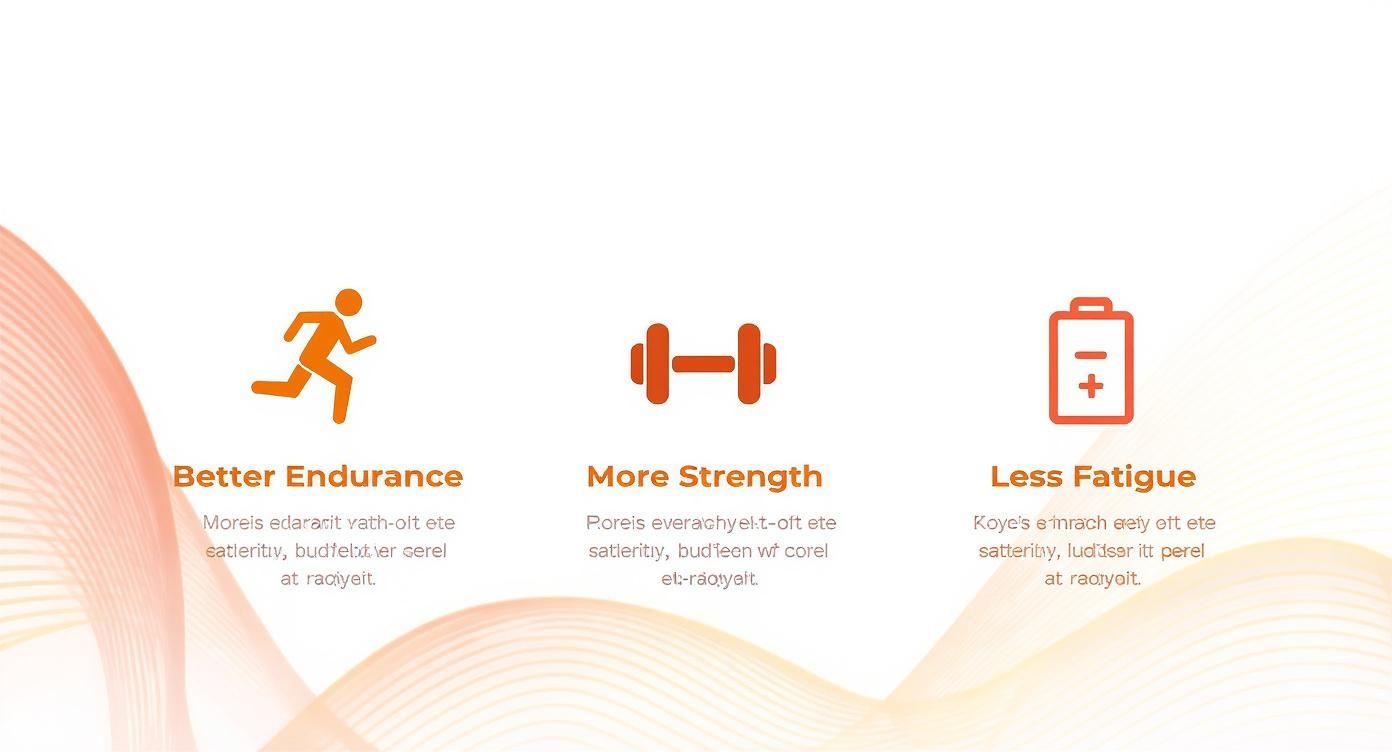
As you can see, a targeted pre-exercise session helps boost endurance, increase strength, and hold off fatigue so you can push harder.
Post-Workout Protocol: Recover And Repair
After you train, the mission completely flips to workout recovery. Now, you want to calm inflammation, clear out metabolic waste, and kickstart the muscle repair process. This calls for a longer, more systemic session designed to soothe the nervous system and promote deep healing and wellness.
For post-workout recovery, the focus is on delivering a sufficient dose of light energy to help manage inflammation and support cellular repair, which is why longer sessions covering larger areas of the body are more effective.
Here’s how to set up your post-workout protocol for the best results:
- Timing: The sooner, the better. Try to get your session in within 1-2 hours of finishing your cool-down.
- Wavelengths: Once again, a blend of red and near-infrared is king for reaching tissue at all depths.
- Duration: Go for a longer session of 10-20 minutes. You can focus on specific sore spots or treat large areas like your entire back or legs.
- Distance: You can back up a bit, standing 12-24 inches away. This allows the light to cover a wider area of your body and encourage more systemic benefits.
This approach is fantastic for cutting down on delayed-onset muscle soreness (DOMS) and speeding up your body's natural healing timeline. Figuring out the best timing for your unique routine can be a puzzle, which is why we created a detailed guide on whether you should use red light therapy before or after your workout.
Red Light Therapy Protocols for Athletes
To make things easy, here’s a quick-reference table you can use to guide your own sessions.
| Goal | Timing | Wavelengths (nm) | Typical Duration (mins) | Distance from Device | Key Health Benefit |
|---|---|---|---|---|---|
| Priming for Performance | 5-10 mins before workout | 630-660 & 810-850 | 5-10 | 6-12 inches | Increased power & endurance |
| Accelerating Recovery | Within 2 hours after workout | 630-660 & 810-850 | 10-20 | 12-24 inches | Reduced soreness & inflammation |
| General Wellness / Off Day | Anytime | 630-660 & 810-850 | 10-15 | 12-36 inches | Systemic health & repair |
Just remember that consistency is what really counts. Weaving these protocols into your daily training and recovery schedule is how you’ll see the health benefits compound over time, leading to better performance, faster recovery, and a more resilient body.
Stacking RLT with Other Recovery Methods
Red light therapy is a serious player in any athlete's recovery game, but its real magic happens when you start pairing it with other wellness practices. Think of it as the base layer of a "recovery stack"—each modality you add on top amplifies the effects of the others. When you get strategic about it, you create a synergistic effect that’s way more powerful than anything you could achieve with one method alone.
This approach builds a more resilient body because you’re targeting different physiological systems at once. While RLT is working at the cellular level to fire up ATP production, things like cold plunges or massage are tackling inflammation and muscle tension from completely different angles. Stack them together, and you get a comprehensive, full-body workout recovery.
RLT and Contrast Therapy: The Hot-Cold Synergy
One of the most potent stacks for athletes is combining red light with hot and cold therapies—what’s often called contrast therapy. This is the classic practice of alternating between something hot (like a sauna) and something cold (like an ice bath or cold plunge). This combination is a cornerstone of modern athletic wellness.
Using red light before a cold plunge is a game-changer. The light gets your circulation going and pre-warms the tissues, which can make that initial shock of the cold way more bearable. More importantly, it primes your body for a massive circulatory response.
On the flip side, hitting a red light session after the sauna can take your recovery even deeper. The heat has already opened up your pores and cranked up blood flow, so when you follow it with RLT, the light energy gets delivered much more efficiently into those warmed-up tissues. This means deeper cellular repair and a serious drop in inflammation.
Stacking RLT with contrast therapy creates a powerful cycle of circulation and repair. The heat and light enhance blood flow and cellular energy, while the cold constricts blood vessels to flush out metabolic waste and powerfully reduce inflammation.
There's a reason this combination is a cornerstone for elite athletes. You're actively training your circulatory system to be more efficient, which is a huge advantage for anyone looking to slash recovery time and build real resilience.
Amplifying Manual Therapies and Mobility Work
Red light therapy also pairs perfectly with hands-on recovery work. Using it right before a massage, stretch, or mobility session can make a night-and-day difference.
- Massage: Hitting sore muscles with RLT for about 10 minutes beforehand helps the tissue relax and eases some of that underlying inflammation. This lets your massage therapist get in deeper and work more effectively without fighting against tense muscles.
- Stretching & Mobility: When your muscles feel tight and locked up, a quick pre-session with red light can increase tissue pliability. This helps you move into a greater range of motion safely and cuts down the risk of strains.
And don't forget the foundation: nutrition. Proper hydration and nutrient intake are the raw materials your body needs for repair. Red light therapy is what enhances the cellular machinery that uses those materials, making sure all your nutritional efforts pay off. By integrating red light therapy for athletes into your wider wellness plan, you’re not just recovering—you’re building a smarter, more efficient system for peak performance.
To explore more ways to optimize your health, be sure to visit the MedEq Wellness Journal.
Choosing the Right Red Light Therapy Device
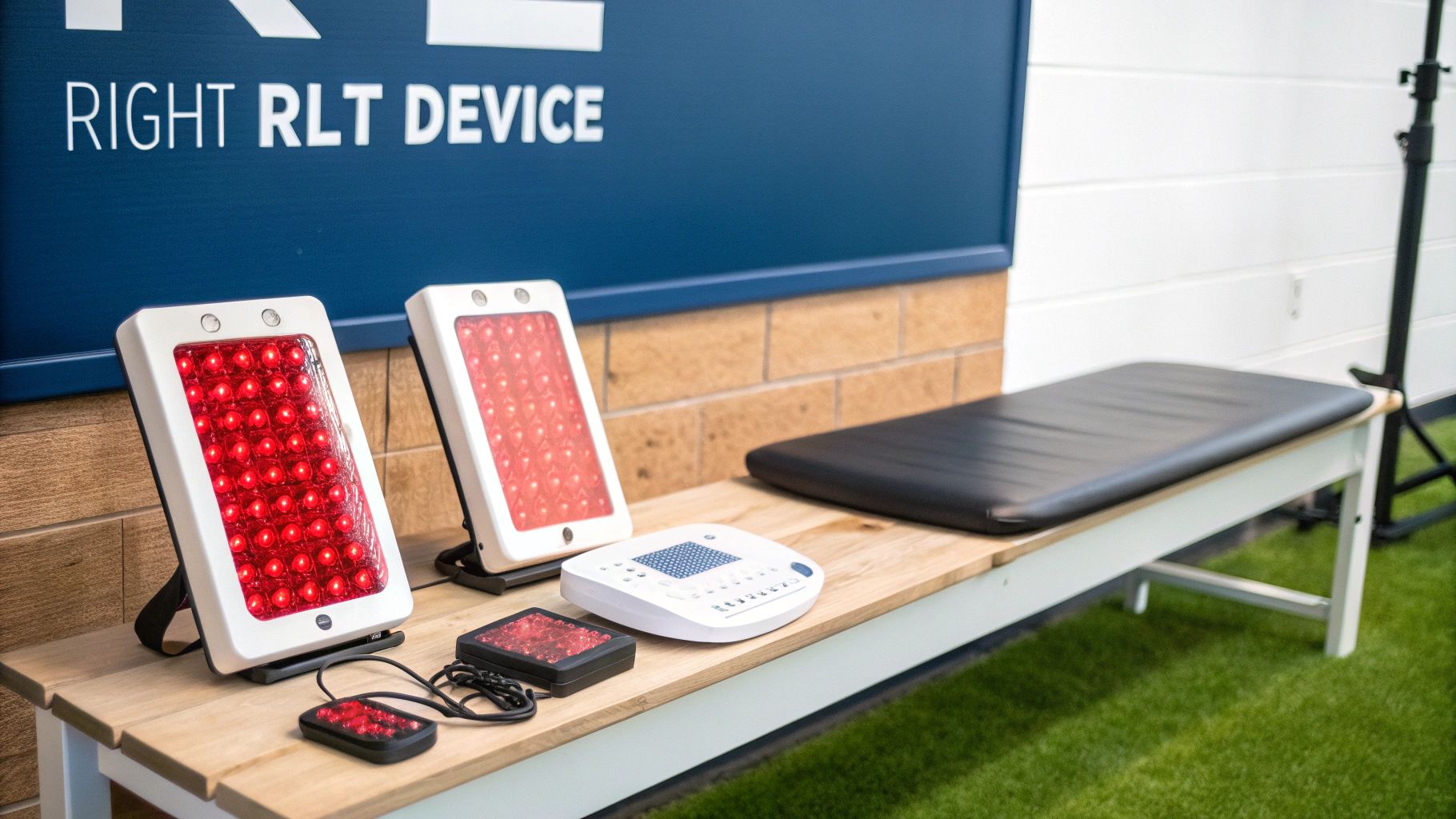
Stepping into the world of red light therapy can feel like navigating a maze. The market is flooded with options, and for an athlete, the stakes are high. Not all devices are built the same, and your results and health benefits hinge on choosing one that can actually deliver on its promises.
Forget the marketing hype for a second. The real effectiveness of your sessions boils down to a few critical specs: the light’s power, the specific wavelengths it’s putting out, and the device's overall design. Get these right, and you’ll ensure the light energy is actually penetrating deep enough into your muscle tissue to kickstart workout recovery.
Power Irradiance: The Metric That Matters Most for Athletes
When you’re comparing devices, the number one spec to look for is power irradiance. Think of it as the dose of light energy being delivered to a target area, measured in milliwatts per square centimeter (mW/cm²). A higher irradiance means the device works faster and more efficiently, pushing that therapeutic light deep into your tissues.
If you’re trying to reach deep muscle and joints, you need a device with some serious punch. A low-power wand might be fine for the top layer of skin, but it simply won't have the oomph to reach the muscle cells that are crying out for energy. Always look for a device that transparently lists its irradiance, especially at a practical distance like six inches from the surface.
A high-irradiance device is like a precision tool for deep tissue work. It guarantees you're not just basking in a red glow, but actively fueling the mitochondria in the muscles and connective tissues that are essential for repair and peak performance.
Wavelengths and Device Types
As we've covered, the sweet spot for athletic recovery is a blend of red light (around 630-660nm) and near-infrared light (810-850nm). Any device worth your time should offer both. This dual-wavelength approach gives you the best of both worlds, targeting everything from surface-level inflammation to deep tissue repair.
Once you’ve got the wavelengths sorted, it's about matching the physical device to your needs.
- Handheld Units: Perfect for zapping specific trouble spots. Got a cranky elbow or a tight calf? These are your go-to. They’re great for travel but aren't built for treating your entire back or legs.
- Targeted Panels: These small-to-medium panels are the versatile workhorses of the RLT world. They’re big enough to effectively treat your quads or lower back, making them an excellent starting point for a home setup.
- Full-Body Panels: For the serious athlete chasing systemic health benefits, this is the gold standard. A full-body panel lets you treat everything at once, making it incredibly efficient for pre-workout priming and post-session recovery.
Your final choice really comes down to your training schedule and recovery ambitions. For a deeper dive into setting up your own wellness space, check out our guide on red light therapy at home.
Don't Skip the Safety and Quality Checks
Finally, never compromise on safety. Look for devices that are FDA-cleared as Class II medical devices. This isn’t just a fancy sticker; it means the device has been scrutinized for safety and efficacy. It’s a clear sign that you’re dealing with a reputable brand that invests in proper testing, giving you confidence that you’re adding a legitimate, clinic-quality tool to your recovery toolkit.
Common Questions from Athletes
As you start to weave red light therapy into your training and wellness routine, a few questions are bound to pop up. Let's tackle the most common ones so you can get started with confidence and get the most out of every session.
Is Red Light Therapy Actually Safe?
Yes, it's considered very safe, especially when you’re using a high-quality, FDA-cleared device the way it’s meant to be used. It’s a completely non-invasive and non-toxic approach with an incredibly low risk of side effects, making it a powerful tool for health and wellness.
Don't confuse it with UV light—the specific red and near-infrared wavelengths we're talking about won't burn or damage your skin. The only real precaution is to protect your eyes from direct exposure, which is why any reputable brand will include protective eyewear. Still, it's always smart to have a chat with a sports medicine pro before adding anything new to your routine, especially if you have any pre-existing health conditions.
How Quickly Will I Notice a Difference?
That really depends on your goals and how consistent you are. A lot of athletes feel an immediate sense of relief right after their first session, like reduced muscle tightness or a bit less pain. That's usually the instant boost in circulation and drop in inflammation at work.
But for the bigger performance gains—like better endurance or measurable strength increases—the health benefits build over time. You’ll probably notice a real shift after a few weeks of consistent use, aiming for 3-5 times per week. For workout recovery, you can often feel a clear reduction in soreness and swelling within 24-48 hours. With red light therapy, consistency is everything.
While some benefits are immediate, the most profound changes in performance and recovery come from making red light therapy a regular, consistent part of your training and wellness regimen, much like proper nutrition or stretching.
Can This Help Treat Sports Injuries?
Absolutely. Red light therapy can be a game-changer for healing common sports injuries like muscle strains, ligament sprains, and tendonitis. By tamping down inflammation, boosting blood flow to the injured spot, and firing up cellular repair, it can seriously shorten your time on the sidelines.
It helps manage the pain and gets you back to training faster. But remember, for any serious injury, RLT is a supporting player. It should be part of a complete treatment plan from your doctor or physical therapist, not a replacement for professional medical care.
At MedEq Fitness, we're all about giving athletes the highest quality, science-backed recovery tools you need to perform at your peak. Check out our collection of professional-grade red light therapy devices and other wellness equipment built to accelerate your recovery and unlock your potential.
Discover clinic-quality recovery solutions at MedEq Fitness today!