

Best Water Rowing Machines: A Guide to Holistic Health and Fitness
If you're looking for the best water rowing machine, you've probably noticed they all share a certain appeal: a blend of dynamic, self-regulating resistance and a seriously effective low-impact, full-body workout. The top models, often featuring beautiful handcrafted wood frames and advanced monitors, hit that sweet spot between aesthetics and pure function, delivering a workout that’s both challenging and almost meditative.
Why Water Rowers Are the Top Choice for Holistic Fitness
Water rowing machines have carved out a special niche in the fitness world, and for good reason. They attract everyone from elite athletes to people just starting their wellness journey at home. Their appeal is simple but powerful: they use actual water to create resistance, which perfectly mimics the smooth, natural feel of rowing on a calm lake. It's a mechanism that creates a workout as much about mindful movement as it is about physical strength.
The biggest win with a water rower is its ability to give you a comprehensive, low-impact workout. Forget the joint-pounding stress of high-impact exercises. Rowing spreads the effort across your entire body. In fact, a single stroke engages over 85% of your muscles—legs, core, back, and arms. It's one of the most efficient full-body exercises you can do, promoting both strength and cardiovascular health.
Uniting Performance and Wellness
What really sets the best water rowing machines apart is how they connect intense physical training with mental well-being. That rhythmic "whoosh" of water in the tank isn't just a byproduct; it's a feature. It creates a soothing, almost zen-like experience that helps you find a consistent pace, turning a tough session into a focused, stress-busting activity. This unique blend supports a truly holistic approach to fitness, where both body and mind get stronger.
Even better, the workout is completely up to you. The harder you pull, the more resistance the water provides. This creates an incredibly adaptable experience that works for any fitness level. You can learn more about the mechanics and benefits in our complete guide to water rowers.
This self-regulating resistance ensures a safe and effective workout, minimizing the risk of injury while maximizing cardiovascular and muscular benefits. It’s a workout that grows with you.
This combination of features makes a water rower more than just a piece of gym equipment—it’s a tool for building a sustainable wellness routine. It’s perfect for both high-intensity training days and active recovery sessions, making it a cornerstone for anyone serious about their long-term health. As we dig into different models, you’ll see how these core principles are adapted for everyone from clinical rehabilitation patients to peak-performance athletes. Explore more wellness topics on our blog: MedEq Wellness Journal.
How to Choose the Right Water Rower
Picking the right water rower isn’t about ticking boxes on a feature list. It's about matching the machine to your body, your space, and your wellness goals.
Whether you're a physical therapist sourcing equipment for a clinic or a dedicated athlete outfitting a home gym, the best choice comes down to a few critical details. Understanding these nuances is the key to finding a rower that feels like an extension of yourself and supports your overall health.
At the core of every water rower is its unique resistance system. Unlike the mechanical feel of magnetic or air rowers, a water rower uses paddles churning through a tank of water. This creates an incredibly smooth, fluid resistance that responds directly to your effort.
The physics are simple but effective: the harder and faster you pull, the more resistance the water provides. This self-regulating system means the machine adapts to you—not the other way around. It’s a perfect setup for everyone from beginners to elite rowers, eliminating the need to fumble with digital settings mid-workout.
This dynamic response is especially valuable in recovery and rehabilitation. It allows users to work at their own capacity, building strength safely without the risk of overexertion. It’s a major reason these machines are considered one of the best forms of low-impact cardio machines available today.
Build Quality and Materials
A rower’s frame is its foundation, and the material directly impacts its durability, stability, and even the sound it makes. You’ll generally find two options: handcrafted wood or industrial-grade steel.
-
Handcrafted Wood: Usually built from solid hardwoods like American Ash or Black Walnut, wooden rowers are known for their striking aesthetics. They can blend into a living space like a piece of fine furniture. But it's not just about looks—the wood frame naturally absorbs sound and vibration, leading to a quieter, smoother stroke. This makes it a fantastic choice for home gyms where noise and wellness ambiance are considerations.
-
Steel Frames: Built for toughness, steel frames are the workhorses of commercial gyms and physical therapy clinics. They offer uncompromising rigidity and are designed to handle constant, heavy use day in and day out. If you need a machine for a high-traffic wellness center or performance facility, steel is the way to go.
Ultimately, the choice between wood and steel depends on your environment. A home user might prefer the warm, quiet elegance of wood, while a clinic will prioritize the rock-solid reliability of steel.
Water Tank Design and Noise Profile
Not all water tanks are created equal. The tank's shape and the paddle design inside are what truly define the "feel" of the stroke and the sound profile of the rower. Some models use patented paddle systems that create a more defined "catch" at the start of the stroke, perfectly mimicking the sensation of an oar grabbing real water.
The sound itself is one of the most beloved features of a water rower—that gentle, rhythmic swoosh.
The sound isn't just background noise; it's auditory feedback. A consistent whoosh helps you lock into a steady rhythm, transforming your workout into a focused, almost meditative experience that promotes mental wellness.
For those in apartments or shared spaces, a well-engineered tank can make all the difference. You want a sound that’s motivating but not so loud that it becomes disruptive to others.
Ergonomics for Comfort and Performance
A rower that isn't comfortable is a rower you won't use. Long-term wellness, performance, and injury prevention come down to how the machine fits your body, and that means focusing on three key contact points: the seat, handle, and footplates.
-
The Seat: A good seat is contoured for support but doesn't get in the way of your movement. It needs to glide effortlessly along the rail with no hitches or bumps, so you can concentrate on your form, not on a choppy ride.
-
The Handle: An ergonomic handle, often with a slight angle, can drastically reduce strain on your wrists, elbows, and shoulders. The grip should feel secure without being overly soft, giving you a firm hold even during intense, sweaty sessions.
-
The Footplates: Adjustable footplates are non-negotiable. They need to accommodate various shoe sizes and allow for proper foot placement to drive power effectively. A solid heel cup and secure straps are critical for transferring power from your legs—where most of your rowing strength comes from.
By digging into these fundamentals—resistance feel, build quality, tank design, and ergonomics—you can see past the marketing hype. You can select a water rower that truly fits your world and supports your health goals. You can find more fitness insights on our blog: MedEq Wellness Journal.
Water Rower Feature Comparison Framework
To help you put it all together, this table breaks down what to look for based on whether you're outfitting a home gym or a professional facility.
| Feature | What to Look For (Home Athlete) | What to Look For (Clinical/Professional) | Why It Matters |
|---|---|---|---|
| Resistance Feel | Smooth, consistent catch that mimics on-water rowing. | Responsive, self-regulating resistance that adapts to any user. | Ensures a natural feel for performance and a safe, accommodating workout for rehab. |
| Build/Materials | Solid wood for aesthetics and quiet operation. | Industrial steel for maximum durability and stability. | The material should match the environment—blending in at home, standing up in a clinic. |
| Water Tank Design | Well-sealed, polycarbonate tank with a meditative sound. | Durable tank with easy water-level adjustments for patients. | A quality tank delivers a better rowing feel and is built for long-term, leak-free use. |
| Noise Profile | A pleasant "swoosh" that isn't disruptive to others. | A sound level that allows for clear communication with patients. | Sound is feedback, but it shouldn't be intrusive in a shared or professional space. |
| Ergonomics | Contoured seat, angled handle, and easily adjustable footplates. | Highly adjustable components to fit a wide range of body types. | Proper ergonomics prevent injury, improve comfort, and allow for efficient power transfer. |
| Monitor/Metrics | Clear display with key metrics like time, distance, and 500m split. | Advanced monitor with heart rate tracking and data export options. | From basic motivation to clinical data tracking, the monitor should serve your specific needs. |
| Footprint/Storage | A compact footprint or vertical storage capability. | A stable, fixed footprint that doesn't require frequent moving. | Space is a premium at home, while stability is key in a clinical setting. |
Choosing a water rower is a personal decision, but it should be an informed one. A physical therapist might prioritize highly adjustable footplates for patient accessibility, while a home athlete might focus on the specific feel of the water tank. The best machines are the ones that are perfectly suited to the person using them and their unique wellness path.
The Health and Recovery Benefits of Water Rowing
Think of a water rower as more than just a piece of gym equipment. It’s a complete wellness tool that builds serious strength, cuts down recovery time, and even helps clear your head. The best water rowing machines give you a powerful, full-body workout that’s incredibly easy on the joints, making it a go-to for both sustainable fitness and physical therapy.
The biggest health benefit is how low-impact it is. Unlike running or high-intensity interval training that pounds your knees and ankles, rowing is a smooth, seated movement. This protects your joints while still firing up an impressive 85% of your body's muscles in every single stroke. You get a balanced, highly effective workout that enhances muscular and cardiovascular health without the wear and tear.
This makes it a perfect fit for almost anyone's wellness journey. It doesn't matter if you're an athlete looking to cross-train without adding more stress or someone in rehab needing to rebuild strength safely—a water rower delivers.
A Powerful Tool for Strength and Workout Recovery
The fluid resistance from a water rower is uniquely suited for building real-world, functional strength. The workout is entirely driven by you; the harder you pull, the more resistance you get. This means it naturally scales to your exact fitness level. That dynamic resistance doesn't just build cardio endurance—it develops serious muscular strength in your legs, core, and back.
In fact, the results are clinically proven. Research has shown that consistent use of water rowing machines can lead to a 33.9% increase in back muscle strength in just six weeks. For physical therapists, healthcare professionals, and wellness centers that rely on evidence-based equipment for their recovery protocols, that number is a game-changer. You can explore more data on the growing rowing machine market.
Building this kind of strength is also key for faster workout recovery. A stronger musculoskeletal system is simply more resilient and bounces back quicker from tough workouts.
The rhythmic, full-body motion of rowing boosts circulation, helping deliver oxygen and nutrients to tired muscles. This process flushes out metabolic waste, which reduces soreness and accelerates the body's natural repair cycle.
To really get the most out of your rower, pairing it with other smart habits is key. Checking out some solid post-workout recovery tips for fitness enthusiasts can help you build a more complete wellness routine.
Enhancing Wellness with Advanced Recovery Practices
When you integrate a water rower into a wider wellness strategy, the benefits really start to stack up. Its low-impact design makes it the perfect partner for more intensive recovery methods, creating a powerful synergy for optimizing your health.
Take contrast therapy, for example, which involves switching between hot and cold environments, like a sauna and a cold plunge. A light rowing session can be the ideal active recovery on days you’re using this technique.
- Warm-Up: A gentle 10-minute row gets your blood flowing, prepping your body for the thermal stress of a sauna or cold plunge.
- Cool-Down: A slow, mindful row afterward helps bring your heart rate down and eases your body back into a resting state.
This combination can amplify the recovery effects, helping to reduce inflammation and improve circulation far more than either activity could on its own. The soothing sound of the water rower also adds a meditative element, aligning perfectly with the restorative goals of these therapies.
Improving Key Biometrics and Mental Health
The impact of water rowing goes deep, touching both your physical and mental well-being. Regular sessions create measurable improvements in key health indicators that show how resilient and recovered your body is.
One of the most important metrics here is Heart Rate Variability (HRV), which tracks the tiny variations in time between each heartbeat. A higher HRV is a sign of a well-rested, adaptable nervous system. The cardiovascular conditioning you get from rowing strengthens your heart, which often leads to a better HRV over time.
On top of that, consistent, low-impact exercise is a well-known sleep-booster. Rowing helps regulate your circadian rhythm and lower stress hormones like cortisol, improving both how long and how well you sleep—a non-negotiable part of recovery.
The mental health benefits are just as profound. The repetitive, flowing motion, combined with the gentle swoosh of the water, creates a calming, almost hypnotic experience. It’s a chance to quiet your mind, reduce anxiety, and take a much-needed mental break. Every session becomes a form of active meditation. For a deeper dive into wellness strategies, explore our MedEq Wellness Journal.
Comparing the Best Water Rowers for Different Needs
Choosing the right water rower isn't about finding a single "best" model. It’s about matching the machine to your specific needs. A rower built for a high-traffic physical therapy clinic has a completely different job to do than one destined for a quiet home gym.
To help you find the perfect fit, we’ve broken down our top recommendations based on three distinct user profiles. This isn’t just a feature list; it's a guide to connect the right machine attributes to your real-world goals, ensuring your investment pays off.
For the Dedicated Home Athlete
The home athlete needs a machine that can handle intense, daily training without missing a beat. Performance, accurate data, and long-term durability are the name of the game. Aesthetics often take a backseat to raw function.
The main goal here is to replicate the on-water feel as closely as possible. That means a water tank and paddle system engineered for a powerful, consistent catch and a smooth, fluid drive. The resistance has to feel authentic, responding instantly to every ounce of effort—perfect for high-intensity interval training (HIIT) and long endurance rows.
For this user, the monitor is everything. It must deliver clear, actionable metrics that go far beyond time and distance. Look for these key data points:
- 500m Split Time: The gold standard for tracking rowing intensity and progress.
- Stroke Rate (SPM): Crucial for pacing and refining your technique.
- Watts or Power Output: A direct measure of the work you're putting in.
The home athlete thrives on data. A great monitor transforms a simple workout into a structured training session, giving you the feedback needed to smash plateaus and hit new personal bests.
Ergonomics are also non-negotiable. A contoured seat that stays comfortable during long sessions, an angled handle to reduce wrist strain, and easily adjustable footplates are must-haves. A solid frame, whether steel or wood, provides the stability needed for those all-out sprints.
For Wellness Clinics and Physical Therapy
In a clinical setting, a water rower is a tool for rehabilitation and building foundational strength for a diverse patient population. The top priorities shift to durability, accessibility, and absolute patient safety.
A clinical-grade rower needs to be built like a tank. It requires an industrial-strength frame—usually steel—that can withstand constant use from people of all shapes, sizes, and abilities. The machine must feel completely stable and secure, giving confidence to patients who might be deconditioned or unsteady on their feet.
Accessibility is a huge differentiator. Key features for a clinical environment include:
- A higher seat: This makes it much easier for patients recovering from knee or hip surgery or those with mobility limitations to get on and off safely.
- A stable, wide footprint: Prevents any tipping or wobbling during use.
- Simple, intuitive adjustments: Therapists need to change footplate and other settings quickly and easily between sessions.
For a clinic, a rower's value is measured by its ability to safely serve the widest possible range of patients. Its self-regulating resistance is a critical safety feature, allowing individuals to work at their own capacity without risking reinjury.
The data requirements are different, too. While a therapist tracks progress, the focus is more on consistency and safe exertion rather than peak performance. A monitor with a large, easy-to-read display and heart rate connectivity is typically all that's needed to guide a patient through their recovery protocol.
For the Aesthetics-Conscious User
For some, a rowing machine is more than just gym equipment—it’s a piece of furniture. This user values craftsmanship, design, and high-quality materials just as much as performance. They want a machine that functions beautifully and looks beautiful, blending seamlessly into their living space.
This is where handcrafted wooden rowers truly shine. Built from premium solid hardwoods like ash, oak, or walnut, these machines are often seen as functional art. The natural wood grain and elegant design lines can elevate any room, turning a potential eyesore into a statement piece. The Compact Solid Wood Rowing Machine is a perfect example of how effective equipment can also enhance your home’s aesthetic.
But the appeal isn’t purely cosmetic. Wood is a natural sound and vibration absorber, meaning a high-quality wooden rower often delivers an incredibly smooth and quiet experience. The gentle swoosh of the water is complemented by the solid, grounded feel of the frame, creating an almost meditative workout.
For the aesthetics-conscious user, the rower must deliver a premium experience from every angle. The tactile feel of the wooden handle, the quiet glide of the seat, and the visual appeal of the machine itself all contribute to a more enjoyable and sustainable wellness routine.
While beauty is a priority, performance isn't an afterthought. The best wooden rowers are built with the same high-performance water tanks and ergonomic parts as their steel counterparts. They offer a challenging, effective workout with an unmatched level of style, making them the perfect choice for anyone who refuses to compromise on form or function.
Taking Care of Your Water Rower: Setup and Maintenance
So, you've invested in a top-tier water rower. That's a great move for your health and wellness. Now, let's make sure it performs flawlessly for years. The good news is that setup and maintenance are surprisingly simple.
Getting started is usually a quick affair, as most machines are designed for easy home assembly. Once it's built, you just need to fill the tank. Use the siphon that came with your rower to add water up to the level marked on the tank. You can always adjust this later to tweak the feel of the resistance, but remember, the real work—and the real resistance—comes from you.
Keeping Your Rower in Prime Condition
One of the best things about water rowers is how little upkeep they need. Your main job is just keeping the water clean.
- Water Purification: Every four to six months, just pop a purification tablet into the tank. This is all it takes to prevent algae and keep the water crystal clear.
- Frame and Rail Care: Give the frame and slide rail a quick wipe-down with a lint-free cloth now and then. This gets rid of dust and sweat, protecting the finish and keeping the seat moving smoothly.
Keeping the tank clean is a non-negotiable for any water-based equipment. For more general tips, you can find helpful resources on cleaning water-filled equipment.
This flowchart can help you quickly pinpoint the right type of rower based on what matters most to you.
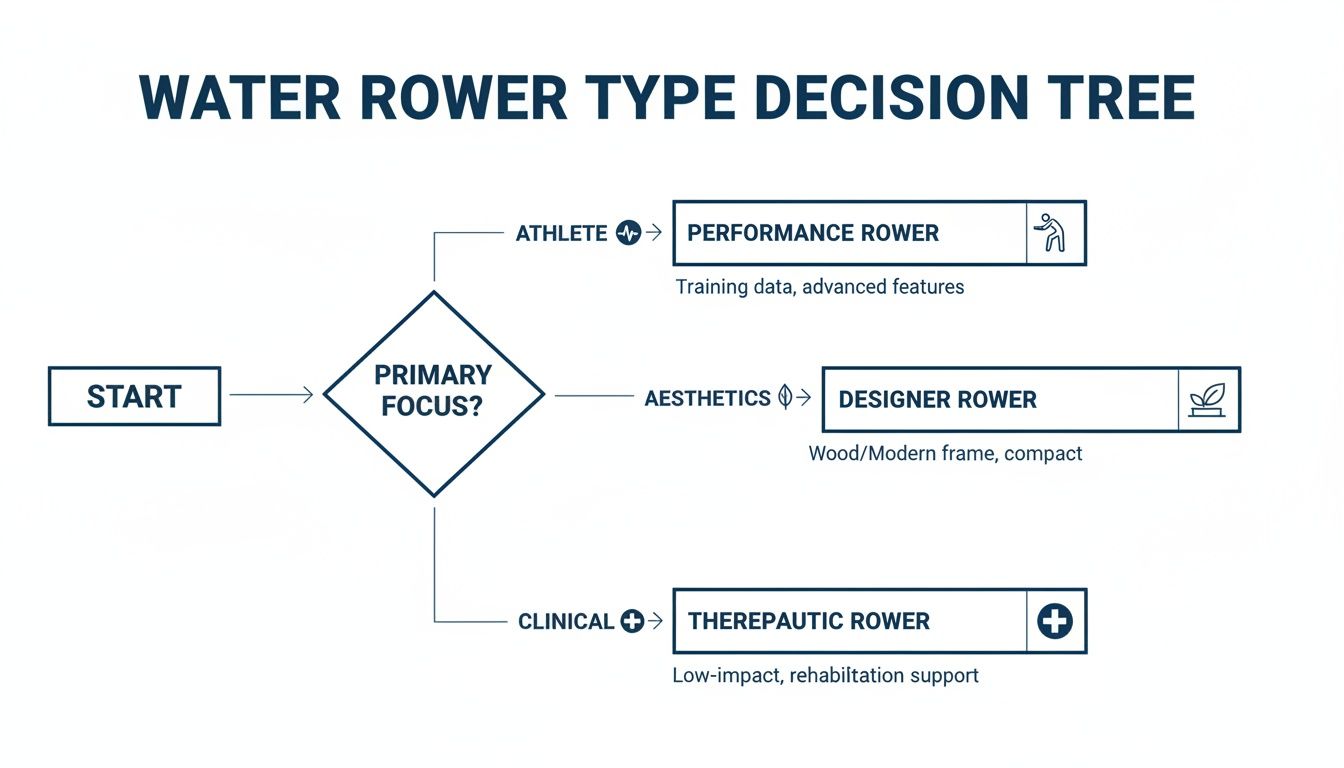
As you can see, your primary goal—whether it's peak athletic training, home aesthetics, or clinical rehabilitation—is the best guide to finding the machine with the right features for your needs.
Getting the Most Out of Every Stroke
The best machine in the world won't help you without proper form. It’s not just about preventing injury; it's about making your workout count. Always remember the sequence: legs, core, then arms.
The real power comes from your legs. It's a powerful push, almost like a leg press. This is what engages your body's biggest muscles and makes rowing such an incredible full-body workout.
It's no surprise the water rower market is booming. It was valued at USD 799.2 million in 2024 and is set to grow even more. This isn't just a trend; it's a fundamental shift in how people want to train, seeking out more engaging, true-to-life fitness experiences both at home and in professional settings.
Follow these simple steps, and your water rower will be a reliable partner in your wellness journey for a long time to come. Learn more on our blog: MedEq Wellness Journal.
Water Rower FAQs
Let's clear up a few common questions people have when considering a water rower. Making an informed choice is key, and these answers should help you feel confident about your investment in your health.
How Much Maintenance Does a Water Rower Need?
Surprisingly little. One of the best things about a quality water rower is how easy it is to care for. Your main job is to drop a water purification tablet into the tank about every six months to keep the water clear.
Aside from that, a quick wipe-down of the rail and frame every so often is all it takes to keep it in prime condition.
Is a Water Rower Quieter Than an Air Rower?
Yes, significantly. A water rower creates a soft, whooshing sound that most people find calming—almost meditative. This is a world away from the loud fan noise of an air rower.
It’s an ideal choice for home gyms, apartments, or any shared space where you don't want to disturb others. The sound also stays consistent and pleasant, even when you’re pushing your intensity to the max, enhancing the wellness experience.
Can a Water Rower Challenge a Fit Athlete?
Absolutely. The resistance is entirely up to you. A water rower’s resistance is dynamic; it responds directly to the power you put into each stroke. The harder you pull, the more resistance the water provides.
This self-regulating system means the machine adapts to your fitness level. Whether you're a beginner or a competitive athlete, you're always in complete control of the challenge, ensuring you can always hit your cardiovascular and strength training goals.
Is a Wooden Rower Durable Enough for Intense Workouts?
Without a doubt. High-quality wooden rowers, especially those made from solid hardwoods, are engineered for incredible durability and a long lifespan.
The wood frame isn't just for looks; it naturally absorbs vibrations and sound, contributing to a smoother, quieter workout. These machines are built to handle intense, daily use while bringing a refined aesthetic to your space.
At MedEq Fitness, our philosophy is to provide equipment that supports every aspect of your wellness journey, from peak physical output to thoughtful recovery. Our handcrafted wooden rowing machines are a perfect reflection of this, blending beautiful design with uncompromising performance.
Explore our collection or find more health insights on the MedEq Wellness Journal.


