
Water Rower The Ultimate Guide to Full-Body Wellness
Picture this: a single workout that builds serious strength, fires up your cardiovascular system, and actually quiets your mind. That’s the magic of the water rower. It uses the simple, powerful resistance of water to create a fitness experience that’s as meditative as it is intense. This isn't just another piece of gym equipment; it’s a holistic wellness tool built for both peak athletic performance and gentle, effective workout recovery.
Why a Water Rower Is Your Ultimate Wellness Tool
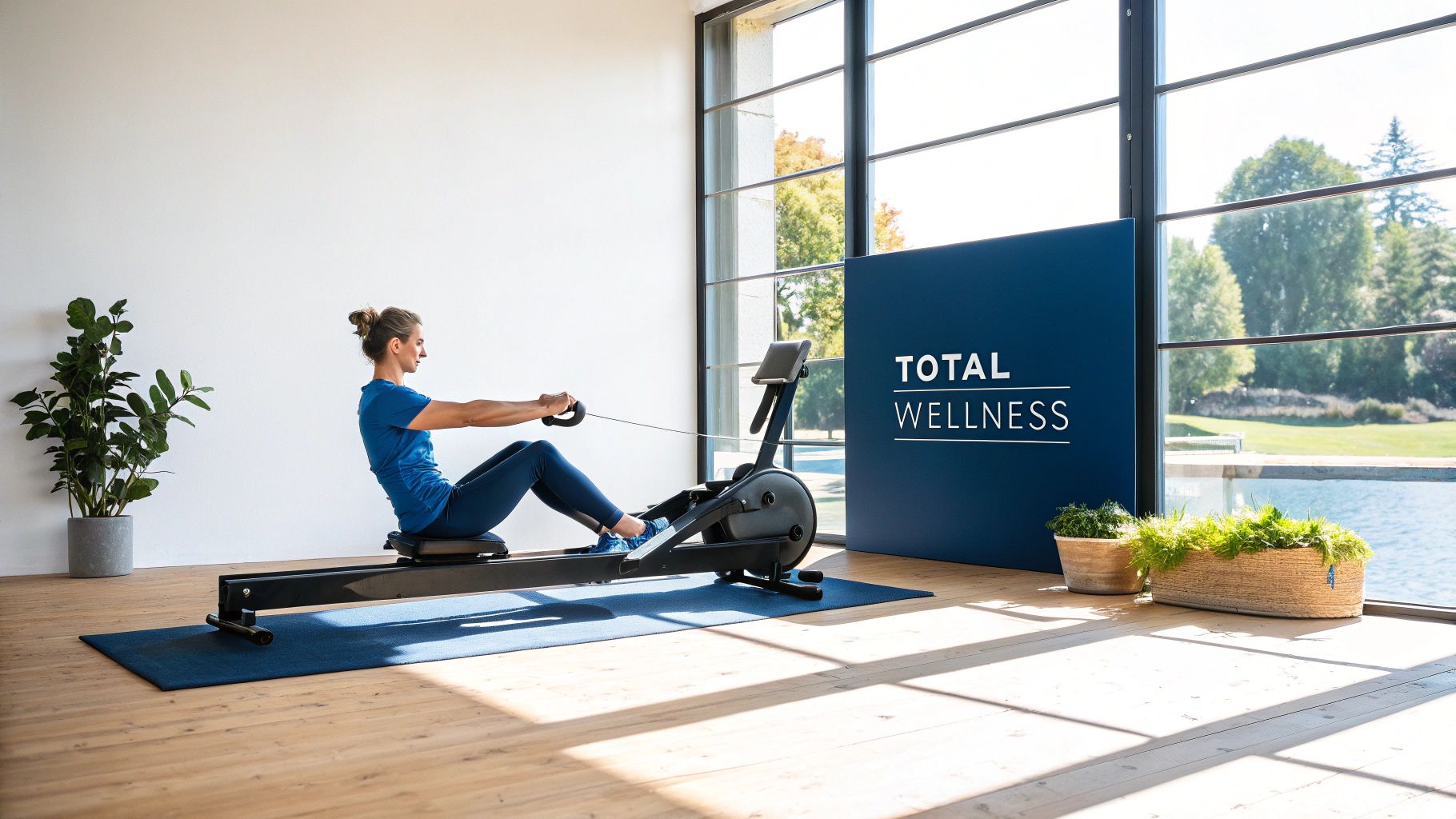
What really sets a water rower apart is its ability to mimic the true feeling of rowing on a calm lake. The secret is in its core design: a flywheel spinning through a tank of water. This creates a smooth, consistent resistance that responds instantly to your effort. The harder you pull, the more resistance you feel. It’s a self-regulating workout that scales perfectly to any fitness level, from a complete beginner to a seasoned athlete.
This dynamic, fluid resistance is a game-changer for long-term health and wellness. Unlike the jarring impact of pounding the pavement or the isolated movements of traditional weightlifting, a water rower delivers a powerful, full-body workout that's incredibly kind to your joints. That makes it the perfect choice for anyone looking for a challenging fitness routine they can stick with for years to come.
A Symphony of Muscle Engagement
Every single stroke on a water rower is a full-body movement, a key health benefit for building balanced, functional strength. It starts with a powerful drive from your legs and glutes, engages your core to keep you stable, and finishes with a strong pull from your arms and back.
- Total Body Activation: It’s not an exaggeration. Research shows rowing engages up to 86% of your muscles in a single motion, promoting overall muscle tone and strength.
- Cardiovascular Excellence: The rhythmic, flowing movement elevates your heart rate and sustains it, effectively strengthening your entire cardiovascular system, boosting endurance, and supporting heart health.
- Mental Clarity: The gentle whoosh of the water with each stroke, combined with the repetitive motion, can create an almost meditative state, helping to melt away stress and sharpen your focus.
For athletes and wellness practitioners, the water rower isn't just another machine—it's a foundational part of a smart training plan. It perfectly bridges the gap between high-intensity work and restorative recovery, making it one of the most versatile tools you can have.
To give you a clearer picture, here's a quick rundown of the health benefits that make the water rower so effective.
Water Rower At a Glance Key Health Benefits
| Benefit | Description |
|---|---|
| Full-Body Workout | Activates up to 86% of muscles for balanced strength and conditioning. |
| Low-Impact Cardio | Delivers a high-intensity cardiovascular workout without stressing your joints. |
| Self-Regulating Resistance | The water's natural resistance scales with your effort—the harder you pull, the harder it gets. |
| Stress Reduction | The rhythmic sound and motion provide a calming, meditative effect, supporting mental wellness. |
| Functional Strength | Builds practical strength that translates directly to everyday movements and improves posture. |
This unique combination of benefits has made it a standout piece of equipment in a competitive market.
The Smart Investment in Wellness
The numbers don't lie. The global water rower market has surged to USD 1.15 billion, making up a huge chunk of the total USD 1.48 billion rower industry. Even with a higher price tag, people are fiercely loyal to water models because they activate nearly 90% of muscles and so closely simulate a true, on-the-water stroke.
For clinics, spas, and studios, this translates to real business results. Some facilities have reported client retention boosts of up to 40% after adding water rowers to their offerings. You can [discover more insights about the rowing machine market](https://www.fortunebusinessinsights.com/rowing-machine-market-103 rowing-machine-market-103314) to see the trend for yourself.
This powerful blend of physical results and user satisfaction makes the water rower a brilliant investment for anyone serious about health—whether for a home gym, a physical therapy clinic, or a high-end wellness center. It’s a direct path to better fitness, faster workout recovery, and a calmer state of mind.
To continue exploring holistic health strategies, visit the MedEq Wellness Journal.
How a Water Rower Creates a Natural Rowing Experience
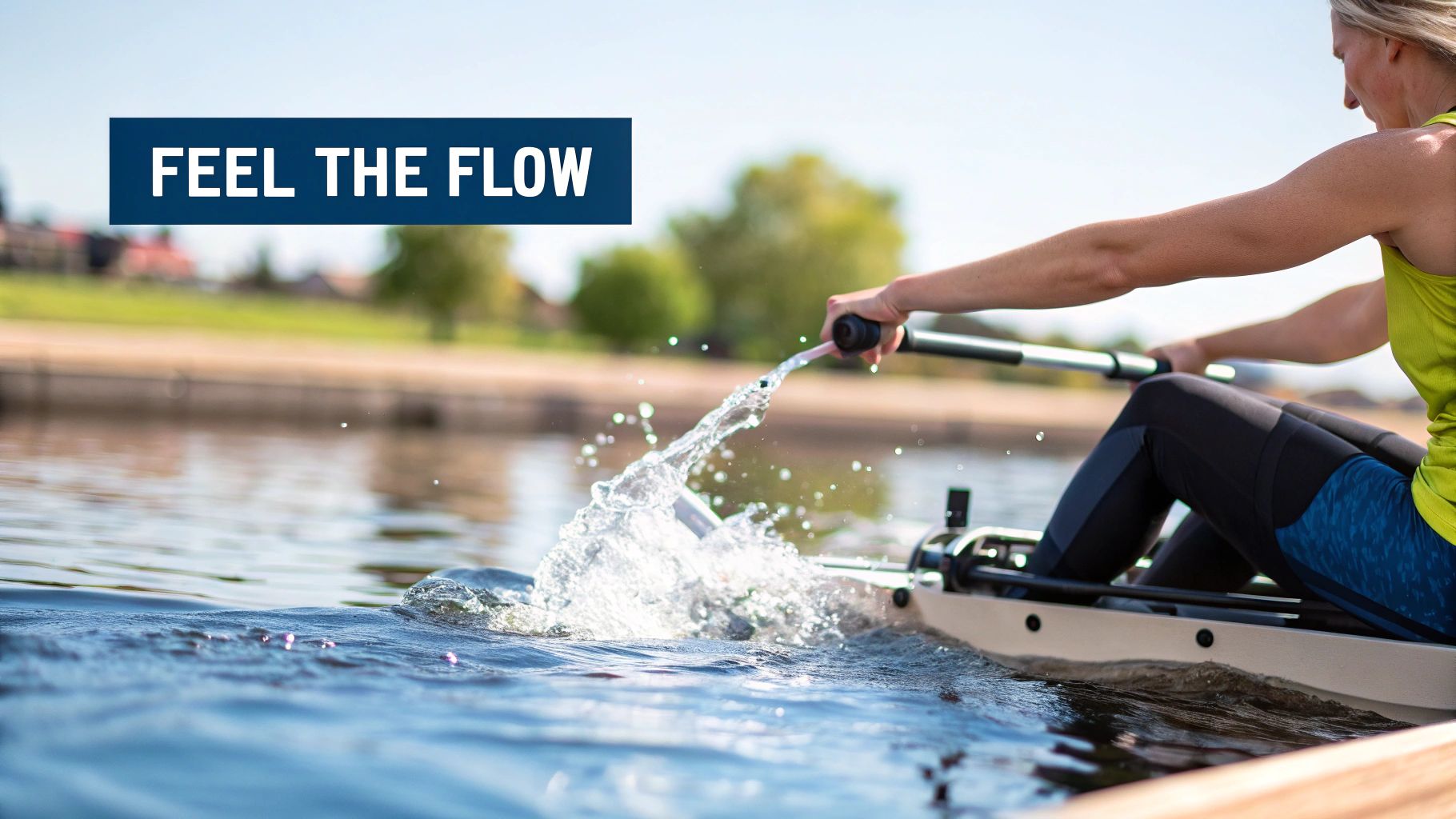
There’s a reason a water rower feels so captivating—it’s not just clever engineering, it’s pure physics. The secret lies in its water-flywheel system, a beautifully simple design that masterfully recreates the feeling of pulling an oar through water.
At its core, a set of paddles spins inside a sealed tank of water. When you pull the handle, those paddles churn, creating drag. That drag is the resistance you feel, and it delivers a smooth, consistent pull from the very beginning of the stroke to the end. No jerks, no jarring stops—just a continuous, fluid motion that’s incredibly gentle on your joints.
This is a world away from other machines. While magnetic rowers have artificial settings and air rowers are notoriously loud, the water rower offers an authentic connection to the work you’re putting in.
The Magic of Self-Regulating Resistance
The real genius here is the rower’s self-regulating resistance. Think about being in a real boat: a gentle paddle lets you glide effortlessly. But if you dig your oar in and pull with everything you’ve got, the water pushes back with serious force.
A water rower works on the exact same principle, sometimes called the rule of cubes. The resistance you feel is a direct result of how fast you move the water. It’s that simple.
- Pull Faster: The flywheel spins quicker, churning more water and creating a ton of resistance.
- Pull Slower: The flywheel moves more gently, giving you a lighter pull that’s perfect for a warm-up or active workout recovery.
This means the machine adapts to your effort instantly, without you ever touching a dial or a screen. Your intensity sets the challenge, making it an unbelievably intuitive tool for everyone from elite athletes to someone just starting their fitness journey.
The water rower doesn’t dictate the difficulty; it responds to you. This dynamic feedback loop ensures you’re always working at the right level for your goals, whether you’re going for an all-out sprint or a long, steady row.
Why This Design Is Superior for Wellness and Recovery
This organic approach to resistance makes the water rower an incredible tool for both health and rehabilitation. That smooth, non-jarring stroke is easy on the body, making it a go-to for workout recovery. On days when you’re sore, a light session can boost blood flow to flush out metabolic byproducts without causing more stress.
For high-intensity work, the infinite resistance curve means you can never max it out. As you get stronger, just pull harder. The machine will always be ready to meet you. This seamless scalability is precisely why it’s a favorite in physical therapy clinics and professional training facilities alike.
The mechanics are also designed to recruit your body in the most efficient way possible. A single, powerful stroke on a water rower engages up to 86% of your muscles—from your legs and glutes all the way to your core and upper back. This total-body workout builds balanced strength, improves posture, and delivers a fantastic cardio session.
Ultimately, a water rower does more than just give you a workout; it creates a wellness experience. The rhythmic sound of the water, the smooth pull, and the direct link between your effort and the machine’s response all foster a focused, almost meditative state. It’s a machine built not just for the body, but for the mind, too.
To explore more topics on building a foundation for lifelong health, check out the MedEq Wellness Journal.
The Science of Rowing for Recovery and Performance
A water rower is more than just a piece of fitness equipment; it's a powerful tool for driving real physiological change. Its genius lies in combining cardiovascular conditioning with muscular strength in a single, fluid motion—all without hammering your joints. This makes it an incredible asset for both pushing athletic performance and speeding up workout recovery.
The full-body, rhythmic nature of rowing is a massive boost for your cardiovascular health. Stick with it, and you'll see measurable improvements in key metrics like VO2 max, which is the ceiling for how much oxygen your body can use during tough exercise. A higher VO2 max is a direct marker of better aerobic fitness and endurance.
At the same time, rowing has a positive effect on Heart Rate Variability (HRV)—the tiny variations in time between your heartbeats. A higher, more variable HRV is a great sign. It means your nervous system is well-rested, resilient, and ready to handle whatever you throw at it.
The Mind-Body Wellness Connection
Here’s a health benefit a water rower gives you that most machines can't: a meditative experience. The repetitive, flowing movement, paired with the organic sound of sloshing water, helps you lock into a focused mental state. This simple act can actually lower cortisol, your body's main stress hormone, and bring a sense of calm to your nervous system.
This synergy between mind and body is a game-changer for both performance and recovery. When you reduce mental stress, your body can more easily slip into a parasympathetic "rest and digest" state. That's the mode where all the good stuff happens—muscle repair, cell regeneration, and deep recovery.
The water rower is one of the few pieces of equipment that trains the body and quiets the mind simultaneously. This unique combination makes every session a holistic wellness practice, not just a workout.
As home wellness has exploded, water rowers have become a go-to for high-performers who are serious about optimizing their downtime. The global water resistance rowing machine market has already hit USD 350 million. For the MedEq audience—biohackers, physical therapists, and clinic owners—this isn't a surprise. Studies have linked consistent rowing to 15-20% improvements in HRV and faster muscle repair, which backs up the rapid ROI our wellness center clients tell us about. You can explore the water resistance rower market trends to see just how significant this growth is.
Optimizing Workout Recovery
Active workout recovery is a non-negotiable part of any smart training plan, and the water rower is practically built for it. After a hard session, your muscles are swimming in metabolic byproducts like lactic acid. One of the best ways to clear that stuff out is with gentle, low-impact movement.
A light rowing session gets blood flowing everywhere without putting more stress on tired muscles and joints. This boost in circulation delivers a fresh supply of oxygen and nutrients to damaged tissues while efficiently flushing out the waste. The result? Less muscle soreness (DOMS) and a quicker return to full strength. Our guide on the best recovery equipment for athletes digs deeper into how tools like this fit into a complete strategy.
Integrating Rowing with Contrast Therapy for Enhanced Recovery
If you're looking to really level up your recovery protocols, a water rower is the perfect primer for contrast therapy—the wellness practice of alternating between hot (like a sauna) and cold (like a cold plunge) to kickstart circulation and crush inflammation. This combination is a powerful strategy for accelerating workout recovery.
Doing a gentle 10-15 minute row before you start your contrast therapy can make it way more effective.
- Warm-Up and Circulation Boost: The light rowing elevates your core body temperature and gets your blood moving.
- Preparation for Cold: Starting warm makes that initial shock of the cold plunge more tolerable, so you can stay in longer and get more out of it.
- Enhanced Vaso-Response: When your circulatory system is already primed, your blood vessels respond more dramatically to the temperature swings, maximizing that "pumping" action that flushes out metabolic junk.
Pairing these two turns a simple cool-down into a sophisticated recovery sequence. It makes the water rower an essential tool for anyone truly dedicated to optimizing their health and performance.
Choosing the Right Water Rower for Your Goals
So, you’re ready to invest in a water rower. It’s a fantastic decision that will pay dividends for your health, whether you’re setting up a home gym or leveling up a professional clinic. But with so many options, how do you pick the right one?
It all boils down to one simple question: what’s your primary goal? Are you an athlete chasing peak performance, or is your focus on consistent, low-impact recovery? The perfect water rower is the one that aligns seamlessly with that objective.
This decision map breaks down how your main goal should steer your choice.
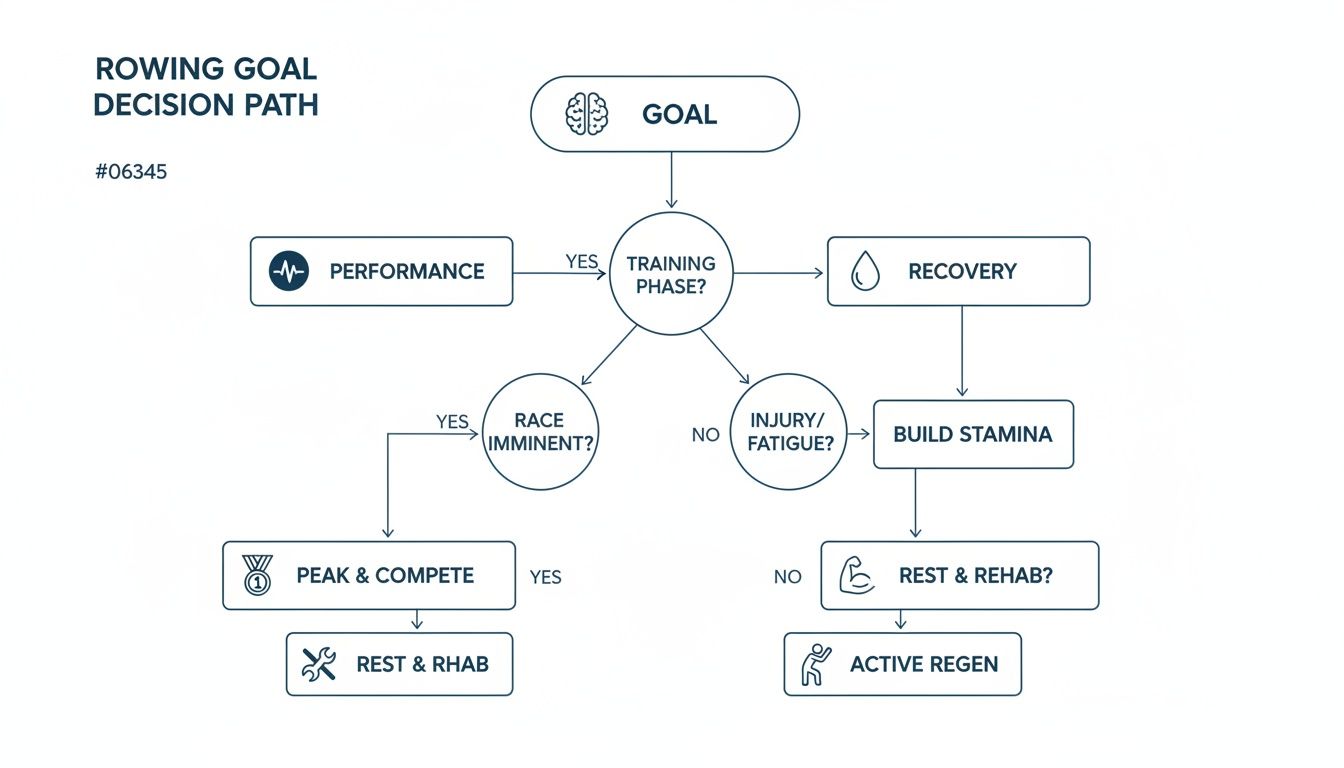
As you can see, every water rower is versatile enough to handle both goals. However, certain features are definitely better suited for high-intensity training versus therapeutic movement, and knowing the difference helps you narrow the field.
Evaluating Build Quality and Materials
The frame is the backbone of any quality rower. You’ll want to look for models built from solid wood or heavy-duty steel. A solid frame is your guarantee against wobbles and creaks, giving you the stability needed to hit a hard workout without distraction. For clinics or any high-traffic environment, this kind of professional-grade durability is a must.
The materials also define the machine’s feel and lifespan. Handcrafted wooden rowers, like the Compact Solid Wood Rowing Machine, have a timeless look that feels more like furniture than fitness equipment. Beyond aesthetics, wood is fantastic at absorbing sound and vibration, making for a noticeably quieter and smoother pull.
Understanding Tank Design and Resistance
Not all water tanks are built the same—not by a long shot. The design of the tank and its internal paddles directly shapes the feel of the resistance. The best designs give you an immediate, clean "catch" at the start of the stroke, perfectly mimicking the sensation of an oar grabbing real water.
The ability to adjust the water level is another key feature. While your effort dictates the resistance second-by-second, changing the water volume adjusts the baseline feel of the stroke. A full tank creates a heavier, more deliberate pull that’s great for building strength. Less water makes the stroke feel lighter and quicker, perfect for cardio-focused sessions or gentle workout recovery.
Console Metrics That Matter
Think of the console as your dashboard. It translates your hard work into cold, hard data you can actually use. While some rowers go for a minimalist vibe, a few key metrics are essential for tracking your progress and staying on plan.
- Stroke Rate (SPM): This tells you how many strokes you’re taking per minute—the key to effective pacing.
- Split Time (/500m): The gold standard for rowing intensity. It shows how long it would take you to row 500 meters at your current pace.
- Watts: A pure measure of your power output. It shows you exactly how much work you’re doing.
- Distance and Time: The basics for tracking how far and how long you’ve worked.
A good console gives you all this information on a clear, easy-to-read display that doesn’t interrupt your flow.
One of the biggest mistakes people make is overlooking ergonomics. A comfortable seat, well-designed footplates, and a natural-feeling handle are absolutely critical for preventing strain and maintaining good form, especially on longer rows.
To really nail down your decision, it helps to see how water rowers stack up against the other major types on the market. Each one delivers a completely different experience based on how it generates resistance.
Water Rower vs Air and Magnetic Rowers A Head-to-Head Comparison
Here’s a quick breakdown to help you compare the three main types of rowing machines. This should help clarify which one truly fits your space and your wellness goals.
| Feature | Water Rower | Air Rower | Magnetic Rower |
|---|---|---|---|
| Resistance Feel | Smooth, consistent, and self-regulating. Mimics on-water rowing. | Variable resistance that can feel less smooth at the start of the stroke. | Consistent and silent but lacks the dynamic feel of water or air. |
| Noise Level | Quiet and soothing. Produces a gentle "swoosh" of water. | Loud. The spinning flywheel creates a significant whirring noise. | Nearly silent. The quietest option, ideal for shared spaces. |
| Maintenance | Low. Requires adding a purification tablet every 6-12 months. | Moderate. The flywheel can collect dust and requires regular cleaning. | Low. The internal magnetic system is generally maintenance-free. |
| User Experience | Meditative and engaging due to the sound and feel of water. | Performance-focused, often used in competitive training settings. | Utilitarian and straightforward, great for quiet, consistent workouts. |
Ultimately, choosing the right rower comes down to matching the machine’s features to your personal wellness goals. By thinking through these key points, you can find a machine that not only works for you today but becomes a go-to piece of your health routine for years to come.
Integrating Rowing Into Your Wellness Routine
Having the right tool is one thing; knowing how to really use it is another. A water rower is incredibly versatile and can fit right into any fitness goal, whether you're building endurance or speeding up workout recovery. The secret is to structure your sessions with clear intent.
By programming specific workouts into your week, you can turn that rower into the centerpiece of a powerful wellness strategy. Let’s break down three goal-oriented routines that cover all the bases, from performance to recovery.
The Steady-State Endurance Session
Think of this as your foundation for building a rock-solid aerobic base. The goal here isn't about raw speed, but pure consistency—maintaining a steady, conversational pace for a good chunk of time. This type of workout is fantastic for improving how efficiently your heart works and teaching your body to use oxygen better, a cornerstone of cardiovascular health.
- Duration: 30–45 minutes.
- Intensity: Aim for 65-75% of your maximum heart rate. You should be able to hold a conversation without gasping for air.
- Form Focus: Concentrate on a long, powerful leg drive and a consistent stroke rate, usually between 20-24 strokes per minute (SPM).
This is the perfect workout for days when you want to build that engine without pushing your body to its absolute limit.
High-Intensity Interval Training (HIIT) for Peak Performance
When you're ready to really push the boundaries and light up your metabolism, nothing beats a HIIT workout on the water rower. This routine is all about alternating between all-out sprints and short recovery periods, which drives your heart rate up and builds serious power.
This style of training is incredibly effective for boosting your VO2 max and anaerobic threshold. For a deeper dive on how intense exercise affects your nervous system, you can check out our guide on how to improve heart rate variability.
Here’s a classic HIIT structure to get you started:
- Warm-up: 5 minutes of easy, relaxed rowing.
- Work Interval: 1 minute of rowing at maximum effort (around 90% intensity).
- Rest Interval: 1 minute of very light, easy rowing to catch your breath.
- Repeat: Complete 8-10 rounds of this work/rest cycle.
- Cool-down: 5 minutes of easy rowing to bring your heart rate down.
The Active Recovery Gentle Flow
On the days after a tough workout, your body needs gentle movement to help flush out metabolic waste and ease muscle soreness. An active workout recovery session on the water rower is the perfect answer, promoting blood flow without adding any stress to your joints.
- Duration: 20–30 minutes.
- Intensity: Very light effort, keeping it below 65% of your max heart rate.
- Form Focus: The goal is smooth, relaxed movement. Keep your stroke rate low (18-22 SPM) and just focus on that meditative rhythm.
This kind of session is also an ideal warm-up before contrast therapy, like a sauna or cold plunge, because it primes your circulatory system for an even better response. It’s this versatility that has fueled the water rower's growth, especially in North America, which commanded a 46.2% market share and generated USD 0.55 billion in 2023.
The machine's ability to engage 86% of your muscles while scaling from gentle rehab to intense HIIT makes it a physician-favorite for a reason.
To truly maximize your full-body wellness and keep your workouts fresh, consider incorporating cross-training activities. Mixing rowing with things like strength training or flexibility work is how you build a balanced, resilient body.
Water Rower FAQs
Thinking about bringing a water rower into your home gym or clinic? It’s a smart move, but it's also a significant investment in your health. You probably have a few questions. We’ve rounded up the most common ones we hear to give you clear, straightforward answers.
These aren't just technical specs—they're the practical, day-to-day things you need to know.
Are Water Rowers Hard to Take Care Of?
Not at all. In fact, one of the best things about a quality water rower is how little maintenance it needs. They’re built to last, so you can spend your time working out, not tinkering.
Your main job is just keeping the water clean. All you have to do is drop in a water purification tablet every 6 to 12 months. Most companies, including MedEq, include these with the rower, so it’s completely hassle-free.
Beyond that, it's just basic upkeep:
- Wipe it Down: Give the rail and seat a quick wipe with a clean cloth after you use it to handle dust and sweat.
- Give it a Look: Every few months, just eyeball the bolts and bungee cord to make sure everything is tight and moving right.
That's it. Unlike air rowers, where the flywheel can get choked with dust, a water rower’s sealed tank protects the whole mechanism. It’s a simple, reliable design that’s perfect for a busy home or a high-use professional clinic.
Is a Water Rower Too Loud for an Apartment?
This is a huge deal for a lot of people, and it’s where a water rower really stands out. If you've ever been near a fleet of air rowers at a gym, you know that loud, whirring racket they make. A water rower is in another league entirely.
Instead of a mechanical roar, you get a gentle, calming "swoosh" with every single stroke. It’s a very organic, rhythmic sound that feels a lot like you’re actually out on a lake. Honestly, many people find it meditative—a nice mental bonus to a physical workout.
We often compare the noise level to a quiet conversation. You can easily watch TV, listen to music, or chat with someone without blasting the volume. And maybe most importantly, you can get a workout in early in the morning or late at night without waking up your family, roommates, or neighbors.
It's the perfect choice for apartments, shared homes, and quiet clinics where noise is a real concern.
Can a Beginner Actually Use a Water Rower?
Absolutely. You could argue it’s one of the best machines for a beginner, period. The design is just so intuitive. The secret is its self-regulating resistance. It takes all the guesswork out of getting started.
You don’t have to mess with complicated screens or fiddle with knobs to change the difficulty. The water in the tank does all that work for you.
- Pull gently, and the resistance feels light. It’s perfect for learning the proper form or just warming up.
- Pull harder, and the water naturally pushes back with more force, giving you a much tougher workout.
This means the machine grows with you. As you get stronger and your technique gets better, the rower automatically keeps up. Plus, the whole movement is incredibly low-impact, so it’s easy on your joints—unlike running or other high-impact activities. It’s a safe, encouraging way for anyone to get started.
How Does Rowing Help with Workout Recovery?
A water rower is a fantastic tool for active workout recovery. The idea is simple: using gentle, low-intensity movement can help your body heal way more effectively than just sitting on the couch.
A light, 20- to 30-minute session gets your blood flowing everywhere. Think of it like a delivery service, bringing fresh oxygen and nutrients to tired, sore muscles. At the same time, it helps flush out all the metabolic junk, like lactic acid, that makes you feel stiff and sore.
Because the motion is non-weight-bearing, you get all these benefits without putting any extra stress on your joints. The full-body movement gently engages everything, which helps prevent that locked-up feeling after a really tough workout. This approach can seriously reduce Delayed Onset Muscle Soreness (DOMS) and get you ready for your next big session way faster.
For any other questions or to explore more wellness topics, feel free to visit the MedEq Wellness Journal.
At MedEq Fitness, we believe in providing science-backed wellness tools that bridge the gap between exertion and renewal. Our handcrafted wooden water rowers are designed to deliver a powerful workout and a meditative experience, making them the perfect centerpiece for any home or clinic. Discover how our equipment can help you restore energy, accelerate recovery, and elevate your daily capacity. Explore our collection of professional-grade wellness equipment today.