A Complete Guide to Recovery Equipment for Athletes
Let's face it, the old "no pain, no gain" mantra is dead. Smart recovery is what actually separates the good from the great. For today's athlete, advanced recovery equipment isn't some luxury—it's a core part of any serious training strategy. The right tools don't just feel good; they actively speed up muscle repair, shut down inflammation, and get your body primed to adapt and come back stronger. This focus on wellness and workout recovery is what unlocks peak performance.
Why Recovery Is Your New Competitive Edge
In high-level sports, what you do between workouts is just as critical as the training itself. When you push your limits, you're creating micro-tears in your muscle fibers. That might sound bad, but this breakdown is the very signal that tells your body to rebuild and get stronger.
But here's the catch: without a smart recovery plan, that rebuilding process is slow and sloppy. It can lead straight to overtraining, chronic fatigue, and injuries that sideline you for weeks.
This is where dedicated recovery equipment for athletes completely changes the game. These tools are built to supercharge your body's natural healing systems, making them more targeted and efficient. They help you manage inflammation, boost circulation, and calm your nervous system, creating the perfect internal environment for repair. Think of it as giving your body’s construction crew the best blueprints and materials to build back better than before, enhancing your overall health and wellness.
The Shift from Passive Rest to Active Recovery
The conversation around workout recovery has moved on. It's not just about taking a day off and sitting on the couch anymore. It's about active recovery—using specific tools and techniques to actively support the healing process.
- Accelerated Muscle Repair: Tools like massage chairs and hyperbaric chambers are all about getting oxygen-rich blood to tired muscles. This helps flush out metabolic junk like lactic acid and delivers the nutrients needed for repair.
- Inflammation Control: Cold plunges and cryotherapy are incredibly effective at bringing down swelling and soreness. This is a huge part of contrast therapy, which uses temperature changes to manipulate blood flow and kickstart healing.
- Nervous System Regulation: Saunas and red light therapy help flip the switch from a "fight or flight" stress state to a "rest and digest" recovery state. This is absolutely essential for deep, restorative sleep and overall wellness.
This proactive approach is being adopted everywhere, and it's backed by serious investment. The global sports medicine market, which includes all this recovery gear, is projected to hit USD 9.5 billion by 2033, growing at a steady 3.8% each year. This boom is fueled by more people getting into sports and a much bigger focus on preventing injuries in the first place. You can learn more about the growing market for recovery products.
Smart recovery isn't about doing less work; it's about making sure all that hard work actually counts. When you optimize the healing phase, you guarantee that every drop of sweat you put into training translates into real, measurable performance gains.
When you treat recovery as a non-negotiable part of your training plan, you're investing in your athletic future. It’s what keeps you performing at your peak, day in and day out.
To give you a clearer picture, here’s a quick breakdown of how different tools support recovery.
At-a-Glance Recovery Equipment Benefits
| Equipment Type | Primary Benefit | Best For |
|---|---|---|
| Hyperbaric Chamber | Increased oxygen saturation | Cellular repair, wound healing, reducing inflammation |
| Massage Chair | Myofascial release & circulation | Relieving muscle tightness, post-workout soreness |
| Cold Plunge | Vasoconstriction & inflammation control | Acute soreness, reducing swelling, nervous system training |
| Sauna | Vasodilation & detoxification | Improving circulation, muscle relaxation, stress reduction |
| Red Light Therapy | Mitochondrial stimulation | Skin health, cellular energy production, joint pain |
| Treadmill / Rower | Active recovery & blood flow | Low-impact movement, flushing out metabolic waste |
Each piece of equipment offers a unique pathway to a faster, more complete recovery.
For more insights on building a bulletproof recovery routine, keep an eye on the Medeq Wellness Journal.
The Science Behind Effective Athlete Recovery
To really get a handle on workout recovery, you have to know what’s going on inside your body after a tough session. Think of intense exercise as a controlled demolition of your muscles. Every lift, sprint, or jump creates tiny, microscopic tears in the muscle fibers, which is the signal to start rebuilding. Recovery is the expert construction crew that shows up to repair those sites, making them stronger and more resilient than they were before.
This rebuilding process isn't instant; it's a whole physiological sequence. You don't actually get stronger during the workout. The magic happens in the crucial hours and days that follow. The quality of that repair phase is what dictates your progress, your performance, and your ability to stay off the sidelines. This is where recovery equipment comes in, acting as a catalyst for these natural healing mechanisms.
Your Body's Response to Intense Training
Right after a hard workout, your body kicks off a multi-stage response. It’s like a well-coordinated emergency crew arriving on the scene. Understanding these stages is the key to seeing how specific recovery gear actually works.
The first responders on the scene are part of the inflammatory process. Inflammation gets a bad rap, but acute inflammation is a necessary first step. It’s your body’s way of clearing out damaged cells and bringing in the resources needed for repair. This is what’s behind that muscle soreness and swelling you feel.
Next up is the rebuilding phase, known as muscle protein synthesis. This is where your body grabs protein from your diet to patch up those micro-tears in your muscles, laying down new, stronger fibers. For this to happen efficiently, you need great blood flow to deliver nutrients and haul away metabolic waste products.
Regulating the Nervous System for Optimal Healing
Recovery isn't just a muscle game; your central nervous system (CNS) takes a pretty big hit, too. Intense training can leave your nervous system jacked up and on high alert, which messes with sleep and slows down repair. Real recovery means shifting your CNS from that stressed-out "fight-or-flight" state to a calm "rest-and-digest" mode. This shift is a core component of overall wellness.
The ultimate goal of any recovery protocol is to create an internal environment that is perfectly optimized for healing. This means managing inflammation, maximizing blood flow, and calming the nervous system so your body can dedicate its energy to rebuilding.
This is exactly where tools that use contrast therapy—alternating between hot and cold—can make such a massive difference.
- Cold Plunges: Dunking yourself in cold water causes vasoconstriction, which is just a fancy word for your blood vessels tightening up. This helps flush out all that metabolic junk from your muscles and dramatically cuts down on inflammation and swelling.
- Saunas: On the flip side, the heat from a sauna causes vasodilation, or the widening of your blood vessels. This ramps up blood flow, delivering a rush of oxygen and nutrients to tired tissues while putting you in a state of deep relaxation.
By jumping between these two, you create a powerful "pumping" action in your circulatory system that can seriously speed up the whole recovery timeline. It's a perfect example of how recovery equipment can actively support your body's built-in healing intelligence.
The market for this kind of gear is blowing up because athletes and health pros are finally recognizing its value. The larger rehabilitation equipment market, which covers many devices used for athletic recovery, was valued at USD 22.04 billion in 2024 and is expected to hit USD 38.78 billion by 2033. This surge is all about a better understanding of how this equipment helps restore function and improve wellness.
At the end of the day, the science of recovery is all about supporting your body’s natural processes. A huge piece of that puzzle is getting restorative rest, since your body does most of its heavy lifting on repairs while you sleep. For more on that, you can check out our detailed guide on how to increase deep sleep.
Exploring The Modern Athlete's Recovery Arsenal
When you step into the world of advanced recovery, you find a powerful suite of tools designed to work with your body’s natural healing, not against it. The modern athlete's toolkit goes way beyond just putting your feet up; it’s about using specialized recovery equipment for athletes to target specific physiological systems. Each piece of gear offers a unique path to faster repair, less inflammation, and a stronger comeback.
Let’s be clear: this isn't just a trend. The market for this equipment is exploding. It's projected to jump from USD 1.5 billion in 2025 to a massive USD 3.5 billion by 2035. That's an 8.7% compound annual growth rate, fueled by a simple fact—smarter recovery prevents injuries and unlocks new levels of performance.
After a tough workout, an athlete really only has two choices: recover intentionally or don't. This decision tree paints a clear picture of those two paths. One leads to strength and adaptation; the other leads straight to fatigue and burnout.
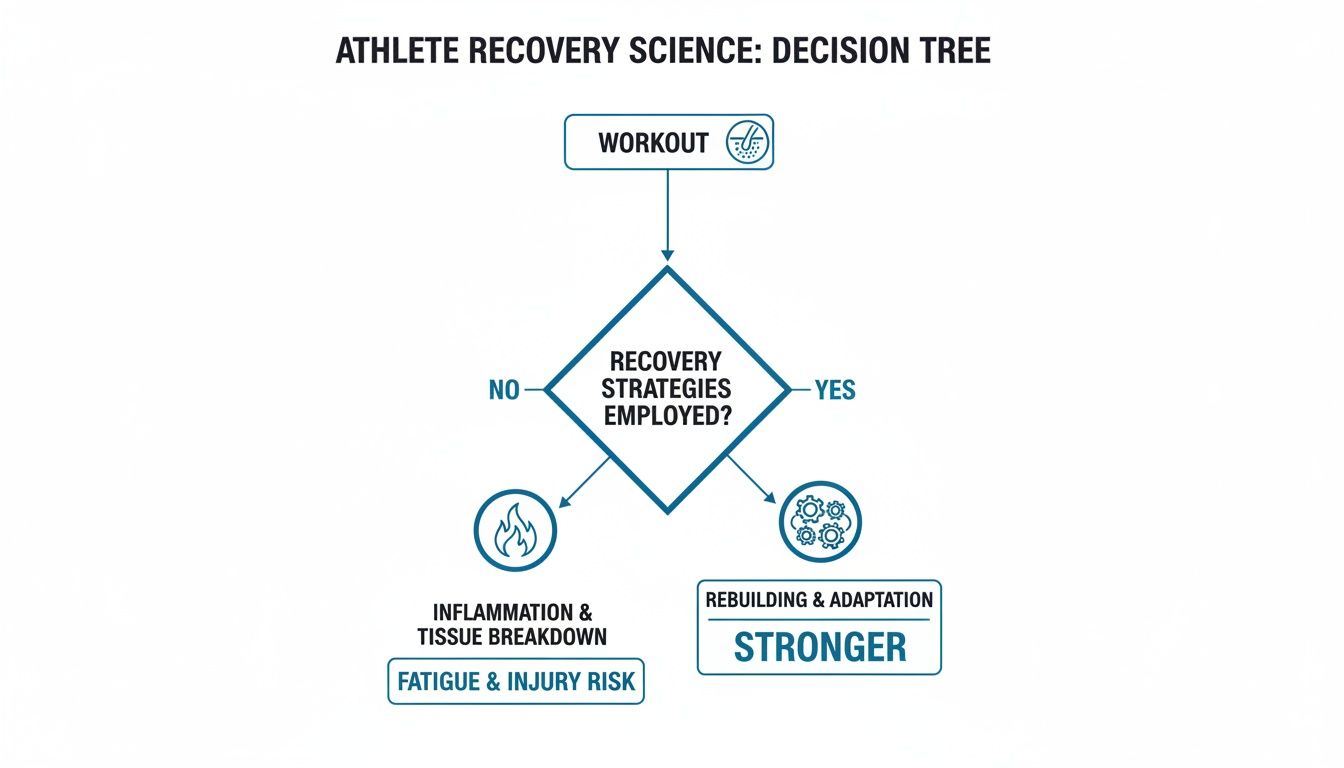
As you can see, making the choice to recover is the turning point that transforms physical stress into real, measurable gains.
Hyperbaric Chambers: Supercharging Cellular Repair
Imagine giving your cells a super-concentrated dose of the one thing they need most to heal: oxygen. That’s the entire idea behind Hyperbaric Oxygen Therapy (HBOT). When an athlete is inside a hyperbaric chamber, they're breathing almost pure oxygen in a pressurized room.
This simple change allows the lungs to absorb way more oxygen than they ever could at normal air pressure. This hyper-oxygenated blood plasma can then get to work, reaching inflamed or injured areas, speeding up tissue repair, and kicking cellular function into high gear. This health benefit is crucial for any serious workout recovery plan.
Massage Chairs: For Deep Myofascial Release
That deep muscle soreness you feel after a workout? It’s often caused by tight fascia and knotted-up muscle fibers. A high-quality massage chair isn’t just about relaxation; it delivers the kind of targeted, deep-tissue work needed to undo that damage.
Using a smart system of rollers, airbags, and vibration, these chairs can:
- Boost Circulation: The kneading and compressing motions get blood flowing, bringing fresh oxygen to your muscles and flushing out all the metabolic junk left over from your workout.
- Undo Muscle Tension: By applying precise pressure, the chair helps break up those stubborn knots and trigger points, giving you back your flexibility.
- Kickstart Relaxation: A good session calms the nervous system, shifting your body into that "rest and digest" state that's absolutely critical for deep recovery.
Cold Plunges and Saunas: The Power of Contrast Therapy
Alternating between hot and cold—known as contrast therapy—is a tried-and-true pillar of athletic recovery. It creates a powerful "pump" for your circulatory system, forcing blood to move and dramatically speeding up the healing process.
Cold Plunges are all about vasoconstriction (tightening the blood vessels). This rapid cooling helps to:
- Crush inflammation and swelling almost immediately.
- Flush out lactic acid and other waste products from the muscles.
- Soothe sore muscles for instant pain relief.
Saunas do the exact opposite, triggering vasodilation (widening the blood vessels). The heat helps to:
- Increase blood flow, delivering a rush of nutrients to the muscles and skin.
- Promote deep relaxation in your muscles and ease stiff joints.
- Lower stress hormones like cortisol, calming your whole system down.
When you use them back-to-back, you get the best of both worlds, creating a dynamic healing environment that supercharges your body's ability to bounce back.
Red Light Therapy: Boosting Your Cellular Engines
At the microscopic level, recovery is all about energy. That's where Red Light Therapy (RLT) comes in. It uses very specific wavelengths of light that penetrate the skin to stimulate the mitochondria—the tiny powerhouses inside every one of your cells.
This process ramps up the production of ATP (Adenosine Triphosphate), which is basically the energy currency for your body. With more ATP on hand, your cells can repair themselves faster, build protein more efficiently, and fight off oxidative stress.
RLT is fantastic for easing joint pain, improving skin health, and healing soft tissue injuries. For a complete breakdown, check out our guide on red light therapy for athletes.
Treadmills: The Secret to Active Recovery
Finally, let's not forget about the basics. A simple, low-intensity walk or jog on a treadmill is a key part of active recovery. This gentle movement keeps blood flowing through tired muscles without adding more stress, helping to clear out metabolic waste and prevent stiffness on the days after a hard session.
To make sense of all these options, it helps to see them side-by-side.
Choosing Your Recovery Modality
This table breaks down how each piece of equipment works and who it's best for, helping you match the right tool to your specific recovery needs.
| Equipment | Mechanism | Key Health Benefit | Ideal Athlete Profile |
|---|---|---|---|
| Hyperbaric Chamber | High-pressure, concentrated oxygen | Accelerates tissue repair and reduces inflammation | Athletes with acute injuries or intense training loads |
| Massage Chair | Myofascial release via rollers/airbags | Relieves muscle tension and improves circulation | Anyone with chronic muscle soreness or tightness |
| Cold Plunge | Vasoconstriction from cold immersion | Reduces inflammation and post-workout soreness | Endurance athletes and those in high-impact sports |
| Sauna | Vasodilation from heat exposure | Increases blood flow and promotes muscle relaxation | Athletes needing to improve flexibility and reduce stress |
| Red Light Therapy | Mitochondrial stimulation with light | Enhances cellular energy (ATP) and speeds healing | Athletes with joint pain or soft tissue injuries |
| Treadmill | Low-intensity cardiovascular movement | Facilitates waste removal and reduces muscle stiffness | All athletes on their "off" days for active recovery |
Each tool in this arsenal offers a distinct advantage. Understanding how and when to use them is the first step toward building a recovery protocol that actually works. To dig even deeper, it's worth reading an ultimate guide to the best recovery tools for athletes.
Building Your Personalized Recovery Protocol
Having the best recovery gear is one thing, but the real magic happens when you know exactly how and when to use it. A generic, one-size-fits-all recovery plan just won't cut it. Every athlete is different, and every sport puts a unique kind of strain on the body. The goal is to build a protocol that matches the right tool to your specific training demands.
Think of it like this: you wouldn't send a Formula 1 car into the pit and have the crew use the same tools for an engine tune-up as they would for a tire change. It’s all about precision. A marathon runner’s recovery plan will—and should—look completely different from a powerlifter’s, because the physiological stress they're managing is fundamentally different.
Sport-Specific Recovery Strategies
The secret to a killer recovery plan is first understanding the primary stressors of your sport. This lets you pick your tools with intention, targeting the exact systems that are taking the biggest hit. A truly effective protocol aligns the equipment's health benefits directly with what your body is screaming for.
Let's break it down with two clear examples:
-
The Endurance Athlete (Marathon Runner): For runners, the game is all about managing repetitive impact, muscle breakdown in the legs, and system-wide inflammation. Their protocol should go right after those problems. Regular cold plunges are perfect for shutting down post-run swelling and leg soreness. A session in a massage chair can then work on releasing the inevitable tightness in their calves, quads, and hamstrings.
-
The Strength Athlete (Powerlifter): A powerlifter’s biggest battle is with central nervous system (CNS) fatigue and the structural stress on major muscle groups from moving heavy iron. Their workout recovery needs to be focused on deep relaxation and repair. An infrared sauna session is brilliant for calming the CNS and easing muscle tension, while red light therapy can be aimed at specific joints like shoulders and knees that get hammered during heavy lifts.
This isn't just recovery; it's smart, targeted recovery.
Mastering Contrast Therapy
If there's one technique every athlete should have in their back pocket, it's contrast therapy—the simple but powerful practice of alternating between hot and cold. This creates a "vascular pump" effect, forcing your blood vessels to rapidly constrict and then dilate. This pumping action is incredibly efficient at flushing out metabolic junk and flooding your tissues with fresh, oxygenated blood. The wellness benefits of this technique are significant for workout recovery.
A classic contrast therapy session pairs a sauna with a cold plunge. Here’s a simple and effective protocol to follow:
- Start Hot: Jump in the sauna for 15-20 minutes to boost circulation and get your muscles relaxed.
- Go Cold: Immediately switch to a 2-5 minute cold plunge. The shock constricts your blood vessels, pushing blood from your limbs back toward your core.
- Repeat the Cycle: Head back to the sauna for another 10-15 minutes, then hit the cold plunge again. Aim for 2-3 full cycles.
- Always End Cold: Finishing with the cold plunge helps stamp out any lingering inflammation, leaving your body in a primed, anti-inflammatory state.
By taking control of your circulatory system this way, contrast therapy kick-starts the healing process, significantly reduces delayed onset muscle soreness (DOMS), and helps regulate your nervous system.
Timing Your Recovery for Maximum Impact
When you recover is just as crucial as how you recover. Weaving recovery sessions into your weekly schedule makes them a non-negotiable part of your training, not an afterthought.
Here’s what a structured week could look like for an athlete training five days a week:
Sample Weekly Recovery Schedule
| Day | Training Focus | Post-Workout Recovery (Immediate) | Evening Recovery (Deeper Healing) |
|---|---|---|---|
| Monday | Heavy Lifting (Legs) | Cold Plunge (10 min) | Massage Chair (30 min) |
| Tuesday | Skill Work/Cardio | Active Recovery (Treadmill walk) | Red Light Therapy (15 min) |
| Wednesday | Heavy Lifting (Upper) | Contrast Therapy (3 cycles) | Rest |
| Thursday | Active Recovery | Light mobility work | Sauna (20 min) |
| Friday | Full Body High-Intensity | Cold Plunge (15 min) | Massage Chair (30 min) |
| Saturday | Full Rest Day | Gentle stretching | Optional Sauna Session |
| Sunday | Full Rest Day | Light walk | Prep for the week |
This kind of structure turns your recovery gear from a random collection of tools into a fine-tuned system for peak performance.
By customizing your protocol to your sport, mastering techniques like contrast therapy, and timing your sessions for the biggest impact, you’re well on your way. For more strategies on optimizing your health and wellness, check out the Medeq Wellness Journal.
How to Choose Safe and Effective Recovery Equipment
Investing in recovery equipment for athletes is a huge step, but let's be honest—the market is flooded. What really separates a pro-grade device from a consumer gadget you'll regret buying? It’s all in the details.
The right details mean better safety, real effectiveness, and equipment that actually lasts. Making a smart choice isn't about falling for flashy marketing. It's about knowing what to look for under the hood to get consistent, reliable results and genuine health benefits.
Whether you're an athlete, coach, or clinic owner, this guide will give you the practical know-how to invest wisely.
Decoding Quality and Clinical-Grade Features
The gap between a truly effective recovery session and just going through the motions often boils down to one word: precision. Professional-level equipment is built for clinical accuracy, with controls and materials that most consumer products simply can't offer.
When you're comparing options, keep these non-negotiables in mind:
- Precise Controls: For tools like saunas and cold plunges, "hot" or "cold" isn't good enough. You need exact temperature management to run specific protocols safely and get the intended benefits.
- Clinical-Grade Materials: Look for durable, non-toxic materials built for heavy, repeated use. This is about more than just longevity; it's about safety during every single session.
- Essential Safety Certifications: Don’t even consider a product without certifications like UL (Underwriters Laboratories) or ETL (Intertek). These marks prove the equipment has passed rigorous, independent safety tests.
It's also crucial to understand how to use these tools properly. For instance, you can check out this complete guide on heating pad safety to see how important proper application is.
Prioritizing Long-Term Maintenance and ROI
Your investment doesn't stop the day the equipment arrives—it starts. Good maintenance is what keeps your gear safe, effective, and delivering a real return on your investment for years to come.
A piece of recovery equipment is only as good as its condition. Consistent maintenance isn't just about protecting your financial investment; it's about protecting the health and safety of the athletes who depend on it for their recovery.
Sticking to a simple maintenance routine makes all the difference.
Simple Maintenance Checklist:
- Regular Cleaning: Always wipe down surfaces after each use, especially on high-contact equipment like massage chairs or hyperbaric chambers. Use the cleaning solutions recommended by the manufacturer.
- Inspect Electrical Components: Give the cords, plugs, and connections a quick check periodically. Frayed wires are a serious safety hazard you can easily avoid.
- Check Mechanical Parts: For anything with moving parts, like a massage chair or treadmill, listen for weird noises and check for anything loose.
- Calibrate When Necessary: If your device relies on precise temperature or pressure, you need to verify its accuracy from time to time to make sure it's still doing its job correctly.
For more on how specific tools like hyperbaric chambers work, the Medeq Wellness Journal has some great information.
By focusing on these clinical features and committing to a simple maintenance plan, you turn a purchase into a powerful, long-term asset for performance and well-being.
Your Next PR Is Won in Recovery
Let's be blunt: the old "no pain, no gain" mantra is missing half the story. The real secret to unlocking peak athletic performance isn't just about how hard you train—it's about how smart you recover.
Gone are the days when "rest" meant collapsing on the couch and hoping for the best. Today's elite athletes and top-tier programs know that what you do between sessions is what truly cements your progress.
Integrating dedicated recovery equipment for athletes isn't just a trend; it's a strategic necessity. This is about more than just feeling less sore. It’s about triggering deep physiological adaptations that translate to real-world results. Whether it’s driving cellular repair with a hyperbaric chamber or releasing stubborn knots with a massage chair, each tool is designed to amplify your body's natural healing processes.
Beyond Muscle Deep
The health benefits run far deeper than just soothing tired muscles. Think of it as a total system upgrade for your wellness.
- Accelerated Muscle Repair: By flooding damaged tissues with oxygen-rich blood, you dramatically shrink the downtime between gut-busting workouts.
- Crushing Inflammation: Tools like cold plunges are a direct assault on the swelling that kills consistency. Even better, contrast therapy acts like a pump for your circulatory system, flushing out all that metabolic junk.
- Sharper Mind, Deeper Sleep: Winding down the nervous system with a sauna or red light therapy isn't a luxury—it's essential for the deep, restorative sleep where the real magic happens.
This isn't about passive waiting; it's about taking active control. It’s a mindset shift that places workout recovery right at the heart of your training plan. This is the edge that keeps you in the game, consistently pushing your limits and staying resilient.
To dive deeper into the strategies and equipment that are redefining performance, check out the Medeq Wellness Journal.
Your Questions Answered: Making Recovery Equipment Work for You
Diving into the world of high-tech recovery tools can bring up a lot of questions. That’s a good thing. Asking the right questions is the first step toward building a recovery plan that actually gets results.
Let's clear up some of the most common ones so you can stop guessing and start recovering with purpose.
How Often Should I Use My Recovery Gear?
The honest answer? It depends entirely on your training schedule and how hard you're pushing. This isn't about using every tool, every day. It's about smart, targeted workout recovery that matches your body's immediate needs.
If you're training hard 5-6 days a week, weaving some form of recovery into your daily routine is a game-changer. Think a 20-minute sauna session to down-regulate your nervous system at night, or a quick, bracing 10-minute cold plunge right after a brutal workout. On your dedicated rest days, you can go deeper with a longer session in a massage chair to work out the knots. Consistency is what separates good from great.
Treat your recovery like you treat your workouts—schedule it and be intentional. For those with a more moderate training schedule, aiming for 3-4 dedicated recovery sessions per week is a solid baseline for managing soreness and speeding up the healing process.
Can I Stack Different Recovery Tools on the Same Day?
Not only can you, but you absolutely should. This is where you unlock some of the most powerful health benefits. "Stacking" different modalities—like the proven method of contrast therapy—is a cornerstone of advanced recovery for a reason. The classic example is moving between a hot sauna and a cold plunge.
That rapid switch from hot to cold creates a powerful "pump" effect in your vascular system. You’re literally flushing out metabolic junk and flooding your muscles with fresh, nutrient-dense blood. You can also pair an active session (like contrast therapy) with a passive one. For instance, follow up your sauna-and-plunge circuit with a 20-minute run in a massage chair to tackle any stubborn tightness. The whole point is to create a combined effect where one tool makes the next one even more effective.
Is This Stuff Just for Pro Athletes?
This is probably the single biggest myth out there. While pro athletes were definitely the first to catch on, the health benefits of this equipment are for everyone. Anyone who is active—from the weekend runner to the dedicated CrossFitter to the busy executive—can see a massive difference.
These tools are built to fight the physical and mental stress that everyone deals with. A massage chair is just as good at relieving the back pain from sitting at a desk as it is at soothing sore muscles after leg day. And a sauna offers incredible stress-reduction benefits that improve your overall wellness, no matter how you train.
This equipment isn't about being a pro. It's for anyone who is serious about investing in their long-term health.
For more wellness insights, visit the Medeq Wellness Journal.
At MedEq Fitness, we believe optimized recovery is the key to unlocking your full potential. Our curated selection of professional-grade equipment, from hyperbaric chambers to cold plunges and massage chairs, is designed to support your wellness journey. Explore our collection and build your ultimate recovery sanctuary at https://www.medeqfitness.com.