Your Guide to the Rowing Machine for Health and Recovery
A rowing machine isn't just another piece of cardio equipment. It's a complete wellness tool that merges cardiovascular training with serious strength work in one fluid, low-impact movement. This makes it one of the most efficient and safest ways to improve your overall health, build functional muscle, and accelerate workout recovery.
Why a Rower Is Your All-in-One Wellness Tool
Think of it like this: what if you could have a strength coach, a cardio trainer, and a mindfulness guide all in a single machine? That's the real magic of a well-built rowing machine. It goes far beyond basic exercise to become the centerpiece of a balanced wellness routine, benefiting both your body and mind with every rhythmic stroke.
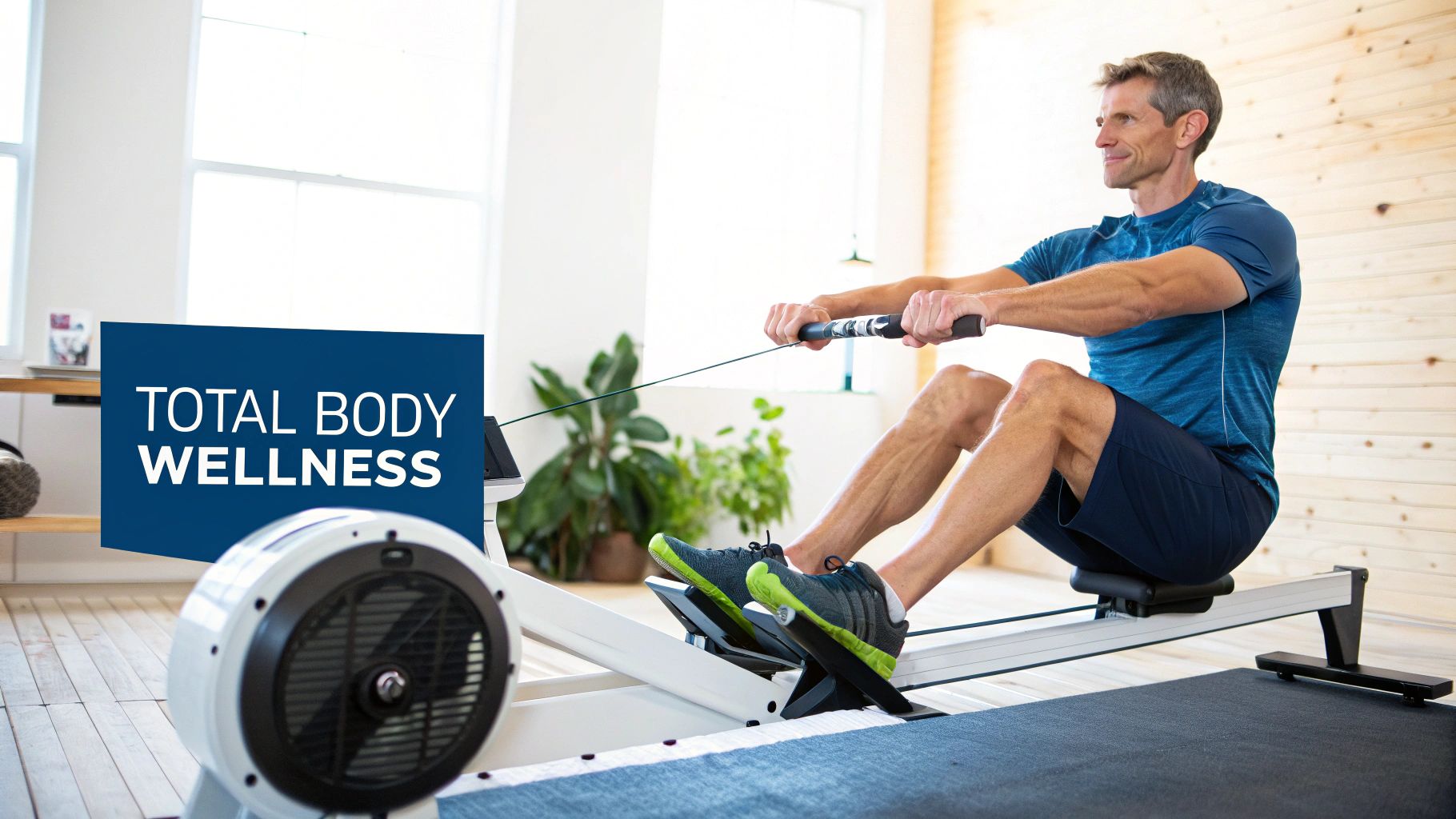
Unlike workouts that isolate small muscle groups one at a time, rowing is a true total-body effort. Each and every stroke is a coordinated sequence that lights up an incredible 86% of your muscles. This comprehensive engagement makes it one of the most effective workouts you can do, delivering significant health benefits without demanding hours of your time.
The Power of Full-Body Engagement
The secret to the rower's effectiveness is its ability to unite your upper and lower body in a single, powerful motion. The movement is a symphony of muscular work, with different groups firing in perfect succession to create a smooth, powerful stroke. This comprehensive approach is a cornerstone of its health benefits.
Let's break down what's happening:
- Legs and Glutes: The push starts here. Your quads, hamstrings, and glutes provide the initial drive that powers the entire movement.
- Core: Your abs and lower back act as the bridge, stabilizing your torso to transfer that raw power from your legs to your upper body.
- Back and Shoulders: The large muscles in your upper back and shoulders engage next, pulling the handle in toward your chest.
- Arms and Hands: Finally, your biceps and forearms finish the stroke with control, completing the sequence.
This integrated approach doesn't just build balanced, functional strength; it also gets your heart rate up for a fantastic cardio session. It's this one-two punch that makes rowing such a uniquely powerful tool for almost any wellness goal.
Gentle on Joints, Tough on Goals
One of the biggest health benefits of rowing is its low-impact nature. High-impact activities like running can put a ton of stress on your knees, hips, and ankles over time. Rowing gives you a killer workout while you're seated.
This design is a game-changer for long-term joint health. It allows for high-intensity training without the associated wear and tear, making it a sustainable fitness solution for people of all ages and fitness levels.
This also makes it the perfect tool for workout recovery. On days when you're sore or tired from other training, a light rowing session can boost blood flow to your muscles. This helps flush out metabolic byproducts and kickstart the repair process without adding more strain. This active recovery is a crucial part of any wellness routine. You can dive deeper into the specific water rowing machine benefits in our detailed guide.
The Meditative Rhythm of Rowing
Beyond the purely physical, the repetitive, rhythmic nature of rowing provides a surprising mental health boost. The steady whoosh of the flywheel combined with the consistent motion of the stroke can create a calming, almost meditative state. It’s an opportunity to tune out the noise, reduce stress, and sharpen your focus.
This blend of physical effort and mental calm is what truly sets the rowing machine apart. It doesn’t just train your body; it helps center your mind, making it a powerful instrument for holistic wellness. For more wellness insights, visit my Blog: https://medeqfitness.com/blogs/medeq-wellness-journal.
Choosing the Right Type of Rowing Machine
Finding the perfect rowing machine is a lot like choosing a training partner—it has to match your goals, your environment, and the kind of experience you're after. The real heart of a rower is its resistance mechanism, which dictates everything from the feel of the stroke to the sound it makes in your home.
Getting to know the four main types—water, air, magnetic, and hydraulic—is the first step to making a decision you’ll feel great about for years to come. It’s not about finding the "best" rower, but the one that’s best for you.
Are you chasing that true on-the-water feeling? Or do you need something whisper-quiet for those 5 AM sessions? Let’s dive into what makes each type unique.
Water Rowing Machines: The Authentic Experience
Water rowers are famous for one thing: delivering the most realistic rowing experience you can get on dry land. They work with a flywheel spinning inside a tank of actual water, creating a smooth, deep resistance that feels just like pulling oars through a lake.
The physics are simple and beautiful—the harder you pull, the more resistance the water creates. This gives you a workout that feels incredibly natural and intuitive. As a bonus, the only sound you hear is the gentle "whoosh" of water with each stroke. Many people find it meditative, a far cry from the mechanical noise of other machines.
- Feel: Exceptionally smooth and consistent, perfectly mirroring real-world rowing.
- Sound: A calming swishing sound that actually adds to the workout experience.
- Best For: Anyone who wants an authentic feel, a peaceful workout, and a machine that looks as good as it performs.
Because they blend performance with stunning design, handcrafted models are often a perfect fit for a home gym that’s also a living space. You can see how function meets form by exploring this collection of beautiful wooden water rowers.
Air Rowing Machines: The Athlete's Choice
If you’ve ever been to a CrossFit box or seen competitive rowers train indoors, you’ve seen an air rower. Often called "ergs," these machines use a fan flywheel to generate resistance. The concept is straightforward: the faster you pull, the more air the fan has to churn, and the harder it gets.
This creates a super responsive workout that instantly rewards effort with intensity. The only real drawback is the noise. That spinning fan can get loud, which is something to consider if you live in an apartment or share your space.
An air rower gives you raw, immediate feedback on your power output. That’s why it’s the go-to tool for High-Intensity Interval Training (HIIT) and for athletes who live and die by their performance metrics.
Magnetic Rowing Machines: The Silent Operator
Need to work out without waking the house? A magnetic rower is your answer. These machines use powerful magnets that move closer to or further from a metal flywheel to adjust the tension. Because nothing is actually touching, they are virtually silent.
Resistance is usually changed with the push of a button, giving you predictable and repeatable levels for every single workout. While the feel isn't quite as organic as an air or water rower, the quiet operation and consistency are huge wins for home use.
Hydraulic Rowing Machines: The Compact Solution
Hydraulic rowers are easily the most compact and budget-friendly of the bunch. Resistance comes from hydraulic pistons attached to the handles. They get the job done, but the rowing motion itself is the least like actual rowing and can sometimes feel a bit mechanical or less fluid.
Their tiny footprint makes them a great pick if you’re really tight on space. Just know that they typically don't offer the same durability or advanced performance tracking you’d find on water, air, or magnetic models.
Rowing Machine Resistance Type Comparison
Sometimes, seeing things side-by-side makes the decision click. This table breaks down the key differences to help you find the perfect fit for your fitness and recovery goals.
| Resistance Type | Feel and Experience | Noise Level | Best For |
|---|---|---|---|
| Water | Smooth, dynamic, and realistic. Resistance increases with user effort, mimicking on-water rowing. | Low to Moderate: A soothing "whoosh" of water that many find relaxing. | Users seeking an authentic feel, a meditative experience, and an aesthetically pleasing machine. |
| Air | Responsive and powerful. Resistance scales directly with the intensity of your pull. | High: The spinning fan generates significant noise, especially during intense workouts. | Competitive athletes, HIIT enthusiasts, and those who prioritize performance metrics and data. |
| Magnetic | Consistent and predictable. Resistance is adjusted manually or electronically. | Very Low: Nearly silent operation, making it ideal for shared or quiet living spaces. | Home gym users who need a quiet machine for steady-state cardio and structured workouts. |
| Hydraulic | Basic and functional. Can sometimes feel less smooth than other types. | Low: Generally quiet, with some minor mechanical sounds from the pistons. | Beginners, individuals on a tight budget, or those with very limited workout space. |
Ultimately, choosing the right rower comes down to balancing what you want out of your workout with the practical needs of your space and lifestyle. For more deep dives into fitness equipment, check out the MedEq Wellness Journal. Also, check out my Blog: https://medeqfitness.com/blogs/medeq-wellness-journal.
The Science of Rowing for Health and Recovery
We often think of rowing as just a killer cardio workout, but its health benefits run much deeper. The fluid, rhythmic motion is a powerful tool for building foundational health and wellness. It’s a systematic process that strengthens your most vital systems from the inside out. When you understand the science behind each stroke, you see why the rower has become a cornerstone of modern wellness and workout recovery.
At its heart, rowing is a masterclass in cardiovascular efficiency. Each session is like a training camp for your heart, teaching it to pump blood more effectively. This strengthens the cardiac muscle and improves circulation everywhere. This is not just about feeling less winded during a workout; it's about building a more resilient cardiovascular system that supports long-term health.
The Dual Benefit of Strength and Endurance
What really makes the rowing machine stand out is its unique ability to build both muscular strength and aerobic endurance at the same time. Picture it as combining a weightlifting session with a long run, but without any of the harsh impact on your joints.
This one-two punch happens with every single stroke:
- The Drive: This is the explosive push with your legs. It builds powerful, lean muscle in your glutes, quads, and hamstrings.
- The Pull: As you engage your core, back, and arms to finish the movement, you’re building upper-body strength and stability.
- The Repetition: Holding this cycle for several minutes builds incredible aerobic capacity, training your body to use oxygen far more efficiently.
This potent combination makes rowing an incredibly effective use of your time. This efficiency is a key reason for its exploding popularity, especially in North America, which now leads the global market. The trend is fueled by the boom in home workouts and a focus on low-impact cardio. People want an efficient fat-burner that engages 86% of their muscles and can torch up to 600 calories in just 30 minutes.
This flowchart helps simplify the selection process by walking you through key decisions based on feel, noise, and space.
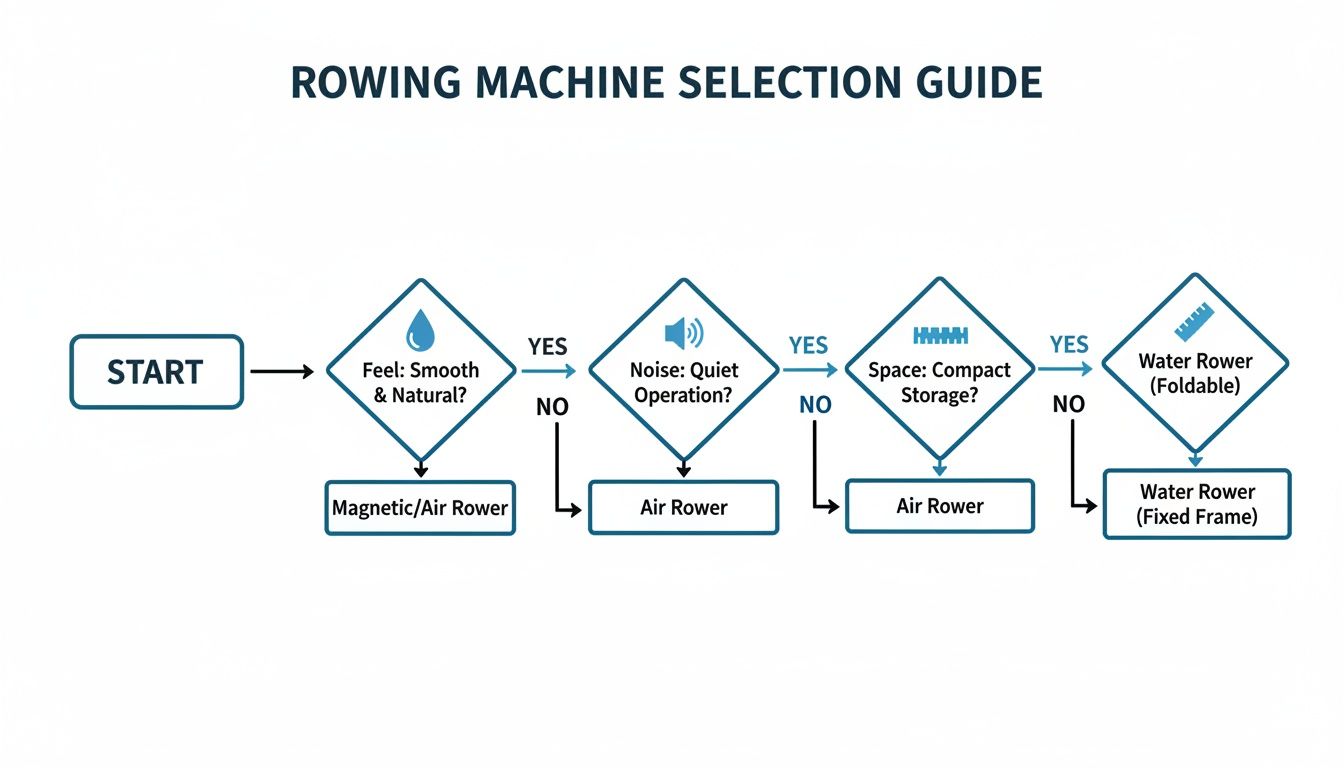
As you can see, if you're after that authentic "on-water" feel, a water rower is your best bet. If silence is golden, a magnetic model is the way to go. This graphic can help you align your wellness priorities with the right machine.
Rowing as a Tool for Advanced Workout Recovery
While high-intensity rowing builds peak performance, low-intensity rowing is a secret weapon for workout recovery. A gentle session on the rower is a form of active recovery, a scientifically proven method for speeding up your body's natural repair process.
A slow, controlled "recovery row" boosts blood flow to sore, tired muscles. This helps flush out metabolic byproducts like lactic acid and delivers a fresh supply of oxygen and nutrients to help repair tissue.
This gentle movement is far more effective at reducing stiffness and delayed onset muscle soreness (DOMS) than just sitting on the couch. Better yet, the focus on mindful, rhythmic breathing during a recovery row can help shift your nervous system out of "fight-or-flight" and into a "rest-and-digest" state—which is where deep recovery and wellness originate.
Enhancing Wellness with Contrast Therapy
To take your workout recovery to the next level, you can integrate rowing into a contrast therapy routine. This wellness practice involves alternating between heat and cold to kickstart circulation and slash inflammation. A rowing machine is the perfect tool for the "heat" part of the cycle.
Here’s a simple but powerful contrast therapy protocol:
- Warm-Up (Heat): Hop on the rower for a 10-15 minute session at a light-to-moderate pace. The goal is to elevate your core body temperature and get your blood moving.
- Cold Exposure: Immediately follow up with a cold plunge or cold shower for 1-3 minutes. This constricts the blood vessels, forcing metabolic waste out of your tissues.
- Rest or Repeat: You can stop there or repeat the cycle 2-3 times for maximum benefit, always finishing with cold.
This powerful combination gives your circulatory system a controlled shock, enhancing resilience, taming inflammation, and fast-tracking muscle recovery.
The health benefits go beyond the physical. The consistent, low-impact movement can improve key wellness metrics like Heart Rate Variability (HRV) and sleep quality—both signs of a more balanced, resilient nervous system. For a deeper dive into advanced recovery strategies, check out the articles on the MedEq Wellness Journal. My Blog is another great resource: https://medeqfitness.com/blogs/medeq-wellness-journal.
Key Features to Look for When Buying a Rower
Investing in a rower is a big move, but with so many models on the market, it’s easy to get lost in the noise. A great machine is more than just a seat and a handle—it's an engineered tool built for performance, comfort, and longevity.
To make the right call, you need to look past the marketing fluff and focus on the core components that shape your workout every single day. From the data on the monitor to the materials under your seat, every detail matters for rowing safely, effectively, and enjoying its health benefits for years to come.
The Performance Monitor Matters
Think of the monitor as your rower’s dashboard. Without clear, accurate feedback, you’re just rowing blind. A quality monitor turns simple movement into a measurable, goal-driven training session.
When you’re looking at a monitor, these are the metrics that count:
- Split Time (Pace per 500m): This is the single most important number for tracking intensity and progress. It tells you exactly how long it would take to row 500 meters at your current speed.
- Stroke Rate (SPM): This measures your strokes per minute, helping you master rhythm and efficiency. It’s absolutely vital for controlling recovery rows.
- Distance and Time: The basics. You need these to structure any workout, whether you're going for a 5,000-meter endurance piece or a 20-minute HIIT session.
A good monitor puts this data right where you can see it, so you can stay focused on your form instead of messing with buttons.
Build Quality and Material Integrity
A rower's durability comes down to what it's made of. High-quality materials don't just last longer; they deliver a smoother, more stable ride. While steel and aluminum are common, solid wood frames offer a unique blend of strength and aesthetics.
A well-crafted wooden rower, for instance, naturally absorbs vibration. This creates a remarkably smooth and quiet ride that metal frames often struggle to replicate, making it an ideal choice for home and clinical settings where a peaceful environment is valued.
Look for a machine with a solid, heavy-duty frame that won’t wobble or shift when you’re pulling hard. The seat rail needs to feel robust, and the chain or strap connecting the handle should feel totally reliable.
Finding the Right Footprint and Storability
Let’s be practical—space matters. Before you buy, measure your workout area and remember to account for your full range of motion. You need clearance behind you for the catch and in front of you for the finish.
Many modern rowers are designed for exactly this problem and can be stored vertically. This is a game-changer for smaller spaces, letting you reclaim your floor when you’re done. A rower that can stand up in a corner or closet is a smart choice for apartments or multi-use rooms.
Ergonomics for Pain-Free Rowing
Ergonomics is all about how the machine fits your body. Getting this right is critical for preventing injury and maintaining proper form. The wrong fit can lead to nagging pain in your back, knees, or shoulders, completely wiping out the low-impact health benefits of rowing.
Pay close attention to these three contact points:
- The Seat: It should be contoured and comfortable enough for long sessions without causing numbness.
- The Handle: An ergonomic handle keeps your wrists in a neutral, strain-free position.
- The Footplates: Look for adjustable plates that fit your shoe size and allow for a natural pivot at the ankle.
Ultimately, a great rowing machine should feel like an extension of your body. By prioritizing these key features, you’ll find a machine that not only meets your fitness goals but also supports your long-term health and wellness. For more in-depth equipment guides, be sure to visit the MedEq Wellness Journal. Don't forget my Blog: https://medeqfitness.com/blogs/medeq-wellness-journal.
Workout Programs for Performance and Recovery
The beauty of a rowing machine is its incredible range. One day, it can push you to your absolute limit. The next, it can be the perfect tool for gentle, active workout recovery.
It all comes down to how you structure your time on the machine. Whether you're chasing new performance goals or just helping your body heal and repair, the right program is everything for maximizing the health benefits.
We've laid out two different paths here—one for high-intensity output and another for restorative wellness. Think of them as templates you can build on as you get stronger and more in tune with your body's needs.
Performance Path: High-Intensity Interval Training
High-Intensity Interval Training (HIIT) and rowing are a perfect match. The rower demands explosive, full-body power, which is exactly what makes HIIT so effective for building anaerobic capacity and incinerating calories in a short amount of time. To get the timing just right, check out this a guide to precision-driven HIIT training.
Here’s a classic power-and-speed HIIT session:
- Warm-Up (5 Minutes): Start with a smooth, easy pace at a low stroke rate (20-22 SPM). Dial in your form: legs, then core, then arms. Slowly ramp up the intensity over the full five minutes until you feel warm and ready to go.
-
The Main Set (12 Minutes): This is where the work happens. You’ll do 6 rounds of this interval:
- Work (1 Minute): Explode into a high-intensity pace, hitting 85-90% of your maximum effort. The stroke rate should be quick and powerful, somewhere around 28-32 SPM.
- Rest (1 Minute): Drop the intensity way down to a light paddle. Don't stop moving, but focus on catching your breath. Your stroke rate should fall back to 20-22 SPM.
- Cool-Down (3-5 Minutes): Wind down with slow, controlled rowing. Let your heart rate come down naturally as you gradually reduce your effort and stroke rate.
Endurance Path: Steady-State Cardio
To build a rock-solid aerobic base, you can't beat steady-state rowing. The goal isn't sprinting; it's about finding a challenging but sustainable pace and holding it for an extended period. This is what trains your body to use oxygen more efficiently, boosting your overall stamina and cardiovascular health.
Think of this as your "long run" on the rower. It’s a mental grind that builds cardiovascular resilience, teaching your body to work for longer without gassing out.
Give this endurance workout a try:
- Duration: 30 Minutes
- Intensity: Settle into a conversational pace, right around 70-75% of your max heart rate. You should be able to get out a few words at a time.
- Stroke Rate (SPM): Keep it consistent and efficient, right in the 22-26 SPM range. The power comes from a strong leg drive, not from rushing your strokes.
Recovery Path: The Gentle Flush
Some days, you just feel beat up. Your muscles are sore, and you're fatigued from other training. That’s the perfect time for a recovery row. This super low-intensity session gets the blood flowing, which helps flush out metabolic junk and deliver fresh oxygen to your muscles without adding any more stress. This is a key part of workout recovery and overall wellness.
Here’s a simple template for a great recovery day:
- Duration: 15-20 Minutes
- Intensity: Keep it very light, around 50-60% of your max effort. It should feel easy, almost therapeutic.
- Stroke Rate (SPM): Nice and low, aiming for 18-22 SPM. Focus on long, smooth, technically perfect strokes. Speed is not the goal here.
Using a Rower in Clinical and Wellness Settings
For professionals in physical therapy, rehabilitation, and corporate wellness, a rowing machine isn't just another piece of cardio equipment—it's a clinical tool. Its unique blend of low-impact mechanics and full-body muscle activation makes it a powerful asset for patient recovery and promoting client health with safety and precision.
The rower’s controlled, repeatable motion is a game-changer. It lets therapists map out exact protocols for rebuilding strength and mobility after an injury. Since it doesn’t pound vulnerable joints, it's ideal for patients coming back from knee, hip, or back issues, allowing them to build cardiovascular fitness and muscular endurance without unnecessary risk.
A Smart Investment for Professional Environments
Choosing a premium, quiet, and durable rower is more than an equipment purchase; it's a strategic move for any clinic or wellness center. It elevates the client experience and signals a real commitment to high-quality care. A quiet machine, like a wooden water rower, is especially valuable for maintaining a peaceful, therapeutic atmosphere.
This focus on quality is fueling serious market growth. The global rowing machines market is on track to hit over $3 billion USD by 2035, with water rowers gaining ground thanks to their authentic feel and versatility for both performance and recovery.
The controlled movement and detailed performance metrics from a high-quality rower enable precise tracking of a patient's progress. This data-driven approach is essential for demonstrating functional improvements and adjusting rehabilitation plans effectively.
The data you can pull from modern rowers also plugs into bigger healthcare strategies, like remote patient monitoring, by offering clear insights into a user's activity and progress. This transforms the rower into a powerful asset that can deliver a fast return on investment.
You can dive deeper into choosing the right recovery equipment for athletes and clinical settings with our professional guides. For more, check my Blog: https://medeqfitness.com/blogs/medeq-wellness-journal.
Answering Your Rowing Machine Questions
It's smart to have questions before bringing a new piece of equipment into your training or clinic. Let's clear up some of the most common ones so you can feel completely confident about adding rowing to your wellness routine.
Is a Rowing Machine a Good Investment for a Beginner?
Without a doubt. A rower is one of the best places to start because it's so low-impact. You get a fantastic full-body workout without putting unnecessary stress on your joints, which is a key health benefit.
The intensity is also completely up to you. You're in the driver's seat—the harder you push and pull, the more resistance you get. This means the machine meets you exactly where you are and grows with you as you get stronger. Focus on good form, and you'll build an incredible foundation for lifelong wellness.
How Often Should I Use a Rowing Machine?
For general fitness and health benefits, a great goal is 3 to 5 sessions per week, each lasting around 20-30 minutes. That’s the sweet spot for boosting cardiovascular health and building lean muscle without overdoing it.
If you’re mixing rowing with other training like lifting or running, 2 to 3 sessions a week is perfect. You can mix in some high-intensity days with longer, steadier rows. The number one rule? Always listen to your body and build in days for rest and workout recovery.
For more expert wellness tips and a deeper dive into common questions, check out our complete collection of articles on the MedEq Wellness Journal. My Blog also has more great info: https://medeqfitness.com/blogs/medeq-wellness-journal.
Will Rowing Make Me Bulky?
This is a very common myth, but the answer is no. Rowing is fundamentally an endurance and cardio exercise. It’s designed to build lean, functional, and toned muscle—not the kind of bulk you'd get from heavy, isolated weightlifting. Think strong, athletic physique, which contributes positively to overall health.
Your results ultimately come down to your diet and how you train. High-intensity sprints build power, while long, steady rows build stamina. For the vast majority of people, the result is a leaner, more defined body.
At MedEq Fitness, we believe your equipment should support every step of your health journey. Our handcrafted wooden rowing machines are designed to deliver a superior workout, blending powerful performance with a peaceful aesthetic that fits perfectly in any home or clinic.