What is red light therapy and how does it support skin health and recovery?
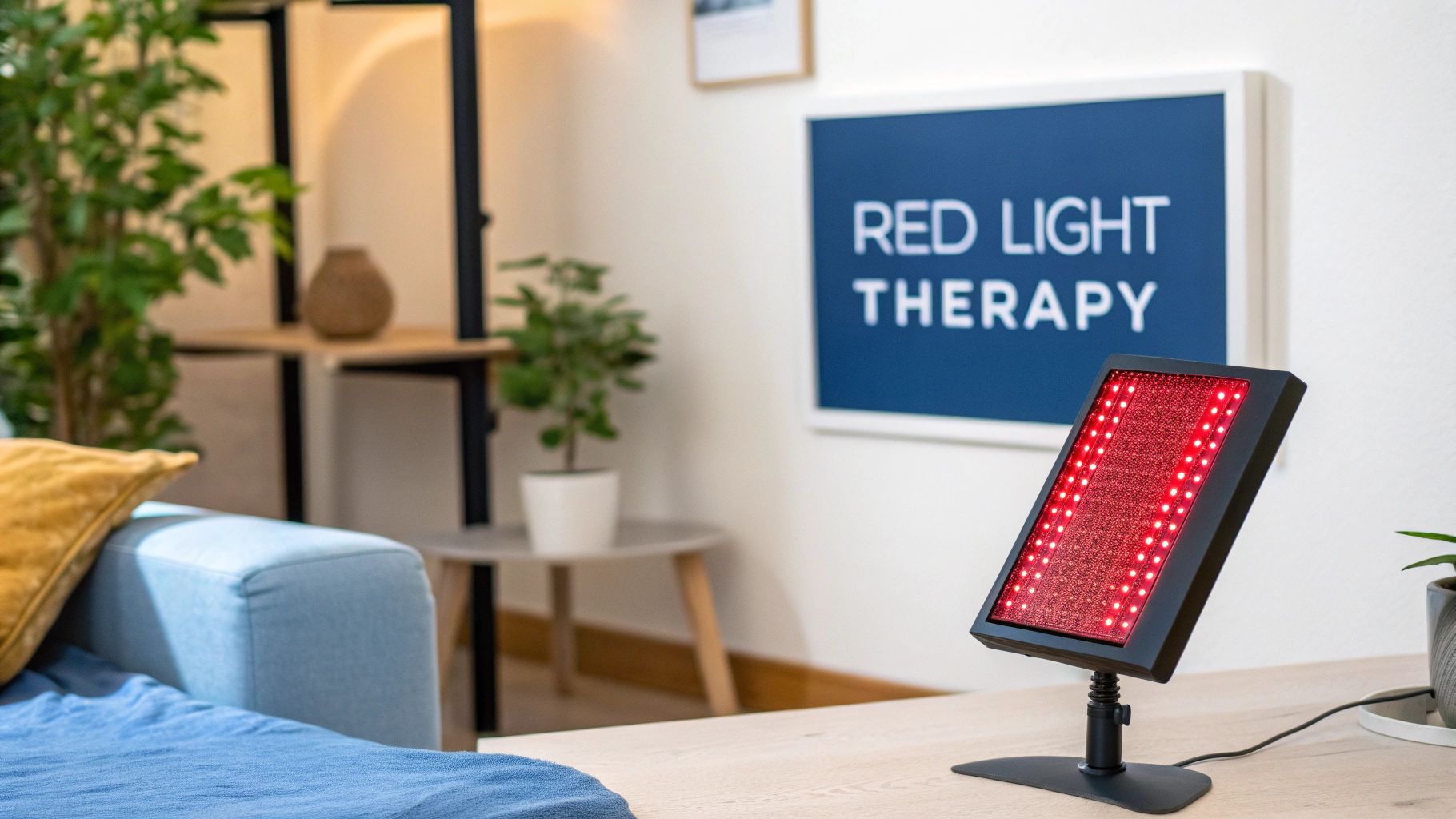
Red light therapy is a straightforward, non-invasive treatment that uses very specific wavelengths of red and near-infrared light to kickstart cellular function. The simplest way to think about it is like photosynthesis for your body. Just as plants use sunlight to create energy, your cells can use this targeted light to heal, cut down on inflammation, and fire up energy production.
This process underpins everything from faster workout recovery to better skin health, making it a cornerstone of modern wellness.
Your Essential Guide To Red Light Therapy
At its core, red light therapy—scientifically known as photobiomodulation (PBM)—is a tool that delivers concentrated, natural light to your body's cells. Unlike damaging ultraviolet (UV) light from the sun, these particular red and near-infrared wavelengths are both safe and therapeutic.
They penetrate through the skin to reach the mitochondria, which you can think of as the "powerhouses" inside every cell. This light exposure helps the mitochondria produce more Adenosine Triphosphate (ATP), the fundamental energy currency for all cellular activity.
With more ATP on hand, your cells have the fuel they need to repair themselves, regenerate, and simply perform better. This boost in cellular energy is the foundation for all the health and wellness benefits linked to red light therapy.
A Modern Approach To Wellness
This technology is getting serious traction in the health and wellness worlds, especially for physical recovery. Athletes and anyone serious about fitness use it to speed up muscle repair and reduce soreness after a tough session.
Because it helps dial down inflammation, it's become a go-to for anyone looking to optimize their recovery and get back to training with less downtime.
Red light therapy is a powerful, non-invasive method for supercharging cellular health. By enhancing mitochondrial function, it provides the energy cells need to heal, leading to better workout recovery, reduced pain, and improved skin vitality.
But its applications go way beyond the gym. From rejuvenating skin by firing up collagen production to helping manage chronic pain, red light therapy is an incredibly versatile tool for wellness.
To give you a clearer picture, here’s a quick breakdown of the core concepts.
Red Light Therapy At A Glance
This table simplifies how red light therapy works and what it does best, giving you a quick reference for its key functions.
| Concept | Mechanism of Action | Primary Health & Wellness Benefits |
|---|---|---|
| Photobiomodulation | Red and near-infrared light penetrate tissue and are absorbed by mitochondria. | Boosts cellular energy (ATP) production. |
| Cellular Repair | Increased ATP fuels cellular repair and reduces oxidative stress. | Accelerates muscle recovery and wound healing. |
| Inflammation Reduction | The therapy helps modulate inflammatory responses at the cellular level. | Alleviates joint pain and muscle soreness. |
| Skin Rejuvenation | Stimulates fibroblasts to increase collagen and elastin production. | Reduces wrinkles and improves overall skin tone. |
By targeting the very foundation of cellular health, red light therapy offers a scientifically-backed approach to improving how you feel and perform.
For more insights on optimizing your health and recovery, explore our MedEq Wellness Journal.
The Unexpected Journey Of Red Light Therapy
You might be surprised to learn that the story of red light therapy doesn't start in a high-tech lab. Its roots go back centuries, built on a foundation of scientific curiosity, accidental discoveries, and brilliant insights.
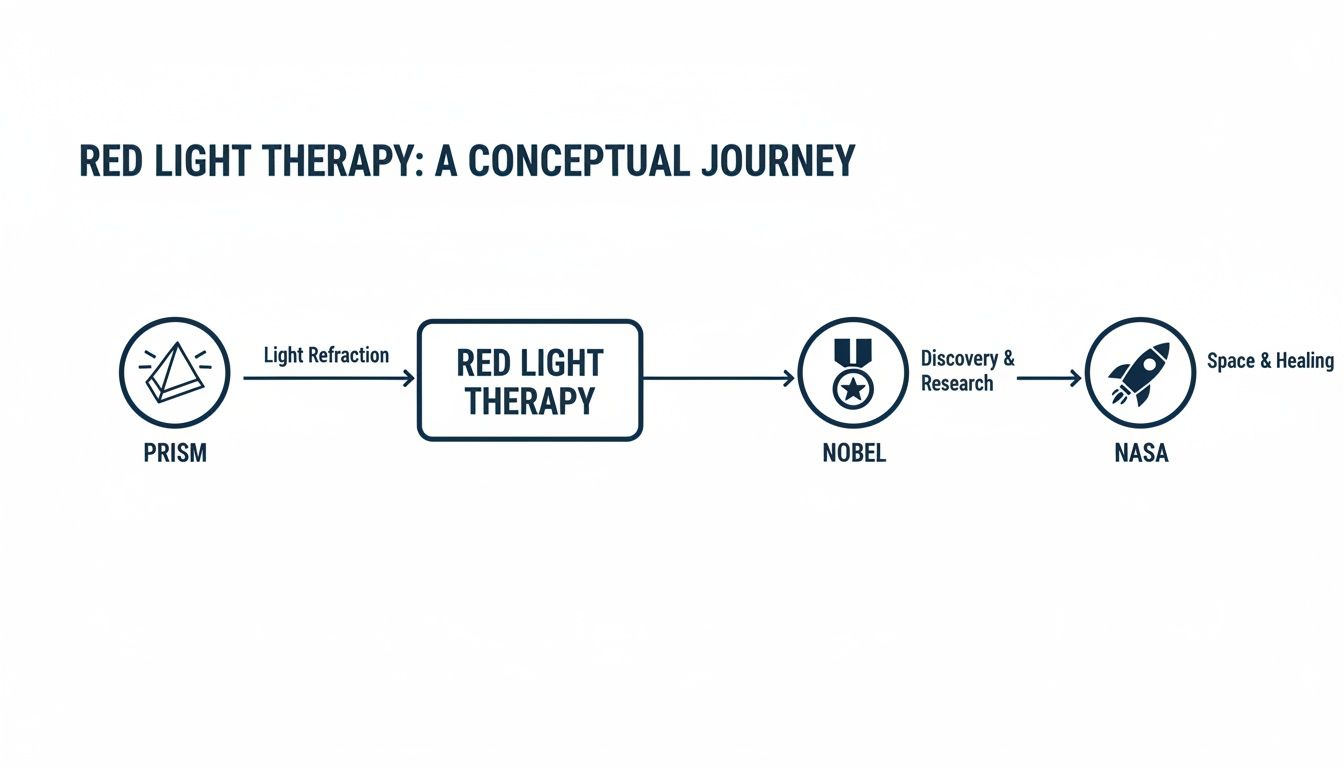
It all began with a simple observation about light itself. Way back in 1666, Isaac Newton used a prism to split white light into a rainbow of colors. This was the first time anyone truly understood that light was made of different wavelengths—including the specific red ones that would become so important later on.
From Scientific Curiosity To Medical Breakthrough
For a long time, this was just an interesting bit of physics. But then, in 1893, a Danish physician named Niels Ryberg Finsen started experimenting with artificial light to treat diseases. He figured out how to use concentrated light to successfully treat skin tuberculosis, a discovery so profound it earned him the Nobel Prize in Medicine in 1903.
Finsen’s work was the first real proof that specific wavelengths of light could have powerful biological effects. He opened the door, but the next big step forward came from a place no one expected.
An Accidental Discovery In Space
Fast forward to the early 1990s. NASA scientists were trying to figure out how to grow plants on space missions using red Light Emitting Diodes (LEDs). This is where the story takes a fascinating turn.
The scientists working hands-on with the red LEDs started noticing something strange: any small cuts or scrapes on their hands were healing much faster than usual. It was a complete accident, but it kicked off a wave of new research into how red light affects human cells.
NASA’s research confirmed that specific red light wavelengths could significantly accelerate wound healing. Studies showed that this light exposure could stimulate fibroblast activity and boost collagen production by up to 200%, laying the groundwork for its use in recovery and wellness. You can learn more about the detailed history of red light therapy and its key milestones.
From Astronauts To Athletes
This discovery was a game-changer. If red light could help astronauts heal in the harsh, zero-gravity environment of space, what could it do for the rest of us here on Earth?
The technology quickly made its way from NASA labs to elite training facilities and wellness clinics. The very same principles that helped astronauts recover were found to be incredibly effective for everyday performance and health.
- Accelerating Workout Recovery: Helping to reduce muscle soreness and calm inflammation after a tough session.
- Enhancing Muscle Repair: Giving cells the energy they need to rebuild and repair tissue more efficiently.
- Supporting Overall Wellness: Improving circulation and reducing the oxidative stress that wears our bodies down.
This rich history—from a prism to a Nobel Prize to an accidental NASA discovery—is what makes red light therapy so credible. It's not just another wellness trend; it's a technology built on a solid foundation of scientific inquiry and proven results. For more wellness and recovery insights, be sure to visit our MedEq Wellness Journal.
How Red Light Therapy Works Inside Your Body
So, how can simple, non-invasive light trigger such powerful healing deep within your body? It’s not magic—it’s biology. Red light therapy uses specific, concentrated wavelengths of light that pass through your skin to energize your cells from the inside out.
Think of your cells like tiny rechargeable batteries. Stress, injury, and the demands of daily life can drain their power. Red light therapy acts as a highly efficient charger, delivering the precise energy your cells need to get back to peak performance.
The process zeros in on the microscopic powerhouses inside every cell: the mitochondria. When these mitochondria absorb red and near-infrared light, they're stimulated to produce more Adenosine Triphosphate (ATP). ATP is the fundamental energy currency that fuels every single process in your body, from muscle contractions to tissue repair.
This flowchart maps out the journey from early light experiments to NASA's groundbreaking applications, showing how our understanding of light's therapeutic power has evolved.
Fueling Cellular Repair And Recovery
When your cells are swimming in ATP, they have the fuel they need to do their jobs better and faster. This energy boost kicks off a cascade of positive effects that are absolutely critical for wellness and athletic recovery.
One of the most important outcomes is a reduction in oxidative stress—a state of imbalance where an excess of damaging free radicals can lead to inflammation and cellular damage. Red light therapy helps your cells mount a stronger defense, neutralizing these harmful molecules and restoring cellular harmony.
This isn't just a minor tweak. Studies show that targeted red and near-infrared light can ramp up mitochondrial function and ATP production by as much as 129% in clinical settings. That massive surge in available energy is what drives accelerated healing.
By calming this cellular stress, red light therapy helps dial down inflammation, a major culprit behind muscle soreness, joint pain, and slow recovery times. This is exactly why so many athletes and fitness enthusiasts report feeling less sore and getting back to their training schedules much faster.
Wavelengths And Their Specific Jobs
Not all light is the same, and when it comes to therapy, the wavelength is everything. Red light therapy primarily uses two distinct types of wavelengths, each with a unique role determined by how deeply it can penetrate your body's tissues.
Let's break down the two key players.
Comparing Red Vs Near-Infrared Light Wavelengths
| Wavelength | Penetration Depth | Primary Benefits |
|---|---|---|
| Red Light (~660nm) | Superficial (skin & surface tissues) | Targets skin health, stimulates collagen, reduces fine lines, and speeds wound healing. |
| Near-Infrared (~850nm) | Deep (muscles, joints, bone) | Reduces deep-tissue inflammation, accelerates muscle recovery, and alleviates joint pain. |
As you can see, red light is perfect for surface-level rejuvenation, like improving skin tone and texture. It's also a key part of how people boost collagen naturally.
Near-infrared light, on the other hand, is invisible to the eye and travels much deeper to reach muscles, joints, and even bone. It’s the go-to for tackling workout recovery and deep-seated pain. Most high-quality devices combine both to deliver a full spectrum of benefits, addressing everything from skin health to muscle repair in a single session.
The Science-Backed Evidence
The connection between light and cellular function isn't just a theory; it's backed by decades of research, starting with NASA's initial discoveries.
By 2001, NASA-sponsored trials with US Navy SEALs had already shown that red and near-infrared light cut muscle damage recovery time by 36%. Even more impressively, their wounds healed 47% faster. Today, meta-analyses covering over 100 randomized controlled trials confirm that red light therapy improves skin health in 92% of cases.
Ultimately, red light therapy works from the ground up, giving your body’s natural healing mechanisms a powerful, foundational boost.
Want to go even deeper into the science? Check out our complete guide on how does red light therapy work.
Exploring the Proven Health and Wellness Benefits
While understanding the science behind red light therapy is great, the real magic is in the results you can see and feel. That boost in cellular energy translates into a whole host of tangible health benefits, from helping you recover faster after a tough workout to giving your skin a healthy glow.
Let's dig into the clinically-backed outcomes that can help you hit your wellness goals.
The evidence for these benefits gets stronger every year. A huge 2023 meta-review looked at 222 trials and found a stunning 68% average pain reduction in musculoskeletal conditions. The researchers noted that near-infrared light at 830nm was a standout, slashing joint inflammation by 35% over just eight weeks. These are the kinds of numbers that really show what this technology can do.
Accelerating Workout Recovery and Performance
For anyone who trains hard, getting back in the game faster and with less soreness is the holy grail. Red light therapy has quickly become a go-to tool for exactly that, helping the body bounce back from intense physical stress.
It works by calming inflammation and oxidative stress deep in the muscle tissue. This directly reduces the delayed onset muscle soreness (DOMS) that can sideline you after a big session. The bottom line? You can get back to training sooner, and with more in the tank.
A study on Division I football players put this to the test. After daily 15-minute sessions, they saw:
- A 33% drop in muscle soreness (DOMS).
- A 28% lower level of creatine kinase, a key marker of muscle damage.
- A 20% faster overall recovery speed.
This is exactly why you're seeing red light panels in pro training rooms and high-end gyms everywhere.
Rejuvenating Skin Health
One of the most popular uses for red light therapy is its incredible ability to improve skin health from the inside out. Specific wavelengths of light fire up your fibroblasts—the tiny cellular factories that produce collagen and elastin.
Those two proteins are what give your skin its structure, firmness, and elasticity. By stimulating them naturally, red light helps soften the appearance of fine lines, wrinkles, and even sunspots. It’s a completely different approach from topical creams because it addresses aging right at the source.
Clinical trials have shown that 12 weeks of consistent treatment with 633nm red light can increase collagen density by 31%. On top of that, 80% of participants reported smoother skin texture.
By kickstarting the body's natural collagen production, red light therapy helps restore a more youthful and vibrant appearance without invasive procedures, promoting long-term skin vitality.
Providing Natural Pain Relief
Chronic pain from conditions like arthritis or nagging back issues can be incredibly frustrating. Red light therapy offers a powerful, drug-free way to manage it. By dialing down inflammation and boosting circulation to the area, it can soothe aching joints and muscles.
It's interesting to see how it compares to other light-based treatments. For example, many people look into various pain relief options like MLS Laser Therapy, which also uses focused light to manage discomfort. By getting to the root of the pain, red light therapy can bring significant relief and a real improvement in quality of life. You can learn more about its specific applications in our guide on the different uses of red light therapy.
Enhancing Recovery With Contrast Therapy
If you really want to take your recovery to the next level, try combining red light therapy with cold therapy. This one-two punch is known as contrast therapy, and it involves alternating between hot and cold to supercharge circulation and flush out inflammation.
Here’s how it works: you follow a red light therapy session (the "hot" part) with a cold plunge. The red light opens up your blood vessels and gets your cells humming, while the cold plunge constricts them, pushing metabolic waste out of your tissues.
This hot-cold cycle acts like a pump for your entire circulatory system, dramatically speeding up recovery and kicking soreness to the curb. It's an incredible strategy for anyone serious about building true physical and mental resilience.
Getting the Most Out of Your Red Light Therapy
So, you have a red light therapy device. Now what? Just basking in the glow won't cut it if you're after real results. To truly unlock the benefits, you need a strategy.
Think of it less like sunbathing and more like a precise prescription. Key factors like how long your sessions are, how often you do them, and even how far you stand from the panel make all the difference. It's all about delivering the right "dose" of light energy to your cells.
The goal is to find that sweet spot. A consistent, targeted routine will always beat random, long sessions. This consistency is what allows the powerful cellular benefits—like boosted energy production and reduced inflammation—to build on each other day after day.
The Three Keys to an Effective Session
To dial in your routine, you need to get familiar with three core ideas that control your treatment's effectiveness. Once you get these, you'll be able to create a protocol that’s perfectly suited to your body and your goals.
-
Irradiance: This is just a technical term for the power of the light hitting your body. Think of it as the concentration of light energy. Higher irradiance means more power, which can mean shorter, more efficient sessions.
-
Dosage: This is the total energy your body absorbs in one session. It’s a simple calculation: irradiance (power) x time (duration). Different goals, from skin health to muscle repair, require different total doses to work.
-
Distance: How far you stand from the device directly controls the irradiance. The closer you are, the more concentrated and powerful the light becomes, delivering a higher dose in less time.
Getting the dose right is everything. Too little light, and you won't trigger a meaningful response from your cells. Too much, and you can actually create stress. The aim is to hit that therapeutic window where your cells get exactly what they need to thrive.
Matching Your Protocol to Your Goals
There’s no one-size-fits-all plan for red light therapy. The best routine is the one designed for what you want to achieve. A protocol for deep tissue recovery will look very different from one designed for fine lines and wrinkles.
Here are a few evidence-based starting points for common goals:
-
Workout Recovery: To soothe sore muscles and speed up repair, aim for 10 to 15-minute sessions. Position the target muscles about 6 to 12 inches away from the device to make sure the light penetrates deep into the tissue.
-
Skin Health: For stimulating collagen and evening out skin tone, you don't need as much depth. Shorter sessions of 5 to 10 minutes are typically perfect for targeting the skin's surface layers.
-
General Wellness: Looking for system-wide benefits like lower inflammation or better sleep? A daily 10 to 12-minute session covering a large area of your body is a fantastic way to support your overall health.
Safety First: Best Practices for RLT
Red light therapy is incredibly safe, with clinical studies confirming its low-risk profile. That said, a few simple guidelines will ensure you have the best and safest experience possible.
First, protect your eyes. The LEDs in a high-quality panel are intensely bright. While the light itself isn't harmful like UV, it's always smart to wear the provided blackout goggles, especially if you're treating your face.
Next, listen to your body. Start with shorter sessions and see how you feel. You can gradually increase the time as you get comfortable. Remember, consistency beats intensity every time. Find a rhythm that works for you and stick with it.
Finally, for the best results, make sure your skin is clean and dry. Lotions, oils, and sunscreens can create a barrier that blocks the light from being absorbed properly.
For more wellness tips and guides, be sure to visit the MedEq Wellness Journal.
Choosing The Right Red Light Therapy Device
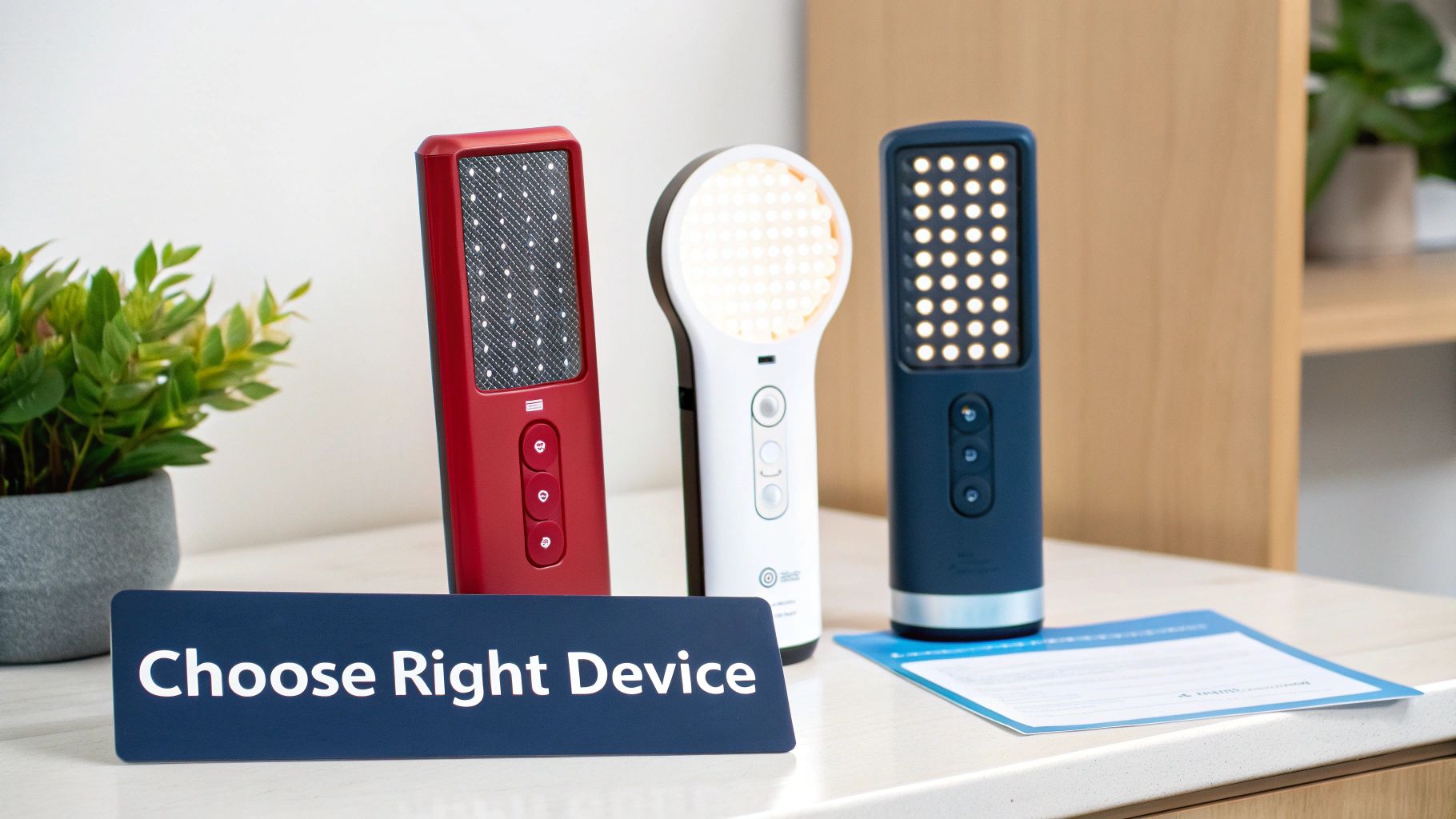
Stepping into the world of red light therapy devices can feel like a minefield. You've got everything from tiny handheld wands to massive full-body panels, and it's tough to know what's a sound wellness investment and what's just an expensive red light bulb.
The secret isn't in the marketing hype; it's in the technical specs. If you know what to look for, you can cut through the noise and find a device that actually delivers on its promises. Think of it less as shopping and more as a strategic equipment purchase for your health.
Key Features To Look For
When you're comparing devices, these are the non-negotiables. They directly dictate whether the device can actually produce a therapeutic effect for skin rejuvenation, muscle recovery, or pain relief.
- Clinically-Proven Wavelengths: Don't settle for anything less than a device offering both red light (around 660nm) and near-infrared (around 850nm). These two specific wavelengths have the overwhelming majority of clinical research backing them for everything from surface-level skin benefits to deep tissue repair.
- High Irradiance: This is simply a measure of how much light power is hitting your body. Higher irradiance means you get a therapeutic dose of light in a much shorter time, making your sessions more efficient and effective.
- Appropriate Size: Your goal dictates the size. If you're targeting a sore knee or elbow, a small, handheld device is perfect. But if you're chasing systemic benefits like reduced inflammation or better athletic recovery, you'll need a large panel to cover a significant portion of your body.
An effective red light therapy device isn’t just about light; it’s about delivering the right kind of light at the right power. Prioritizing proven wavelengths and sufficient irradiance is crucial for seeing tangible results.
Safety And Build Quality
Performance is key, but safety and durability are just as important. A well-constructed device is not only safer to use but is built to last for years of consistent treatments. Always look for third-party electrical safety certifications—this is your proof that it meets established standards.
You should also look for devices with low EMF (electromagnetic field) output. While any quality manufacturer designs their products to minimize this, seeing it listed gives you extra peace of mind. A solid build, often with a metal casing, is another great indicator of a high-quality product that won't let you down.
Focusing on this checklist will help you make a smart, informed decision. To see how top options stack up, check out our guide on the best red light therapy devices.
Your Red Light Therapy Questions, Answered
Alright, let's tackle some of the most common questions that pop up when you're just getting started with red light therapy. Think of this as a quick-reference guide to clear up any lingering uncertainties.
Is Red Light Therapy Safe For Your Eyes?
The LEDs in a high-quality panel are incredibly bright. While red and near-infrared light aren't damaging like UV light, staring directly into them for a long time isn't comfortable.
That's why we always recommend using the protective blackout goggles that come with your device. It’s a simple precaution, especially when you're treating your face or neck.
How Long Until I See Results?
That really comes down to what you're using it for and how consistent you are. If you're looking for better workout recovery, many people report feeling less muscle soreness after just a handful of sessions.
For skin health—things like reducing fine lines or evening out your skin tone—you’ll need a bit more patience. It’s a biological process. You're often looking at 8 to 12 weeks of regular use to see visible changes as your body gets to work producing new collagen.
The key to success with red light therapy isn't intensity; it's consistency. Small, regular sessions build upon each other to create noticeable, lasting results over time.
Can't I Just Get This From The Sun?
Great question, but no. This is a critical point. The sun does emit red light, but it also blasts us with damaging ultraviolet (UVA and UVB) radiation that ages our skin and raises the risk of skin cancer.
Red light therapy devices are designed to do one thing very well: deliver a concentrated dose of only the beneficial red and near-infrared wavelengths. You get all the cellular benefits without any of the risks from UV exposure. It’s a targeted, therapeutic approach.
For more deep dives into recovery and wellness, check out our full MedEq Wellness Journal.
At MedEq Fitness, we provide science-backed wellness and recovery equipment to help you restore energy and elevate your daily performance. Explore our curated selection of professional-grade tools, from red light therapy panels to cold plunges, by visiting MedEq Fitness.