How to Use Red Light Therapy for Peak Wellness and Health
So, you've got your red light therapy device. What now?
The basics are simple: you expose your skin to specific wavelengths of light for about 5-15 minutes a session, a few times a week. The real trick is consistency and getting the device in the right spot—usually 6 to 12 inches away from whatever you're treating. This sweet spot allows the light to get into your tissues and start energizing your cells, unlocking a host of health and wellness benefits.
How Red Light Therapy Actually Works
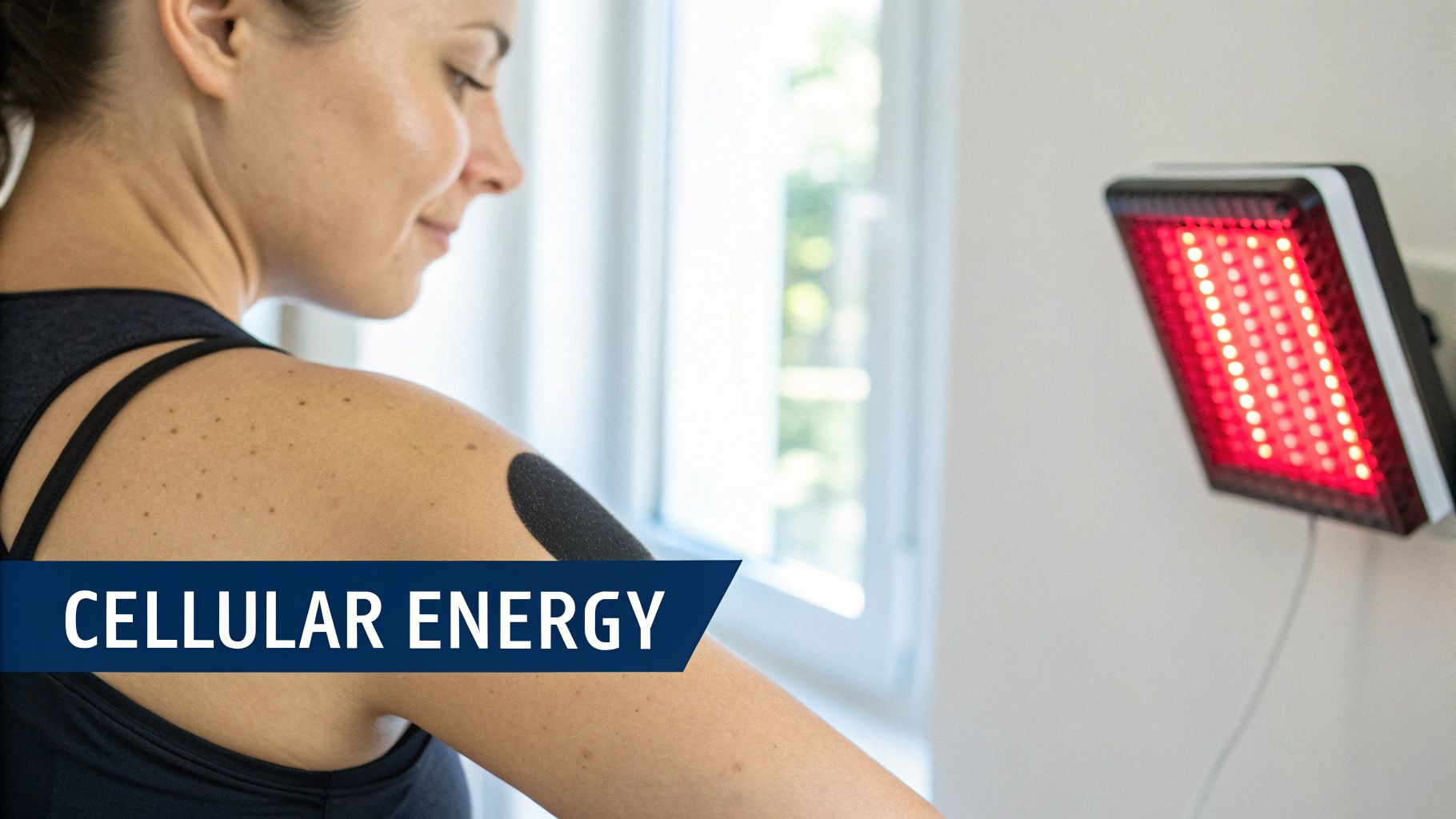
Before you jump into your first session, it helps to understand what's happening under the surface. It's more than just a warm red glow. The science behind it is called photobiomodulation (PBM), which is just a technical way of saying that certain wavelengths of light can kickstart positive changes inside your body's cells, enhancing your overall wellness.
Think of your cells as tiny power plants. Inside each one, you have mitochondria, which produce the energy currency called ATP (adenosine triphosphate). This energy is what powers everything—from repairing muscle to healing skin.
But things like stress, an intense workout, or just getting older can make these cellular power plants sluggish and less efficient. Red light therapy is like hitting the reset button, giving them a serious recharge.
Energizing Your Cells From Within
At its core, photobiomodulation works because light photons interact with a specific part of the mitochondria called cytochrome c oxidase. When the right wavelengths of red and near-infrared light hit this target, they help kick out a molecule called nitric oxide, which can clog up the energy production line.
Once nitric oxide is out of the way, oxygen can bind more effectively. This simple change dramatically boosts mitochondrial efficiency and ramps up ATP production. With more cellular energy on tap, your body can heal and regenerate itself far more effectively.
This is what leads to the powerful health benefits people see and feel:
- Faster Workout Recovery: More energy means your body can repair muscle tissue damaged during training much quicker.
- Reduced Inflammation: RLT calms down inflammatory responses right at the source, easing that post-workout soreness and discomfort.
- Better Skin Health: That extra cellular energy fuels the production of collagen and elastin, which is what gives you firmer, healthier-looking skin.
Wavelengths Are Key for Targeted Results
Not all red light is created equal. The specific wavelength, measured in nanometers (nm), dictates how deep the light can penetrate and what it's best at treating. Most high-quality devices use a combination of two key ranges for this very reason.
- Red Light (around 660 nm): This is your surface-level specialist. It doesn't penetrate very deep, so it's absorbed mostly by your skin. It's the go-to for improving skin tone, smoothing out fine lines, and helping wounds heal faster.
- Near-Infrared Light (around 850 nm): NIR light has a longer wavelength, so it can travel deeper into your body. It reaches muscles, joints, and even bone, making it the perfect choice for tackling workout recovery, joint pain, and deep inflammation.
By using both, you get a comprehensive treatment that works from the outside in. This science is why consistent use delivers such powerful results. For a closer look at professional light-based skin treatments, you can check out guides on specific systems like Dermalux LED Light Therapy.
The real-world impact is pretty significant. Research has shown major relief for chronic conditions like fibromyalgia and knee osteoarthritis. One study even found that regular use can make your mitochondria up to 16 times more efficient just by displacing that pesky nitric oxide.
Knowing this science helps you move beyond just following instructions. You can start strategically using your device to hit your specific wellness goals. For more guides on optimizing your health, be sure to visit the MedEq Wellness Journal.
Your First Red Light Therapy Session at Home
Getting started with red light therapy at home shouldn't be intimidating. Let's walk through your first session, step by step, so you can feel confident and focus on the health benefits from day one. It’s actually a really simple process.
First thing’s first: prep your skin. The goal is to give the light a clear, unobstructed path to your cells. This just means the area you're treating should be clean and totally dry.
You'll want to skip any lotions, creams, or sunscreens right before your session. These can act like a barrier, reflecting the light and preventing your body from absorbing its full benefits. A quick wash with a gentle cleanser is all you need.
Finding the Sweet Spot: Distance and Dose
Alright, now that you're prepped, let's talk positioning. The distance between you and your device is probably the most critical factor for getting real results. For most panels, you're aiming for a distance of 6 to 12 inches from your skin.
This range is the sweet spot—it ensures the light is powerful enough to penetrate your tissue without being too intense or spreading out too much. Too far, and the energy dissipates. Too close, and you might not get even coverage over the whole area.
Next up is the "dose," which is just a combination of the light's intensity and the length of your session. For your very first time, the best approach is to start slow and see how your body feels.
A great starting point for beginners is a session lasting 5 to 10 minutes. This is generally plenty of time to kickstart cellular activity without overdoing it, giving you a chance to see how your skin responds.
Remember, this is a marathon, not a sprint. Consistency is way more important than intensity. You'll see far better results for workout recovery and overall wellness by sticking to a regular schedule of shorter, focused sessions.
Finishing Your Session the Right Way
While red light isn't damaging to your eyes like UV light, the high-powered LEDs on modern panels are incredibly bright. It’s a smart move to wear the protective goggles that came with your device, especially if you're treating your face or neck. If you’re working on another body part, just avoid looking directly into the LEDs.
After your time is up, that’s it! There's no special aftercare needed. You can get dressed and go about your day. It’s totally normal to feel a subtle warmth or even a light tingling sensation in the area you treated.
As you get more comfortable, you can slowly work your way up to a 15-minute session if you feel you need it. Just listen to your body. Ultimately, consistency is what will help you hit your goals, whether that's taming inflammation, speeding up muscle repair, or improving your skin.
To see what kind of devices are out there and find the right one for your home, check out our in-depth red light therapy device reviews.
Targeted Protocols For Specific Wellness Goals
Once you get the hang of the basics, you can start fine-tuning your sessions for specific results. The way you’d use red light therapy for sore quads after a heavy squat day is totally different from how you’d use it to smooth out fine lines. This is where you can really get specific and turn your device into a personalized wellness powerhouse.
Dialing in your protocol means playing with variables like session time, frequency, and which part of your body you’re treating. The whole point is to deliver just the right dose of light energy to the right cells, whether you're trying to cool down inflammation or fire up collagen production.
Optimizing Workout Recovery And Performance
For anyone who trains hard, red light therapy can be a complete game-changer for recovery. The strategy here is to hit the muscles you just worked, which helps dial down inflammation and kickstart the repair process. This is a key health benefit for athletes and fitness enthusiasts alike. Forget spot-treating—you want to cover entire muscle groups.
A full-body panel is your best bet for this. Say you just finished a brutal leg day. You’d want to stand in front of your panel for 10-15 minutes, making sure the red and near-infrared light bathes your quads, hamstrings, and glutes. This helps clear out metabolic byproducts and eases the delayed onset muscle soreness (DOMS) that can otherwise keep you out of commission.
- Pre-Workout: A quick 5-10 minute session can prime your muscles for action, almost like a cellular warm-up that can boost performance and endurance.
- Post-Workout: Aim for a longer 10-20 minute session within an hour of your cool-down. This is the sweet spot for getting a head start on recovery.
This quick guide covers the fundamentals for any RLT session, making sure you nail the basics every single time.
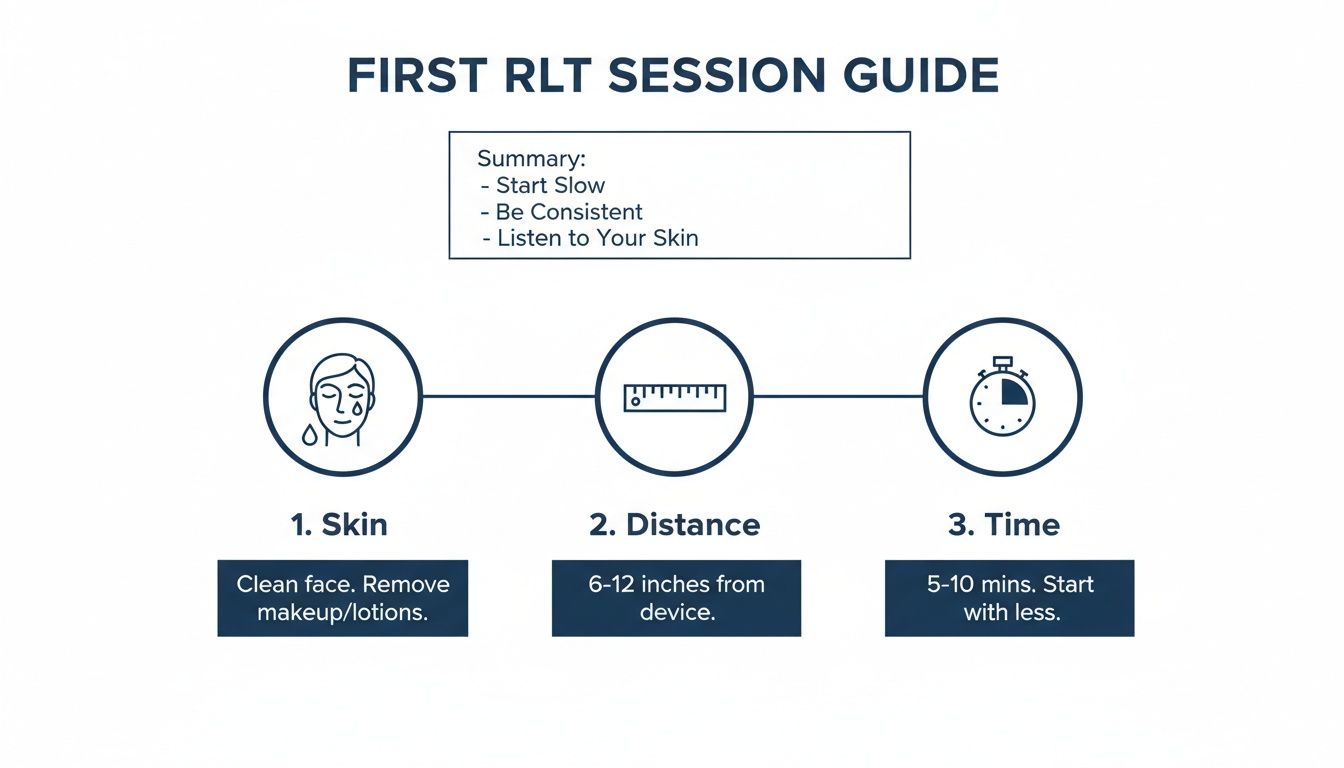
It's a great reminder that effective therapy always starts with clean skin, the right distance, and consistent, timed sessions.
Enhancing Skin Rejuvenation And Health
When you’re going after skin goals, your approach needs to be more precise. If you want to tackle fine lines, even out your skin tone, or fade dark spots, you'll need to focus the light directly on your face, neck, and chest. Red light wavelengths, especially around 660 nm, are brilliant for waking up the cells that produce collagen and elastin.
For this, a smaller, targeted panel or a dedicated face mask usually makes the most sense.
Set up your device about 6-12 inches from your clean, makeup-free face. A steady routine of 10-minute sessions, 3 to 5 times a week, is a solid protocol to start with. The key here is consistency—it takes time for your skin to build that new collagen, so stick with it.
Many people start seeing a real difference in their skin’s texture and firmness after a few weeks. While home devices are fantastic, if you have more specific goals, looking into professional aesthetic treatments at a medical spa can offer even more advanced, customized options.
Managing Joint Pain And Inflammation
If you're dealing with angry joints in your knees, shoulders, or hands, near-infrared (NIR) light is what you need. It penetrates much deeper than red light, reaching into cartilage and connective tissues to calm inflammation and soothe pain. In fact, research on photobiomodulation has shown major pain reduction for issues like knee osteoarthritis, a significant health benefit for those with chronic pain.
To hit a specific joint, you need to get the light right where it hurts. For a sore knee, for instance, you could sit with your leg out and place the panel just 6 inches away for a really concentrated treatment. A daily 15-20 minute session can create a cumulative effect, bringing lasting relief. Plus, the gentle warmth from the panel just feels good on stiff, achy joints.
Improving Sleep Quality
Using red light therapy for better sleep is a completely different ballgame. It’s less about treating a body part and more about influencing your body's master clock—your circadian rhythm. Hitting your body with red and NIR light in the evening helps signal that it's time to wind down, but without the harsh, sleep-wrecking blue light from your phone and TV.
Try a full-body session for 10-15 minutes an hour or two before you plan to go to sleep. It helps quiet your nervous system and can even lower the stress hormone cortisol, which often gets in the way of deep, restorative rest. Many people find this nightly ritual becomes a powerful, calming transition into a great night's sleep.
To dive deeper into the science behind these applications, check out our full article on the benefits of red light therapy.
This quick-reference table breaks down the protocols to help you tailor your RLT sessions to your specific health and performance goals.
Red Light Therapy Protocols by Wellness Goal
| Wellness Goal | Target Area | Wavelength (nm) | Session Duration | Frequency | Key Tips |
|---|---|---|---|---|---|
| Workout Recovery | Major muscle groups | 660 & 850 | 10-20 minutes | Post-workout | Use within an hour of exercise for best results. |
| Skin Rejuvenation | Face, neck, chest | 660 | 10 minutes | 3-5 times/week | Ensure skin is clean and free of products. |
| Joint Pain Relief | Specific joints | 850 | 15-20 minutes | Daily | Position device close for a concentrated dose. |
| Improved Sleep | Full body | 660 & 850 | 10-15 minutes | Nightly | Use 1-2 hours before bedtime to promote relaxation. |
By following these targeted protocols, you can transform your red light therapy device from a general wellness tool into a precision instrument for hitting your health goals.
Advanced Techniques to Amplify Your Results
Once you’ve got your red light therapy routine dialed in, it’s time to explore a few strategies that can take your results to the next level. Moving past the basics means getting a feel for the nuances of how light interacts with your body.
A key principle here is the biphasic dose response. It sounds complicated, but the idea is simple: there’s a sweet spot. The right amount of light triggers powerful health benefits, but too much can actually backfire and diminish the positive effects. This is why a longer session isn’t always better. Overdoing it can make the treatment less effective, so sticking to the recommended times is the best way to get the most out of every session.
The Power of Contrast Therapy for Enhanced Workout Recovery
If you're serious about workout recovery, one of the best things you can do is pair your red light therapy with cold therapy. This one-two punch is known as contrast therapy, and it creates a powerful physiological response that floods your system with circulation and helps flush out inflammation.
It's a straightforward process of alternating between the heat of the red light and the shock of the cold.
- Start with Red Light: Kick things off with a 10-15 minute red light session. This gets the tissues warmed up, fires up cellular energy, and preps your body for what’s next.
- Follow with Cold: Immediately jump into a cold plunge or ice bath for 2-5 minutes. The intense cold makes your blood vessels clamp down, pushing out metabolic junk and inflammation.
- Let Your Body Rebound: The magic happens when you get out. As your body rushes to warm itself, a wave of fresh, nutrient-rich blood floods your muscles. This circulatory flush is an incredible tool for speeding up recovery.
There’s a reason elite athletes swear by this method. It takes a huge edge off muscle soreness and helps you bounce back from tough workouts much faster, amplifying the wellness benefits.
Strategic Timing for Maximum Impact
When you use your red light is just as important as how you use it. Timing your sessions to match your body’s natural rhythms or specific goals can make a massive difference in your results.
Think of it as aligning your therapy with your body’s own schedule:
- Morning Sessions for Energy: Using red light first thing in the morning can help lock in your circadian rhythm. That blast of light signals to your body that the day has started, which can make you feel more alert and even lead to better sleep later that night.
- Pre-Workout for Priming Muscles: A quick 5-10 minute session before training can act as a dynamic warm-up for your muscles at a cellular level. It boosts blood flow and energizes the cells, which can improve performance and help protect against injury.
- Post-Workout for Recovery: This is the most popular approach for athletes. A 15-20 minute session right after your cool-down gets to work on inflammation immediately and jumpstarts the muscle repair process.
By integrating red light therapy into these specific windows, you’re not just treating your body—you’re working with it. This approach transforms RLT from a standalone treatment into a synergistic part of a complete wellness routine.
The clinical evidence for specific dosing just keeps getting stronger. A landmark 2014 trial with 136 volunteers found that light in the 611–650 nm range at doses around 9 J/cm² twice a week led to dramatic skin improvements. For an athlete, that translates to using a high-quality panel for 10-20 minutes per session from about 6-12 inches away, with no adverse effects reported.
You can dive into the specifics in the full study published in Photomedicine and Laser Surgery. For more wellness insights, check out the MedEq Wellness Journal.
Safety Guidelines and Common Mistakes to Avoid
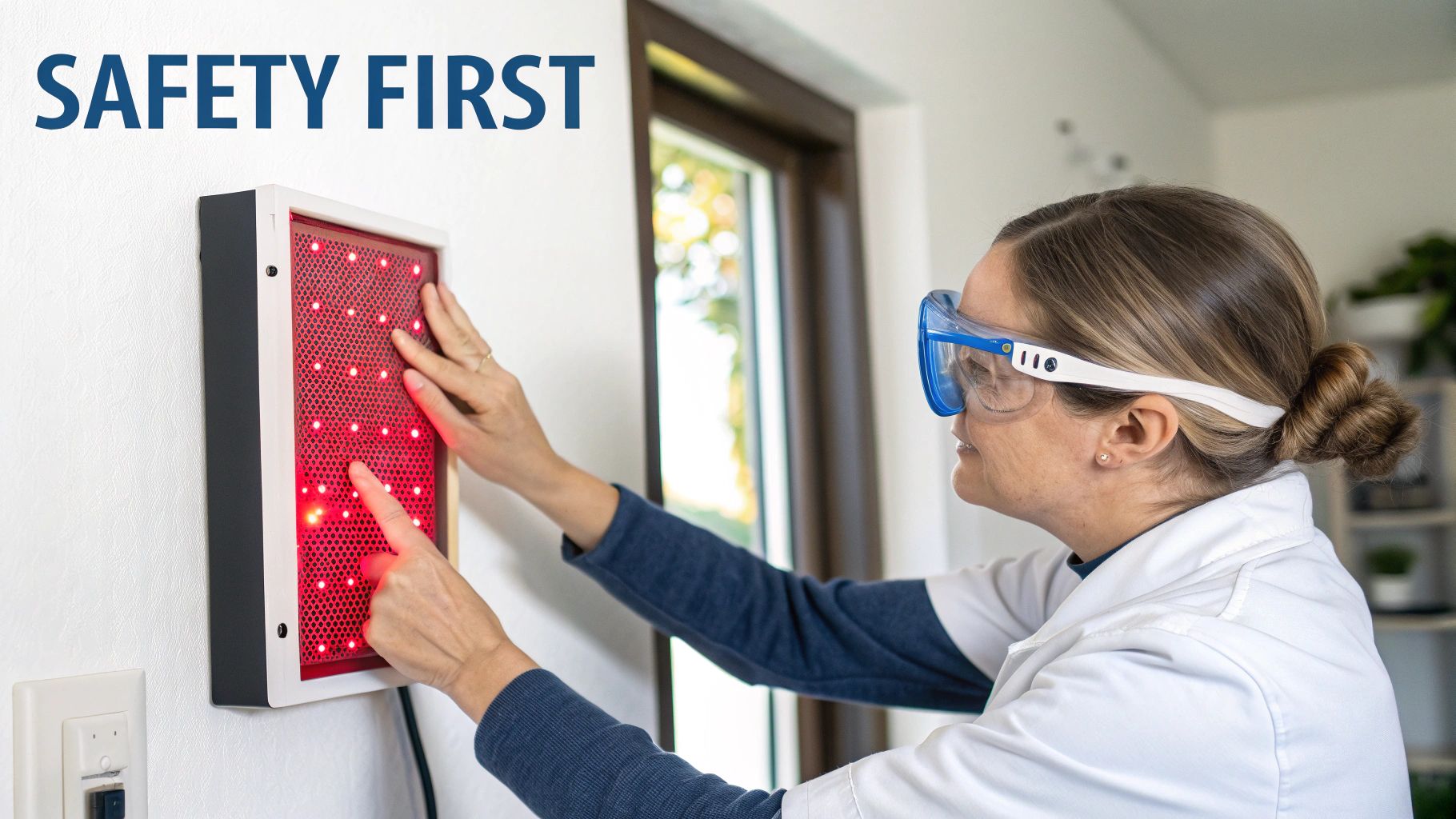
Red light therapy has a stellar safety record, but that doesn't mean you should skip the fundamentals. Think of it like any powerful tool in your wellness arsenal—respecting it is key to getting the health benefits you want. While it’s free of the damaging UV light you get from the sun, the high-intensity LEDs in modern devices are no joke.
The number one rule? Protect your eyes. The light from a quality panel is incredibly bright and can be uncomfortable. Always, always use the provided blackout goggles, especially if you're treating your face or anywhere nearby. For other areas, just be sure to look away from the LEDs.
It's also a smart move to review your medications. Some prescriptions, like certain antibiotics or acne treatments, can cause photosensitivity, making your skin more reactive to light and potentially leading to irritation.
Understanding Who Should Be Cautious
While RLT is safe for most, there are a few situations where you'll want to hit pause and talk to a doctor first. This is especially true if you are pregnant, have active cancer, or have a history of seizures triggered by light.
A quick chat with your dermatologist or primary care physician is never a bad idea before starting something new. They can give you the green light and confirm it’s a good fit for your personal health profile.
Common Pitfalls to Sidestep on Your Wellness Journey
Knowing how to use red light therapy is just as much about what not to do. I see newcomers make the same small mistakes all the time, and it’s usually what holds them back from seeing real progress in their workout recovery or skin health.
Here are the most common slip-ups I see:
- Inconsistent Sessions: Treating RLT like a magic bullet you only use once in a while just doesn't work. The benefits are cumulative, building up over time. You have to be consistent, especially when you start. Aim for at least 3-5 sessions per week.
- Incorrect Distance: This is a big one. Standing too far from your device kills its effectiveness. The light's energy (irradiance) drops off fast with distance. For most panels, you need to be within 6 to 12 inches to get a therapeutic dose.
- Overdoing It: More isn't better here. Pushing past the recommended 10-20 minute session time can backfire due to the biphasic dose response. In short, too much light can actually negate the benefits. Stick to the guidelines.
The recent surge in interest for red light therapy highlights the need for clear usage protocols. Expecting overnight miracles is another common pitfall; whether for skin health or muscle recovery, results take time and dedication.
The boom in at-home wellness tech is undeniable. Google searches for 'red light therapy' have skyrocketed 118% since early 2024, showing just how many people are looking for science-backed ways to feel better. This makes following proper protocols more important than ever. You can explore the research behind these protocols to get a deeper look at the science.
By avoiding these common errors, you're setting yourself up for a safe and effective journey. For more tips on getting the most out of your routine, head over to the MedEq Wellness Journal.
Common Questions About Using Red Light Therapy
Once you start using your red light therapy device, you're bound to have a few questions. That's totally normal. Here are some straightforward answers to the questions we get asked the most, designed to help you feel confident as you get started.
How Often Can I Use Red Light Therapy?
Yes, using your device daily is generally safe—in fact, it's often a good idea when you're just starting out. A typical session runs about 10 to 15 minutes. But the golden rule is always to listen to your body and see how you feel.
After that initial daily period, many people find that cutting back to 3 to 5 sessions per week works perfectly for maintaining health benefits. If you’re an athlete looking to speed up workout recovery, daily use might be your sweet spot. For general wellness or skin goals, you might get the same great results hitting it every other day.
At the end of the day, consistency is what really matters, not necessarily daily use. For a much deeper dive, check out our guide on how often to use red light therapy.
Do I Really Need To Wear Goggles?
The light itself isn't damaging like UV rays, but the high-powered LEDs in modern panels are incredibly bright. That intensity can be really uncomfortable for your eyes, so think of the goggles as a simple step for comfort and safety.
Most brands strongly recommend wearing the blackout goggles they provide, especially if you're treating your face or any area where the light shines toward your eyes. If you’re treating your back or legs, just turn your head away from the device.
The one non-negotiable rule is to never stare directly into the LEDs. The intensity is simply too much for your eyes to handle safely. Your vision should always be the top priority.
How Long Until I See Real Results?
Patience is a virtue with any wellness practice, and red light therapy is no different. The timeline for seeing real, noticeable health benefits depends on your goals, how your body responds, and—most importantly—how consistent you are.
- For Acute Issues: If you're dealing with minor aches, joint stiffness, or muscle soreness, you might feel relief after just a handful of sessions.
- For Skin Health: Things like smoother skin and fewer fine lines come from increased collagen production, which is a gradual process. You'll likely start seeing these changes after several weeks to a few months of consistent use.
- For Deeper Tissues: Targeting chronic conditions or deep muscle repair is a longer game. It might take a month or two of regular sessions to feel significant improvements.
Sticking with a routine is the single best thing you can do for success.
Can Red Light Therapy Help With Weight Loss?
Let's be clear: red light therapy isn't a magic bullet for weight loss, and it’s no substitute for a healthy diet and exercise. Think of it as a powerful supporting player in your overall wellness strategy.
Some research suggests photobiomodulation can help improve metabolic function and reduce systemic inflammation, which is often linked to obesity. When you pair regular red light therapy sessions with good nutrition and consistent activity, it can help support fat loss and make your primary efforts even more effective. It's all about optimizing your body's internal environment.
For more wellness insights and guides, be sure to visit the MedEq Wellness Journal.
At MedEq Fitness, we provide science-backed wellness and recovery equipment to help you restore energy and elevate your daily capacity. Explore our curated selection of professional-grade red light therapy devices, cold plunges, and saunas to build your ultimate recovery space.