Unlocking the Benefits of Cold Plunge for Peak Wellness
The primary health benefits of a cold plunge are accelerated workout recovery, sharpened mental clarity, and a more resilient immune system. This isn't just a trend; it's a science-backed wellness practice for optimizing both body and mind. A quick dip in cold water triggers powerful physiological shifts that boost your overall performance and well-being.
Unlock Your Potential with a Cold Plunge
There's a good reason athletes, biohackers, and wellness professionals have embraced cold plunging. The core idea is simple: submerge your body in water that’s typically between 50 and 60 degrees Fahrenheit. This controlled, intentional stress kicks off a cascade of positive adaptations, making your system more efficient and durable.
Think of it like hitting a reset button. That initial shock quickly gives way to a state of heightened awareness as your body springs into action. It’s not about just toughing it out; it’s about tapping into your body's natural ability to adapt and get stronger. The health and wellness benefits go way beyond just feeling refreshed.
Core Advantages for Body and Mind
The impact of cold water immersion is wide-ranging, touching everything from your muscles to your mood. Athletes love it for workout recovery. By constricting blood vessels, a cold plunge dramatically reduces inflammation and muscle soreness after a tough session. That means you get back to training faster and more consistently.
But the mental boost is just as impressive. The jolt of cold water triggers a release of norepinephrine and dopamine—neurochemicals that lift your mood, sharpen your focus, and make you feel alert. This makes it an incredible tool for building mental grit against everyday stress. On top of that, regular plunges can stimulate the production of white blood cells, giving your immune defenses a serious upgrade.
"An icy dunk causes the body’s blood vessels to rapidly constrict. That slows the flow of blood to muscle tissue, decreasing inflammation and swelling. As a result, a person may feel less sore or achy post-workout."
To give you a clear picture of what cold plunging delivers, here’s a quick summary of the key health benefits.
Top Benefits of Cold Plunge at a Glance
This table breaks down the main physiological and psychological advantages you can expect from regular cold water immersion.
| Benefit Category | Key Outcome | Best For |
|---|---|---|
| Physical Recovery | Reduces muscle soreness and inflammation post-workout. | Athletes, Fitness Enthusiasts |
| Mental Wellness | Boosts mood, alertness, and resilience to stress. | High-Performers, Professionals |
| Immune Support | Stimulates white blood cell production for enhanced defense. | Wellness-Focused Individuals |
| Metabolic Health | Activates brown adipose tissue (BAT) for improved thermogenesis. | Biohackers, Health Optimizers |
We'll get into the science behind these outcomes, showing you exactly how to work this practice into your routine for the best results.
Ready to dive deeper into advanced wellness protocols? Explore more insights on the MedEq Wellness Journal.
How Cold Water Immersion Works
To really get why a cold plunge is so powerful, you need to understand what’s happening under the skin the second you hit that chilly water. It’s more than just a shock to the system; it’s a full-blown physiological event that sets off a chain reaction of benefits, starting with your circulation.
The first thing your body does is called vasoconstriction. Think of your blood vessels like a network of pipes. The cold makes them clamp down, pulling blood away from your skin and muscles and rushing it toward your core to protect your vital organs. It's a primal survival reflex.
This immediate tightening is a game-changer for workout recovery. By restricting blood flow to your muscles right after a hard session, vasoconstriction helps dial down the inflammation and swelling that cause next-day soreness.
The Vascular Pump Effect
So what happens when you get out and start warming up? The exact opposite: vasodilation. Those pipes open wide, letting a massive rush of fresh, oxygen-rich blood flood back into your tissues.
This creates what’s known as the “vascular pump” effect. It’s like a power-flush for your muscles, pushing out all the metabolic junk—like lactic acid—that builds up during a tough workout. By clearing out that debris, your body can get to work repairing muscle fibers much faster. The result? Quicker recovery and less time spent feeling stiff and sore.
If you really want to supercharge this effect, you can learn more about alternating hot and cold in our guide to contrast therapy.
Hormonal and Cellular Responses
The magic of a cold plunge goes way beyond blood flow. That initial shock also triggers a huge hormonal shift, most notably a spike in norepinephrine. This is a neurotransmitter that dials in your focus, attention, and mood.
Ever wonder why you feel so sharp and energized after a plunge? That's the norepinephrine talking. In fact, studies show that cold water immersion can boost norepinephrine levels by 200-300%, giving you a clean, natural jolt of mental clarity.
The body's reaction to cold is a perfect example of hormesis—a good kind of stress that forces you to adapt and get stronger. By deliberately exposing yourself to the cold, you're training your nervous system to become more resilient.
This infographic breaks down how these benefits ripple out across your physical recovery, mental well-being, and immune system.
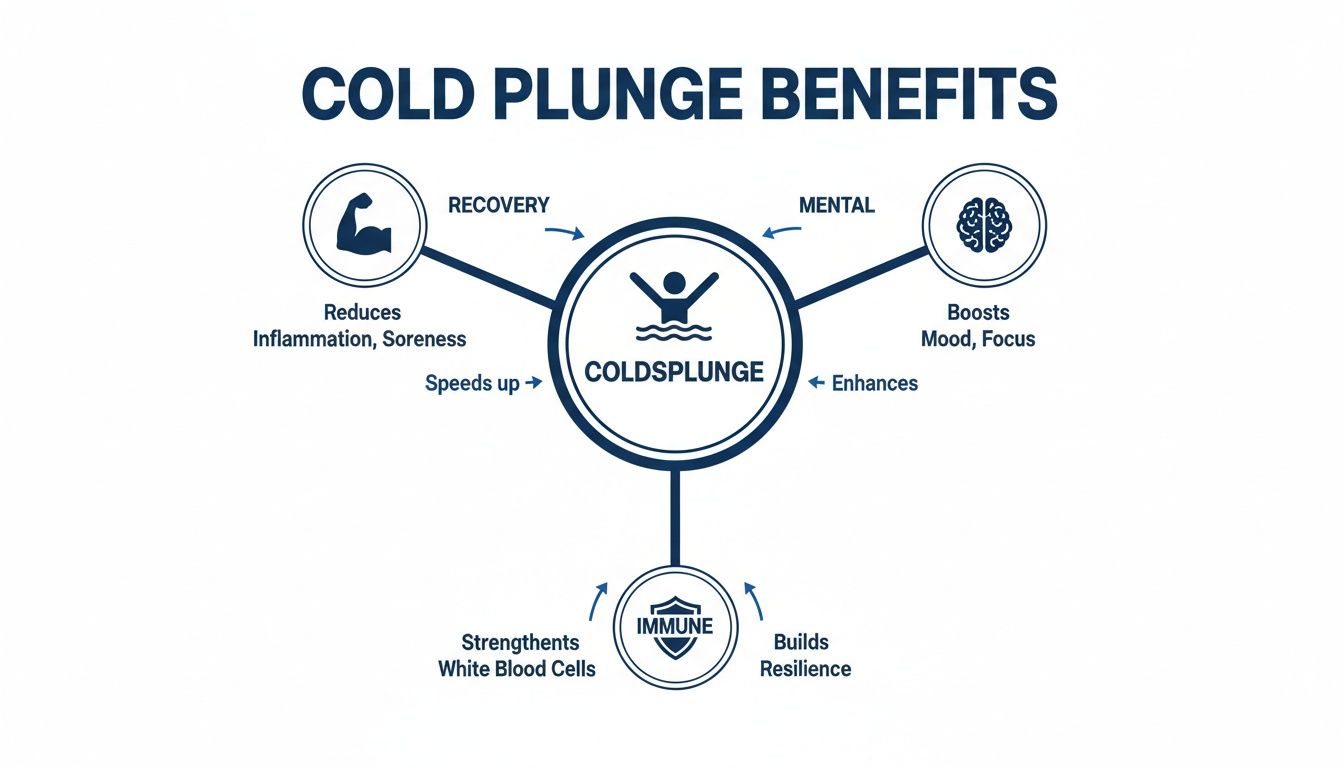
The big takeaway here is that one simple practice can set off a cascade of positive changes throughout your entire body.
Strengthening Your System from Within
Digging even deeper, cold exposure flips on some unique switches at the cellular level. One of the coolest (no pun intended) is the creation of Cold Shock Proteins (CSPs). These are specialized proteins that activate in the cold and have neuroprotective effects, helping to shield brain cells and support cellular repair.
Beyond that, the practice has a profound impact on your autonomic nervous system—the part that runs the show behind the scenes, controlling things like heart rate and digestion. A key metric here is Heart Rate Variability (HRV), which is a great indicator of your body's ability to handle stress and recover effectively. Sticking with a regular cold plunge routine can improve your HRV, signaling a more balanced and adaptable nervous system.
At its core, a cold plunge is a catalyst. It kicks off everything from vascular pumping and hormonal releases to cellular activation—all working together to help your body recover faster, think clearer, and perform better. For more wellness guides, explore the MedEq Wellness Journal.
Boosting Your Mental Clarity and Mood
https://anxietychecklist.com/cold-shower-therapy-anxiety-benefits
While the physical perks of a cold plunge get a lot of attention, its power to sharpen the mind is just as profound. That intense, shocking cold acts as a hard reset for your brain, cutting through the noise of anxious thoughts and yanking you directly into the present moment. This isn't just a distraction; it's forced mindfulness.
When you willingly step into that icy water, you're training your nervous system to stay cool under fire. This is how you build stress resilience—the ability to meet a challenge head-on, adapt, and bounce back fast. Before long, the daily grind that used to feel overwhelming starts to feel a lot more manageable.
The Brain Chemistry Behind the Boost
That wave of clarity you feel after a plunge isn't just in your head—it's in your brain chemistry. The cold shock triggers a massive release of norepinephrine, a neurotransmitter that’s absolutely critical for alertness, focus, and a balanced mood. It's the reason you feel so sharp and clear-headed afterward.
At the same time, your body starts pumping out dopamine, the molecule tied to motivation, reward, and that feeling of "I did it." This natural mood elevator provides a clean, sustainable drive that can last for hours, all without the inevitable crash from a triple-shot espresso.
And these aren't small changes. One fMRI study of 94 people found that a single 5-minute cold plunge led to a 7-point jump in positive affect scores and a 4.66-point drop in negative affect scores. In plain English, people felt way more active, alert, inspired, and proud after their dip. You can explore the full study to see just how significant these mood-enhancing effects are.
Forging Mental Fortitude, One Plunge at a Time
Making cold plunging a regular practice is like taking your brain to the gym. That initial jolt of discomfort forces you to take control of your breath and stay centered—a skill that pays dividends in high-pressure meetings and tough life situations. You're actively teaching your body that you, not your environment, are in charge.
This builds a much stronger mind-body connection. You start to listen to your body's signals more closely, learning to tell the difference between real danger and manageable discomfort. This kind of self-awareness is the bedrock of emotional regulation and true mental toughness.
The simple act of pushing through that initial urge to jump out of the cold water builds incredible self-efficacy. It's a small, daily win that proves you can handle hard things, creating a powerful feedback loop for your confidence.
Real-World Wins for High-Performers
For athletes, entrepreneurs, and anyone else looking for an edge, these mental benefits are a game-changer. That boost in focus and clarity can lead directly to more productive work, smarter decisions, and better creative thinking.
Think about what a consistent practice can unlock:
- Sharper Daily Focus: Cut through the morning fog and dive into your most demanding tasks with laser-like concentration.
- Greater Emotional Stability: By training your stress response, you become less reactive to daily pressures and unexpected challenges.
- Increased Drive: The dopamine kick gives you the momentum to chase down big goals and stick with your habits.
Ultimately, adding a cold plunge to your routine is an investment in your mental capital. It's a reliable tool to reset your mindset, sharpen your thinking, and build the kind of resilience that helps you thrive, no matter what's thrown at you. For more strategies to optimize your well-being, head over to the MedEq Wellness Journal.
Accelerating Workout Recovery and Reducing Soreness
For any serious athlete, one of the biggest draws of a cold plunge is its incredible power to speed up physical recovery. When you've pushed your body to the absolute limit, that immediate shock of cold water is a potent tool for fighting muscle fatigue and soreness. It helps you bounce back faster so you can train harder, sooner.
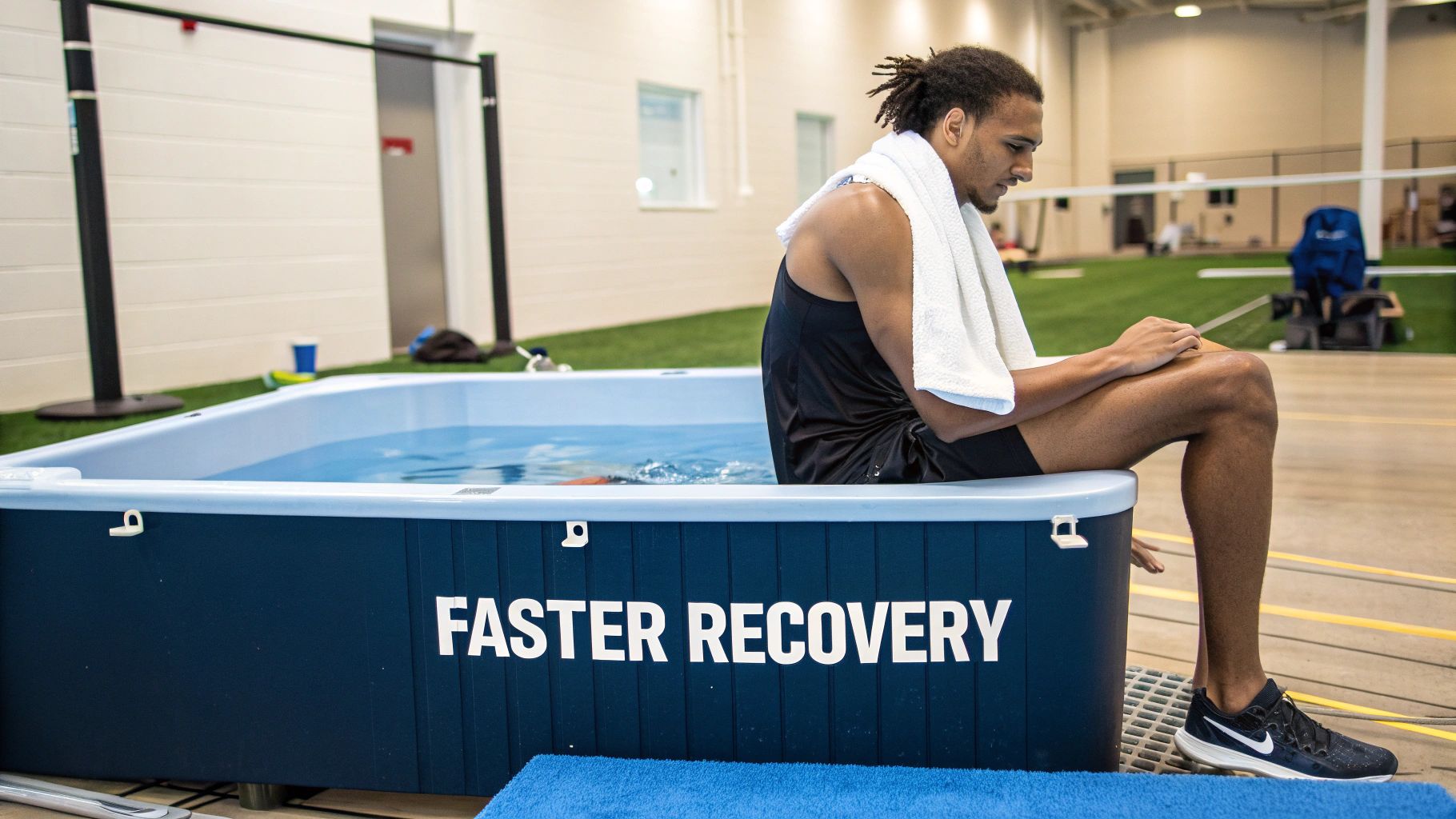
The magic happens through a process called vasoconstriction—a fancy term for your blood vessels tightening up. This rapid constriction cuts down blood flow to your muscles, which is exactly what you want post-workout to limit the inflammation and swelling that cause so much pain.
By shutting down that inflammatory response, a cold plunge can seriously take the edge off Delayed Onset Muscle Soreness (DOMS). You know, that all-too-familiar ache that creeps in a day or two after a killer session. For anyone doing intense leg workouts, jumping into cold water can be a game-changer for muscle repair and putting a stop to that dreaded soreness.
The Science of Reduced Muscle Damage
This isn't just bro-science; the benefits are backed by solid evidence. Cold exposure works on a cellular level to protect against exercise-induced muscle damage. The key marker here is creatine kinase, an enzyme that spills out of damaged muscle cells and into your bloodstream after you've gone hard in the gym.
Study after study shows that cold water immersion right after a tough workout leads to lower levels of creatine kinase. In plain English, that means less muscle damage and a faster, more efficient recovery. The cold triggers that vasoconstriction, which slows down metabolic activity and reroutes blood flow, ultimately shielding your muscle tissue from further breakdown.
Supercharging Recovery with Contrast Therapy
A cold plunge is fantastic on its own, but you can kick its effects into high gear by pairing it with heat. This is known as contrast therapy, and it involves alternating between a cold plunge and a hot sauna to create a powerful circulatory "pump."
This rapid switch from cold (vasoconstriction) to hot (vasodilation) forces your blood vessels to squeeze and then relax. This pumping action is incredibly effective at flushing out metabolic waste like lactic acid while flooding your tired muscles with fresh, nutrient-rich blood.
A simple contrast therapy protocol could look like this:
- Heat: 15-20 minutes in a sauna.
- Cold: 2-5 minutes in a cold plunge.
- Repeat: Go through this cycle 2-3 times, making sure to end with cold to keep inflammation under control.
This back-and-forth gives you a much more active recovery boost than either heat or cold can deliver alone.
Smart Timing for Optimal Gains
When you take your plunge is just as important as if you take it, especially when you have specific training goals.
The anti-inflammatory effect of a cold plunge is fantastic for recovery, but inflammation is also a necessary signal for muscle growth (hypertrophy). Timing your plunge is key to getting the benefits without compromising your gains.
Let's break it down for different athletes:
- Endurance Athletes: If you're a runner, cyclist, or swimmer, plunging right after a long session is perfect. It clamps down on soreness and inflammation, which means you can train more consistently day in and day out.
- Strength and Hypertrophy Athletes: If your goal is to build muscle size and strength, you'll want to hold off for a few hours. That initial inflammatory response is a critical signal for muscle adaptation. Plunging immediately can blunt that signal. Waiting 4-6 hours gives your body a chance to kick off the growth process before you switch gears to recovery.
For more wellness guides, visit the MedEq Wellness Journal.
Strengthening Your Immune System
Beyond just chilling out your muscles, one of the most powerful health benefits of a cold plunge is what it does for your immune system. Taking a regular dip in cold water is a perfect example of hormesis—a fancy word for a good kind of stress. It’s a short, controlled shock to your system that forces your body to adapt and come back stronger.
Think of it like a boot camp for your immune cells. That initial jolt from the cold water doesn't weaken you; it wakes up your body's internal army, training it to react faster and more effectively when real threats like germs and viruses show up.
Activating Your Body's Natural Defenses
So, what’s actually happening under the surface? The cold triggers a cascade of physiological responses, including a notable uptick in the production of your most important immune cells. We're talking about an increase in white blood cells—specifically lymphocytes and monocytes, which are your body's first responders.
These are the cells that hunt down and destroy pathogens. By nudging your body to produce more of them, consistent cold plunging can help you build a more robust, ready-to-go defense system over time.
The key idea is this: the short-term stress from a cold plunge builds long-term strength. Your body learns from that controlled challenge, making it better equipped to handle the random, unpredictable stressors of daily life, including getting sick.
It's a fantastic example of how a little intentional discomfort can lead to some serious health rewards.
Evidence of Reduced Sick Days
This isn't just theory, either. The proof is in the data. A major Dutch study with 3,018 participants discovered something pretty incredible: people who finished their hot showers with a 30-second blast of cold water called in sick to work far less often. The study found a staggering 29% reduction in sickness-related work absences. That’s a compelling argument for a little bit of cold. You can dig into more of the science behind cold water therapy impacts on health at Atria.org.
It goes to show that you don't need to overdo it. Small, consistent doses of cold can have a real, measurable impact on your health and productivity.
A Balanced Approach to Immune Health
Of course, it’s important to see cold plunging as one powerful tool in your wellness toolbox, not a magic bullet. It’s part of a bigger picture. If you're curious about stacking your recovery methods, we have a guide that breaks down the sauna and cold plunge benefits when you combine hot and cold.
Always listen to your body. Consistency beats intensity every time. And if you have any underlying health issues, especially anything related to your heart, make sure to chat with your doctor before making this a regular habit. Done right, it's a phenomenal way to build a more resilient immune system. For more on optimizing your health, visit the MedEq Wellness Journal.
How to Start Your Cold Plunge Routine Safely
Diving into cold plunging can be a game-changer for your health, but how you start matters. A safe, gradual approach is the key to turning that initial shock into a rewarding and sustainable wellness ritual.
The goal isn't to traumatize your system; it's to train it.
Listen to your body, not your ego. There’s no prize for hitting the coldest temperature on day one. When you're just starting out, consistency is always more important than intensity.
Setting Your Temperature and Time
For your first few plunges, aim for a water temperature that’s challenging but not overwhelming. A great starting point is between 50-60°F (10-15°C). This range is cold enough to kickstart those powerful physiological responses without sending your system into overdrive.
Keep your first sessions short. Really short. Start with just 30 to 60 seconds. As your body gets used to the cold over a few sessions, you can slowly add more time, eventually working up to a sweet spot of two to five minutes.
A good rule of thumb is to only change one thing at a time. Either make the water a little colder or stay in a little longer—never both at once.
Remember, the most powerful benefits of a cold plunge often kick in within the first few minutes. Pushing for longer doesn't always add more value and can actually increase the risks.
So, how often should you do it? A schedule of 2-4 times per week is an excellent target. This gives your body a consistent stimulus to adapt while leaving plenty of time to recover between sessions.
Mastering the Cold with Your Breath
That initial shock of cold water triggers an involuntary gasp reflex. It's totally normal. Your most powerful tool to manage it is your breath.
Before you even touch the water, take a few deep, slow breaths to calm your nervous system. As soon as you get in, put all your focus on a long, slow exhale. This simple action sends a signal of safety to your brain, helping you override that initial fight-or-flight response. This turns the plunge from a test of endurance into a powerful meditative practice.
Knowing When to Seek Medical Advice
While cold plunging is safe for most healthy people, it's not for everyone. The cold puts a significant demand on your cardiovascular system, so it's absolutely essential to talk to a doctor before starting if you have any pre-existing conditions.
You should speak with your doctor first if you have:
- A history of heart disease or high blood pressure.
- Poor circulation or a condition like Raynaud's disease.
- Diabetes or peripheral neuropathy, which can impact your ability to feel temperature changes.
Safety is the bedrock of a successful practice. By starting slow, focusing on your breath, and respecting your body's limits, you can unlock the incredible benefits of a cold plunge routine. For a deeper dive into specific protocols, check out our complete guide on ice bath therapy.
Your Cold Plunge Questions, Answered
Jumping into the world of cold water immersion naturally brings up a few questions. Let's clear things up so you can start your practice with confidence and get the most out of every plunge.
How Cold and How Long Should I Plunge?
If you're just starting out, aim for a water temperature between 50-60°F (10-15°C). This range is the sweet spot—cool enough to trigger the benefits without feeling overwhelming.
Keep your first few sessions short, just 30-60 seconds. The goal is consistency, not endurance. As your body adapts, you can slowly work your way up to the 3-5 minute mark. Always listen to your body; it knows best.
Is a Cold Plunge Better Than an Ice Bath?
While people often use the terms interchangeably, there’s a key difference. An "ice bath" is the old-school method of dumping ice into a tub of water. It's messy, the temperature is all over the place, and you have to set it up every single time.
A modern cold plunge is a purpose-built tub with integrated cooling and filtration. It delivers a clean, convenient, and perfectly controlled temperature every time, making it a far better tool for building a consistent recovery routine.
Should I Plunge Before or After My Workout?
For workout recovery, the answer is simple: plunge after your workout. The cold helps constrict blood vessels, which is exactly what you want to reduce the inflammation and muscle soreness that comes with a tough session. This is one of the biggest wins for athletes.
Plunging before a strength workout isn't a great idea, as the cold can temporarily dampen muscle power. The exception? A very quick cold blast, like a 30-second cold shower, can be an amazing way to sharpen your focus and wake up your nervous system before you train.
A post-workout cold plunge is your go-to for recovery. A pre-workout dip is strictly for a mental edge—not for prepping your muscles.
What's Contrast Therapy All About?
Contrast therapy is a recovery protocol that has you switching between hot and cold. Think of it as moving from a sauna straight into a cold plunge. It's a powerful way to accelerate healing.
- A Classic Protocol: Spend 15 minutes in a sauna, then immediately hit the cold plunge for 3-5 minutes. Repeat the cycle a few times.
This rapid temperature swing creates a "pump" for your circulatory system. Your blood vessels open up in the heat and clamp down in the cold, flushing out metabolic waste and flooding your muscles with fresh, oxygen-rich blood. For many, it speeds up recovery even more than a cold plunge on its own.
For more wellness guides and deep dives into recovery science, check out the MedEq Wellness Journal.