
What Is a Hyperbaric Chamber and How Does It Work
Ever wonder how you can give your body's natural healing systems a serious upgrade? That's where a hyperbaric chamber comes in. Think of it as a specialized wellness vessel designed to bridge the gap between intense physical effort and profound recovery.
It creates a unique environment where your body can perform incredible feats of self-repair.
The Power of Pressurized Oxygen for Wellness
At its core, the principle behind a hyperbaric chamber is brilliantly simple: combine increased atmospheric pressure with concentrated oxygen. This powerful one-two punch is known as hyperbaric oxygen therapy (HBOT), and it fundamentally changes how your body absorbs and uses oxygen.
Under normal conditions, oxygen is almost exclusively carried by red blood cells. But inside a pressurized chamber, the game changes. The elevated pressure literally forces oxygen molecules to dissolve directly into your blood plasma—the liquid that makes up over half your blood volume.
This is a complete game-changer for recovery and overall wellness.
Fueling Cellular Repair and Recovery
This super-oxygenated plasma can seep into areas where circulation is poor or restricted by inflammation, places where red blood cells might struggle to reach. It’s like creating an express delivery lane for the most vital nutrient your cells need to heal, regenerate, and produce energy.
This massive influx of oxygen unlocks a whole host of health benefits, especially for anyone committed to fitness and long-term wellness. It helps:
- Accelerate Workout Recovery: Flooding sore muscles and damaged tissues with oxygen reduces downtime and helps you get back to your training regimen faster and feeling stronger.
- Reduce Inflammation: Higher oxygen levels have a natural anti-inflammatory effect, calming the chronic inflammation that often leads to pain, fatigue, and other health issues.
- Enhance Mental Clarity: Your brain is an oxygen hog, consuming roughly 20% of your body's supply. Supercharging it can lead to sharper focus, improved memory, and better cognitive function.
- Promote Overall Wellness: From boosting immune responses to stimulating collagen for healthier skin and joints, the benefits reach far beyond athletic performance, supporting vitality and longevity.
To put it simply, here’s a quick overview of what a hyperbaric chamber is all about.
Hyperbaric Chamber At a Glance
| Concept | Description |
|---|---|
| Core Function | Creates a pressurized environment to enhance oxygen absorption. |
| Primary Mechanism | Forces oxygen to dissolve directly into blood plasma. |
| Key Principle | Hyperbaric Oxygen Therapy (HBOT). |
| Main Goal | Supercharge the body's natural healing and recovery processes. |
This process allows you to bypass the body's normal oxygen delivery limits, providing a direct and potent fuel source for cellular health.

This makes HBOT an incredible tool for anyone serious about optimizing their health and wellness. Whether you’re an athlete pushing physical boundaries or someone focused on vitality and longevity, a hyperbaric chamber offers a direct route to enhanced biological function.
For more deep dives into optimizing your health, check out the latest articles on the MedEq Wellness Journal.
The Science Behind Pressurized Oxygen Healing
So, how exactly does sitting in a pressurized room help your body heal faster? The magic isn't really magic at all—it’s just applied physics, giving your body a clever workaround to its normal oxygen delivery limits. Getting this is key to understanding why hyperbaric therapy is such a powerful tool for recovery and wellness.
On a normal day, your red blood cells are the workhorses. They grab oxygen from your lungs and ferry it around your body. It's a remarkably efficient system, but it has a bottleneck. When tissue is injured or inflamed, blood flow can be restricted, and those red blood cells can't always get where they need to go.
This is where the hyperbaric chamber completely changes the game.
Bypassing Biological Traffic Jams
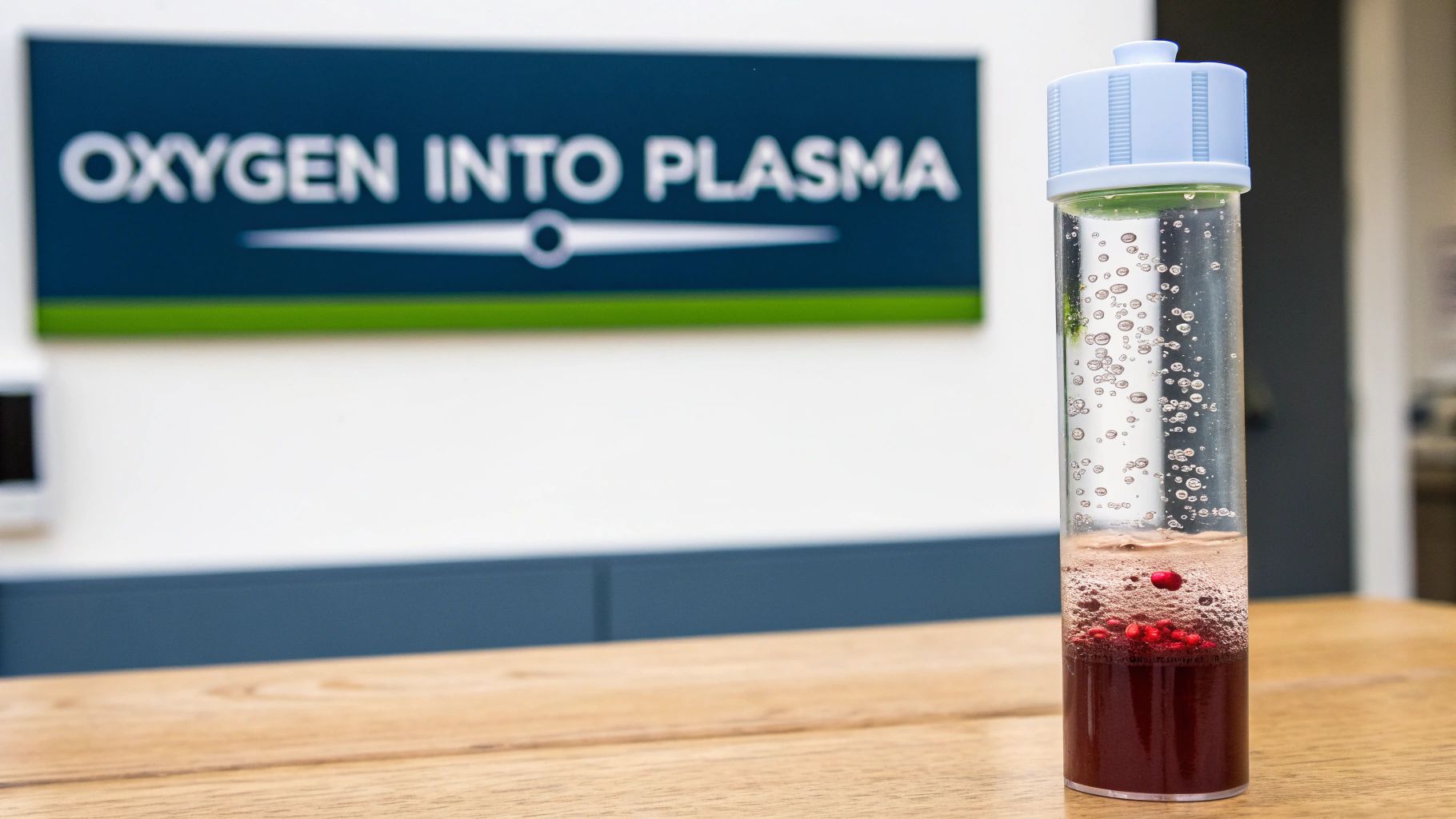
Inside the chamber, the combination of pure oxygen and increased air pressure forces O2 molecules to dissolve directly into your blood plasma—the liquid part of your blood that normally carries very little of it. This is all thanks to a principle called Henry's Law, which basically says the higher the pressure, the more gas you can dissolve into a liquid.
Think about how they make soda. CO2 gas is forced into water under high pressure, creating that familiar fizz. A hyperbaric chamber does something similar, but with oxygen and your blood. It can force 10 to 15 times the normal amount of oxygen straight into your plasma.
This "super-oxygenated" plasma is the secret weapon for healing. It can seep into areas where red blood cells can’t reach due to swelling or damaged vessels, delivering a massive dose of oxygen right to the cells that are screaming for it.
This direct delivery system provides the fuel your body’s repair crews need to work at peak efficiency, creating the perfect internal environment for recovery.
The Cellular Impact of Hyper-Oxygenation
Once this oxygen-rich plasma arrives on the scene, it kicks off a whole cascade of powerful biological effects. We're not just talking about more fuel; this is about sending clear signals to your body to repair itself, and fast.
For starters, it stimulates the growth of new blood vessels, a process called angiogenesis. This is absolutely critical for long-term healing, as it builds new pathways for permanent blood flow to damaged tissue. The high oxygen levels also mobilize stem cells from your bone marrow—the body's master repair cells—and calls them to action.
For anyone serious about their wellness, the health benefits are tangible:
- Reduced Inflammation: High oxygen concentration is a potent natural anti-inflammatory, helping to quiet the systemic inflammation behind so much chronic pain and fatigue.
- Enhanced Immune Function: Your white blood cells need oxygen to effectively fight off bacteria and other invaders. More oxygen means a stronger, more resilient immune system.
- Boosted Energy Production: Your mitochondria, the power plants in every cell, use oxygen to create ATP—the body's energy currency. More O2 means more raw energy for everything from muscle repair to thinking clearly.
The Link to Contrast Therapy and Modern Wellness
This process of flooding the body with oxygen shares a common goal with other popular wellness modalities like contrast therapy. A cold plunge constricts blood vessels to crush inflammation, while a sauna opens them up to boost circulation. A hyperbaric chamber complements these by attacking the problem from a different angle—it improves the quality of the blood itself.
By dramatically increasing the oxygen-carrying capacity of your blood, HBOT provides a foundational boost that can make your other recovery practices even more effective. It's this synergy that makes understanding what is a hyperbaric chamber so essential for anyone building a serious recovery protocol.
This is the science that explains why hyperbaric therapy has become a cornerstone for elite athletes and everyday wellness seekers alike. It gets right to the heart of what your body needs to heal. To see how this fits into the bigger picture of modern health tech, check out our MedEq Wellness Journal.
The Surprisingly Long History of Hyperbaric Therapy
Hyperbaric therapy might seem like a futuristic bio-hack, but the idea of using pressurized air to heal the body is anything but new. Its journey didn't start in a sterile, modern lab. It began centuries ago, long before scientists even knew why it worked, proving that the core principles are time-tested and built on a fascinating history of discovery.
The story starts way back in 1662—before oxygen was even identified as an element. A British clergyman named Nathaniel Henshaw came up with a brilliantly simple idea. He built a sealed chamber he called the 'Domicilium' and used bellows and valves to manually increase or decrease the air pressure inside.
Henshaw theorized that high-pressure air could help with acute conditions, while lower pressure might be better for chronic ones. He was limited by the science of his day, of course, but he was the very first person to document using altered air pressure for therapeutic purposes. That single idea planted the seed for what would one day become modern hyperbaric medicine.
From Deep Sea Dangers to a Medical Solution
The next big breakthrough came from necessity. In the 19th century, as engineers built bridges and tunnels underwater, workers started coming down with a mysterious illness after returning to the surface too quickly. They called it "caisson disease" or "the bends," and it caused debilitating joint pain, paralysis, and sometimes death.
The solution was found by accident and observation: putting the workers back into a pressurized airlock and slowly bringing them back to normal atmospheric pressure reversed the symptoms. This was the first real-world, practical application of hyperbaric therapy. By 1877, French surgeon Dr. J. A. Fontaine even built a mobile pressurized operating room, noting that patients seemed more responsive to anesthesia inside.
This era cemented the link between pressure and human physiology. The protocols developed to keep deep-sea divers safe became the foundation for the safe and effective hyperbaric treatments we use today.
Military Pioneers and Medical Proof
The technology jumped forward again during the world wars and the 1918 flu pandemic. Military doctors started exploring its use for treating carbon monoxide poisoning and healing stubborn battlefield wounds. It was during this time that researchers truly began to study the powerful combined effects of pressure and pure oxygen.
The U.S. Navy, in particular, led the charge. They refined hyperbaric protocols to treat decompression sickness in their divers, conducting exhaustive research that helped create the standardized treatment tables still referenced today. This military-driven work proved that a hyperbaric chamber wasn't just an experimental device—it was a reliable medical tool that could produce consistent, life-saving results.
This rich history, from a 17th-century clergyman’s invention to a critical tool for naval divers, shows that hyperbaric oxygen therapy is not a passing wellness fad. It’s a scientifically validated approach with a centuries-long track record.
This legacy of research underpins the physician-led equipment available today, bringing this powerful therapy into the modern world for workout recovery, clinical treatment, and enhanced wellness.
A hyperbaric chamber is a sealed, pressurized vessel designed to deliver hyperbaric oxygen therapy (HBOT). Inside, a person breathes pure oxygen at pressures greater than normal, flooding the body with 10-15 times more oxygen than at sea level. This super-saturates the blood plasma, allowing oxygen to reach deep into tissues to accelerate healing.
Today, we're simply continuing this long tradition of using pressure and oxygen to unlock the body's full potential.
For more insights into the science of recovery and wellness, you can explore the MedEq Wellness Journal.
Key Health Benefits for Recovery, Wellness, and Performance
The science behind hyperbaric therapy is fascinating, but what really matters are the tangible health benefits. This is where the physics of pressure and oxygen physiology translates into real-world gains in workout recovery, overall wellness, and peak physical performance.
For anyone who trains hard, one of the most immediate benefits is a massive drop in muscle soreness and accelerated workout recovery. That familiar ache after a tough session comes from micro-tears in muscle fibers and the inflammation that follows. Hyperbaric oxygen therapy hits this problem right at the source.
By flooding your system with dissolved oxygen, HBOT calms inflammation and gives your damaged tissues the fuel they need to repair themselves faster. The result? Less downtime, a quicker return to full strength, and the ability to train harder and more consistently.
Enhancing Cognitive Function and Mental Clarity
The health benefits aren't just physical. Your brain is an oxygen hog—it consumes about 20% of your body's oxygen at rest. Giving it more fuel can lead to some pretty profound improvements in cognitive function.
Many users report feeling sharper, with better focus and memory after their sessions. This makes a hyperbaric chamber a powerful tool not just for athletes, but for anyone seeking a mental edge. Over time, the therapy supports brain health by encouraging the growth of new blood vessels, boosting circulation and nutrient delivery where it counts.
Hyperbaric therapy is about optimizing your body's internal environment so all your systems can run more efficiently. It’s about building resilience from the inside out, tackling the root causes of fatigue instead of just masking the symptoms.
As a side benefit, all that extra oxygen also stimulates collagen production. Collagen is the protein that keeps your skin firm and your joints healthy, so you get some subtle anti-aging effects thrown into the mix.
A Powerful Tool for Inflammation and Immunity
Chronic, low-grade inflammation is the hidden culprit behind everything from nagging joint pain to persistent fatigue. Hyperbaric therapy is one of the most potent anti-inflammatory tools available, helping to dial down your body's inflammatory response and bring it back into balance.
This doesn't just help with workout recovery; it also bolsters your immune system. Your immune cells need plenty of oxygen to do their job, and a well-oxygenated body is a much tougher place for harmful bacteria to thrive.
- Systemic Inflammation Reduction: Directly lowers inflammatory markers across the body, easing chronic aches and pains.
- Immune System Support: Supercharges your white blood cells, making your body a more effective infection-fighting machine.
- Accelerated Tissue Repair: Provides the raw materials cells need to regenerate and heal, whether it’s from an injury or an intense workout.
HBOT Recovery Benefits vs Other Modalities
When building a complete recovery protocol, it helps to understand how different tools fit together. This is where contrast therapy—alternating between hot and cold—can be a powerful partner. Let's compare HBOT to other popular methods to see where its unique strengths lie.
| Modality | Primary Mechanism | Key Recovery Benefit |
|---|---|---|
| Hyperbaric Oxygen Therapy | Increased atmospheric pressure & oxygen saturation | Systemic cellular repair & reduced inflammation |
| Cold Plunge (Contrast Therapy) | Vasoconstriction (blood vessel narrowing) | Flushes metabolic waste & reduces acute swelling |
| Infrared Sauna (Contrast Therapy) | Vasodilation (blood vessel widening) | Increases blood flow & promotes detoxification |
| Compression Therapy | Mechanical pressure | Enhances circulation & reduces fluid buildup |
While things like cold plunges and saunas manipulate blood flow, HBOT fundamentally improves the quality of the blood itself by saturating it with healing oxygen. This makes it an incredible standalone therapy and a perfect partner to other modalities like contrast therapy for a truly comprehensive approach to wellness.
The historical data backs this up. Early pressurized chambers showed their potential right away. In 1877, one of the first therapeutic chambers made 27 successful surgeries possible in just three months. Fast forward to today, and professional sports teams report up to 40% faster recovery from soft-tissue injuries, proving its enduring power.
To truly see the impact of this therapy on your own health, understanding outcome measurement is key. It allows you to quantify your progress and know you're getting a real return on your wellness investment.
For a deeper look at how pro athletes leverage this technology, check out our guide on the specific hyperbaric chamber benefits for athletes.
Choosing Your Chamber: Hard Shell vs. Soft Shell
Once you wrap your head around what hyperbaric therapy is, the next big question is: which type of chamber is right for you? They aren't all created equal, and the main fork in the road is the choice between a hard-shell and a soft-shell model.
This decision directly shapes the pressure levels you can achieve, which in turn dictates what you can use the chamber for.
Soft-shell chambers are what you'll typically see for mild hyperbaric oxygen therapy (mHBOT). These are the workhorses for home gyms, wellness clinics, and anyone focused on general health optimization. Built from tough, flexible materials, they run at lower pressures—usually between 1.3 and 1.5 atmospheres absolute (ATA). That range is the sweet spot for speeding up workout recovery, cooling systemic inflammation, and sharpening mental focus without needing direct medical supervision.
Hard-shell chambers are the clinical gold standard. Made from rigid materials like steel and acrylic, they’re engineered to safely handle serious pressure, often pushing 2.0 ATA to 3.0 ATA and beyond. You’ll find these units in hospitals and specialized medical centers where they're used for FDA-approved treatments that require maximum oxygen saturation.
Matching Chamber Type To Your Goals
The right chamber for you comes down to what you want to accomplish.
An athlete looking to slash muscle repair time after a brutal training session will get exactly what they need from a soft-shell chamber. The same is true for a biohacker aiming for better sleep and next-level cognitive performance.
On the other hand, a clinical practice treating specific medical conditions or a pro-level facility needing the most potent protocols will require a hard-shell chamber. These units deliver the higher pressures essential for those more demanding applications.
This decision tree gives you a visual for how different recovery goals line up with specific hyperbaric benefits.
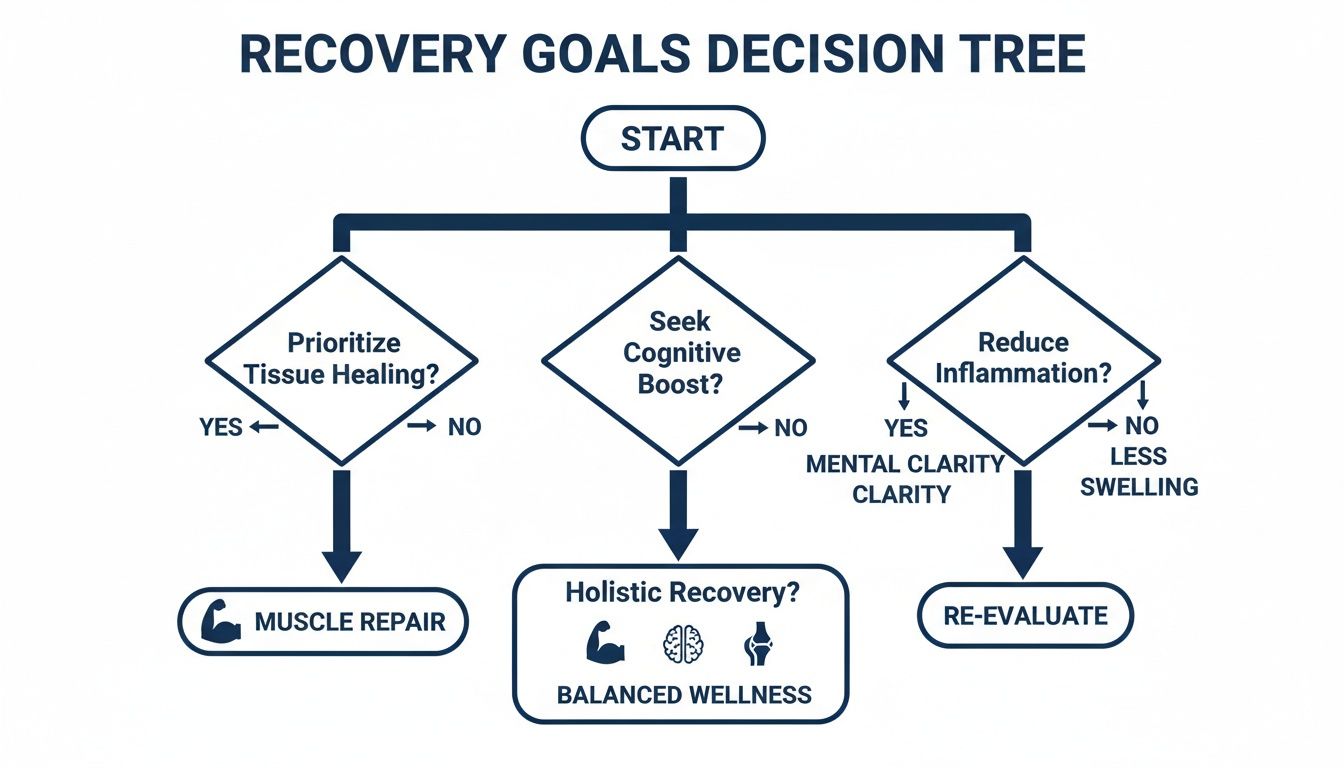
The takeaway here is that whether you’re chasing tissue repair, mental clarity, or inflammation control, HBOT provides a powerful boost to your body's built-in healing systems.
Key Differences At a Glance
Let’s get straight to the point. The evolution of hyperbaric chambers has been driven by specific needs and discoveries. After WWII, new decompression tables helped establish over 14 FDA-approved uses for HBOT. Today, modern clinics are seeing 20-30% gains in HRV for their high-performing clients. These benchmarks directly influenced the designs we have now: soft chambers for the 1.3-1.5 ATA range and hard-shell units for the 2.0-6.0 ATA clinical applications.
For most people wanting to elevate their workout recovery and wellness game at home, a soft-shell chamber is the clear winner. They’re accessible, easy to use, and incredibly effective. If you’re ready to look at specific models, our guide on choosing the best hyperbaric chamber for home use is the perfect next step.
What to Expect During Your Hyperbaric Session
Thinking about your first hyperbaric session? It might sound a bit like something out of a sci-fi movie, but the reality is surprisingly calm and relaxing. Let's walk through what a typical session looks like so you know exactly what to expect.
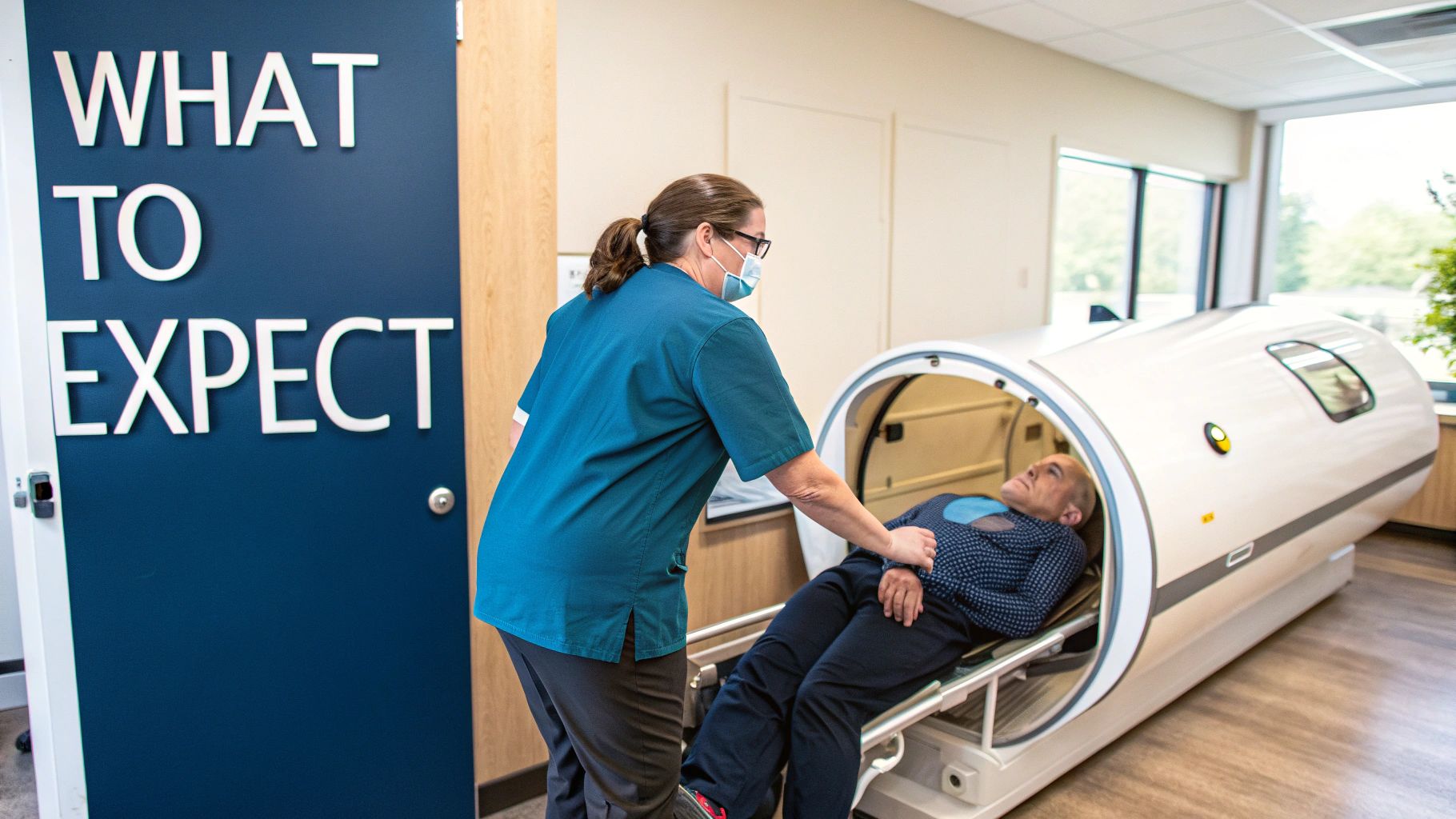
The whole process starts with a slow, controlled increase in air pressure inside the chamber. This phase is called compression. As the pressure gently builds, you'll probably feel a sense of fullness in your ears—the same sensation you get when a plane takes off or you drive up a mountain.
Equalizing the Pressure
That "ear-popping" feeling is totally normal, and it's easy to manage. A technician will be there to guide you, but a few simple tricks are usually all it takes to keep you comfortable.
- Swallow or Yawn: This is the easiest way to open up the Eustachian tubes that connect your middle ear to your throat, which naturally equalizes the pressure.
- The Valsalva Maneuver: Just pinch your nose and blow out gently. You'll feel a little pop as your ears clear.
- Drink Some Water: Staying hydrated helps, as swallowing becomes easier and more effective for clearing your ears.
Once the chamber gets to the target pressure set for your session, that full feeling in your ears will vanish. From there, your job is simple: just breathe normally and relax. Most people use this quiet time to read a book, meditate, listen to music, or even catch a quick nap.
Safety and Comfort Inside the Chamber
Your safety is paramount. Before you even get in, you'll be asked to remove anything that could be a fire risk in an oxygen-rich environment—think lighters, matches, and certain battery-powered electronics. It’s also best to wear simple, comfortable clothing made from 100% cotton to prevent any static electricity.
The entire experience is passive. You don't have to do anything. Your only job is to lie back and let the pressurized oxygen do its work to supercharge your body's natural healing abilities.
When your time is up, the pressure is gradually returned to normal. This is called decompression. You might feel your ears pop again on the way down, but the same clearing techniques work just as well. Once you step out, most people say they feel refreshed, clear-headed, and ready to tackle the rest of their day.
For more practical tips on preparing for your wellness journey, explore the articles on the MedEq Wellness Journal.
Answering Your Top Hyperbaric Chamber Questions
So, you're curious about diving into hyperbaric therapy. That’s a great first step. Whether you're an athlete chasing that extra edge, a biohacker looking to optimize, or a clinic owner wanting to offer the best, practical questions always come up.
Let's cut through the noise and get you the clear, straightforward answers you need to feel confident using this incredible tool.
How Often Should I Be Using It For Workout Recovery?
For general wellness and enhanced workout recovery, most people find a sweet spot with 2-3 sessions per week. This rhythm is usually enough to keep inflammation down, accelerate muscle repair, and support consistent cellular health.
But here's the thing: "ideal" is personal. If you're nursing a fresh injury or ramping up for a big competition, you might benefit from daily sessions for a week or two to really flood your system with healing oxygen. The best rule of thumb? Start slow, listen to your body, and adjust from there. You'll find what works for you.
The most common side effect you'll hear about is that ear-popping feeling, just like on an airplane. It's temporary and easily fixed by yawning, swallowing, or gently pinching your nose and blowing.
Are Soft Chambers Actually Effective?
Yes, absolutely. This is probably the number one question we get, especially from people focusing on wellness and home recovery. While soft-shell chambers run at lower pressures—typically 1.3-1.5 ATA—they are more than powerful enough for the goals of most wellness-focused users. This is what we call mild hyperbaric oxygen therapy (mHBOT).
At these pressures, you still get a significant physiological boost. Soft chambers are fantastic for:
- Speeding up recovery after tough workouts.
- Calming systemic inflammation and easing muscle soreness.
- Sharpening mental clarity and improving sleep.
- Boosting overall energy levels and wellness.
They are a safe, accessible, and highly effective tool for home use, delivering real health benefits without needing the intense pressures of a hospital-grade unit. If you're curious about the investment, our guide on hyperbaric chamber cost breaks it all down.
It's also worth noting the difference in oxygen sources. A home soft chamber pairs with an oxygen concentrator, which pulls in ambient air and purifies it to about 95% oxygen. Clinical hard chambers, on the other hand, are fed with tanks of 100% medical-grade oxygen to handle their higher-pressure protocols.
For more in-depth guides like this, make sure to check out the MedEq Wellness Journal.