Ice Bath Therapy: A Complete Guide to Health, Wellness, and Recovery
At its core, ice bath therapy is the simple, powerful practice of plunging your body into cold water for wellness. We're typically talking about a temperature range of 50-59°F for just a few minutes at a time.
This isn't just about enduring the cold. Think of it as hitting a reset button for your entire system. This intentional cold exposure—also known as cold water immersion—is a foundational tool for anyone serious about optimizing their health, wellness, and workout recovery.
What Is Ice Bath Therapy and Why Is It So Popular?
Ice bath therapy has exploded in popularity, moving from a secret weapon for elite athletes to a mainstream wellness ritual. And for good reason. It’s not some fleeting trend; it's a science-backed method for speeding up workout recovery, building mental toughness, and supporting overall health and wellness.
From pro sports facilities to your local gym, the sight of someone braving the cold is everywhere. This boom is fueled by real results. When you get into that icy water, your body kicks into high gear to maintain its core temperature, firing up several internal systems. This controlled stressor is what helps you build a more robust and adaptive nervous system over time.
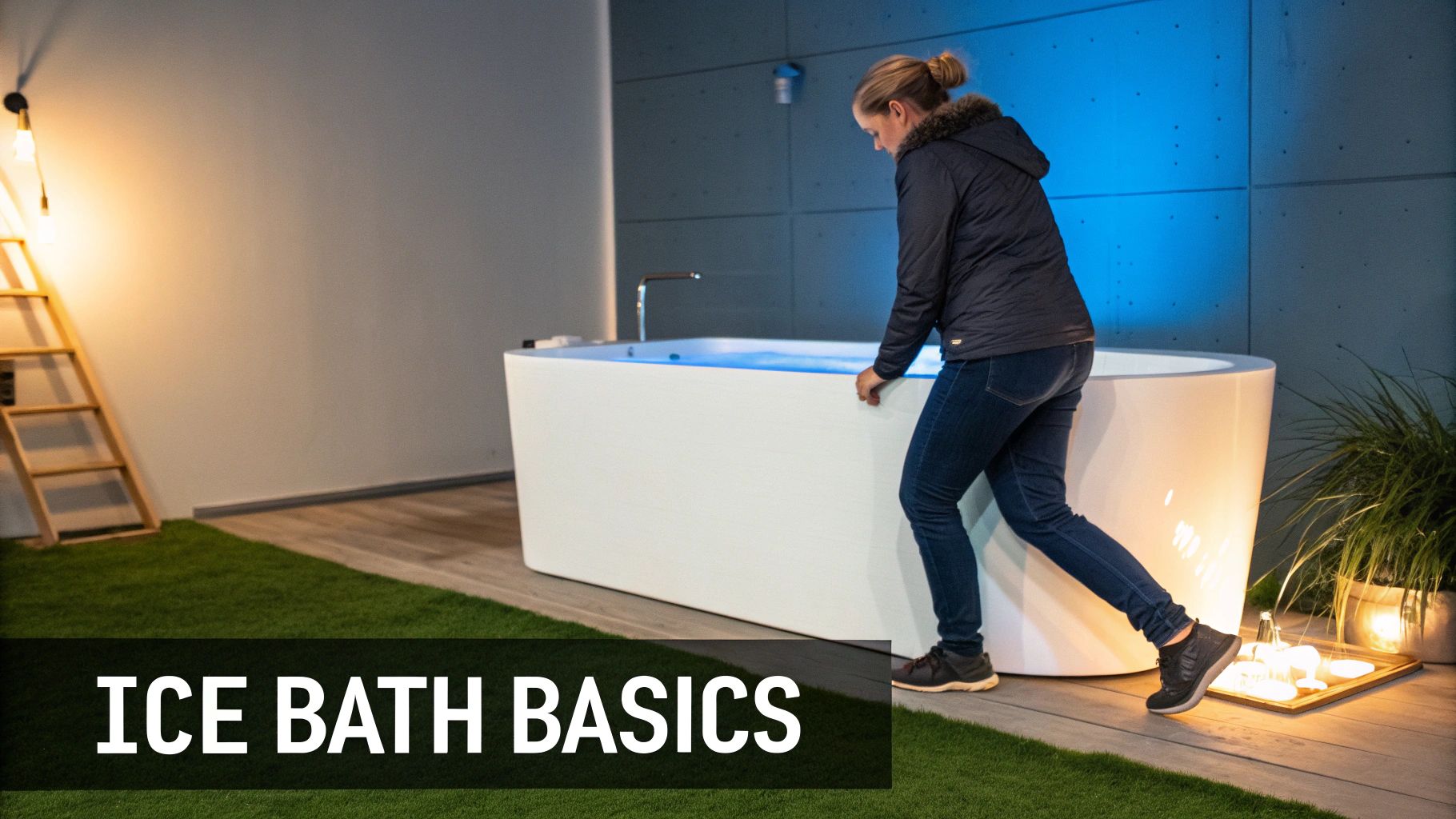
Core Principles of Cold Immersion
The whole point is to harness the body's natural response to cold. Think of it like a workout for your circulatory system. The cold forces your blood vessels to constrict (vasoconstriction), and when you get out, they rapidly open back up (vasodilation). This powerful flushing action helps clear out metabolic waste from your muscles, which is exactly why it's so prized for post-workout recovery.
To give you a clearer picture, here's a quick breakdown of what makes ice bath therapy so effective for your health.
Ice Bath Therapy at a Glance
This table offers a snapshot of the key components and health benefits you can expect from a typical cold water immersion session.
| Aspect | Typical Protocol | Primary Health Benefit |
|---|---|---|
| Temperature | 50-59°F (10-15°C) | Triggers vasoconstriction and a powerful hormonal response. |
| Duration | 5-15 minutes | Optimizes health benefits while minimizing any potential risks. |
| Key Outcome | Reduced Muscle Soreness | Dramatically accelerates post-workout and training recovery. |
| Mental Effect | Increased Alertness | Boosts "feel-good" neurotransmitters like dopamine and norepinephrine. |
Each element plays a crucial role in delivering the physical and mental rewards that have made this practice a cornerstone of modern wellness routines.
More Than Just Physical Recovery
While faster muscle repair is a major draw, the health benefits go way beyond the physical. That initial shock of cold water trains your mind to stay calm under pressure—a skill that translates directly into handling everyday stress with more grace. This mental fortitude is one of the most celebrated wellness outcomes among people who practice it regularly.
You can even take it a step further by pairing it with heat, a technique known as contrast therapy. Alternating between an ice bath and a sauna creates an even more dynamic "pump" for your circulatory system, pushing workout recovery and detoxification to the next level.
By deliberately putting yourself in a stressful environment, you become more resilient to the stresses of life. The cold is a powerful teacher in managing your internal state, regardless of external conditions.
Ultimately, the rise of ice bath therapy reflects a bigger shift toward proactive, holistic health and wellness. People are looking for effective, natural ways to feel better, and cold immersion delivers. With professional-grade equipment, like the systems offered by MedEq Fitness, this powerful therapy is no longer confined to elite training centers. It's now an accessible tool for anyone looking to build resilience, speed up recovery, and elevate their well-being from the comfort of home.
For a deeper dive into wellness strategies and recovery science, explore our other articles on the MedEq Wellness Journal.
The Science Behind How Cold Water Immersion Works
When you plunge into an ice bath, your body doesn't just feel cold—it kicks off a cascade of powerful physiological responses. This isn't just about gritting your teeth through the chill; it’s about tapping into some fascinating science that makes ice bath therapy a go-to tool for workout recovery, mental resilience, and overall health.
Think of your circulatory system as a highway. After a tough workout, that highway is clogged with metabolic traffic jams—things like lactic acid that leave you sore and tired. The instant shock of cold triggers vasoconstriction, causing blood vessels near your skin and in your limbs to clamp down.
This isn't a bad thing. It's a strategic rerouting of traffic. Blood is shunted away from your extremities and toward your core, effectively flushing all that metabolic junk out of your muscles. The congestion clears, setting the stage for repair.
The Rebound: Vasodilation and Repair
The real magic starts the moment you step out. As your body scrambles to warm up, your blood vessels fly open in a process called vasodilation. This creates a powerful "whoosh" effect, sending a surge of fresh, oxygen- and nutrient-rich blood rushing back into your muscles.
This flood of new blood is exactly what your tissues need to rebuild. It delivers the raw materials for repair, dials down inflammation, and soothes the micro-tears responsible for delayed onset muscle soreness (DOMS). It's why athletes swear by ice baths to get back in the game faster.
This circulatory flush is also the engine behind contrast therapy. By alternating between a cold plunge and a hot sauna, you're essentially creating a pump—forcing your blood vessels to constrict and dilate over and over, dramatically boosting circulation and accelerating workout recovery.
The Hormonal Shift: Focus, Mood, and Resilience
The health benefits go way beyond your muscles. That initial cold shock is a powerful wake-up call for your nervous system, triggering a massive release of key neurotransmitters. The star of the show is norepinephrine, a hormone that governs focus, attention, and mood.
Research shows that a cold plunge can spike norepinephrine levels by 200-300%. It’s like a clean, natural stimulant that sharpens your mind and creates a state of calm alertness, all without the caffeine jitters.
By exposing yourself to a controlled, short-term stressor like an ice bath, you're essentially training your nervous system. You teach your body how to handle stress more efficiently, making you more resilient to the challenges of everyday life.
At the same time, the cold activates your brain’s reward centers, releasing dopamine—the molecule of motivation and pleasure. This sustained dopamine lift is why so many people report an elevated mood and a more positive outlook long after they've dried off.
This potent hormonal cocktail is a huge part of the wellness appeal. While the practice was refined in elite sports, it was popularized by figures like Wim Hof. His protocol—breathing paired with cold plunges (2-5 minutes at 40°F) —was shown in a 2014 study to significantly boost the immune response. Trained subjects exposed to an endotoxin had 50% fewer flu-like symptoms than the control group. You can learn more about the history and science behind these methods.
Taming Inflammation and Reducing Swelling
One of the most immediate and noticeable effects of an ice bath is its anti-inflammatory power. The cold acts fast to reduce swelling and calm down irritated tissue.
Exercise creates micro-damage in your muscles, which triggers inflammation. A little bit is necessary for healing, but too much just gets in the way of recovery. An ice bath helps put the brakes on that response, numbing nerve endings for quick pain relief and constricting blood vessels to limit swelling. This targeted action is fundamental to effective workout recovery, allowing you to train harder and more consistently.
For a deeper look into wellness topics, visit the MedEq Wellness Journal.
The Health and Wellness Case for Ice Baths
While athletes have known the secret for years, ice baths are much more than a quick fix for sore muscles. Think of ice bath therapy as a powerful upgrade for your entire system, impacting everything from your immune function to your mental state. It's a true investment in your total health and wellness.
The most famous benefit, of course, is taming Delayed Onset Muscle Soreness (DOMS). That deep ache you feel after a tough workout is the result of micro-tears in your muscles and the inflammation that follows. An ice bath acts like a circuit breaker, dialing down that inflammatory response so you can get back to training faster and harder.
This isn't just some new fitness fad. People have been using cold water therapeutically for centuries. Vincent Priessnitz was a key figure in the 19th-century hydrotherapy movement, turning it from a folk remedy into a respected medical practice. After healing his own injuries with cold compresses back in 1816, he opened a clinic where he treated thousands by having them sit in ice-cold baths at 50-55°F for 10-15 minutes. The results were remarkable. Discover more about the fascinating history of hydrotherapy.
Building a Stronger Immune System
Regular cold plunges can also give your body's defense system a serious boost. The initial shock of the cold prompts your body to produce more white blood cells, which are the soldiers on the front lines of your immune system, fighting off germs and keeping you healthy.
You can think of it like running drills for your immune response. Each plunge is a controlled challenge that trains your system to be more efficient and ready for action. Over time, this can mean fewer sick days and a better ability to fight off common bugs.
A Natural Lift for Mood and Focus
The mental health benefits of ice bath therapy are just as powerful as the physical ones. The moment you get into that cold water, your brain releases a rush of feel-good neurotransmitters, especially norepinephrine and dopamine.
- Norepinephrine: This chemical is all about focus, mood, and alertness. Regular plunges can lead to better concentration and mental clarity that lasts all day.
- Dopamine: Often called the "motivation molecule," dopamine is central to your brain's reward system. The release you get from the cold provides a genuine sense of well-being and accomplishment.
When you intentionally face the cold and use your breath to control your body's reaction, you're actively training your mind. This builds a mental toughness that carries over into how you handle all of life's other stressors.
Master Your Stress, Improve Your Sleep
Ice baths are a fantastic tool for stress management. The cold directly stimulates the vagus nerve, a key player in the part of your nervous system responsible for calming you down—the "rest-and-digest" system. By toning your vagus nerve, you're teaching your body how to switch out of "fight-or-flight" mode more easily.
This has a direct, measurable impact on your Heart Rate Variability (HRV), a key marker of how well your nervous system can handle stress. Higher HRV is tied to better recovery, lower stress, and a healthier heart. To see how ice baths truly affect athletic recovery, it's helpful to understand the different methods of physical performance testing.
On top of that, many people find their sleep dramatically improves. By helping to calm your nervous system and lower your core body temperature, an ice bath before bed can help you fall asleep faster and get more deep, restorative rest. These wellness effects get even stronger when you combine cold with heat. Check out our journal to learn how to best pair sauna sessions with cold plunges.
Adding ice bath therapy to your routine with professional equipment from MedEq Fitness is more than just a recovery hack—it's a commitment to becoming a healthier, more resilient you. For more ways to optimize your health, visit our MedEq Wellness Journal.
A Practical Guide to Your First Ice Bath
Stepping into an ice bath for the first time can feel a little intimidating, but it doesn't have to be. With a clear plan, you can make it a safe and genuinely empowering part of your wellness routine. The goal isn't to endure misery; it's to intentionally use the cold to kickstart your body's powerful recovery and resilience mechanisms.
Let's walk through a straightforward roadmap to get you started. The most critical things to get right in your first few sessions are temperature, duration, and timing. Nailing these ensures you get the health benefits of ice bath therapy without overdoing it. A gentle start is the key to building a practice that sticks.
Setting the Stage: Temperature and Duration
For anyone new to cold plunging, the sweet spot for temperature is between 50-59°F (10-15°C). This is definitely cold enough to trigger the physiological responses we want—like vasoconstriction and that norepinephrine rush—but it’s not so extreme that it feels unbearable. You don't need a tub packed with ice; often, just running your tap water on its coldest setting is the perfect entry point.
Your first plunge should be short and sweet. Aim for just 1-3 minutes. Your biggest challenge won't be the cold itself, but the initial cold shock reflex that makes you want to gasp for air.
The secret to mastering the cold shock is your breath. Before you even get in, take a few slow, deep breaths. As you submerge, focus on a long, controlled exhale. This simple action sends a powerful signal to your nervous system that you are safe and in control.
Once you’re comfortable with those shorter dips, you can gradually increase your time. You can work your way up to the 5-15 minute range, which is fantastic for deep workout recovery. The golden rule is to always listen to your body. If you start feeling dizzy or overly uncomfortable, it's time to get out.
This is a great visual of the core health benefits that ice bath therapy delivers to your brain, heart, and muscles.
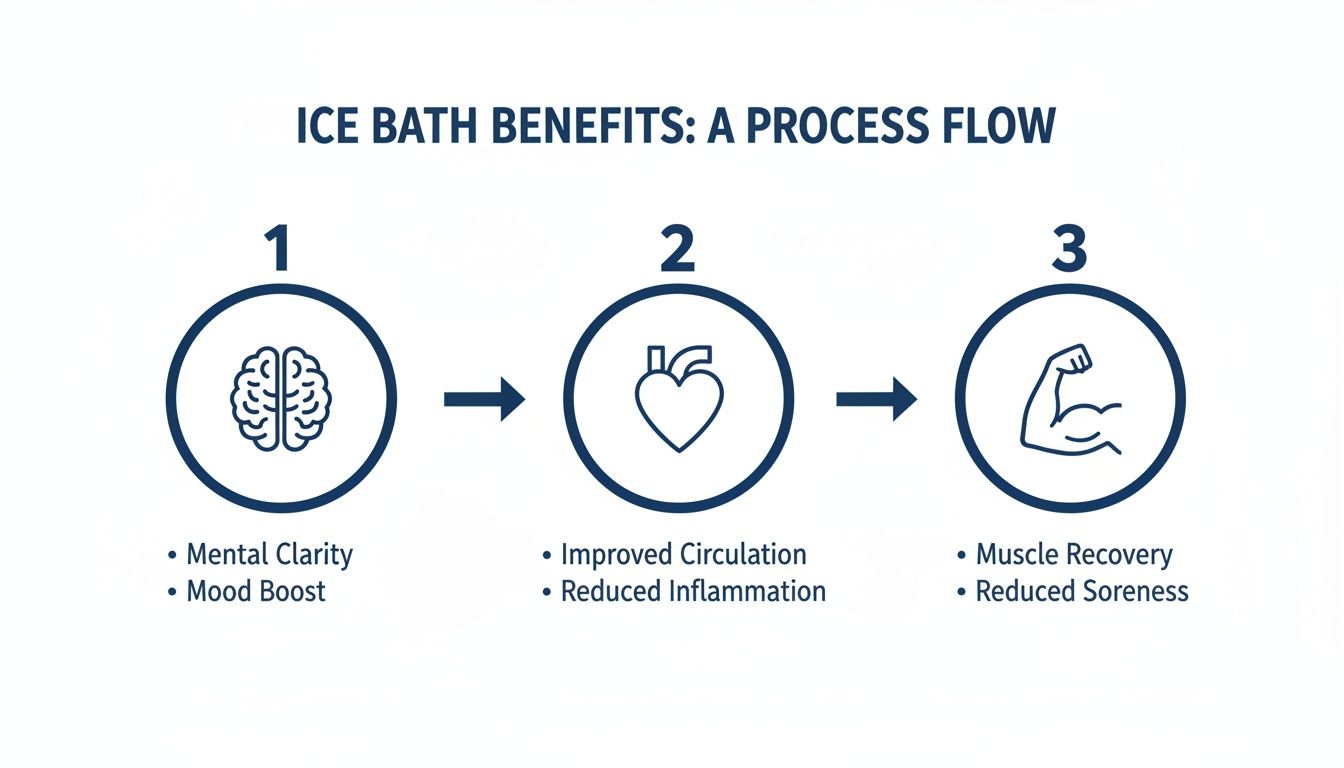
As you can see, the practice doesn't just work on one area. It improves mental focus, enhances circulation, and accelerates muscle repair, showcasing just how holistic its wellness impact really is.
Timing Your Plunge for Maximum Effect
When you take your ice bath really matters. If you're using it for workout recovery, the best time is within an hour after an intense endurance session. This timing helps you get a handle on inflammation and muscle soreness right away, kickstarting the repair process when your body needs it most.
However, if your main goal is building muscle strength and size (hypertrophy), you might want to hold off. Some research suggests that an immediate post-lift plunge could slightly blunt the inflammatory signals your body needs to build muscle. For strength athletes, waiting a few hours or using the ice bath on a rest day is a much better strategy.
Introducing Contrast Therapy for Enhanced Recovery
Once you've gotten the hang of cold immersion, you can level up with contrast therapy. This is where you alternate between your cold plunge and a hot environment, like a sauna or even just a warm shower. It’s a powerful technique that creates a dynamic circulatory "pump" in your body.
The heat opens up your blood vessels (vasodilation), and the cold snaps them shut (vasoconstriction). Alternating between the two pushes blood and lymphatic fluid through your system, flushing out metabolic waste and delivering fresh nutrients to your tissues with incredible efficiency.
A common and effective protocol is 15-20 minutes of heat followed by 1-3 minutes of cold, repeated for a few cycles. This is an excellent wellness practice for boosting circulation and accelerating workout recovery.
Customizing Your Ice Bath Routine
Your ice bath therapy protocol should always line up with your specific wellness goals. Not everyone needs the same temperature or duration to get what they want out of the practice.
This simple guide can help you personalize your routine based on what you're trying to achieve.
Ice Bath Protocols for Different Wellness Goals
| Goal | Recommended Temperature | Recommended Duration | Best Timing | Frequency |
|---|---|---|---|---|
| Workout Recovery | 50-55°F (10-13°C) | 10-15 minutes | Within 1 hour post-exercise | As needed after intense sessions |
| Mental Clarity & Mood Boost | 55-59°F (13-15°C) | 2-5 minutes | Morning | 3-5 times per week |
| General Health & Wellness | 59°F+ (15°C+) | 1-3 minutes | Anytime | Daily or every other day |
| Contrast Therapy with Sauna | 50-59°F (10-15°C) | 1-3 min cold / 15-20 min hot | On recovery days | 1-2 times per week |
By starting slowly and tailoring your routine to fit your goals, you can make cold plunging a true cornerstone of your health and workout recovery journey.
For more expert advice on recovery and wellness, check out the MedEq Wellness Journal.
How to Choose the Right Cold Plunge Equipment
Bringing ice bath therapy into your home, clinic, or training facility is a game-changer for consistent workout recovery and wellness. But to make it a sustainable habit, you need the right gear.
Let's be honest, a DIY setup with endless bags of ice seems easy at first. But the reality is, it's a chore. That hassle often leads to inconsistent use, and you end up missing out on the very health benefits you were chasing.
A dedicated cold plunge system turns a clunky process into a seamless ritual. Instead of wrestling with ice and guessing the temperature, you get precise, reliable cooling at the push of a button. That consistency is what makes a cold immersion routine truly effective.
This modern approach isn't inventing something new; it’s just perfecting an ancient practice. Using cold to heal dates back over 5,500 years to ancient Egypt. The Edwin Smith Papyrus, one of the oldest medical texts ever found, documents how cold applications were used to reduce inflammation—a practical remedy standing in stark contrast to the magical thinking of the time.
Key Features to Look For in a Cold Plunge
When you start comparing systems, a few features immediately separate the pro-grade options from the rest. Focusing on these will ensure you make a smart investment in your health and wellness.
-
Powerful and Quiet Chilling: The chiller is the engine of your cold plunge. You need a unit that can drop the water to your target temperature quickly and hold it there, plunge after plunge. For home use especially, quiet operation is just as important—nobody wants a wellness ritual that sounds like a jet engine.
-
Robust Water Filtration: Clean water is non-negotiable. A quality system should have multi-stage filtration, typically combining an ozone generator with a particle filter. This keeps the water crystal clear and hygienic, saving you from the constant drain-and-refill cycle.
-
Durable, Quality Construction: The materials tell a story. Look for tubs made from resilient acrylic or stainless steel that can handle constant use and temperature swings. If you're setting it up outside, make sure all components are weather-resistant.
A professional-grade system is more than a tub; it’s a reliable piece of wellness technology. Investing in quality up front means you're investing in safety, convenience, and the long-term consistency of your practice.
MedEq Fitness Pro-Grade Performance for Home and Clinics
For those who demand unwavering reliability and performance, a system like the MedEq Fitness Stainless Steel Plunge Pool is the answer. It delivers the powerful chilling and filtration you'd find in an elite training center, but it’s designed with the aesthetics and simplicity needed for a home gym or wellness clinic.
The real advantage here is removing all the friction. The water is always clean. It's always at the perfect temperature. It's ready when you are. That convenience is what helps you build the daily or weekly habit that unlocks the profound health benefits of ice bath therapy—from faster workout recovery to a stronger mindset.
By choosing a system built for performance, you're free to focus on what actually matters: your health. A reliable cold plunge is an investment that pays you back in reduced muscle soreness, elevated mood, and a more resilient response to stress, making it a cornerstone of any serious wellness routine.
Safety First: Essential Protocols and Common Myths
Ice baths are incredibly powerful, but like any effective wellness tool, they demand respect. Your safety is non-negotiable, so before you even think about taking the plunge, it's critical to understand the ground rules and separate fact from fiction.
First thing's first: cold plunging isn't for everyone. If you have a history of cardiovascular issues, high blood pressure, or a condition like Raynaud's syndrome, this is a conversation to have with your doctor. Their professional guidance is the only green light that matters.
Smart Plunging Best Practices
Once you're cleared for takeoff, a few simple rules will keep your practice safe, sustainable, and genuinely beneficial. Think of these as the fundamentals you never skip.
- Never Plunge Alone: Especially when you’re starting out. Always have someone nearby who can assist if you feel lightheaded or need help getting out.
- Listen to Your Body: This is the golden rule. A little discomfort is part of the process, but sharp pain or dizziness is your body’s stop sign. Get out immediately.
- Start Slow and Short: You don't win a prize for going colder or longer on your first try. Begin with warmer water (around 59°F or 15°C) for just 1-3 minutes. Let your body adapt.
Think of your first few plunges as a conversation with your body. You're learning its signals and building trust. Pushing too hard, too soon, breaks that trust and can set you back.
Debunking Common Ice Bath Myths
A lot of myths make ice baths seem far more extreme than they need to be. Let's clear the air on a couple of the most common ones.
One huge misconception is that "colder is always better." The science just doesn't back that up. You don't need painfully frigid water to trigger the health benefits. Research shows that key physiological responses, like reduced inflammation and that powerful norepinephrine surge, kick in effectively between 50-59°F. Going colder simply increases the risk without adding much benefit.
Another myth is that you need marathon sessions to see results. The idea of staying in for 20-30 minutes is not only unnecessary, it's downright dangerous. Consistency beats duration, every single time. A regular, disciplined practice built on safe, evidence-backed protocols is what delivers sustainable, long-term health and wellness results.
This safety-first mindset is what builds the confidence to make cold plunging a truly effective part of your life. For more expert-backed recovery strategies, check out our guide to the best recovery tools for athletes.
Common Questions About Ice Baths
Diving into the world of ice bath therapy naturally brings up a few questions. While the practice is simple at its core, understanding the details helps you build confidence and get the most out of every plunge. Let's tackle some of the most common queries so you can get started safely and effectively.
What Should I Do Immediately After an Ice Bath?
Once you step out of the cold water, your main job is to rewarm your body gradually. It’s tempting to jump straight into a hot shower, but resist that urge. A sudden, extreme temperature shift can be a real shock to your system and might even make you feel dizzy.
Instead, just calmly get out and dry off completely. The best way to rewarm is to put on warm, dry clothes, sip a warm (not hot) drink, and let your body's internal furnace do the work. A little light movement, like a slow walk, also helps get your circulation back to normal without overdoing it.
Can Ice Bath Therapy Help With Weight Loss?
While it's no magic pill for weight loss, an ice bath can definitely be a strong supporting player in a healthy lifestyle. Cold exposure is known to activate a specific type of fat called brown adipose tissue (BAT). Unlike the white fat that stores energy, BAT’s purpose is to burn calories to generate heat—a process called thermogenesis.
Think of it as a helpful boost to your metabolic engine, not a replacement for a solid diet and consistent exercise. Regular cold plunges can contribute to a modest increase in your overall metabolic rate.
This is just one of the many health and wellness benefits that make cold plunging a powerful addition to any serious health and fitness plan.
Is It Better to Do an Ice Bath Before or After a Sauna?
This is the classic contrast therapy question, and the order really depends on your goal. For workout recovery, the science is clear: end with cold. The sauna's heat relaxes your muscles and opens up your blood vessels (vasodilation), and the ice bath that follows immediately constricts them (vasoconstriction).
A proven routine looks like this:
- Spend 15-20 minutes in a hot sauna.
- Immediately follow it with a 2-5 minute cold plunge.
- Repeat this cycle 2-3 times, always finishing with the cold.
This hot-to-cold sequence creates a powerful "pumping" action for your circulatory system. It actively flushes out metabolic waste and inflammation from your muscles while delivering a fresh surge of oxygen-rich blood, which can dramatically speed up your workout recovery. For more deep dives and wellness guides, check out the MedEq Wellness Journal.
At MedEq Fitness, we're committed to providing science-backed equipment that helps you hit your recovery and wellness goals. Explore our professional-grade cold plunges and saunas to build the ultimate recovery sanctuary in your own home. For more wellness insights, visit the MedEq Wellness Journal.