Cold Plunge Benefits: A Guide to Faster Recovery & Peak Wellness
At its core, a cold plunge is about so much more than just enduring the chill. Think of it as a powerful system-wide reset—a way to accelerate workout recovery, slash muscle soreness, sharpen your mental focus, and build incredible resilience to stress.
This deliberate practice of cold exposure triggers a cascade of physiological responses that benefit both your body and your mind, forming a cornerstone of any serious wellness routine.
The Real Health Benefits of Cold Plunge Therapy
Diving into icy water isn't just a shock to the system; it's a strategic tool that top athletes and wellness experts use to unlock peak performance. The whole idea behind cold water immersion is to submerge your body in water that’s typically between 40-60°F for just a few minutes. This intentional, controlled stressor is what kicks off a wave of positive health benefits.
Imagine it as a workout for your entire circulatory system. The moment you get in, the cold makes your blood vessels clamp down (vasoconstriction), and when you get out, they open back up with a rush (vasodilation). This powerful flushing action helps clear out metabolic waste from your muscles, brings down inflammation, and can seriously reduce that delayed onset muscle soreness (DOMS) that hits after a tough workout. For anyone serious about their physical performance, knowing the right recovery equipment for athletes is a total game-changer.
Physical and Mental Advantages
But the health benefits don't stop at your muscles. A cold plunge has a profound effect on your nervous system. That initial jolt forces your body to adapt, training it to handle stress far more effectively. This builds a kind of mental armor that you carry with you throughout your day.
It's why so many people report an incredible feeling of calm and clarity after a session. This isn't just a feeling—it’s backed by a real release of mood-boosting neurochemicals like norepinephrine and dopamine. You're not just tolerating the cold; you're using it to gain tangible, science-backed health advantages. To get a deeper look at the science, you can explore more about the proven benefits of cold water therapy.
"Cold water immersion is a potent stimulus that can reset the body’s homeostatic mechanisms. It's a direct way to influence inflammation, circulation, and even mood, making it one of the most efficient recovery tools available today."
To give you a quick snapshot, we've pulled together the key health benefits of a consistent cold plunge practice.
Key Cold Plunge Benefits at a Glance
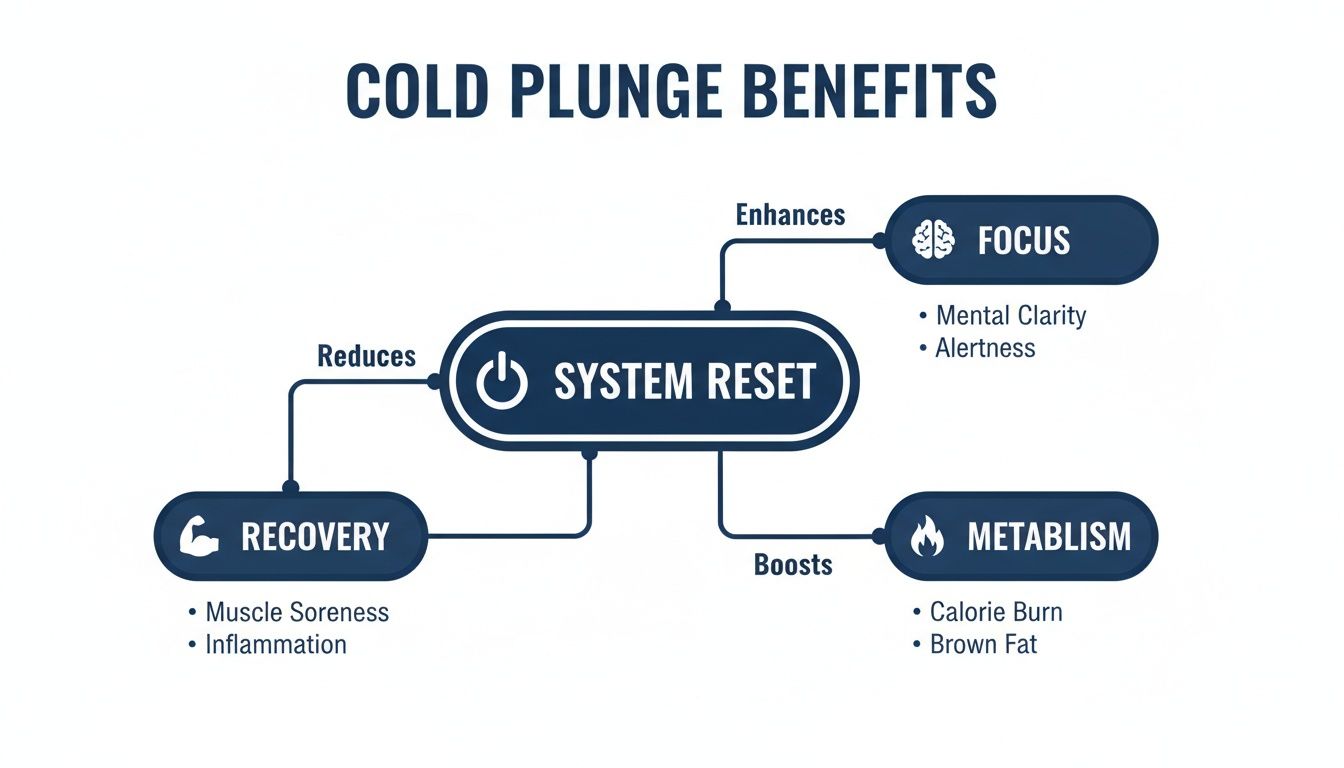
This graphic and table break down the powerful outcomes you can expect when you make cold immersion a regular part of your wellness routine.
| Benefit Category | Primary Outcome | Key Mechanism |
|---|---|---|
| Workout Recovery | Reduced Muscle Soreness & Faster Repair | Vasoconstriction reduces inflammation & flushes metabolic byproducts. |
| Mental Acuity | Enhanced Focus & Mood Elevation | Release of norepinephrine and dopamine sharpens alertness. |
| Stress Resilience | Improved Nervous System Regulation | Hormetic stress trains the body to manage physiological stressors. |
| Metabolic Health | Potential Boost in Caloric Burn | Activation of brown adipose tissue (BAT) to generate heat. |
As you can see, the impact of a cold plunge goes far beyond just feeling refreshed. It’s a holistic practice that strengthens your body from the inside out, making it a vital component of modern wellness. For more expert wellness insights, visit the MedEq Wellness Journal.
How Your Body Responds to Cold Exposure
Stepping into a cold plunge isn't just about gritting your teeth through the chill; it's a deliberate signal to your body to adapt and get stronger from the inside out. That immediate, sharp change in temperature kicks off a cascade of physiological events, and it's this rapid adaptation that unlocks the incredible wellness benefits.
Think of it as a beneficial, short-term stressor. Your body is hardwired for survival, so when it senses the intense cold, it mounts a powerful defense. This reaction is precisely where the magic happens, firing up your circulatory, hormonal, and nervous systems to build some serious resilience.
The Circulatory Workout: Vasoconstriction and Vasodilation
The first thing that happens is a dramatic shift in your circulatory system. When you get in that cold water, your body immediately triggers vasoconstriction—the blood vessels near your skin and in your limbs tighten up significantly. This is a survival move, shunting blood toward your vital organs to keep your core temperature stable.
You can literally think of it as a workout for your arteries and veins. This constriction forces blood to move more efficiently under higher pressure. Then, when you get out, the opposite happens: vasodilation. Your blood vessels open back up, and a rush of fresh, oxygen-rich blood floods your tissues.
This "pump" action is a game-changer for workout recovery:
- Flushes Metabolic Waste: That rush of blood helps clear out metabolic junk like lactic acid that builds up after a tough session.
- Reduces Inflammation: By tightening up blood vessels, cold immersion can put the brakes on the inflammatory response and swelling in overworked muscles.
- Improves Blood Flow: Over time, this practice can improve the elasticity of your entire vascular system, much like lifting weights strengthens muscles.
This circulatory flush is a huge reason why cold plunges are so good at knocking out delayed onset muscle soreness (DOMS). For an even bigger circulatory boost, many people alternate with a warm environment, a technique known as contrast therapy, to really amplify that pumping effect.
The Neurochemical Rush: Mood and Focus
Your brain gets the signal loud and clear, too. The cold shock floods your system with some powerful neurochemicals, especially norepinephrine and dopamine. Norepinephrine is all about vigilance, focus, and mood, while dopamine is the key player in motivation and feeling rewarded.
That massive spike is what causes that incredible feeling of alertness and the mood boost so many people rave about after a plunge. And this isn't just a feeling; the research backs it up. One study showed that a single 5-minute immersion left people feeling more active, alert, and inspired. You can dive deeper into these mood-boosting findings on ncbi.nlm.nih.gov.
Training Your Nervous System for Resilience
Maybe the most profound long-term benefit of cold plunging is what it does for your autonomic nervous system. This system has two settings: the "fight-or-flight" sympathetic side and the "rest-and-digest" parasympathetic side. The cold initially slams the gas on your sympathetic system, but the real goal is to consciously override that panic with calm, controlled breathing. Doing this strengthens your parasympathetic (or "rest-and-digest") response.
By learning to stay calm under the acute physical stress of the cold, you are effectively training your nervous system to better handle psychological and emotional stress in everyday life.
This training has a direct, measurable impact on your Heart Rate Variability (HRV), a key metric for tracking how balanced and recovered your nervous system is. A higher HRV is a sign that your body is adaptable and resilient. Regular cold plunging can lead to a sustained increase in your baseline HRV, which is a fantastic indicator of improved overall wellness.
This foundation of physiological responses is what makes cold plunging such an effective tool for anyone looking to optimize their health. For more ways to enhance your well-being, explore our MedEq Wellness Journal.
Accelerate Workout Recovery and Reduce Muscle Soreness
For any serious athlete or fitness enthusiast, this is the big one: getting back in the game faster. Every tough workout creates tiny micro-tears in your muscle fibers. It's this process of damage and repair that makes you stronger, but it also brings on inflammation and the all-too-familiar delayed onset muscle soreness (DOMS) that can keep you on the sidelines.
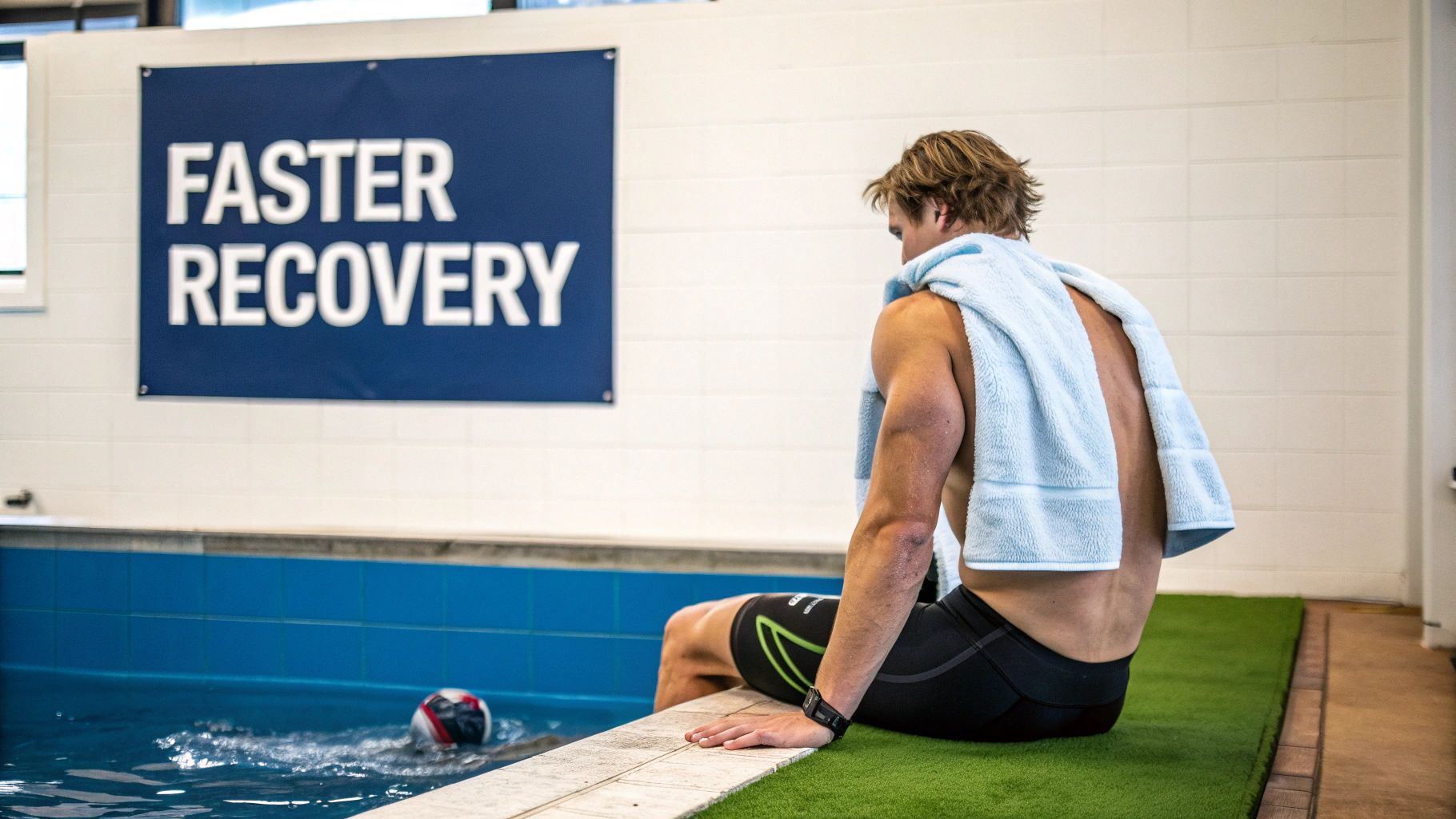
This is where a cold plunge becomes your best friend for workout recovery. Plunging into cold water triggers rapid vasoconstriction—a fancy term for your blood vessels clamping down. Think of it like a powerful pump that flushes out metabolic waste, like lactic acid, that builds up during a hard session.
By tapping the brakes on metabolic activity in your muscles and curbing that inflammatory response, you’re doing more than just numbing the pain. You're actively helping your body manage the damage and kickstart the repair process.
Strategic Timing for Optimal Workout Recovery
Here’s where we separate the pros from the newcomers. While cold immersion is a fantastic recovery tool, when you do it is critical.
A little bit of inflammation isn't the enemy; it’s a crucial signal that tells your muscles to adapt and grow. Plunging immediately after a heavy lifting session might feel good, but it can actually mute the very signals your body needs to build muscle (a process called hypertrophy).
"The benefits for post-exercise recovery are dose- and timing-sensitive. Cold water immersion reduces exercise-induced muscle damage and perceived soreness, but immediate post-strength-training plunges can blunt long-term hypertrophy adaptations."
This isn't just theory. Top health authorities like the Mayo Clinic stress this nuance. While cold water is great for reducing soreness, it's not a one-size-fits-all fix for every workout. You can read more about these expert recommendations for post-workout plunges on mayoclinichealthsystem.org.
Recovery Protocols for Different Goals
To get the most out of your plunge, you need to match your protocol to your goal. Let's get specific.
Here are a few practitioner-level approaches:
- For Strength and Hypertrophy: Don't plunge right after you lift. Instead, wait at least 4-6 hours or, even better, save your plunge for a rest day. This gives those critical muscle-building signals time to work their magic before you bring in the powerful anti-inflammatory benefits of the cold.
- For Endurance and Performance: Just finished a long race or a grueling cardio session? Plunging soon after is highly effective. Here, the goal is to manage widespread inflammation and get you ready for your next training day, fast.
- For General Wellness: If you're plunging for overall resilience and mental clarity, any time of day is fair game. Many people love a morning plunge for that incredible, energizing rush it provides.
For more ways to handle post-workout aches, take a look at our complete guide on how to reduce muscle soreness.
Contrast Therapy: A Powerful Workout Recovery Alternative
Want to level up your recovery? Try contrast therapy. This involves alternating between a cold plunge and a hot environment, like a sauna.
The rapid switching from cold to hot creates a unique vascular "pumping" action as your blood vessels constrict and then dilate. This is incredibly effective at boosting circulation and flushing out metabolic junk. It's a fantastic option for athletes who want the circulatory benefits without interfering with post-workout growth signals.
By understanding these details, you can turn your cold plunge from a simple recovery tool into a precision instrument for optimizing your training and performance. For more expert wellness advice, be sure to visit the MedEq Wellness Journal.
Build Mental Resilience and Sharpen Your Focus
The power of a cold plunge goes way beyond the physical. It’s a direct line into training your mental game. Stepping into that icy water is a perfect example of hormesis—a beneficial stress that acts like a workout for your nervous system. By intentionally facing this intense but brief stressor, you're teaching your brain to stay calm and sharp when the real pressure hits.
Think of it as building mental armor. This resilience doesn't just stay in the tub; it translates directly into your daily life, whether you're in an athletic competition or a high-stakes meeting. The initial shock is the test, but learning to control your breath and quiet your mind through it is the real skill. You're showing your body that you’re in charge, not the stressor.
The Powerful Neurochemical Rewards
One of the most immediate and profound health benefits of a cold plunge is the flood of powerful neurochemicals it unleashes. When your body hits the cold, it responds by releasing a wave of norepinephrine and dopamine. This isn't just a fleeting buzz; the effects are designed to last.
The dopamine release is especially noteworthy. It can lift your mood, sharpen your motivation, and fuel your drive for hours after you've dried off. Unlike the quick, jittery spikes from caffeine or sugar, this is a sustained rise that creates a genuine sense of well-being and productivity. This is the neurochemical reset behind that incredible feeling of clarity so many people talk about.
Mastering the initial shock of the cold is less about physical toughness and more about mental discipline. It is a trainable psychological skill that demonstrates you can remain calm and deliberate in the face of intense adversity.
This combination of mental training and a neurochemical boost leads to real-world results you can actually feel.
From Mental Armor to Real-World Results
That ability to stay composed under the acute stress of cold water doesn't just disappear. It carries over, reinforcing your overall stress management skills and sharpening your focus throughout the day.
Here’s how these wellness benefits actually show up:
- Enhanced Productivity: The sustained dopamine release helps you stay locked in, making it easier to power through complex tasks without getting sidetracked.
- Improved Stress Management: After you've trained your nervous system to handle the shock of the cold, daily frustrations like work deadlines or tough conversations feel much more manageable.
- Greater Emotional Regulation: By practicing control over your body's initial panic response, you gain a much better handle on your emotional reactions in general.
These psychological skills are invaluable. Alongside cold plunging, it's worth exploring other complementary habits. There are diverse strategies to boost energy and focus that can work together with your cold exposure routine.
Ultimately, a cold plunge is more than just a wellness trend; it's a direct and powerful method for building a more resilient, focused mind. You're forging a practical skill set that makes you far more capable of handling whatever challenges life throws your way. For more insights on peak wellness, check out the MedEq Wellness Journal.
A Practical Guide to Cold Plunge Protocols
Knowing the science is one thing, but actually getting in the water—safely and effectively—is a different beast entirely. To really tap into the health benefits, you need a protocol. This just means being deliberate about the three big variables: temperature, duration, and frequency.
Getting these dialed in is how you get the biggest bang for your buck without pushing your body too far, too fast. Think of it as a prescription for resilience. Your ideal dose depends on your experience and what you're chasing, whether that's crushing post-workout soreness, hitting a mental reset, or just boosting your overall vitality.
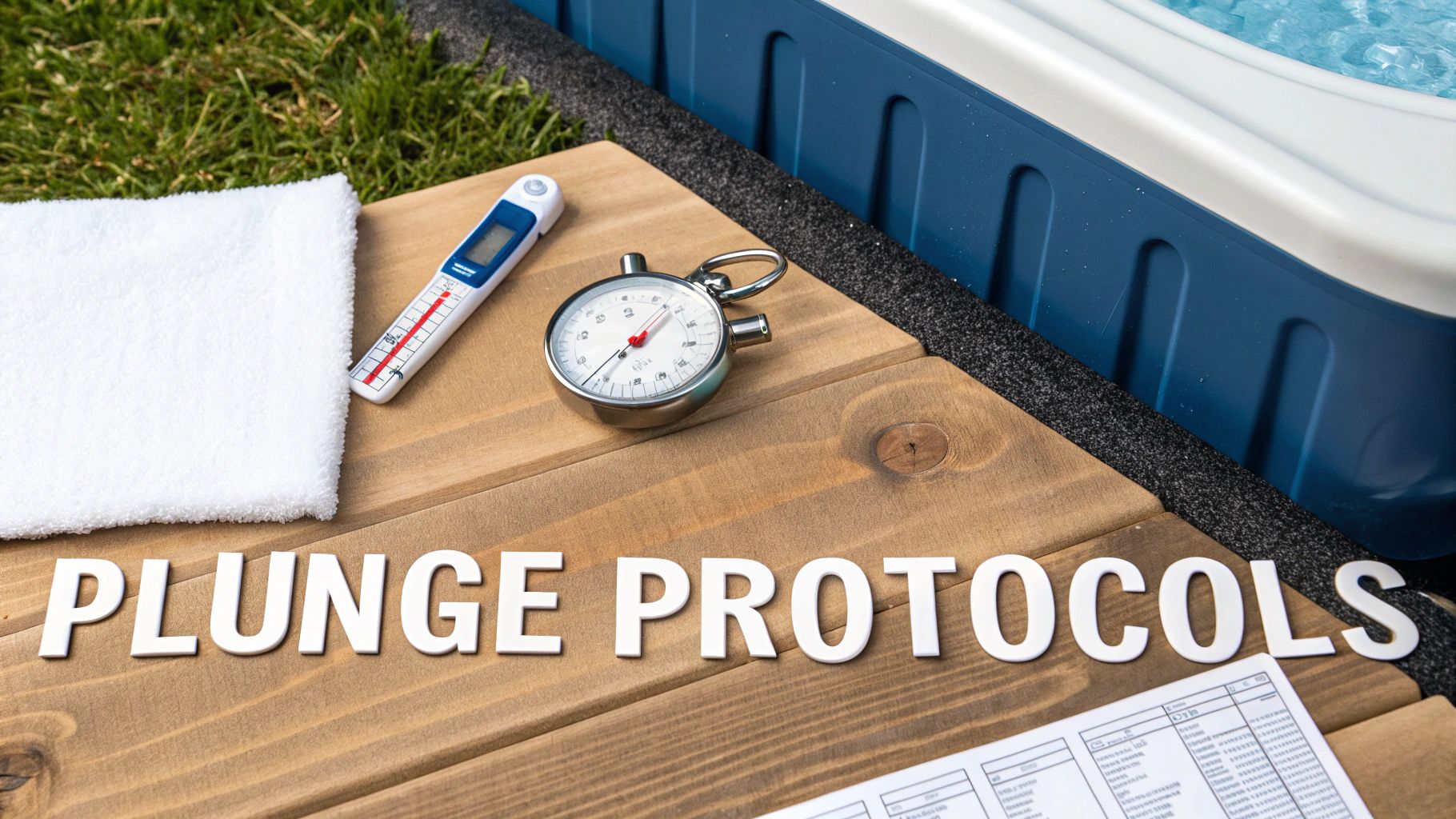
Temperature, Duration, and Frequency
The dance between how cold the water is and how long you stay in is the core of any good protocol. The rule is simple: the colder the water, the shorter the plunge. A huge mistake I see people make is thinking that colder and longer is always better. That approach is a fast track to diminishing returns and can even be dangerous.
If you’re just starting out, ease into it. Aim for water around 50-60°F (10-15°C). At that temperature, a quick session of just 1-3 minutes is plenty to kickstart the physiological benefits without totally overwhelming your system.
Once you’ve adapted, you can start nudging the temperature down or the duration up—but never both at the same time. Seasoned plungers might work down to a bracing 40°F (4°C), but they keep their sessions brief, rarely going over 5 minutes. The most important rule is always to listen to your body.
The goal is to stimulate your body, not annihilate it. It’s a perfect example of hormesis: a small, managed stressor makes you stronger, but too much just causes damage. Finding that sweet spot is everything.
Recommended Cold Plunge Protocols by Goal
Your "why" for plunging should dictate your "how." A protocol built for an elite athlete's workout recovery will naturally look different from one designed for daily mental clarity. Use this table as a starting point to dial in your practice for the results you want.
| User Goal | Recommended Temperature | Recommended Duration | Recommended Frequency |
|---|---|---|---|
| Beginner Wellness | 50-60°F (10-15°C) | 1-3 minutes | 2-3 times per week |
| Mental Clarity & Mood | 45-55°F (7-13°C) | 2-4 minutes | 3-5 times per week |
| Workout Recovery | 40-50°F (4-10°C) | 3-5 minutes | Post-intense training or on rest days |
| Advanced Resilience | Below 40°F (Below 4°C) | 1-3 minutes | 3-4 times per week |
This framework gives you a solid foundation, but remember to adjust based on how you feel. Consistency trumps intensity every time.
Essential Safety and Best Practices
Safety is non-negotiable. That initial shock is no joke, so you have to manage it with awareness and control.
- Never Plunge Alone: Especially when you're new to this. Always have someone nearby in case you feel dizzy or disoriented.
- Controlled Breathing: The cold shock response makes you want to gasp for air. Fight it. Focus on long, slow exhales to tell your nervous system that you're in control.
- Warm Up Naturally: After you get out, resist the urge to jump straight into a hot shower. The sudden temperature swing can be a lot for your system. Instead, dry off, throw on warm clothes, and move around a bit to let your body reheat itself.
Introducing Contrast Therapy
Ready to level up? Try contrast therapy. This involves cycling between your cold plunge and a hot environment like a sauna. It creates an incredible circulatory pump.
A classic protocol is 3 minutes in the heat followed by 1 minute in the cold, repeated for 3-4 rounds. This rapid vasodilation and vasoconstriction is fantastic for flushing out inflammation and accelerating recovery.
By following these guidelines, you can build a safe, sustainable, and powerful cold plunge routine. For more deep dives into wellness protocols, keep exploring our MedEq Wellness Journal.
Creating Your Complete Wellness Routine
A cold plunge is a game-changer on its own, but its real power is unlocked when you weave it into a complete wellness system. Stop thinking of it as a one-off event. Instead, picture your plunge as the anchor of a bigger strategy for high performance and deep recovery.
When you start layering it with other therapies, you create a powerful synergistic effect where the whole becomes far greater than the sum of its parts. This is how you bridge the gap between hard work and true renewal, keeping your body and mind primed for whatever you demand of them.
Synergistic Pairings for Enhanced Health Benefits
One of the most potent combinations is contrast therapy—the practice of alternating between your cold plunge and a hot sauna.
This rapid cycling between hot and cold creates a massive "vascular pump" effect. It dramatically boosts your circulation, helps flush out metabolic junk, and kicks your workout recovery into high gear. To learn more, you can explore the specific sauna benefits for athletes in our journal.
Another fantastic pairing is the cold plunge with red light therapy. While the plunge tackles systemic inflammation and circulation, red light therapy gets to work on a cellular level, firing up your mitochondria to supercharge cellular repair.
Tracking Your Progress with Meaningful Data
Going by "feel" is a great start, but to truly dial in your routine, you need objective data. Hard numbers give you undeniable proof that what you're doing is actually working.
Here are the key metrics to watch:
- Heart Rate Variability (HRV): This is your best window into your nervous system's resilience. A steadily rising HRV trend is a fantastic sign that your body is adapting better to stress.
- Resting Heart Rate (RHR): A lower RHR is a classic sign of improved cardiovascular fitness and more efficient recovery.
- Sleep Quality Scores: Most modern wearables track your sleep stages. Pay attention to how your deep and REM sleep numbers improve after you start a consistent plunging routine.
- Subjective Soreness: It doesn't have to be complicated. Just rate your muscle soreness on a simple 1-10 scale each day to see how your protocols impact how you feel.
By tracking these metrics, you move from guessing to knowing. This data-driven approach allows you to fine-tune your protocols, ensuring every plunge, sauna session, and recovery day is optimized for maximum benefit.
This holistic strategy transforms your cold plunge from a simple recovery tool into a central component of a high-performance lifestyle. To continue learning and refining your routine, explore more expert insights at the MedEq Wellness Journal.
Your Cold Plunge Questions, Answered
As you get ready to dive into the world of cold plunging, it's natural to have a few questions. Let's clear up some of the most common ones so you can start your practice with confidence.
What's the Best Starting Temperature for a Beginner?
You don't need to jump into near-freezing water to get the benefits. When you're just starting out, consistency is far more important than intensity.
Aim for a temperature somewhere between 50-60°F (10-15°C). This range is more than enough to kickstart those powerful physiological responses—like taming inflammation and sharpening your focus—without feeling completely overwhelming. At this temperature, stick to just 1-3 minutes per session and concentrate on your breathing to calm that initial shock. As your body adapts, you can slowly start to drop the temperature or stay in a little longer.
Should I Cold Plunge If I Feel Sick?
This is a great question, and the short answer is no. While regular cold exposure can be a powerful tool for building a more resilient immune system over time, you should never plunge when you’re actively sick.
When you have a cold or the flu, your body is already working overtime and under a lot of stress. Adding the intense shock of a cold plunge can push your system too far, potentially slowing down your recovery. It’s much smarter to wait until you’re fully healthy again.
Interestingly, consistent practice when you're well might help you stay that way. One recent meta-analysis found a 29% reduction in sickness-related work absences for people who took daily cold showers. You can explore those findings over at plos.org.
Think of cold plunging as a proactive tool for building resilience when you’re healthy, not a treatment for when you're already sick.
What’s the Real Difference Between a DIY Ice Bath and a Professional Tub?
A DIY setup, like filling a stock tank with ice, is a perfectly fine way to get started. But if you're serious about making this a consistent practice, professional cold plunge tubs offer some major advantages you just can't ignore.
- Precise Temperature Control: A professional unit holds the exact temperature you set, day in and day out. That means no more last-minute runs to the store for bags of ice.
- Constant Water Filtration: They come with built-in filtration and sanitation (like ozone or UV), keeping your water clean and ready whenever you are. This is a huge step up from a DIY bath where water can get stagnant quickly.
- Built for Durability and Comfort: These tubs are designed to last and are often shaped ergonomically, making your sessions safer and more comfortable.
While a DIY approach can work, a professional tub removes all the friction, turning your cold plunge from a chore into a seamless part of your daily wellness routine. For more expert-backed wellness information, be sure to visit the MedEq Wellness Journal.
At MedEq Fitness, we build the bridge between exertion and renewal with professional-grade wellness equipment. Our cold plunge tubs are engineered for performance, durability, and simplicity, ensuring you get the most out of every single session.