How to Reduce Muscle Soreness and Recover Faster
That familiar ache after a hard workout isn't just a nuisance—it’s the first sign that your body is getting to work, building stronger, more resilient muscle. The secret to managing that soreness effectively is to take immediate, strategic action right after you train. This initial window is your best shot at minimizing stiffness and setting yourself up for a faster recovery. Wellness isn't just about the workout; it's about the intelligent workout recovery that follows.
Your First Steps For Immediate Soreness Relief
What you do in the moments right after your workout can make or break your recovery. Instead of just collapsing on the couch, the focus needs to shift to a deliberate cool-down and a smart refueling plan. This isn't about pushing through more pain; it’s about giving your body exactly what it needs to start repairing those microscopic muscle tears that ultimately lead to growth. The health benefits of a proper cool-down are immediate and cumulative.
Think of your muscles post-workout like a construction site after a long shift. You’ve got to clear out debris, bring in new materials, and lay the groundwork for the next day. A proper cool-down and immediate nutrition do exactly that.
Initiate an Active Cool-Down
Stopping cold after an intense effort can cause metabolic byproducts, like lactic acid, to pool in your muscles, which is a major contributor to that stiff, leaden feeling. The goal of a cool-down is to gently bring your heart rate down while keeping the blood moving, effectively flushing everything out. This simple act is a cornerstone of effective workout recovery.
Forget static stretching for now—save that for later when your muscles are more relaxed. Right now, it's all about light, dynamic movement to keep that blood flowing and ease your body back to a resting state.
A few great cool-down options:
- Light Cardio: 5-10 minutes of slow jogging, walking, or easy cycling.
- Dynamic Stretches: Gentle leg swings (forward and side-to-side), arm circles, and torso twists.
- Bodyweight Movements: A few sets of slow, controlled bodyweight squats or walking lunges.
Refuel with Purpose
Your muscles are primed for nutrients in the first 60-90 minutes after exercise. This "anabolic window" is the best time to restock depleted energy stores (glycogen) and deliver the building blocks (protein) needed for repair. Skipping this step can seriously prolong soreness and sabotage your hard-earned gains.
Your post-workout meal or shake should have a solid mix of carbs and protein. It doesn't have to be complicated—a protein shake with a banana or a small meal of grilled chicken and quinoa gets the job done and kickstarts the recovery process, enhancing your overall wellness.
To put it all together, here’s a quick checklist for that crucial post-workout window.
Immediate Post-Workout Recovery Checklist
This is your quick-reference guide to the essential actions you should take within the first 60-90 minutes after your workout to get a head start on mitigating muscle soreness. This graphic illustrates the foundational steps for any wellness-focused recovery plan.
| Action | Why It Works | Example/Timing |
|---|---|---|
| Active Cool-Down | Prevents blood pooling and flushes metabolic waste. | 5-10 minutes of light cardio and dynamic stretches immediately after your last set. |
| Hydration | Replaces fluids lost through sweat and aids nutrient transport. | Drink 16-24 oz of water or an electrolyte drink right away. |
| Protein Intake | Provides the amino acids needed for muscle repair. | Consume 20-40g of protein from a shake or whole food source. |
| Carbohydrate Intake | Replenishes muscle glycogen (energy stores) for the next workout. | Aim for a 2:1 or 3:1 carb-to-protein ratio in your meal or snack. |
Following these simple steps consistently will make a massive difference in how you feel the next day.
Key Takeaway: Immediate post-workout nutrition isn't just for building muscle; it’s one of your most powerful tools for managing inflammation and reducing how sore you get.
These active recovery strategies are foundational. Research from elite sports has shown that the biochemical markers of muscle damage—like inflammatory cytokines and enzymes like creatine kinase (CK)—can take 3 to 5 days to return to normal after intense competition. Enhancing circulation through other methods, like a post-workout sauna session, can also speed things along. You can learn more about how to incorporate the benefits of a sauna into your own routine. For more wellness insights, visit our blog: https://medeqfitness.com/blogs/medeq-wellness-journal
The First 72 Hours: Navigating Peak DOMS
Welcome to the main event. That 24 to 72-hour window after a monster workout is where Delayed Onset Muscle Soreness (DOMS) really makes its presence known. Getting out of bed can feel like a heroic effort, but parking yourself on the couch is the last thing you want to do.
To get through this, you need a proactive game plan. It's not about toughing it out; it's about smart, active management that prioritizes your long-term health and wellness.
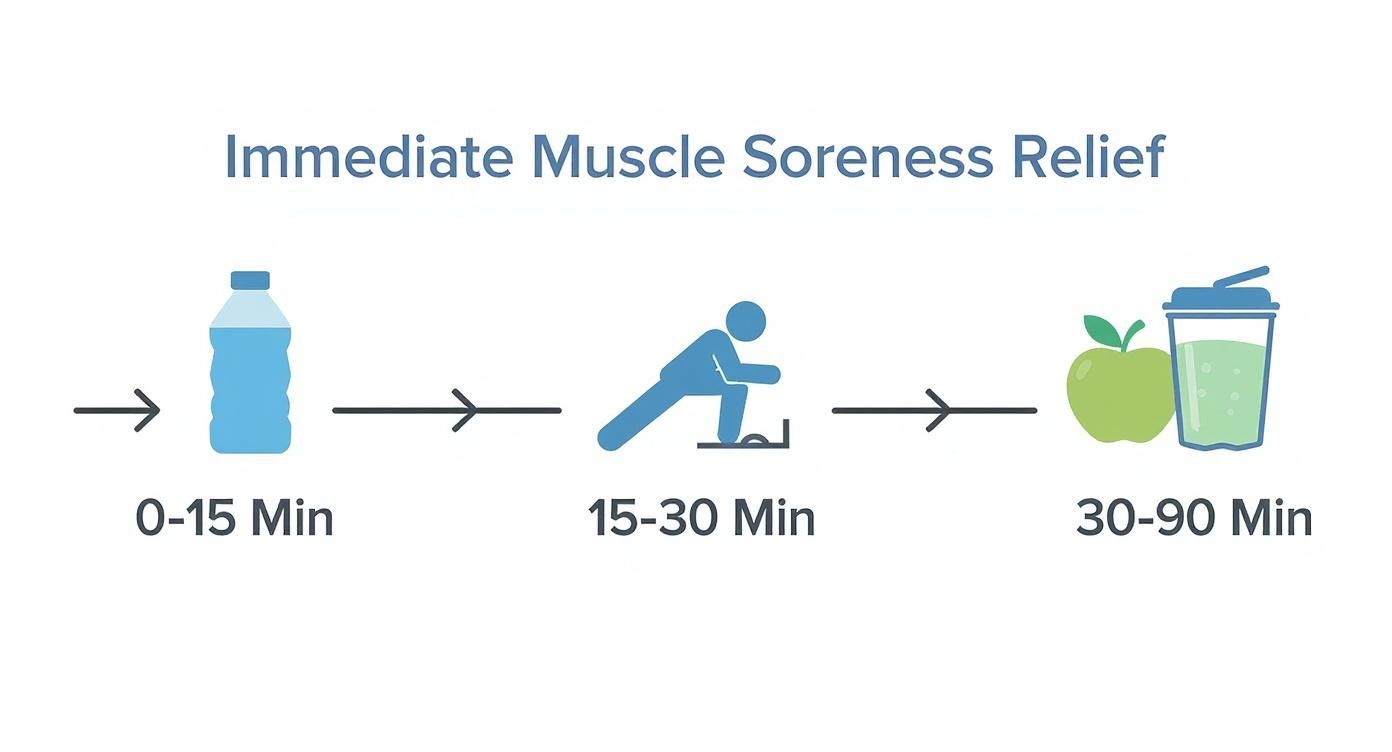
This is about getting ahead of the pain. What you do in the first 90 minutes post-exercise sets the stage for how you'll feel for the next three days.
Keep Moving, Gently
It sounds like the opposite of what you should do, but light, gentle movement is your best friend right now. This is called active recovery, and its entire purpose is to get blood flowing to those screaming muscles without causing any more damage.
Think of it this way: better circulation brings in fresh oxygen and nutrients and helps escort out the metabolic junk that’s contributing to the pain. You’re not trying to sweat; you’re just trying to coax your muscles back to life.
A few great options for active recovery include:
- A 20–30 minute walk. It’s simple, effective, and works wonders for stiff legs and glutes.
- Swimming or just moving in the water. The buoyancy takes the pressure off your joints while you move.
- Light, flowing yoga. Focus on deep, restorative stretches that ease tension, not aggressive poses.
Master Contrast Therapy at Home
Contrast therapy—alternating between hot and cold—is a powerhouse technique for workout recovery. It acts like a pump for your circulatory system, drastically reducing both inflammation and that locked-up feeling. The health benefits are rooted in its ability to promote circulation and flush out metabolic waste.
The heat opens up your blood vessels (vasodilation), inviting blood flow in. Then, the cold slams them shut (vasoconstriction), pushing blood and excess fluid out. This cycle is incredibly effective at flushing the area with fresh, healing resources.
You don't need a fancy spa for this. Your shower is all it takes.
Pro Tip: When you’re using heat, like a heating pad or hot water, stick to 15-20 minutes at a time. While heat feels great for loosening up, too much can actually make inflammation worse during the acute phase of DOMS.
A Sample Recovery Day Schedule
Putting this all together doesn't need to be a full-time job. Here’s a simple, realistic schedule for a day when you're in the thick of it:
- Morning: The moment you get out of bed, do 10 minutes of gentle stretching. Just enough to work out the overnight stiffness. Then, hop in for a contrast shower: 1 minute cold, 2 minutes hot. Repeat that cycle 3-4 times.
- Midday: Get up from your desk and take a 20-minute walk. It’s the perfect way to keep your muscles from seizing up after a few hours of sitting.
- Evening: Before you call it a night, spend 10-15 minutes with a foam roller on the areas that need it most. This self-myofascial release can help break up adhesions and prepare your body for a night of deep, restorative sleep.
By taking control of this 72-hour period, you can cut down the intensity and duration of your soreness, getting you back to training feeling stronger, not broken.
For more deep dives into advanced recovery and wellness protocols, check out the MedEq Wellness Journal.
Fuel Your Body to Beat Muscle Soreness
What you eat after a tough workout is just as important as the workout itself. You can do all the right things immediately after training, but if your nutrition isn't on point for the next few days, your workout recovery will stall out.
Think of it this way: your diet is the construction crew that shows up to rebuild your muscles stronger than before. A nutrient-dense diet offers profound health benefits that extend far beyond muscle repair.
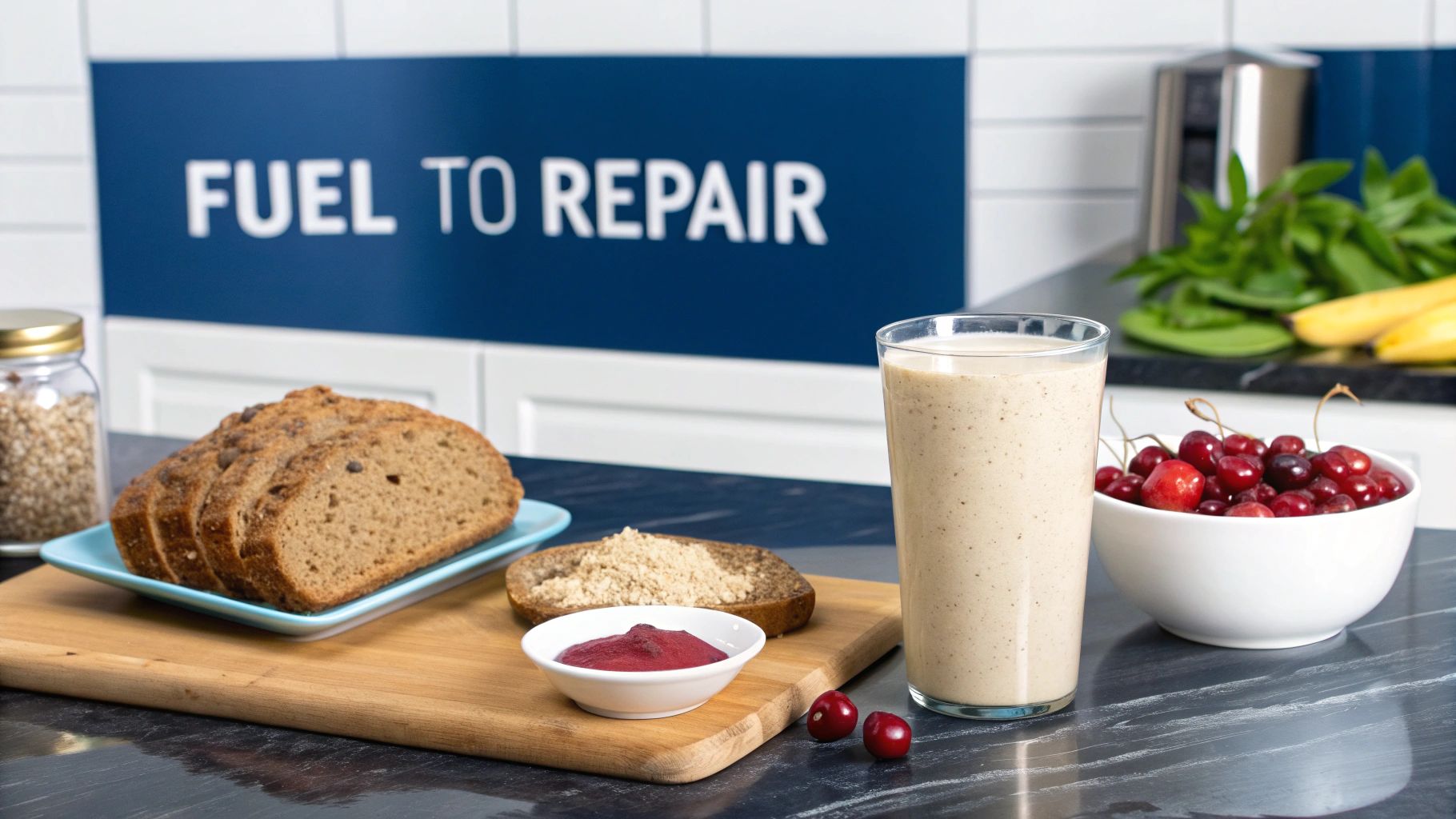
This isn't just about slamming a protein shake and calling it a day. Real recovery comes from a smart mix of macros, micros, and anti-inflammatory compounds found in whole foods. Getting this right is the secret to bouncing back faster and feeling less sore.
Your Macro Blueprint for Recovery
Protein, carbs, and fats each have a critical, non-negotiable role in fixing sore muscles. If you neglect one, you create a bottleneck in your body’s repair cycle, leaving you achy and drained for way longer than necessary.
- Protein The Builder: This one’s a no-brainer. Protein provides the amino acids needed to patch up the micro-tears in your muscle fibers. The key is to get a steady supply throughout the day, not just in one post-workout meal. Lean meats, fish, eggs, and legumes are all fantastic sources.
- Carbs The Fuel: A hard workout drains your muscle glycogen—your body's main fuel tank. You have to refill it. Complex carbs like sweet potatoes, oats, and quinoa are perfect for the job. Topping off your glycogen stores is essential for powering your next session and stops your body from cannibalizing muscle for energy.
- Healthy Fats The Firefighters: Don't skip the fats. Omega-3 fatty acids, found in things like salmon, walnuts, and flaxseeds, are powerful anti-inflammatories. They help calm the inflammation that's causing all that soreness.
This isn't about restriction; it's about providing your body with all the raw materials it needs to repair, adapt, and get stronger.
Eat to Fight Inflammation
Beyond the big three macros, certain foods are packed with compounds that naturally turn down the dial on inflammation and muscle pain. Think of these as a turbo-boost for your recovery.
Tart cherries, for instance, are loaded with anthocyanins, which studies show can significantly cut down on exercise-induced muscle damage and soreness. The active compounds in ginger (gingerol) and turmeric (curcumin) are also well-known for their potent anti-inflammatory effects.
A simple go-to is a recovery smoothie. I often blend a scoop of protein, a handful of spinach, about half a cup of tart cherry juice, a small chunk of fresh ginger, and some almond milk. It’s an inflammation-fighting powerhouse that actually tastes good.
These natural options work with your body, not against it, providing relief without the potential downsides of over-the-counter pain meds.
Don’t Forget Water and Electrolytes
Dehydration is recovery's worst enemy. Period.
Water is what transports nutrients into your cells and flushes out all the metabolic junk left over from your workout. When you're dehydrated, that whole process grinds to a halt, making you feel even more sore for even longer.
Electrolytes like sodium, potassium, and magnesium—which you lose in sweat—are just as critical. They're essential for muscle contractions and nerve function. An imbalance can lead to cramps, weakness, and more soreness.
Get in the habit of sipping water all day, not just chugging it around your workout. And make sure to eat electrolyte-rich foods like bananas (potassium) and leafy greens (magnesium).
This focus on nutrition as a recovery tool is a big reason why the global muscle recovery powder industry was valued at roughly US$ 8.3 billion in 2024. It’s expected to more than double, hitting nearly US$ 16.9 billion by 2034, as more people catch on to the power of proteins, BCAAs, and electrolytes. You can read more about the growth of the muscle recovery market and see what's driving this trend.
When you start looking at food as a functional tool for healing, you can completely change how you feel after you train. For more ideas on building recovery-focused meals, check out the recipes and tips on the MedEq Wellness Journal.
Using Recovery Tools to Accelerate Healing
Let's be honest, the market is flooded with gadgets promising to erase muscle soreness instantly. While some are more hype than help, a few key modalities have earned their place in a serious workout recovery protocol. They work by targeting the underlying physiology of muscle repair, but knowing how and when to use them makes all the difference.
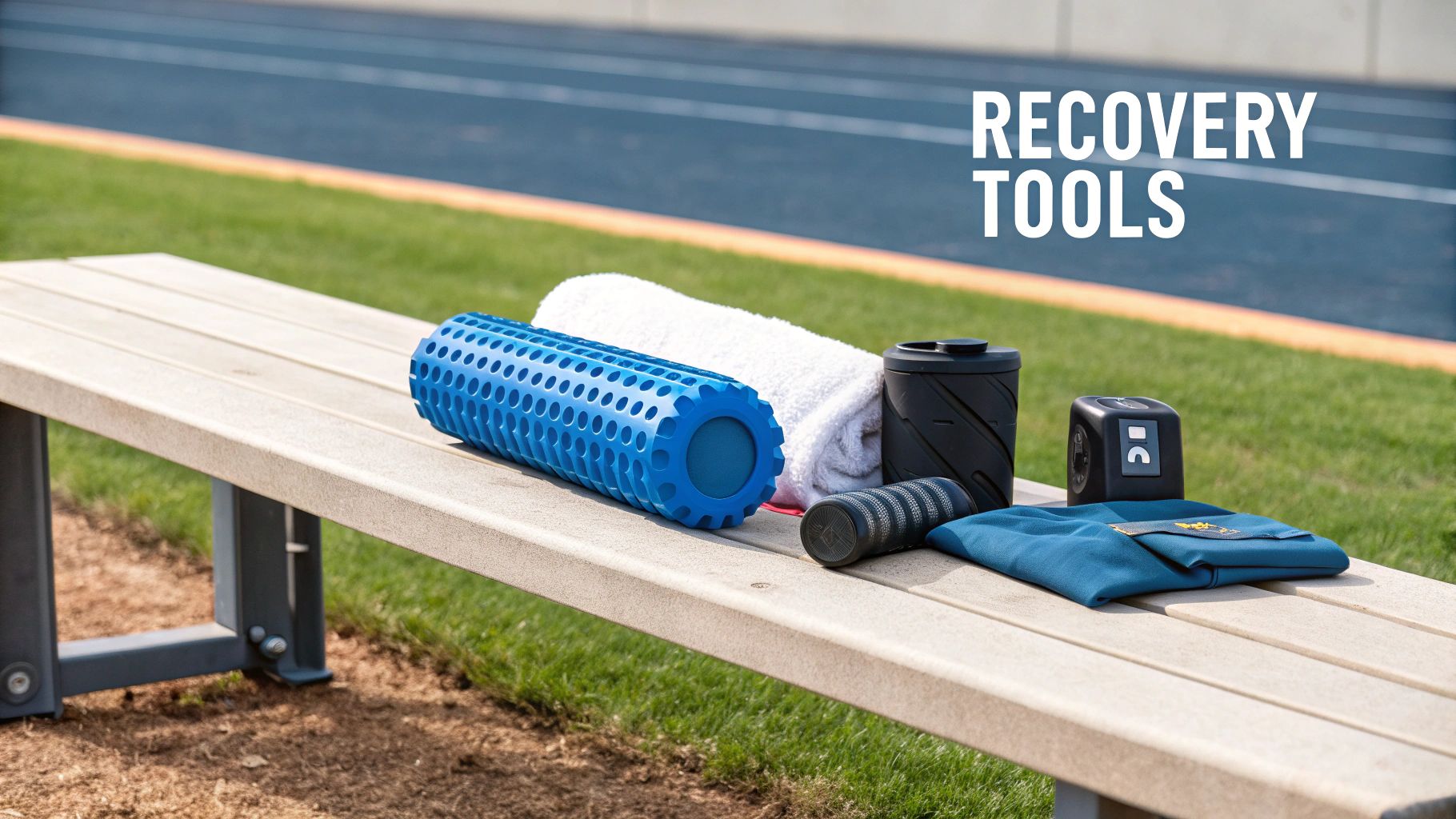
From a simple foam roller to advanced compression systems, the goal is the same: manipulate soft tissue, boost circulation, and calm your nervous system. When you layer these tools into your routine, you can genuinely shorten your recovery timeline. Less downtime, less wincing when you get out of a chair—that’s the goal.
Percussive Therapy and Foam Rolling
Think of these as your go-to tools for self-myofascial release. Both massage guns and foam rollers are designed to break up adhesions—those stubborn "knots" in your muscles and the fascia surrounding them. They get to the same destination but take slightly different routes.
A foam roller uses your own body weight to apply broad, sustained pressure. It’s perfect for flushing out large muscle groups like your quads, hamstrings, or back. I use it for a quick warm-up to get blood flowing or a general cool-down after a long session.
Percussive massage guns, on the other hand, are all about precision. They deliver rapid, targeted pulses deep into the muscle, which is fantastic for increasing local circulation and temporarily overriding pain signals. They let you zero in on specific trigger points that a roller just can’t get to.
- When to Use: Grab a foam roller for 5–10 minutes before training to improve mobility. Use a massage gun for just 1–2 minutes per muscle group post-workout or on rest days to attack specific sore spots.
- Best Practice: On either tool, go slow. Never roll or press directly on bones or joints. When you find a tight spot, pause for a moment and breathe, letting the muscle release before you move on.
Compression Garments for Enhanced Recovery
Compression gear has officially moved from a pro-athlete secret to a staple for anyone serious about recovery. These tight-fitting sleeves, socks, and leggings apply gentle, graduated pressure that helps stabilize muscles, reducing the micro-vibrations that contribute to damage during a workout.
Even better, that pressure enhances venous return—essentially improving the circulatory pump that flushes metabolic waste out and brings fresh, oxygenated blood in. The science is solid here. Meta-analyses show wearing compression gear can lead to 30-40% faster strength recovery and a significant drop in perceived soreness. It's a simple, passive way to manage inflammation, especially after a brutal leg day or a long run.
The Power of Heat with Saunas
Heat therapy is a classic for a reason. Sitting in a sauna causes your blood vessels to dilate, which ramps up circulation everywhere. The health benefits include enhanced detoxification, nervous system relaxation, and improved cardiovascular function.
This rush of blood flow delivers more oxygen and nutrients to your aching muscles while helping clear out the inflammatory byproducts left over from your workout. The heat also has a calming effect on the nervous system, which can help dial down muscle tension and the perception of pain.
Expert Tip: For muscle soreness, a 15–20 minute sauna session after your workout is the sweet spot. It’s long enough to get the circulatory benefits without risking major dehydration. And always, always hydrate before, during, and after.
Combining these tools is where the real magic happens. For instance, you could use a massage gun to release a knot in your calf, then hop in the sauna to promote overall blood flow and relaxation.
To help you choose the right tools for your goals and budget, we've put together a quick comparison.
Comparing Popular Recovery Modalities
| Recovery Tool | Primary Mechanism | Best For | Usage Protocol |
|---|---|---|---|
| Foam Roller | Self-Myofascial Release | General muscle tightness, pre-workout warm-up, large muscle groups (quads, back). | 5-10 minutes pre- or post-workout. Roll slowly, pausing on tender spots. |
| Percussion Gun | Vibration & Percussion | Targeting specific trigger points, deep muscle knots, rapid pain relief. | 1-2 minutes per muscle group post-workout or on rest days. Avoid bones. |
| Compression | Graduated Pressure | Reducing post-exercise swelling & soreness, improving circulation during/after activity. | Wear for 1-4 hours post-exercise or during long-duration activities. |
| Sauna (Heat) | Vasodilation & Increased Blood Flow | General muscle soreness, relaxation, promoting overall circulatory health. | 15-20 minutes post-workout, 2-4 times a week. Hydrate thoroughly. |
Ultimately, the goal is to work smarter, not just harder, when it comes to recovery. For a more detailed breakdown, our guide on the best recovery tools for athletes can help you build the perfect toolkit for your needs.
The Hidden Pillars of Recovery: Sleep and Stress
https://www.youtube.com/embed/xsfyb1pStdw
You can nail your nutrition plan and use every high-tech recovery tool out there, but if you ignore sleep and stress, you're just spinning your wheels. These are the invisible forces that truly dictate your body's ability to repair itself. They control the hormonal environment that either accelerates muscle repair or grinds it to a halt. True wellness is built on this foundation.
Think of it this way: all your other recovery efforts are the building materials, but sleep and stress management are the construction crew. Without them, nothing gets built.
Sleep: The Ultimate Anabolic State
When you sleep, your body isn't just offline—it's running its most critical repair protocols. This is when the real magic happens.
During the deep stages of sleep, your body floods your system with Human Growth Hormone (HGH), a key player in repairing the microscopic muscle tears from your workout. At the same time, levels of the stress hormone cortisol take a nosedive. This creates the perfect anabolic (rebuilding) environment.
Bad sleep flips that script entirely. It suppresses HGH and keeps cortisol high, trapping your body in a catabolic (breakdown) state. The result? More soreness, slower recovery.
It's not just in your head. Poor sleep quality is directly linked to higher levels of inflammatory markers throughout the body. This systemic inflammation makes you feel achier and actively slows down the entire healing process.
To really capitalize on sleep's restorative power, you have to get intentional about your sleep hygiene.
Crafting Your Ideal Sleep Environment
Your bedroom should be a sanctuary for rest, not an extension of your office or living room. Optimizing this space is one of the highest-impact changes you can make.
- Make it Pitch Black: Even tiny amounts of light can disrupt melatonin production. Use blackout curtains and ditch the glowing electronics.
- Keep it Cool: Your body temperature naturally drops to initiate sleep. Aim for a room temperature between 60-67°F (15-19°C) to help that process along.
- Keep it Quiet: Unpredictable noise is a major sleep disruptor. If you can't control the outside world, use a white noise machine or earplugs to create a consistent soundscape.
If you want to go even deeper on this, check out our guide on how to increase deep sleep for more advanced strategies.
Taming Stress to Unlock Recovery
Chronic stress is recovery's silent killer. Just like sleep deprivation, it keeps your cortisol levels chronically elevated, which directly interferes with muscle repair and sabotages your sleep quality. It’s a vicious cycle.
Managing stress isn't a "nice-to-have"—it's a non-negotiable part of any serious training regimen. Simple, consistent practices can make a world of difference.
Try incorporating these into your daily routine:
- Box Breathing: A simple but powerful technique. Inhale for a count of four, hold for four, exhale for four, and hold for four. Just a few rounds can calm your entire nervous system.
- Mindful Moments: Take five minutes. Sit quietly and just focus on your breath. Don't try to change anything, just observe. This is incredibly effective at reducing the physiological stress response.
For more wellness strategies, visit our blog: https://medeqfitness.com/blogs/medeq-wellness-journal
Common Questions About Muscle Soreness
Even with the best recovery plan in place, a few questions always seem to surface. It can be tricky figuring out what your body is telling you, but getting clear on the common sticking points will help you train smarter and with more confidence. Let's clear up some of the usual confusion.
Is It Okay to Work Out When I'm Sore?
Ah, the million-dollar question. The honest answer is: it depends.
If you’re so sore that your range of motion is shot and every movement is a struggle, then another intense session is a terrible idea. Pushing through that kind of pain is a fast track to injury and will only dig you into a deeper recovery hole.
But if you're just dealing with some mild to moderate stiffness? Light, active recovery is not only fine—it's one of the best things you can do. Think a gentle walk, a slow spin on a bike, or some light yoga. This gets blood flowing to those achy muscles, which actually speeds up the healing process. The trick is to really listen to your body and keep the intensity way down.
How Can I Tell the Difference Between Soreness and an Injury?
This is a critical one. Knowing whether you're dealing with standard muscle soreness or a real injury can save you a lot of trouble down the line. They might feel similar at first, but here are the key tells.
- Soreness (DOMS): This usually feels like a dull, widespread ache that shows up in the muscles you worked, often on both sides (like both quads after squat day). It tends to peak around 24-48 hours post-workout and then starts to fade on its own.
- Injury: Pain from an injury is a different beast. It’s often sharp, sudden, and you can pinpoint it to a specific spot. You might also see swelling, bruising, or notice you can’t use a joint or limb properly. Unlike DOMS, it usually doesn't get better with time.
If the pain hangs around for more than a few days without improving, or if you have any reason to suspect an injury, don't guess. See a healthcare professional.
Should I Use Ice or Heat for Sore Muscles?
The old ice vs. heat debate. Here's a simple way to think about it.
For the first 24-72 hours after a hard workout, when inflammation is highest, your best bet is often contrast therapy—alternating between hot and cold. The cold constricts blood vessels to knock down swelling, and the heat opens them up to bring in fresh, healing blood flow. This method is a cornerstone of advanced workout recovery due to its powerful circulatory benefits.
If you have to pick just one, it’s all about timing. Cold is your friend right after a workout to manage that initial inflammatory response. Heat is fantastic a day or two later for loosening up muscles that feel stiff and tight, as it boosts circulation and helps the tissue relax.
How Long Does It Take for Muscle Soreness to Go Away?
Typically, DOMS will hit its peak within 48 hours and be mostly gone within 3 to 5 days. The exact timeline really depends on the workout's intensity, your current fitness level, and how well you're managing your recovery.
If you stay on top of the strategies we've covered—good nutrition, hydration, active recovery, and quality sleep—you can definitely shorten that window.
By understanding these common points, you can get much better at how to reduce muscle soreness and make smarter decisions for your body. For more in-depth wellness tips, be sure to explore the full MedEq Wellness Journal.
At MedEq Fitness, we provide physician-selected, science-backed recovery tools to help you bridge the gap between exertion and renewal. Explore our collection of saunas, cold plunges, and hyperbaric chambers to elevate your recovery and unlock your full potential. Find your solution at https://www.medeqfitness.com.