How to Speed Up Muscle Recovery: A Wellness Guide
If you’re serious about speeding up muscle recovery, you have to nail the fundamentals first. Focusing on strategic nutrition, smart hydration, and quality sleep isn't just a suggestion; it's the foundation of a wellness-focused approach that sets the stage for real progress and long-term health benefits.
Forget quick fixes. Effective workout recovery isn’t a one-off action—it's an ongoing wellness practice that starts the second you finish your last rep.
Building Your Foundation for Faster Recovery
Let's be real: you want to get back to your workouts without feeling like you’ve been hit by a truck. The secret to accelerating workout recovery isn't some magic pill. It's about mastering the daily habits that allow your body to repair, rebuild, and return stronger, enhancing your overall wellness.
This means moving past the old-school 'no pain, no gain' mentality. That familiar post-workout ache, known as Delayed Onset Muscle Soreness (DOMS), is a sign of microscopic tears in your muscle fibers. It's a normal part of getting stronger, but managing it effectively is what separates consistent gains from burnout.
Proper recovery ensures those micro-tears heal properly, making the muscle stronger and more resilient for your next session.
The Pillars of Effective Recovery
Think of recovery as a 24/7 wellness commitment. The first 24-48 hours are crucial for immediate damage control, but it's the long-term habits that build true resilience and promote lasting health benefits.
Here’s what you absolutely have to get right:
- Strategic Nutrition: Your body needs high-quality fuel. You need adequate protein to rebuild torn muscle fibers and complex carbs to restock your depleted energy stores (glycogen).
- Smart Hydration: Water is essential for health. It's critical for flushing out metabolic waste created during intense exercise. Even slight dehydration can significantly slow your recovery process.
- Quality Sleep: This is when the magic of healing happens. Your body releases growth hormone and focuses on muscle repair. Skimping on sleep is one of the biggest recovery mistakes you can make.
Debunking the DOMS Myth
A lot of people think extreme soreness is a badge of honor for a great workout. The truth? While some soreness shows you’ve challenged your muscles, excessive pain can hinder consistent training and proper form.
The goal isn't to eliminate DOMS completely. It's to manage it so you can approach your next workout with intensity, precision, and a focus on your well-being.
The real measure of progress isn't how sore you get. It's how quickly your body adapts and comes back stronger. Nailing your foundational recovery is the fastest way to get there.
Once you have a solid foundation, you can explore other powerful wellness tools. For instance, using a sauna for muscle recovery can be a game-changer, as heat therapy boosts blood flow and helps your muscles relax.
But remember, nothing can replace the powerful trifecta of nutrition, hydration, and especially sleep. To really dial in your rest, check out our deep dive on how to increase deep sleep. Mastering these habits is the first and most critical step in building a truly effective workout recovery routine. For more wellness tips, visit the MedEq Wellness Journal.
Your Post-Workout Action Plan for the First 48 Hours
The second you finish your last rep, the recovery clock starts ticking. What you do over the next two days is vital for how you feel and perform in your next session. This is a targeted wellness plan for the most critical window of muscle repair.
Think of this period as prime time for your muscles. They’re like sponges, ready to soak up nutrients and start the healing process. Giving them what they need right away is the fastest way to minimize soreness and maximize the health benefits of your workout.
The Immediate Cool-Down and Mobility
Don't just drop the weights and bolt. A dedicated cool-down is your first move to shift your body out of a high-stress state and into repair mode. The goal here is simple: gradually bring your heart rate down and start flushing out metabolic byproducts, like lactic acid, from your muscles.
All it takes is 10-15 minutes of low-intensity cardio. This could be a slow jog, a light spin on a stationary bike, or even just a brisk walk. This easy movement keeps your blood flowing, delivering fresh oxygen to tired muscles and carrying away waste.
After that, spend a few minutes on targeted mobility.
- Foam Rolling: Hit the major muscle groups you just worked for about 30-60 seconds each. This is a form of self-myofascial release that can help ease tightness and boost blood flow.
- Static Stretching: Hold gentle stretches for 20-30 seconds for each muscle group. This isn't about forcing new flexibility; it's about easing that immediate post-workout tightness.
Refueling for Rapid Repair
What you eat right after a workout has a massive impact on your recovery speed. You've just used your body's main fuel source (glycogen) and initiated muscle protein breakdown. Your immediate job is to reverse that trend for optimal health.
Try to get a meal or shake in within 60-90 minutes after you finish. A 3:1 ratio of carbohydrates to protein is a great target. The carbs rush to restock your glycogen stores, while the protein delivers the amino acids needed to kickstart muscle protein synthesis—the actual process of rebuilding muscle tissue.
A protein shake with a banana or a bowl of Greek yogurt with berries are great, easy-to-digest choices. Getting your nutrition right is non-negotiable, so it’s worth learning more about the critical post-workout recovery foods that will give you the best health benefits.
The post-workout nutrition window isn't a rigid deadline you have to stress over. It's an opportunity. Giving your body carbs and protein sooner rather than later just provides the raw materials to start repairing damage without delay.
The sheer size of the sports nutrition industry shows how vital this is. Valued at $45.24 billion in 2023, the market is expected to grow at a 7.5% CAGR through 2030, with a huge focus on recovery products. It's not just hype; research shows that getting 25g of whey protein after a lift boosts muscle protein synthesis by 50% more than just carbs, which can help athletes tolerate up to 20% more training volume each week.

As you can see, these three pillars—nutrition, hydration, and sleep—are the foundation. They create the ideal environment for your body to repair itself and come back stronger, forming the core of any effective workout recovery plan. For more wellness insights, visit the MedEq Wellness Journal.
Using Advanced Recovery Tools Like the Pros
Once you've locked in the fundamentals—sleep, nutrition, and smart training—it's time to explore the tools that can give you a serious recovery advantage. The wellness tech space is exploding, but it’s easy to get overwhelmed by the sheer number of gadgets promising miraculous results.
Let's be clear: these tools aren't magic. They work by enhancing your body's own incredible healing mechanisms. They can dramatically reduce inflammation, boost blood flow, and melt away muscle tension far better than just resting. When used strategically, they become a game-changer for your overall wellness.
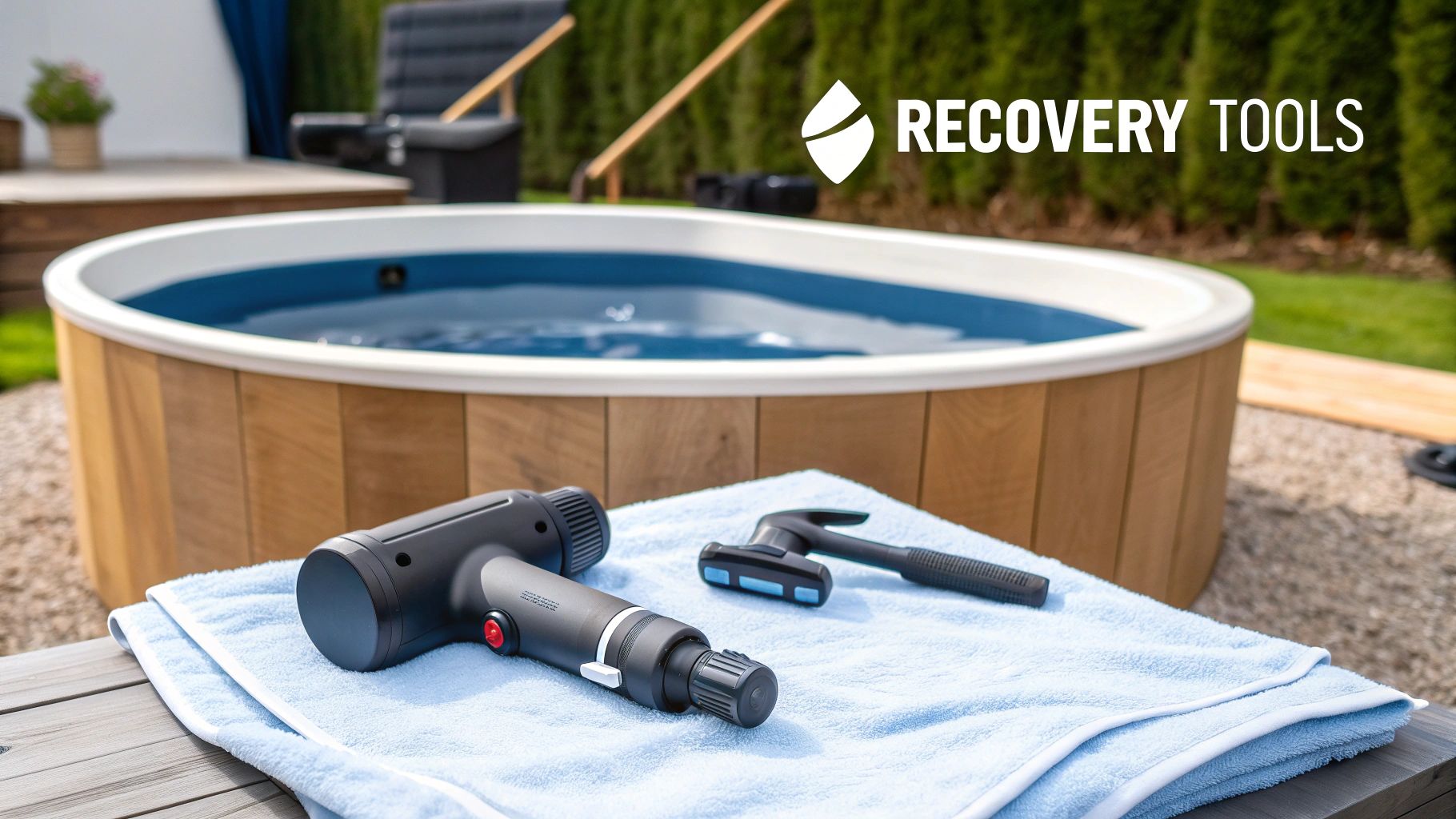
The market for these tools is growing fast for a reason. Projections show the global sports medicine products market hitting $9.5 billion by 2033, driven by innovations that genuinely work. Industry data suggests these devices can speed up workout recovery by an impressive 40%.
The best part? Professional-grade recovery is no longer just for the pros. The price of at-home cryotherapy baths, for example, has dropped by 50% since 2020, making it easier than ever to get the health benefits of a 20-30% reduction in post-workout soreness right at home. You can discover more insights about the sports medicine devices market and the tech behind it.
Mastering Contrast Therapy for a Vascular Pump
One of the most potent and accessible techniques is contrast therapy—the practice of alternating between hot and cold. This does more than just test your willpower; it creates a powerful "pumping" action in your circulatory system, delivering significant health benefits.
When you jump from hot to cold, your blood vessels rapidly constrict (vasoconstriction) and then dilate (vasodilation) when you warm up again. This vascular pump is fantastic for workout recovery, flushing out metabolic waste and inflammation while flooding your muscles with fresh, oxygen-rich blood.
A Practical Contrast Therapy Protocol
Here's a simple and effective routine you can do with a sauna and cold plunge:
- Heat: Start with 3-4 minutes in a hot sauna (175-195°F or 80-90°C).
- Cold: Immediately follow with 1 minute in a cold plunge or shower (50-59°F or 10-15°C).
- Repeat: Cycle through this 3-4 times. Always finish with cold to maximize the anti-inflammatory health benefit.
The goal isn't to see how much you can suffer. It's about creating a significant temperature gap to get that vascular pump going. Consistency beats intensity every time for long-term wellness.
Choosing Your Advanced Recovery Modality
With so many options out there, it helps to know which tool is right for the job. This table breaks down some of the most popular modalities to help you decide where to invest your time and money.
| Modality | Primary Benefit | Best For | Suggested Protocol |
|---|---|---|---|
| Cold Plunge | Reduces inflammation & soreness | Post-intense training, reducing DOMS | 3-5 minutes at 50-59°F (10-15°C) |
| Sauna (Infrared/Traditional) | Increases blood flow, promotes relaxation, detoxifies | General recovery, muscle tightness, pre-bed relaxation | 15-20 minutes at 175-195°F (80-90°C) |
| Contrast Therapy | Flushes metabolic waste, boosts circulation | Post-game or heavy lifting to accelerate recovery | 3-4 rounds of 3 min hot / 1 min cold |
| Percussion Massage | Releases knots, breaks up adhesions | Targeted muscle relief, pre-workout activation | 90-120 seconds per muscle group |
| Red Light Therapy | Enhances cellular repair, reduces oxidative stress | Chronic pain, skin health, systemic inflammation | 10-15 minutes per area, 3-5 times per week |
| Hyperbaric Oxygen (HBOT) | Super-oxygenates tissues, accelerates healing | Injury recovery, systemic fatigue, performance enhancement | 60-90 minutes per session, protocol varies |
Each of these tools offers a unique health benefit, and the best ones for you will depend entirely on your training demands, recovery needs, and lifestyle.
Using Percussive Massage Guns Correctly
Massage guns are everywhere now, and for good reason—they offer targeted, deep-tissue relief that can break up stubborn knots and ease tension. But there’s a right way and a wrong way to use them for maximum wellness benefit.
The secret is to let the gun do the work. Don't jam it into your muscle with all your might, which can cause bruising and more harm than good. Instead, just "float" the device over the muscle belly and let the percussive waves penetrate the tissue.
How to Use a Massage Gun for Recovery
- Pick the Right Head: Use a larger, softer head (like the ball) for big muscles and a smaller, more focused attachment for specific trigger points.
- Keep It Moving: Don’t press and hold. Glide the gun slowly over the length of the muscle.
- Stay on the Muscle: Avoid running it over bones, joints, or your spine. It's ineffective and uncomfortable.
- Be Efficient: Spend about 90-120 seconds on each major muscle group. A full-body tune-up shouldn't take more than 15 minutes.
While a quick session can help wake up muscles pre-workout, the recovery goal is to encourage relaxation and blood flow. There are countless devices on the market, so it’s worth exploring the best recovery tools for athletes to find one that fits your needs. For more wellness tips, visit the MedEq Wellness Journal.
Fueling Your Body for Peak Recovery
That post-workout shake? It's a decent first step, but it’s just one piece of a much larger wellness puzzle. Real, lasting muscle recovery is built meal by meal, day in and day out. When you shift your focus from a single "anabolic window" to consistent, high-quality nutrition, food becomes your single most powerful tool for performance and health.
This sustained approach is what keeps your body flush with the raw materials it needs to repair tissue, reduce inflammation, and replenish energy stores. You’re not just recovering from your last workout—you're getting a head start on your next one.
Dialing in Your Macronutrients for Repair
To really speed up recovery, you have to get serious about protein. It provides the essential amino acids that are the literal building blocks for repairing those microscopic muscle tears you create during intense training. If you shortchange your protein intake, your workout recovery will hit a wall. It’s that simple.
A solid target for anyone training hard is 1.6 to 2.2 grams of protein per kilogram of body weight each day. For a 180-pound person (around 82 kg), that works out to about 131 to 180 grams of daily protein.
But how you eat it matters just as much as how much. Instead of cramming it all into one or two massive meals, try spreading that intake across four or five smaller meals or snacks. This creates a steady drip of amino acids into your bloodstream, keeping your muscles in a constant state of repair—what we call an anabolic state.
Eating to Fight Inflammation
Hard exercise is a stressor, and that stress creates inflammation. A little bit is actually a good thing; it's a signal for your body to adapt and get stronger. But chronic, lingering inflammation is a recovery killer that will drain your energy. The good news is you can fight back with what you put on your plate, reaping significant health benefits.
Think of these foods as your internal clean-up crew, working around the clock to calm things down.
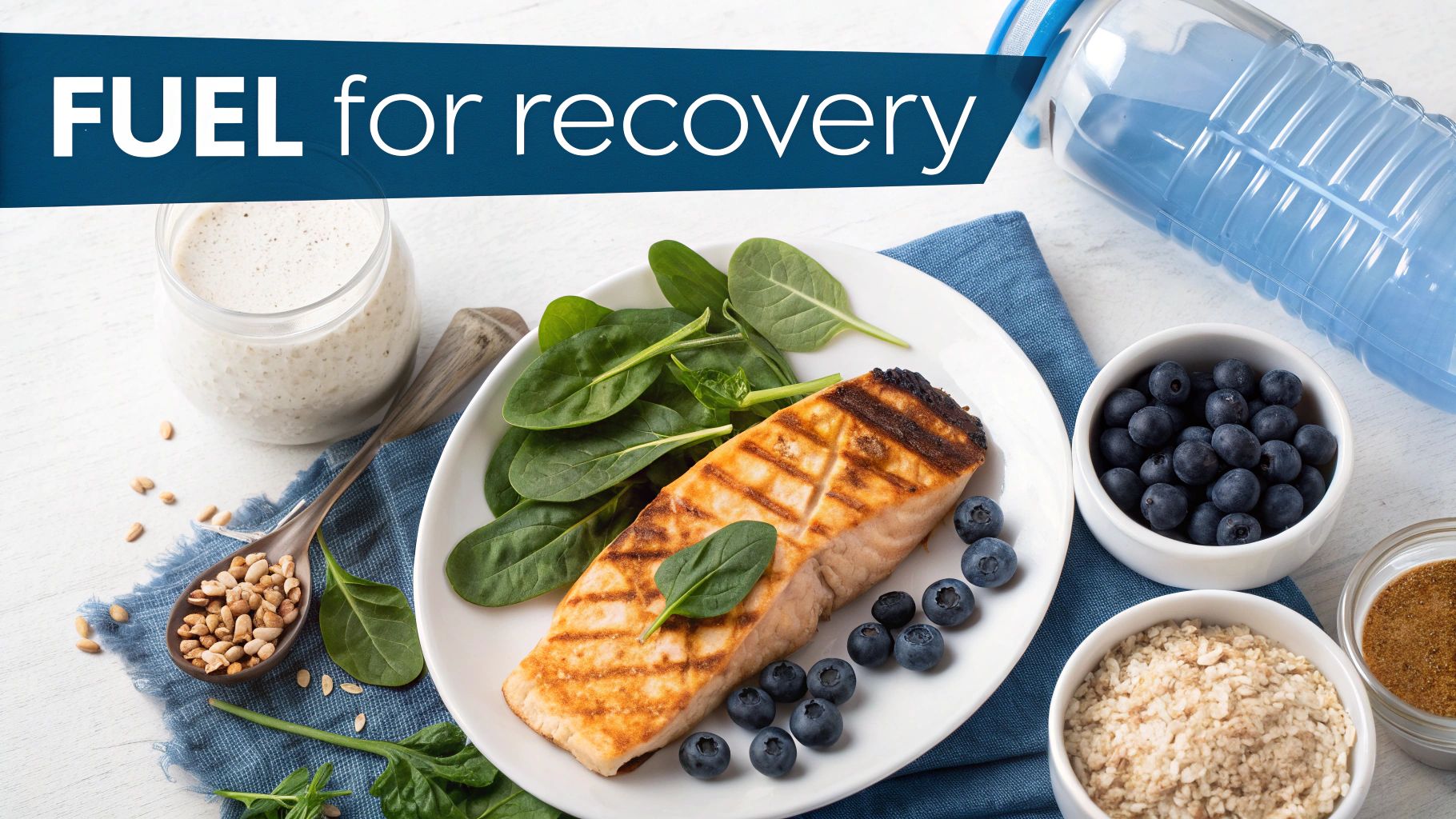
- Omega-3 Fatty Acids: Wild-caught salmon, mackerel, chia seeds, and walnuts are packed with healthy fats proven to lower inflammatory markers.
- Antioxidant-Rich Berries: Blueberries, raspberries, and strawberries are loaded with compounds that fight oxidative stress.
- Leafy Greens: Spinach, kale, and Swiss chard deliver a potent mix of vitamins and minerals that support cellular repair.
- Spices: Turmeric (with its active compound, curcumin) and ginger are powerful natural anti-inflammatories you can easily add to almost any meal.
Building an anti-inflammatory diet isn't about restriction. It's about strategic addition. By consistently working these foods into your routine, you create a physiological environment that actively speeds up healing and enhances wellness.
This laser focus on nutrition explains the explosive growth in the supplement world. The global muscle recovery powder market was valued at a staggering US$8.3 billion in 2024 and is projected to more than double to US$16.9 billion by 2034, with a 7.9% CAGR. This boom is built on solid science, with studies showing that getting 20-30g of protein within 30 minutes post-workout can boost muscle repair rates by 25%. You can find out more about the muscle recovery powder market trends and the data driving this growth.
Hydration Beyond Just Water
Everyone knows to drink water, but optimal hydration for muscle function is a bit more nuanced. When you sweat, you don't just lose water; you lose critical electrolytes like sodium, potassium, and magnesium. These minerals are non-negotiable for nerve signaling, muscle contractions, and fluid balance.
If your electrolyte levels drop, your cells can't properly absorb the water you're drinking, which leads straight to cramping, fatigue, and stalled recovery. Make sure you’re replenishing these by adding a quality electrolyte powder to your water, eating mineral-rich foods like bananas and avocados, or grabbing some coconut water after a tough session. For more deep dives and actionable strategies, the MedEq Wellness Journal is an incredible resource.
How to Track Your Recovery with Real Data
Feeling less sore is a good start, but it’s a trap to think that’s the whole story. Real workout recovery runs deeper, right down to your nervous system. Relying only on how your muscles feel can lead you straight into overtraining.
To sidestep that, you need to look at objective data. This is where auto-regulation comes into play—the art of listening to your body's real-time feedback to guide your training. Instead of blindly sticking to a rigid plan, you learn when to push, when to pull back, and when to just rest. It's a smarter, more sustainable way to make progress and support your long-term wellness.
Understanding Heart Rate Variability
One of the most insightful metrics you can track is Heart Rate Variability (HRV). It’s not your heart rate, but rather the tiny, millisecond variations between your heartbeats. A higher, more consistent HRV is a great sign. It means your nervous system is in a "rest and digest" state, primed and ready to recover.
When your HRV takes a nosedive, it’s a warning flare. Your body is under stress—maybe from a monster workout, a bad night's sleep, or even just life. Wearables from brands like WHOOP, Oura, or Garmin measure this while you sleep and provide a daily readiness score. A high score is a green light to go hard. A low score is your body telling you to focus on workout recovery.
To get a better handle on this, check out the fundamentals of what HRV training involves.
Think of HRV as your body's internal stress gauge. A high, stable number means you’ve got the resources to handle a tough session. A low number means you're running on fumes, and piling on more stress will only dig you into a deeper hole.
Low-Tech Ways to Track Readiness
You don't need fancy tech to get a read on your recovery. A couple of simple, consistent habits can give you surprisingly accurate insights into your wellness state.
The first is your Resting Heart Rate (RHR). Check it for 60 seconds every morning before you even get out of bed or glance at your phone. Write it down and look for trends over time. A sustained jump in your RHR—say, 5-10 beats per minute above your normal baseline—is a classic red flag for fatigue.
Another great tool is a simple subjective soreness and energy scale. Just rate how you feel each morning on a 1-10 scale.
- Soreness: 1 = Fresh as a daisy; 10 = Can barely move.
- Energy: 1 = Totally zapped; 10 = Fired up and ready to crush it.
Combine your RHR with these scores, and you get a pretty clear picture. If your RHR is high and your energy is a 4/10, today is not the day for a new deadlift PR. It’s a day for active recovery. This data-driven mindset is fundamental to working with your body, not against it.
Recovery Metrics at a Glance
Tracking your workout recovery doesn't have to be complicated. The key is consistency. By monitoring a few key data points, you can make smarter decisions about your training intensity and recovery protocols. Here’s a quick rundown of the most effective metrics to watch.
| Metric | How to Measure | What It Tells You |
|---|---|---|
| Heart Rate Variability (HRV) | Wearable device (e.g., WHOOP, Oura) measured during sleep. | A high HRV indicates a well-recovered, stress-resilient nervous system. A low HRV signals fatigue and stress. |
| Resting Heart Rate (RHR) | Manually measure your pulse for 60 seconds each morning before getting out of bed. | An RHR that is 5-10 BPM higher than your baseline suggests accumulated fatigue and incomplete recovery. |
| Subjective Soreness | Rate on a 1-10 scale each morning. | Provides direct feedback on muscle damage and readiness for the next training session. |
| Subjective Energy | Rate on a 1-10 scale each morning. | Reflects your overall systemic readiness, including mental and central nervous system fatigue. |
Using this data helps you move beyond guesswork. When you understand what your body is telling you, you can fine-tune your approach for better, faster, and more sustainable results. For more information, visit the MedEq Wellness Journal.
Answering Your Top Muscle Recovery Questions
When you're trying to optimize your training, a lot of questions pop up around workout recovery. Let's cut through the noise. Here are some of the most common things people ask, with clear, science-backed answers to help you build a smarter recovery strategy that enhances your overall wellness.
Think of this as your go-to guide for clearing up confusion and debunking a few myths along the way.
How Long Does Muscle Recovery Actually Take?
There’s no one-size-fits-all answer here. Recovery is personal. It hinges on how hard you trained, your genetics, and how consistently you nail your recovery protocols. For that classic Delayed Onset Muscle Soreness (DOMS), you can generally expect it to hang around for 24 to 72 hours.
Smaller muscle groups, like your biceps or triceps, might be good to go again in about 48 hours. But the big players—your quads, glutes, and back—often need 72 hours or more to fully repair after a heavy session. The absolute best advice? Listen to your body. Use real data like your HRV to know when you're truly ready to go hard again.
Is It a Good Idea to Train While Still Sore?
This really comes down to how sore you are. If it’s just a mild ache—maybe a 3 or 4 on a 10-point scale—some light active recovery is a great idea. Think a gentle walk, a slow spin on the bike, or an easy swim. This gets the blood flowing, which can actually help you heal faster.
But if you’re seriously sore (a 7/10 or higher) or feel any sharp, specific pain, you absolutely need to rest that muscle group. Pushing through that kind of pain is a one-way ticket to injury and will only set your workout recovery back. Instead, try training a different body part while the sore muscles get the downtime they need.
Are Ice Baths or Hot Saunas Better for Recovery?
A classic question. The truth is, they serve different, almost opposite, functions with unique health benefits.
- Ice Baths: These are your best bet right after a brutal workout. The cold constricts blood vessels, which helps reduce inflammation and can seriously cut down on next-day soreness.
- Hot Saunas: Heat is all about promoting blood flow and deep muscle relaxation. That makes it perfect for rest days or at least 24 hours after you train, once that initial inflammatory wave has passed.
Want the best of both worlds? Contrast therapy is a fantastic option. By alternating between hot and cold, you create a "pumping" effect in your blood vessels, which helps flush out metabolic waste and bring in fresh, nutrient-rich blood, maximizing the health benefits of both modalities.
Are Supplements Necessary to Speed Up Recovery?
Supplements aren't magic, but they can definitely support a solid foundation of nutrition and sleep. A good protein powder, for example, makes it much easier to hit your daily protein targets, especially in that critical post-workout window when your muscles are ready for fuel.
Others, like creatine, are proven to boost performance, while electrolytes are non-negotiable for keeping you hydrated and your muscles firing correctly. Just think of supplements as "optimizers" for your core recovery plan, not a replacement for it. Whole foods always come first.
For more wellness insights, be sure to explore the MedEq Wellness Journal.
At MedEq Fitness, we believe true performance comes from a balanced cycle of exertion and renewal. Our physician-led selection of recovery equipment, from cold plunges to saunas and hyperbaric chambers, is designed to help you restore energy and elevate your daily capacity. Discover our clinic-quality solutions and build your ultimate recovery sanctuary at MedEq Fitness.