
How to Reduce Cortisol Levels Naturally for Optimal Health & Wellness
If you want to lower your cortisol levels naturally, the answer isn't a single magic pill. It’s about building a foundation of solid wellness habits: getting truly restorative sleep, fueling your body with a balanced diet, learning to manage stress with intention, and moving your body in a smart, moderate way.
These are the pillars that help regulate your body's entire stress response system, preventing cortisol from staying chronically elevated and unlocking profound health benefits.
Understanding Cortisol: Your Body's Stress Thermostat

We often call it the "stress hormone," but that's a bit of an oversimplification. Cortisol is a powerful and essential player in your body’s day-to-day operations. Produced by your adrenal glands, it’s like a sophisticated thermostat, managing everything from your energy and focus to your immune response for peak wellness.
Think of it as your body's built-in alarm system.
When you're up against a threat—whether that’s a brutal workout or a tight deadline at work—cortisol surges. This spike gives you that much-needed burst of energy and sharpens your focus, priming you to tackle the challenge head-on. In a healthy system, cortisol levels naturally fall once the stressor is gone.
The Natural Rhythm of Cortisol
Your body is designed to follow a natural cortisol cycle tied to your circadian rhythm. Levels are meant to be highest in the morning, peaking around 8 AM, to pull you out of sleep and get you ready for the day.
From there, cortisol should gradually taper off, hitting its lowest point around midnight. This decline is what allows your body to wind down for deep, restorative sleep.
This daily rise and fall is absolutely critical for your health. It dictates your sleep-wake cycle, helps regulate blood sugar, keeps inflammation in check, and even plays a role in memory. When this rhythm is in sync, you feel alert and energized during the day and sleepy at night. If that balance feels off, it's a good idea to explore how to improve sleep quality naturally, since sleep is a non-negotiable for hormonal health.
To give you a clearer picture, here’s a quick overview of the key lifestyle pillars that directly influence your cortisol rhythm.
Key Pillars of Natural Cortisol Reduction at a Glance
| Pillar | Primary Goal | Key Actions |
|---|---|---|
| Sleep Optimization | Restore the natural circadian rhythm and promote deep, restorative sleep. | Consistent sleep/wake times, blackout curtains, morning sun exposure, avoiding blue light at night. |
| Strategic Nutrition | Stabilize blood sugar and provide essential micronutrients for stress resilience. | Eating whole foods, avoiding processed sugars, adequate protein, magnesium-rich foods. |
| Moderate Exercise | Use physical activity to process stress hormones and improve workout recovery. | Prioritizing low-intensity cardio, resistance training, and avoiding chronic overtraining. |
| Stress Management | Activate the parasympathetic (rest-and-digest) nervous system to counter the stress response. | Breathwork, mindfulness, meditation, cold exposure (contrast therapy), sauna, and massage. |
These four areas are interconnected and form the foundation of a robust stress management strategy.
When The Balance Is Disrupted
The real trouble starts when stress isn't a temporary event, but a chronic state. Constant physical, mental, or emotional pressure leaves the cortisol tap running, and your body never gets the signal to return to a relaxed state.
This sustained high-cortisol environment throws your natural rhythm completely out of whack, triggering a cascade of negative health effects.
A dysregulated cortisol rhythm often feels like being "wired but tired." You might have persistent brain fog, or notice that it takes you way longer to recover from your workouts. These are clear signals that your body's stress management system is overloaded.
This chronic imbalance can show up in a few key ways:
- Energy and Fatigue: You might drag yourself out of bed feeling exhausted, even after a full 8 hours, or hit a wall of fatigue every afternoon.
- Workout Recovery: Elevated cortisol can sabotage muscle repair and growth. You'll find it much harder to recover between training sessions and your progress in the gym might stall. This is a critical aspect of your overall fitness journey.
- Immune Function: Chronically high levels can suppress your immune system, making you more vulnerable to getting sick.
- Metabolism: Cortisol is known to crank up cravings for sugary, high-fat foods and tells your body to store fat—especially around the midsection.
Getting a handle on this hormone’s true function is the essential first step. It empowers you to make targeted changes to bring your body back into balance. For more wellness insights backed by science, be sure to explore the MedEq Wellness Journal.
Mastering the Four Pillars of Cortisol Control

Knowing how your body’s stress response works is the first step. Actually managing it is where the real work—and real wellness—begins. The most powerful way to lower cortisol isn't a quick fix or a magic pill; it’s about consistently reinforcing the four pillars of health: sleep, nutrition, exercise, and mindfulness.
These pillars are interconnected. Think of them like the legs of a table—if one is shaky, the whole thing becomes unstable. By strengthening each one, you create a resilient system that can handle life’s stressors without getting stuck in a state of chronic overwhelm.
The Non-Negotiable Power of Sleep
Sleep is far from passive. It's an active, essential period of hormonal recalibration. As you enter deep sleep, your body gets to work lowering cortisol, repairing muscle tissue, and cementing memories. When you skimp on sleep or it's constantly interrupted, that critical reset gets cut short, leaving cortisol levels elevated the next day. This directly impacts your mood, energy, and ability to recover from workouts.
This is why aiming for 8 hours is only half the battle. Quality is everything. The goal is to sync your sleep with your circadian rhythm, the internal clock that governs your natural cortisol curve.
Here's how to build a rock-solid sleep routine for optimal wellness:
- Keep it Consistent: Go to bed and wake up at the same time every day. Yes, even on weekends. This repetition is what locks in your body's sleep-wake cycle.
- Create a Cave: Your bedroom should be pitch black, quiet, and cool. Blackout curtains and an eye mask are game-changers for blocking light that kills melatonin production.
- The 90-Minute Wind-Down: For the 90 minutes before you want to be asleep, ditch the screens and intense conversations. Pick up a real book, do some gentle stretching, or take a warm bath instead.
Fueling Your Body for Stress Resilience
What you eat directly influences your hormones, especially cortisol. A diet loaded with processed foods and sugar sends your blood sugar on a rollercoaster. Your body perceives these wild swings as a stressor and pumps out cortisol to get things back under control.
A nutrient-dense diet, on the other hand, acts as a powerful buffer against stress. You want to focus on whole, anti-inflammatory foods that keep your blood sugar stable and give your body the raw materials it needs to manage stress effectively. The health benefit is a more stable mood and sustained energy throughout the day.
Start with these strategies:
- Protein at Every Meal: Protein helps anchor your blood sugar and provides the amino acids needed to produce neurotransmitters that regulate your mood and stress response.
- Load Up on Omega-3s: Fatty fish like salmon, plus walnuts and flaxseeds, are packed with omega-3 fatty acids. They’re proven to reduce inflammation and help blunt the cortisol response to stress.
- Magnesium is a Must: This mineral is a calming agent for the nervous system. Find it in leafy greens like spinach, avocados, almonds, and even high-quality dark chocolate.
When your diet keeps your blood sugar balanced, you're sending a constant signal of safety to your body. This prevents the low-grade, chronic stress response that keeps cortisol elevated and allows your system to finally relax.
Training Smart to Lower Cortisol
Exercise is one of the best tools we have for stress management, but it’s a double-edged sword. An intense workout is a physical stressor that temporarily spikes cortisol. That's normal. The magic happens during recovery, where your body adapts and becomes more resilient to stress over time.
The problem starts with chronic overtraining—going too hard, too often, without giving yourself a chance to recover. This keeps cortisol from returning to baseline, leading to fatigue, burnout, and stalled progress in the gym. Smart training is essential for optimizing workout recovery.
Smart training for cortisol control is all about balancing intensity with recovery. You need both.
- Make Room for Low-Intensity Movement: Walking, yoga, and light cycling are fantastic for helping your body clear stress hormones without adding more strain.
- Prioritize Recovery Days: Don't just take rest days—make them productive. This could mean active recovery or using tools like contrast therapy to speed up the process. Our guide on the benefits of sauna and cold plunge therapy shows how this can accelerate recovery.
- Listen to Your Body: If you feel wrecked, it's a signal. Maybe today is a day for a walk, not a HIIT session. Honoring those signals is crucial for your long-term hormonal health.
To truly master this, it's worth exploring the ultimate guide to the connection between exercise and sleep quality, as these two pillars are deeply intertwined.
Daily Mindfulness and Stress Reduction Techniques
You can't eliminate stress from your life, but you can change how you respond to it. This is where mindfulness and simple stress-reduction practices become so powerful. These techniques are designed to activate your parasympathetic nervous system—your "rest and digest" mode—which is the direct opposite of the cortisol-driven "fight or flight" response. The health benefit is a calmer mind and a more resilient body.
Just a few minutes of intentional relaxation can tell your adrenal glands the crisis is over, allowing cortisol levels to drop.
Try these simple but effective techniques:
- Box Breathing: Inhale for a four-count, hold for four, exhale for four, and hold for four. Do this for just 2-3 minutes, and you'll feel a noticeable shift in your nervous system.
- Mindful Walks: Take a 10-15 minute walk and leave your phone behind. Focus on what’s around you: the feeling of the sun, the sound of the birds, the rhythm of your own breathing. It pulls you back into the present moment.
-
Scheduled Disconnects: Block out specific times in your day to step away from all screens. This gives your brain a much-needed break from the constant stimulation that fuels chronic stress.
Find more wellness strategies on our blog: https://medeqfitness.com/blogs/medeq-wellness-journal
Leveraging Advanced Recovery for Stress Resilience
Once you’ve nailed the fundamentals like sleep and nutrition, you can start bringing in some heavy hitters to build serious stress resilience. Think of these advanced recovery methods as tools for actively training your nervous system.
You're teaching your body how to shift gears more efficiently—from the chaotic "fight or flight" response to the calm, restorative "rest and digest" state. For anyone serious about high performance and building a buffer against modern stress, this is where the magic happens.
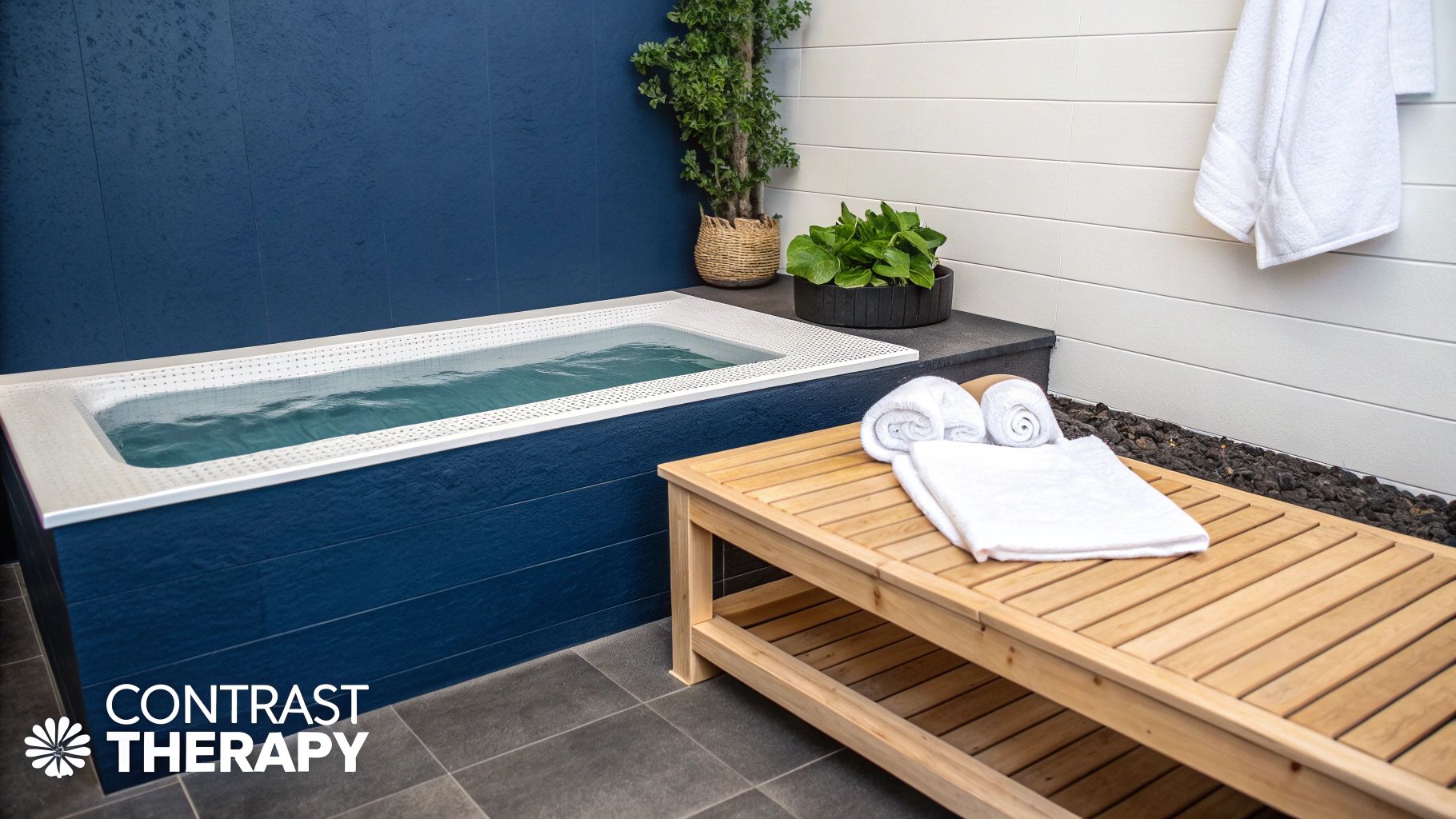
This isn’t just about feeling good in the moment. It’s about creating long-term adaptation. By using controlled stressors like intense cold or heat, you trigger a process called hormetic adaptation. You’re essentially giving your body small, manageable doses of stress to make it stronger and less likely to overreact when real-world challenges pop up.
The Power of Contrast Therapy
Contrast therapy is the practice of jumping between hot and cold—usually a sauna and a cold plunge. This deliberate shock to the system is a game-changer for workout recovery and stress management.
The rapid temperature shift forces your blood vessels to switch from vasodilation (widening in the heat) to vasoconstriction (narrowing in the cold). This creates a natural pumping action that helps flush out metabolic byproducts and dials down inflammation. It's why so many athletes swear by it for bouncing back from tough sessions. Its health benefits include faster muscle repair, reduced soreness, and improved circulation.
But more importantly, it trains your autonomic nervous system to be more flexible. Mastering these kinds of nervous system regulation techniques is key to building true resilience.
Cold Plunge for Cortisol Control and Recovery
There’s nothing quite like plunging your body into icy water to jolt you into a state of sharp awareness. That initial shock triggers a flood of norepinephrine, a neurotransmitter that dials up your focus and mood. But the real cortisol-lowering benefits come after you get out.
As your body works hard to warm itself, it kicks the parasympathetic (calming) branch of your nervous system into high gear. This intentional activation helps slow your heart rate, fights inflammation, and pulls your body back into balance.
Here’s why it works so well for stress resilience and workout recovery:
- Reduced Inflammation: High cortisol and chronic inflammation go hand-in-hand. Cold plunges directly attack inflammation, soothing sore muscles and lowering it system-wide.
- Improved Vagal Tone: The vagus nerve is the superhighway of your parasympathetic nervous system. Regular cold exposure strengthens it, meaning your body gets much better at pumping the brakes on stress.
- Mental Fortitude: Leaning into the discomfort of a cold plunge builds grit. You’re literally practicing how to stay calm under physical pressure, a skill that translates directly to handling emotional stress.
Getting Started with Cold Exposure: You don't need a fancy setup. Just end your daily shower with 30-60 seconds of cold water. The key is to focus on long, slow exhales to tell your nervous system that everything is okay.
Sauna Sessions for Deep Relaxation
While a cold plunge is an intense wake-up call, the sauna is all about deep, restorative relaxation. The heat penetrates your muscles, boosts circulation, and triggers a rush of endorphins—your body’s natural painkillers and mood elevators.
This profound sense of relaxation is incredibly effective at bringing cortisol levels down. The heat also mimics a mild fever, which can give your immune system a gentle boost. Above all, it’s a dedicated space to unplug and let your mind and body completely unwind. If you’re interested in other advanced recovery tools, you can read our breakdown of hyperbaric oxygen therapy.
A Practical Weekly Protocol for Recovery
You don’t need to do everything at once. When it comes to these therapies, consistency beats intensity every time, especially when you're just starting out. The goal is to weave these practices into your routine so they become a sustainable habit.
Here’s a sample schedule to show you how it can all fit together. You can tweak it based on your own training and lifestyle.
Sample Weekly Recovery Therapy Protocol
| Day | Post-Workout Recovery | Evening Wind-Down |
|---|---|---|
| Monday | Strength Training: 2-3 minute cold plunge (45-55°F) within 1 hour post-workout to blunt inflammation. | Light stretching. |
| Tuesday | Cardio/HIIT: Focus on hydration and nutrition for recovery. | 15-20 minute sauna session (170-190°F) to promote relaxation. |
| Wednesday | Active Recovery: Gentle walk or mobility work. | N/A |
| Thursday | Strength Training: Contrast Therapy: 3 rounds of 10 min sauna followed by 2 min cold plunge. | N/A |
| Friday | Cardio/HIIT: Focus on hydration and nutrition. | 15-20 minute sauna session to de-stress from the week. |
| Saturday | Long Workout or Sport: Contrast Therapy: 4 rounds of 10 min sauna followed by 3 min cold plunge. | N/A |
| Sunday | Full Rest Day: Focus on mindfulness and nutrition. | Gentle yoga or meditation session. |
This balanced approach uses cold therapy to manage acute inflammation after your hardest workouts and heat to promote systemic relaxation. By scheduling these sessions, you’re making a direct investment in your body's ability to handle stress, recover faster, and perform at its best.
For more wellness guides, visit our blog: https://medeqfitness.com/blogs/medeq-wellness-journal
Strategic Supplements for Cortisol Balance
Lifestyle changes are the undisputed foundation for managing cortisol, but think of specific supplements as a powerful supporting cast. They aren't a shortcut or a replacement for quality sleep and nutrition. Instead, they provide targeted support to fine-tune your body's response to stress when used correctly. The health benefit is a more resilient system that can better handle daily pressures.
The right supplements can help dial in your stress-response system, offering nutrients that often get depleted during chronic stress or adaptogenic herbs that help your body roll with the punches. Let’s break down the most effective, science-backed options.
Ashwagandha: The Premier Adaptogen
When it comes to natural cortisol management, Ashwagandha is always at the top of the list. This ancient herb is a premier adaptogen—meaning it helps your body adapt to physical, chemical, and biological stressors. It doesn't force your body in one direction; it helps modulate and balance your physiological response.
Ashwagandha works by interacting with your hypothalamic-pituitary-adrenal (HPA) axis, which is the central command center for your stress response. By helping to regulate this system, it can keep cortisol from running wild during stressful times. One analysis even reported a 23% decrease in cortisol levels after just two months of supplementation. You can get more details on these cortisol findings over at GoodRx.com.
Omega-3 Fatty Acids: Cooling Inflammation and Stress
Chronic stress and inflammation are locked in a vicious cycle that keeps cortisol elevated. Omega-3 fatty acids—specifically the EPA and DHA found in fatty fish and quality fish oil supplements—are potent anti-inflammatory agents that can break this cycle.
By taming systemic inflammation, Omega-3s help turn down one of the primary signals for cortisol production. Studies have shown that people with higher Omega-3 intake have a blunted cortisol response when faced with a stressful task, suggesting these fatty acids help build a more resilient stress-response system over time.
Key Takeaway: Think of Omega-3s as a calming force for your entire system. They do more than support joint health; they actively cool down the inflammatory fire fueled by chronic stress, which in turn helps keep your cortisol in check.
Essential Micronutrients: Magnesium and Vitamin C
During periods of high stress, your body burns through certain vitamins and minerals much faster than usual. Staying on top of these micronutrients is crucial for maintaining a healthy stress response. Two of the most important players here are Magnesium and Vitamin C.
- Magnesium: Often called the "relaxation mineral," magnesium is essential for regulating the nervous system. It helps calm excitability and has been shown to lower cortisol, especially in the evening, which is a huge win for sleep quality.
- Vitamin C: Your adrenal glands contain a high concentration of Vitamin C and need it to produce cortisol. When stress is constant, your body's demand for it skyrockets. Ensuring you have enough helps support healthy adrenal function without pushing them into overdrive.
Always prioritize high-quality supplements. Look for products that have been third-party tested for purity and potency. For a deeper dive into wellness protocols and expert insights, explore our full library of articles at the MedEq Wellness Journal.
Building Your Personal Cortisol Management Plan
Knowing the principles is one thing, but putting them into practice consistently is a whole different ballgame. The real secret to making this stick is to build habits one at a time, avoiding the overwhelm that sinks so many well-intentioned plans.
This is where a structured, yet flexible, plan becomes your most powerful tool. Instead of trying to change everything overnight, we're going to focus on nailing one key area each week. This lets you master a new skill set before adding another, creating a solid foundation for long-term health and stress resilience.
Your Four-Week Cortisol Reset
Think of the next month as a guided experiment. The goal isn't perfection; it's consistent effort. Each week layers on top of the last, creating a powerful synergy that helps rebalance your body's entire stress response system.
Here's a look at how we'll stack these habits over the next four weeks, focusing on a new pillar of wellness each time.
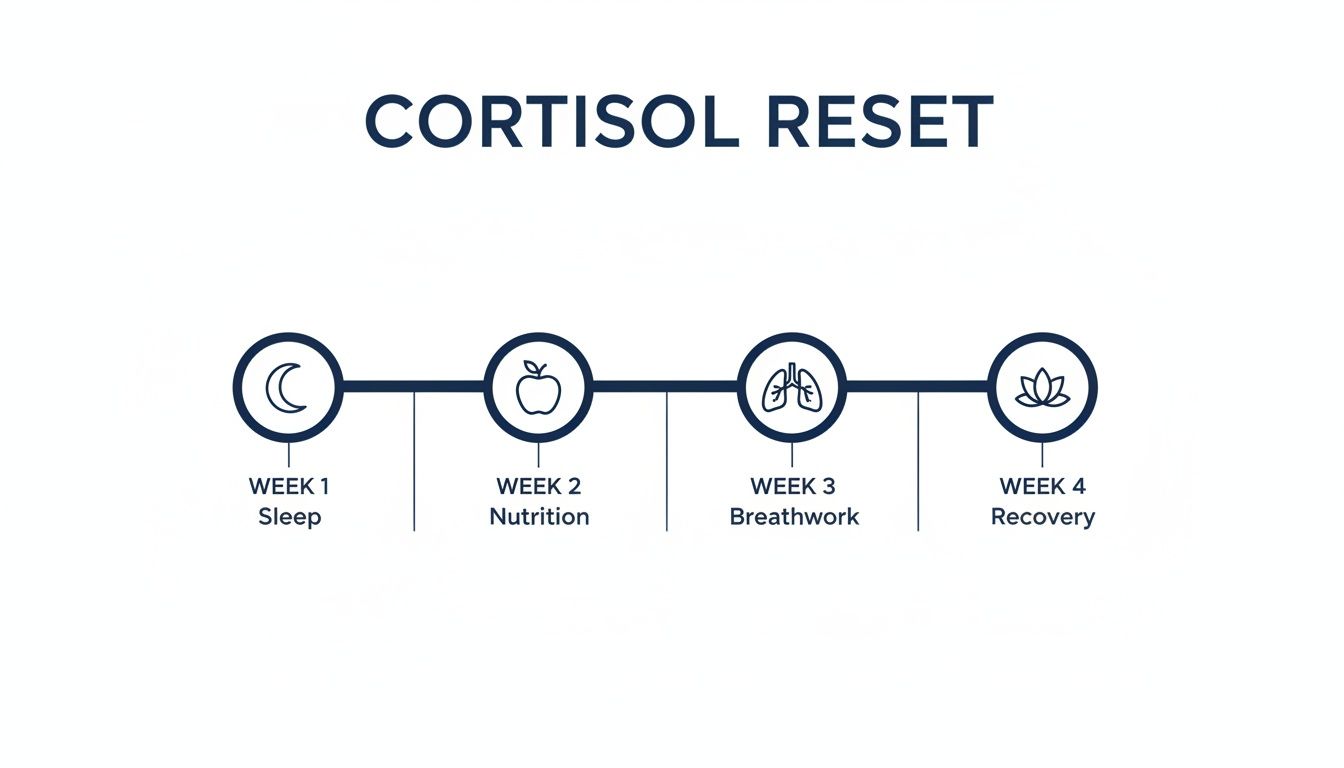
This progression is designed to be manageable. We'll start with the biggest levers and build from there.
Week 1: The Sleep Foundation
Your mission, should you choose to accept it: protect your sleep at all costs. Nothing hits your cortisol harder—for better or worse—than the quality and timing of your sleep.
- Consistent Bedtime: Aim to be in bed and waking up within the same 30-minute window. Every single day. Yes, even weekends.
- Morning Sunlight: Get 10-15 minutes of direct sunlight within an hour of waking. This is non-negotiable for locking in your circadian rhythm.
- Screen Curfew: Power down all phones, tablets, and TVs at least 60 minutes before your head hits the pillow.
- Create Your Cave: Your bedroom should be completely dark and cool—aim for around 65°F / 18°C.
Week 2: Nutritional Upgrades
With your sleep getting dialed in, it's time to fuel your body properly. This week is all about stabilizing blood sugar and tamping down inflammation to give your system a break.
- Protein at Every Meal: Include a quality source of protein—think eggs, fish, chicken, or legumes—with breakfast, lunch, and dinner. This is your best defense against energy crashes and cravings.
- Add Omega-3s: Make a point to get a source of omega-3s daily from foods like salmon, walnuts, or chia seeds. A 2019 study on nurses experiencing burnout found that taking omega-3s for eight weeks significantly lowered cortisol and emotional exhaustion. You can read more about it over on MedicalNewsToday.com.
- Hydrate Smartly: Drink plenty of water all day, but start tapering off your intake about 2 hours before bed to prevent middle-of-the-night wakeups.
Week 3: Integrating Mindful Practices
Now that your body is better rested and fueled, we can introduce techniques that actively flip the switch on your nervous system, moving you from "fight or flight" into "rest and digest."
- Box Breathing: Take 3-5 minutes when you wake up and before bed to practice box breathing. It’s simple: inhale for a 4-count, hold for 4, exhale for 4, and hold for 4.
- Mindful Movement: Go for one 15-minute walk without your phone or any podcasts. Just walk. Pay attention to your surroundings, the feeling of your feet on the ground, and your breath.
Tracking doesn't have to be complicated. At the end of each day, just jot down a rating from 1 to 5 for your energy, mood, and sleep quality. After a couple of weeks, you'll start seeing clear patterns between what you do and how you feel.
Week 4: Advanced Recovery and Consolidation
In this final week, we'll layer in some more advanced recovery tools and focus on cementing all the habits you've built. This is about enhancing your body's ability to bounce back from any stressor life throws at you, which is key for both mental wellness and workout recovery.
- Introduce Contrast Therapy: Once or twice this week, try a 30-60 second cold shower after a workout or jump in a sauna on a recovery day.
- Review and Refine: Look back at your daily ratings. What gave you the biggest boost? Where did you struggle? Tweak the plan to make it something you can realistically stick with for the long haul.
This framework is your launchpad. Make it your own, be consistent, and listen to what your body is telling you. For more deep dives into wellness and recovery protocols, check out the MedEq Wellness Journal.
Cortisol FAQs: Your Questions Answered
Diving into hormonal health always brings up questions. Let's tackle some of the most common ones I hear about managing cortisol so you can feel confident in your approach.
How Long Does It Take to Lower Cortisol Naturally?
Everyone's timeline is different—it really depends on your starting point and how consistent you are. That said, most people start feeling a real difference in sleep, energy, and overall mood within 2 to 4 weeks of locking in the foundational lifestyle changes.
True, deep hormonal rebalancing? That's a longer game, often taking a few months. The goal isn't a quick fix; it's about building sustainable habits that stick.
Is All Cortisol Bad for Me?
Not at all. In fact, a healthy cortisol spike is crucial. It’s the natural jolt that gets you out of bed in the morning, powers you through a tough workout, and sharpens your focus when you need it most. That kind of short-term, acute spike is exactly what you want. It rises and falls quickly.
The real enemy is chronic elevation—when stress keeps your cortisol levels high day in and day out. That’s what wrecks your sleep, kills your recovery, and leads to long-term health problems.
How Should I Use Recovery Tools Like Cold Plunges?
Timing is everything if you want the best results for stress reduction and workout recovery.
My rule of thumb? Hit the cold plunge after a hard strength or HIIT session. It’s fantastic for blunting inflammation and kickstarting muscle repair. Save the sauna for your recovery days or in the evening to wind down and flip the switch on your parasympathetic (rest-and-digest) nervous system.
Quick tip for contrast therapy (hot/cold): If your primary goal is to crush inflammation and boost workout recovery, always finish with cold. If it’s pure relaxation before bed, end your session in the sauna.
When Should I See a Doctor?
Lifestyle changes are incredibly powerful, but sometimes you need to call in a professional. It's time to talk to a doctor if you’re dealing with:
- Persistent fatigue that just won’t go away, no matter how much you rest.
- Unexplained weight changes, especially stubborn fat around your middle.
- Chronic insomnia or seriously disrupted sleep patterns.
- Symptoms of anxiety or depression that get in the way of your daily life.
A healthcare professional can run the right tests to rule out underlying issues like Cushing's syndrome or adrenal insufficiency and help you create a personalized plan.