
How to improve sleep quality naturally: Your Ultimate Guide
If you feel like you're doing everything right—spending eight hours in bed, eating well—but still wake up exhausted, you're not alone. The secret isn't just about how long you sleep, but how well you sleep. True restoration happens in the deep, uninterrupted cycles where your body and mind actually get to work repairing and recharging, which is the cornerstone of a healthy, vibrant life.
This guide is your complete blueprint for reclaiming your nights. We’re moving past the generic advice to give you a sustainable system for better sleep rooted in wellness.
Mastering your sleep has a ripple effect across your entire life. It’s the foundation for recovering from tough workouts, letting your muscles repair and hormones find their balance. It’s what sharpens your focus, stabilizes your mood, and keeps your immune system strong. Improving sleep is one of the most powerful things you can do for your overall health.
Why Quality Sleep Is Non-Negotiable for Your Wellness
Making sleep a priority is one of the single best investments you can make in your health. It directly dictates your ability to show up and perform, both in the gym and in life. When you get your sleep right, you build a powerful buffer against daily stress and unlock a new level of energy and productivity. This isn't just a wellness trend; it's a biological necessity.
This isn't just a feeling; it's backed by data. A recent poll found a direct link between how well people sleep and how well they live. The results were clear: those with good sleep health are a staggering 57% more likely to report that they are thriving in life. You can dig into the full findings from the National Sleep Foundation’s research to see just how deep this connection runs.
"Sleep is the single most effective thing we can do to reset our brain and body health each day." - Matthew Walker, PhD, Neuroscientist
The Pillars of Natural Sleep Improvement
Getting better sleep doesn’t mean you need complicated routines or a bedroom full of expensive gadgets. It really comes down to building a solid foundation of simple, consistent habits that align with your body's natural biology and promote holistic wellness.
The core principles are surprisingly straightforward but incredibly effective:
- Circadian Alignment: Working with your body's internal clock by syncing up with natural light and dark cycles.
- Environmental Control: Turning your bedroom into a true sanctuary built for nothing but rest and recovery.
- Lifestyle Habits: Making sure your nutrition and exercise habits are supporting—not sabotaging—your sleep and workout recovery.
- Mind-Body Connection: Learning how to quiet a racing mind and calm your nervous system before bed.
These pillars all work together. For example, learning to manage stress doesn't just help you fall asleep faster; it can also improve your Heart Rate Variability (HRV), a key metric for tracking your body's recovery and overall health.
When you focus on these areas, you start a positive feedback loop. Great sleep stops being something you chase and starts becoming the natural result of your daily life. For more tips like these, check out the Medeq Wellness Journal.
To get you started, here is a quick overview of the core principles for natural sleep improvement. Think of this as your cheat sheet for immediate, actionable steps you can take tonight.
Quick-Start Guide to Natural Sleep Enhancement
| Principle | Simple Action | Primary Health Benefit |
|---|---|---|
| Circadian Rhythm | Get 10-15 minutes of morning sunlight. | Sets your internal clock, promoting daytime energy, nighttime sleepiness, and hormonal balance. |
| Sleep Environment | Make your bedroom cool, dark, and quiet. | Minimizes disruptions and supports the deep, restorative sleep needed for physical and mental repair. |
| Pre-Sleep Routine | Disconnect from screens 60 minutes before bed. | Protects melatonin production, the key hormone for initiating restful sleep. |
| Nutrition & Timing | Avoid heavy meals and caffeine within 3-4 hours of bedtime. | Prevents digestive and stimulant interference, allowing for uninterrupted sleep cycles and better workout recovery. |
| Stress Management | Practice 5 minutes of slow, diaphragmatic breathing. | Activates your parasympathetic (rest-and-digest) nervous system to calm the mind and body. |
This table lays out the fundamental habits that form the backbone of a great night's sleep. By consistently implementing these simple actions, you create the ideal conditions for your body to achieve the deep, restorative rest it needs for optimal health and wellness.
Align Your Day with Your Body's Natural Clock
Think of your body as having its own internal, 24-hour clock. This is your circadian rhythm, the master regulator that dictates when you feel sleepy, when you feel energized, and everything in between. It controls hormone release, digestion, and body temperature. When you learn to work with this clock instead of against it, you unlock a powerful biological advantage for better health and sleep.
When your rhythm is solid, you feel alert during the day and naturally start winding down at night. But modern life—with its late nights and bright screens—throws a wrench in the works. This disruption is often why you might struggle to fall asleep, wake up during the night, or feel groggy all day. The good news is, you can start resetting this clock the moment you wake up.
The Power of Morning Sunlight
The most impactful thing you can do to anchor your circadian rhythm is get 10-15 minutes of direct sunlight within the first hour of waking. This isn't just about feeling more awake; it's a direct signal to your brain with massive health benefits.
Sunlight exposure tells your brain to shut down melatonin (the sleep hormone) and kickstarts a healthy pulse of cortisol. This morning cortisol spike is exactly what you want for focus and energy. More importantly, it sets a countdown timer. About 14-16 hours later, your body will get the signal to start producing melatonin again, getting you ready for bed right on schedule.
By getting that morning light, you're essentially programming your brain for a great night's sleep later on. It’s the ultimate proactive wellness strategy.
For anyone serious about fitness, a stable circadian rhythm is a non-negotiable. It governs the release of growth hormone during deep sleep, which is absolutely critical for muscle repair and workout recovery. If your internal clock is off, you're short-changing your body's ability to rebuild, leaving you sore longer and stalling your progress.
Navigating the Evening Light Trap
Just as morning light signals "wake up," darkness signals "time to sleep." The problem? We live in a world flooded with artificial blue light from our phones, tablets, and TVs. This specific wavelength of light is a powerful sleep disruptor because it tricks your brain into thinking it's still daytime.
Getting hit with blue light in the hours before bed can slam the brakes on melatonin release, pushing your natural bedtime later and making it a real battle to fall asleep. To fight back, create a "digital sunset" at least 90 minutes before you want to be asleep.
This timeline shows how small, strategic tweaks throughout your day can have a huge impact on your natural sleep-wake cycle.
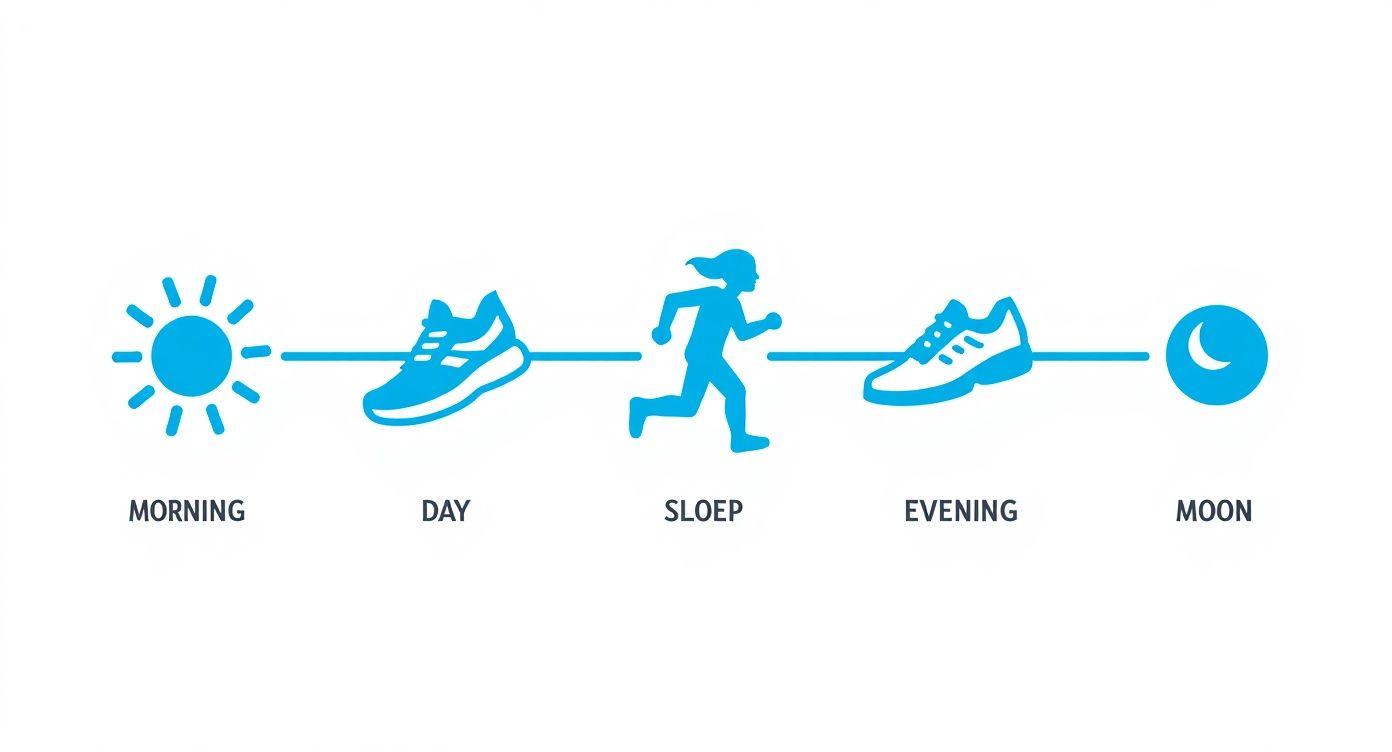
The key is that actions taken in the morning, afternoon, and evening all build on each other to improve your sleep quality.
Here are a few practical ways to protect your evening melatonin production:
- Use Blue-Light Filtering Tools: Most phones and computers have a built-in "night mode" that warms up the screen colors. Turn it on.
- Wear Blue-Light Blocking Glasses: If you absolutely have to be on a screen in the evening, these are a game-changer.
- Dim Your Home's Lighting: Swap out bright overhead lights for warmer, dimmer lamps in the evening. This creates a relaxing environment that signals to your body that the day is over.
The Non-Negotiable Consistent Wake-Up Time
If you do only one thing to strengthen your circadian rhythm, make it this: wake up at the same time every single day. Yes, even on weekends.
I know sleeping in feels amazing, but it creates what experts call "social jetlag." It confuses your internal clock, which is why waking up on Monday morning can feel so brutal. A consistent wake-up time is the anchor that stabilizes everything else, from your energy levels to your mood, providing immense wellness benefits.
For anyone committed to optimizing their health, this is a foundational habit. To learn more about building a holistic wellness routine, check out our Medeq Wellness Journal.
Engineer the Perfect Environment for Sleep
Your bedroom should be a sanctuary—a space engineered for one primary purpose: deep, restorative rest. When your environment sends the right signals to your brain, falling asleep and staying asleep becomes a natural, automatic process. By mastering three key environmental factors—light, temperature, and sound—you can create the ideal conditions for optimal sleep, enhanced workout recovery, and overall wellness.
Embrace Absolute Darkness
Even the smallest sliver of light at night can disrupt your body’s production of melatonin, the hormone that governs your sleep-wake cycle. Your brain interprets any light as a signal to stay awake, which can sabotage your ability to reach the deeper, more restorative stages of sleep that are vital for your health.
Getting your room completely dark is one of the most powerful changes you can make. This means going beyond just closing the blinds. Think like a sleep scientist and hunt down every last source of light.
- Blackout Curtains: A non-negotiable. Invest in high-quality curtains that block all streetlights and ambient outdoor light.
- Cover Electronics: Use small pieces of electrical tape to cover the tiny, annoying LED lights on your TV, power strips, and chargers.
- Mind the Gaps: Is light seeping under your bedroom door? A simple door draft stopper can solve this problem in seconds.
Creating this pitch-black cave reinforces the powerful biological signal that it’s time to shut down, helping you fall asleep faster and avoid those frustrating mid-night awakenings.
Maintain a Cool Temperature
Ever struggled to sleep in a warm, stuffy room? There's a scientific reason for that. Your body's core temperature actually needs to drop slightly to initiate and maintain sleep. A cool room doesn't just feel nice; it actively helps this natural process along.
Research points to a surprisingly cool range of 60-67°F (around 18°C) as the sweet spot for most people. This cool environment helps your body thermoregulate, a key step for entering deep sleep. It's during this critical stage that your body releases growth hormones vital for muscle repair, making temperature a secret weapon for workout recovery.
Setting your thermostat a few degrees cooler isn't just about comfort—it's a direct biological trigger that promotes deeper, more restorative rest, which is essential for your long-term health.
Experiment within this range to find what works for you. A programmable thermostat is a great tool here, letting you automatically cool the room down an hour or so before bedtime.
Control Your Soundscape
Sudden, unexpected noises are a notorious culprit for fragmented sleep. A barking dog, passing traffic, or a snoring partner can easily pull you out of deep sleep without you even realizing it. The goal isn't necessarily total silence, but rather a consistent and predictable auditory environment.
While some people love silence, many find it unsettling. The better solution is often consistent, monotonous sound to mask any abrupt noises.
- White Noise Machines: These are fantastic for producing a steady sound that covers a wide range of frequencies, effectively drowning out disruptive noises.
- Earplugs: A simple and highly effective solution, especially if you share a bed with someone who snores.
- Fans: The gentle hum of a fan can serve the dual purpose of providing white noise while also helping to keep the room cool.
By taking control of the light, temperature, and sound in your bedroom, you engineer a space that is perfectly optimized for sleep. This sends an unmistakable message to your brain and body, making deep, uninterrupted rest the default outcome. For more advanced strategies on how temperature can aid recovery, check out our guide detailing sauna benefits for athletes on the Medeq Wellness Journal.
Fueling Your Body for Nighttime Recovery
What you eat, when you move, and how you hydrate are non-negotiable pillars of deep, restorative sleep. Think of your body as a finely tuned machine—the fuel you put in and the work you demand from it directly dictates how well it repairs itself overnight.
By getting strategic with your nutrition and exercise, you set the stage for your body to do its best recovery work. This isn't about overhauling your entire life. It’s about smart timing and making deliberate choices that support your natural sleep-wake cycle. Get this right, and you’ll fall asleep faster, stay asleep longer, and wake up feeling genuinely recharged and healthier.
Strategic Nutrition for Better Sleep
Certain foods are packed with the raw materials your body needs to produce sleep-regulating hormones and neurotransmitters. Weaving them into your diet, especially later in the day, is a simple way to nudge your body toward rest.
Magnesium is a perfect example. Often called the "relaxation mineral," it’s crucial for calming the nervous system. You’ll find it in foods like almonds, spinach, and avocados. Another heavy hitter is tryptophan, an amino acid your body converts into serotonin and then melatonin. Turkey gets all the credit, but it's just as abundant in eggs, nuts, and seeds.
Your evening meal can either be a launching pad for great sleep or a roadblock to recovery. Prioritizing sleep-supportive nutrients while giving your body ample time to digest is a simple but powerful wellness strategy.
Timing is everything. A huge meal right before bed forces your digestive system to work overtime just as the rest of your body is trying to power down. This can cause indigestion and choppy sleep. As a rule of thumb, try to finish your last big meal at least three hours before you hit the hay.
Navigating Common Sleep Saboteurs
While some foods build you up for rest, others will tear your sleep quality down. The two most common culprits are caffeine and alcohol, both of which can completely derail your sleep architecture, even if you don't feel it immediately.
Caffeine is a potent stimulant with a surprisingly long half-life, meaning it lingers in your system for hours. That 3 PM coffee you need to power through the afternoon could be the very thing wrecking your deep sleep at 1 AM. To protect your night, a strict caffeine cutoff is non-negotiable. Aim for no caffeine after 2:00 PM, or at least eight hours before your planned bedtime.
Alcohol might feel like it’s helping you unwind, but it’s a master of deception. As a sedative, it can make you drowsy, but it absolutely demolishes your sleep cycles later on. It’s particularly brutal on REM sleep, the stage critical for memory and emotional processing. That "relaxing" glass of wine often leads to more middle-of-the-night wake-ups and a feeling of exhaustion the next day, harming your overall health.
Exercise Timing for Optimal Recovery
Daily movement is one of the most effective natural sleep aids out there. Exercise builds "sleep pressure"—the physiological need for sleep that accumulates throughout the day. It’s also a powerful tool for torching stress and anxiety, key components of a balanced wellness routine.
But when you train matters. An intense workout spikes your core body temperature, heart rate, and cortisol, screaming "it's go-time!" to your brain. That’s the opposite of what you want before bed. It’s best to wrap up any high-intensity training at least two to three hours before you plan to sleep.
So what’s the right approach?
- Train in the Morning or Afternoon: This syncs perfectly with your body's natural energy curve and leaves plenty of time for your nervous system to cool down.
- Move Gently at Night: If evenings are your only option, stick to restorative activities. Think light stretching, a gentle yoga flow, or a quiet walk. These can actually help signal to your body that it’s time to wind down.
For anyone serious about fitness, sleep isn’t just downtime—it’s the main event for recovery. It's during deep sleep that your body releases growth hormone to repair muscle, solidifies new motor patterns from training, and balances key hormones. Dialing in your nutrition and exercise timing ensures your hard work actually pays off.
A recent global report backs this up, showing a strong link between lifestyle regularity and better sleep quality. In an era of declining rest, these simple behavioral shifts are powerful. You can dig into the data in Sleep Cycle's comprehensive report. For more practical health strategies, check out our Medeq Wellness Journal.
Advanced Wellness Tools for Deeper Sleep
You’ve already put in the work to align your daily habits and dial in your sleep environment. That’s the foundation. But if you’re looking to take your recovery to the next level and unlock truly restorative rest, it's time to bring in some advanced tools.
Think of these not as shortcuts, but as powerful amplifiers for the natural sleep strategies you're already using. They help calm your nervous system, release physical tension, and prep your body for a profound state of relaxation. Layering them into your evening routine can be a total game-changer, especially for workout recovery and overall wellness.
Embrace Contrast Therapy for Nervous System Regulation
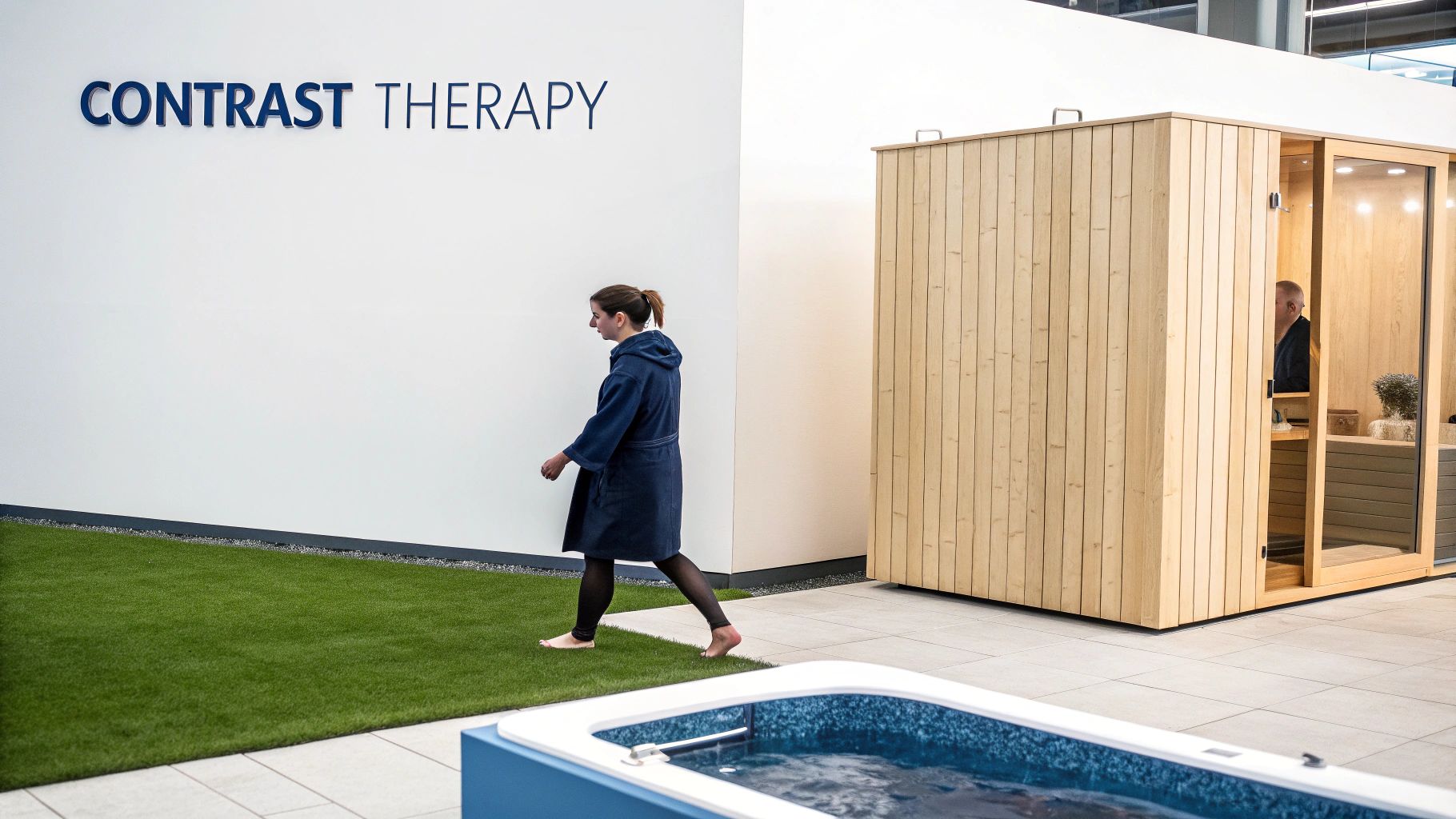
Contrast therapy is the practice of jumping between extreme heat (like a sauna) and cold (like a cold plunge). While it's famous for crushing muscle soreness, its real magic for sleep lies in what it does for your autonomic nervous system—a huge health benefit.
The heat from a sauna gets your blood flowing and relaxes your muscles. Then, the shock of the cold water triggers a controlled stress response. This back-and-forth cycle is essentially a workout for your nervous system, making it much better at shifting from a stressed-out "fight-or-flight" state to a calm "rest-and-digest" mode.
By intentionally exposing your body to these temperature swings in the evening, you’re training your nervous system to power down on command. This makes it far easier to find that deep state of calm you need for sleep, enhancing both workout recovery and mental wellness.
The process has a huge impact on both physical and mental recovery. The boosted circulation flushes out metabolic waste from your muscles, while the deep relaxation you feel afterward helps quiet a racing mind. It perfectly sets the stage for deep, uninterrupted sleep.
Harness Red Light Therapy to Support Melatonin
We all know blue light from screens at night is a sleep killer. But what if I told you certain kinds of light could actually help you sleep? That’s where Red Light Therapy (RLT) comes in. It uses specific, low-level wavelengths of light that penetrate the skin to boost cellular energy and cool down inflammation.
Using RLT in the evening can help offset all the blue light you’ve been exposed to. Unlike blue light, red light doesn't slam the brakes on melatonin production. Some studies even suggest it can support your body's natural release of melatonin, reinforcing the signal that it's time to wind down.
Here’s a simple way to work it in:
- Keep it short: A targeted 10-15 minute session is all you need.
- Pair it with calm: Do it while you meditate or practice deep breathing to double down on the relaxing effects.
- Be consistent: Like anything, the real wellness benefits come from making it a regular part of your routine.
This is a gentle, non-invasive way to prep your body for rest, and it’s especially useful on days when you’ve had a lot of screen time. If you want to dive deeper into the science, check out our full article on how Red Light Therapy works.
Release Physical Tension with Percussive Massage
It’s tough to fall asleep when your body is one giant knot of tension. Whether it’s from a tough workout or just a stressful day, tight, sore muscles are a major barrier to quality rest. A percussive massage gun is a fantastic tool for tackling this head-on.
These devices send rapid pulses deep into your muscle tissue, which helps to:
- Boost blood flow to speed up workout recovery.
- Break up knots and melt away muscle tightness.
- Shift your nervous system out of "high alert" and into relaxation mode.
Just 5-10 minutes with a massage gun before bed can make a world of difference. Hit the big muscle groups where you hold tension—quads, hamstrings, glutes, and your upper back. Stick to a low or medium setting and just let the gun float over your muscles. No need to dig in hard.
This simple ritual does more than just relieve soreness. It sends a clear signal to your brain that the day is done and it's time to let go. By releasing all that stored physical stress, you make it so much easier to sink into bed and drop into the deep, restorative stages of sleep.
For more wellness strategies to enhance your recovery and daily performance, be sure to visit the Medeq Wellness Journal.
Your Questions About Natural Sleep, Answered
As you start dialing in your sleep, questions will pop up. It’s natural. Sorting through sleep science can feel like a maze, but the answers are usually more straightforward than you’d think. Here are some of the most common questions I get, with clear advice to keep you moving toward restorative rest.
The struggle for better sleep is a global one. A recent survey found that people lose nearly three nights of good sleep every single week. The problem hits women harder, with 38% having trouble falling asleep compared to 29% of men. What's really shocking is that almost 22% of people have just given up and accepted poor sleep as their reality. You can dig into the full report in ResMed's Fifth Annual Global Sleep Survey.
How Long Does This Actually Take to Work?
Everyone wants to know this, and the honest answer is: it depends. You'll feel some things almost immediately—like the deep calm that comes from a completely dark, cool room. But the real, lasting health benefits don't happen overnight.
Think of it like training a new muscle. You need to give your body at least one to two weeks of solid, consistent effort to see a significant shift. This is especially true when you're realigning your circadian rhythm. That daily dose of morning sun and a strict wake-up time are non-negotiable for recalibrating your internal clock. Be patient. Consistency is everything here.
Are Daytime Naps a Good or Bad Idea?
Naps can be a powerful wellness tool, but they can also backfire. It all comes down to timing and length.
A short "power nap" of 20-30 minutes early in the afternoon can be a game-changer for alertness and focus. It’s just enough time to refresh your brain without dipping into deep sleep, so you avoid that post-nap grogginess.
But be careful. Naps longer than 40 minutes, or any nap taken too late in the day, can absolutely torpedo your "sleep drive." That’s the biological pressure that builds all day to make you feel tired at night. If you’re struggling to fall asleep, your best bet is to skip naps altogether. You’ll hit your pillow with maximum sleep pressure, ready to drift off.
Can Supplements Actually Help Me Sleep?
Yes, certain supplements can give you a helpful nudge toward relaxation and sleep, but they're supporters, not saviors. They work best when you’ve already got a strong sleep hygiene foundation in place.
Some of the most effective and well-researched options include:
- Magnesium Glycinate: Fantastic for calming the nervous system and quieting a racing mind before bed.
- L-theanine: This amino acid (found in green tea) promotes a state of relaxed alertness without making you drowsy.
- Tart Cherry Extract: A natural source of melatonin that can help gently guide your sleep-wake cycle.
Just remember to talk to a healthcare provider before adding any new supplements to your routine. It's the only way to be sure they're right for your personal health journey.
What If I Wake Up in the Middle of the Night?
This is incredibly frustrating, but there's a golden rule: Don't just lie there. Tossing and turning for more than 20-25 minutes teaches your brain that your bed is a place for stress, not sleep. This creates a vicious cycle.
If you’re wide awake, get out of bed. Go to another room with dim lighting and do something quiet and relaxing. Read a real book (no screens!), listen to some calm music, or do a few gentle stretches. The goal is to take the pressure off. Only head back to bed when you feel that wave of sleepiness return. This technique, called stimulus control, is crucial for protecting the sacred connection between your bed and sleep. For more tips, check out the Medeq Wellness Journal.
At MedEq Fitness, we know that peak performance is built on a foundation of exceptional recovery. Our physician-led selection of wellness tools—from cold plunges and saunas to red light therapy—is curated to help you unlock your body's full potential.
Explore our science-backed recovery solutions and build a more resilient you.