Compression Therapy Benefits: A 2026 Guide to Safe Use
Compression therapy gets marketed like a shortcut to better workouts, but that's not where the strongest evidence lives. The more honest story is better and more useful, compression therapy benefits show up most clearly in recovery, soreness reduction, swelling control, and clinical healing, especially when the right pressure and delivery method match the goal. If you care about performance, the simple fact is that compression can support the work you already did, but it doesn't reliably turn into instant speed or power.
That matters because readers often buy the hype first and learn the physiology later. The physiology is the reason compression helps a swollen calf, a sore quad, a venous ulcer, or a leg that's been sitting all day, and it's also why it can disappoint when someone expects a direct performance boost. For a practical starting point on circulation support, the article on physician-led circulation improvement is a useful companion.
Rethinking What Compression Therapy Actually Does
Compression therapy is better understood as a pressure-based support system for fluid movement. That framing is less dramatic than the sales pitch, but it matches how the body responds. In venous leg ulcer care, compression has been associated with better healing, and that is the kind of result that matters in real treatment, not in ad copy. It helps explain why clinicians keep using it for swelling control, wound care, and circulation support, even when the promise of a workout boost falls flat.
Recovery is the honest headline
For active people, the strongest case for compression is usually recovery, not a bigger lift, faster sprint, or higher training score. A 2022 meta-review found athletic performance effects were mixed, with little change in metabolic responses, heart rate, or cardiorespiratory measures, while reduced soreness showed up more consistently (sports meta-review). That is why compression fits better after hard sessions, long flights, long shifts, or any day that leaves the legs feeling heavy and tight.
Practical rule: use compression for what it does well, not for what ads promise.
The same pattern shows up in clinical care. In acute DVT, a 2024 review reported faster pain relief and less swelling when compression was added early, and it also summarized post-thrombotic syndrome reductions in several trials (PubMed review). Those outcomes matter because they affect comfort, movement, and the ability to get through the day with less friction.
People who tend to benefit most usually fit two broad groups. One group wants less soreness, less swelling, and steadier recovery after training or long periods on their feet. The other group is dealing with venous disease, DVT recovery, chronic edema, wound healing, or a situation like the one discussed in liposuction compression benefits, where compression is part of a broader clinical plan. The tool can be the same, but the goal is not. For readers who want a practical starting point for circulation support, physician-led circulation improvement is a useful companion.
How Compression Moves Fluid Through Your Body
Compression works by changing the pressure around your tissues so fluid has a clearer path back toward the heart and into the lymphatic system. A good way to picture it is a garden hose with a controlled squeeze. The water does not vanish, it is redirected through the narrowed section more efficiently. The body is more complex than a hose, though, because veins, valves, lymphatics, and muscle contractions all influence how fluid moves.

Why gradient pressure matters
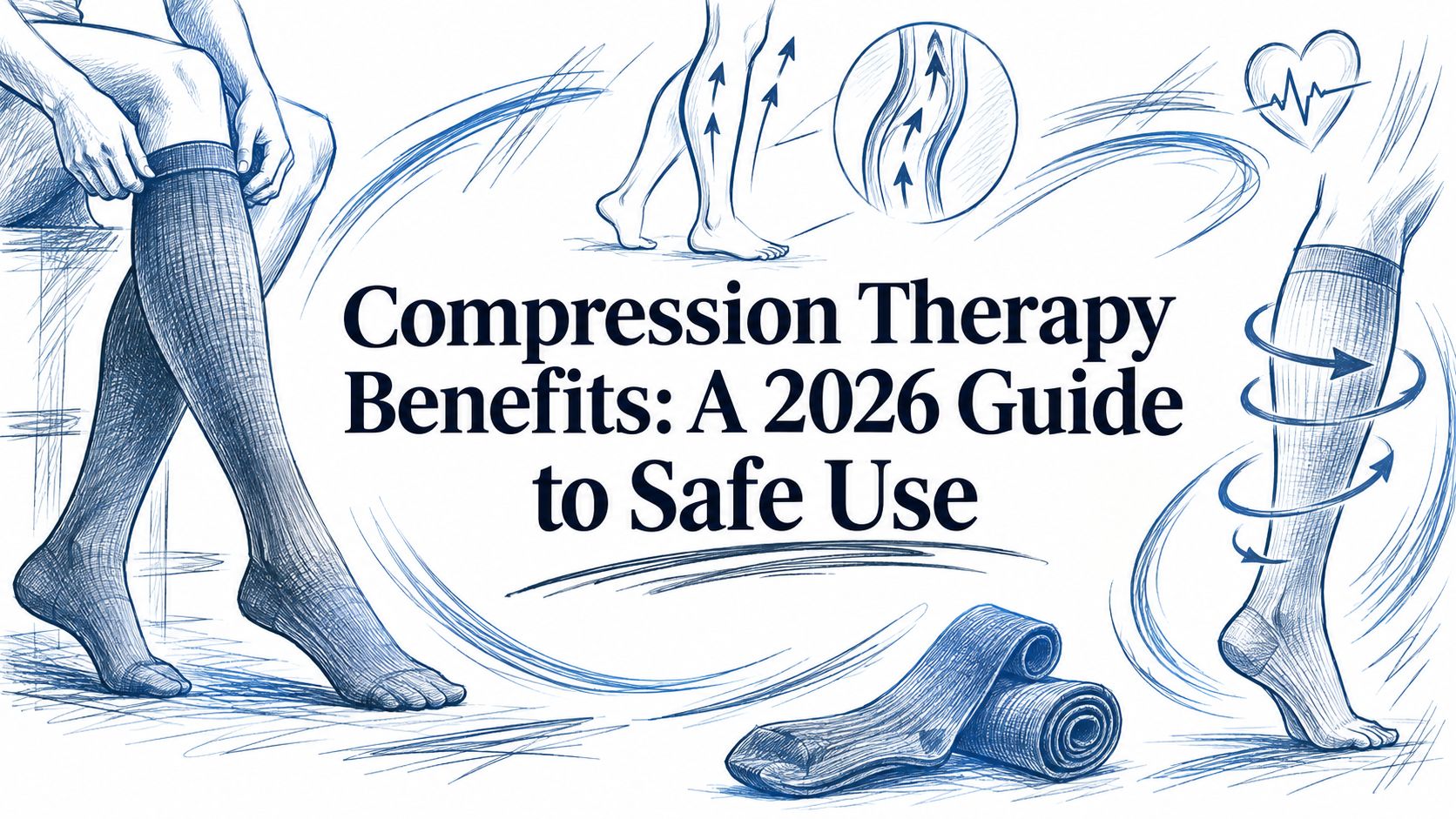
Graduated compression goes beyond tight clothing by applying a deliberate pressure gradient. The lower leg usually receives more pressure than the upper leg, and that change helps guide fluid upward instead of letting it collect below. In venous use, about 20 mmHg at the distal leg can increase venous blood-flow velocity in the supine position and help limit swelling after sitting or standing, while >50 mmHg upright may be needed to intermittently occlude incompetent veins and reduce ambulatory venous hypertension during walking (pressure and posture review).
That is why pressure choice matters so much. The right level depends on the goal, the body position, and the problem being addressed. A garment that works well for daily swelling control may be too light for a venous issue that needs stronger support.
Static garments versus dynamic devices
Garments stay on the body and provide steady pressure, so they are easy to wear for hours at a time. Pneumatic devices cycle pressure on and off, which creates a pumping effect and can be useful during dedicated recovery sessions. Mechanically, compression lowers transmural pressure, raises interstitial pressure, increases tissue stiffness, and helps reduce venous reflux, stasis volume, and edema.
Fluid moves better when the outside pressure helps do part of the work that the veins are struggling to manage on their own.
That same mechanism helps explain why compression can support lymphatic drainage. When tissue pressure is kept in a better range, fluid between cells has a clearer route back into circulation. For a real-world example of how these principles show up in post-procedure care, the article on liposuction compression benefits is a useful reference. For readers comparing options, recovery tools for athletes is a helpful companion guide.
Evidence-Backed Benefits Across Different Needs
Compression gets marketed as a shortcut to better performance, but the clearer evidence points elsewhere. Its strongest uses show up in recovery, soreness control, swelling management, and clinical healing, where the physiology is easier to measure and the results are easier to trust.
Compression Therapy Benefits by Use Case
| Use Case | Primary Benefit | Key Evidence |
|---|---|---|
| Athletes and fitness enthusiasts | Less soreness and swelling after exercise | Review work in sports settings shows the clearest effects are reduced perceived soreness and swelling, while performance gains are less consistent (sports meta-review, sports recovery review) |
| Venous leg ulcers | Better healing rates | Compression supports wound healing in venous ulcers, where controlling edema and venous pressure helps tissue recover (PMC review) |
| Acute lower-limb DVT | Faster pain relief and less swelling | Early compression can ease symptoms and support recovery in acute DVT, with the goal of improving comfort and lowering later complications (PubMed review) |
| Exercise recovery sessions | Improved tissue mechanics after hard training | Pneumatic and cryo-compression have been linked to better tissue perfusion and muscle elasticity after exercise, which helps explain why some athletes feel looser after a session (sports recovery review) |
| Chronic venous symptoms | Less heaviness, pain, itch, and cramps | Clinical review literature links compression with symptom relief and better day-to-day quality of life (venous review) |
What athletes usually notice
For training recovery, the most dependable benefits are less soreness, less swelling, and a calmer feeling in the legs after hard work. Compression supports the work you already did rather than delivering instant speed or power. That difference matters, because many people expect a performance boost when the better-supported outcome is recovery.
A sports review also found clear support for reduced soreness and swelling after exercise-induced muscle damage, while performance effects were more mixed (sports recovery review). If you want to compare compression with other recovery options, the guide on recovery tools for athletes is a practical companion.
What clinical patients usually need
Venous leg ulcer care depends on sustained graduated compression because healing improves when edema and venous pressure are controlled over time. DVT care uses a different lens, where the goal is symptom relief, lowering complication risk, and making daily movement more tolerable during recovery. The clinical literature also describes persistent calf-circumference differences in the trials it reviewed, which is a useful reminder that early support can change how a leg feels and functions (PubMed review).
That same logic explains why compression is part of some postsurgical protocols and why it appears in an aesthetic lymphatic drainage treatment as well. When fluid shifts are part of the problem, steady outside pressure can help the body move fluid with less strain.
What rehabilitation patients often care about
After surgery or injury, compression is often used to manage swelling and make movement more tolerable. The goal is usually steady support, not force for its own sake. Comfort, fit, and regular use matter because those are the factors that determine whether a person keeps the garment or device on long enough to help.
Choosing Between Garments and Pneumatic Devices
Compression choices get clearer once you separate everyday wear from recovery sessions. Socks, sleeves, and wraps are made for ease and routine use, while pneumatic boots and intermittent devices are built for a more controlled treatment block. They address overlapping needs, but they work in different ways.

Garments suit people who need consistency
Garments are often the easiest starting point because they can be worn during the day, carried anywhere, and folded into normal routines. They deliver fixed graduated pressure, which fits daily swelling control, travel support, and post-exercise leg relief. The pressure is fixed rather than adjustable minute by minute, and that simplicity is part of the appeal.
They also work well for people who want a low-friction habit they can repeat. A garment does not ask for setup, charging, or a separate treatment window, so adherence tends to be more realistic for busy schedules. That matters because a compression tool only helps if it is used long enough and often enough to make a difference.
Pneumatic devices suit people who want a stronger session
Pneumatic boots and sleeves use sequential, pulsating pressure, which creates a more hands-on recovery session. They need a power source and more time, but they can provide higher and adjustable intensity for people who want a structured treatment block. That makes them a practical fit for rehab rooms, wellness centers, and home users who already have a defined recovery routine.
The trade-off is simple. Pneumatic devices ask for more setup, but they also give you more control over the session itself. For some people, that control feels like a massage chair for the legs, a scheduled block that is harder to ignore than a garment worn in the background.
Choose the device your schedule and comfort level support, rather than the most visually impressive option.
Pressure and use case should lead the decision
Venous use has specific pressure logic. About 20 mmHg can support venous flow and swelling control in many everyday situations, while higher pressures may be needed for more demanding venous goals (PubMed review, pressure and posture review). Pressure only makes sense when it matches the goal, because a light daily garment and a more forceful recovery session are solving different problems.
For anyone exploring lymphatic-style treatments, the overview on aesthetic lymphatic drainage treatment gives useful context for how device-based compression is used in spa and wellness settings. The clinical takeaway is straightforward, choose the format that matches the outcome you want, whether that is day-long support, a more intensive session, or a blend of both.
The embedded video below is a useful visual companion if you're comparing different recovery device styles.
The right question is usually not “Which device is best?” It is “Which device will I use often enough, comfortably enough, to get the benefit?” For a broader equipment comparison, the MedEq Fitness athlete recovery guide can help you sort through that trade-off.
Pairing Compression With Other Recovery Modalities
Compression becomes more useful when you treat it as one part of recovery, alongside other tools that do different jobs. People often combine it with contrast therapy, cold plunges, saunas, red light therapy, or hyperbaric sessions because each approach targets a separate piece of the recovery process. Compression's job is to support fluid movement, reduce lingering heaviness, and help tissues feel less congested.

Contrast and cold work well with compression
Contrast therapy alternates hot and cold exposure, which many people use to create a circulation “pump.” Compression can fit neatly after the cold phase, when tissues are ready to rewarm and fluid shift becomes more noticeable. For readers who want a practical comparison, the guide to enhanced workout recovery explains how contrast fits into a training week.
Cold plunge users often find compression more comfortable after they get out and start warming back up. That sequence makes practical sense because the garment supports movement while the body transitions from a cold, constricted state back toward normal circulation.
Heat and light sessions can be paired thoughtfully
Saunas create a strong heat load, so wearing compression during the heat itself does not suit everyone. For some people, the better option is to use compression after the session, when they want to settle the legs and reduce fluid pooling while they rest. Red light therapy is often used in the same recovery window because it is easy to layer with other low-burden interventions.
Pair the tools that solve different problems, then give your body time to respond.
Hyperbaric sessions belong in the same conversation
Hyperbaric oxygen therapy focuses on oxygen delivery, while compression focuses on pressure and fluid movement. Those are different mechanisms, which is why they can complement each other in a broader wellness plan. MedEq's collection of hyperbaric chambers and cold plunge pools shows how people build a full recovery room around those ideas.
For readers comparing clinical and post-surgical recovery pathways, the overview of the healing process after mastectomy shows why fluid management and comfort often sit at the center of recovery planning. The best setup is the one that fits your body, your schedule, and your current phase of healing.
Safety Guidelines and When to Avoid Compression
Compression is safe when fitted correctly and used for the right reason, but it's not a universal fix. The biggest mistake is assuming tighter always means better. In reality, the goal is therapeutic support, not a tourniquet.

Know the main red flags
Severe peripheral arterial disease is a major reason to avoid compression unless a clinician specifically clears it. Untreated DVT, acute skin infection, open wounds, fragile skin, and known garment-material allergies also deserve caution or avoidance. If someone has peripheral neuropathy, skin infection concerns, or a recent procedure, medical guidance matters before starting.
Fit should feel firm, not punishing
Numbness, tingling, increased pain, skin discoloration, or a deep line where the garment cuts in are warning signs. Those symptoms usually mean the fit is wrong, the pressure is too high, or the device is being used in a way that doesn't match the condition. A garment that traps heat, rolls at the top, or leaves the foot cold should be reassessed.
If you have to “tolerate” compression, something is off.
Pressure should match the goal
More pressure is not automatically better. Lower everyday pressures may be enough for swelling prevention, while venous disease or more specific clinical goals may need a different range. A clinician can help determine whether the tool is meant for routine support, recovery sessions, or a more targeted treatment plan.
Garment care matters too. Worn-out elastic can reduce effectiveness, and dirty or damaged materials can irritate skin. If the device stops feeling supportive or starts leaving unusual marks, it's time to reevaluate the fit and condition before pushing ahead.
Building Your Weekly Compression Recovery Plan
A simple plan beats an ambitious plan that never gets used. For many active people, that means using garments on long workdays, travel days, or after hard training, then adding a pneumatic session when the legs feel especially heavy. The goal is to make recovery automatic instead of waiting until soreness is already dragging everything down.
A practical weekly rhythm
Athletes often do well with compression after intense lower-body sessions, long runs, or competition days. Wellness-focused readers can use it after long standing periods, high-sitting workdays, or evenings when swelling tends to show up. If you use a pneumatic device, it can fit nicely into a post-workout cool-down block or a dedicated recovery night at home.
How to judge whether it's working
Pay attention to soreness, energy, and how quickly your legs feel normal again the next morning. Those subjective markers are useful because they tell you whether the routine is changing how you move and feel. If the garment is comfortable and your legs feel lighter, you're probably in the right neighborhood.
The best compression plan is the one you'll repeat.
For ongoing education and better equipment choices, the broader Curated recovery and wellness resource is a useful starting point. Compression therapy fits best when it sits inside a larger recovery habit, not as a one-off fix.
If you want better circulation support, less post-workout soreness, and smarter recovery tools, explore the science-backed options at MedEq Fitness. You'll find equipment that fits real training and healing needs, plus a practical path toward building a recovery setup that gets used.