
Are Infrared Saunas Good for You? A Guide to the Health & Wellness Benefits
So, are infrared saunas good for you? The short answer, backed by a growing body of scientific research, is a resounding yes.
These wellness tools harness gentle, radiant heat to unlock a wide range of health benefits, from improved heart function to accelerated workout recovery. For anyone serious about their health and wellness journey, an infrared sauna is a powerful asset for achieving deeper relaxation and enhanced physical performance.
The Science-Backed Verdict on Your Health
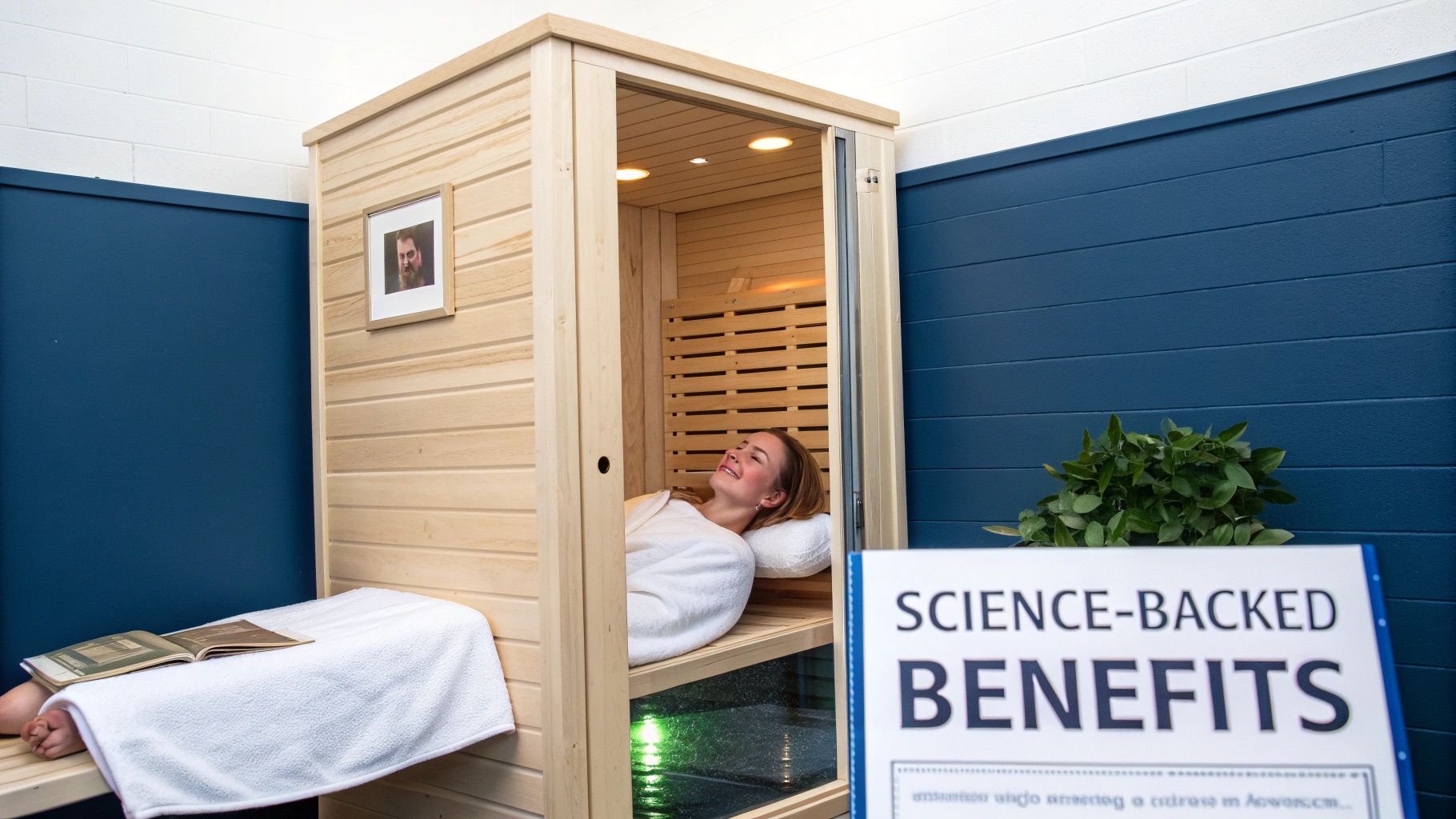
Here's the key difference: a traditional sauna heats the air around you, which then heats your body. An infrared sauna, on the other hand, uses specialized light waves to warm your body directly, from the inside out.
This direct approach gets you a deeper, more productive sweat at a lower, more comfortable temperature. The session feels less intense, but the physiological benefits for your wellness are arguably more profound.
At MedEq Fitness, we’re all about physician-led wellness equipment that bridges the gap between exertion and true renewal. We believe in providing science-grounded tools that help you restore energy, accelerate recovery, and elevate your daily performance. Understanding how these saunas work is the first step toward optimizing your well-being.
Core Health & Wellness Benefits of Infrared Saunas
The evidence points to several key areas where infrared saunas can make a real difference. With regular use, you can see measurable improvements in both your physical and mental wellness.
Let's break down the main perks.
- Improved Cardiovascular Function: The gentle heat raises your core body temperature, increasing your heart rate and circulation much like a session of moderate exercise. This supports overall heart health.
- Accelerated Workout Recovery: By boosting blood flow to tired muscles, infrared heat helps shuttle in oxygen and nutrients while flushing out metabolic waste. The result? Less soreness and stiffness after training.
- Effective Detoxification: The deep, penetrating sweat helps your body expel heavy metals and other environmental toxins more efficiently than a traditional sauna can, supporting your body's natural cleansing processes.
- Enhanced Relaxation and Stress Reduction: The soothing warmth helps lower cortisol levels, calming your nervous system and promoting a state of deep relaxation that can significantly improve sleep quality and overall wellness.
Here’s a quick overview of what you can expect from consistent infrared sauna sessions.
Infrared Sauna Benefits At-a-Glance
| Benefit Category | How It Works | Who Benefits Most |
|---|---|---|
| Cardiovascular Health | Increases heart rate & circulation, similar to moderate cardio, improving blood vessel function. | Individuals with high blood pressure, early-stage heart conditions, or anyone seeking to improve heart health. |
| Workout Recovery | Boosts blood flow to muscles, delivering oxygen and clearing metabolic waste products. | Athletes, fitness enthusiasts, and anyone experiencing muscle soreness or stiffness from physical activity. |
| Detoxification | Induces a deep sweat that helps the body purge heavy metals and environmental toxins. | People looking to support their body's natural detox processes or reduce their toxic load. |
| Stress & Relaxation | Lowers cortisol levels and calms the nervous system, promoting a state of deep relaxation. | Anyone dealing with chronic stress, anxiety, or sleep disturbances. |
This table provides a snapshot, but the research behind some of these health benefits is especially compelling.
Deeper Dive: The Cardiovascular Connection
The impact on heart health is one of the most well-documented advantages of infrared sauna use. Research from respected institutions like the Cleveland Clinic shows that the cardiovascular response from a session mimics moderate exercise, boosting heart health and helping lower blood pressure.
One particularly compelling study looked at patients with congestive heart failure. After undergoing far-infrared sauna therapy, they saw an 87% improvement rate in their symptoms. The therapy led to a significant increase in the heart's pumping efficiency and a notable drop in systolic blood pressure.
As you explore the world of heat therapy, it's helpful to understand how different technologies stack up. We break it all down in our detailed guide on the infrared sauna vs. traditional sauna. For more wellness insights, check out the MedEq Wellness Journal.
How Infrared Heat Works Its Magic
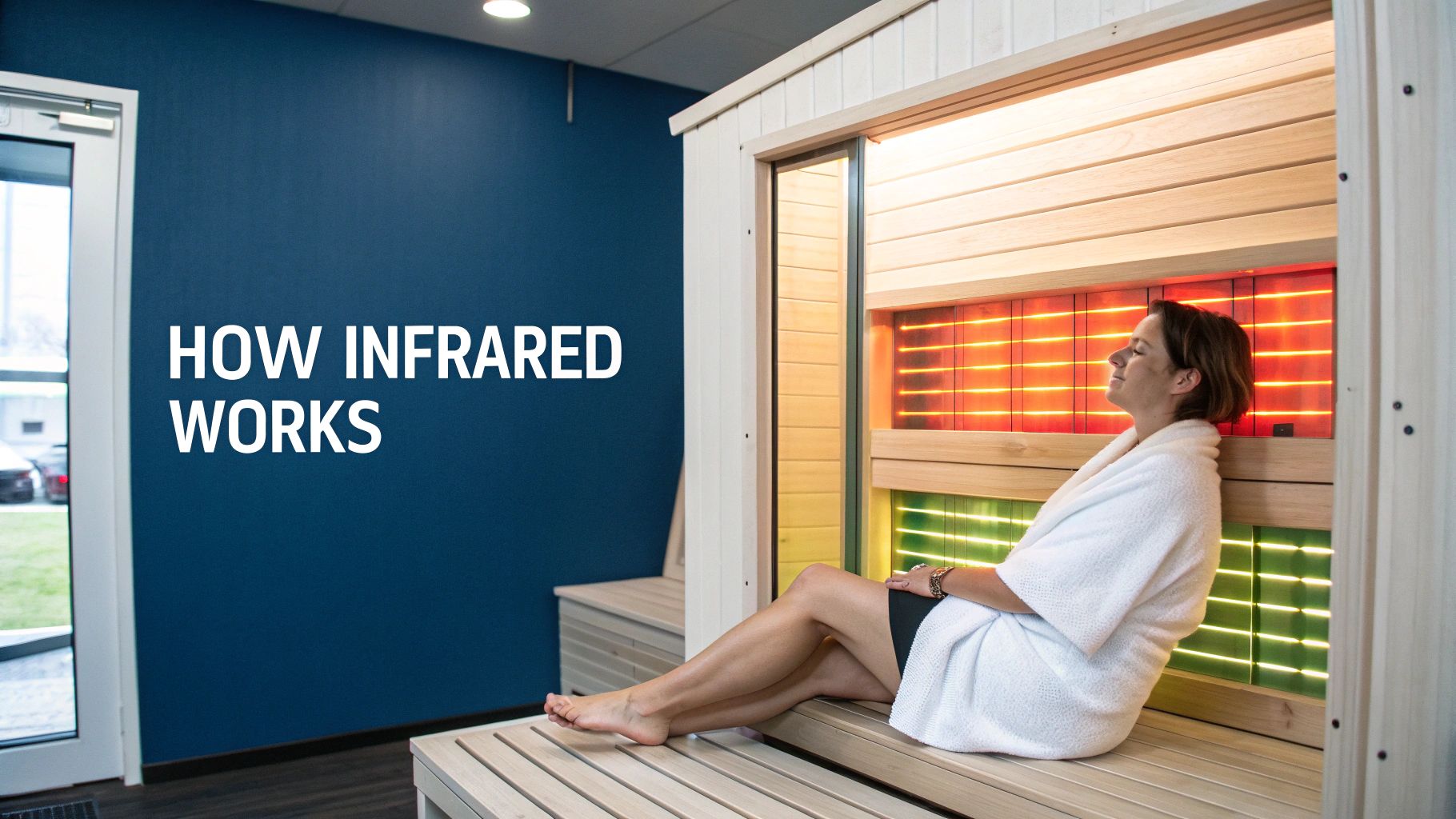
To really understand why infrared saunas feel so different—and why they are so good for your wellness—we need to talk about how they generate heat.
Picture this: you're outside on a cool, sunny day. The air is crisp, but you can feel the sun’s rays warming you to the bone. That’s radiant heat in action, and it’s the exact same principle that powers an infrared sauna.
A traditional sauna is basically a convection oven. It heats the air to an extreme temperature, and that super-heated air then warms your body. An infrared sauna, on the other hand, uses special emitters that generate infrared light waves. These waves cut right through the air and are absorbed directly by your body.
The result? You get warmed from the inside out. It's a much more efficient way to raise your core body temperature and work up a deep, cleansing sweat, all without having to breathe scorching-hot air.
Radiant Heat vs. Convective Heat
The real game-changer is how the heat gets to you. A classic Finnish sauna uses convective heat. It gets a pile of rocks blazing hot, which then heats the air in the room, often pushing past 180°F (82°C). You feel hot because you're sitting in a pocket of that intensely hot air.
An infrared sauna flips the script with radiant heat. About 80% of the energy it produces goes directly into warming your body, while only 20% warms the air around you. This simple difference creates a completely different wellness experience.
- More Comfortable Air: Infrared saunas run at much more manageable temperatures, usually between 120°F and 140°F (49°C to 60°C). This makes it easier to breathe and relax, especially if you find the blast-furnace heat of traditional saunas a bit much.
- Deeper Tissue Warming: The far-infrared wavelengths can penetrate up to 1.5 inches into your body’s soft tissue. This is what gives you that deep, soothing warmth that helps relax tight muscles and ease stiff joints. It’s also what triggers that powerful, detoxifying sweat people are after.
Because the heat penetrates more deeply at a lower ambient temperature, your body can experience a more vigorous sweat and enhanced cardiovascular response without the discomfort of breathing extremely hot air.
The Science of a Good Sweat
This direct heating method kicks off a powerful response in your body. As your core temperature climbs, your body's natural cooling system kicks into high gear, producing a deep sweat to cool you down. But that’s not all it’s doing. This process also gets your heart rate up and boosts circulation.
That’s why people often call an infrared sauna session a "passive cardio" workout. Your heart is working harder to pump blood to the skin's surface to help with cooling, which can help strengthen the cardiovascular system over time. This is the foundational mechanism behind many of the health benefits, from faster workout recovery to deep relaxation.
For more wellness insights, be sure to visit the MedEq Wellness Journal.
Supercharge Your Workout Recovery
Anyone who trains hard knows the real gains happen after the workout. Recovery is where the magic happens—it’s when your body rebuilds and adapts, coming back stronger than before. This is exactly where the deep, penetrating heat of an infrared sauna can be a game-changer for workout recovery, helping you bounce back faster from tough sessions.
Imagine your muscles post-workout as a traffic jam. Metabolic waste products, like lactic acid, are clogging up the highways, causing that all-too-familiar soreness and stiffness. An infrared sauna acts like an expert traffic controller. Its radiant heat gently raises your core temperature, triggering your blood vessels to expand in a process called vasodilation.
This widening of your circulatory pathways is key. It allows a massive surge of fresh, oxygen-rich blood to flood your tired muscles, delivering critical nutrients while efficiently clearing out the metabolic gridlock that leads to delayed onset muscle soreness (DOMS). The result? A much smoother, quicker workout recovery. The best recovery starts with the best equipment.
How Infrared Heat Eases Muscle Soreness
The beauty of infrared is that its warmth doesn't just sit on the surface; it penetrates deep into your muscle tissue, reaching up to 1.5 inches below the skin. This creates a profoundly soothing effect that melts away tension and improves flexibility.
This deep-tissue warmth delivers a few key recovery benefits:
- Reduces Stiffness: The heat helps relax tight muscles and the surrounding connective tissues, which can dramatically improve your range of motion.
- Alleviates Pain: By boosting circulation and directly soothing nerve endings, the heat helps dial down the pain signals from overworked muscles and joints.
- Promotes Cellular Repair: Better blood flow is like an express delivery service for the raw materials your muscles need to repair themselves, speeding up the entire regeneration process.
A post-workout infrared sauna session can be the difference between dragging yourself through the next day and feeling refreshed and ready to go again. It targets soreness right at the source, making it a cornerstone of effective workout recovery.
Optimizing Your Sauna Protocol for Recovery
When you use the sauna is just as important as how you use it. Timing your sessions strategically can make all the difference for workout recovery.
For maximum impact, many athletes jump in the sauna right after training. A 20 to 30-minute session post-exercise immediately kickstarts the recovery cascade, helping to head off soreness before it fully sets in. Your muscles are warm and incredibly receptive to the health benefits at this point.
Using the sauna on a rest day is another fantastic strategy. Think of it as an active recovery tool that promotes circulation and eases any lingering tightness without putting any additional stress on your body. It's a perfect way to ensure you're fully restored for your next big workout. For a deeper dive into how elite athletes use this, check out our guide on specific sauna benefits for athletes.
Ultimately, adding an infrared sauna to your routine isn't just about feeling good—it's a smart wellness strategy to elevate your performance. When you prioritize workout recovery, you're investing in your ability to train harder and more consistently.
For more wellness insights, check out the MedEq Wellness Journal.
Unlock Peak Wellness with Contrast Therapy
An infrared sauna session is a powerful wellness tool on its own, but what if you could multiply its health benefits? The secret is pairing it with its polar opposite: cold therapy.
This practice of cycling between extreme heat and cold is known as contrast therapy. It’s a go-to method for elite athletes and biohackers looking to push the absolute limits of workout recovery and performance.
The concept is surprisingly simple but incredibly effective. When you get into the sauna, the deep-penetrating heat causes your blood vessels to widen—a process called vasodilation. This expansion floods your muscles and tissues with a rush of oxygen-rich blood and vital nutrients.
Then comes the cold plunge. That icy shock triggers the opposite reaction: vasoconstriction. Your blood vessels rapidly narrow, creating a powerful 'pumping' action throughout your entire circulatory system.
The Circulatory Pump Effect
This cycle of expansion and contraction essentially acts like a natural pump for your vascular system. It forces blood through your tissues far more efficiently than your body could ever manage on its own.
Think of it as hitting a reset button on your circulation. You’re flushing out metabolic waste and inflammation while simultaneously fast-tracking the delivery of restorative compounds. The wellness benefits are significant.
- Dramatically Reduces Inflammation: The rapid tightening of blood vessels from the cold plunge is a game-changer for reducing swelling and systemic inflammation.
- Accelerates Muscle Recovery: That ‘pump’ effect is incredibly efficient at clearing out lactic acid and other metabolic junk that leaves you sore after a tough workout.
- Boosts Immune Function: The jolt to your system from the temperature swings can actually stimulate the production of white blood cells, strengthening your immune response.
- Enhances Mood and Focus: The release of endorphins and norepinephrine from the hot-cold exposure often leads to better mental clarity, a sharp focus, and a serious mood boost.
Contrast therapy turns a passive recovery session into an active circulatory workout. It uses your body's built-in responses to hot and cold to create a powerful healing synergy that enhances overall wellness.
This graphic breaks down the simple but effective flow from your workout to sauna-based recovery.
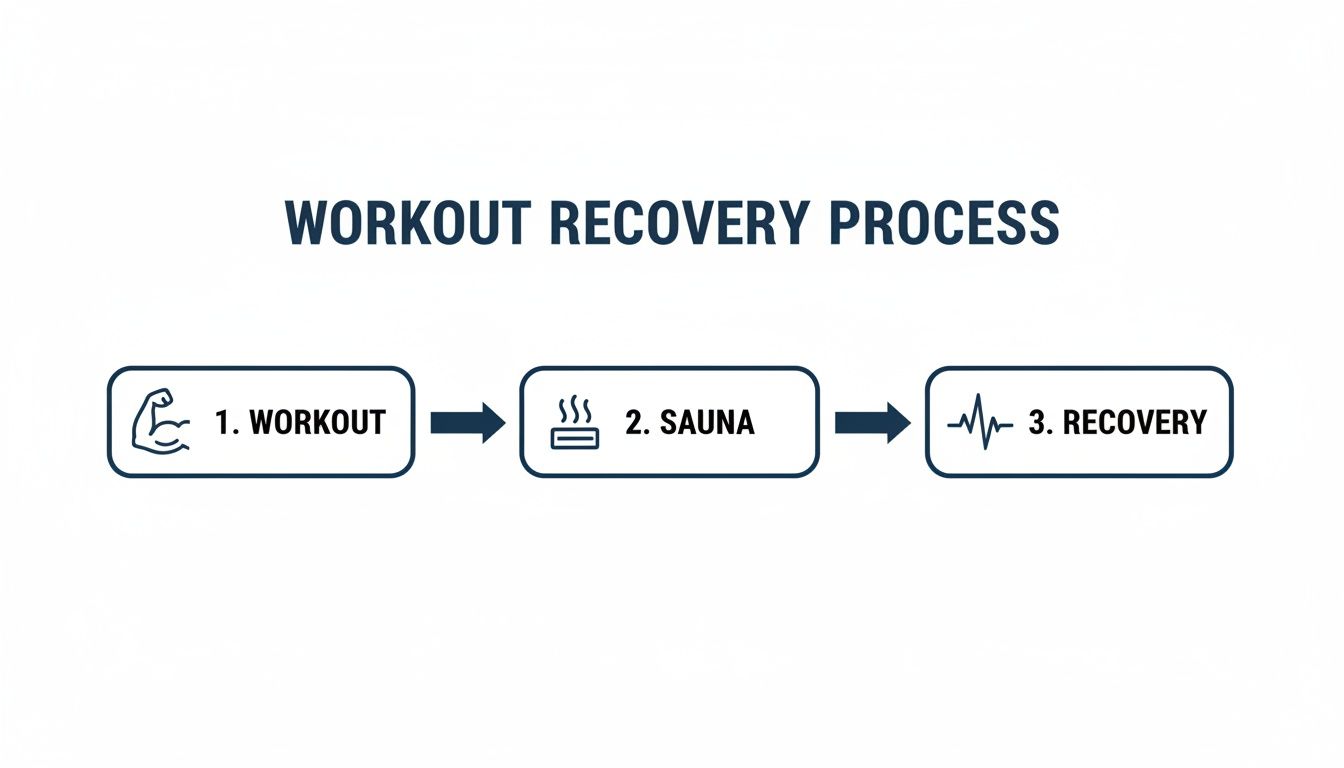
As the infographic shows, slotting in a sauna session after training is a key part of the recovery cycle that leads to better overall results and improved wellness.
A Practical Protocol for Contrast Therapy
Ready to give it a shot? A simple and effective way to start is the 3-to-1 rule: for every three minutes in the heat, spend one minute in the cold. Aim for three to four cycles.
Here’s a great starting point:
- Heat: Begin with a 15-minute session in your infrared sauna.
- Cold: Immediately jump into a 1 to 3-minute cold plunge or an icy shower.
- Rest: Give your body a brief 2-minute rest to normalize.
- Repeat: Run through this cycle 3 to 4 times to complete the session.
For a more targeted approach, especially for facial recovery, you can even add in practices like a portable facial plunge dipping bowl to complement your routine. For more wellness insights, check out the MedEq Wellness Journal.
Choosing and Using Your Infrared Sauna Safely

Bringing an infrared sauna into your home is a powerful move for your wellness. But to make sure you’re getting a tool that’s both safe and effective, you need to know what to look for and how to use it right. Think of it like buying any piece of professional-grade equipment—the details really matter.
An informed choice is what separates a good experience from a great one. The quality of any sauna boils down to a few critical components that dictate its performance, safety, and how long it will last.
Key Factors When Selecting a Home Sauna
When you start shopping, it’s easy to get overwhelmed. Just focus on what directly impacts your sessions and safety. A high-quality sauna isn't just a hot box; it's a precisely engineered wellness device.
Here’s what to zero in on:
- Emitter Type: This is the engine of your sauna. Carbon emitters have a large surface area for broad, even heat. Ceramic emitters pack a more intense, focused punch. Full-spectrum heaters are the hybrid option, delivering near, mid, and far-infrared waves for a more comprehensive session.
- EMF Levels: Electromagnetic fields (EMF) are part of any electrical device. Reputable brands tackle this head-on with low-EMF or ultra-low-EMF technology, and they should have third-party test results to back up their claims. Don't be afraid to ask for them.
- Wood Quality: The wood matters for durability, scent, and avoiding off-gassing. Non-toxic woods like Canadian Hemlock, Cedar, and Basswood are excellent choices because they stand up to the heat without warping or releasing unwanted chemicals.
A clean home environment amplifies the health benefits of your sauna. Things like maintaining good indoor air quality complement your detox goals and support the holistic wellness you’re working toward.
Protocols for Safe and Effective Use
Once your sauna is set up, smart usage is everything. The number one rule? Listen to your body. Always.
Start slow. Give your body a chance to acclimate to the heat stress. This means shorter sessions, lower temperatures, and less frequency at the beginning. You can gradually ramp things up as your tolerance improves.
Safety is non-negotiable. An infrared sauna is a potent wellness tool, but its health benefits are only unlocked when you use it correctly and respect your body's limits.
To get you started, here are some clear, evidence-based guidelines for beginners and more advanced users.
Infrared Sauna Safety and Usage Protocol
These recommendations are a solid starting point for building your sauna routine. Remember to adjust based on how you feel.
| Protocol Aspect | Beginner Recommendation | Advanced User Guideline |
|---|---|---|
| Temperature | Start between 110-125°F (43-52°C). This milder heat allows your body to adjust. | Can increase to 130-140°F (54-60°C) as comfort and tolerance improve. |
| Session Duration | Begin with 15-20 minute sessions. Pay close attention to how you feel. | Gradually work up to 30-45 minute sessions. Longer isn't always better. |
| Frequency | Start with 2-3 sessions per week, allowing a day of rest in between. | Can increase to 4-5 sessions per week based on recovery needs and tolerance. |
No matter your experience level, hydration is absolutely critical. Drink plenty of water before, during, and especially after your session to replace the fluids you've lost.
Finally, if you have any pre-existing health conditions, make sure to talk with your healthcare provider before you start a new sauna routine. For more wellness insights, check out the MedEq Wellness Journal.
Your Infrared Sauna Questions, Answered
If you're thinking about adding an infrared sauna to your wellness routine, you've probably got a few questions. That's a good thing. Let's walk through some of the most common ones we hear, giving you the clear, practical answers you need to get started with confidence.
How Long Until I Start Feeling the Benefits?
This is probably the number one question people ask, and the honest answer is: it depends on what you're looking for. Many people feel a deep sense of calm and a little less achiness after their very first session. That soothing heat works quickly on the nervous system.
But for the more significant health benefits, consistency is everything.
- Short-Term (First 1-2 Weeks): You'll likely notice better sleep and less muscle soreness within the first week or so, especially if you're getting in 3-4 sessions.
- Mid-Term (A Few Weeks In): This is when things like skin health often start to improve. A clearer complexion and better tone are common after several weeks of regular use.
- Long-Term (Months of Use): Deeper physiological shifts, like improvements in blood pressure or lasting relief from chronic pain, take time. Think in terms of weeks and months of dedicated use.
It's a lot like exercise or physical therapy. The real magic happens when the health benefits start to stack up, with each session building on the last.
Do Infrared Saunas Actually Help with Weight Loss?
An infrared sauna can absolutely support a weight loss plan, but it's not a silver bullet. The main way it helps is by kicking your body's cooling systems into a higher gear. Raising your heart rate and core temperature forces you to work harder and burn more calories to cool down.
A single session can torch a similar number of calories as a brisk walk. But it's important to remember that most of the weight you "lose" right after a session is just water from sweat, and you'll gain it back as soon as you rehydrate.
The real value of an infrared sauna for weight management comes from its secondary wellness benefits. It helps lower cortisol—the stress hormone linked to stubborn fat—and by speeding up muscle recovery, it lets you get back to your workouts sooner and more effectively.
So, while it won't melt pounds away on its own, it's a powerful partner to a smart diet and consistent exercise.
What’s the Difference Between Near, Mid, and Far Infrared?
"Infrared" isn't just one thing; it's a spectrum of light. Different wavelengths penetrate the body to different depths, which is why you'll often hear about "full-spectrum" saunas being the gold standard for comprehensive health benefits.
Here’s a simple breakdown:
- Near-Infrared (NIR): The shortest wavelength. It works just below the surface of the skin, making it great for skin renewal, wound healing, and boosting cellular health.
- Mid-Infrared (MIR): This one goes a bit deeper, reaching into soft tissues. It’s fantastic for reducing inflammation, improving circulation, and easing pain in sore muscles and joints.
- Far-Infrared (FIR): As the longest wavelength, FIR penetrates the deepest. This is what really raises your core body temperature, triggering a deep, detoxifying sweat and delivering major cardiovascular benefits.
A good full-spectrum sauna uses heaters that emit all three, giving you a comprehensive therapeutic session that addresses everything from skin health to deep tissue recovery.
Is It Safe to Use an Infrared Sauna Every Day?
For most healthy people, a daily infrared sauna session is generally safe. The most important rule is to listen to your body. Hydration is non-negotiable, and you should keep your sessions to a reasonable length.
If you're just starting out, ease into it. Begin with shorter sessions of 15-20 minutes about 3 times a week. This gives your body a chance to adapt to the heat. Once you're comfortable, you can slowly work your way up in both frequency and duration.
A more experienced user might settle into a routine of a 30-minute session daily. But if you ever feel dizzy, lightheaded, or just "off," it's time to get out. And if you have any pre-existing health conditions—especially heart disease, low blood pressure, or multiple sclerosis—talk to your doctor before making it a daily habit.
For more wellness insights and guides, be sure to explore our complete collection of articles on the MedEq Wellness Journal.
At MedEq Fitness, we specialize in physician-led, science-backed wellness equipment designed to bridge the gap between exertion and renewal. If you're ready to elevate your recovery and performance with professional-grade tools, explore our curated selection of saunas, cold plunges, and more at https://www.medeqfitness.com.