Air Runner Treadmill: The Ultimate Guide to Self-Powered Fitness and Wellness
Think of an air runner treadmill less like a machine and more like a true running partner. Unlike a motorized treadmill that dictates your pace with a moving belt, the air runner is entirely self-powered. You are the motor. Its distinctively curved belt moves only when you do, responding instantly to your stride—the faster you run, the faster the belt moves. This user-driven approach is fundamental to its profound health and wellness benefits.
What Exactly Is an Air Runner Treadmill?
An air runner treadmill is a motor-free, concave running machine that puts you, the user, in total command of your workout, promoting a more natural and mindful approach to fitness.
Picture the difference between paddling a canoe and driving a motorboat. The motorboat (your standard electric treadmill) lets you punch in a speed, and the engine carries you along for the ride. But in the canoe—that’s the air runner—your own effort is what sets the pace. This one change creates a more authentic, engaging workout that enhances body awareness and promotes holistic wellness from the very first step.
The genius is in the simplicity. The curved design brilliantly uses gravity and friction. As your foot strikes forward and up the curve, your body weight naturally pulls the belt down and back underneath you. The sensation is remarkably similar to running on open ground. There are no buttons to frantically press to speed up or slow down; your body's position and stride are the only controls you need.
It's this elegant, user-driven design that makes it such a powerful tool for everyone from elite athletes focusing on performance to individuals using it for physical therapy and long-term wellness.
A Growing Movement Toward Natural Fitness
The move toward self-powered equipment isn't just a fleeting trend. It reflects a much deeper shift toward functional fitness and authentic wellness.
Air runner treadmills are at the forefront of this movement, with market growth fueled by rising health consciousness around the globe. Valued at USD 1.26 billion, the global air runner market is projected to soar to USD 3.14 billion, showing a compound annual growth rate (CAGR) of 12.1%. This boom is largely driven by the demand for more effective cardio that recruits the entire body without needing a power outlet.
The air runner treadmill empowers you to listen to your body. Your pace is determined by your output, not by a pre-set digital speed, creating a more intuitive and responsive training session that is central to sustainable wellness.
This user-centric approach has huge implications for workout quality, workout recovery, and overall wellness. Because you control the intensity from one moment to the next, you can fluidly switch from an all-out sprint to a slow recovery walk without fumbling for buttons. This makes it an incredible tool for interval training and for athletes who need to tune into their body’s feedback during rehabilitation.
To really get a feel for the mechanics, check out our deep dive on manual treadmills vs electric models.
To help you see the differences at a glance, we've broken them down in this simple table.
Air Runner vs Motorized Treadmill Key Differences
This quick comparison highlights the fundamental differences between self-powered air runners and traditional electric treadmills across key functional and health-related areas.
| Feature | Air Runner Treadmill | Motorized Treadmill |
|---|---|---|
| Power Source | Self-Powered: Propelled by the user's running motion. No electricity needed. | Motor-Powered: An electric motor drives the belt at a set speed. |
| Speed Control | Instant & User-Driven: Speed changes based on stride and position on the curve. | Button-Controlled: Requires manual adjustment of pre-set speeds. |
| Running Biomechanics | Natural Form: Encourages a forefoot/midfoot strike, promoting better joint health. | Passive Form: The moving belt can alter natural gait and encourage heel striking. |
| Calorie Burn | Higher: Studies show it can burn up to 30% more calories, enhancing metabolic health. | Standard: Consistent but less demanding on the body. |
| Workout Type | Ideal for HIIT & Recovery: Perfect for sprints, intervals, and active recovery walks. | Good for Steady-State: Excellent for long-distance, consistent-pace runs. |
| Maintenance | Low Maintenance: Fewer moving parts and no motor to service. | Higher Maintenance: Requires regular belt and motor check-ups. |
In short, the air runner offers a more challenging and natural workout that benefits your overall health, while the motorized treadmill provides a more controlled, steady-state experience. Both have their place, but the air runner's self-powered design is what makes it so effective for functional training and holistic wellness.
The Science of a Better and Safer Workout
The praise for the air runner treadmill from athletes and physical therapists is grounded in solid biomechanics. That unique curved design isn't just for looks—it fundamentally changes how you run, guiding your body into a more natural and efficient form that is crucial for long-term health.
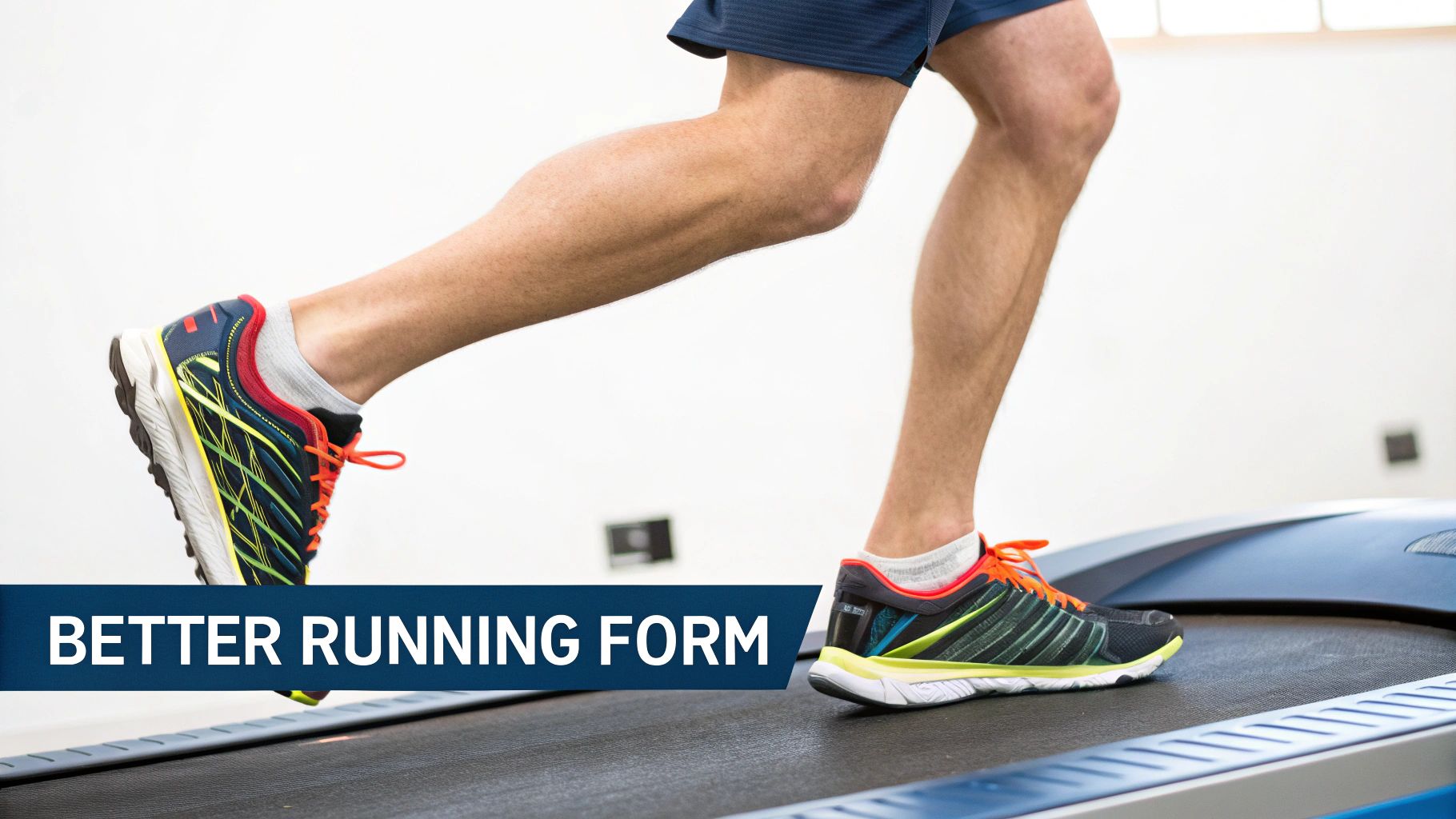
Instead of the heavy heel strike so common on motorized treadmills, the concave surface instinctively promotes a forefoot or midfoot strike. Think of it as a built-in running coach. As your foot lands higher up on the curve, you're prompted to pull the belt underneath you, firing up the right muscles and improving your gait. It’s a subtle tweak that makes a world of difference for your joint health and overall wellness.
Engaging More Muscle for Greater Health Benefits
On an air runner, you are the engine. This self-powered design forces your entire posterior chain—those powerful muscles in your glutes and hamstrings—to engage and drive every stride. A traditional treadmill does most of that propulsion for you, which can lead to a more passive, less effective run.
This ramped-up muscle activation is exactly why an air runner treadmill delivers such a demanding workout. In fact, studies show you can burn up to 30% more calories compared to running at the same speed on a motorized unit. It’s not just about working harder; it's about working smarter to improve cardiovascular health, boost your metabolic rate, and build functional strength.
By forcing you to power the movement, the air runner transforms a simple run into a full-body conditioning session, building functional strength that translates directly to real-world performance and resilience.
A Focus on Joint Preservation and Wellness
That shift to a forefoot strike does more than just fix your form—it actively protects your body. This running style dramatically reduces the jarring impact forces that travel up through your ankles, knees, and hips with every step.
For anyone managing chronic pain or coming back from an injury, this low-impact design is a game-changer for their wellness journey. Our guide on low-impact cardio machines dives deeper into this very concept.
Of course, to get the most out of it and prevent common running injuries, understanding the importance of foot health is key. Good foot mechanics are the bedrock of a safe and powerful stride.
By combining greater muscle recruitment with less joint stress, the air runner treadmill offers a superior path to fitness. You get a more intense workout that builds serious strength and endurance, all while safeguarding your body from the wear and tear of high-impact exercise. It's the ideal tool for building sustainable, lifelong wellness.
Don't Just Run: How to Use Your Air Runner for Complete Conditioning and Recovery
An air runner isn't just a treadmill—it's a dynamic performance and recovery machine. Because you're the motor, you have instant, total control over your speed. This simple fact unlocks a world of training and recovery protocols that aren't possible on a traditional motorized treadmill.
You can go from an all-out, explosive sprint to a slow, controlled walk in a heartbeat, without fumbling for a single button. This makes the air runner a beast for High-Intensity Interval Training (HIIT). It lets you redline your cardiovascular system to build your VO2 max with zero delay. The belt moves at the speed of you, creating a perfect feedback loop for both peak effort and immediate workout recovery.
Beyond the Workout: Active Recovery and Wellness
The health benefits don't stop when the hard work is done. The self-powered design makes an air runner an incredible tool for active recovery sessions. A slow, gentle walk on the curved deck is one of the best ways to promote blood flow to sore muscles, helping to flush out metabolic waste and ease stiffness after a strenuous workout.
This is where the air runner proves its worth as a complete wellness tool, and it’s a big reason why its role in modern fitness is exploding. The global treadmill market, which hit USD 6.05 billion, is on track to reach USD 10.18 billion. But within that massive market, it's manual treadmills like the air runner that are the fastest-growing segment, projecting a 5.89% CAGR. Their electricity-free operation and smaller footprint are changing the game. You can read the full analysis on treadmill market trends to see just how big this shift is.
Amplify Workout Recovery with Contrast Therapy
Ready to take your workout recovery to the next level? Pair your air runner sessions with contrast therapy. This technique involves alternating between hot and cold temperatures to boost circulation, reduce inflammation, and accelerate muscle repair.
Here’s a simple but seriously effective protocol:
- Warm-up: Start with a 5-10 minute light walk or jog on the air runner to get the blood pumping.
- Workout: Complete your main session, whether it's HIIT, a moderate run, or hill simulations.
- Cool-down: Follow up with a 5-minute slow walk on the air runner. This begins the active recovery process by gently bringing your heart rate down.
- Contrast Therapy: Immediately after your cool-down, begin your contrast therapy. This can involve alternating between a few minutes in a hot sauna or shower and a cold plunge or cold shower.
This one-two punch of active recovery on the air runner followed by targeted contrast therapy is a game-changer for your wellness. The cool-down walk actively flushes metabolic byproducts, and the hot/cold exposure then supercharges the healing process, reducing recovery time dramatically.
When you start thinking beyond just running, the air runner becomes an essential tool to build endurance, unleash power, and—most importantly—recover faster so you can stay consistent with your health goals. For more expert insights on optimizing your health, check out our MedEq Wellness Journal.
Key Features to Look for Before You Buy
Picking the right air runner treadmill is a big decision for your long-term health, whether you’re decking out a home gym or adding a new tool to your professional clinic. To make sure you get a machine that will stand up to years of hard work, you need to know exactly what to look for.
Let's start with the most important part: the running surface. You'll mostly see two kinds of belts. Slat belts are made of individual, interlocking pieces that give you a firm, almost road-like feel under your feet. They're absolute workhorses known for their durability. On the other hand, continuous belts offer a slightly softer landing but might need a bit more love and maintenance down the line.
Durability and Construction
The frame is the skeleton of the machine. You want a beast built from heavy-duty steel that feels completely solid, especially when you're going all-out in a sprint. A rock-solid frame doesn't just keep you safe; it cuts down on noise and vibration, making for a better wellness experience.
A great indicator of build quality is the maximum user weight. If you see a machine rated for 180 kg / 400 lbs, you know you’re looking at a tough, commercial-grade unit. When you’re building out a facility, you want to see how this piece fits into your ultimate fitness center equipment list and ensures it matches the quality of your other high-performance gear.
Console and Metrics Tracking
Even though the air runner is beautifully simple and motor-free, the console is your command center for tracking health progress. A good one will give you all the essential data you need to monitor your workouts and see improvements over time.
Make sure the display clearly shows these key metrics:
- Time, Distance, and Calories: The non-negotiables for any cardio workout.
- Pace and Watts: These are critical for measuring your real-time effort and power output.
- Heart Rate Connectivity: A must-have for anyone serious about training in specific heart rate zones to maximize health benefits.
- Interval Programs: Built-in timers (like 20 seconds on, 10 seconds off) make HIIT sessions a breeze to set up and execute.
This is where the air runner's versatility really shines, supporting everything from all-out sprints to gentle recovery walks and even muscle therapy.
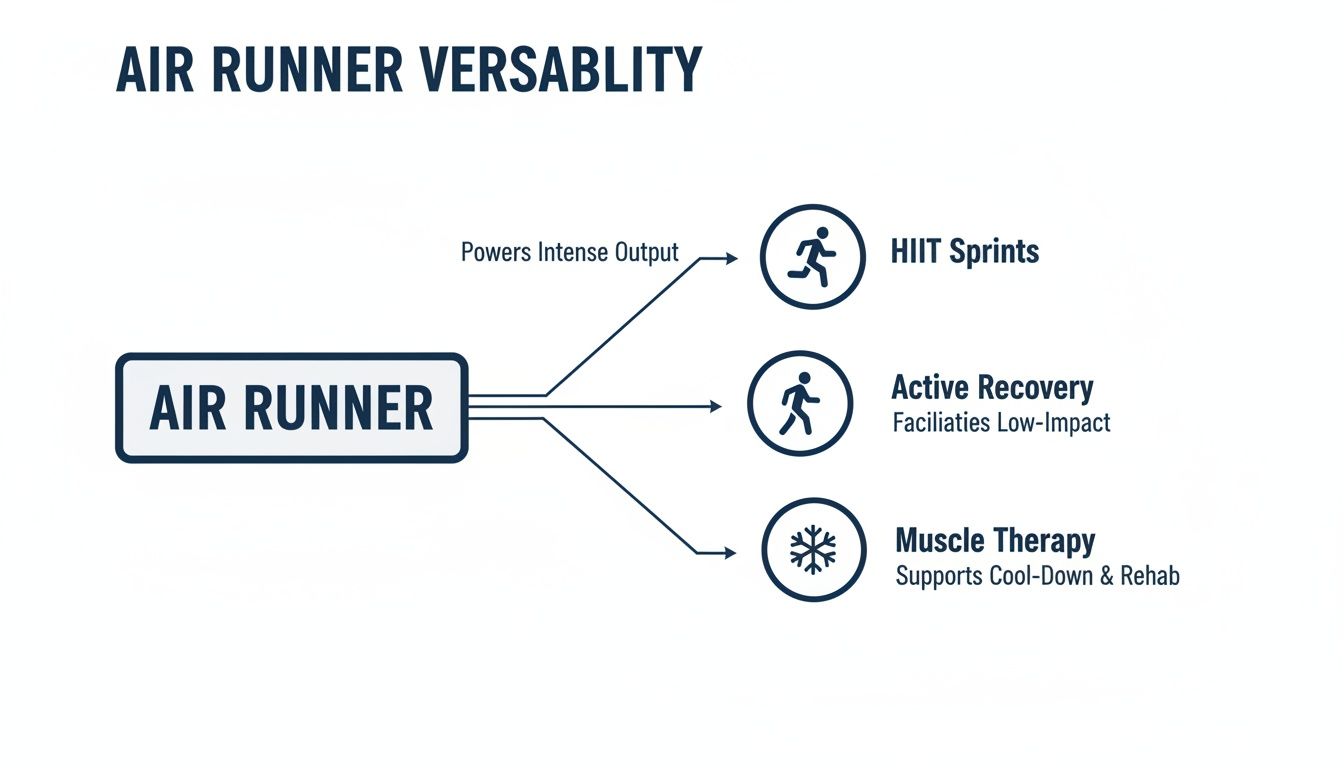
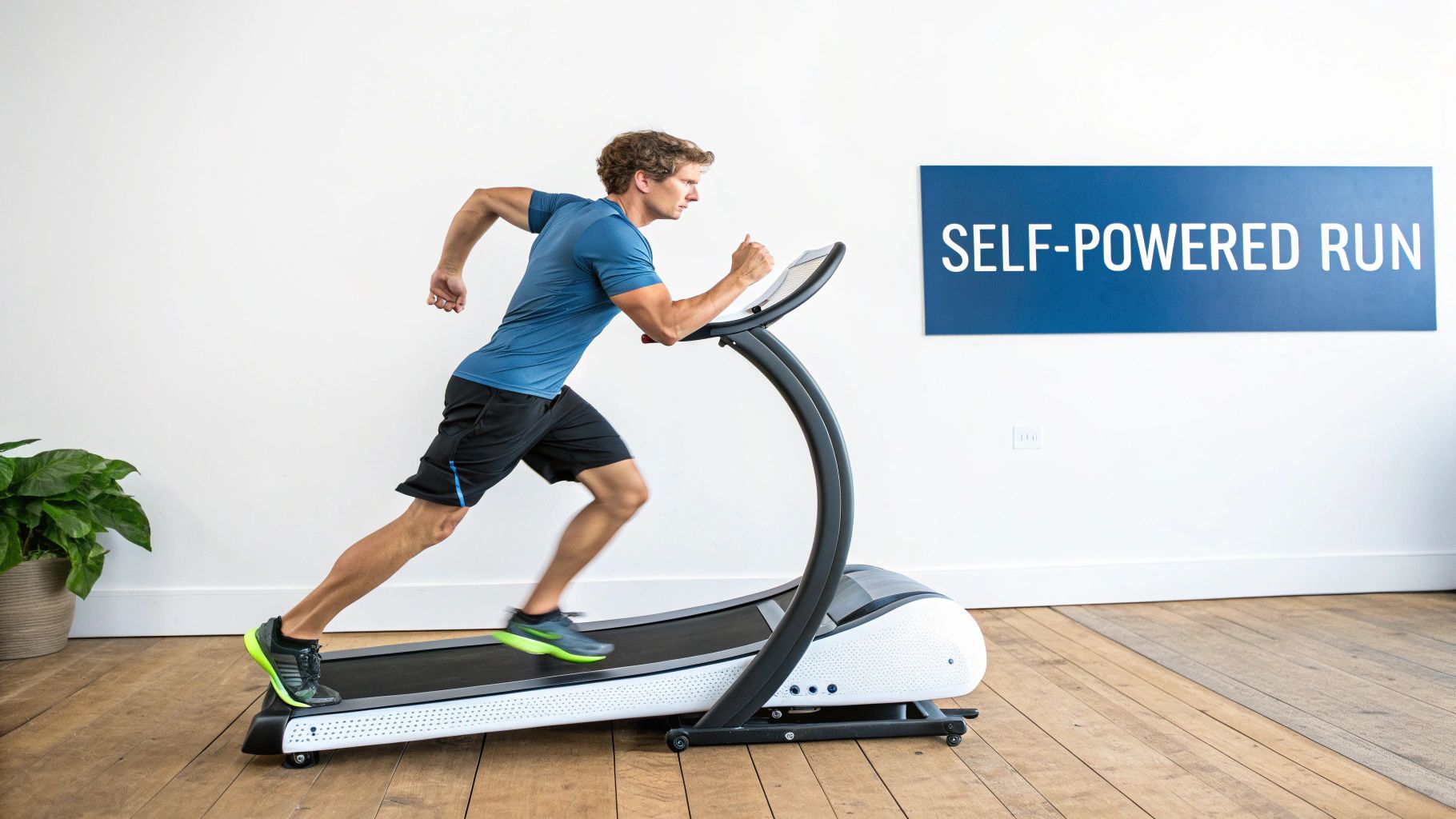
The image above perfectly illustrates how this single machine can be a cornerstone for peak performance, active recovery, and therapeutic movement—a complete solution for your wellness goals.
A great air runner balances raw, self-powered mechanics with smart, actionable data. The best models give you the feedback you need to train intelligently without complicating the pure, user-driven experience.
By keeping an eye on the belt type, frame quality, and console features, you can confidently pick an air runner that’s a perfect match for your training style and goals.
Simple Setup and Long-Term Maintenance
One of the best things about an air runner treadmill, and a key wellness benefit, is its simplicity. There's no motor, no tangled wiring, and no sensitive electronics to worry about. This makes putting it together a breeze compared to a traditional motorized treadmill.
Most air runners show up at your door partially assembled. You’ll likely just need to attach the handlebars, pop on the console, and adjust the leveling feet. You can usually get it done in under an hour with just a few basic tools.
Once it's built, you can forget about the headaches of motor burnouts or electrical shorts. That motor-free design is what makes these machines so reliable and cheap to own over the long haul. Instead of worrying about expensive repairs, you can focus on simple upkeep that will keep it running perfectly for years, supporting your health journey without interruption.
Your Minimal Maintenance Checklist
Keeping an air runner in top shape is surprisingly easy. A few simple habits are all it takes to protect your investment and ensure it's always ready for a workout.
Your entire maintenance routine really just comes down to three things:
- Wipe Down After Use: After each session, give the belt and frame a quick wipe with a damp cloth. This gets rid of sweat and dust before it can build up and affect the smooth glide of the belt.
- Check Hardware Periodically: Every few weeks, give the machine a quick once-over to make sure all the nuts and bolts are snug. Pay close attention to the handlebars and main frame joints, tightening anything that feels loose.
- Inspect the Belt: The running surface is the most important part of your air runner. Take a look at it regularly for any signs of damage or wear. Slat belts are built to last, but keeping them clean and aligned is crucial for a smooth run.
The beauty of an air runner lies in its mechanical integrity. With no motor to service and fewer electronic parts to fail, you are investing in a piece of equipment built for longevity, not disposability.
If you ever need a little guidance on belt care, the principles in our article on how to properly adjust a treadmill belt can be a great help. This straightforward approach to maintenance just goes to show why the air runner is such a reliable, fuss-free foundation for any fitness and wellness routine.
Got Questions About Air Runners? We've Got Answers.
Making a big investment in your health or clinic is a major decision, and it's natural to have a few questions. We get it. That's why we've put together answers to the most common things people ask about air runner treadmills.
Let's clear everything up so you can feel 100% confident about how this machine fits into your bigger wellness picture.
Are Air Runners Good for Beginners?
Absolutely. In fact, they might be one of the safest ways to start your fitness journey. Since the treadmill is totally self-powered, you are always in complete control.
There’s no intimidating motor dragging the belt along, so you never have to worry about the machine "running away" from you or frantically hitting an emergency stop. The belt moves when you move and stops when you stop. Simple as that. It’s an incredibly intuitive way to build confidence and learn to listen to your body, letting you progress at a pace that feels right for you, making it a perfect wellness tool.
How Loud Are These Things, Really?
This is a huge win, especially for home gyms and wellness spaces. Air runner treadmills are noticeably quieter than their motorized cousins. The only real sound you'll hear is the quiet whir of the belt and your own footsteps.
You can finally ditch the loud, droning hum of an electric motor. That means early morning or late-night workouts are back on the table without waking up the whole house or bothering your neighbors. It’s just a more peaceful way to train.
Can You Just Walk on an Air Runner?
Yes, and it’s a fantastic way to use it for health and recovery. The air runner is built for everything from a slow, deliberate walk to an all-out sprint. Because of the curved deck, you’ll engage more of your posterior chain—think glutes and hamstrings—even at a walking pace. It turns a simple walk into a surprisingly effective, low-impact workout that's great for your health.
This makes it a perfect tool for active recovery days, warm-ups, or for anyone who prefers walking for their cardio. You get the same user-controlled benefits whether you're pushing your limits or just taking it easy.
The biggest health benefit of a curved treadmill is the powerful combination of a higher calorie burn with a more natural, low-impact running form. It improves mechanics, reduces joint stress, and demands greater muscle activation, delivering a smarter and more efficient workout for long-term wellness.
At the end of the day, an air runner adapts to your goals, not the other way around. To keep learning how to optimize your health, check out more insights on our MedEq Wellness Journal.
Ready to Run on Your Own Terms?
An air runner isn't just another piece of cardio equipment. It’s a completely different way to approach your training—one that puts you, not a motor, in the driver's seat. It's built to bridge the gap between all-out effort and smart recovery, helping you hit your wellness goals, whether that’s a new PR or just feeling better day-to-day.
This machine forces you to be the engine. By doing so, it naturally improves your running form, reduces stress on your joints, and delivers a cardiovascular workout that a motorized treadmill just can't match. When you pair that kind of intentional training with smart workout recovery protocols like contrast therapy, you're not just exercising; you're building a more resilient, higher-performing body.
Choosing where you get your gear matters. When you work with a physician-led team, you’re not just buying a treadmill—you’re getting a partner who understands the science behind health and performance.
We’re here to help high performers restore energy, accelerate recovery, and elevate their daily capacity with equipment that actually works.
At MedEq Fitness, we hand-pick every tool we offer. With free shipping and a U.S.-based team ready to help, we make sure you have everything you need to get the most out of your investment in your health.
Want to learn more about building a smarter fitness and recovery routine? Keep exploring our insights over on the MedEq Wellness Journal.
Ready to feel the difference for yourself? Check out the top-tier air runners and recovery tools we have at MedEq Fitness.