Red Light Therapy Bed: Benefits, Models, and Easy Usage
Think of it like this: your body is a high-performance machine, and every single one of its trillions of cells runs on energy. What if you could plug directly into a power source to recharge those cells?
That’s essentially what a red light therapy bed does. It’s a full-body wellness experience designed to saturate your cells with specific, restorative wavelengths of light, kicking your body’s natural healing and energy production into high gear.
The Foundation of Full-Body Wellness
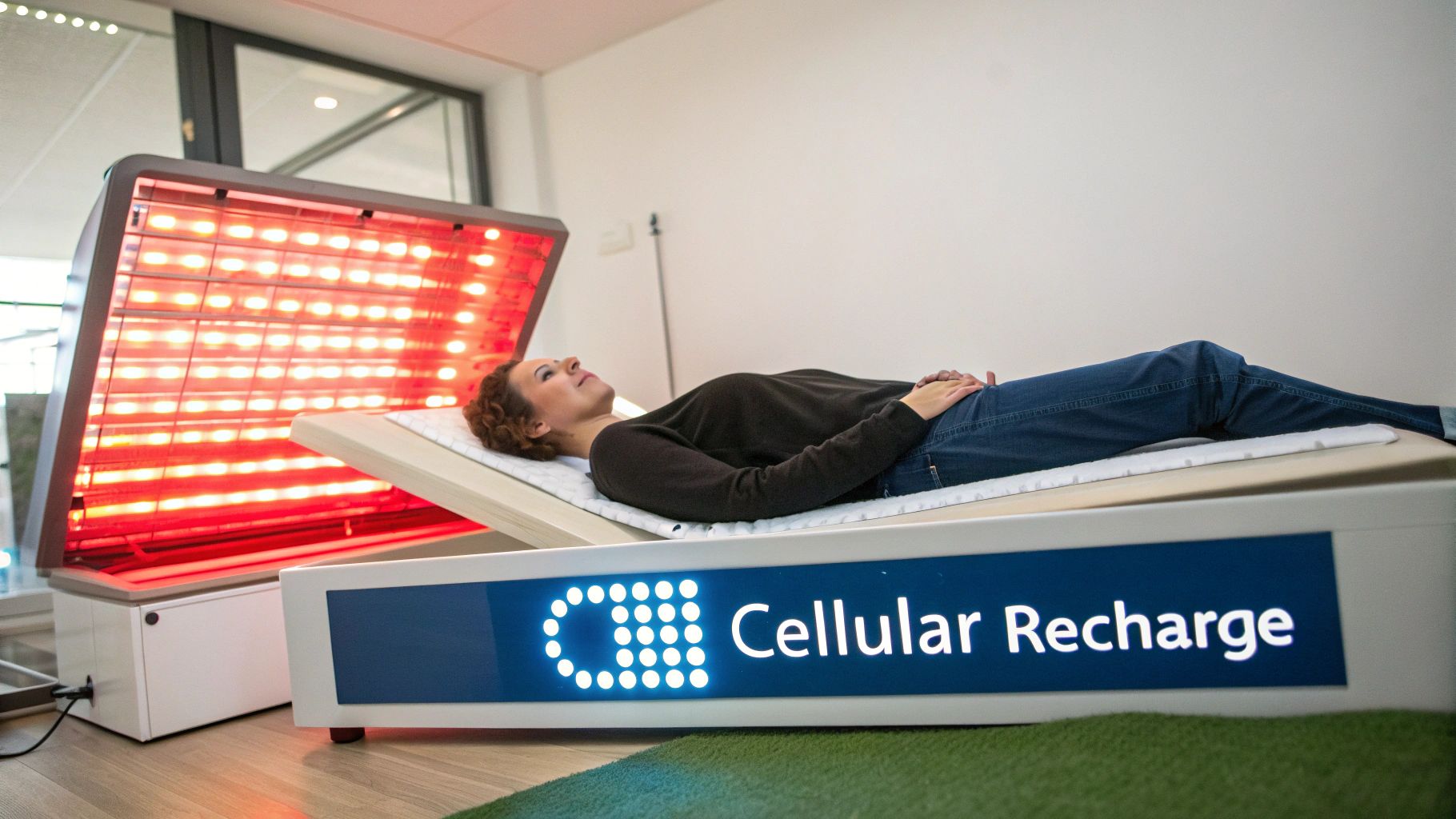
At first glance, it might look like a tanning bed, but its function is the complete opposite. Instead of harmful UV rays, a red light therapy bed surrounds your body with thousands of LEDs emitting clinically studied wavelengths of red and near-infrared (NIR) light.
This light penetrates deep into your tissues, where it’s absorbed by the mitochondria inside your cells—the tiny engines responsible for generating power. This process, known as photobiomodulation, gives your mitochondria a serious boost, prompting them to produce more adenosine triphosphate (ATP).
ATP is the fuel your body runs on. It powers every muscle contraction, every nerve impulse, and every single cellular repair job.
Why More Cellular Energy Changes Everything
When you elevate ATP production across your entire system, the ripple effects on your health and wellness are profound. This isn't just about feeling a little more energetic; it's about providing your body with the fundamental resources it needs to heal, perform, and thrive.
It’s the reason elite athletes, longevity-focused biohackers, and high-end wellness clinics are all investing heavily in this technology.
Here's a quick look at what this cellular recharge means in practical terms.
Red Light Therapy Bed At a Glance
| Primary Health Benefit | Key Mechanism | Expected Outcome for Users |
|---|---|---|
| Workout Recovery | Increased ATP in muscle cells helps clear metabolic waste and repair tissue. | Reduced muscle soreness, less inflammation, and faster return to peak performance after workouts. |
| Skin Rejuvenation | Stimulates fibroblasts to produce more collagen and elastin. | Improved skin tone, texture, and firmness; reduction in the appearance of fine lines. |
| Systemic Wellness | Supports mitochondrial function and reduces oxidative stress body-wide. | Better sleep quality, more consistent daily energy levels, and an overall sense of enhanced vitality. |
| Synergy with Contrast Therapy | Pre-warms tissues and boosts cellular energy before a cold plunge. | Amplifies the anti-inflammatory and resilience-building effects of hot/cold contrast protocols. |
This isn't a niche trend. The market for this technology reflects its growing demand, ballooning to an estimated $500 million valuation in 2025 and projected to hit $1.8 billion globally by 2033.
We're just scratching the surface here. To truly grasp why this technology is a game-changer for workout recovery and overall wellness, you need to understand the science behind it. For a much deeper dive, you should read our full guide on how red light therapy works to optimize your body from the inside out. For more health and wellness content, visit our Blog at https://medeqfitness.com/blogs/medeq-wellness-journal.
The Science of Cellular Rejuvenation
So, how can something as simple as light deliver such profound health benefits? It’s not magic—it's a fascinating biological process called photobiomodulation. A red light therapy bed doesn’t just work on the surface; it penetrates deep into your body to recharge you at the most fundamental level: your cells.
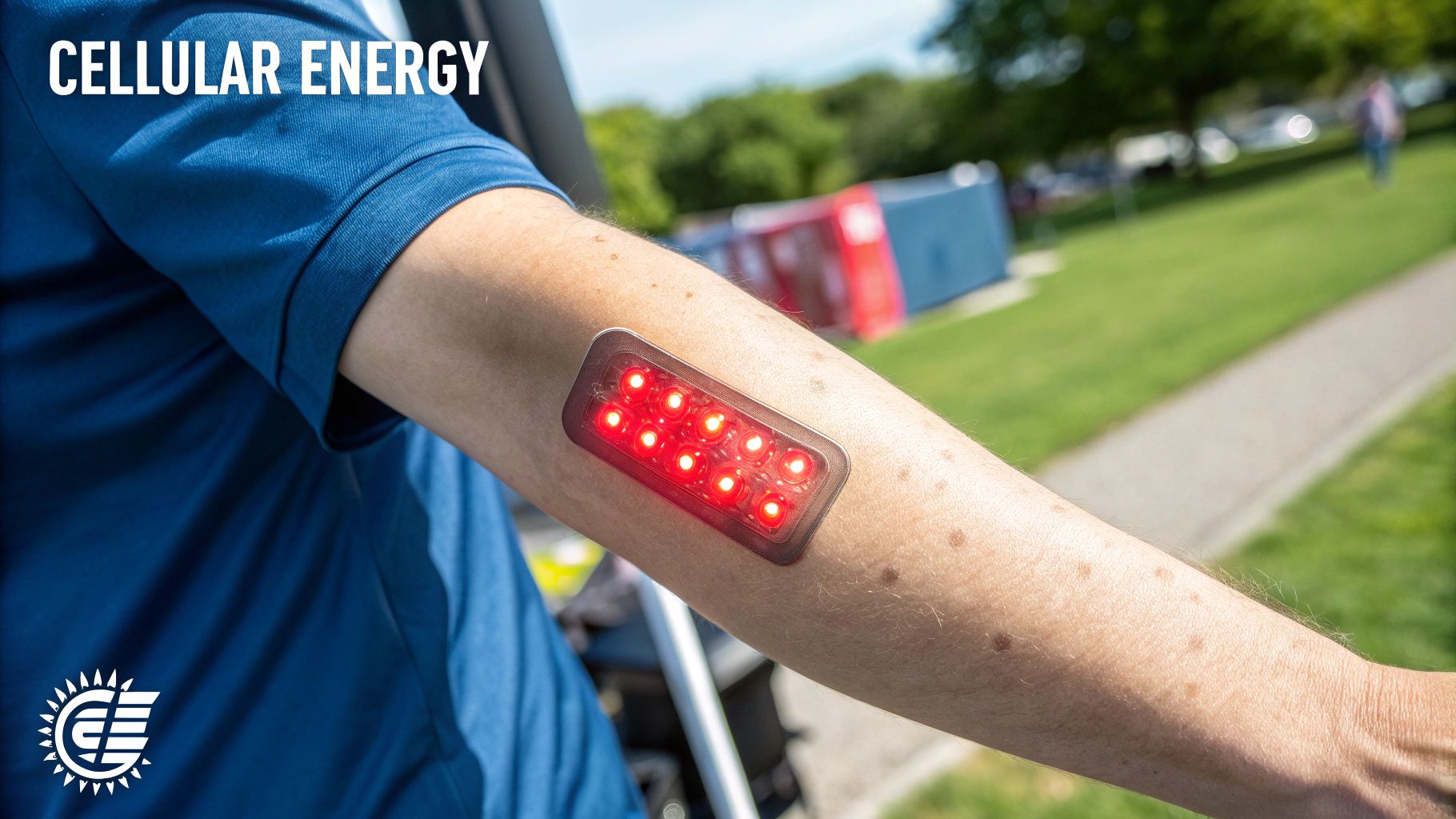
It all starts when specific, gentle wavelengths of red and near-infrared light pass through your skin. Unlike damaging UV light, these waves are restorative. They travel right through your tissue and interact directly with the mitochondria—the tiny powerhouses inside every single one of your cells.
Think of your mitochondria as little engines and a molecule called ATP (adenosine triphosphate) as the high-octane fuel they produce. The light from a therapy bed acts like a key in the ignition, activating a specific enzyme called cytochrome c oxidase. This one interaction kicks off a powerful chain reaction.
Igniting Your Cellular Engines
Once stimulated, your mitochondria fire up and go into overdrive, churning out significantly more ATP. This surge of cellular energy is the real secret behind every health benefit you get from red light therapy. When your cells have more fuel in the tank, they can do their jobs better and more efficiently.
And we're not talking about a minor tune-up. It's a system-wide upgrade that fuels:
- Faster Tissue Repair: Damaged muscle cells can mend themselves more quickly after a tough workout.
- Reduced Inflammation: Cells get the energy they need to manage and dial down inflammatory responses.
- Enhanced Overall Function: Every biological process, from brain function to circulation, simply runs better with more energy.
This growing understanding is a big reason why the global light therapy market, valued at $1.03 billion in 2025, is projected to hit $1.28 billion by 2030. You can track this growth yourself over on Mordor Intelligence.
"The general premise of red light therapy is the use of light energy to stimulate cell function. Two of the primary physiological responses elicited by red light therapy are enhanced circulation and increased production of mitochondria."
This fundamental boost in cellular energy creates powerful downstream effects that directly impact your wellness and workout recovery.
The Ripple Effect on Recovery and Wellness
Boosting ATP production does more than just supply raw energy; it also helps your body fight back against oxidative stress. This is the cellular-level wear and tear caused by unstable molecules called free radicals, which damage cells and contribute to aging and inflammation.
Red light therapy essentially helps your cells mount a stronger defense, neutralizing these damaging molecules more effectively. The result is an internal environment that is less inflammatory and far more primed for healing and rejuvenation. It's exactly why so many athletes rely on a red light therapy bed to bounce back faster from intense training.
On top of that, the whole process improves cell signaling. Healthy, energized cells communicate more clearly with each other, coordinating complex jobs like immune responses and tissue regeneration with greater precision. This improved communication is vital for maintaining your overall health and resilience. From skin health to muscle recovery, the science is clear—it all starts by empowering your cells. You can explore more about the foundations of red light therapy in our other detailed articles. For more health and wellness content, visit our Blog at https://medeqfitness.com/blogs/medeq-wellness-journal.
The Big Wins: Key Health Benefits of a Full Body Red Light Therapy Bed
Once your cells get that jolt of energy, the good stuff starts happening everywhere. It’s a ripple effect, touching everything from how you feel after a brutal workout to the look and feel of your skin. A full-body red light therapy bed isn’t just a one-trick pony; think of it as a systemic tune-up for your body's own healing, performance, and anti-aging machinery.
The results aren't just hype—they're real, they're measurable, and they're backed by a solid pile of scientific research. Let's dig into the most significant health and wellness upgrades you can expect from consistent, full-body sessions.
Bounce Back from Workouts Faster
If you train hard, you know that the time between workouts is where the magic happens. This is where red light therapy really shines for workout recovery. Intense exercise creates micro-tears in your muscles and a buildup of metabolic junk, which leads to inflammation and that all-too-familiar delayed-onset muscle soreness (DOMS).
A red light therapy bed gets right to the root of the problem. By cranking up circulation and handing your cells more ATP, it helps your body:
- Clear Lactic Acid Faster: Better blood flow means the gunk that makes you sore gets flushed out more efficiently.
- Calm Inflammation: It helps dial down the inflammatory response, so you get less of the excessive swelling that slows down healing.
- Speed Up Muscle Repair: Energized muscle cells have the fuel they need to patch themselves up and rebuild stronger and faster.
Bottom line? You bounce back quicker, feel less sore, and can get back to training with more in the tank. Studies have shown photobiomodulation can knock down inflammation markers like C-reactive protein and oxidative stress, which translates to better performance and fewer aches.
Rejuvenate Your Skin From the Inside Out
Sure, those little red light masks are popular, but a full-body bed is a whole different ballgame for skin health. Why? Because it treats your entire body. The same cellular mechanics that fix your muscles also work wonders for your skin.
The specific red and near-infrared wavelengths dive deep into the dermis, where they wake up specialized cells called fibroblasts. These are your skin's little factories, responsible for churning out collagen and elastin—the two proteins that give your skin its structure, bounce, and youthful firmness.
As we get older, our collagen production naturally takes a nosedive. That’s where fine lines, wrinkles, and sagging skin come from. Red light therapy is like flipping a switch, telling your body to ramp that natural collagen-making process back up.
Consistent sessions can lead to a visible difference in skin tone, a smoother texture, and a serious reduction in the signs of aging all over—not just on your face. While red light therapy is a powerhouse, exploring other anti-aging treatments can give you a well-rounded strategy for maintaining a youthful appearance.
Find Natural Relief from Pain and Inflammation
Dealing with chronic pain from things like osteoarthritis or a nagging lower back can be a daily grind. Red light therapy offers a non-invasive, drug-free way to manage that discomfort. Its knack for reducing inflammation and boosting circulation helps soothe aching joints and tissues.
By driving more blood flow to painful spots, it delivers a fresh supply of oxygen and nutrients while simultaneously carting away the inflammatory molecules causing the trouble. This creates the perfect environment for healing, bringing serious relief for many people without the side effects that come with popping pills.
The Ultimate Combo: Contrast Therapy Synergy
Want to take your workout recovery to the next level? Pair your red light therapy bed with cold therapy, like a cold plunge. This one-two punch is known as contrast therapy, and it creates a powerful wellness effect that’s way more than the sum of its parts.
Here’s how they work together as a team:
- Red Light Therapy (Pre-Plunge): A session before you get in the cold "pre-warms" your tissues and floods your cells with ATP. It basically preps your body for the shock of the cold, making the whole experience more effective and a bit less brutal.
- Cold Plunge: The intense cold clamps down on your blood vessels (vasoconstriction), pushing blood from your limbs to your core and putting a stop to inflammation in its tracks.
- Post-Plunge Rebound: As you warm back up, a rush of oxygen- and nutrient-rich blood floods back into your tissues, amplifying the healing process that the red light kicked off.
This combination of supercharged cellular energy followed by a massive anti-inflammatory signal creates a recovery protocol that builds resilience and speeds up healing way beyond what either therapy could do on its own. To keep learning about game-changing wellness strategies, check out more articles on our MedEq Wellness Journal. For more health and wellness content, visit our Blog at https://medeqfitness.com/blogs/medeq-wellness-journal.
How To Choose The Right Red Light Therapy Bed
So, you're ready to bring the power of full-body photobiomodulation into your home or clinic? Awesome. Choosing the right red light therapy bed can feel like a major decision, but once you know what to look for, it's actually pretty straightforward.
The key is to cut through the marketing fluff and focus on the technical specs that actually matter. This isn't just about buying another piece of fitness equipment; it's a direct investment in your cellular health. Your goal is to find a bed that delivers the right kind of light at the right intensity to get you real, noticeable results—whether that’s crushing your workout recovery times, rejuvenating your skin, or just feeling more energized every day.
Decoding The Critical Specifications
When you start comparing different beds, you’ll run into a few technical terms that make all the difference. Get these right, and you're golden.
-
Wavelengths (Red and NIR): To get the most bang for your buck, you need a bed that delivers both red light (usually in the 630-660 nm range) and near-infrared (NIR) light (around 810-850 nm). Think of it this way: red light works wonders on the surface for skin health, while NIR penetrates deep to reach muscles, joints, and internal tissues. Having both gives you the complete package for full-body health benefits.
-
Irradiance (Power Density): This is just a fancy term for the amount of light energy hitting your body, measured in mW/cm². A higher irradiance means more light is delivered in less time, making your sessions shorter and more potent. A quality bed should have enough juice to spark a real therapeutic response without overdoing it.
-
Total Energy Delivery (Joules): This is the total "dose" of light your body soaks up in a session. It’s a simple calculation: the bed's power (irradiance) multiplied by your session time. A well-designed bed lets you hit that effective energy dose in a reasonable timeframe, typically 10-20 minutes.
This flowchart can help you map your main wellness goals to the right therapeutic approach.
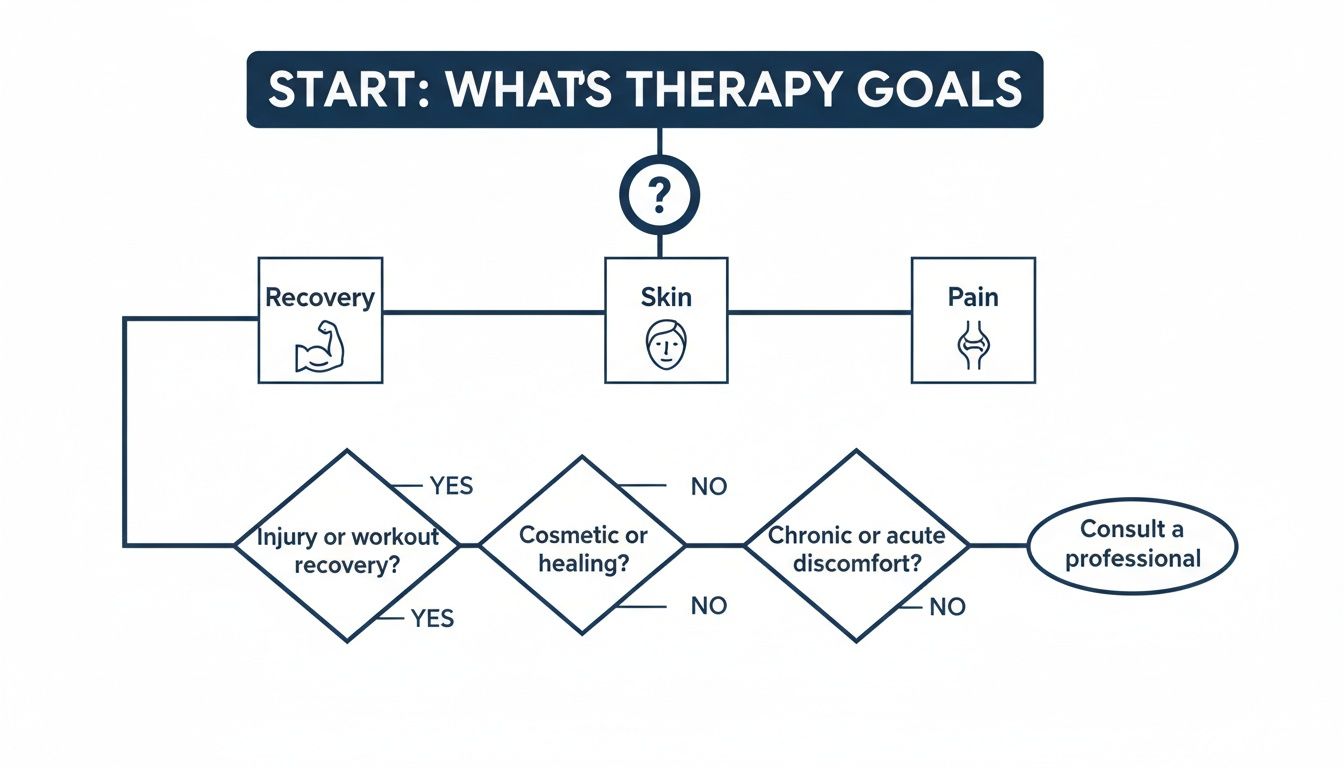
As you can see, whether your primary focus is workout recovery, skin rejuvenation, or pain management, red light therapy offers a specific pathway to support your wellness journey.
Home Use vs Professional Clinic Models
Not all red light therapy beds are built the same. They're typically designed for two very different environments: your home or a busy professional clinic. Understanding the distinction is key.
For those building a complete home wellness sanctuary, it's also worth looking at integrated solutions like a full spectrum infrared sauna with medical-grade red light therapy to see how different modalities can work together.
Here’s a quick breakdown to help you decide which type of bed fits your needs.
Home Use vs Professional Clinic Red Light Therapy Beds
| Feature | Ideal for Home Use | Ideal for Professional Clinics |
|---|---|---|
| Build Quality | Built tough for regular use by you and your family. | Heavy-duty, industrial-grade construction to handle back-to-back sessions all day, every day. |
| LED Density | Solid coverage and power, optimized for effective personal sessions. | Maximum LED density for the highest power output and the shortest possible session times. |
| Customization | Simple, user-friendly controls for session time and basic settings. | Advanced controls for pulsing specific wavelengths, adjusting intensity, and programming client protocols. |
| Safety Features | Essential safety marks like FDA registration for peace of mind. | Multiple, rigorous safety and electrical certifications required for commercial operation. |
The move toward powerful at-home wellness tools isn't just a trend; it's an explosion. The U.S. red light therapy market, led by full-body beds and panels, is projected to more than double from $590 million in 2025 to a staggering $1.32 billion by 2031. This tells you everything you need to know about the growing demand for pro-level recovery right at home.
Ultimately, the best red light therapy bed is the one that lines up with your goals, budget, and how you plan to use it. For a deeper dive into specific models, check out our in-depth red light therapy device reviews to get all the details you need to make a confident choice. For more health and wellness content, visit our Blog at https://medeqfitness.com/blogs/medeq-wellness-journal.
Your Game Plan: Red Light Therapy Protocols for Specific Goals
Getting the most from your red light therapy bed isn’t about just lying in it—it’s about having the right game plan. There’s no one-size-fits-all answer here. The best results come from tailoring your session duration, frequency, and intensity to exactly what you want to achieve.
Think of it like a personalized training program. The routine for building raw strength is completely different from the one for marathon endurance. The same logic applies to light therapy. Whether you’re chasing faster workout recovery, smoother skin, or relief from nagging pain, you need a specific approach to get the job done.
This guide translates the science into a simple action plan, giving you clear, effective protocols to use your device safely from day one.
The Protocol for Accelerated Workout Recovery
After a brutal workout, your body has one mission: repair. You need to tamp down inflammation, clear out metabolic junk, and get to work rebuilding muscle tissue. To do that, your cells need a serious dose of light energy to fuel the recovery process.
A longer, more powerful session is the ticket here. It’s all about driving that light deep into the muscle tissue to make sure the mitochondria get the boost they need to manage oxidative stress and build you back stronger.
- Session Duration: 15-20 minutes. This gives the near-infrared light enough time to reach deep muscle groups and kick off a strong therapeutic response.
- Frequency: 3-5 times per week. Hit it within a few hours post-workout if you can. Consistency is what keeps delayed-onset muscle soreness (DOMS) at bay.
- Why It Works: Longer exposure delivers more total energy (joules), which is exactly what your body needs to patch up the micro-tears in muscle fibers and flush out inflammatory molecules.
This protocol helps you bounce back faster, cuts down on soreness, and gets you ready to hit your next session feeling recovered and ready to go.
When it comes to post-exercise recovery, research has shown that photobiomodulation can significantly reduce markers of inflammation and oxidative stress, leading to better performance and less muscle soreness.
Want to supercharge this? Try pairing it with contrast therapy. A red light session followed by a cold plunge creates an incredible one-two punch for workout recovery. The red light energizes the cells, and the cold delivers a powerful anti-inflammatory signal.
The Protocol for Skin Rejuvenation and Collagen Production
When the goal is healthier, younger-looking skin, the strategy changes. Your skin cells are right on the surface and actually respond better to shorter, more frequent sessions. Blasting them with too much energy can backfire. The goal is gentle, consistent stimulation to wake up your body’s collagen and elastin factories.
This isn’t about deep penetration; it’s about giving the fibroblasts in your dermis a consistent nudge to stay active.
- Session Duration: 10-12 minutes. This is the sweet spot for stimulating skin cells without overdoing it.
- Frequency: 4-6 times per week. Skin cells turn over pretty quickly, so more frequent sessions help keep that collagen-building momentum going.
- Why It Works: Shorter, regular sessions keep your fibroblasts in an active state. This promotes the steady production of the proteins that give your skin its firmness and bounce, leading to gradual but noticeable improvements in tone, texture, and fine lines.
The Protocol for Chronic Pain and Inflammation Management
If you're dealing with chronic issues like arthritis or a back that just won't quit, the focus shifts to calming inflammation and boosting circulation. This requires an approach that’s both potent enough to make a difference and consistent enough to maintain it.
You need to deliver enough energy to dial down inflammatory signals and get blood flowing, and you need to do it regularly to keep the pain from creeping back in.
- Session Duration: 12-15 minutes. This is long enough for the light to penetrate into joints and deeper tissues to create a real anti-inflammatory effect.
- Frequency: 5-7 times per week. For chronic conditions, daily sessions often deliver the best results for managing persistent inflammation and providing lasting relief.
- Why It Works: Hitting it consistently helps maintain lower levels of inflammation and promotes steady circulation to painful areas. This brings in fresh oxygen and nutrients while helping to carry away waste, creating a much better environment for long-term healing and pain management.
By tailoring your approach, you turn your red light therapy bed from a passive device into a precision tool for hitting your wellness goals. To dive deeper into advanced wellness strategies, check out the MedEq Wellness Journal. For more health and wellness content, visit our Blog at https://medeqfitness.com/blogs/medeq-wellness-journal.
Red Light Therapy Bed FAQs
Diving into new wellness tech always brings up a few questions. As you think about bringing a red light therapy bed into your life, it's totally normal to have questions about how it all works. Here are some quick, no-nonsense answers to the questions we hear most often.
How Long Until I See Results?
This really depends on what you're trying to achieve. Some effects, like better sleep or less muscle ache after a hard workout, can show up pretty fast—sometimes after just a handful of sessions. Many people report a quick lift in energy and just feeling better overall.
But for the benefits that rely on deep cellular change, like boosting collagen for skin health, you need to be more patient. Seeing real, noticeable improvements in your skin's tone and firmness usually takes consistent use over several weeks, or even a couple of months.
Is This the Same as a Tanning Bed?
Not at all—and this is a really important distinction. Tanning beds blast your skin with damaging ultraviolet (UV) light, which is known to cause cell damage and make you look older, faster.
A red light therapy bed does the complete opposite. It uses specific wavelengths of red and near-infrared light that are beneficial, helping your cells repair and regenerate without any harmful UV rays.
Can I Use It Too Much?
With red light therapy, more isn't necessarily better. It works based on a principle called the biphasic dose response. Think of it like watering a plant: too little water and it won't grow, but too much will drown it. There's a sweet spot.
Overdoing it can actually cancel out the benefits. That's why sticking to the recommended session times and frequency is key to getting the results you want.
Do I Need to Wear Eye Protection?
While the light itself isn't harmful to your eyes like UV light is, the LEDs in a high-quality therapy bed are incredibly bright. For your own comfort and safety, we always recommend wearing the provided blackout goggles during every session.
Exploring these topics is just the beginning. For more deep dives and expert guides, be sure to check out the MedEq Wellness Journal. For more health and wellness content, visit our Blog at https://medeqfitness.com/blogs/medeq-wellness-journal.