
A Complete Guide to Infrared Sauna Therapy
An infrared sauna is a modern cornerstone of wellness, using light to create warmth that heals from the inside out. Think of the sun's gentle heat on your skin—that's the same idea. It provides a deep, penetrating warmth at much lower temperatures (120-140°F) than a traditional sauna, making it a more comfortable and effective way to supercharge your health, wellness, and workout recovery.
Your Guide to Modern Recovery and Wellness
Forget the scorching hot air of old-school saunas. An infrared sauna works on a completely different principle, and it's quickly becoming a foundational tool in modern wellness and recovery protocols.
Instead of heating the room to extreme temperatures (often over 180°F), infrared technology uses advanced heaters to emit specific wavelengths of light. This light safely penetrates your skin to warm your body's core directly. The result? A deep, productive sweat at a far more manageable air temperature. This gentler environment lets you stay in longer, relax more deeply, and soak up the full spectrum of therapeutic health benefits.
The Core Purpose of Infrared Heat
So why are so many athletes, clinics, and everyday wellness seekers turning to infrared? It all comes down to enhancing the body’s natural systems. The main goals are simple and powerful, focused on holistic health and peak performance:
- Accelerated Workout Recovery: The deep heat boosts blood flow, getting more oxygen to sore, tired muscles. This helps flush out metabolic waste, reduce soreness, and speed up tissue repair after a tough session.
- Enhanced Circulation and Detoxification: By raising your core temperature, you trigger a profound sweat. This is your body's most effective natural process for expelling toxins and impurities, giving your detoxification pathways a serious helping hand for overall wellness.
- Profound Relaxation and Stress Reduction: The soothing, radiant warmth calms the nervous system, helps lower cortisol (the stress hormone), and eases you into a state of deep relaxation. It’s a win for both your mind and body.
The momentum behind personal wellness tech is undeniable. The global infrared sauna market grew from $670.9 million in 2021 and is on track to hit $863.1 million by 2025. This isn't just a trend; it's a clear shift toward integrating powerful health tools into our daily lives. You can learn more about this market growth and what's driving it.
This guide is your starting point for understanding how infrared technology works and how to use it to elevate your health. For more deep dives into the science of wellness, check out the MedEq Wellness Journal.
How Infrared Technology Actually Works
Ever wonder how standing in the sun feels so warm, even on a cool day? That's the core principle behind an infrared sauna. You're not feeling the hot air; you're feeling your body absorb invisible infrared light from the sun.
An infrared sauna does the exact same thing, just in a controlled, therapeutic environment. Instead of heating the air like a traditional sauna (think of it like a convection oven), infrared saunas use special heaters that emit light waves. These waves penetrate your body directly, heating you from the inside out. This triggers a deep, productive sweat at much lower, more comfortable temperatures, unlocking a new level of health benefits.
The Three Wavelengths of Wellness
Here's where it gets interesting. Not all infrared is created equal. The real magic comes from using different wavelengths, each with a unique job. Full-spectrum saunas blend these three to give you a comprehensive treatment, hitting different depths of the body for a powerful, layered effect.
Think of it as a toolkit for your body's wellness:
- Near-Infrared (NIR): This is the shortest wavelength, working just beneath the skin's surface. Its main gig is skin health—boosting rejuvenation, improving tone, and helping with wound healing and cell repair.
- Mid-Infrared (MIR): Going a bit deeper, MIR is a circulation powerhouse. By improving blood flow, it gets right to work on sore muscles and stiff joints, making it a game-changer for workout recovery.
- Far-Infrared (FIR): This is the longest wavelength, and it penetrates the deepest. FIR is what drives the profound detoxification benefits, raising your core body temperature to help release stored toxins and heavy metals. It’s also incredibly relaxing for the nervous system.
It's not just about heat. By using these specific wavelengths, an infrared sauna delivers targeted health benefits that go way beyond a simple sweat session. NIR, MIR, and FIR each have a specific mission, from skin renewal to deep muscle relief.
From Science to Real-World Results
Knowing the science is great, but what does it actually do? The unique properties of each wavelength translate directly into tangible health benefits that athletes and wellness enthusiasts are looking for. A session isn't just a passive activity; it's actively kicking off physiological processes that support your body’s own healing mechanisms.
This diagram shows how those scientific principles lead to real-world outcomes like better recovery, circulation, and detox.
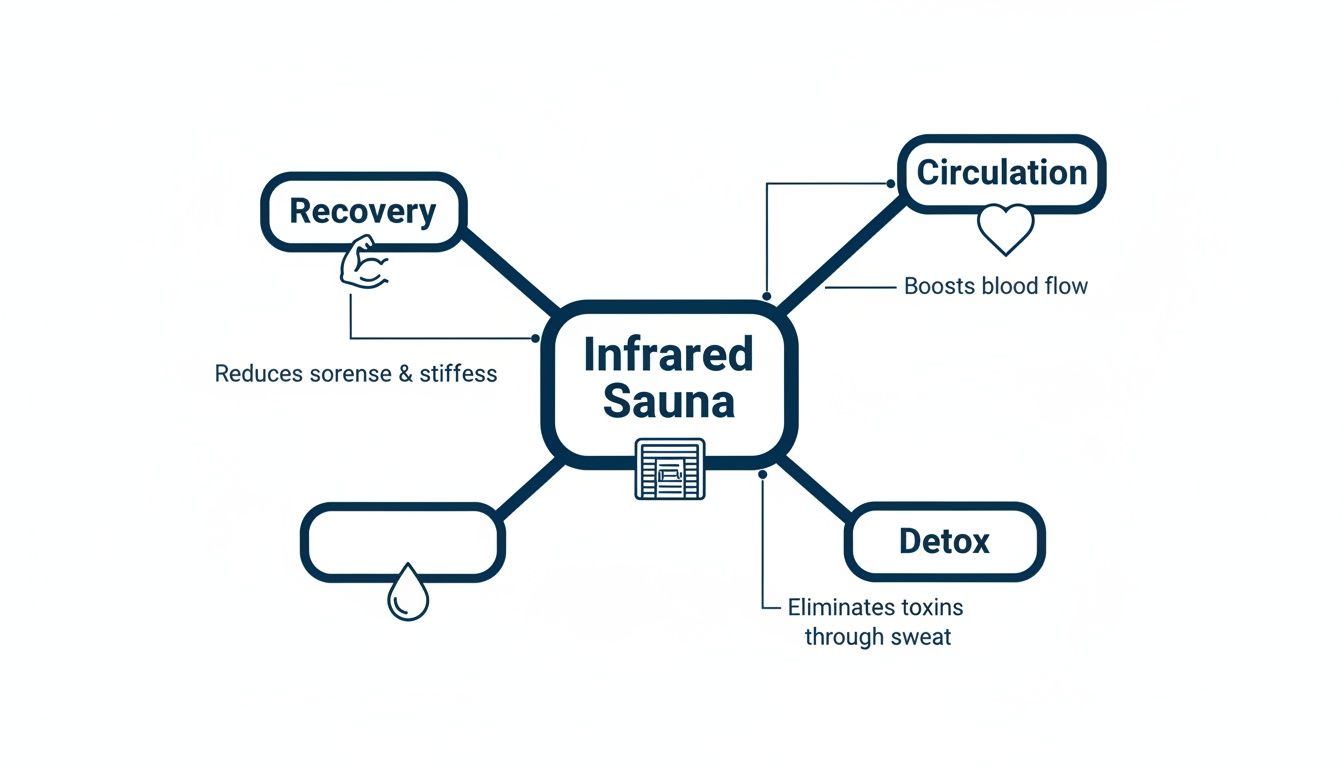
You can see the direct line from the technology to its impact on the functions that matter most for peak health and wellness. While NIR is a crucial part of this trio, it's not the only light-based therapy out there. If you're curious, you can see how different light spectrums are used for healing in our guide on how Red Light Therapy works.
Infrared technology has found its way into plenty of other everyday applications, too. For instance, the same principles are used in motion sensing light bulbs, which use passive infrared sensors to detect body heat. It's a perfect example of how reliable this science is, moving from the clinic right into our homes. For more wellness insights, visit the MedEq Wellness Journal.
The Science-Backed Health and Recovery Benefits
This is where the rubber meets the road—where the deep, penetrating heat of an infrared sauna turns into real health benefits for your body and mind. Using one consistently can set off a chain reaction of positive changes, making it a serious tool for anyone dedicated to their wellness and athletic performance. The health benefits go way beyond just a good sweat, touching everything from muscle repair and workout recovery to mental clarity.

Unlike a traditional sauna that just blasts you with hot air, infrared waves warm your body from the inside out. This deep, cellular-level warmth is what unlocks so many of the health advantages, especially when it comes to workout recovery.
Supercharge Your Workout Recovery
After a tough session, your muscles are desperate for oxygen and nutrients to start rebuilding. An infrared sauna session gives that whole recovery cycle a massive boost, helping you bounce back faster and with a lot less soreness.
The deep heat causes your blood vessels to open up in a process called vasodilation. This widening of your arteries and capillaries ramps up circulation, flooding tired muscles with oxygen-rich blood. This is absolutely critical for flushing out the metabolic junk like lactic acid that makes you sore.
By kickstarting circulation, an infrared sauna delivers a fresh supply of oxygen and nutrients straight to damaged muscle tissue. This not only cuts down on delayed onset muscle soreness (DOMS) but also speeds up the cellular repair work needed for muscle growth, making it a vital tool for workout recovery.
For athletes, this means less downtime between training days and a better ability to handle tough workouts. It turns recovery from a passive waiting game into an active, strategic part of your training. We get into even more detail on this in our deep dive on the sauna benefits for athletes.
A Deeper Level of Detoxification
Your liver and kidneys do most of the heavy lifting when it comes to detoxification, but sweating is a powerful backup system for getting rid of impurities. An infrared sauna makes you sweat on a completely different level than a traditional one because it raises your core body temperature so efficiently.
This isn't just surface sweat. It's a deep, purifying sweat that helps your body push out stored toxins, including heavy metals and environmental pollutants that build up over time. By supporting this natural cleansing, you lighten the toxic load on your system, which can translate to clearer skin, more energy, and an overall boost to your wellness.
Boost Cardiovascular Health and Endurance
Believe it or not, a regular infrared sauna session is like a passive cardio workout. As your core temperature climbs, your heart rate increases to pump more blood to your skin and cool you down.
This process gives your heart a gentle but effective workout, improving cardiac output and strengthening your cardiovascular system over time. Research has shown that consistent sauna use can help lower blood pressure and improve the flexibility of your arteries, contributing to better long-term heart health. Of course, a well-rounded approach is key, and some people also explore improving their heart health through supplements as part of their broader wellness strategy.
Master Your Stress with Contrast Therapy
One of the most potent ways to use an infrared sauna for wellness is to pair it with cold therapy. This is called contrast therapy, and it involves moving from the intense heat of the sauna straight into a cold plunge or an ice-cold shower.
This rapid switch from hot to cold creates a unique and powerful response in your body. The infrared heat opens up your blood vessels, and the cold shock immediately constricts them. This powerful "pumping" action sends circulation into overdrive, tamps down systemic inflammation, and trains your nervous system to become more resilient to stress.
Benefits of Contrast Therapy:
- Amplified Inflammation Reduction: The hot-to-cold switch helps flush inflammation and swelling right out of your joints and muscles.
- Enhanced Mood and Focus: That cold exposure triggers a release of norepinephrine, a neurotransmitter that sharpens focus, boosts mood, and makes you feel alert.
- Builds Mental Resilience: Willfully moving between extreme temperatures is a form of mental training. It teaches your mind to handle discomfort and stress far more effectively.
When you combine an infrared sauna with a cold plunge, you create a powerful synergy that takes the health benefits of both to a whole new level. You get faster workout recovery, a stronger immune response, and a more balanced state of mind.
Integrating Infrared Saunas Into Your Wellness Routine
Knowing the "why" behind infrared saunas is the easy part. The real challenge is figuring out how to weave this powerful wellness tool into your existing routine to get the results you're after.
Whether you're looking to accelerate workout recovery, get deeper sleep, or just give your overall health a boost, consistency is everything. This is your playbook for moving from theory to practice and building a sauna habit that actually works for you.
The first step, before you even open the door, is preparation. Think of it like a pre-workout routine—what you do beforehand sets the stage for a great session. And when it comes to saunas, hydration is non-negotiable.
You're going to sweat, and probably a lot more than you think. Aim to drink 16-20 ounces of water about an hour before you get in. This ensures your body is primed and ready to sweat efficiently. It’s also smart to keep a water bottle handy during and after to keep replenishing those fluids.
Crafting Your Ideal Sauna Protocol
There's no single "best" way to use a sauna. The right session length and frequency really come down to your goals, your experience level, and how your body feels. The golden rule? Start slow and listen to what your body is telling you.
A great starting point for beginners is 15-20 minutes at a moderate temperature, maybe three times a week. Once you get comfortable, you can gradually work your way up to 30-45 minutes and go more often, say four or five times a week. It's about consistency, not just cranking up the heat.
Here are a few templates you can adapt based on your wellness goals:
- For Workout Recovery: Jump in the sauna within an hour after you finish training. A 25-30 minute session will help drive blood flow to tired muscles, dial down inflammation, and kickstart the repair process.
- For Deep Relaxation and Sleep: An evening session is your best bet. Try for 30-40 minutes about an hour or two before you plan to go to bed. The gradual cool-down of your body after you get out is a powerful signal to your brain that it's time to sleep.
- For General Detoxification: For this, a longer session at a slightly lower temperature is perfect. A 35-45 minute session a few times a week will promote a deep, purifying sweat without putting too much stress on your system.
The Power of Contrast Therapy
Want to take your recovery and wellness to the next level? Try contrast therapy. This is where you alternate between the deep, penetrating heat of the infrared sauna and the invigorating shock of a cold plunge or even just a cold shower.
This rapid switch from hot to cold acts like a pump for your circulatory system, flushing out metabolic waste and inflammation like nothing else. The combination is a game-changer for athletes and anyone looking to seriously optimize their body's built-in recovery systems and overall health.
If you want to dive deeper into the science behind this incredible duo, check out our guide on the benefits of sauna and cold plunge therapy.
Safety First: Essential Guidelines
While infrared saunas are incredibly safe for most people, you have to respect the heat. Sticking to a few simple rules will ensure you have a good—and safe—experience every time.
Important Safety Reminders:
- Listen to Your Body: This is the most important rule. If you feel dizzy, lightheaded, or just "off," end your session. Pushing through discomfort is never the answer.
- Avoid Alcohol: Never, ever use a sauna after drinking. Alcohol dehydrates you and impairs your judgment, a dangerous combination with heat.
- Consult Your Doctor: If you're pregnant, have a heart condition, deal with low blood pressure, or have any other serious health concerns, please talk to your doctor before making the sauna a regular habit.
By following these guidelines and starting out slow, you can safely make this incredible wellness tool a core part of your health routine. For more tips and insights on optimizing your health, be sure to visit the MedEq Wellness Journal.
How to Choose the Right Infrared Sauna
So, you're ready to bring the power of infrared therapy into your home, gym, or wellness clinic. It’s a fantastic investment in your health and workout recovery protocols, but let's be honest—the market is flooded with options, and it can be tough to know where to start.
This guide cuts through the noise. We'll walk through the non-negotiables to make sure you land a high-quality unit that’s a perfect fit for your space and your wellness goals.

The first thing to look at? The heaters. They are the engine of the entire experience, and they determine the quality and effectiveness of every single session.
Comparing Carbon and Ceramic Heaters
The heater type dictates how infrared light actually reaches your body. The two main players are carbon and ceramic, and they work quite differently.
- Carbon Heaters: Think of these as large, flat panels that cover a lot of surface area inside the sauna. Their biggest win is even heat distribution at a lower surface temperature. This creates a gentle, consistent warmth that completely surrounds you, making for longer, more comfortable sessions perfect for deep detox and relaxation.
- Ceramic Heaters: These are usually rod-shaped and get much hotter on the surface. They produce a more intense, direct heat. While they get the job done, the heat can feel concentrated in certain "hot spots" instead of providing that even, ambient feeling.
Many of the best modern saunas now use a hybrid system, combining both heater types to give you a true full-spectrum experience that delivers the health benefits of all infrared wavelengths.
The goal is to get the most effective and evenly distributed heat possible. Carbon heaters generally have the edge here, providing a consistent, full-body warmth that maximizes therapeutic benefits without creating uncomfortable hot spots.
Prioritizing Non-Toxic Materials
When you're in a sauna, the heat causes the materials around you to "off-gas," or release compounds into the air. This is why your choice of wood is so critical. You want to be breathing clean air, not chemicals.
Stick to saunas built from solid, non-toxic woods. Your best bets are:
- Canadian Hemlock: This is a go-to choice for a reason. It's durable, has a nice light color, and doesn't have a strong scent. It’s a non-allergenic, non-toxic wood that handles the constant cycle of heating and cooling like a champ.
- Red Cedar: Famous for its natural ability to resist moisture and decay, cedar also has that classic, pleasant aroma. It's also naturally anti-fungal and anti-bacterial.
What should you avoid? Plywood or any other engineered woods. The glues and adhesives holding them together can release nasty volatile organic compounds (VOCs) when heated.
Understanding EMF and ELF Emissions
Electromagnetic fields (EMF) and extremely low-frequency (ELF) fields are invisible energy fields that come from electrical devices, including sauna heaters. We're exposed to them all the time, but it’s smart to minimize them—especially in a wellness tool you're using for your health.
Reputable infrared sauna brands have engineered their heaters to produce ultra-low EMF and ELF levels. When you're shopping, look for companies that are transparent about their emissions and can show you third-party testing results. A low-EMF infrared sauna is a non-negotiable feature for a top-tier unit, ensuring your sessions are purely therapeutic.
Practical Considerations for Your Space
Beyond the tech specs, you need a sauna that actually works for your life and your location. Don't forget to think about the practical side of things.
- Size and Capacity: How many people will use it at once? Models range from personal one-person units that are perfect for a home gym to larger four or six-person saunas built for clinics and performance centers.
- Assembly and Installation: Most home saunas are designed for a simple two-person assembly. Check for models that use a simple clasp or buckle system—it can make setup a breeze.
- Warranty and Support: A solid warranty is a great sign that a manufacturer stands behind its product. Look for comprehensive coverage on the heaters, cabinetry, and electrical components, and make sure the company has a responsive, U.S.-based customer support team.
The demand for these wellness tools is exploding. In fact, Asia Pacific is leading the charge as the fastest-growing infrared sauna market, projected to capture 28.3% of the global share by 2025. This just shows the worldwide shift toward investing in high-quality wellness tools for both home and clinical use. You can dive deeper into this growth in this detailed industry report.
To help you put all this information into action, we’ve created a simple checklist. Use this as your guide when comparing different models to make sure you cover all your bases.
Infrared Sauna Buyer's Checklist
| Feature to Consider | What to Look For | Why It Matters |
|---|---|---|
| Heater Type | Carbon or hybrid (carbon/ceramic) panels | Provides the most even heat distribution for full-body coverage and a more comfortable, effective session. |
| Wood Type | Solid Canadian Hemlock or Red Cedar | Ensures no toxic glues or chemicals are released (off-gassed) when the sauna is heated. |
| EMF/ELF Levels | Third-party tested ultra-low or near-zero emissions | Minimizes exposure to unwanted electrical fields, keeping your sessions purely therapeutic and safe. |
| Construction | Thick, solid wood panels with secure interlocking systems | Guarantees durability, better heat retention, and prevents heat loss for an efficient session. |
| Size & Capacity | A size that fits your space and user needs (1-6 person) | Ensures the sauna is practical for your intended use, whether for personal recovery or for a commercial setting. |
| Safety Certifications | UL or ETL listed for electrical components | Verifies that the sauna meets rigorous, third-party safety standards for electrical safety and reliability. |
| Warranty | Lifetime or multi-year warranty on heaters, controls, and wood | A strong warranty reflects the manufacturer's confidence in their product and protects your investment. |
| Customer Support | U.S.-based, responsive support team | Ensures you can get help with assembly, troubleshooting, or warranty claims when you need it. |
Choosing the right sauna is a major step in upgrading your recovery toolkit. By focusing on these key features, you can confidently invest in a unit that will deliver safe, effective, and reliable performance for years to come.
For more articles on optimizing your health and recovery, be sure to explore our MedEq Wellness Journal.
Your Common Infrared Sauna Questions Answered
Stepping into the world of infrared saunas always brings up a few questions. We get it. Below are some clear, straight-up answers to the most common things people ask, designed to help you build an effective wellness practice from day one.
Think of this as the final piece of the puzzle, reinforcing what we've covered and giving you the practical know-how to get the most out of your sessions.
How Long Should My Sauna Session Be?
When you're just starting out, ease into it. A great starting point for beginners is a 15-20 minute session at a comfortable temperature. This gives your body time to acclimate to the deep, penetrating heat without feeling overwhelmed.
Once you're more comfortable, you can gradually work your way up to 30-45 minutes. The golden rule is to always listen to your body—if you start feeling lightheaded or off, it’s time to hop out. Remember, consistency beats intensity for long-term health benefits.
What's the Difference Between Carbon and Ceramic Heaters?
The type of heater is a big deal because it determines how the heat actually gets to your body.
- Carbon Heaters: These are large, flat panels that create a wide, even heat. They run at a lower surface temperature, which results in a gentle, enveloping warmth. This makes them perfect for longer, more relaxing sessions aimed at detox and stress relief.
- Ceramic Heaters: These are usually rod-shaped and kick out a more intense, direct heat from a smaller surface area. They’re great for a more targeted heat experience.
Many of the best modern saunas actually use a hybrid of both. This "full-spectrum" approach gives you the best of both worlds in a single session, maximizing your wellness gains.
Can I Use an Infrared Sauna Every Day?
For most healthy adults, yes—daily infrared sauna use is generally safe. Because they operate at lower temperatures than traditional saunas (120-140°F vs. 180°F+), they put a lot less stress on your body.
A daily 20-30 minute session can be an incredible addition to your wellness routine for managing stress, dialing in your sleep, and accelerating workout recovery. That said, it's always smart to check with your doctor before starting any new health protocol, especially if you have pre-existing conditions.
An infrared sauna session feels more like a prescriptive wellness tool engineered to boost your mood and productivity. A daily habit can become a cornerstone of self-care, providing a dedicated time for mental and physical renewal.
How Soon After a Workout Should I Use the Sauna?
For maximum workout recovery benefits, timing is key. The sweet spot is right after you've finished your workout and had a chance to cool down a bit.
Waiting about 15-30 minutes post-exercise lets your heart rate settle before you introduce heat. Jumping in the sauna then helps relax your muscles, boost circulation to deliver nutrients for repair, and seriously cut down on delayed onset muscle soreness (DOMS).
For more in-depth articles on optimizing your wellness journey, be sure to explore the MedEq Wellness Journal.
Ready to bring the powerful health benefits of infrared therapy into your daily routine? At MedEq Fitness, we offer a curated selection of professional-grade infrared saunas designed for peak performance, wellness, and workout recovery. Explore our collection of premium saunas today.