
Unlocking Infrared Sauna Benefits for Peak Performance and Wellness
From faster workout recovery to deeper, more restorative sleep, the health benefits of infrared saunas are grounded in solid science. This isn't just about feeling good; it's about using targeted heat to trigger powerful physiological responses that enhance both your physical and mental well-being.
Your Guide to Science-Backed Infrared Sauna Benefits

Infrared sauna therapy is far more than a wellness trend. It's a proven tool that’s finding its way into the routines of serious athletes, progressive health clinics, and high-performance home gyms for one simple reason: it delivers measurable health and wellness results.
So, what makes it different? A traditional sauna blasts you with hot air, forcing you to endure scorching temperatures. An infrared sauna, on the other hand, uses advanced light technology to warm your body directly from the inside out.
This means you get a deeper, more productive sweat at a much more comfortable temperature—typically 120-140°F. This direct heating is the secret sauce behind its unique wellness advantages.
Core Health and Wellness Benefits of Infrared Heat
At its heart, an infrared sauna works by elevating your core body temperature. This strategic heat stress, often called hyperthermic conditioning, kicks off a cascade of positive changes in your body.
Here's a quick rundown of what that looks like:
- Enhanced Workout Recovery: By boosting blood flow, infrared heat delivers a rush of oxygen and nutrients to sore, tired muscles. This helps accelerate the repair process and significantly reduces post-workout aches.
- Improved Cardiovascular Function: The heat gets your heart pumping and your blood vessels to dilate, mimicking the effects of a light cardio session. Over time, this can lead to real improvements in heart health.
- Deep Relaxation and Stress Reduction: The gentle, enveloping warmth is fantastic for calming the nervous system, which helps lower cortisol levels and melt away the day's stress.
- Support for Detoxification: An infrared sauna induces a powerful sweat that helps your body efficiently flush out metabolic waste and other impurities.
For a quick reference, here's how the key benefits stack up.
Key Infrared Sauna Benefits at a Glance
| Benefit Area | Key Outcome | Best For |
|---|---|---|
| Workout Recovery | Reduces soreness & accelerates repair | Athletes, fitness enthusiasts |
| Cardiovascular Health | Improves circulation & heart function | General wellness, longevity |
| Stress Reduction | Lowers cortisol & calms the nervous system | High-stress individuals, sleep support |
| Detoxification | Flushes metabolic waste through sweat | Anyone seeking a health reset |
Ultimately, these benefits work together to create a powerful system for optimizing your body's natural functions.
Think of an infrared sauna session as a strategic wellness practice. You're using targeted heat to supercharge your body's built-in recovery and detoxification systems for better performance and vitality.
For those pushing their physical limits, understanding the specific sauna benefits for athletes can be a true game-changer. We'll dive into the evidence behind these claims, giving you a clear roadmap for adding this technology to your own wellness routine.
How Infrared Heat Works Its Magic on Your Body
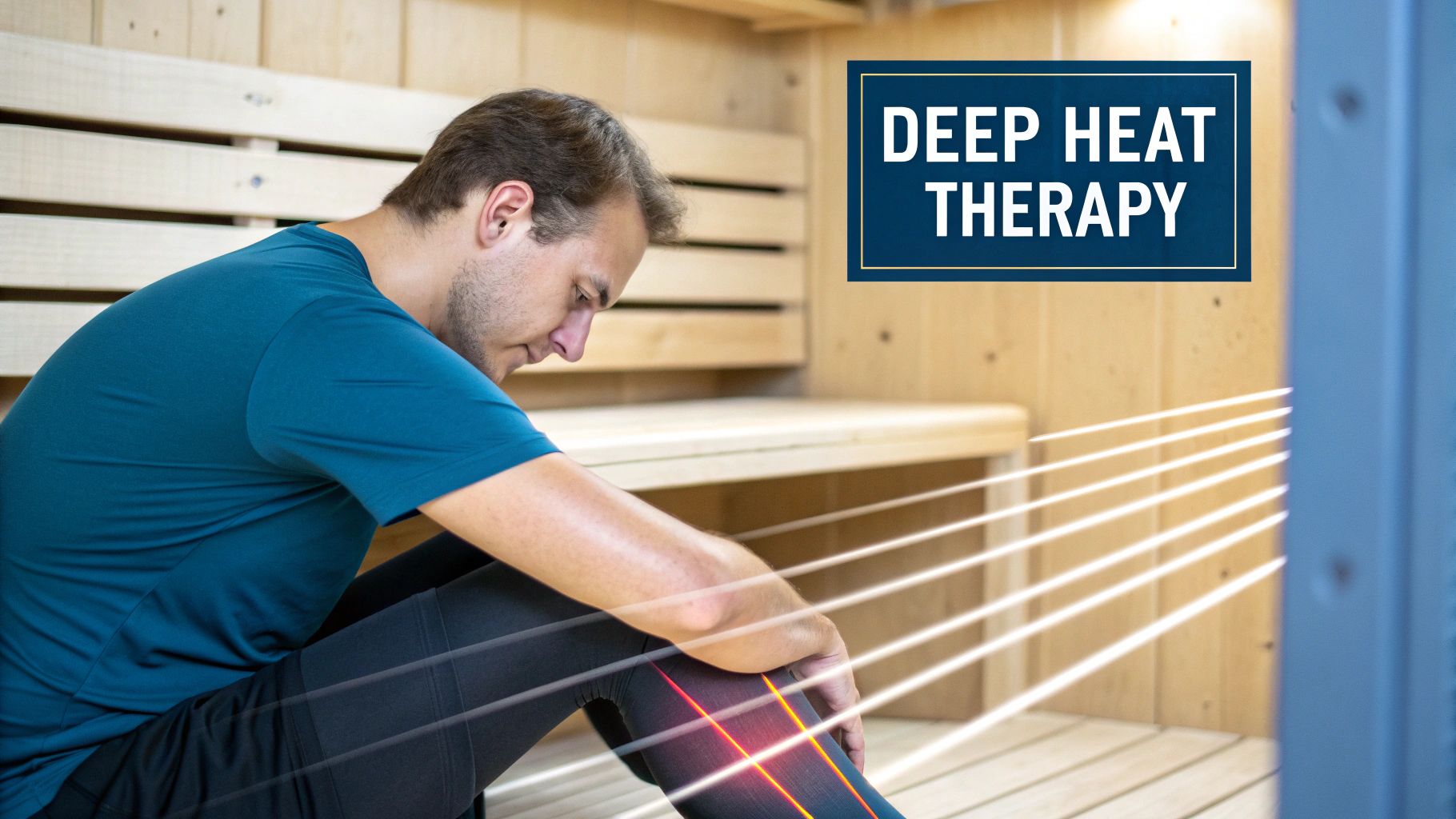
To really get why infrared saunas are so effective for your health, you first have to understand what makes them different. Unlike a traditional sauna that just bakes the air around you, an infrared sauna takes a much more direct approach to heating your body.
Think of it this way: a traditional sauna is like sitting in a stuffy, hot room. An infrared sauna is more like standing in the sun's warm glow on a cool day. Even if the air isn't hot, you feel the sun's rays warming you deeply. That's radiant heat at work, and it’s the same principle infrared saunas use to warm you from the inside out.
This is all possible thanks to far-infrared waves, part of the invisible light spectrum that penetrates skin, muscle, and joint tissue. This creates a deep, therapeutic warmth that feels incredibly gentle, even though it's working hard. It does all this at a much lower ambient temperature, usually between a comfortable 120°F and 140°F.
Radiant Heat vs. Convective Heat
The real game-changer is how the heat is delivered. A traditional sauna uses convective heat—it heats the air, and the hot air then heats you. An infrared sauna uses radiant heat to directly warm your body's mass. This is a fundamental shift, and it’s what makes the experience more targeted and far more tolerable for longer sessions.
Here’s a simple breakdown:
- Traditional Sauna (Convection): Blasts the air with extreme temperatures (180-220°F), which then transfers heat to your skin. For many, it can feel intense and almost suffocating.
- Infrared Sauna (Radiant): Directly heats your body using infrared light. Around 80% of the energy warms you directly, with only 20% heating the air. This creates a much more efficient and comfortable session.
This direct absorption of energy is what kicks off a cascade of powerful physiological responses, turning a simple warming session into a deep therapeutic process. It’s the foundation for every single health benefit we’re about to cover.
Triggering Your Body’s Natural Healing Response
Once those infrared waves start penetrating your body, they cause a gentle but meaningful rise in your core temperature. This isn't just a surface-level effect; it's a deep heat that triggers a chain reaction. Your body's internal thermostat senses this shift and immediately kicks into gear to cool itself down.
This is where the real magic happens. To regulate its temperature, your body initiates several key responses, and each one brings its own distinct health benefits.
The core mechanism of an infrared sauna is its ability to induce a "passive cardiovascular workout." It safely raises your core temperature, forcing your body to work to cool itself down, which in turn strengthens key physiological systems without the strain of exercise.
First, your heart rate increases to pump blood more efficiently toward the skin's surface. This process, called vasodilation, is where your blood vessels widen, dramatically improving circulation throughout your entire body. This rush of enhanced blood flow delivers a fresh supply of oxygen and nutrients to your muscles and tissues, which is absolutely critical for repair and recovery.
At the same time, your body activates its best cooling tool: sweating. But this isn't just any sweat. The sweat produced in an infrared sauna is more profuse and comes from deeper within the body, which is why so many people report feeling completely cleansed and refreshed after a session.
These connected responses—increased core temperature, vasodilation, and deep sweating—are the engines driving the powerful health outcomes we'll explore. For more on how to use wellness tools to your advantage, be sure to check out our MedEq Wellness Journal.
Enhancing Workout Recovery and Reducing Muscle Soreness
Anyone who trains seriously knows that workout recovery isn't just downtime—it's a critical part of the process. How you recover determines how hard you can train next time. This is where an infrared sauna becomes an absolute game-changer, helping you bounce back faster and feel stronger after a tough session.
Think about what's happening to your muscles post-workout. They're tight, fatigued, and swimming in metabolic waste like lactic acid. The deep, penetrating heat from an infrared sauna gets right to the source of the problem. It gently warms you from the inside out, kicking your circulation into high gear.
This boost in blood flow is everything. It's like an express delivery service, rushing oxygen and nutrients straight to your exhausted muscle tissues. At the same time, it acts as a cleanup crew, flushing out all the junk that makes you feel sore and stiff. This whole process just allows your muscles to repair themselves far more efficiently.
Taming Inflammation and DOMS
Better circulation is your best weapon against inflammation, which is the real culprit behind muscle soreness. The heat helps your muscles relax and reduces swelling, giving you almost immediate relief. It's especially good at tackling Delayed Onset Muscle Soreness (DOMS)—that all-too-familiar ache that creeps in 24 to 48 hours after you've pushed your limits.
Hopping in the sauna soon after your workout helps you get ahead of the inflammatory response before it really sets in. It’s a proactive strategy that can dramatically shorten your recovery window and dial down the pain, so you're ready for your next session without days of hobbling around.
When you make infrared sauna sessions a regular part of your post-workout ritual, you're not just waiting to feel better. You're actively managing inflammation and giving your body's natural repair systems a massive assist. Workout recovery stops being a passive waiting game and becomes a strategic advantage.
Practical Tips for Optimal Workout Recovery
To really squeeze every last drop of benefit out of your sauna session, timing and preparation are crucial.
- Timing is Everything: Try to get into the sauna within 1-2 hours of finishing your workout. Your body is still in a heightened metabolic state, making it the perfect window to fight off inflammation.
- Hydrate Relentlessly: You're going to sweat—a lot. You already lost fluids during your workout, so drink plenty of water before, during, and after your sauna session to keep your cells happy.
- Start Slow: New to infrared saunas? Don't be a hero. Start with shorter sessions of 15-20 minutes at a comfortable temperature. You can always work your way up as your body gets used to it.
For a deeper dive into beating post-exercise aches, our article on how to reduce muscle soreness has even more strategies to explore.
Amplify Workout Recovery with Contrast Therapy
Ready to take your workout recovery to the next level? Try pairing your infrared sauna session with a blast of cold. This technique, called contrast therapy, involves alternating between the sauna's intense heat and a cold plunge or shower. The rapid temperature shift creates a powerful "pumping" action in your circulatory system.
Here’s how it works: the heat makes your blood vessels dilate (open up), and the cold makes them constrict (tighten). Cycling between the two forces blood to surge through your muscles, turbocharging the removal of waste products and the delivery of fresh, oxygenated blood. It's a favorite recovery hack among elite athletes for a reason—it crushes inflammation and soreness like nothing else.
For an extra layer of muscle support, you can also add in recovery aids like a topical magnesium spray for muscle relief to help your muscles relax even further. For more wellness insights, visit our blog at https://medeqfitness.com/blogs/medeq-wellness-journal.
Boosting Cardiovascular Health and Circulation
Beyond just helping your muscles recover, one of the biggest health benefits from using an infrared sauna is what it does for your heart and circulation. Think of it as a form of “passive cardio.” You get a solid, heart-pumping workout without having to move a muscle. It's a surprisingly effective way to condition your cardiovascular system.
Here’s how it works: As you relax in the gentle, radiant heat, your core body temperature starts to climb. Your body’s natural response is to cool itself down, and it kicks into a gear that looks a lot like moderate exercise. Your heart rate picks up and your blood vessels widen—a process called vasodilation—to shuttle more blood to the skin’s surface.
This isn’t just a temporary feeling; it’s a real cardiovascular conditioning session. The boost in blood flow gets your circulation moving everywhere, delivering more oxygen and nutrients to every cell in your body. Over time, this helps make your arteries more flexible and can support healthier blood pressure levels.
The Science Behind a Healthier Heart
The evidence for infrared saunas and heart health is piling up. A single session can create a cardiovascular response similar to a moderate-paced walk. It’s a low-impact way to give your heart a workout.
In one impressive clinical trial, patients with congestive heart failure used far-infrared sauna therapy for just two weeks. The results were dramatic: their premature ventricular contractions (PVCs) dropped by an incredible 73%. At the same time, key markers of heart strain also fell, showing a measurable improvement in how well their hearts were functioning.
This "passive cardio" effect is what makes infrared saunas such a great tool for cardiovascular conditioning. It strengthens the heart muscle and makes your circulatory system more efficient, building long-term resilience without putting any mechanical stress on your joints.
For athletes, this means workout recovery gets supercharged. The improved circulation helps clear out metabolic waste and deliver the building blocks needed for muscle repair, getting you back to training faster.
This is where better blood flow really pays off for recovery.

As you can see, accelerating muscle repair and cutting down on soreness are directly tied to how well your circulatory system is working.
Integrating Sauna Use for Lasting Benefits
To really tap into these cardiovascular perks, consistency is everything. Research suggests that regular use—somewhere in the ballpark of 4-7 times a week—is linked to a significantly lower risk of developing hypertension. This shifts the sauna from being just a recovery tool to a proactive wellness strategy for keeping your heart healthy for the long haul.
Combining sauna sessions with other smart fitness habits is the best approach. If you're looking for a complete plan, it helps to understand the fundamentals of How to Improve Cardiovascular Endurance. When you pair regular sauna use with a solid fitness routine, you're building a stronger, more resilient cardiovascular system from all angles.
How to Use an Infrared Sauna for the Best Results
Knowing the science behind infrared saunas is one thing. Putting it into practice is where the real magic happens. To actually get the health benefits for your workout recovery, cardiovascular fitness, and overall well-being, you need a smart, consistent routine.
This isn’t about seeing how much heat you can tolerate. It’s about creating a sustainable wellness practice that delivers real results safely.
Find Your Ideal Temperature
One of the best things about infrared saunas is that they work their magic at much lower temperatures than the traditional kind. Instead of baking in 180-220°F heat, you’ll get the best results somewhere between a far more comfortable 120-140°F (49-60°C).
Why the big difference? The radiant heat warms your body directly, not just the air around you. This means the heat can penetrate your tissues more deeply, giving you a better sweat without that feeling of breathing in scorching-hot air. Start at the lower end of that range and work your way up as you get used to it.
Dial In Your Session Time and Frequency
Just like starting a new workout routine, you need to give your body time to adapt. Ease into it.
- Beginners: Start with shorter sessions of 15-20 minutes. That’s plenty of time to raise your core temperature and kickstart the health benefits without overdoing it.
- Regular Users: Once you’re comfortable, you can extend your sessions to 30-45 minutes. This longer soak allows for a deeper sweat and more significant cardiovascular effects.
How often you get in is just as important as for how long. Consistency is everything. Aim for 3-7 sessions per week, based on what you’re trying to achieve. An athlete in a heavy training block might want to hit the sauna almost daily to speed up workout recovery, while someone using it for general wellness will do great with 3-4 sessions a week.
The real goal here is to make sauna use a regular part of your wellness routine, not just a one-off treatment. It’s the safe, consistent exposure that drives those long-term physiological changes.
Essential Safety: Hydration is Non-Negotiable
A good protocol isn’t just about getting results—it's about staying safe. Dehydration is the main thing to watch out for, so you need to be smart about hydration.
Drink plenty of water before you step in, keep a bottle with you during your session, and make sure you rehydrate well afterward. It's also a good idea to replenish your electrolytes, since you lose key minerals when you sweat. Most importantly, listen to your body. If you feel dizzy or lightheaded, it’s time to get out.
Who Should Be Cautious
While infrared saunas are safe for most of us, some people need to be more careful. If you are pregnant, have a serious heart condition, or are particularly sensitive to heat, you absolutely should talk to your doctor before making this a part of your wellness routine. That way, you can get all the benefits without taking any unnecessary risks.
For more science-backed health insights, keep exploring our MedEq Wellness Journal.
Weaving Infrared Saunas Into Your Wellness Routine
Getting the most out of an infrared sauna isn't about the occasional one-off session. It’s about consistency. Think of it less like a spa day treat and more like a fundamental part of your health and workout recovery toolkit. The real magic happens when it becomes a routine.
This means finding a rhythm that works for you. For an athlete, that might be a 30-minute session right after a tough workout to kickstart muscle repair and calm inflammation. Making this a regular post-training ritual can significantly shorten your workout recovery time, letting you get back to high-quality training sooner.
If you're a busy professional, your approach might look different. An evening session can be an incredibly effective wellness practice to downshift, lower cortisol, and prime your body for deep, restorative sleep. By building it into your wind-down process, you're actively taking control of your nervous system to improve your focus and energy for the next day.
Making It a Habit That Sticks
How you use it really comes down to your specific goals. The key, no matter what, is building a sustainable habit that slots neatly into your life.
Consistency is what turns infrared sauna use from a temporary fix into a long-term investment in your health and wellness. Each session builds on the last, compounding the benefits for your heart, muscles, and mind.
For those serious about workout recovery, try pairing the sauna's heat with the shock of a cold plunge. This contrast therapy creates a powerful circulatory pump, flushing out metabolic junk and slashing muscle soreness. You can dive deeper into the science behind this powerful combination in our guide to sauna and cold plunge benefits.
In the end, whether you’re aiming to recover faster, sleep better, or just melt away the day's stress, the goal is to be deliberate. The cumulative effect of regular, consistent sessions is what delivers the real, measurable improvements to your health and performance. For more informative wellness tips, visit our blog at https://medeqfitness.com/blogs/medeq-wellness-journal.
Common Questions About Infrared Saunas
It's smart to have questions when you're exploring a new recovery and wellness tool. Let's clear up some of the most common ones about infrared saunas so you can feel confident stepping into your first session.
Infrared vs. Traditional Steam Saunas: What's the Real Difference?
It all comes down to how they heat you. A traditional sauna cranks up a heater to blast the air with extreme temperatures, often hitting 180-220°F. You're essentially sitting in a super-heated room, and that hot air is what warms your body.
Infrared saunas work differently. They use far-infrared light to warm your body directly, kind of like how the sun warms your skin on a cool day. The heat penetrates your tissues deeply but at a much more manageable air temperature, usually between 120-140°F. This means you can stay in longer and get the therapeutic health benefits without having to endure scorching air.
How Quickly Will I Actually Feel a Difference?
Most people feel an immediate sense of calm and relief after their very first session. The deep warmth is fantastic for melting away muscle tension and just quieting your mind.
But for the bigger physiological wins—like better heart function, faster workout recovery, and deeper sleep—you need to be consistent. Think of it like training. Most people start to see and feel significant, lasting improvements within 2-4 weeks of regular sessions (about 3-5 times a week).
The magic is in the routine. Each session builds on the one before it, steadily improving your body's ability to recover and adapt.
Can I Use the Sauna with Other Recovery Tools?
Absolutely, and you should. Stacking therapies is a pro move for amplifying your results. One of the most powerful combos is contrast therapy: moving between the sauna's heat and a cold plunge. This hot-cold switch creates a "pump" for your circulatory system, flushing out metabolic junk and crushing inflammation. It’s a favorite among elite athletes for a reason.
Another great pairing is an infrared sauna session followed by red light therapy. The sauna gets your blood flowing and warms up your body, which can help your cells absorb the healing energy from the red light even more effectively.
To keep learning about science-backed recovery and wellness, check out more articles on the MedEq Wellness Journal.
At MedEq Fitness, we source professional-grade, science-backed wellness equipment to help you perform at your best. Explore our collection of infrared saunas and other recovery tools built for those who demand results. Find more health and wellness information at our blog: https://medeqfitness.com/blogs/medeq-wellness-journal.