Pilates for Rehabilitation: How to Restore Mobility and Enhance Wellness
When you're recovering from an injury or surgery, the goal isn't just to heal—it's to come back stronger, more resilient, and with a deeper understanding of your body's wellness. Pilates, with its focus on controlled, precise movements and core principles of health, offers a powerful, low-impact path to do just that. It's a method dedicated to rebuilding strength from the inside out, starting with the deep core muscles that act as your body's essential foundation.
The Role of Pilates in Modern Rehabilitation
Pilates has made a significant leap from the fitness studio to the physical therapy clinic, and for good reason. What was once seen as a niche workout is now a go-to tool for therapists and doctors helping patients recover and improve their overall wellness. Its power comes from a set of core principles that create a methodical, mindful approach to healing the body and enhancing health.
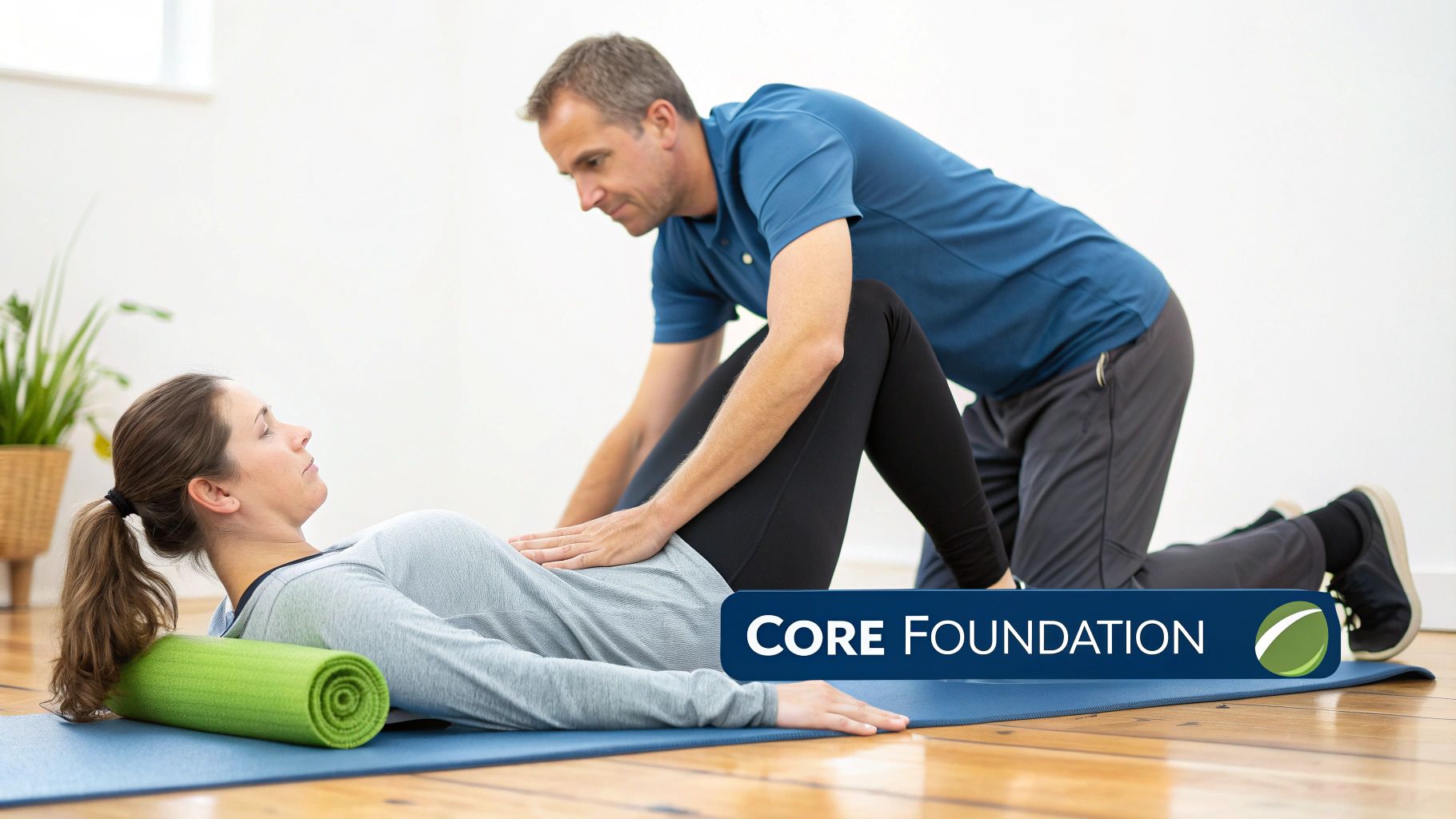
Think of an injured body like a house with a shaky foundation. You wouldn't start fixing the roof until the base was secure. Pilates works the same way—it zeroes in on re-establishing deep core stability, which is the non-negotiable first step for safe, functional movement and a key component of physical health.
Building a Strong Foundation for Recovery
One of the greatest health benefits of Pilates is its adaptability. It can meet you exactly where you are in your recovery journey, making it a safe and effective wellness practice for nearly anyone.
In the early stages, gentle mat exercises can reawaken crucial stabilizing muscles without stressing vulnerable joints. As you get stronger, reformer work adds controlled resistance to help you rebuild muscle and relearn healthy movement patterns, contributing to a holistic workout recovery.
This versatility is what makes Pilates such a clinical asset. It fits seamlessly into professional treatment plans and is especially effective for those who use in-home rehabilitation services to receive personalized care in a comfortable setting. For more wellness insights, visit our Blog.
Pilates teaches you to be in control of your body and not at its mercy. This focus on mindful movement is what separates it from traditional exercise and makes it a superior choice for rehabilitation and long-term wellness.
The Six Principles: Your Roadmap to Recovery
The philosophy of Pilates is built on six key principles. When applied in a rehabilitation setting, they become a powerful framework for intentional, effective healing and improved health.
| Pilates Principle | Rehabilitation Application |
|---|---|
| Concentration | Fosters the mind-body connection, crucial for re-educating muscles and improving motor control. |
| Control | Ensures every movement is deliberate and safe, preventing re-injury and protecting vulnerable tissues. |
| Centering | Focuses on strengthening the deep abdominal, back, and pelvic floor muscles to stabilize the entire body. |
| Precision | Emphasizes correct form and alignment, correcting the compensatory patterns that often lead to injury. |
| Breath | Uses deep, diaphragmatic breathing to oxygenate tissues, release tension, and support core engagement. |
| Flow | Promotes smooth, graceful movements that translate into efficient, functional patterns for daily life. |
By integrating these principles, you're not just going through the motions. You're actively participating in a smarter, more sustainable recovery process that enhances your overall wellness.
Evidence-Based Healing
The confidence that healthcare professionals have in Pilates isn't just anecdotal—it's backed by solid research highlighting its health benefits. A landmark 2017 review from Macquarie University, for instance, analyzed numerous studies and found that Pilates consistently reduced pain and improved function for patients recovering from a wide range of injuries.
It's clear that the method provides a reliable, evidence-based approach to getting people back on their feet safely and effectively.
The Science Behind How Pilates Heals Your Body
To really understand why Pilates is such a powerhouse for rehabilitation, we have to look at the incredible health benefits it provides on a physiological level. This isn't just about movement; it's about re-establishing a clear conversation between your brain and your muscles to optimize wellness. Think of Pilates as the ultimate translator, restoring communication lines that get scrambled by an injury.
Imagine your body runs on an internal GPS that guides every move you make. After an injury or surgery, that system gets completely thrown off. Pilates methodically reboots this entire system, waking up dormant muscles and teaching them how to fire in the right sequence again for optimal workout recovery.
Retraining Your Body's Internal GPS
When your body experiences trauma, key stabilizing muscles often just "switch off" as a protective mechanism. Muscles like the deep transverse abdominis (your body’s built-in corset) and the multifidus (the tiny but mighty muscles supporting your spine) can go quiet. This forces bigger, surface-level muscles to overcompensate, creating imbalances that lead straight to chronic pain and a high risk of re-injury.
Pilates goes right after these deep, intrinsic muscles. The slow, controlled movements force your brain to find them and switch them back on. It’s a process we call neuromuscular re-education, a cornerstone of effective rehabilitation and a significant health benefit.
Think of it like this: If your star quarterback gets injured, you can’t just ask a lineman to start throwing passes. You need to get the quarterback back in the game. Pilates bypasses the overworking 'linemen' and goes straight to rehabilitating the specialized, stabilizing 'quarterbacks' of your muscular system.
This pinpoint focus is what true healing is all about, fixing faulty movement patterns at the source. For more information, please visit our Blog.
Proprioception: The Body's Sixth Sense
Beyond just turning muscles back on, Pilates sharpens your proprioception—your body’s innate sense of its position in space. This "sixth sense" is the bedrock of balance, coordination, and joint stability. Injuries can seriously dull this sense, leaving you feeling clumsy or unstable.
Pilates exercises demand intense concentration on your alignment and the quality of each movement. This focus rebuilds the neural pathways that govern proprioception, leading to huge health benefits:
- Improved Balance: This is critical for reducing fall risk, especially during post-op recovery.
- Enhanced Joint Stability: Your muscles learn to co-contract at just the right time to protect joints.
- Refined Motor Control: Movements become smoother and more graceful, improving efficiency and reducing wear and tear.
The Power of Breath in Pain Management
A non-negotiable part of every Pilates exercise is intentional, diaphragmatic breathing—a powerful physiological tool for healing and wellness. When you're in pain, your breathing instinctively becomes shallow and fast, kicking your body’s "fight or flight" response into high gear.
Controlled Pilates breathing does the exact opposite. It stimulates the parasympathetic nervous system, which is the "rest and digest" state where your body can actually heal.
Flipping this switch has a profound impact on workout recovery:
- Reduced Pain Perception: A calm nervous system is less sensitive to pain signals.
- Increased Oxygen Flow: Deep breaths deliver more oxygen-rich blood to injured tissues, speeding up repair.
- Lowered Muscle Tension: It helps release chronic tightness around an injury, improving comfort.
By syncing your breath with every movement, you create an internal environment that’s primed for healing. You can dive deeper into how a calm nervous system affects recovery in our guide on how to improve your HRV.
Tailoring Pilates Protocols for Specific Conditions
The real magic of Pilates in a rehab setting isn't a single secret move; it's the art of customization for maximum health benefit. An experienced therapist crafts a specific protocol that gets right to the heart of an injury, turning wellness principles into a concrete strategy for healing.
Think of it this way: a Pilates practitioner is like a master locksmith. They know that a nagging low back, a post-op knee, and a strained shoulder all need a different key to unlock pain-free movement and restore function.
A Closer Look: Chronic Low Back Pain
Chronic low back pain is one of the most common reasons clients seek Pilates. The first order of business is almost always re-establishing lumbopelvic stability by rebuilding the muscular "corset" around the midsection to support the spine.
- Mat Work: We start with the basics. Gentle pelvic tilts and controlled leg slides retrain the deep abdominal muscles and pelvic floor without stressing the lower back.
- Reformer Work: The beauty of the Reformer is its spring-loaded support system. It allows for non-weight-bearing movements like Footwork and Bridging, which are fantastic for strengthening the glutes and hamstrings—the unsung heroes of back support.
This targeted work corrects muscle imbalances, creating a pathway to real, lasting relief and improved wellness.
It's a hierarchical approach. We start with the breath, use it to build deep core stability, and then layer on refined neuromuscular control. This pyramid is the very foundation of effective Pilates-based rehab.
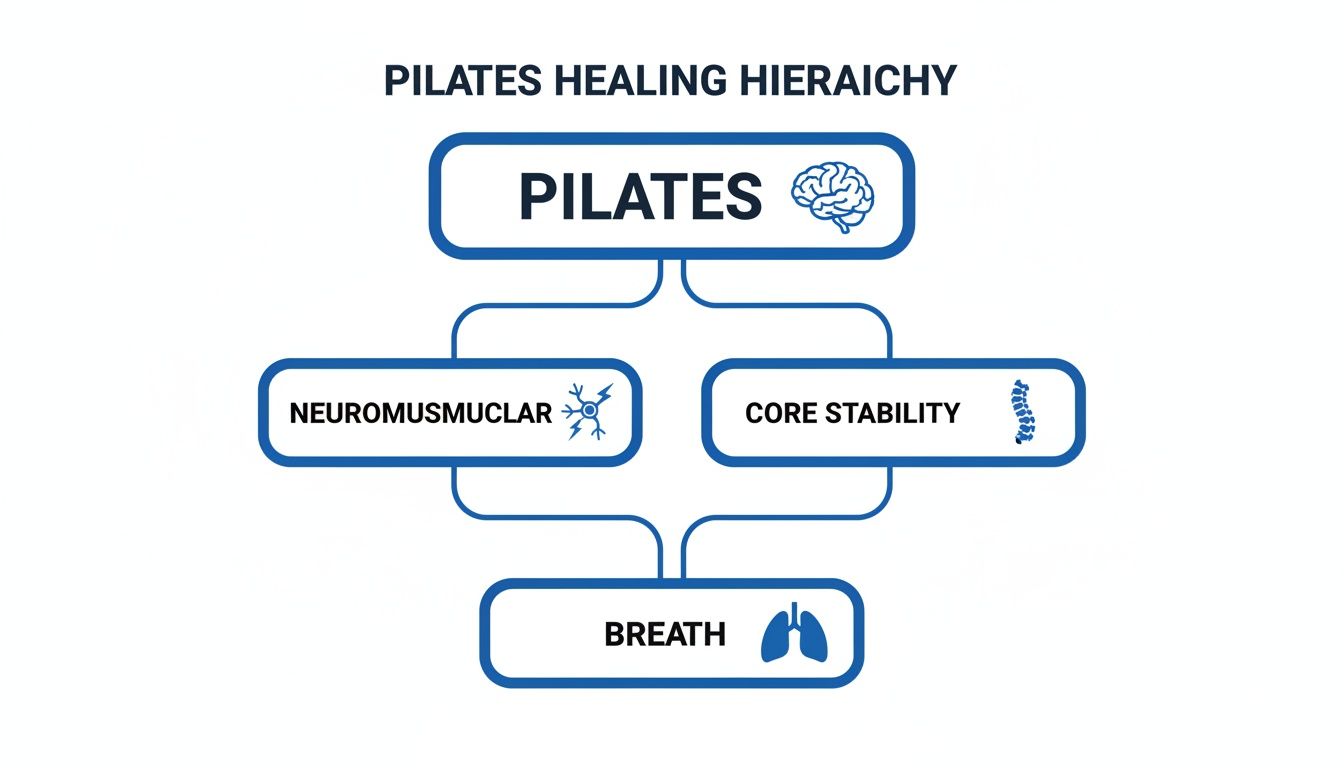
As you can see, everything flows from foundational breathwork. This graphic illustrates how breath supports core engagement, which in turn allows for the precise muscle control needed to heal.
Post-Surgical Recovery: Hips and Knees
After a joint replacement, the goals are clear: restore range of motion, manage swelling, and safely rebuild strength. The Pilates Reformer becomes an indispensable ally, providing a controlled, supportive environment that enhances mobility without undue stress on a healing joint.
Studies in Germany and the UK have shown that integrating reformers into patient programs can lead to up to a 70% improvement in balance and posture for back pain sufferers in just 12 weeks.
For a post-op patient, the reformer’s sliding carriage and adjustable springs feel like a safety net. It lets them move through a full range of motion with support, building both strength and confidence without the fear of re-injury.
Healing Shoulder Impingement and ACL Injuries
Pilates also offers highly specific solutions for injuries like shoulder impingement or an ACL tear. The focus shifts to restoring stability and correcting the faulty movement patterns that caused the injury.
For Shoulder Impingement:
- The goal is to strengthen the small, stabilizing rotator cuff muscles.
- Using light spring tension on the Reformer helps isolate these muscles, creating space in the shoulder joint to stop painful pinching.
For ACL Reconstruction:
- Early on, it's all about restoring quadriceps control.
- The Reformer’s non-weight-bearing setup is perfect for this. As the client progresses, standing work can safely reintroduce impact and retrain neuromuscular pathways.
To help clinicians organize these personalized recovery journeys, looking at effective treatment plan templates can provide a great structural starting point.
Pilates Applications for Common Rehabilitation Needs
| Condition | Primary Rehab Goal | Example Pilates Focus/Exercise |
|---|---|---|
| Chronic Low Back Pain | Enhance lumbopelvic stability | Mat-based Pelvic Tilts; Reformer Bridging |
| Post-Op Hip Replacement | Restore hip mobility and glute strength | Reformer Leg Circles; Side-Lying Leg Press |
| Post-Op Knee Replacement | Regain quad control and range of motion | Reformer Footwork; gentle hamstring curls |
| Shoulder Impingement | Improve scapular stability & rotator cuff function | Arm work with light springs; Scapular isolation |
| ACL Reconstruction | Rebuild quad strength and neuromuscular control | Non-weight-bearing leg press; eventual Jumpboard work |
By carefully tailoring exercises, Pilates becomes a powerful and precise therapeutic tool. To learn more, check out our Blog.
Creating a Holistic Recovery Environment
Real rehabilitation is about more than just exercises; it's about building a complete wellness ecosystem that supports your body’s natural healing process. When you create this environment around your pilates for rehabilitation practice, you can accelerate workout recovery and achieve better, longer-lasting health benefits.
It all starts with the right equipment and then layering in complementary wellness tools, creating a powerful synergistic effect where each component enhances the others.
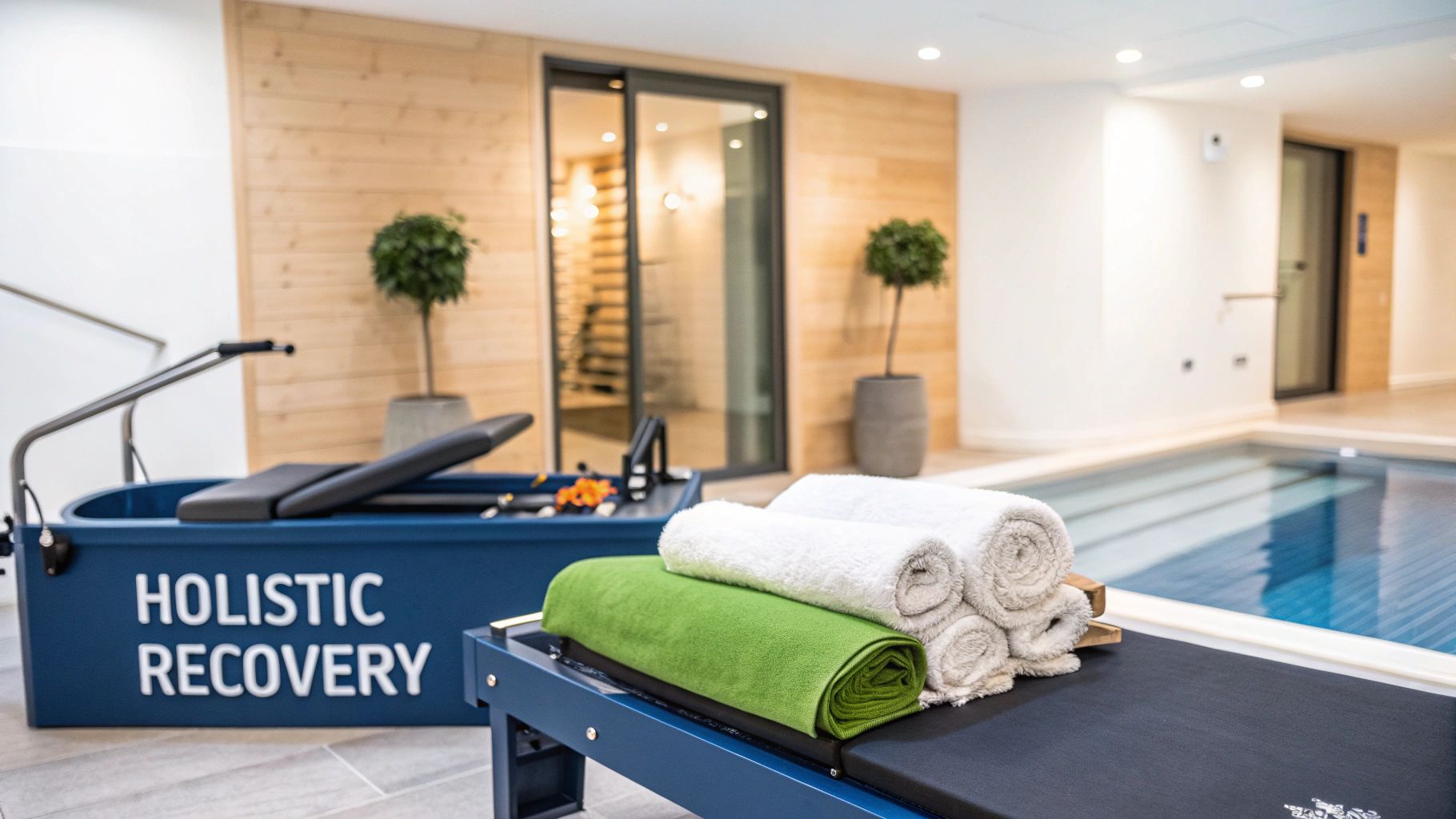
The Pilates reformer is the foundation of this ecosystem. Its spring-based system provides a unique blend of assistance and resistance, allowing you to move with incredible precision and control, strengthening the right muscles without putting harmful stress on healing joints.
The Synergistic Power of Wellness Tools
Pairing modern wellness technology with your Pilates practice creates a powerful one-two punch for recovery. While Pilates rebuilds strength and stability, tools like cold plunges and infrared saunas can tackle pain, slash inflammation, and kick tissue repair into high gear. This combination addresses healing from multiple angles—the key to a more complete and efficient recovery.
The Pilates Reformer market is projected to skyrocket from USD 7,645.5 million in 2025 to USD 16,814.3 million by 2035. This boom is tied directly to the global demand for low-impact training that helps people recover from injuries, with some data showing Pilates users can experience up to 40% faster return-to-sport rates after an ACL repair.
Contrast Therapy and Its Role in Workout Recovery
One of the most effective wellness strategies you can add to your routine is contrast therapy—alternating between hot and cold temperatures. This technique boosts circulation, flushes out metabolic waste, and dramatically reduces inflammation, making it the perfect partner to a rehab session.
A great contrast therapy protocol for workout recovery might look like this:
- Post-Pilates Sauna: Spend 15-20 minutes in an infrared sauna. The deep heat improves blood flow, delivering fresh oxygen to muscles.
- Immediate Cold Plunge: Follow with a 2-3 minute dip in a cold plunge. The cold constricts blood vessels, helping to shut down inflammation and numb pain.
- Repeat (Optional): Repeat this cycle 2-3 times, always ending on cold to leave your body in an anti-inflammatory state.
This rapid cycling of vasodilation (from heat) and vasoconstriction (from cold) acts like a pump for your circulatory system. It actively clears out inflammation and speeds up the delivery of healing compounds to your tissues—exactly what a recovering body needs for optimal health.
Building Your Personal Recovery Sanctuary
Creating this kind of holistic environment makes recovery an intentional part of your wellness routine. When you combine the neuromuscular re-education of Pilates with the physiological benefits of advanced wellness tools, you create a system that supports healing from every angle. You can check out a curated selection of tools in our guide on recovery equipment for peak wellness.
This thoughtful approach takes you beyond just "doing the exercises," setting you up to emerge from an injury stronger, more resilient, and with a deeper understanding of your body's amazing capacity for renewal. For more on this, visit our Blog.
How to Find a Qualified Rehab Professional
Starting a Pilates for rehabilitation program is a huge step toward enhancing your health and wellness. However, the success of that journey rests almost entirely on who is guiding you. Choosing the right professional isn't just a small detail—it's the most critical decision you'll make for a safe and effective recovery.
Differentiating Fitness from Rehabilitation Expertise
The key difference lies in their perspective. A standard Pilates teacher is fantastic at helping healthy people get stronger. But when you’re recovering, you don't just need a workout leader. You need a clinical guide who understands the health benefits and risks.
This is where you'll find licensed Physical Therapists (PTs) who are also certified in Pilates, or seasoned instructors with post-graduate training in rehabilitation. They’re trained to:
- Perform a thorough initial assessment to pinpoint your exact limitations and imbalances.
- Understand the contraindications for your specific diagnosis.
- Modify every single exercise with precision, challenging your body without putting healing tissues at risk.
- Work alongside your doctor, ensuring your Pilates program is a seamless part of your overall medical and wellness plan.
This is non-negotiable for a safe workout recovery.
Your Checklist for Choosing the Right Professional
To feel confident in your choice, you must ask the right questions. A true professional will welcome your diligence—after all, your health is on the line.
A thorough initial evaluation is the hallmark of a qualified rehabilitation professional. They must understand your unique starting point—your specific injury, movement patterns, and pain triggers—before they can design a safe and effective path forward.
Use this checklist to guide your search:
- What are your specific qualifications and certifications? Look for certifications from reputable organizations and ask about advanced training in rehabilitation.
- What’s your experience with my specific injury or condition? Ask how they’d approach working with someone recovering from your specific issue.
- What does your initial assessment process involve? A good answer will include a detailed evaluation covering postural analysis, range of motion, and medical history.
- How will you communicate with my doctor or physical therapist? An integrated, team-based approach is a surefire sign you’re working with a true professional.
- Can you explain how you modify exercises for safety and progression? They should clearly explain how they scale movements based on your progress.
Choosing your guide is the most important exercise in your rehabilitation. By finding a qualified professional, you're setting the stage for a successful recovery and long-term wellness.
For more insights on building a strong foundation for health, explore the MedEq Wellness Journal.
Your Pilates Rehab Questions, Answered
Jumping into any new recovery plan comes with questions. Getting clear, straightforward answers is the best way to move forward with confidence and embrace the health benefits of Pilates. Let's tackle the most common questions we hear about using Pilates for rehabilitation and wellness.
Knowing what to expect can make all the difference on your path back to full strength and an active, healthy lifestyle.
How Soon After an Injury Can I Start Pilates?
This is the big one, and the answer is always a conversation between you, your doctor, and your physical therapist. There's no universal timeline; your body sets the pace for your workout recovery.
For a minor strain, you might get the green light for gentle movements within a few days to get blood flowing. But after a major surgery, you’ll need weeks, maybe even months, for the tissue to properly heal. A true post-rehab professional will never rush this, starting you with incredibly gentle exercises focused on activating deep core stabilizers without stressing the healing area.
The golden rule is non-negotiable: Never start a post-injury exercise program without medical clearance. A qualified instructor will always ask for a doctor's note or work directly with your PT to ensure your safety and wellness are the top priority.
This careful, medically-guided start is what makes your return to movement both safe and effective.
Is Mat or Reformer Pilates Better for Rehab?
One isn't "better" than the other; they're different tools for different jobs, and a good wellness program will often use both. The right choice depends entirely on where you are in your recovery.
Mat work is the bedrock. It’s where you learn to control your own body against gravity, building the intrinsic strength and mind-body connection vital for healing.
The Reformer, however, is often where the magic happens in a clinical setting due to its unique health benefits:
- It can assist you. Early on, the springs can be set to assist your movement, letting you glide through a range of motion you couldn’t achieve on your own.
- It builds strength safely. As you get stronger, the springs provide smooth resistance to build muscle without the jarring impact of weights.
- It lets you work off your feet. The sliding carriage allows for exercises lying down—perfect if you can't put weight on an injured limb.
A skilled practitioner will blend mat and reformer work seamlessly to create a program that meets you exactly where you are. Learn more on our Blog.
Can Pilates Help with Chronic Pain?
Absolutely. When guided by an expert, Pilates can be a powerful ally against chronic pain from conditions like arthritis and fibromyalgia, offering significant health benefits. Because it’s so low-impact, it’s one of the best ways to stay active without provoking a flare-up.
For arthritis, Pilates builds a muscular "scaffolding" around sore joints. When supporting muscles are stronger, they take the load off the joint itself, dramatically reducing pain and improving wellness.
For conditions like fibromyalgia, the gentle movements help ease stiffness, while the focus on breathing calms the nervous system—a key factor in pain perception. The secret is finding an instructor who specializes in chronic conditions and understands how to modify exercises for your specific health needs.
What's the Difference Between Fitness Pilates and Rehab Pilates?
This is a critical distinction. Both use the same principles, but their goals and application are worlds apart, impacting the health benefits you receive.
Fitness Pilates is what you see in most gyms. It’s a group class designed for a generally healthy population with a goal of overall conditioning.
Rehab Pilates, on the other hand, is a clinical application of the method, almost always one-on-one. The entire session is built around addressing your specific injury, making it a key part of your workout recovery and long-term wellness.
| Feature | Fitness Pilates | Rehabilitation Pilates |
|---|---|---|
| Goal | General strength and conditioning | Address a specific injury or condition |
| Setting | Group classes | One-on-one or clinical setting |
| Focus | Whole-body workout | Therapeutic goals (e.g., restore ROM) |
| Instructor | Certified Pilates teacher | PT or rehab-specialized instructor |
An instructor focused on rehab uses Pilates as a therapeutic tool. Every exercise is chosen to meet your clinical needs, not a generic fitness goal.
At MedEq Fitness, we believe recovery is an ecosystem that supports total wellness. Our physician-led team curates science-backed wellness and recovery equipment designed to work alongside your rehabilitation. From cold plunges that crush inflammation to saunas that boost circulation, we give you the tools to accelerate healing and get back to your full potential.
Explore our clinic-quality recovery solutions at MedEq Fitness and find more expert insights at the MedEq Wellness Journal.