The Ultimate Guide to the Pilates Reformer
Ever walked into a Pilates studio and wondered about that elegant, almost intimidating, bed-like machine? That's the Pilates reformer, and it's far less complicated than it looks. It’s essentially a sophisticated piece of equipment that uses a sliding carriage, adjustable springs, and straps to give you a full-body workout that's both gentle on the joints and incredibly effective for your overall wellness.
The reformer is a cornerstone of mindful fitness, prized for its ability to build long, lean muscle, carve out serious core strength, and improve your overall sense of well-being. What makes it so special is its adaptability—it can be tailored for anyone, from someone recovering from an injury to a professional athlete looking for a competitive edge.
Unlocking the Power of the Pilates Reformer
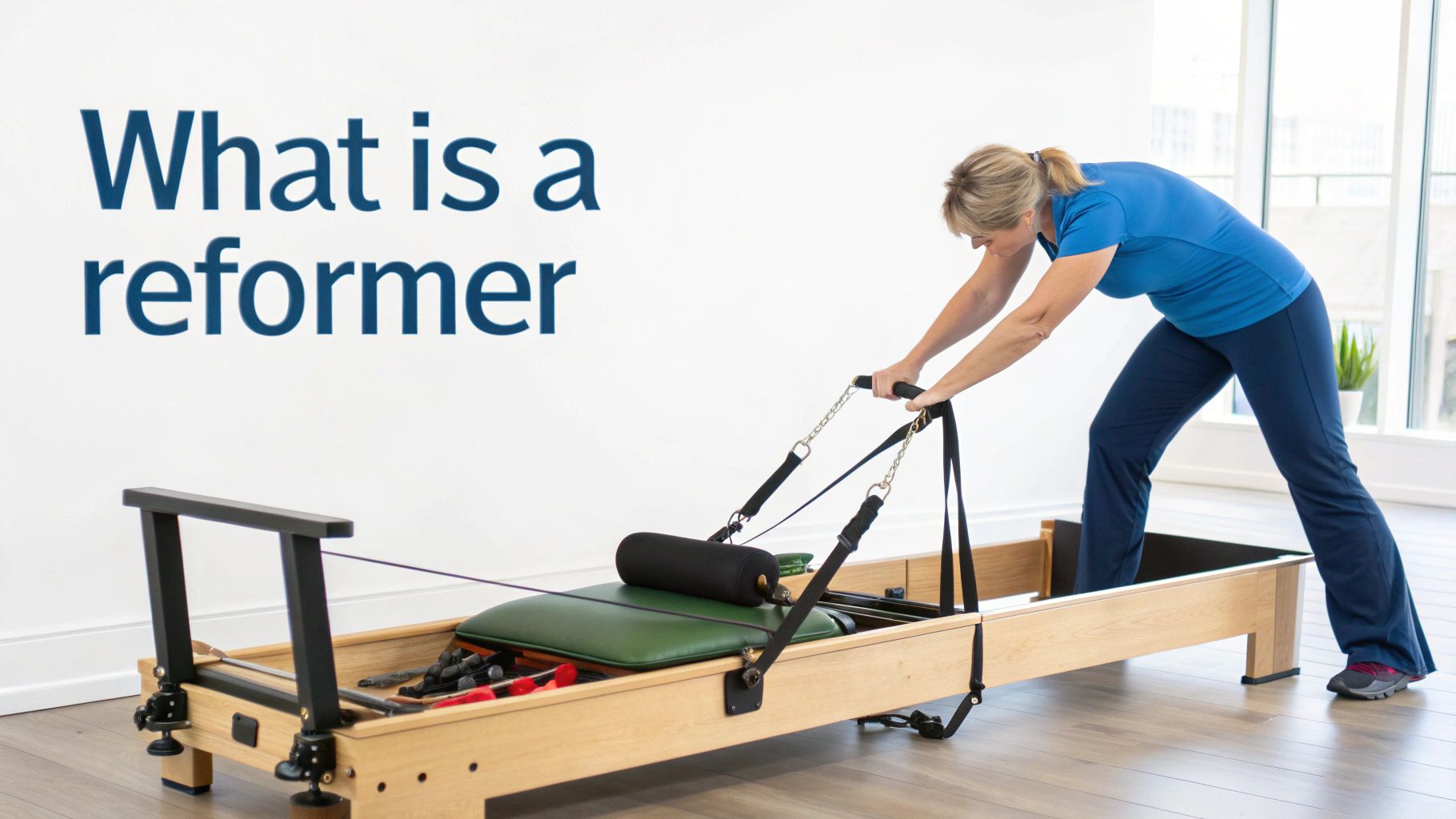
Don't think of the reformer as just a machine. Think of it as an intelligent wellness partner that guides every single movement. It’s a beautifully designed system that challenges your body in ways that simple mat exercises or free weights just can't replicate. The real magic is how it blends constant, variable resistance with simultaneous support.
This unique combination actually makes every movement both safer and more challenging. It’s like having an all-in-one wellness tool that intuitively responds to what your body needs, whether you're just building a foundation of strength or truly pushing your physical limits.
Understanding the Core Components
To really get what a reformer can do, it helps to know the main parts and how they work together. Each piece has a specific job in creating a controlled, effective workout that builds a deep connection between your mind and muscles.
- The Carriage: This is the platform you'll be on—lying down, sitting, or even standing. It glides back and forth on the frame, and that smooth but unstable surface forces your deep core muscles to fire up and stay engaged.
- The Springs: This is the heart and soul of the reformer. The color-coded springs provide different levels of resistance, and you can add or remove them to dial an exercise up or down. Unlike weights, springs create tension through the entire range of motion, working your muscles on the way out and on the way back in.
- The Straps: Connected to pulleys at the end of the reformer, you can use these straps with your hands or feet. They open up a massive range of exercises and let you target muscles in your arms, legs, and core from all sorts of angles.
How It All Works Together
It’s the interplay between these parts that makes the reformer so unique. When you push or pull against the springs using the carriage or straps, you're working against a force that demands control, precision, and constant stabilization. This isn't about just muscling through a rep; it's about intentional, mindful movement that promotes holistic health.
Here's a cool thing: adding more springs (heavier resistance) can actually make some ab exercises easier because the springs help return the carriage. On the flip side, using a lighter spring often demands way more core control to keep the carriage from slamming or moving erratically. This dynamic is central to the Pilates method—it teaches you to initiate every movement from your core, building real functional strength from the inside out.
The genius of the reformer is its immediate feedback. If your alignment is off or you lose your core connection, the carriage will let you know instantly. This constant dialogue with the machine sharpens your body awareness and helps correct those little bad habits in your movement patterns.
Once you understand how this equipment functions, you can see why it’s a go-to tool for everything from athletic conditioning to post-injury rehab. The precise engineering of a classic professional solid wood Pilates reformer ensures a smooth, quiet, and stable experience every time. For more insights into mindful fitness, you can explore the Medeq Wellness Journal.
Exploring the Health and Wellness Benefits
Working out on a Pilates reformer is about so much more than just surface-level fitness; it’s a practice that fundamentally enhances your body's health and function. The magic is in the spring-based resistance, which builds a deep, functional strength that’s both gentle on your joints and incredibly effective. It’s a workout that supports your wellness from the inside out.
At the heart of it all is your core. Think of the reformer as a masterclass in core engagement. Every single movement on that sliding carriage forces you to fire up your deep abdominal muscles just to stay stable. This targets the transverse abdominis and obliques—the very muscles that act as your body's natural corset, supporting spinal health.
That deep core work has a direct and noticeable impact on your posture. By strengthening the muscles that hold your spine in place and ironing out imbalances, the reformer helps you stand taller and move with more confidence. It's the perfect antidote to the slouching and back pain that often come from a desk-bound lifestyle.
Building Strength Without Stress
One of the biggest health benefits of the reformer is how kind it is to your body. It's a true low-impact workout. The machine supports you, letting you build serious muscle endurance and tone without any jarring or pounding on your joints. This makes it a fantastic wellness option for almost everyone.
- Injury Rehabilitation: It offers a safe, controlled way for people to rebuild strength after an injury.
- Athletic Conditioning: Athletes can cross-train to build stability and prevent injuries without adding more high-impact stress.
- Active Aging: Older adults can fight off muscle loss and maintain mobility, all while protecting their joints.
The demand for this kind of intelligent, low-impact fitness is booming. The global Pilates Reformer machine market is sitting at around $250 million and is expected to grow at a CAGR of 7% through 2033. This isn't just a trend; it's a reflection of a wider shift toward smarter, preventive health. Studies have shown that low-impact workouts like Pilates can slash injury risks by up to 30% compared to high-impact training.
A Workout for Your Mind
The reformer isn't just a physical workout; it's a mental one, too. The precise, controlled movements require your full attention, forging a powerful mind-body connection. You can't just phone it in—you have to be completely present, focused on your breath, your alignment, and how every muscle is working.
This mindful movement is basically a form of active meditation. When you're concentrating on your body’s position and the rhythm of your breathing, the mental chatter just melts away. It’s why so many people walk out of a session feeling not just stronger, but profoundly calmer and more centered.
This heightened body awareness doesn't just stay in the studio. You'll start to notice your posture when you're sitting, your form when you're lifting groceries, and your overall movement patterns throughout the day. This improved proprioception is a game-changer for long-term health and staying injury-free.
Enhancing Recovery and Energy
The reformer is also an incredible tool for workout recovery. The gentle, full-range movements are perfect for lengthening tight muscles, boosting circulation, and easing soreness after a tough training session. It’s active recovery at its best, helping your body repair and come back stronger.
For athletes looking to supercharge their healing, pairing a reformer session with a technique like contrast therapy—alternating hot and cold—can do wonders for reducing inflammation and speeding up recovery time. Beyond the physical benefits of the reformer, maintaining an active lifestyle and exploring natural ways to boost energy can further enhance your overall well-being.
Ultimately, the Pilates reformer delivers a holistic approach to health. It helps you build a body that’s not just strong, but also resilient, graceful, and efficient. For more wellness tips and fitness insights, be sure to visit the Medeq Wellness Journal.
How to Choose the Right Pilates Reformer
Picking the right Pilates reformer feels like a huge commitment, but it doesn't have to be. Think of it like finding the perfect training partner—you want one that fits your space, matches your goals, and works with your budget. Once you know what to look for, the decision gets a lot easier.
The process really starts with understanding the core differences in how these machines are built. From the frame's material to the feel of the spring system, every single component shapes the reformer's performance, how long it will last, and the quality of your workout. Let's break it down so you can choose a machine you'll love for years.
Frame Materials and Durability
The frame is the literal backbone of a Pilates reformer. It provides all the stability you need for a safe, grounded workout. You'll generally find two main options: wood and metal.
- Wood Frames: Usually made from beautiful maple or oak, wood reformers have that classic studio look. They're incredibly durable, whisper-quiet, and their sheer weight gives them an unshakeable, stable feel. This is why they're the gold standard in professional studios.
- Metal Frames: Typically built from aluminum, metal frames are lighter and often more budget-friendly. This is a fantastic option for a home gym where you might need to move it around or even fold it up for storage.
The Springs: The Heart of the Machine
If the frame is the skeleton, the spring system is the heart of the reformer. The springs provide that unique, variable resistance that makes Pilates so effective. Good springs give you a smooth, even pull without any jerking, which is absolutely critical for both safety and getting the most out of every movement.
When you're looking at a reformer, pay attention to the number of springs and their different tension levels (they're almost always color-coded). A typical setup gives you four to five springs with varying resistance, letting you fine-tune the challenge for any exercise. That versatility is what allows you to keep progressing.
The quality of the springs directly impacts the quality of your movement. Premium, nickel-plated carbon steel springs ensure a fluid and controlled glide, which is essential for building the long, lean muscles Pilates is known for.
This decision tree can help you align your wellness goals with the benefits a Pilates reformer offers.
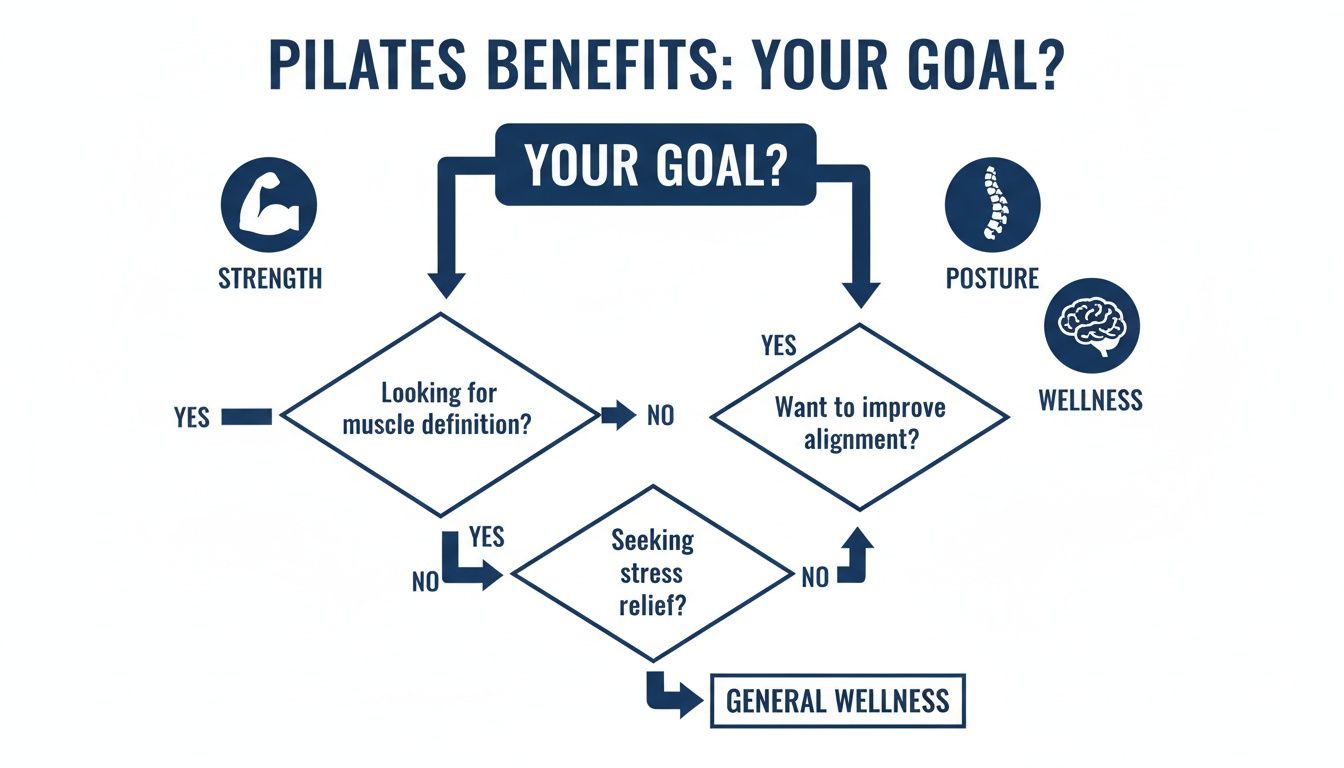
As you can see, the reformer is an incredibly versatile tool, whether you're focused on building functional strength, fixing your posture, or just improving your overall wellness.
Home Use vs. Professional Models
The market for Pilates reformers has exploded, and there are now fantastic options for both home gyms and professional studios. The biggest change? The boom in home use, which now accounts for a massive 45% of total market revenue. This shift, kicked into high gear by the post-pandemic demand for at-home fitness, has led to a flood of new compact and foldable models. Plus, a 40% jump in virtual fitness subscriptions since 2020 has made it easier than ever to get studio-quality instruction right in your living room.
Choosing between a home and a professional model really comes down to your specific needs. The table below breaks down the key differences to help you decide.
Home Use vs Professional Studio Pilates Reformer Comparison
| Feature | Home Reformer | Professional Studio Reformer |
|---|---|---|
| Footprint & Storage | Often compact, foldable, or designed to be stored vertically. Ideal for smaller spaces. | Larger, heavier, and requires a dedicated space. Not designed for portability. |
| Construction | Lighter materials like aluminum. Built for moderate use by one or a few people. | Heavy-duty wood or steel frames. Engineered for constant, high-volume daily use. |
| Features | Simplified features, fewer adjustment options. Focuses on core functionality. | Advanced features, extensive adjustability (footbar, gearbar, headrest), and more accessories. |
| Spring System | Fewer springs (often 4) with basic tension options. | More springs (typically 5-6) with a wider range of finely-tuned resistance levels. |
| Price Point | More affordable, with a lower entry price. | A significant investment, reflecting higher-grade materials and engineering. |
Ultimately, the best Pilates reformer is the one you’ll actually use. Whether you opt for a sleek, foldable home model or a robust studio machine, the right choice is the one that gets you moving consistently.
Ready to find your perfect match? You can explore a curated collection of professional-grade Pilates reformers. For more guidance, check out our Medeq Wellness Journal.
Getting Started With Foundational Reformer Exercises
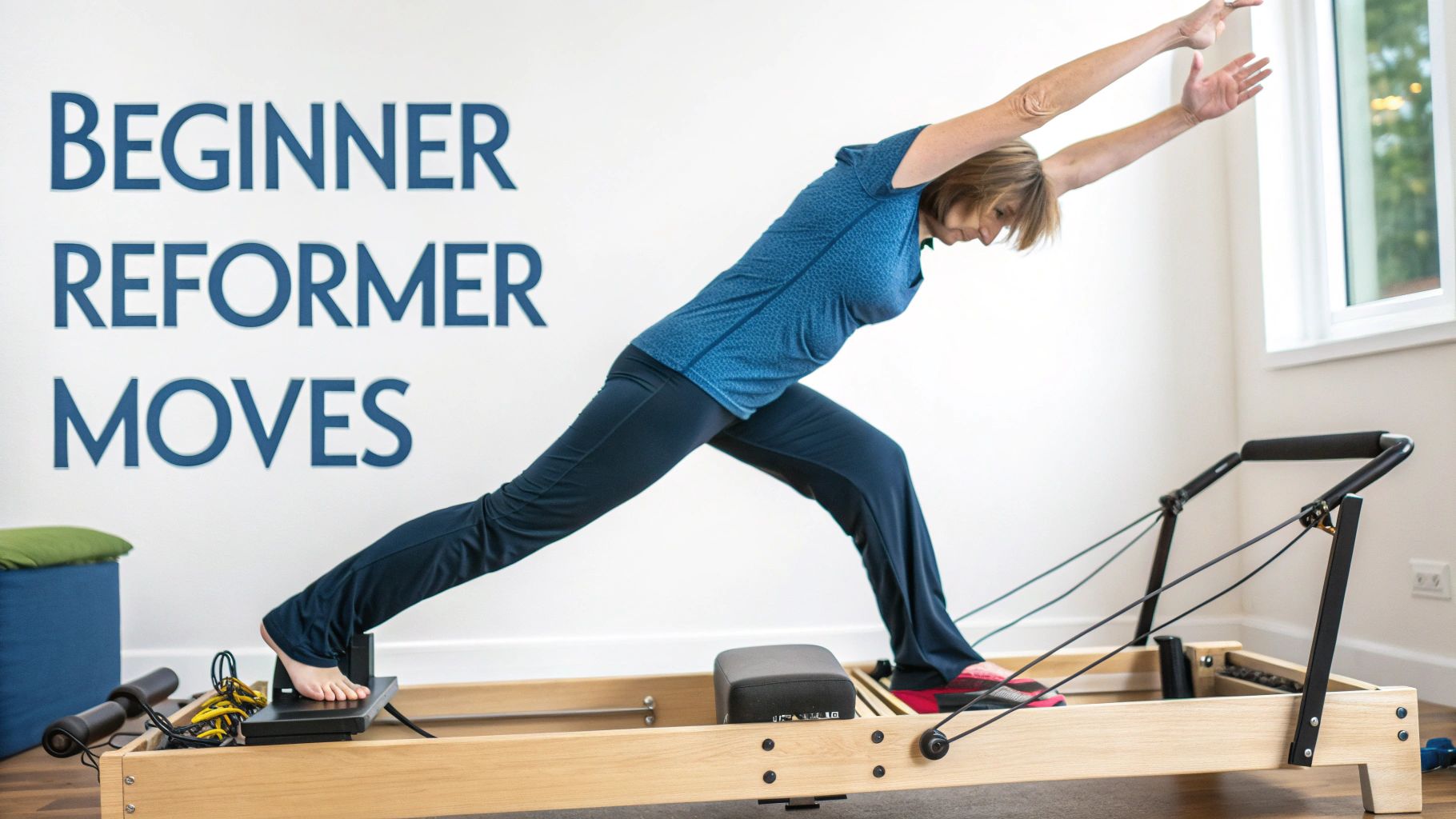
Starting out on a Pilates reformer is all about building a solid foundation for your health and wellness journey. It’s less about doing complicated movements and more about mastering the fundamentals with intention. Getting a feel for these core exercises will build your confidence and show you what this machine is truly capable of.
Think of these foundational movements as the alphabet of Pilates. Once you know them, you can form any word—or in this case, any exercise—in the repertoire. They teach you how to fire up your core, control the carriage, and work with the springs, not just against them.
Your Core Foundational Movements
Here are five essential exercises that every beginner should master. I’ll break down not just the "how" but the "why"—because understanding the purpose behind each movement is what really makes it click.
-
The Footwork Series: There's a reason this is almost always the first thing you do in a session. Lying on your back with your feet on the footbar, you press the carriage out and in. It seems simple, but it’s a powerhouse. It warms up your entire body, strengthens the legs and glutes, and helps you find proper alignment from your feet all the way up to your pelvis.
-
The Hundred: This is a classic for a reason. The Hundred is the ultimate core activator and a fantastic breathing exercise. You’ll lift your head and shoulders, extend your legs, and pump your arms while taking five sharp breaths in and five sharp breaths out. It builds serious abdominal endurance and gets your blood flowing.
-
Leg Circles: If you want to improve hip mobility and stability, this is your move. With one foot in a strap, you’ll guide your leg through controlled circles. This targets the deep stabilizers in your core and hips, which is absolutely crucial for better balance and fending off lower back pain.
-
Feet in Straps Series: Movements like Frogs or Leg Lowers, where both feet are in the straps, are amazing for hitting the lower abs and inner thighs. The straps give you a mix of support and resistance, letting you explore a full range of motion while keeping your core locked in.
-
Elephant: Standing on the carriage with your hands on the footbar, you'll use your abs to push the carriage back and pull it forward. It's a fantastic hamstring stretch and a powerful way to connect your core strength to your lower body.
How to Structure Your First Workouts
A good session isn't just a random list of exercises; it's a sequence with a purpose. You want a flow that warms your body up, challenges it, and then cools it down properly for optimal recovery.
A great beginner routine is all about flow and control. Start with lighter springs so you can nail the form. You can always add more tension later. The real goal is fluid, uninterrupted movement, not just grunting against heavy resistance.
Here’s a simple template for a solid 30-minute session:
- Warm-Up (5 minutes): Kick things off with the Footwork series to get your legs and core talking. Follow it up with some gentle pelvic curls to mobilize your spine.
- Core Work (10 minutes): Dive into The Hundred, then move to the Feet in Straps series to really fire up those deep abdominals.
- Full-Body Integration (10 minutes): Bring it all together with Leg Circles for hip mobility and Elephant for that hamstring and core connection.
- Cool-Down (5 minutes): Finish with some gentle stretches on the reformer. A mermaid stretch for your sides or a kneeling thigh stretch feels amazing here.
This foundational approach is the backbone of classes taught in studios all over North America, which happens to be the biggest market for Pilates Reformers. While sessions can cost $20-40, the investment in your health pays off. In fact, after home reformer use jumped 35% post-2020, more people are seeing the benefits firsthand. For athletes, it's a game-changer—studies show Pilates can cut injury rates by 25%. For a deeper dive into market trends, check out this report from HTF Market Insights.
Once you get comfortable, the sky's the limit. You can add more springs, increase your range of motion, or move on to more complex variations. For more programming ideas to keep your practice fresh, the Medeq Wellness Journal is a great resource.
Using the Reformer for Athletic Training and Recovery
The Pilates reformer has become a secret weapon for athletes and a powerful ally for anyone on a journey of physical recovery. It’s not just another piece of gym equipment. Its unique ability to build functional strength and fine-tune motor control makes it an invaluable tool for both boosting performance and accelerating healing.
For athletes, this is about more than just a workout—it's about re-engineering movement for their specific sport. The reformer excels at building strength through a full range of motion, which translates directly to more power and efficiency, whether you're a runner or a golfer.
By targeting those deep, often-neglected stabilizer muscles, it corrects the subtle imbalances that lead to nagging injuries. The result is a more resilient, balanced body. This focus on core-driven movement helps athletes generate force more effectively while protecting their joints from unnecessary strain.
A Gentle Path to Rehabilitation
In a rehab setting, the reformer provides a supportive, controlled environment for movement. It’s a game-changer for anyone recovering from joint surgery or dealing with chronic back pain. The machine’s framework and adjustable spring tension allow for gentle, pain-free exercise, helping re-establish those crucial neuromuscular connections without stressing healing tissues.
The sliding carriage assists movement while the springs offer just enough resistance, guiding the body through proper patterns. This process doesn't just strengthen the injured area; it retrains the entire body to move as an integrated, efficient system. That’s key for long-term recovery and preventing re-injury.
The beauty of the reformer in a recovery setting is its adaptability. It meets you exactly where you are, allowing you to work on stability and strength in a supported, horizontal plane before progressing to more challenging weight-bearing positions.
Optimizing Recovery Post-Workout
Recovery is just as important as the training itself, and the reformer plays a huge role here, too. A light reformer session can be a powerful form of active recovery, flushing out lactic acid, lengthening tight muscles, and improving circulation to sore areas. It helps reduce muscle soreness and gets your body ready for the next challenge.
To really supercharge the healing process, pairing your routine with other recovery techniques is highly effective. Contrast therapy, which involves alternating between hot and cold, is one of the best.
- Cold Therapy: A dip in a cold plunge or an ice bath helps constrict blood vessels, which can significantly reduce post-workout inflammation and numb sore muscles.
- Heat Therapy: Following up with time in a sauna or a warm bath dilates those blood vessels, boosting blood flow to deliver the oxygen and nutrients needed for tissue repair.
This combination of active recovery on the reformer and targeted therapies creates a robust system for healing. For those looking to build a comprehensive recovery protocol, exploring the best recovery tools for athletes can provide even more strategies to keep you performing at your peak.
Your Pilates Reformer Questions Answered
Jumping into the world of Pilates reformers always sparks a few questions. How often do I need to do it? Will it help me lose weight? Should I start at home or in a studio? It's totally normal to wonder about these things before you commit.
We're here to cut through the noise and give you clear, straightforward answers. Think of this as your practical guide to getting started with confidence. Let's tackle the questions we hear most often.
How Often Should I Use a Pilates Reformer to See Results?
Consistency is everything. If you really want to feel a difference in your body, aim for 2-3 sessions a week. That’s the sweet spot that gives your muscles time to adapt and get stronger without burning out.
Most people start to notice a real shift in their posture, core strength, and stability within the first few weeks. If you’re looking for more visible changes, like sculpted muscle tone, give it a solid 2-3 months of consistent practice.
Remember, rest days are just as important as workout days—that’s when the magic happens and your muscles repair. For the best all-around health benefits, try mixing your reformer workouts with some cardio. The two work together beautifully.
Is a Pilates Reformer Good for Weight Loss?
A reformer workout isn't like an all-out sprint on a treadmill, but it's an incredible tool for any weight loss plan. Its real power is in building lean muscle. The more lean muscle you have, the more calories your body burns at rest. It’s a long-term wellness strategy.
It's less about just burning calories and more about sculpting your body. The controlled resistance work creates that long, toned look so many people are after. Plus, the strength and flexibility you build will make your other workouts—including cardio—feel more powerful and effective.
The winning formula for weight loss is pairing reformer sessions with a healthy diet and regular cardio like swimming, cycling, or even brisk walking. The reformer builds the strong, stable engine that powers all your other fitness goals.
Can I Learn on a Reformer at Home or Do I Need Classes?
You can absolutely learn at home, but I always recommend starting with a few classes led by a certified instructor if you can. There's just no substitute for having an expert teach you the fundamentals—proper breathing, how to hold your spine, and how to fire up your deep core muscles.
Getting those basics right from the start is the key to preventing injuries and actually getting results. Once you’ve built that foundation, you can confidently switch to an at-home practice with online classes and feel good about your form.
If you do decide to start at home from day one, just be smart about it:
- Stick to beginner-level videos from well-known, reputable instructors.
- Put a mirror next to your reformer so you can keep an eye on your alignment.
- Focus on slow, controlled movements. It’s not about speed or heavy springs.
What Is the Difference Between Mat and Reformer Pilates?
The biggest difference is the equipment and where the resistance comes from. Mat Pilates is amazing because all you need is your own body. You use your body weight to build incredible core strength and control.
The reformer adds a whole new dimension. It uses a system of springs for adjustable resistance, which challenges your muscles in a completely different way and provides support when you need it. This helps develop long, lean muscle without adding bulk. The springs create tension through the entire movement, both as you push or pull away and as you control the return.
The reformer’s moving carriage, straps, and footbar also open up a massive range of exercises that just aren't possible on the mat. You can isolate tiny muscle groups with incredible precision. While both are fantastic forms of exercise, the Pilates reformer simply offers a more dynamic and versatile strength training experience.
For more in-depth articles on fitness, recovery, and overall well-being, explore the Medeq Wellness Journal.
At MedEq Fitness, we believe in equipping you with the best tools to achieve your health goals. Our physician-led selection of wellness and recovery equipment is designed to bridge the gap between exertion and renewal.
Discover our collection of premium, professional-grade Pilates reformers today.