Hyperbaric Chamber Cost: What to Expect in 2026
One of the first questions people ask when they start researching hyperbaric oxygen therapy is a simple one: how much does a hyperbaric chamber cost? The answer — as with most meaningful wellness investments — is that it depends. The range spans from around $4,000 for an entry-level soft-shell home unit all the way to $75,000 or more for a premium clinical-grade hard-shell capsule.
That's a wide window. But once you understand what drives hyperbaric chamber prices — pressure rating, shell type, oxygen system, build materials, and features — the numbers start to make a great deal of sense. This guide breaks it all down clearly so you can match your budget to your wellness goals without overpaying or under-buying.
If you're newer to the topic and want a foundation first, start with our guides on What Is Hyperbaric Oxygen Therapy and Hyperbaric Chamber Home Use. Then come back here for the full cost picture.
1. Hyperbaric Chamber Cost at a Glance: The Full Spectrum
The hyperbaric chamber market in 2026 segments cleanly into four price tiers, each reflecting a meaningful difference in what you're getting — not just a marketing premium. Here's a high-level overview before we go deeper into each tier.
| Price Tier | Typical Cost | Chamber Type | Pressure | Best For |
|---|---|---|---|---|
| Entry-Level | $4,000 – $8,000 | Soft-Shell | 1.3 ATA | First-time buyers, general wellness |
| Mid-Range | $9,000 – $15,000 | Soft-Shell Pro | 1.5 ATA | Daily home use, athletes, biohackers |
| Premium | $20,000 – $35,000 | Hard-Shell | 2.0 ATA | Serious users, home gyms, studios |
| Luxury / Clinical | $40,000 – $75,000+ | Hard-Shell Premium | 2.0 ATA | Med-spas, clinics, luxury wellness |
Understanding why each tier costs what it does is more valuable than any list of sticker prices. Let's work through every major cost driver.
2. What Drives Hyperbaric Chamber Costs?
Hyperbaric chamber pricing is not arbitrary. Every dollar difference between a $5,000 soft-shell unit and a $35,000 hard-shell capsule reflects something real — in materials, engineering, safety systems, or long-term performance. Here are the six primary cost drivers to understand before you buy.
Pressure Rating: ATA and Why It Matters to Price
Pressure is the single biggest cost lever in the hyperbaric chamber market. Chambers rated at 1.3 ATA require relatively modest construction tolerances — the pressure difference between inside and outside the chamber is small. Chambers engineered to hold 2.0 ATA must be built to substantially tighter standards, with reinforced shells, precision pressure-regulation systems, and redundant safety valves. All of that costs more to design, test, and manufacture. As a rule of thumb, every step up in ATA rating adds meaningfully to the price floor of the chamber. You can learn more about the difference between pressure levels in our 2026 Home Hyperbaric Chamber Buyer's Guide →
Shell Type: Soft vs. Hard
Soft-shell chambers use heat-welded TPU or reinforced nylon — flexible, lighter, and less expensive to produce. Hard-shell chambers require precision-machined aluminum alloy or stainless steel components with tight dimensional tolerances. The materials alone represent a significant cost difference, before you account for the more complex manufacturing processes hard-shell construction demands. For a deeper dive, see our Guide to Soft Shell Hyperbaric Chambers →
Oxygen Delivery System
The oxygen concentrator and compressor that power a chamber are significant cost components in their own right. Entry-level chambers use basic compressors paired with a separate external concentrator. Mid-range and premium units integrate the oxygen system fully — with PSA (Pressure Swing Adsorption) concentrators rated at 93–96% oxygen purity, oil-free compressors that extend service life, PM2.5 dual air filtration, and dehumidification systems. Our proprietary BIBS (Built-In Breathing System) takes this further — delivering oxygen directly and efficiently to the user's airway during each session.
Build Materials and Construction Quality
On the soft-shell side, heat-welded TPU with reinforced YKK zipper systems and medical-grade silicone seals cost meaningfully more than glued nylon construction. On the hard-shell side, the difference between standard aluminum alloy and Stainless Steel 304 (as used in our TimeCapsule Vision 750+) is measurable in both cost and longevity. Stainless steel resists corrosion and maintains pressure integrity for a longer useful life — making it genuinely more cost-effective over a 5–10 year horizon.
Control Systems and Technology
Basic chambers ship with simple external gauges and manual valves. Premium units feature dual interior and exterior digital touch screens, wireless control panels, remote pressure monitoring, automatic relief systems, and emergency depressurization protocols. Each layer of technology adds cost — but also adds safety, convenience, and the daily usability that drives long-term compliance with your session schedule.
Climate Control and Air Management
Spending 60–90 minutes in a pressurized environment requires a comfortable temperature. Entry-level chambers offer none. Mid-range units offer optional external climate management. Premium chambers offer fully integrated climate systems built into the host unit. Our Advanced Host Unit and Pressurized Climate Control options represent this end of the spectrum.
A $9,950 home chamber used 4 times per week over 3 years costs roughly $16 per session in pure capital terms — before electricity or consumables. A clinical session at a wellness center typically runs $150–$400. For consistent, frequent users, home ownership becomes the clear economic choice within the first year of regular use.
3. Price Tier Breakdown: What You Get at Each Level
Entry-Level: $4,000 – $8,000
Entry-level soft-shell chambers in this range typically operate at 1.3 ATA, use basic nylon or TPU construction, and include a simple compressor and separate oxygen concentrator. They're a legitimate starting point for first-time home HBOT users and general wellness use — but they tend to be noisier, less feature-rich, and shorter-lived than mid-range options. Control systems are typically basic external gauges with manual pressure valves.
If budget is the primary constraint, our TimeCapsule Air 1.5 at $9,885 (reduced from $12,250) sits at the top of this tier and the bottom of the mid-range — offering 1.5 ATA performance in a compact, capsule-style soft-shell design that punches well above its price point.
Mid-Range: $9,000 – $15,000
This is where serious home users live. Mid-range soft-shell chambers at 1.5 ATA offer a substantially better experience than entry-level in every measurable dimension: quieter compressors, better oxygen delivery, stronger materials, smarter controls, and more comfortable session formats. The TimePod Air 1.5 Pro at $9,950 is our flagship recommendation in this tier — with an industry-leading ≤20 dB cabin noise rating, wireless interior touch controls, U-shaped entry, and a full Pro Kit air-handling stack. It's also available in 8 colors to suit any home wellness space.
Premium: $20,000 – $35,000
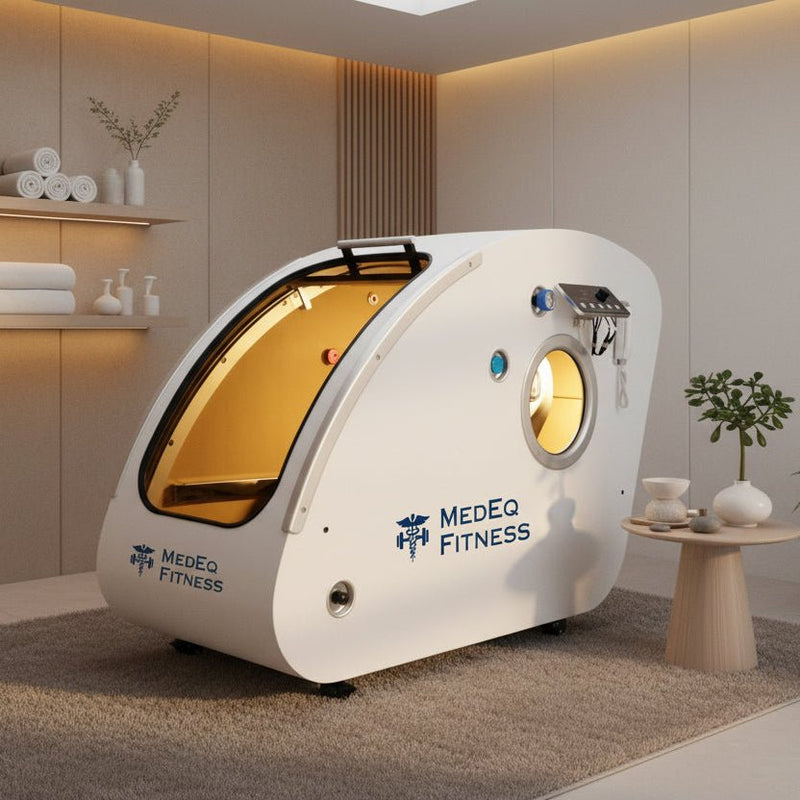
Hard-shell chambers in this range represent a step-change in performance. You're now in 2.0 ATA territory, with rigid aluminum or stainless steel construction, integrated PSA oxygen systems, BIBS compatibility, climate management, and dual digital control systems. Our TimeCapsule Vision 750+ (from $28,999) sits in this tier — a stainless steel lying capsule with panoramic viewing windows, dual touchscreen controls, and full 2.0 ATA performance. The TimeCapsule C750+ Aluminum Alloy (from $20,250) offers a compelling entry into hard-shell at a lower price point.
Luxury / Clinical: $40,000 – $75,000+
At the top of the market, premium hard-shell chambers offer maximum interior volume, showpiece aesthetics, and the most advanced integrated systems available outside a hospital setting. Our TimePod 2 ($42,999) brings a distinctive architectural triangular form factor and full 2.0 ATA in aircraft-grade aluminum — ideal for high-end spas and sports medicine installations where presence matters as much as performance. The TimeCapsule Ultra Seated 2.0 ATM ($62,500) is our most premium seated hard-shell offering, with a footprint and specification set suited to clinical and luxury wellness environments.
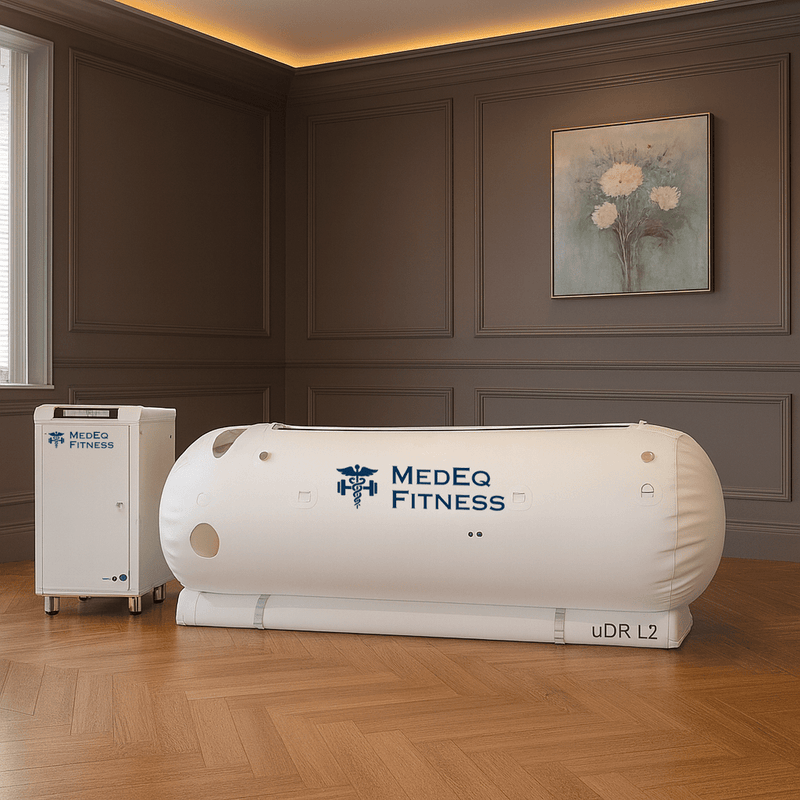 |
Entry / Mid · 1.5 ATA · Soft-Shell Capsule
TimeCapsule Air 1.5Our most accessible soft-shell chamber. Compact capsule format, 1.5 ATA pressure, and an integrated oxygen system — delivering genuine mild HBOT at the most approachable price in our collection. $9,885
Regular $12,250 — Save $2,365
View TimeCapsule Air 1.5 →
|
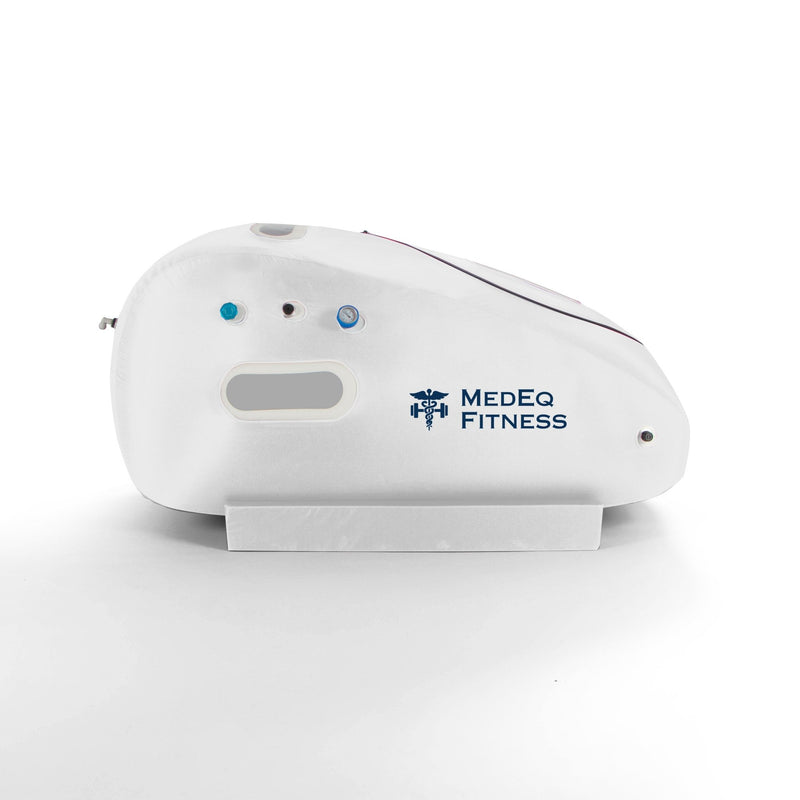 |
Mid-Range · 1.5 ATA · Soft-Shell Seated
TimePod Air 1.5 (Pro)Our best-in-class soft-shell 1.5 ATA chamber. Industry-leading ≤20 dB cabin noise, wireless interior controls, U-shaped entry, sit/recline/lie-flat positions, and Pro-grade dual air handling. The ideal daily home chamber. $9,950
Regular $12,500 — Save $2,550
View TimePod Air 1.5 Pro →
|
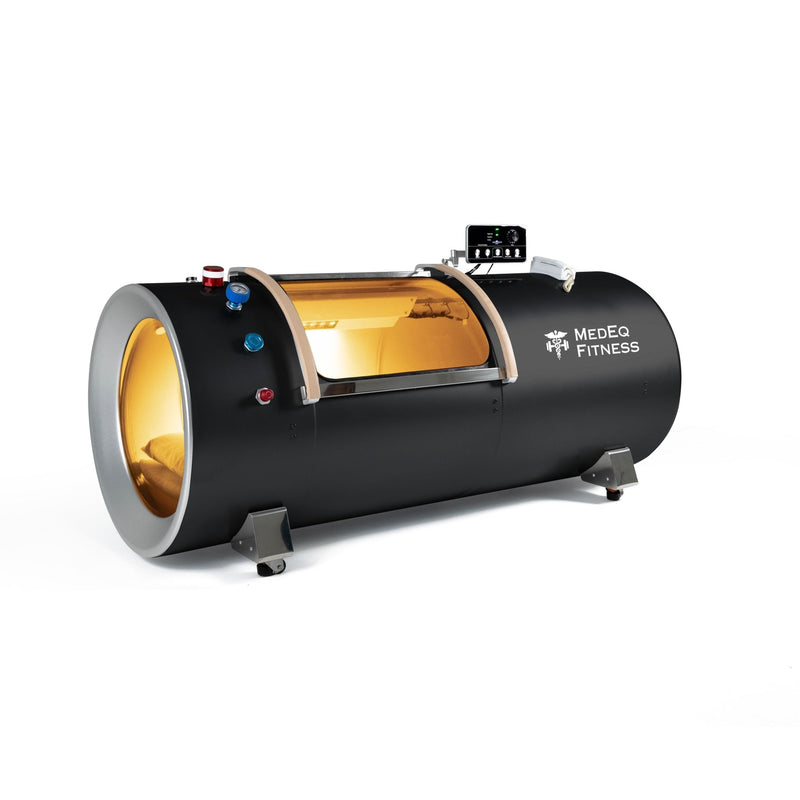 |
Premium · 2.0 ATA · Hard-Shell Capsule
TimeCapsule Vision 750+The flagship hard-shell home chamber. Stainless Steel 304 construction, full 2.0 ATA, BIBS-compatible oxygen delivery, dual touchscreen controls, panoramic viewing window, and integrated climate management. From $28,999
Regular $29,999 — Save $1,000
View TimeCapsule Vision 750+ →
|
 |
Luxury · 2.0 ATA · Hard-Shell Triangular
TimePod 2A showpiece hard-shell chamber in a distinctive triangular architectural format. Aircraft-grade aluminum alloy, full 2.0 ATA, maximum interior volume, BIBS-compatible oxygen delivery. Ideal for high-end spas and sports medicine installations. $42,999
Regular $45,999 — Save $3,000
View TimePod 2 →
|
4. Clinical Sessions vs. Home Ownership: The True Cost Comparison
One of the most important cost calculations a prospective buyer can do is compare the cumulative cost of clinic visits against the upfront and ongoing cost of home ownership. The math almost always favors ownership for anyone committed to regular HBOT sessions.
| Scenario | Per Session Cost | Sessions / Week | Year 1 Total | 3-Year Total |
|---|---|---|---|---|
| Clinical center (typical) | $150 – $400 | 3× | $23,400 – $62,400 | $70,200 – $187,200 |
| Wellness spa (mid-range) | $75 – $150 | 3× | $11,700 – $23,400 | $35,100 – $70,200 |
| TimePod Air 1.5 Pro (home) | ~$16 (amortized) | 4× | $9,950 (purchase) | ~$10,700 incl. running costs |
| TimeCapsule Vision 750+ (home) | ~$35 (amortized) | 4× | $28,999 (purchase) | ~$30,500 incl. running costs |
For anyone doing 3 or more sessions per week, a home hyperbaric chamber pays for itself within 12–18 months compared to clinical session pricing — and delivers every subsequent session essentially free.
— MedEq Wellness TeamThe running costs of a home chamber are modest: electricity for the compressor and concentrator (typically $1–$3 per session depending on your utility rate), occasional filter changes, and annual service of the oxygen concentrator. We cover all of this in our guide on Hyperbaric Chamber Home Use →
5. Full MedEq Model Cost Comparison (2026)
Here's our complete 2026 pricing across the MedEq hyperbaric chamber collection, with the key specs that justify each price point. Use this alongside our interactive comparison tool → to find your ideal match.
| Model | Type | Pressure | Shell | Sale Price | Best For |
|---|---|---|---|---|---|
| TimeCapsule Air 1.5 | Soft · Capsule | 1.5 ATA | TPU | $9,885 | Entry home use |
| TimePod Air 1.5 Pro | Soft · Seated | 1.5 ATA | TPU Pro | $9,950 | Best daily home use |
| TimePod Air Wheelchair 1.4 | Soft · Vertical | 1.4 ATA | TPU | $12,499 | Accessible / rehab |
| TimeCapsule C750+ Aluminum | Hard · Capsule | 2.0 ATA | Aluminum Alloy | From $20,250 | Premium home / studio |
| TimeCapsule Vision 750+ | Hard · Capsule | 2.0 ATA | Stainless Steel 304 | From $28,999 | Luxury home / med-spa |
| TimeCapsule Vision C900+ | Hard · Capsule | 2.0 ATA | Hard-Shell | From $29,500 | Wider interior, luxury |
| TimePod 2 | Hard · Triangular | 2.0 ATA | Aircraft Aluminum | $42,999 | Spa / sports medicine |
| TimeCapsule Ultra Seated 2.0 | Hard · Seated | 2.0 ATA | Premium Hard-Shell | $62,500 | Clinic / ultra-premium |
| Smart Oxygen Therapy Chamber | Smart · Work-Inside | Advanced | Premium | $69,950 | Executive / productivity |
Military personnel and healthcare professionals qualify for special pricing across our entire collection. See our Military & Healthcare Savings page →
6. Hidden and Ongoing Costs: What to Budget Beyond the Purchase Price
The sticker price of a hyperbaric chamber is the biggest number, but it's not the only number. Smart buyers account for the full cost of ownership before committing. Here's what else to factor in.
| Cost Category | Soft-Shell 1.5 ATA | Hard-Shell 2.0 ATA | Frequency |
|---|---|---|---|
| Electricity (compressor + O₂) | $1 – $2 per session | $2 – $4 per session | Per use |
| Air filter replacement | $20 – $60 | $40 – $100 | Every 6–12 months |
| O₂ concentrator service | $50 – $150 | $100 – $250 | Annually |
| Zipper / seal maintenance | $0 – $30 | N/A (hard-shell door) | As needed |
| Accessories (BIBS, battery backup) | Optional add-ons | Optional add-ons | One-time |
| Setup / delivery | Typically included | Sea or air freight | One-time |
Running costs for a soft-shell 1.5 ATA chamber used 4 times per week typically run $200–$400 per year — a negligible addition to the cost of ownership. For context, that's less than two clinical sessions. Hard-shell chamber running costs are modestly higher but remain minimal relative to the purchase price.
For peace of mind during power interruptions, we recommend adding a battery backup to your setup — particularly for the oxygen concentrator. Our guide covers this in full: Battery Backup for Oxygen Concentrators →
The BIBS (Built-In Breathing System) upgrade improves oxygen delivery efficiency and is worth adding to any chamber that supports it. Explore all add-ons in our Hyperbaric Chamber Accessories & Upgrades collection →
7. What Separates Good Value From a Bad Deal
Price alone doesn't tell you whether a hyperbaric chamber is worth buying. There are chambers in the $5,000–$8,000 range that represent genuine value and others that will disappoint within a year. Here's what separates a smart purchase from a regret.
Warranty Coverage
A quality home chamber should come with at least a 2-year warranty on the shell and zipper system, and a 1-year warranty on the oxygen concentrator and compressor. Shorter warranties on compressed-air equipment are a signal of lower-quality components. MedEq chambers include standard warranty coverage across all major components — details are on each product page.
Safety Certification
Look for chambers carrying ISO and/or CE certifications. These certifications reflect manufacturing quality standards and safety testing, even though they do not constitute FDA approval. Chambers without any third-party certification represent unknown safety risk. Every chamber in the MedEq collection carries appropriate certifications — see our regulatory disclosure page for full details.
Build Verification: Heat-Welded vs. Glued
On soft-shell chambers, the difference between heat-welded TPU seams and glued construction is significant. Glued seams degrade with repeated pressurization cycles and can release residual adhesive compounds into the chamber air. Heat-welded construction lasts longer, holds pressure more consistently, and is the standard for all MedEq soft-shell chambers.
Oxygen Purity Ratings
A chamber paired with an oxygen concentrator rated at 90–96% O₂ purity will deliver meaningfully better sessions than one paired with a basic unit rated at 80–85%. This spec is often buried in technical documentation but makes a real difference to the quality of oxygen delivery you experience.
After-Sales Support
Hyperbaric chambers are complex pieces of equipment. Manufacturer and seller support matters — particularly for setup, calibration, and any issues that arise during the first weeks of use. MedEq's expert team is available by phone at 1-224-208-8151 (Mon–Fri, 9am–7pm) and by email at info@medeqfitness.com.
Ready to Find Your Chamber at the Right Price?
Browse the full MedEq collection — every model, every price tier. Use our interactive comparison tool to match specs to your budget and wellness goals.
Shop All Hyperbaric Chambers →8. When to Spend Less — and When Spending More Makes Sense
Not everyone needs a $30,000 hard-shell capsule. And not everyone should buy the cheapest chamber available. Here's a practical framework for matching your budget to your actual needs.
Spend Less (Entry to Mid-Range) If You:
- Are new to HBOT and want to experience it before committing to a premium unit
- Have space constraints and need a portable, storable option
- Plan to use the chamber 2–3 times per week for general wellness and recovery
- Have a budget under $15,000 and want the best quality within that range
- Are primarily interested in 1.5 ATA mild HBOT protocols
Spend More (Premium to Luxury) If You:
- Want 2.0 ATA performance and the clinical-grade protocols that pressure enables
- Are equipping a med-spa, wellness studio, or sports medicine practice where ROI justifies higher upfront cost
- Value long-term durability and expect to use the chamber daily for 5+ years
- Want an integrated, turnkey system with minimal manual setup or adjustment
- Are serious about longevity optimization and want the most comprehensive home HBOT protocol available
If you're still unsure which tier is right for you, our 2026 Buyer's Guide walks through each tier in detail, and our model comparison tool lets you filter by budget, pressure, and use case.
9. Frequently Asked Questions About Hyperbaric Chamber Costs
Home hyperbaric chambers range from approximately $4,000 for basic entry-level soft-shell units up to $75,000+ for premium hard-shell luxury models. The most popular range for serious home users is $9,000–$30,000, covering high-quality 1.5 ATA soft-shell and 2.0 ATA hard-shell options.
For anyone doing 3+ sessions per week, home ownership is almost always cheaper over a 12–18 month period. Clinical sessions typically cost $150–$400 each. A $9,950 home chamber amortizes to roughly $16 per session over 3 years of regular use — a fraction of the clinical cost. See our cost comparison table in Section 4 above.
We recommend not going below $8,000–$10,000 for a soft-shell home chamber if you want reliable performance, quality construction, and adequate safety systems. Our TimeCapsule Air 1.5 at $9,885 represents the lowest price point at which we're confident in the quality of the chamber you're getting.
Yes, but they're modest. Expect $1–$4 per session in electricity, $20–$100 per year in filter replacements, and an annual concentrator service of $50–$250. Total annual running costs for most home users fall between $200 and $500 — negligible compared to the purchase price or clinical session costs.
Within the legitimate market, yes — higher prices reflect higher pressure capacity, better build materials, more advanced oxygen delivery systems, better safety features, and longer useful life. The key is ensuring you're comparing chambers that are genuinely certified and built to a verifiable standard. See Section 7 of this article for the quality markers to look for at any price point.
Yes. MedEq offers flexible payment options. Review our Payment Policy page for details, or contact our team to discuss your options directly.
In some circumstances, hyperbaric chambers may qualify as a deductible medical expense — particularly if prescribed by a physician for a qualifying condition. This is a tax and legal question specific to your situation; consult a qualified tax advisor. MedEq cannot provide tax or legal advice.
10. Final Thoughts: Making a Smart Hyperbaric Chamber Investment
The hyperbaric chamber market in 2026 offers genuine options at every meaningful price point — from the accessible entry of our TimeCapsule Air 1.5 to the clinical-grade performance of the TimeCapsule Ultra Seated 2.0 ATM. What matters most isn't finding the cheapest option or the most expensive one — it's finding the chamber whose pressure rating, build quality, features, and price point genuinely match your wellness goals and your commitment to regular use.
The users who get the most from their investment are those who show up consistently — 3, 4, or 5 times a week — over months and years. A chamber that makes every session comfortable, quiet, and convenient will pay for itself many times over. One that's awkward to enter, loud to run, or unreliable under pressure will collect dust regardless of its price tag.
Our team is here to help you get this decision right. Call us at 1-224-208-8151 (Mon–Fri, 9am–7pm), browse our FAQ, or read what our customers have to say on our testimonials page. You can also use our interactive chamber comparison tool to narrow down your options by budget, pressure, and use case.
Our best selling Hard Chamber - TimeCapsule Vision C750+ 2.0
Browse the full MedEq Hyperbaric Chamber Collection → · Read our 2026 Buyer's Guide → · Learn about BIBS Upgrades → · Explore Accessories & Upgrades →
— The MedEq Wellness Team
Continue Reading from the MedEq Wellness Journal