A Complete Guide to Fitness Recovery Systems for Enhanced Wellness
True fitness isn't just about the work you put in; it's about how well your body recovers and rebuilds. This is where fitness recovery systems come in, marking a huge shift from simply taking a day off to actively recharging your body and mind. These advanced tools are designed to support your body's natural repair cycles, reduce inflammation, and restore balance, helping you achieve your wellness goals faster.
Going Beyond Rest Days With Modern Workout Recovery
The old-school approach to workout recovery was simple: take a day off, maybe use a foam roller, and wait. While rest is non-negotiable for health, we now know we can do much more to support our body's healing processes.
Fitness recovery systems turn your downtime into a strategic wellness advantage. Instead of passively waiting for soreness to fade, these tools proactively restore your body. Think of workout recovery not just as a break, but as a core pillar of peak health and performance, standing shoulder-to-shoulder with your training and nutrition.
Core Goals Of Active Recovery for Better Health
Active workout recovery isn't just about feeling better; it's about creating specific, positive biological changes that enhance overall wellness. The main health benefits are clear:
- Reduce Delayed Onset Muscle Soreness (DOMS): By flushing out metabolic byproducts and improving blood flow, these tools can significantly ease the muscle pain that often follows a challenging workout.
- Boost Circulation: Enhanced blood flow acts like a supercharged delivery service for your muscles, bringing in more oxygen and vital nutrients—the essential materials needed for tissue repair and growth.
- Calm the Nervous System: Therapies like saunas, contrast therapy, or cold plunges help your body shift from a stressed "fight-or-flight" state to a calm "rest-and-digest" state. This is absolutely critical for deep healing, hormonal balance, and high-quality sleep.
This wellness-focused approach is why the recovery market is exploding. What was once a niche for pro athletes is now a central part of the global fitness and wellness economy. One recent market analysis projects the global fitness recovery services market will rocket from USD 8.3 billion in 2025 to USD 26.8 billion by 2035.

This is what modern wellness is all about—a proactive, intentional approach to balancing physical stress with mindful restoration. To truly enhance your health, you need to understand the full range of strategies to speed up muscle recovery.
Modern recovery is about being an active participant in your body’s healing process. It's the conscious application of science and technology to recharge your physical and mental batteries, ensuring you return stronger and more resilient for life's demands.
By integrating these powerful wellness tools, you take control of your healing timeline. To see how specific technologies are changing the game, check out our guide on biohacking recovery tools. And for more expert-driven content, be sure to visit the MedEq Wellness Journal.
How Fitness Recovery Systems Actually Work
To truly appreciate modern recovery tools, you have to understand the science. Fitness recovery systems aren't just feel-good gadgets; they're engineered to trigger specific, powerful physiological responses that promote health and healing. Think of them as different specialists on your personal wellness team—each one targets a unique biological pathway.
We can break them down into three main categories based on how they work: temperature, pressure, and light.
Achieving peak performance and wellness is always a balancing act. It’s not just about the grind; it’s about a smart, dedicated focus on training, nutrition, and workout recovery. All three must work in harmony for optimal health.
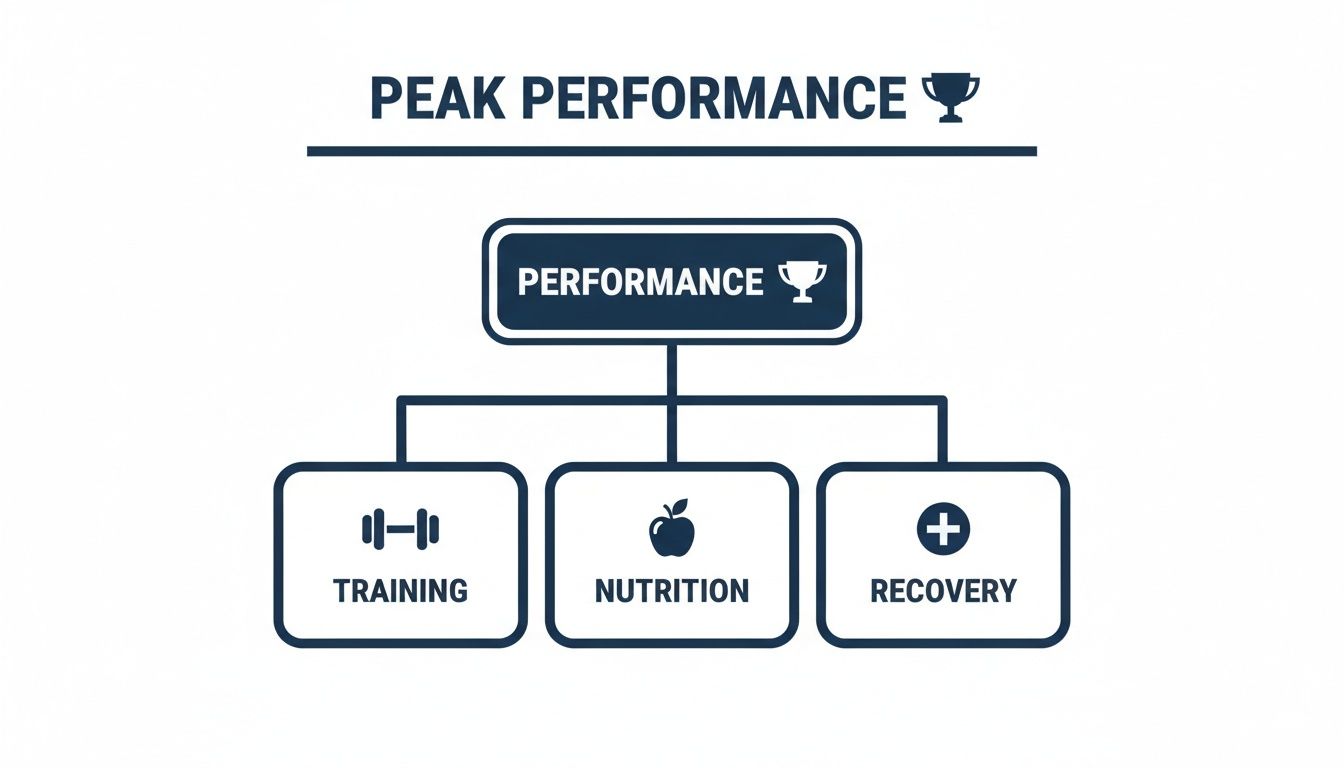
This graphic drives home the point that recovery isn't an optional add-on. It's a foundational pillar of health, just as crucial as your training sessions and your diet.
Temperature-Based Systems
The recovery systems most people are familiar with use temperature to manipulate the body's circulatory system. Imagine your blood vessels are a vast network of highways. These systems act as traffic controllers, either speeding up or slowing down blood flow to optimize how your body cleanses waste and delivers nutrients to tired muscles.
Cold plunges and ice baths are classic examples. They use cold to cause vasoconstriction, which is the tightening of your blood vessels. This process is like wringing out a dirty sponge—it forces metabolic byproducts out of your muscles and into your lymphatic system to be flushed away, reducing inflammation.
On the flip side, saunas use heat to do the opposite, causing vasodilation, or the widening of your blood vessels. This opens the floodgates, allowing a surge of oxygen-rich and nutrient-packed blood to reach your tissues. This fresh supply gives your muscles the raw materials they need to repair and rebuild after a tough workout.
When you alternate between hot and cold, you engage in contrast therapy. This creates a powerful "pump" effect, rapidly switching between vasoconstriction and vasodilation to dramatically boost circulation, reduce systemic inflammation, and kick the entire recovery process into high gear.
By strategically using temperature, you’re giving your body a systemic reset, enhancing its natural ability to heal from the stress of exercise and daily life.
Pressure-Based Systems
Next up are systems that use pressure to supercharge your body’s repair mechanisms. These wellness tools work by changing the atmospheric pressure around you, which directly impacts how much oxygen your body can absorb and utilize for healing.
The most well-known pressure-based system is hyperbaric oxygen therapy (HBOT). Inside a hyperbaric chamber, you breathe almost pure oxygen in a highly pressurized environment. This allows your lungs to absorb far more oxygen than they could at normal air pressure.
This super-oxygenated blood plasma can then travel to areas with restricted blood flow due to injury or inflammation. It delivers a massive boost of the fuel your cells need for energy production and tissue repair, effectively speeding up healing from the inside out and promoting profound wellness.
Light-Based Systems
Finally, some of the most advanced recovery systems work at a cellular level, using specific wavelengths of light to directly influence how your cells function. Instead of manipulating circulation or oxygen delivery, these systems go straight to the power source within your cells.
Red light therapy, also known as photobiomodulation, is the star player here. It uses precise wavelengths of red and near-infrared light that penetrate your skin and are absorbed by your cells.
This light energy stimulates the mitochondria, the "powerhouses" of your cells. By giving the mitochondria an energy boost, red light therapy helps them produce more adenosine triphosphate (ATP), which is the body's main energy currency. With more ATP available, your cells can repair themselves, regenerate, and fight inflammation far more efficiently, leading to enhanced skin health, reduced pain, and better muscle recovery.
For a deeper look into the science, you can find out more about how red light therapy works and the specific health benefits it offers.
Each of these systems provides a unique path toward better recovery and wellness. To help you choose, here’s a quick-glance table comparing the heavy hitters.
Comparing Key Fitness Recovery Technologies
| Recovery System | Primary Mechanism | Main Health Benefits | Best For |
|---|---|---|---|
| Cryotherapy/Cold Plunge | Vasoconstriction | Reduces inflammation, muscle soreness, and swelling; boosts immune function | Post-workout soreness, acute injury management, reducing systemic inflammation |
| Sauna (Infrared/Traditional) | Vasodilation | Improves circulation, promotes detoxification through sweat, aids muscle relaxation | General wellness, stress reduction, improving cardiovascular health, post-workout recovery |
| Hyperbaric Oxygen (HBOT) | Increased Oxygen Saturation | Accelerates healing, reduces inflammation, supports cellular repair, enhances cognitive function | Serious athletes, post-surgery recovery, chronic injury, anti-aging protocols |
| Red Light Therapy (RLT) | Photobiomodulation | Boosts cellular energy (ATP), reduces pain and inflammation, improves skin health and collagen | Targeted pain relief, muscle recovery, anti-aging, pre-workout priming |
| Compression Therapy | Mechanical Pressure | Enhances circulation, reduces swelling and fluid buildup, decreases muscle soreness | Post-workout flushing of metabolic waste, reducing delayed-onset muscle soreness (DOMS) |
By understanding the health benefits of each technology, you can start to figure out which ones make the most sense for your personal wellness plan.
The Health and Wellness Benefits You Can Expect
Knowing how fitness recovery systems work is interesting, but what truly matters are the results. Beyond the sophisticated mechanisms, the real magic lies in the tangible health and wellness benefits you’ll experience in your performance and daily life. These systems offer a suite of evidence-backed perks that genuinely accelerate repair and boost your overall well-being.
One of the first things people notice is a significant reduction in post-workout muscle soreness. By kicking your circulation into high gear and flushing out metabolic waste, these therapies take the edge off delayed onset muscle soreness (DOMS). This means you can return to your activities faster, feeling refreshed and ready.
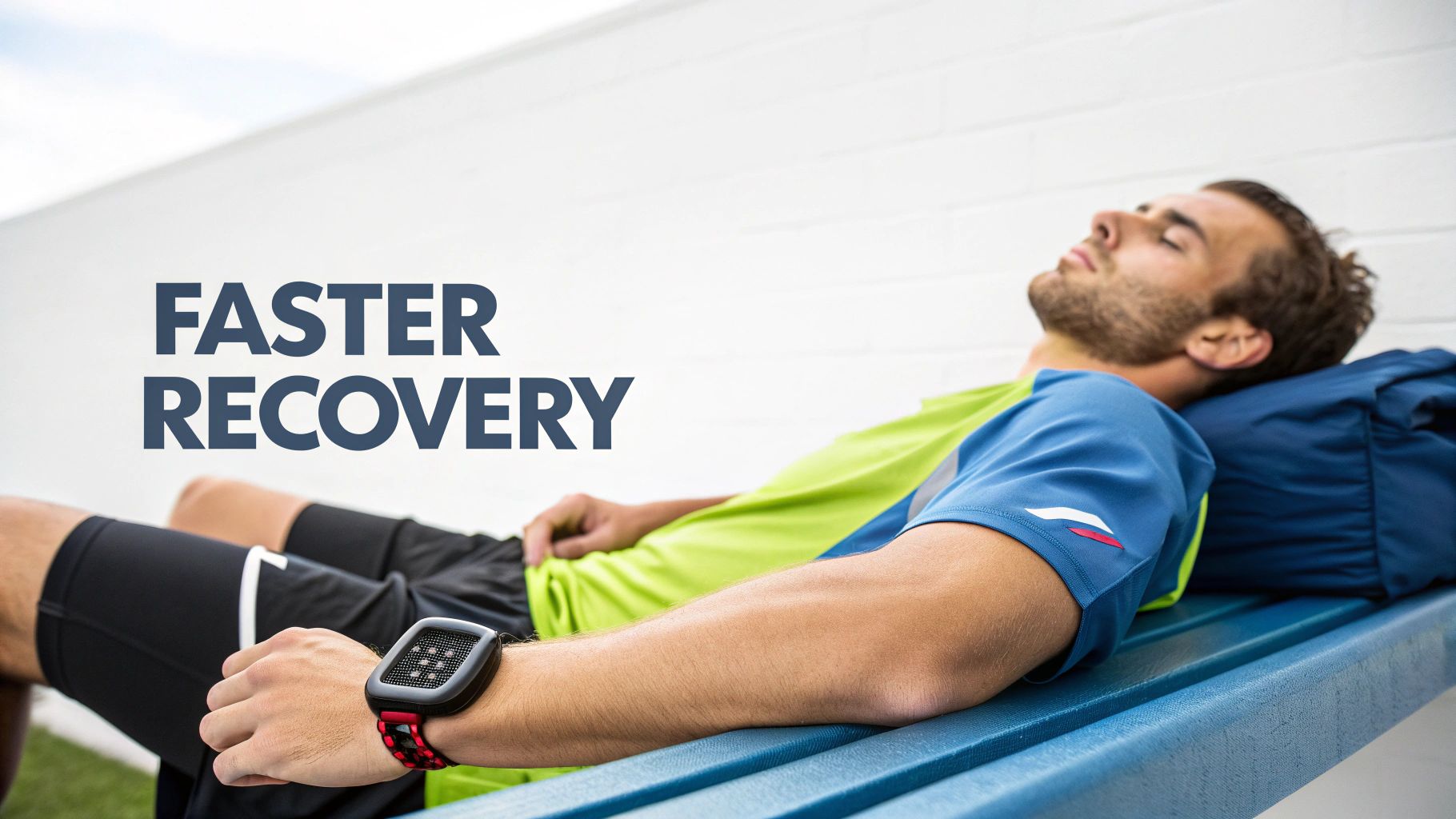
This supercharged muscle repair is all about blood flow. Think of your circulatory system as a nutrient delivery service. Recovery tools like saunas and contrast therapy open up all the delivery routes, rushing oxygen and vital building blocks to your tired muscles so they can rebuild stronger and more efficiently.
Reducing Inflammation and Fortifying Your System
Pushing yourself in a workout creates micro-tears in your muscles, which triggers a natural inflammatory response. This is a crucial part of getting stronger. However, when inflammation becomes chronic, it can sabotage your recovery and contribute to long-term health issues. This is where fitness recovery systems step in to promote balance.
Cold plunges are champions at taming systemic inflammation. The intense cold triggers a powerful anti-inflammatory cascade, soothing overworked tissues and calming your entire system. It’s not just about workout recovery; it’s about dialing back the chronic, low-grade inflammation linked to many modern health concerns, thereby promoting overall wellness.
Optimizing your body’s recovery potential also requires understanding the intricate relationship between exercise and hormone health. Smart recovery helps manage stress hormones like cortisol, creating a balanced internal environment that is crucial for both physical and mental well-being.
Enhancing Sleep and Nervous System Resilience
The health benefits don't stop at your muscles. Many of these therapies have a profound impact on your nervous system and sleep quality—two absolute game-changers for any wellness strategy. Regular sauna use, for instance, is well-known to promote deeper, more restorative sleep.
The heat helps your body unwind and your mind quiet down, making it easier to fall asleep and stay asleep. Better sleep quality gives your body the primetime it needs for its natural repair cycles, which are firing on all cylinders while you’re in deep slumber.
At the same time, tools like cold plunges act as a workout for your autonomic nervous system, making it more resilient. Each plunge is a short, controlled stressor that trains your body to shift from its "fight-or-flight" state to its "rest-and-digest" calm mode more effectively.
A key metric used to track nervous system recovery is Heart Rate Variability (HRV). A higher HRV indicates a well-recovered, adaptable nervous system ready to handle stress. Many people using these recovery systems report a noticeable improvement in their HRV scores—objective proof of their positive health impact.
By incorporating these practices into your routine, you’re actively conditioning your body to handle stress better, whether from a workout or a demanding day. This resilience translates to sharper focus, sustained energy, and a genuine sense of well-being. For more expert insights into building a robust recovery routine, visit the MedEq Wellness Journal.
Choosing the Right Recovery System for You
With so many powerful fitness recovery systems available, picking the right one can feel daunting. But it doesn't have to be.
The secret is to match the technology to your specific wellness goals, your space, and your lifestyle. What works for a professional athlete is different from what a home gym enthusiast needs to feel their best.
Let's break down how to make the right choice for three different scenarios. The goal is to help you invest wisely in your health, so you see real, tangible results from your workout recovery routine.
For the Home Gym Enthusiast
When building your personal wellness sanctuary, the decision comes down to a blend of performance, space, and even aesthetics. You need tools that deliver real health benefits without turning your home into a sterile clinic.
The best fits are often systems that are compact and easy to integrate into your daily life. A sleek, modern cold plunge or a portable red light therapy panel can offer serious wellness perks while complementing your home's design. Look for features like quiet operation and simple setup—these are key to maintaining a peaceful home environment. It’s all about finding that perfect balance between high-end performance and everyday practicality.
The best home recovery system is one that you'll actually use consistently. If it's easy to use and doesn't take up the whole room, it will become a seamless part of your daily wellness routine, not a chore you avoid.
For instance, many of today's saunas are designed with this in mind, with compact footprints that can fit into a spare room or a large closet. Likewise, exploring the best hyperbaric chamber for home use reveals options that bring advanced recovery home without needing a dedicated facility.
For the Competitive Athlete
When your performance is measured in fractions of a second, your recovery gear needs to be as serious as your training. For competitive athletes, the focus shifts away from aesthetics and squarely onto precision, data, and anything that provides a measurable edge.
This means seeking recovery systems that offer pinpoint control and serious power. A cold plunge is no longer just a cold tub; it’s a machine that can hold an exact temperature of 39°F to trigger optimal vasoconstriction. A hyperbaric chamber needs to hit specific pressures, like 1.5 ATA or higher, to supercharge oxygen saturation and slash healing time. These are the details that separate general wellness from true performance enhancement.
Key things for athletes to look for:
- Precise Control: The ability to dial in exact temperatures, pressures, or light wavelengths.
- Durability: Equipment built to withstand heavy, daily use without breaking down.
- Performance Metrics: Systems that help improve trackable data points like HRV and sleep scores.
For Wellness Clinics and Commercial Gyms
For a business owner, choosing recovery systems is a strategic move. It's about meeting client wellness needs, ensuring durability, and getting a solid return on investment (ROI). Your equipment must be robust enough to serve a wide range of clients, all day, every day.
Durability and low maintenance are non-negotiable. You need systems built with commercial-grade materials that are also easy for staff to clean and operate. Features that appeal to everyone—like user-friendly touchscreens on saunas or adjustable settings on massage chairs—are critical for keeping clients happy and returning.
From a business standpoint, recovery is no longer an afterthought; it's a powerful revenue stream. The U.S. fitness industry is on track to generate USD 45–46 billion in 2025, and industry experts point to recovery services as a key driver for member retention and growth. You can see more insights on the evolving gym industry on mmcginvest.com.
For more expert advice and wellness strategies, be sure to explore our other articles on the MedEq Wellness Journal.
Building Your Weekly Recovery Protocol
Owning the best recovery gear is one thing. Knowing exactly how and when to use it to get real health benefits is another. A structured weekly protocol is what separates random acts of recovery from a deliberate strategy for peak wellness. It's about building a routine that actively supports your body, not just something you do when you feel worn down.
A smart protocol is a schedule that syncs with your body's demands throughout the week. This is all about timing. For instance, using a sauna before a workout can help warm up your muscles and improve flexibility. Using it after a tough session is all about boosting circulation to kickstart the repair process and promote relaxation.
The secret to seeing lasting health benefits is consistency. A well-planned week makes workout recovery a non-negotiable part of your wellness equation, not an afterthought.
Stacking Therapies for Compounded Effects
One of the most powerful strategies is stacking—combining different recovery tools to create a synergistic effect that's greater than the sum of its parts. This is how you maximize your results, addressing multiple recovery pathways in one efficient session.
The classic stack is contrast therapy: moving from a hot sauna straight into a cold plunge. The intense heat of the sauna opens up your blood vessels (vasodilation), flooding your muscles with fresh, oxygen-rich blood. Then, the immediate shock of the cold plunge slams them shut (vasoconstriction), powerfully flushing out metabolic waste. It’s a massive pump for your entire circulatory system that offers immense health benefits.
Here’s a simple way to structure a contrast therapy session:
- Step 1: Spend 15-20 minutes in a sauna to increase core temperature and promote vasodilation.
- Step 2: Immediately transition into a 2-3 minute cold plunge to trigger vasoconstriction and reduce inflammation.
- Step 3: Rest for 5-10 minutes, then repeat the cycle 2-3 times for the full wellness effect.
This powerful one-two punch does more than just reduce soreness; it actively trains your nervous system and dramatically speeds up your entire recovery timeline.
Sample Weekly Recovery Schedules
Your ideal schedule will depend on your specific training and lifestyle. There’s no one-size-fits-all answer, but here are a couple of examples to inspire you.
Example 1: The Strength Athlete's Peak Week
- Monday (Heavy Leg Day): A 5-minute post-workout cold plunge to immediately blunt inflammation and kickstart recovery.
- Wednesday (Heavy Upper Body): A full contrast therapy session (3 rounds of sauna/cold plunge) to boost circulation and feed repairing muscles.
- Friday (Full Body Power): 15 minutes of red light therapy on major muscle groups, followed by a sauna session to drive deep relaxation and cellular energy.
- Sunday (Active Recovery): After light cardio, a longer 20-30 minute sauna session for a full system detoxification and nervous system reset.
Example 2: The Busy Professional's Weekend Wellness Reset
- Saturday Morning: Kick off the weekend with a 20-minute sauna session to melt away stress and improve circulation.
- Saturday Afternoon: After a workout or weekend activity, use a red light therapy panel for 15 minutes to target any nagging aches or sore spots.
- Sunday Evening: Wind down the weekend with a quick 3-minute cold plunge to reset the nervous system, followed by light stretching to prepare you for the week ahead.
Personalizing Your Protocol with Data
Ultimately, the goal is to create a routine perfectly dialed into your unique physiology. Technology makes this easier than ever. The global smart fitness market is expected to rocket from USD 71.86 billion in 2025 to USD 186.06 billion by 2034, as more people use apps and smart devices to create a constant feedback loop.
Home users and clinics are now tracking metrics like Heart Rate Variability (HRV), resting heart rate, and sleep quality to get real, objective proof that their investment in recovery is paying off. You can read more about the growth of the smart fitness market on precedenceresearch.com.
For more expert advice on optimizing your health and recovery, be sure to check out the MedEq Wellness Journal.
Your Partner in Peak Wellness and Performance
We've covered a lot of ground, showing that strategic workout recovery isn't just about rest—it's a science dedicated to improving your health. The right fitness recovery systems are the key to unlocking tangible improvements in your performance and your overall well-being.
But knowing what to do is one thing; putting it into practice is another. That’s where a trusted partner comes in, and at MedEq Fitness, we're here to guide you on that journey.
What makes us different is our physician-led approach. Every product we offer is vetted for its scientific backing and proven effectiveness. We exist to bridge the gap between your hard work and the meaningful recovery that enhances your health and makes it all worthwhile.
Science-Backed Solutions for Every Wellness Goal
Whether you're building a wellness sanctuary in your home or outfitting a professional clinic, we've curated our collections to meet your exact needs. We hand-pick systems that deliver results you can feel and measure, from boosting circulation with contrast therapy to speeding up repair at the cellular level.
At MedEq Fitness, we believe professional-grade recovery technology should be accessible, not complicated. Our mission is simple: to give you the tools and knowledge to take full control of your wellness, supported by a team that lives and breathes the science behind peak performance.
We’re firm believers that the best health outcomes come from informed decisions. That’s why we do more than just sell equipment. We provide a solid foundation of knowledge so you can build a smarter, more effective workout recovery protocol that truly works for you.
Dedicated to Your Wellness Journey
Our commitment to you doesn't end with delivery. With dedicated, U.S.-based support, we’re with you every step of the way to ensure your experience is perfect. Our goal is to elevate well-being by making the most effective recovery technologies accessible to everyone.
We invite you to explore our solutions and see for yourself how the right tools can help you redefine what you thought was possible for your health.
For more expert insights and deep dives into the world of recovery and wellness, visit us at the MedEq Wellness Journal.
Your Recovery System Questions, Answered
Stepping into the world of advanced recovery can feel a little overwhelming. You've got questions, and that's a good thing—it means you're being intentional about your health and wellness. Let's clear up some common queries so you can move forward with confidence.
How Often Should I Use Recovery Systems?
There's no single magic number here. It really depends on the specific tool and, more importantly, your training load and wellness goals.
For general health and wellness using tools like saunas or cold plunges, aiming for 2-4 sessions per week is a fantastic sweet spot. This gives your body a consistent signal to adapt and recover without overdoing it.
If you're an athlete in a competitive season, you might use certain therapies almost daily to keep up with demand. The golden rule? Listen to your body. Start slow, pay attention to how you feel, and monitor your sleep quality to dial in the right frequency for you.
Can I Combine Different Recovery Therapies?
Yes, and you absolutely should for maximum health benefits. This strategy, often called "stacking," can seriously amplify your results.
The classic, most scientifically-backed stack is contrast therapy: moving between a hot sauna and a cold plunge. This creates a powerful pump for your circulatory system, flushing out metabolic waste and speeding up repair while reducing inflammation.
Just ease into it. Get comfortable with one therapy first, see how your body responds, and then start layering. A simple sauna-then-plunge routine is a perfect place to start.
Expert Insight: Stacking isn't just about doing more; it's about creating synergy. The combined health benefits of a sauna and cold plunge are far greater than the benefits of doing each one on its own.
Is a Cold Plunge Better Than an Ice Bath?
They both use cold to trigger a healing response, but a modern cold plunge is a far more precise, clean, and practical tool for a consistent wellness routine.
It comes down to two things: control and cleanliness. A high-quality cold plunge lets you set the exact temperature, ensuring you get the optimal therapeutic benefit every single time. Consistency is key for lasting health benefits.
Plus, built-in filtration and sanitation mean the water is always clean and ready to go. No more hauling bags of ice or dealing with murky water. An ice bath works in a pinch, but a dedicated plunge is a reliable, always-on part of a serious workout recovery system. For a deeper look at wellness protocols, check out the MedEq Wellness Journal.
At MedEq Fitness, we're here to equip you with the science-backed tools you need to build a truly effective recovery routine. Explore our curated wellness equipment and take complete control of your health.