
Oxygen Therapy for Athletes: Boost Wellness and Speed Recovery
For elite athletes, the hunt for a competitive edge never stops. It turns out, that edge might be found in something as fundamental as oxygen. Oxygen therapy for athletes is all about flooding your body's tissues with a higher concentration of O2, a core principle of wellness and health optimization.
This super-oxygenated environment helps your body get to work faster, reducing inflammation, repairing banged-up tissue, and clearing out the metabolic gunk left over from a brutal workout. The result? You achieve superior workout recovery and can train harder, building a more resilient body.
The Modern Athlete's Edge: How Oxygen Therapy Accelerates Recovery
Elite athletes know that winning and losing often comes down to razor-thin margins. In that world, achieving faster workout recovery than your opponent isn't just a nice-to-have—it's everything. This is where oxygen therapy, especially Hyperbaric Oxygen Therapy (HBOT), really changes the game by enhancing your body's natural health and wellness processes.
Picture your circulatory system as a highway system. Normally, red blood cells are the trucks carrying oxygen. But after a tough training session or an injury, traffic gets backed up, and the standard delivery just can't keep up with the demand from your screaming muscles and damaged tissues.
Supercharging Your Body's Natural Healing
HBOT essentially adds a high-speed express lane to that highway. By increasing the air pressure around you while you breathe in pure oxygen, it forces your blood plasma—the liquid part of your blood—to absorb and carry massive amounts of extra O2.
Suddenly, you've gone from just having delivery trucks to a whole fleet of supersonic jets. This oxygen-rich plasma can saturate every nook and cranny of your body, reaching inflamed or injured areas that normal circulation might struggle to get to. It's a powerful boost to your body's built-in repair crew, promoting faster healing and overall wellness.
By flooding tissues with oxygen, you're giving your cells the single most critical resource they need to repair, regenerate, and shut down the inflammation that leaves you sore and on the sidelines.
To help you understand the core health benefits at a glance, we've put together a summary of what oxygen therapy brings to the table for dedicated athletes.
Table: Key Health & Wellness Benefits of Oxygen Therapy for Athletic Recovery
| Benefit | Mechanism of Action | Impact on Athletes |
|---|---|---|
| Accelerated Tissue Repair | Increased O2 delivery fuels cellular metabolism (ATP production), promoting faster healing of muscle, tendon, and ligament injuries. | Reduces downtime from injuries and allows for a quicker, safer return to training and competition. |
| Reduced Inflammation & Swelling | Hyper-oxygenation causes vasoconstriction, which helps reduce edema (swelling) while still delivering ample oxygen to the surrounding tissues. | Less post-exercise soreness (DOMS) and quicker resolution of acute inflammation from sprains and strains. |
| Enhanced Endurance & Performance | Saturating the body with oxygen helps clear metabolic byproducts like lactate more efficiently and can improve aerobic capacity over time. | Greater ability to sustain high-intensity efforts, push through training plateaus, and perform at peak levels. |
| Improved Neurological Function | Increased oxygen supply to the brain can reduce mental fatigue, improve cognitive function, and support better sleep patterns for total wellness. | Sharper focus during competition, better decision-making under pressure, and more restorative sleep for overall recovery. |
This table illustrates how oxygen therapy isn't just about one single advantage; it's a comprehensive wellness tool that impacts multiple systems crucial for athletic success.
A Proven Strategy for Reducing Downtime
Using oxygen therapy for athletes isn't some new fad; it has a solid track record in pro sports. A landmark clinical report back in 1993 showed a jaw-dropping 55% reduction in lost days to injury for professional soccer players who used HBOT to treat their injuries. You can dig into the specifics of this foundational research on sports injury recovery.
The ability to drastically cut down recovery time is a game-changer. It means less time on the bench and more time training, competing, and getting better.
At MedEq Fitness, our whole mission is to bring clinic-quality recovery tools into the hands of athletes who are serious about their performance. For more deep dives into wellness and recovery strategies, check out the MedEq Wellness Journal.
Unlocking The Science Behind Hyperbaric Oxygen Therapy
To really get why oxygen therapy is such a game-changer for athletes, we need to talk about a basic physics principle called Henry's Law. It sounds technical, but you already know how it works if you've ever opened a can of soda.
Before you pop the tab, all that carbonation is forced into the liquid under intense pressure. The moment you open it, that pressure is released, and the dissolved gas comes rushing out as bubbles. Hyperbaric Oxygen Therapy (HBOT) uses that exact same idea, but with your body and life-giving oxygen.
Inside a hyperbaric chamber, the atmospheric pressure is cranked up. This forces your blood plasma—the liquid part of your blood—to absorb massive amounts of oxygen, way more than your red blood cells could ever carry on their own.
Dissolving Oxygen Beyond Normal Limits
Think about it like this: your red blood cells are the delivery trucks for oxygen, and they're already working at about 97% capacity just from breathing normal air. There's not much more you can squeeze in.
HBOT gets around this limit by creating an entirely new delivery system. It dissolves oxygen directly into the plasma itself.
This super-oxygenated plasma can then travel anywhere blood flows, bypassing circulatory bottlenecks to saturate tissues that are starving for oxygen after a tough workout or an injury. We're talking about strained ligaments, torn muscles, and damaged tendons. It's this unique mechanism that puts workout recovery into overdrive. If you want to dive deeper, our guide on what hyperbaric oxygen therapy is breaks it all down.
This concept map shows exactly how oxygen therapy plugs into the core pillars of athletic recovery.
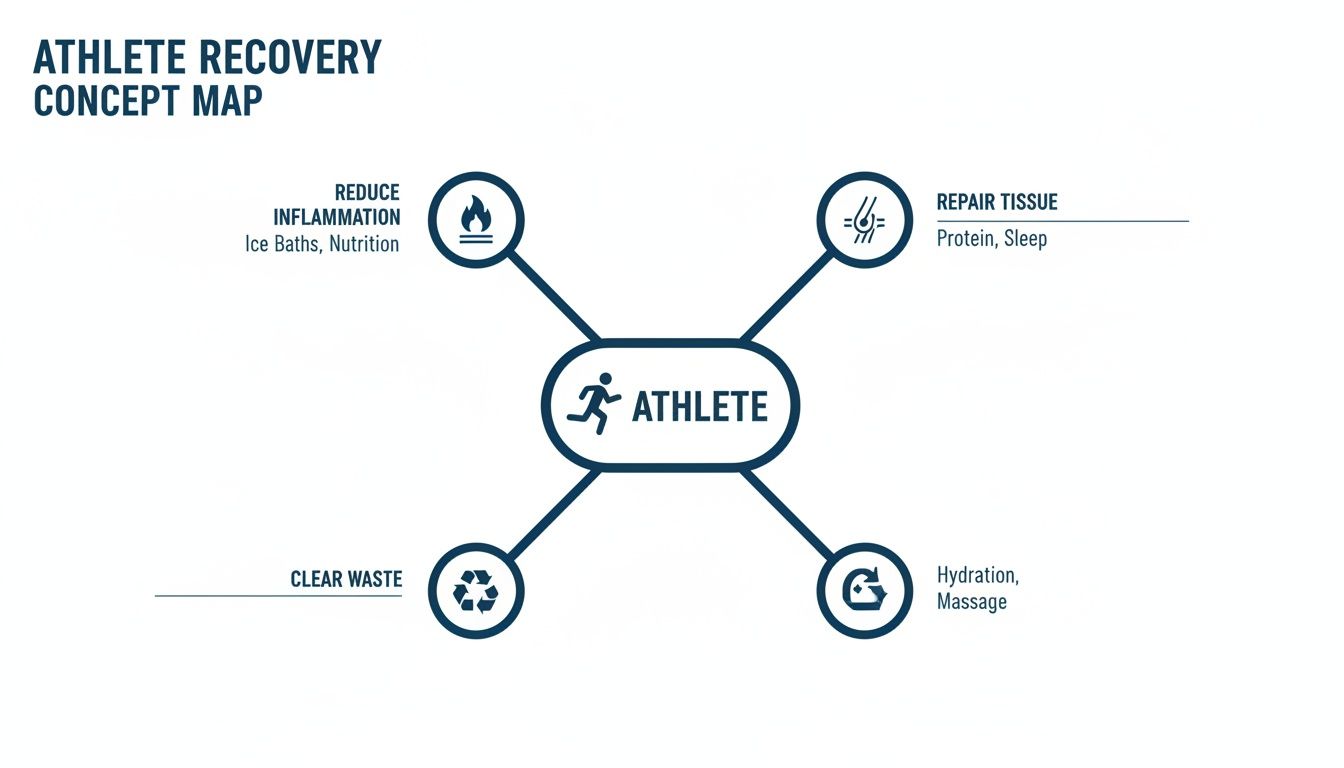
As you can see, recovery isn't just one thing. It's a complex process, and oxygen is the fundamental fuel that drives tissue repair, tames inflammation, and clears out metabolic waste at the cellular level.
Types of Oxygen Therapy for Athletes
While HBOT is the heavy hitter, it helps to know the other types of oxygen therapy athletes use. Each has its own place depending on the wellness goal.
- Hyperbaric Oxygen Therapy (HBOT): This is the full experience—breathing nearly 100% oxygen inside a pressurized chamber. The combination of high-purity oxygen and increased pressure creates the powerful physiological effects that dramatically speed up healing.
- Normobaric Oxygen Therapy (NBOT): With this method, you breathe a high concentration of oxygen, but at normal atmospheric pressure (the same pressure you're feeling right now). It'll bump up the oxygen in your blood, but it can't achieve the deep tissue saturation of HBOT without the driving force of pressure.
- Supplemental Oxygen: This is what you see athletes using on the sidelines, breathing from a mask hooked up to a tank. It gives a quick, temporary boost to blood oxygen levels, helping to catch their breath and feel less winded after an all-out sprint.
Each one has a purpose, but only HBOT has the power to drive oxygen deep into your body's tissues where it’s needed most for comprehensive workout recovery. This enhanced oxygenation does more than just patch up damage from your last session; it builds a more resilient body over the long haul.
It actively reduces the exercise-induced oxidative stress—that cellular wear-and-tear that builds up from hard training.
Even better, consistent oxygen therapy can stimulate angiogenesis, the body's process of creating new blood vessels. For an athlete, that means building a more robust circulatory network to improve blood flow and nutrient delivery, even when you're resting. The result is better performance, more endurance, and a body that's simply better equipped to handle elite-level demands. For more health and wellness insights, visit the MedEq Wellness Journal.
The Proof: What Clinical Studies Reveal About Performance
Understanding the science is one thing, but for athletes, the only thing that matters is results. Does the data actually back up the claims? When you dig into the clinical evidence, a pretty clear picture emerges. Oxygen therapy for athletes isn't just theory—it creates tangible, measurable improvements in workout recovery and performance.
Scientific research has thankfully moved beyond just stories and anecdotes to actually quantify how Hyperbaric Oxygen Therapy (HBOT) impacts the body on a cellular level after intense physical stress. These studies zoom in on specific biomarkers—think of them as tiny messengers in your blood that signal muscle damage and inflammation.
By tracking these markers, researchers can objectively measure how fast and how well an athlete is recovering. And the results consistently show a significant biological advantage for those who make oxygen therapy a part of their wellness routine.
Reducing Key Markers of Muscle Damage
Every tough workout creates microscopic tears in your muscle fibers. That’s a normal part of getting stronger, but it also releases specific enzymes and proteins into your bloodstream that scream, "Damage here!" Two of the most important markers to watch are creatine phosphokinase (CK) and myoglobin (MB).
High levels of CK and MB are a dead giveaway that your muscles have taken a beating and need serious time on the sidelines to repair. This is where the evidence for HBOT gets really compelling.
A key 2019 clinical trial gave us some powerful insights by tracking athletes with exercise-related muscle injuries. The study split them into two groups: one got HBOT, the other was a control. After just ten sessions, the HBOT group showed significant drops in their creatine phosphokinase (CK), myoglobin (MB), and another damage marker called glutamic oxaloacetate transaminase (GOT).
And this wasn't just a temporary fix. The improvements were still there two weeks after their last treatment, proving it had a lasting biological effect. You can read the research on muscle damage markers here to see the full data.
This shows HBOT doesn't just make you feel better; it actively dials back the physiological damage that causes soreness and fatigue, getting you back to peak condition faster.
Conquering Delayed Onset Muscle Soreness
Every athlete knows the feeling of Delayed Onset Muscle Soreness (DOMS)—that deep, frustrating ache that kicks in 24 to 48 hours after a killer session. DOMS isn't just uncomfortable; it can seriously sabotage your training intensity and frequency. So, naturally, researchers have looked at how oxygen therapy can tackle this all-too-common problem.
The hyper-oxygenated state you achieve during HBOT helps flush out metabolic waste products and calms the inflammatory response that fuels muscle soreness.
By directly targeting the root causes of DOMS—microtrauma and inflammation—oxygen therapy helps athletes experience less pain. This allows them to get back to high-intensity training sooner and with more consistency, which is the absolute cornerstone of athletic progress.
Studies have shown that athletes who use HBOT after a workout report feeling less sore and actually maintain more of their muscle function compared to those who don't. That means less time spent hobbling around after leg day and more time getting ready for your next challenge. The science confirms it: oxygen therapy is a powerful tool for managing the physical toll of elite training.
For anyone looking to go deeper on wellness and recovery tech, the MedEq Wellness Journal is a great place to continue your reading.
Applying Oxygen Therapy Safely and Effectively
Knowing the science is one thing, but putting it into practice is where you’ll actually start seeing faster workout recovery. For athletes and coaches, this is where the theory gets real. It all comes down to mastering the variables that shape every oxygen therapy session. Think of these as the dials you turn to fine-tune the therapy for specific health and wellness goals.
There are three core components to any Hyperbaric Oxygen Therapy (HBOT) protocol:
- Pressure: This is measured in atmospheres absolute (ATA), and it’s the key to driving more oxygen into your body.
- Duration: Simply the length of each session. This determines your total exposure to that oxygen-rich environment.
- Frequency: How often you’re getting in the chamber. This is crucial for stacking the benefits and achieving lasting results.
By tweaking these three elements, you can build a precise recovery plan, whether you're just bouncing back from a brutal workout or dealing with an acute injury.
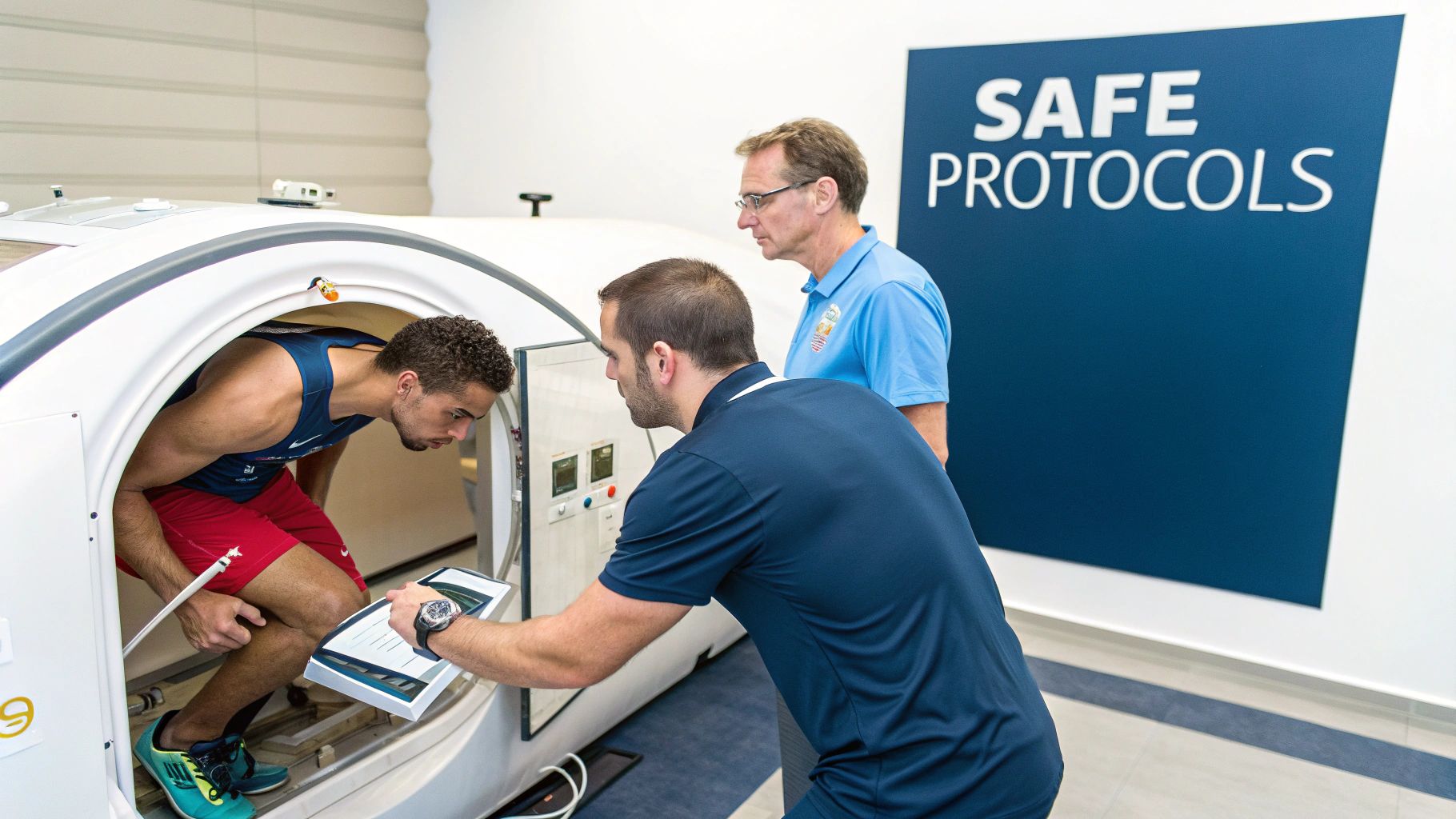
Differentiating Between Mild and Higher Pressure Protocols
Not all pressure is created equal. The distinction between mild and high-pressure protocols is a big one, and it’s critical for targeting different recovery needs effectively.
For general wellness and day-to-day workout recovery, mild HBOT (mHBOT) is usually the sweet spot. These sessions typically run at pressures between 1.3 and 1.5 ATA. This gentle push is incredibly effective for calming systemic inflammation, fighting off fatigue, and speeding up the repair of all those muscle microtears that come with hard training.
On the other hand, higher-pressure protocols—anything from 1.6 to 2.5 ATA—are generally reserved for more serious medical conditions under a doctor’s care. While a severe sports injury might call for higher pressures, most athletes find that consistent, mild-pressure sessions deliver the best results for ongoing recovery. A major systematic review confirmed this, showing that intervention pressures for athletic performance studies spanned from 1.3 ATA to 2.5 ATA. Facilities and equipment providers like MedEq Fitness support this entire range, allowing for a flexible approach to recovery. You can dig into the data yourself in this deeper analysis of HBOT athletic performance studies.
To make this more concrete, let's look at how these variables come together in different scenarios. The following table breaks down some common starting points for athletes.
Common Oxygen Therapy Protocols for Athletes
| Recovery Goal | Typical Pressure (ATA) | Session Duration | Recommended Frequency |
|---|---|---|---|
| General Wellness & Sleep | 1.3 ATA | 60-90 minutes | 2-3 times per week |
| Post-Workout Recovery | 1.5 ATA | 60 minutes | 3-5 times per week (during heavy training) |
| Acute Injury Support | 1.5 - 2.0 ATA | 90 minutes | Daily for the first 5-10 days |
| Pre-Competition Priming | 1.3 ATA | 60 minutes | 1-2 sessions in the days leading up to an event |
Remember, these are just templates. The ideal protocol is always one that’s personalized to your body and your training load, but this gives you a solid framework to start from.
Essential Safety Guidelines and Contraindications
While oxygen therapy is incredibly safe—especially at mild pressures—using it responsibly is non-negotiable. It all starts with being aware of contraindications, which are specific conditions that could make the therapy risky.
The first rule of any wellness practice is "do no harm." Before you start oxygen therapy, a consultation with a healthcare professional isn’t just a good idea—it’s an essential step to guarantee both safety and effectiveness.
Here are the key safety points to always keep in mind:
- Untreated Pneumothorax: This is an absolute no-go. A collapsed lung can become much worse under pressure changes.
- Ear, Sinus, or Lung Issues: If you can't properly clear your ears due to a bad cold or have certain chronic lung diseases, you might have problems.
- Certain Medications: Some drugs can interact with hyperbaric conditions and should be cleared with your doctor first.
- Claustrophobia: Modern chambers are built for comfort, but if you have severe claustrophobia, it's something to discuss and consider.
At MedEq Fitness, we place user wellness and safety above everything else. Understanding these guidelines ensures that oxygen therapy for athletes remains a powerful—and safe—tool for reaching peak performance. For more recovery strategies, check out the MedEq Wellness Journal.
Creating a Powerful Recovery Stack with Oxygen Therapy
Serious athletic recovery isn’t about finding one magic bullet. It’s about building a smart, synergistic system where every tool makes the others work harder. Think of oxygen therapy as the cornerstone of that system—the foundation that amplifies everything else you do for your wellness.
When you integrate it correctly, you create a powerful recovery stack that hits healing from every possible angle. It’s a physiological one-two punch. Most recovery tools get your body ready to repair, but oxygen therapy delivers the fuel—pure oxygen—needed to actually get the job done at a cellular level. It’s the difference between having a construction crew on-site and giving them the materials to start building.
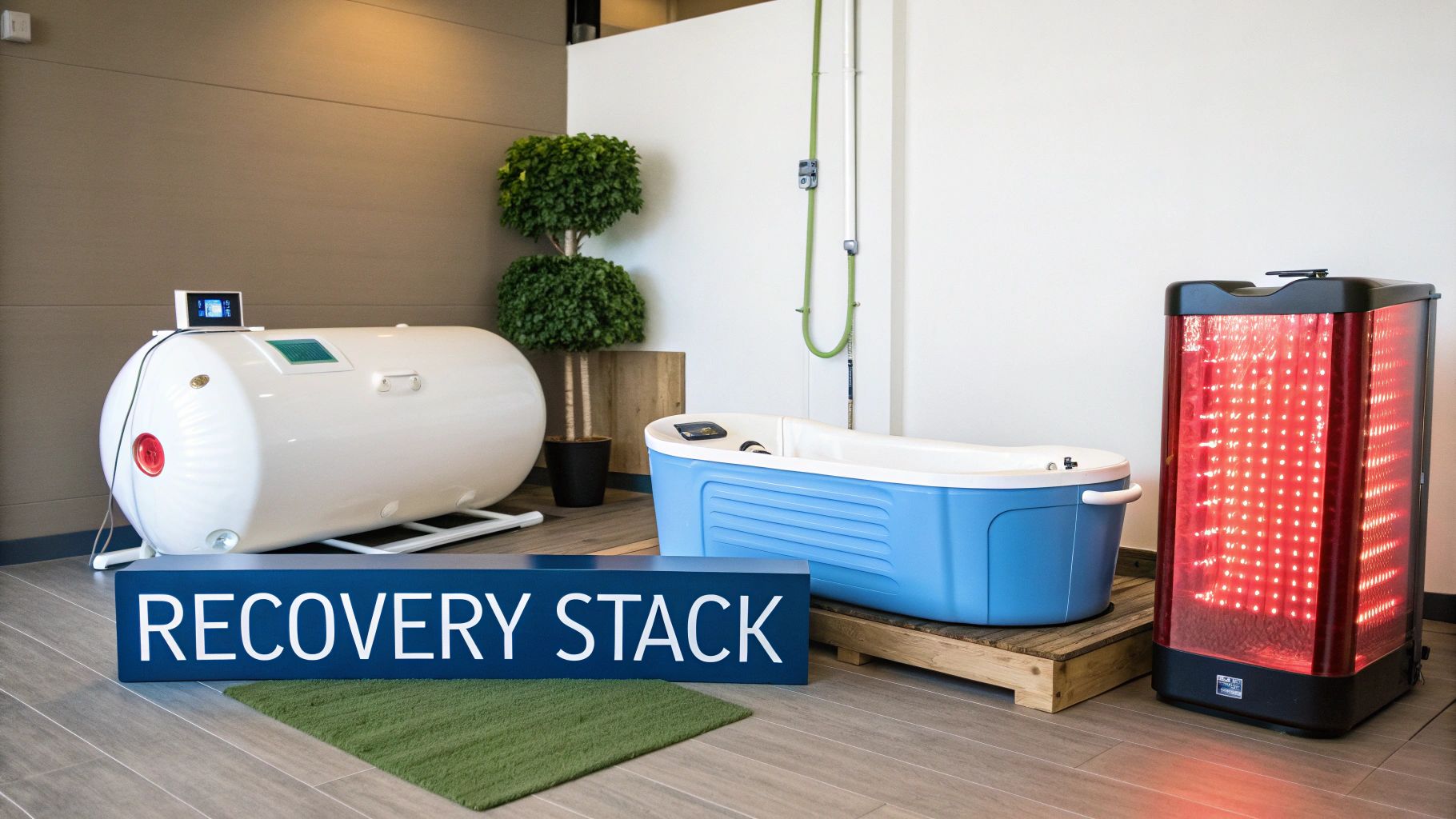
Pairing Oxygen Therapy with Contrast Therapy
Want to accelerate workout recovery fast? One of the most potent pairings is oxygen therapy with contrast therapy, such as alternating between cold plunges and saunas. This combination creates an incredibly powerful circulatory "pump," dramatically speeding up waste removal and nutrient delivery.
Here’s the simple breakdown:
- Cold Plunge (Constriction): Hitting the cold water causes your blood vessels to clamp down (vasoconstriction). This shunts blood away from your limbs and toward your vital organs.
- HBOT Session (Saturation & Dilation): Follow that up with a hyperbaric session, which floods your blood plasma with O2. As your body warms back up, your vessels open wide (vasodilation), and this super-oxygenated blood rushes back into every muscle and tissue.
This sequence forces a massive circulatory flush. It’s incredibly efficient at clearing out metabolic junk like lactic acid and driving a huge dose of oxygen right into damaged muscle fibers. The result? Less soreness and a repair process that kicks into high gear.
Synergy with Red Light and Other Modalities
Another game-changing combo is with red light therapy (RLT). RLT works by firing up your mitochondria—the tiny power plants inside your cells—to produce more ATP, the body’s core energy currency.
But here’s the catch: for mitochondria to make ATP, they need oxygen. Oxygen therapy delivers that critical fuel in abundance, ensuring your newly energized mitochondria can run at full capacity. It’s like upgrading a car’s engine (RLT) and then filling the tank with premium, high-octane fuel (HBOT). This stack is particularly great for healing stubborn connective tissues like tendons and ligaments.
Combining these therapies isn't just about adding benefits; it's about multiplying them. Each modality sets the stage for the next, creating a cascade of recovery effects that build on one another for a truly profound impact on your body's ability to heal and adapt.
This stacking principle works with other tools, too. A deep tissue massage, for instance, breaks up adhesions and boosts local blood flow. Follow it with an oxygen session, and you ensure that newly opened-up tissue gets bathed in the O2 it’s craving to repair.
For those looking to push recovery and hormone health even further, exploring synergistic approaches like specific peptide combinations like CJC-1295 and ipamorelin can offer another layer of optimization. By treating oxygen therapy as the central hub of your recovery ecosystem, you build a wellness system that supports you from every angle. For more insights on building your wellness stack, visit the MedEq Wellness Journal.
Choosing the Right Hyperbaric Chamber for Your Goals
Picking the right equipment is a huge step in bringing oxygen therapy into your training, home, or clinic. The market can feel a bit overwhelming, but the choice really boils down to one thing: what are your wellness goals?
The first major decision you'll face is whether to go with a soft-shell (mild) chamber or a hard-shell chamber. Each one is built for a different job in the world of oxygen therapy for athletes, and knowing the difference is key to making a smart investment.
Soft-Shell vs. Hard-Shell Chambers
Soft-shell chambers are what you'll find most often in home gyms and wellness centers. They’re made from tough, flexible materials and are designed for mild hyperbaric oxygen therapy (mHBOT), which is perfect for general workout recovery.
- Pressure Level: They typically operate up to 1.5 ATA. This is the sweet spot for taming inflammation, shaking off fatigue, and speeding up muscle repair after a tough workout.
- Best For: Athletes who want consistent, low-pressure sessions to sleep better, manage soreness, and stay on top of their game during intense training cycles.
Hard-shell chambers, in contrast, are the heavy-duty option. Built from steel and acrylic, they can handle much higher pressures, making them the go-to for more intensive, clinically supervised treatments.
- Pressure Level: These units can safely push to 2.0 ATA and beyond, which is often necessary for treating more acute injuries or specific medical issues.
- Best For: Clinical settings, professional sports facilities, or anyone working under a doctor's guidance for high-intensity protocols.
What to Look For in a Chamber and a Supplier
Once you know which type of chamber you need, it’s all about quality and support. Look for chambers built with durable, medical-grade materials—this isn't something you want to cheap out on. Small details like quiet operation and simple controls also make a huge difference in creating a relaxing, effective experience.
Choosing a reputable supplier is just as important as choosing the right chamber. Your relationship with the provider ensures you have reliable support long after the initial purchase.
When you're vetting suppliers, look for companies with U.S.-based customer support, clear pricing, and a solid reputation for service. At MedEq Fitness, we’ve hand-picked a collection of premium hyperbaric chambers that tick all these boxes, so you can find the perfect match for your recovery goals. For more expert advice, be sure to explore the MedEq Wellness Journal.
Common Questions About Oxygen Therapy
Diving into a new recovery tool always brings up a few questions. Let's clear the air and give you the straightforward answers you need to make oxygen therapy a core part of your performance and recovery plan.
Is Oxygen Therapy Allowed in Pro Sports?
Yes, absolutely. Hyperbaric Oxygen Therapy is a widely accepted recovery and wellness tool used by elite athletes everywhere.
Major organizations like the World Anti-Doping Agency (WADA) don't list it as a banned method. It's seen as a natural way to support the body's own healing mechanisms, not a performance-enhancing drug. Still, it’s always smart for professional athletes to double-check the specific rules for their league or sport.
What Does an HBOT Session Actually Feel Like?
The main thing you'll notice is a bit of pressure in your ears as the chamber pressurizes, a lot like the feeling you get when a plane lands.
It's easy to manage—just yawn, swallow, or gently pinch your nose and blow. Once you're at the right pressure, it's incredibly quiet and calm. Most athletes just nap, meditate, or catch up on reading. Any side effects are rare and minor, maybe just some lingering ear fullness that fades quickly.
The entire experience is built around relaxation. It's a distraction-free zone where your body can dedicate all its resources to healing and recovery.
How Fast Will I See Results from Oxygen Therapy?
That really depends on you and what you're trying to achieve. Some athletes feel less sore and more energized after just one session.
For tackling deeper muscle fatigue or accelerating injury repair, the real magic happens with consistency. The benefits really start to compound after a series of 5-10 sessions. This lines up with clinical findings, which show that markers for muscle damage drop most significantly after several back-to-back treatments. Consistency is what unlocks the therapy's full potential for wellness.
Can I Use a Hyperbaric Chamber Safely at Home?
You bet. Modern mild hyperbaric chambers, especially the soft-shell versions designed for home use, are built to be safe and incredibly user-friendly.
These units run at lower pressures, usually between 1.3 and 1.5 ATA, which is the sweet spot for boosting workout recovery, enhancing sleep, and promoting overall wellness. They're simple to operate and fit right into a home gym or recovery room. If you're looking for more ideas on building out your recovery space, check out the expert tips on our MedEq Wellness Journal.
At MedEq Fitness, our mission is to equip serious athletes with the clinic-grade tools needed to dominate their sport. Our hyperbaric chambers are handpicked for their safety, performance, and durability. Explore our collection of hyperbaric chambers and discover how to elevate your recovery game.