Finding the Best At Home Sauna for Wellness and Recovery
Investing in an at-home sauna is a significant upgrade to your wellness routine, turning any space into a personal sanctuary for health and recovery. But with the variety of options—infrared, traditional steam, different woods, various sizes—it’s easy to get lost.
Before you dive into heater technology or the difference between hemlock and cedar, let's start with the most critical question: what do you want this sauna to do for you?
Your "why" is the compass that will point you to the perfect sauna. Are you an athlete laser-focused on accelerating workout recovery and reducing muscle soreness? Or is your primary goal to create a peaceful escape to de-stress, lower cortisol, and achieve deep, restorative sleep? Understanding your core wellness objective is the first step toward making a smart choice.
Aligning Your Sauna With Your Wellness Goals
Think of it this way: you wouldn't buy a power rack if your goal was to run a marathon. The same logic applies here. Your sauna should be a targeted tool for your specific health objectives, a cornerstone of your personal wellness strategy.
Someone dealing with chronic joint pain, for instance, will likely get more relief from the deep, penetrating heat of an infrared sauna. The radiant heat targets tissues directly, offering profound therapeutic benefits. On the other hand, if you're chasing that intense, full-body sweat to boost cardiovascular function and flush toxins, the high ambient heat of a traditional Finnish sauna is your best bet for a powerful, cleansing experience.
An at-home sauna isn't just a luxury—it's a personalized wellness device. The right one becomes a strategic part of your health regimen, turning every session into a targeted therapy session designed for your body's needs.
To get started, which of these health benefits matters most to you?
- Accelerated Workout Recovery: To repair tissue, reduce post-training soreness, and get back to peak performance faster.
- Enhanced Cardiovascular Health: To improve circulation, strengthen heart function, and support overall longevity.
- Stress Reduction & Mental Clarity: To find your calm, lower stress hormones, and sharpen your focus.
- Detoxification & Skin Health: To cleanse your body through a deep, purifying sweat and promote vibrant skin.
Once you have your primary goal in mind, the choice becomes much clearer. We'll break down how each sauna type delivers on these wellness promises.
For more expert-led strategies on recovery and wellness, check out the MedEq Wellness Journal.
Infrared vs. Traditional Saunas: A Head-to-Head Comparison
Choosing the right at-home sauna boils down to one fundamental decision: infrared or traditional heat? This isn't just a matter of preference—it's about understanding how two different heating methods trigger very different physiological responses and serve distinct wellness goals.
The core difference is simple but profound. A traditional sauna heats the air around you. An infrared sauna heats your body directly. This single distinction creates two completely unique experiences with tailored health benefits.
A classic traditional Finnish sauna uses a robust heater to warm up sauna stones, which then radiate intense heat into the room. When you pour water over those stones—a ritual known as löyly—you generate a wave of humid, powerful heat, pushing the air temperature anywhere from 160°F to 220°F (70°C to 105°C). It's an immersive, all-encompassing heat designed for a deep, detoxifying sweat.
In contrast, an infrared sauna uses specialized emitters to generate infrared waves. These waves bypass the air and penetrate your body's tissues, raising your core temperature from the inside out. This happens while the surrounding air stays at a much more manageable 120°F to 140°F (50°C to 60°C), making it ideal for longer, more targeted therapeutic sessions.
Infrared vs Traditional Sauna At a Glance
To quickly see how these two technologies stack up, this table breaks down their core operational and experiential differences. It’s a great starting point for figuring out which approach fits your routine and wellness philosophy.
| Feature | Infrared Sauna | Traditional Steam Sauna |
|---|---|---|
| Heating Method | Direct body heating via infrared waves | Heats the air and rocks, creating steam |
| Operating Temp | 120°F – 140°F (50°C – 60°C) | 160°F – 220°F (70°C – 105°C) |
| Warm-Up Time | Fast: 10 – 20 minutes | Slower: 30 – 60 minutes |
| Heat Sensation | Gentle, deep, penetrating warmth | Intense, enveloping, humid heat |
| Best For | Muscle recovery, pain relief, relaxation | Cardiovascular health, detoxification, respiratory aid |
| Energy Use | More efficient due to lower temps | Higher consumption due to intense heat |
Ultimately, your choice depends on the experience you’re after. Do you want targeted, gentle heat for workout recovery, or an intense, traditional sweat for a full-body cleanse and cardiovascular boost?
The Heat Experience and Its Impact
The feeling inside a traditional sauna is powerful and visceral. The combination of high ambient heat and steam forces a deep, profuse sweat that’s fantastic for detoxification and can feel amazing for clearing up respiratory congestion.
Infrared saunas deliver a gentler, more direct warmth. Because the heat penetrates muscles and joints deeply without making the air feel stifling, many people find they can enjoy longer, more comfortable sessions. This is especially beneficial for those looking to maximize deep-tissue repair for workout recovery or manage chronic pain.
The Key Takeaway: The "best" heat source is the one that matches your goal. If you're chasing an intense, full-body cardiovascular session and a deep detox, traditional heat is king. For targeted muscle recovery and soothing deep-tissue pain, infrared's radiant heat is far more efficient.
The flowchart below walks you through the main decision points—your goals, preferred technology, and available space—to help you land on the perfect sauna for your home.
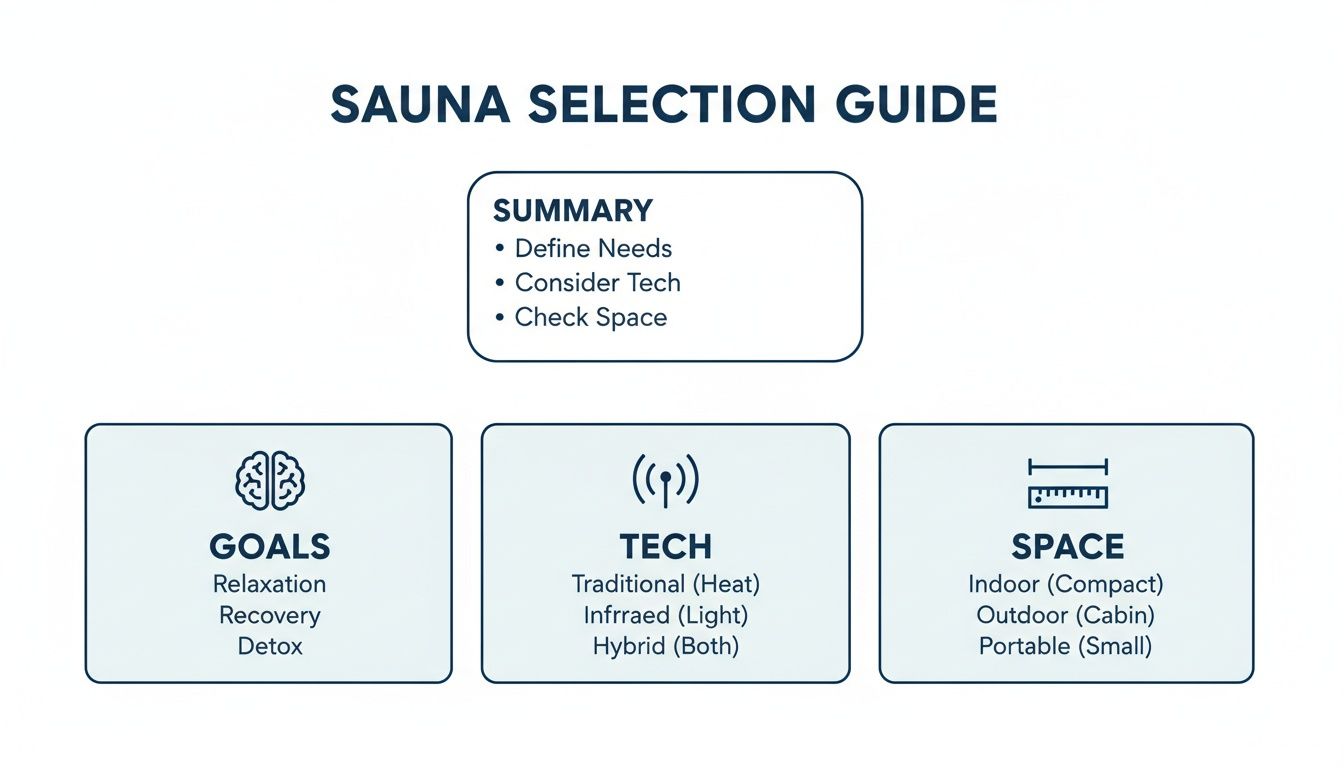
This visual guide confirms it: aligning your wellness ambitions with the right technology and a practical footprint is the single most important step.
Health Benefits: A Direct Comparison
Both sauna types are wellness powerhouses, but they shine in different areas. Knowing their specific health benefits helps you optimize your wellness routine and accelerate your results.
Traditional Sauna Health Strengths:
- Superior Cardiovascular Conditioning: The intense heat spikes your heart rate, creating an effect similar to moderate cardio exercise. This helps improve heart health, circulation, and overall endurance.
- Enhanced Detoxification: The combination of high heat and steam triggers a deep, cleansing sweat, helping flush toxins and impurities from your body more effectively than other methods.
- Respiratory Support: For many, the moist steam is a game-changer for clearing airways, soothing throat irritation, and promoting robust respiratory function.
Infrared Sauna Health Strengths:
- Deep Muscle and Joint Relief: Far-infrared waves can penetrate up to 1.5 inches into soft tissue. This boosts circulation right where you need it to speed up muscle repair, reduce inflammation, and ease chronic pain from conditions like arthritis.
- Accelerated Workout Recovery: By delivering heat directly to sore muscles, infrared technology helps cut down on delayed onset muscle soreness (DOMS) more efficiently, getting you back to training faster.
- Cellular Repair and Wellness: The radiant heat helps stimulate the production of heat shock proteins, which are critical for repairing damaged cells and bolstering your immune system for long-term wellness. You can get a much deeper look into the science in our guide explaining how infrared sauna sessions work.
Operational and Practical Differences
Beyond the wellness benefits, you have to think about the practical side of owning a sauna.
- Warm-Up Time: A traditional sauna needs 30 to 60 minutes to get the room and stones properly heated. An infrared sauna is ready in just 10 to 20 minutes, integrating seamlessly into a busy schedule.
- Energy Efficiency: Thanks to their lower operating temperatures and quicker warm-up times, infrared saunas are typically more energy-efficient. Regular use might add $10-$20 to your monthly electricity bill, compared to $25-$40 or more for a traditional model.
Evaluating Materials and Key Sauna Features
The type of heat is only half the story. The materials and construction of your sauna are what truly define its performance, longevity, and the quality of every session. A great at-home sauna is a complete system where the wood, heaters, and design all work in concert. Knowing what to look for helps you cut through the marketing noise and spot genuine quality.

The first, and maybe most important, choice you'll make is the wood. This isn't just about looks; it impacts the aroma, the sauna's ability to fight off moisture and bacteria, and how it feels to the touch. You're going to be spending a lot of time in there, so the details matter.
The Great Wood Debate: Cedar vs. Hemlock
Two woods have really come to dominate the at-home sauna market, and for good reason: Western Red Cedar and Canadian Hemlock. They're both fantastic options, but they create very different experiences for different priorities.
Western Red Cedar:
- Aromatic & Antimicrobial: Cedar is legendary for that rich, earthy smell that instantly elevates your wellness experience. Its natural oils are a huge functional benefit, too—they make it inherently resistant to mold and bacteria, crucial in a warm, humid space.
- Built to Last: This is a tough wood. It handles temperature swings without warping, ensuring your sauna stays structurally sound for the long haul. It's also porous, so it doesn't get scorching hot to the touch.
- Classic Look: With its deep reddish hues and beautiful grain, cedar just looks luxurious.
Canadian Hemlock:
- Hypoallergenic & Neutral: For anyone with allergies or scent sensitivities, Hemlock is the clear winner. It has virtually no natural scent, giving you a clean, neutral environment for pure relaxation.
- Light & Modern: The wood's pale, consistent color gives the sauna's interior a bright, airy, and more contemporary feel. It’s also non-resinous, so you never have to worry about sticky sap seeping out at high temperatures.
- Value Without Compromise: Hemlock is typically more budget-friendly than cedar, but it still delivers excellent durability and a premium finish. It's a smart value play.
The decision really comes down to personal preference. If you crave that traditional, aromatic spa experience and want maximum natural antimicrobial protection, nothing beats cedar. If you need a completely scent-free, hypoallergenic space with a clean aesthetic, hemlock is your best bet.
Infrared Heater Technology: Carbon vs. Ceramic
If you're leaning toward an infrared sauna, the heater panels are just as critical as the wood. The two main players are carbon and ceramic, and they deliver infrared heat in very different ways.
Key Insight: The best infrared heaters aren't the ones that get the hottest. They're the ones that emit infrared waves at the perfect wavelength for your body to absorb. Efficiency is everything.
Carbon heaters are large, thin panels that cover a lot of surface area. This design is brilliant for providing even, consistent warmth across your entire body, eliminating any "hot spots." They run at a lower surface temperature, which allows them to produce infrared waves that penetrate deep into your tissues more effectively, maximizing the health benefits.
Ceramic heaters are different. They're smaller, rod-shaped emitters that get significantly hotter. While they pack a punch, they can create concentrated pockets of intense heat, and some of their energy is spent just heating the air instead of your body. They can be great for targeting specific areas of pain, but for full-body immersion, carbon panels are widely considered more efficient.
Today, many top-tier saunas use full-spectrum heaters, which are a hybrid—they give you the broad, gentle coverage of carbon with the high-intensity punch of ceramic. It's the best of both worlds.
Crucial Features You Cannot Overlook
Finally, a few construction details are non-negotiable. These are the things that separate a well-built sauna from a cheap imitation.
- Wall Thickness: Always look for dual-wall construction. Thicker, insulated walls mean the sauna heats up faster, holds that heat more efficiently, and ultimately uses less electricity. It's a dead giveaway of quality craftsmanship.
- EMF Ratings: Electromagnetic fields (EMF) are a valid concern. Any reputable infrared sauna brand will use low-EMF or ultra-low-EMF technology and be transparent about their testing data. Don't settle for anything less.
- Glass and Door Seals: A quality sauna will use tempered safety glass. But pay close attention to the door seals. A snug, airtight fit is absolutely essential to prevent heat from leaking out and keep your sessions efficient.
By digging into these details, you can invest with confidence in a wellness tool that is safe, effective, and built to last. For more expert insights on recovery and wellness equipment, check out our MedEq Wellness Journal.
How Saunas Optimize Athletic Performance and Recovery
For a serious athlete, an at-home sauna isn't a luxury item—it's a core piece of workout recovery gear. When used correctly, it becomes a powerful tool to slash recovery times, build resilience, and sharpen your competitive edge. This is about more than just relaxing; it's a strategic way to leverage heat to accelerate your body's natural healing processes and break through physical barriers.
The real work starts at the cellular level. Every intense workout creates microscopic tears in your muscles, triggering inflammation and delayed onset muscle soreness (DOMS). Heat from a sauna is one of the most effective ways to counteract this, immediately kicking your body’s natural repair mechanisms into high gear.
The heat dramatically boosts circulation. Your blood vessels dilate, allowing a flood of oxygen-rich blood and nutrients to reach tired muscles, which helps flush out metabolic waste products like lactic acid that cause soreness. Better blood flow is the bedrock of faster, more complete workout recovery.
The Science of Heat for Faster Workout Recovery
It's not just about blood flow. The heat triggers a much deeper physiological response, signaling your body to produce more heat shock proteins (HSPs). You can think of HSPs as a cellular "cleanup crew" that gets to work repairing damaged cells and shielding them from future stress.
By using a sauna regularly, you're essentially conditioning your body to become better and faster at deploying these HSPs. This means you can handle tougher training loads and bounce back much quicker from grueling sessions. The end game? Less downtime and more consistent gains.
This is exactly why so many athletes obsess over finding the best at home sauna. An infrared sauna, for instance, is brilliant at sending heat directly into deep muscle tissue, making it a go-to for targeting profound soreness and speeding up this cellular repair process.
When you make sauna sessions a non-negotiable part of your routine, you’re not just treating soreness after the fact. You’re conditioning your body to recover more efficiently, building a foundation for higher training volumes and peak performance down the line.
Integrating Sauna Sessions Into Your Training
Timing is everything. You want your sauna sessions to support your training, not get in the way of it. Here are a few proven protocols to start with:
- Post-Workout Recovery: The sweet spot is 30 to 60 minutes after you train. This gives your heart rate a chance to settle before you introduce the heat stress. Begin with 15-20 minute sessions.
- Cardiovascular Endurance: Regular sauna use can actually mimic the effects of moderate cardio. It improves your heat tolerance and increases plasma volume, which studies have linked to major endurance gains.
- Rest Day Enhancement: Hitting the sauna on an off day keeps blood flowing to your muscles, works out any lingering stiffness, and primes your body for the next big workout.
Want to get more granular on specific protocols? We cover the science in more detail right here on our blog, breaking down the sauna benefits for athletes.
Amplifying Results with Contrast Therapy
If you're ready to take your workout recovery to the next level, it's time to try contrast therapy. This powerful wellness technique involves alternating between the sauna's intense heat and a cold plunge or ice-cold shower. That rapid switch from hot to cold creates a "pump" effect throughout your circulatory system.
In the sauna, your blood vessels open up (vasodilation). Jump into the cold, and they clamp down (vasoconstriction). This cycle is incredibly effective at flushing out inflammation and metabolic waste from your muscles.
A classic contrast therapy protocol looks like this:
- 15-20 minutes in the sauna.
- 2-3 minutes in a cold plunge or shower.
- Repeat this cycle 2-3 times.
This doesn't just accelerate physical recovery; it's a massive builder of mental toughness. Adding contrast therapy to your wellness routine will make you more resilient to both physical and mental stress.
Sizing, Installation, and Power: The Nuts and Bolts
Let's get practical. Beyond choosing the right wood or heater, you need a sauna that actually fits—not just in your room, but into your life. Getting the logistics of size, power, and installation right from the start is the difference between a daily wellness ritual and a very large, very expensive headache.
First things first: grab a tape measure. You need to know your footprint, of course, but don't forget about vertical height and the space needed for the door to swing open. Think honestly about how you'll use it to nail down the right capacity.
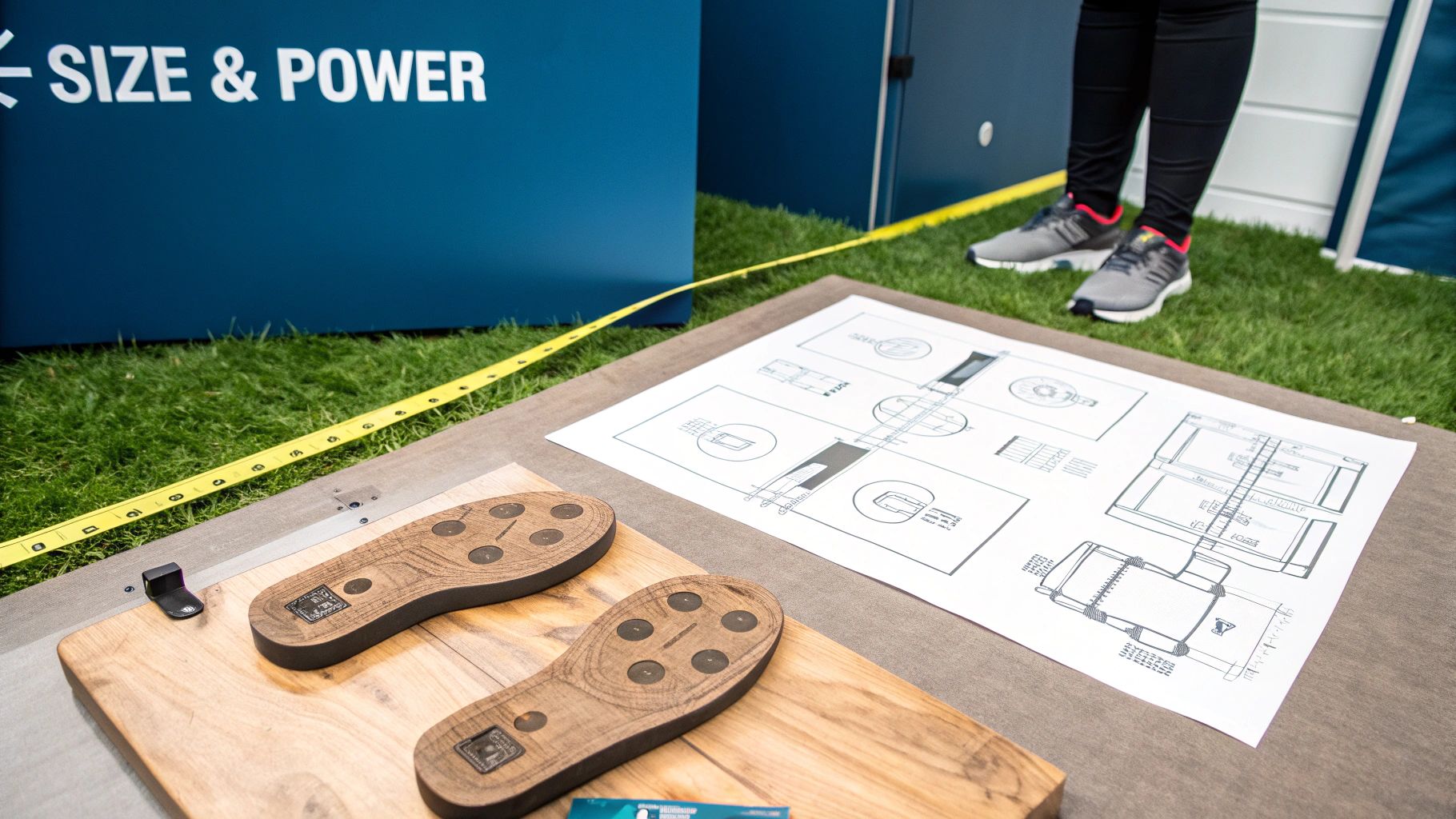
Matching Sauna Size to Your Routine
How you plan to sweat it out directly dictates the size you need. This is all about balancing the space you have with the goals you're chasing.
- 1-Person Saunas: Built for the solo session. These are perfect for deep recovery or quiet meditation without distractions. Their compact footprint makes them a no-brainer for apartments, tight corners in a home gym, or even a master bedroom.
- 2-Person Saunas: This is the sweet spot and our most popular size for a reason. It’s got enough room for one person to really stretch out, but it's also perfect for couples. A versatile 2-person sauna from our collection hits that ideal balance of spaciousness and efficiency.
- 3-4+ Person Saunas: If you see your sauna as a social hub for family or friends, this is your category. These larger models become a true centerpiece for shared wellness, but they demand a significant, dedicated space like a basement, garage, or covered patio.
Power and Installation, Demystified
You absolutely have to know what your home's electrical system can handle. This isn't something to guess on. Saunas generally come in two power configurations, and they have very different installation needs.
120V "Plug-and-Play" Models
These are all about convenience. Just like the name says, they plug right into a standard household wall socket. It’s a fantastic option for renters or anyone who wants the most straightforward setup possible. The trade-off? They are typically limited to smaller infrared models.
240V Hardwired Units
This is where the serious power comes in. Larger infrared models and pretty much all traditional saunas require a dedicated 240V circuit—the same kind an electric dryer or oven uses. This is not a DIY job; you'll need a licensed electrician to install it safely. The upside is that the higher voltage heats the sauna much faster and maintains those high temperatures with ease.
Before you even click "buy" on a 240V model, have an electrician confirm your home's electrical panel can handle the new load. If you're in an older home, a professional switchboard upgrade might be necessary to run your sauna safely and without issues.
From Delivery to Assembly
Finally, think through the delivery logistics. How will it get from the curb to its final spot? Most saunas show up flat-packed in several big, heavy boxes. Make sure you have a clear path through any doorways, hallways, or tight turns.
While many of our models are designed for a two-person DIY assembly, good instructions and clearly labeled parts are everything. A well-engineered sauna should click together smoothly, getting you that much closer to your first session.
Alright, you've waded through the technical specs, compared the materials, and figured out the installation requirements. Now it’s time to pull it all together and make a choice. The goal here isn't just to buy a sauna, but to integrate a powerful wellness tool into your daily life.
The explosion in at-home saunas is no accident. It’s driven by a massive shift toward proactive self-care, where convenience is king. For athletes and health professionals, it’s even more than that—it’s about having a customized workout recovery tool on demand.
Home saunas simply outperform commercial options where it matters most: they eliminate travel, slash long-term membership costs, and make daily recovery sessions a practical reality. You can learn more about the growth of the at-home wellness market in recent reports.
Your Final Decision Checklist
Before you make the final call, run through these key questions.
- Primary Goal: Are you chasing deep muscle recovery (lean infrared) or aiming for cardio benefits and a classic sweat detox (lean traditional)?
- Space & Power: Did you measure twice? Do you have the right electrical setup for a 120V or 240V unit?
- Material Preference: Do you want the rich, antimicrobial scent of Cedar, or do you need the clean, hypoallergenic properties of Hemlock?
- Usage Habits: Is this your personal recovery pod, or a shared wellness hub for your family?
An at-home sauna is a serious investment in your health. The company you buy from should understand the science behind wellness and workout recovery just as well as they understand wood types and heater specs.
This is where MedEq Fitness comes in. As a physician-led company, we don't just sell equipment; we curate it based on scientific evidence and proven results. Every sauna in our collection is professional-grade, built to meet the standards of elite athletes, wellness clinics, and anyone who demands performance and durability.
When you work with us, you're getting more than just a box delivered to your door. You get a partner dedicated to your wellness, backed by medical expertise, U.S.-based support, and free shipping. Your path to next-level recovery begins here.
Explore our collection or find more expert-led insights on our MedEq Wellness Journal.
Got Questions? We've Got Answers
Choosing the right sauna is a big decision, and it's smart to have all the facts. We get a lot of questions from people trying to balance their health goals with the practical side of things, like installation. Here are some of the most common ones we hear, answered to help you feel great about your choice.
How Often Should I Be Using My Sauna?
For general wellness and melting away stress, a good starting point is 3-4 sessions a week, for about 15-20 minutes each time. If you're an athlete looking to speed up workout recovery, you might benefit from shorter, more frequent sessions—maybe even up to five times a week after training.
But here’s the most important thing: listen to your body. Consistency is key, but so is staying hydrated. Always drink plenty of water before, during, and after you sweat. As you get more comfortable with the heat, feel free to slowly increase how long or how often you use it, but never push yourself too hard.
What’s the Maintenance Like?
Great news—both infrared and traditional saunas are incredibly low-maintenance.
- Infrared Saunas: These are about as easy as it gets. They use dry heat, so a quick wipe-down of the benches and walls with a damp cloth after you're done is usually all it takes to keep things fresh.
- Traditional Saunas: Because of the steam and humidity, you'll want to make sure you let it air out completely after each use. Every so often, a light cleaning with a mild, non-toxic cleaner will keep the benches and floor in perfect shape and prevent any mildew.
The single best tip for either type? Always sit on a towel. It absorbs sweat and cuts down your cleaning time dramatically.
Your at-home sauna is a low-maintenance wellness tool. A few minutes of simple care after each use ensures a clean, hygienic, and inviting space for every session.
Are There Any Health Reasons to Avoid a Sauna?
Absolutely. It's essential to talk to your doctor before starting a sauna routine, especially if you have any pre-existing health conditions. People with unstable heart conditions (like severe aortic stenosis or a recent heart attack), very low blood pressure, or who are pregnant should generally steer clear.
It’s also smart to skip the sauna if you have a fever, are dehydrated, or have been drinking alcohol. Putting your safety first is non-negotiable and ensures you get all the health benefits without the risks. For more expert-backed health insights, check out our MedEq Wellness Journal.
Ready to find the perfect wellness solution for your home or clinic? At MedEq Fitness, we offer a curated selection of professional-grade saunas and recovery equipment, all backed by medical expertise. Explore our complete collection and elevate your wellness journey today.