Skip to content

Cart

Your cart is empty

Analox HYP Hyperbaric Portable O2 Partial Pressure Analyzer

Sale price$1,499.00

Analox HYP Hyperbaric Portable O2 Partial Pressure Analyzer
Analox HYP Hyperbaric Portable O2 Partial Pressure Analyzer Sale price$1,499.00
Physician-Led Recovery & Wellness

Advanced wellness equipment with medical-grade perspective.

MedEq Fitness combines physician-guided product selection, premium recovery technology, and concierge-level customer support for serious home wellness and performance optimization.

MD Physician-led product guidance
15+ Years healthcare leadership
Premium Curated wellness technology

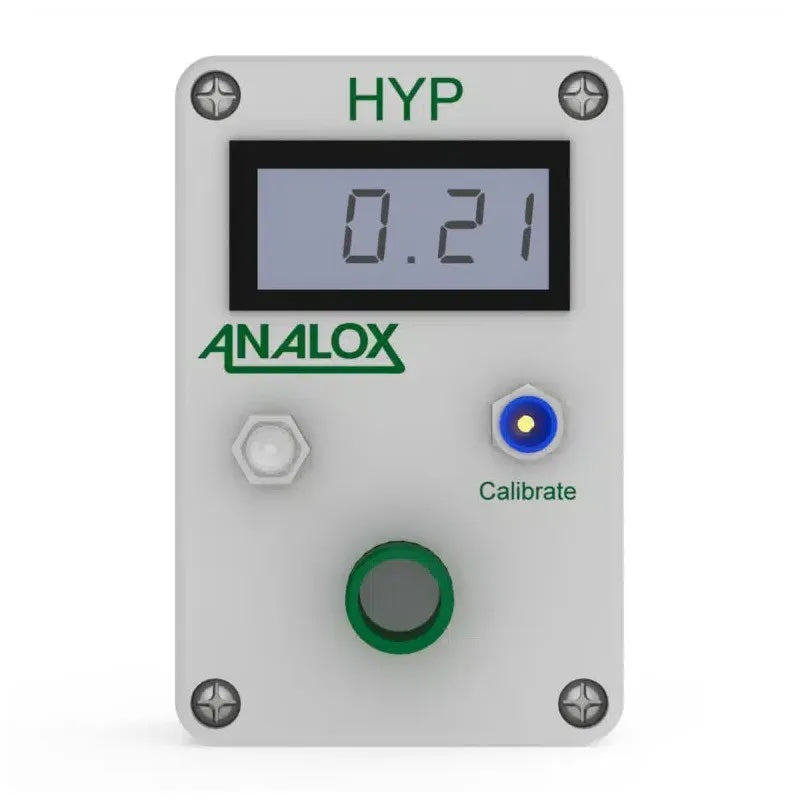
Analox HYP Hyperbaric Portable O₂ Partial Pressure Analyzer

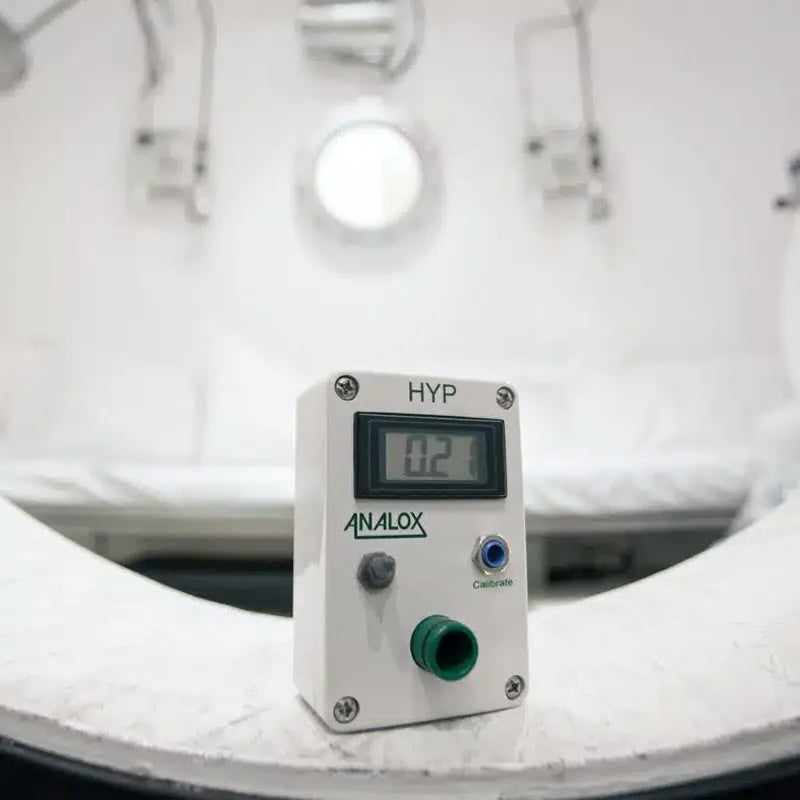
The Analox HYP Hyperbaric Oxygen Analyzer is a compact, portable hyperbaric O₂ analyzer designed specifically for monitoring oxygen partial pressure inside hyperbaric chambers and other pressurized environments. As a true hyperbaric chamber oxygen analyzer, the HYP measures ppO₂ directly rather than relying solely on oxygen percentage.

With an operating pressure range of 0.8 to 60 bar absolute, the HYP functions as a highly capable pressure-rated oxygen analyzer for hyperbaric chambers, diving bells, hyperbaric lifeboats, submarines, and other pressure-variable environments.

This portable oxygen analyzer measures oxygen partial pressure from 0 to 2.0 bar ppO₂, making it well suited for facilities that require an independent oxygen partial pressure analyzer or ppO₂ analyzer for chamber atmosphere monitoring. Its compact size, long battery life, and broad pressure rating also make it a practical hyperbaric oxygen monitor for professional and specialized chamber environments.

Purpose-Built Hyperbaric Oxygen Analyzer for Chamber Monitoring

  • Hyperbaric pressure rated: designed for operation from 0.8 to 60 bar absolute
  • Direct ppO₂ measurement: measures oxygen partial pressure from 0 to 2.0 bar
  • Hyperbaric chamber oxygen monitoring: designed specifically for chamber atmospheres and other pressurized environments
  • Portable oxygen analyzer: compact enough to hand carry or position within confined spaces
  • Long battery life: approximately 800 hours of continuous operation from a single 9V PP3 battery

Key Features

O₂

Hyperbaric Oxygen Partial Pressure Monitoring

ppO₂

A dedicated oxygen partial pressure analyzer designed for pressure-variable and hyperbaric environments.

  • Measurement range from 0 to 2.0 bar ppO₂
  • Direct partial pressure measurement
  • Designed for hyperbaric chamber oxygen monitoring
  • Suitable as a portable ppO₂ analyzer
◎

Pressure-Rated Hyperbaric O₂ Analyzer

HYPERBARIC

A true pressure-rated oxygen analyzer engineered for operation across a wide range of ambient pressures.

  • Operating pressure: 0.8 to 60 bar absolute
  • Equivalent manufacturer rating to approximately 600 MSW / 2000 FSW
  • 1.5 ATA and 2.0 ATA fall well within the published operating range
  • Designed specifically for hyperbaric environments
▣

Large LCD Display

Simple digital display provides fast access to oxygen partial pressure measurements.

  • Large numerical LCD readout
  • Displays oxygen partial pressure directly
  • Simple single-switch operation
  • Reading appears within approximately one to two seconds after startup
⚡

Approx. 800-Hour Battery Life

A single replaceable 9V PP3 battery provides long-duration portable operation.

  • Approximately 800 hours continuous use
  • About one month of continuous operation
  • Approximately three months when used eight hours per day
  • Low-battery warning displayed on screen
◈

Temperature-Compensated O₂ Sensor

Electrochemical sensing technology is individually temperature compensated across the rated operating range.

  • Analox electrochemical oxygen sensor
  • Temperature compensation integrated into sensor design
  • Stable readings across changing environmental conditions
  • Replaceable sensor architecture
◆

Compact Portable Oxygen Analyzer

Designed for confined spaces where traditional instrumentation may be impractical.

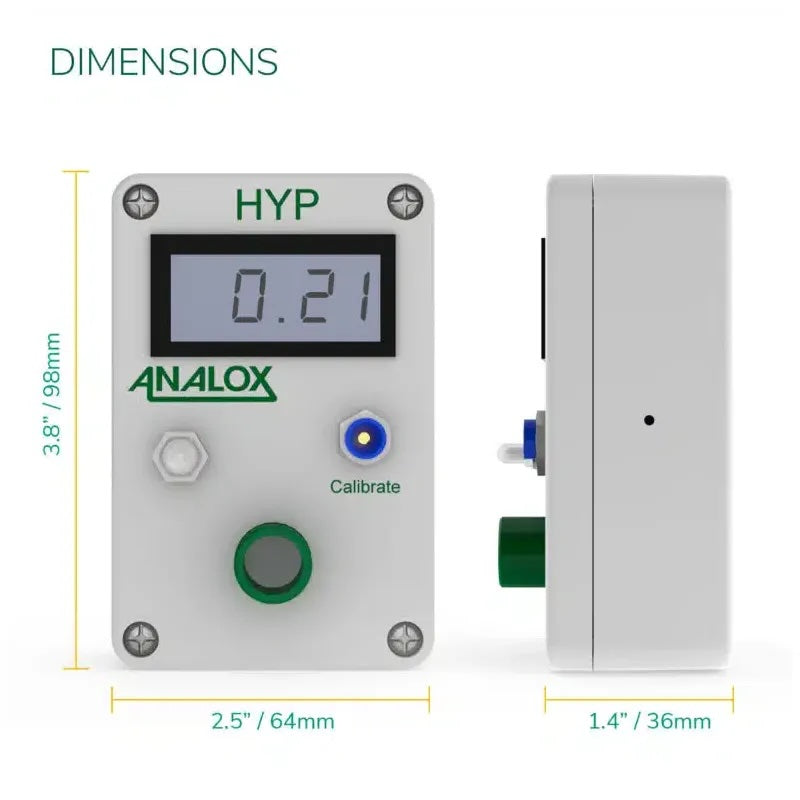
  • Approx. 98 mm high
  • Approx. 64 mm wide
  • Approx. 36 mm deep
  • Approx. 200 g / 7 oz
↔

Local or Remote Sampling

Monitor the atmosphere immediately around the analyzer or use an optional sampling kit for remote measurements.

  • Local atmosphere measurement by sensor diffusion
  • Optional remote sample-draw system
  • Hand-operated aspirator bulb
  • 2-meter sample line supplied with applicable sampling kit
💧

Built for Humid Hyperbaric Environments

Designed with chamber humidity and condensation in mind.

  • Specially coated circuit boards
  • Protection against humidity and condensation
  • Hydrophobic membrane protects the oxygen sensor inlet
  • Vertical positioning helps prevent water accumulation at the sensor inlet

Why Measure Oxygen Partial Pressure?

Oxygen concentration expressed as a percentage and oxygen partial pressure are related, but they are not the same measurement.

In a hyperbaric environment, total atmospheric pressure increases during compression. Even if the percentage of oxygen remains unchanged, its partial pressure increases because total atmospheric pressure has increased.

ppO₂ (bar) = Oxygen Percentage × Absolute Pressure (bar) ÷ 100

For example, an atmosphere containing approximately 20.9% oxygen at 1.0 bar absolute produces a ppO₂ of approximately 0.21 bar. The same approximately 20.9% oxygen atmosphere at 2.0 bar absolute produces a ppO₂ of approximately 0.42 bar.

Because the Analox HYP reports ppO₂ directly, this hyperbaric oxygen analyzer provides a measurement particularly relevant to pressurized chamber environments.

Important: The HYP displays partial pressure of oxygen, not oxygen percentage. If oxygen percentage is required, the user must also know the absolute atmospheric pressure and calculate the percentage accordingly.

Hyperbaric Applications

Hyperbaric Chamber Oxygen Monitoring
Independent partial-pressure oxygen monitoring within applicable hyperbaric chamber atmospheres.
Hyperbaric oxygen monitor
Portable oxygen monitoring for appropriate pressure-controlled chamber environments.
Diving bells
Designed for direct ppO₂ measurement within commercial diving and saturation environments.
Hyperbaric lifeboats
Compact design is suitable for confined hyperbaric rescue and evacuation environments.
Submarines
Partial-pressure oxygen monitoring where internal atmospheric pressure may differ from surface pressure.
Remote atmosphere sampling
Optional sampling accessories allow gas samples to be drawn from remote areas at the same pressure as the analyzer.

Hyperbaric Pressure Compatibility

The Analox HYP has a manufacturer-specified operating-pressure range of 0.8 to 60 bar absolute. This makes it a true pressure-rated hyperbaric O₂ analyzer and places the operating pressure of typical mild and moderate pressure hyperbaric chambers comfortably within its published range.

1.3 ATA chamber
Approx. 1.32 bar absolute
Within HYP operating range
1.5 ATA chamber
Approx. 1.52 bar absolute
Within HYP operating range
2.0 ATA chamber
Approx. 2.03 bar absolute
Within HYP operating range
HYP maximum rating
60 bar absolute
Pressure-change limitation: The manufacturer specifies a compression/decompression rate of less than 2 bar per minute. The analyzer should not be passed through a medical lock or other pressure-transfer system that subjects it to rapid pressure changes.

Technical Specifications

Product
Analox HYP Hyperbaric Portable Oxygen Analyzer
Analyzer type
Portable hyperbaric oxygen partial pressure analyzer
Measurement
Oxygen partial pressure (ppO₂)
Measurement range
0 to 2.0 bar ppO₂
Sensor type
Analox 9100-9212-5H electrochemical oxygen sensor
Accuracy
±1% of reading plus ±1 LSD
Temperature effect
±0.2% of reading per °C
Long-term drift
Typically approximately 5% of reading per year
Operating temperature
0°C to 40°C
Approx. 32°F to 104°F
Operating pressure
0.8 to 60 bar absolute
Depth equivalent
Approx. 600 MSW / 2000 FSW manufacturer rating
Compression / decompression rate
<2 bar per minute
Display
Large digital LCD
Battery
9V PP3
Continuous battery life
Approx. 800 hours
Intermittent battery life
Approx. 3 months at 8 hours per day
Dimensions
64 × 98 × 36 mm
Approx. 2.52 × 3.86 × 1.42 in.
Weight
Approx. 0.200 kg / 200 g / 7.1 oz

Oxygen Sensor

Sensor model
9100-9212-5H
Sensor technology
Electrochemical oxygen cell
Maximum expected life
Up to approximately 3 years in normal air at standard atmospheric pressure
Typical replacement planning
Manufacturer documentation references replacement at approximately 12, 18, or 24 months depending on application and exposure
High O₂ exposure
Higher oxygen partial pressures consume the electrochemical sensor more quickly and may reduce service life
Temperature compensation
Sensor incorporates temperature-compensation components

Operation & Monitoring

Startup
Switch the analyzer on and the oxygen measurement appears on the LCD within approximately one to two seconds
Local monitoring
Ambient gas diffuses directly into the oxygen sensor for measurement of the local chamber atmosphere
Remote monitoring
Optional sample-draw kit allows a remote atmosphere at the same pressure to be sampled
Low battery indication
Battery symbol appears when battery voltage approaches depletion
Avoid exhaling directly over the oxygen sensor while taking a measurement. Exhaled air has a lower oxygen concentration than the surrounding atmosphere and can temporarily alter the reading.

Calibration

Periodic calibration is required because electrochemical oxygen sensors gradually change output as the sensor is consumed over its operating life.

Fresh-air calibration
May be used where the analyzer will primarily measure air-equivalent atmospheres. Atmospheric pressure, temperature, and humidity should be considered.
Pure oxygen calibration
Manufacturer documentation identifies pure oxygen calibration as the preferred method where measurements will span the sensor's full range.
Calibration gas
Known calibration gas may be applied using the appropriate Analox flow adapter and regulator.
Reference analyzer
Calibration may also be checked against an appropriate reference analyzer when both instruments are exposed to the same gas.
Calibration adjustment
Recessed front-panel potentiometer provides manual calibration adjustment
Typical interval
Calibration frequency depends on accuracy requirements and application. Manufacturer documentation discusses six-month calibration as appropriate for many users, with more frequent checks in critical applications.

Humidity & Condensation

Hyperbaric environments can have elevated humidity and condensation. The HYP is designed with these conditions in mind.

Circuit protection
Circuit boards are specially coated to help protect against humidity and condensation
Sensor membrane
Hydrophobic membrane helps prevent liquid water from entering the oxygen sensor
Condensation management
Analyzer should be positioned so condensed water cannot accumulate over the sensor inlet
Recommended orientation
Vertical positioning helps allow collected moisture to drain away from the sensor inlet

Battery & Hyperbaric Operation

Battery
Single 9V PP3 battery
Continuous runtime
Approx. 800 hours
Low battery warning
Display provides low-battery indication before battery exhaustion
Hyperbarically tested battery
Analox documentation identifies a hyperbarically tested PP3 battery for higher-pressure applications
Analox recommends considering a battery tested for hyperbaric operation when the analyzer is used above 1.5 bar absolute, particularly in critical applications.

Accessories & Replacement Parts

Replacement O₂ sensor
Analox 9100-9212-5H
Hyperbarically tested battery
Analox 2557-1855 PP3 battery
Sample draw kit
GENPISDK sample draw kit with flow adapter, aspirator bulb, 2 m neoprene tubing, and stainless steel probe
Calibration kit
SA7 100HYP CALKIT manufacturer-listed calibration system
Flow adapter
Analox 8000-0011GA flow adapter

Maintenance

Calibration
Periodically verify and calibrate the analyzer according to the accuracy requirements of the application
Sensor inspection
Inspect the electrochemical oxygen sensor for damage or electrolyte leakage
Battery replacement
Replace the 9V PP3 battery when the low-battery indicator appears
Sensor replacement
Replace according to sensor condition, calibration performance, oxygen exposure, and manufacturer guidance

Warranty

Electronics
1 year
Oxygen sensor
3 months
Support
MedEq Fitness provides product guidance and coordinates applicable manufacturer support

Important Safety & Use Information

Pressure-change limitation: Do not subject the HYP analyzer to rapid compression or decompression. The manufacturer's specified maximum rate is less than 2 bar per minute. Do not transfer the analyzer through a medical lock or other system where pressure may change more rapidly.

The oxygen sensor is an electrochemical device containing a potassium hydroxide electrolyte. Damaged or leaking sensors should not be handled as normal components and must be managed according to manufacturer safety instructions.

This product is a hyperbaric atmospheric monitoring instrument. Users are responsible for establishing appropriate monitoring protocols, alarm thresholds, calibration intervals, and operating procedures for their specific hyperbaric installation.

Why Buy Through MedEq Fitness?

◎

Hyperbaric Equipment Expertise

MedEq understands the interaction between chamber pressure, oxygen delivery, ventilation, and atmospheric monitoring.

  • Hyperbaric-specific product selection
  • Pressure-rating review
  • Chamber accessory guidance
  • Professional and residential equipment support
✓

Application-Focused Support

We can help determine whether the HYP, Sub Aspida, or another monitoring platform is appropriate for the intended application.

  • Hyperbaric oxygen analyzer selection
  • O₂ monitoring requirements
  • CO₂ monitoring considerations
  • Operating-pressure compatibility
  • Portable versus continuous monitoring options

MedEq Fitness - Physician-founded, veteran-owned, physician-guided wellness and recovery equipment.

Exclusive Lifestyle Collective Partner

MedEq Fitness × Erewhon

Physician-led wellness and recovery technology curated for elevated lifestyle environments.

Learn More