

Boost Energy by Improving Mitochondrial Health: Your Ultimate Guide
If you've ever felt like your energy is perpetually lagging, no matter how much you sleep or how many coffees you down, the root cause might be cellular. Deep inside nearly every cell in your body are tiny engines called mitochondria, and they are the absolute bedrock of your vitality, wellness, and performance.
Think of them as microscopic power plants. Their primary role is to convert the food you eat and the oxygen you breathe into adenosine triphosphate (ATP)—the universal energy currency that fuels literally everything. From the explosive muscle contractions in a heavy lift to the firing of neurons that create your thoughts, mitochondria are running the show.
But boosting your mitochondrial health isn't just about fighting fatigue. It's about optimizing your entire biological operating system for enhanced wellness and longevity.
The Pillars of Cellular Performance
When your mitochondrial network is robust and efficient, the health benefits ripple across your entire physiology. This isn't just about feeling more energetic; it's about building a more resilient, high-performing body from the inside out and promoting overall wellness.
Beyond Just Energy
While ATP production is their claim to fame, healthy mitochondria are mission-critical for so much more:
- Accelerated Workout Recovery: Ever wonder why some people bounce back from brutal workouts so quickly? Efficient mitochondria are key. They help clear metabolic waste like lactate, tamping down muscle soreness and getting you ready for your next session faster.
- Sharper Cognitive Function: Your brain is an energy hog, consuming about 20% of your body's total energy. Strong mitochondrial function directly supports memory, focus, and mental clarity. It’s the biological hardware for a sharp mind.
- Enhanced Cellular Resilience: Mitochondria are central players in the signaling pathways that manage inflammation, combat oxidative stress, and protect your cells from damage, contributing significantly to your long-term wellness.
True mitochondrial optimization is a dynamic cycle. It involves building new, powerful mitochondria (biogenesis) while simultaneously clearing out the old, dysfunctional ones (mitophagy). This constant quality control is what builds a truly resilient system.
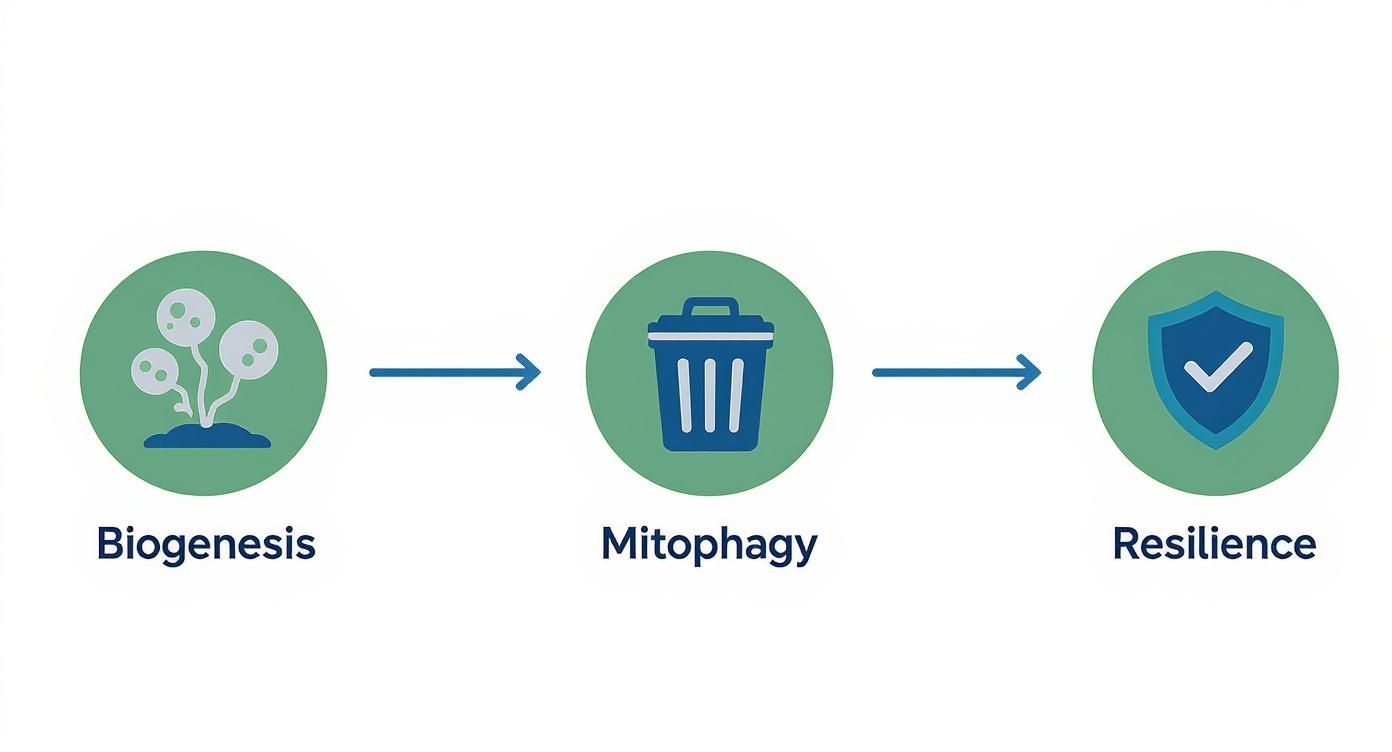
This constant renewal process ensures your cellular machinery isn't just growing, but is becoming more efficient and robust over time.
A Growing Focus in Health and Wellness
The link between cellular energy and overall health is no longer a niche topic; it's moving to the forefront of proactive wellness. This shift is clearly reflected in the diagnostics market. The global market for mitochondrial DNA (mtDNA) analysis, valued at around USD 324.8 million in 2024, is projected to hit USD 612.6 million by 2033. This growth is fueled by new testing technologies and a public that is increasingly invested in understanding and optimizing their own biology. You can discover more insights about this expanding market and what it means for the future of personalized health.
Before we dive into the specific strategies, let's get a high-level view of the key areas we'll be targeting.
Pillars of Mitochondrial Health at a Glance
This table provides a quick summary of the key lifestyle areas that directly influence the health and function of your mitochondria, which will be explored in detail throughout this guide.
| Intervention Area | Primary Goal | Key Actions |
|---|---|---|
| Exercise | Stimulate Biogenesis & Mitophagy | Zone 2 cardio, HIIT/sprints, resistance training |
| Nutrition | Provide Fuel & Reduce Stress | Nutrient density, ketosis, targeted fasting, phytonutrients |
| Sleep & Circadian Rhythm | Facilitate Repair & Cleanup | Consistent sleep schedule, light/dark exposure, temp regulation |
| Targeted Supplementation | Fill Gaps & Enhance Function | CoQ10, PQQ, Creatine, NAD+ precursors, Magnesium |
| Advanced Modalities | Supercharge Cellular Processes | Red Light Therapy, Sauna, Cold Exposure, HBOT |
Each of these pillars works synergistically to create a powerful effect on your cellular health.
In the following sections, we'll break down actionable steps for each of these pillars—from specific workout prescriptions to advanced recovery protocols—to help you build a more powerful and efficient mitochondrial network. For more wellness insights, be sure to explore our Medeq Wellness Journal.
How to Eat for Better Cellular Energy
When it comes to mitochondrial health, your diet isn't just a supporting player—it's the main event. While exercise signals your body to build more of these cellular power plants, the food you eat provides the high-octane fuel and protective armor they need to run at peak capacity for optimal wellness.
Let's move past the generic "eat healthy" advice and get into the specifics of what a pro-mitochondrial plate actually looks like. The goal here is simple: build resilience and sustain high energy levels.
Think of your mitochondria as finely tuned engines. They absolutely thrive on clean, premium fuel but sputter and break down when clogged with low-quality junk. Our entire nutritional strategy is built around giving them the nutrients to crank out ATP while defending them from the oxidative stress that wrecks their delicate machinery.
Building Your Plate with Mitochondria in Mind
The core principle is to maximize nutrient density while minimizing anything that causes cellular damage. This means building every meal around whole foods packed with healthy fats, quality proteins, and a whole spectrum of antioxidant-rich vegetables. It's the synergy between these components that truly protects your cellular powerhouses.
Healthy fats, for one, are non-negotiable. Mitochondria with robust, flexible membranes just perform better, and the omega-3 fatty acids found in these foods are essential for building those membranes.
- Wild-caught fatty fish like salmon and sardines
- Avocados and pure avocado oil
- Nuts and seeds, especially walnuts, chia seeds, and flaxseeds
At the same time, quality protein delivers the amino acid building blocks needed to repair and construct new mitochondrial structures. I always recommend focusing on grass-fed meats, pasture-raised poultry, and wild-caught fish to get the cleanest source possible.
Finally, load up your plate with colorful vegetables. They deliver a powerful dose of phytonutrients—plant compounds like polyphenols that are potent antioxidants. They are your frontline defense, neutralizing the free radicals generated during energy production and shielding your mitochondria from daily wear and tear.
The Big Picture: A pro-mitochondrial diet isn't about harsh restrictions. It's about strategic additions. Think of every meal as a chance to either protect or stress your cellular energy systems. Prioritize healthy fats for membrane health, clean protein for repair, and a rainbow of plants for antioxidant defense.
Using Fasting and Ketosis for a Cellular Tune-Up
It’s not just what you eat, but when you eat that can profoundly shift mitochondrial function. Tactical approaches like intermittent fasting and nutritional ketosis are incredibly effective for triggering cellular cleanup and boosting energy efficiency.
Intermittent fasting, which is just cycling between periods of eating and not eating, introduces a beneficial metabolic stress. This nudge forces your body to become more efficient, firing up a critical process called mitophagy. Think of it as a targeted cleanup crew that identifies, removes, and recycles old, dysfunctional mitochondria, making room for new, more powerful ones.
Nutritional ketosis gets you to a similar place by switching your body’s primary fuel from glucose to ketones. For mitochondria, ketones are a much cleaner-burning fuel, producing far fewer damaging reactive oxygen species (ROS) than glucose. This high-fat, very-low-carb approach can dramatically cut down on oxidative stress and upgrade your overall mitochondrial efficiency.
Foods That Clog Your Cellular Engines
Just as important as what you add is what you take away. Some foods act like sludge in your mitochondrial engines, creating a storm of oxidative stress and grinding your energy production to a halt.
The two biggest offenders?
- Refined Sugars and Carbohydrates: These send your blood glucose on a rollercoaster, forcing mitochondria into overdrive. This metabolic chaos spews out a massive amount of free radicals, causing direct damage to mitochondrial DNA and proteins.
- Processed Industrial Seed Oils: Oils from corn, soy, and canola are loaded with unstable omega-6 fatty acids. When heated, they oxidize and get woven into your cell membranes, making them stiff and dysfunctional. This is a direct hit to mitochondrial performance.
Cutting these out is one of the single most impactful things you can do. This focus on cellular health is gaining momentum globally as a pillar of long-term wellness. As populations age, particularly in places like China, the focus is shifting from simply extending lifespan to enhancing healthspan, which is driving huge consumer demand for personalized mitochondrial therapies. Explore more on the future trends of the mitochondrial medicine industry to understand how this is reshaping global health.
For more deep dives into actionable wellness, check out our Medeq Wellness Journal.
The Right Way to Exercise for Mitochondrial Growth
If your diet provides the fuel, think of exercise as the signal that tells your body to build a bigger, better cellular engine. It’s hands down the most powerful trigger for mitochondrial biogenesis—the actual creation of new mitochondria. But this isn't about just going harder. It's about training smarter to provoke the most profound cellular upgrades for health and wellness.
Different workouts send different messages. Each training style stresses your energy systems in a unique way, which in turn sparks distinct mitochondrial improvements. A truly effective plan doesn’t just hammer one type of workout. Instead, it strategically blends different intensities to build both endurance and power right down at the cellular level.

Whether you're an elite athlete or just starting out, the goal is the same: create a metabolic demand that forces your cells to adapt and amplify their energy production.
Zone 2 Cardio: The Foundation of Mitochondrial Density
The absolute bedrock of any mitochondrial-focused program is steady, lower-intensity endurance exercise. You’ve probably heard this called Zone 2 training. It's that sweet spot where you can still hold a conversation but you're definitely working—think a brisk walk on an incline, a light jog, or a steady pace on a bike.
During Zone 2 work, your body primarily burns fat for fuel through aerobic respiration, a process that happens right inside your mitochondria. When you sustain this effort for 45-90 minutes, you send a clear and powerful signal to your cells: "We need to get way better at using fat and producing energy for the long haul." The result is a real, measurable increase in the number and efficiency of your mitochondria, especially in your slow-twitch muscle fibers.
This boost in mitochondrial density delivers huge health benefits:
- Deeper Endurance: You can simply go longer before you hit a wall because your body becomes a master at generating ATP aerobically.
- Metabolic Flexibility: Your system gets much better at switching between burning fats and carbs for fuel.
- Faster Workout Recovery: A robust aerobic base helps you clear out metabolic waste more efficiently between those hard efforts, which is crucial for consistent training and wellness.
HIIT: The Catalyst for Peak Mitochondrial Power
While Zone 2 builds the size of your mitochondrial engine, High-Intensity Interval Training (HIIT) is what tunes it for maximum horsepower. HIIT means short, all-out bursts of effort followed by brief recovery. This kind of training pushes your muscles to their absolute limit, creating an energy demand so massive that your mitochondria simply can't keep up.
That temporary energy crisis is actually a fantastic thing for your cells. It triggers a powerful cascade that tells them to not only build new mitochondria but also to improve the function of the ones you already have. HIIT is also a potent stimulus for mitophagy, the critical cleanup process where the cell recycles old, damaged mitochondria. This keeps the entire network lean, mean, and highly efficient.
An athlete with a strong mitochondrial base can clear lactate more efficiently, pushing their lactate threshold higher. This means they can sustain a higher intensity for longer before performance drops off—a key advantage in any sport and a sign of enhanced workout recovery.
For athletes, this translates directly to a higher power output and the ability to repeat intense efforts over and over. Plus, the quick nature of HIIT makes it an incredibly time-efficient way to get these powerful cellular results.
Creating a Balanced Weekly Plan
The real magic happens when you bring these two training styles together. Zone 2 builds the engine, and HIIT fine-tunes it. A polarized approach, where the bulk of your training is low-intensity with just a small dose of high-intensity work, has proven incredibly effective for health and wellness.
Here’s a sample weekly template for someone looking to optimize mitochondrial health:
| Day | Workout Focus | Example Activity | Duration |
|---|---|---|---|
| Monday | Zone 2 Cardio | Inclined Treadmill Walk | 60 minutes |
| Tuesday | Strength Training | Full Body Workout | 45 minutes |
| Wednesday | HIIT | 8x 30s Sprint / 90s Rest | 20 minutes total |
| Thursday | Active Recovery | Light Walk or Yoga | 30 minutes |
| Friday | Zone 2 Cardio | Stationary Bike | 75 minutes |
| Saturday | Strength Training | Upper or Lower Body Focus | 45 minutes |
| Sunday | Rest | Complete Rest | N/A |
This kind of structure gives you the consistent signals needed for mitochondrial growth without running you into the ground. Don't forget that strength training is also crucial—building muscle mass gives you more real estate to house all these new mitochondria. Our guide on resistance training for smarter strength offers some great insights on that front. Ultimately, this balanced approach is the key to unlocking better performance, faster recovery, and sustainable progress. For more wellness insights, be sure to explore our Medeq Wellness Journal.
Using Heat and Cold to Boost Mitochondrial Function
Beyond the foundational work of diet and exercise, you can send powerful signals to your cells using something surprisingly simple: temperature. This strategy, often called thermal stress, is a fantastic way to improve your mitochondrial health. It works by creating a short-term, controlled challenge that forces your cells to adapt, becoming stronger and more efficient—a cornerstone of proactive wellness.
This isn't just about gritting your teeth through discomfort; it's about tapping into ancient survival pathways. The shock of switching between hot and cold strengthens your existing mitochondria and can even trigger the creation of new ones, making it a potent tool for anyone serious about health, performance, and workout recovery.

From speeding up post-workout recovery to building entirely new powerhouses in your cells, deliberate heat and cold exposure are practical ways to supercharge your cellular engines.
Harnessing Cold for Mitochondrial Biogenesis
Cold plunges are more than just a passing wellness trend—they're a direct line of communication with your cellular energy factories. When you get into cold water, your body kicks into a mild survival mode. Its main goal is to generate heat to protect your core temperature, which puts a massive energy demand on your mitochondria.
This metabolic jolt is exactly what kickstarts mitochondrial biogenesis. Your body gets the message that it needs to be better at producing heat, so it responds by building brand-new mitochondria. This process is especially good at increasing your brown adipose tissue (BAT), or "brown fat," which is packed with mitochondria designed specifically for heat production.
Ready to get started? Here’s a practical approach:
- Temperature: Get the water between 40-60°F (4-15°C).
- Duration: Just 1-3 minutes is plenty when you're starting out. You can build up from there.
- Frequency: Aim for 2-3 times per week, maybe after a tough workout or on a dedicated recovery day.
The initial shock can be intense, but focusing on slow, controlled breathing is the key. The payoff—from lower inflammation to an incredible feeling of alertness—makes it a worthwhile habit.
Activating Cellular Defenses with Heat
On the other side of the thermometer, saunas offer a different but equally powerful stimulus for mitochondrial health. When you expose your body to intense heat, you activate a special group of proteins called heat shock proteins (HSPs).
Think of HSPs as your cells' personal bodyguards. They protect other proteins from getting damaged or misfolded by stress, whether it’s from heat, a hard workout, or oxidative damage. By shoring up these defenses, saunas help maintain the integrity of your mitochondria so they can keep running smoothly.
This cellular protection translates directly into better workout recovery and resilience. For a closer look at the science, check out our guide to sauna benefits for athletes.
Key Takeaway: Heat stress does more than just make you sweat—it strengthens your cells from the inside out. Activating heat shock proteins is like installing a cellular security upgrade, preserving mitochondrial function and helping your body handle all kinds of stress.
The Power of Contrast Therapy for Recovery
Why choose one when you can have both? Contrast therapy, which involves alternating between hot and cold, combines the health benefits of both into a single, powerful recovery session. The rapid switch from a hot sauna to a cold plunge creates a "pumping" action in your circulatory system.
Your blood vessels constrict in the cold and then dilate in the heat. This back-and-forth helps flush out metabolic byproducts like lactate from your muscles while delivering a fresh supply of oxygen-rich blood. The result is significantly faster workout recovery and less muscle soreness.
For your mitochondria, this circulation boost means a better, faster delivery of the nutrients and oxygen they need to bounce back after a workout.
Here's a simple and effective contrast protocol:
- Heat: Spend 15-20 minutes in the sauna.
- Cold: Follow it with 2-5 minutes in a cold plunge.
- Repeat: Go through this cycle 2-4 times.
- Finish Cold: Always end your session on cold to help bring down any lingering inflammation.
This method doesn't just support your physical recovery; it also trains your nervous system to be more resilient, offering both immediate relief and long-term health benefits.
Comparing Advanced Recovery Modalities
While hot and cold therapies are both fantastic, they work in slightly different ways and are better suited for different goals. Knowing the differences can help you pick the right tool for the job.
Here's a quick comparison to help you understand which modality might be best for your specific wellness needs, from building new mitochondria to accelerating workout recovery.
| Modality | Mechanism of Action | Primary Benefit | Best For |
|---|---|---|---|
| Cold Plunge | Induces thermogenesis and activates BAT | Mitochondrial biogenesis, reduced inflammation | Building cellular energy capacity, post-workout soreness |
| Sauna Use | Activates heat shock proteins (HSPs) | Cellular protection, improved circulation | Enhancing resilience to stress, deep recovery |
| Contrast Therapy | Vasodilation/vasoconstriction cycling | Flushing metabolic waste, enhanced circulation | Accelerating workout recovery, nervous system training |
| Red Light Therapy | Stimulates cytochrome c oxidase | Increased ATP production, cellular repair | Targeted tissue healing, reducing pain and inflammation |
Each of these modalities offers a unique pathway to better mitochondrial health. By working them into your routine, you can start fine-tuning your body’s energy systems for peak performance and longevity. For more wellness insights, be sure to explore our Medeq Wellness Journal.
Strategic Supplements and How to Track Your Progress
While the big wins for mitochondrial health come from lifestyle pillars like exercise and nutrition, a few strategic supplements can provide targeted support. Think of them as the support crew for your cellular engines, enhancing your overall wellness.
These compounds can help protect existing mitochondria, boost their energy output, and supply the specific raw materials they need to run at peak capacity. You're building the engine with diet and workouts; supplements are the premium oil and protective additives that keep it humming under pressure. Let's focus on the players with solid evidence behind them.
Core Supplements for Cellular Energy
The supplement aisle is a crowded place, but a few key compounds consistently prove their worth for supporting the full mitochondrial life cycle. They work by either participating directly in energy production or shielding your cellular powerhouses from damage.
Here are three foundational supplements I often see deliver real health benefits:
-
Coenzyme Q10 (CoQ10): This is pretty much non-negotiable for mitochondrial health. CoQ10 is a powerful antioxidant your body makes naturally, and it's absolutely critical for the final steps of ATP production. The catch? Our natural levels drop as we age, which makes supplementation a smart move for maintaining cellular energy.
-
Pyrroloquinoline Quinone (PQQ): This one works beautifully with CoQ10. While CoQ10 optimizes the mitochondria you already have, PQQ has been shown to actually stimulate the creation of new ones—a process called mitochondrial biogenesis. Together, they build and protect your entire cellular energy grid.
-
Creatine: It’s known for muscle building, but creatine’s role is far more fundamental. It's a key player in recycling ATP, our body's energy currency. This rapid energy regeneration is crucial for high-demand tissues like our muscles and, just as importantly, our brain.
These supplements fill in the biochemical gaps that even a meticulously planned diet might miss.
Measuring What Matters: How to Track Progress
So, how do you know if all your hard work—from the Zone 2 sessions to the sauna—is actually paying off on a cellular level? You don't need a biopsy to get meaningful feedback. A few accessible metrics are surprisingly powerful proxies for mitochondrial function and overall wellness.
One of the most valuable is Heart Rate Variability (HRV). This metric isn't about your heart rate; it measures the tiny variations in time between each heartbeat, offering a direct window into your autonomic nervous system's status. A higher HRV is a great sign—it generally means your body is resilient, recovered, and adapting well to stress.
As your mitochondrial health improves, your body becomes more efficient at producing energy and managing stress. This enhanced resilience is often reflected in a higher, more stable HRV, signaling that your nervous system is in a state of balance and recovery. This is a key indicator of improved workout recovery and overall wellness.
By tracking your HRV daily, you can start connecting the dots between your lifestyle choices and your internal state. Consistent workouts, better sleep, and smart nutrition should lead to a gradual upward trend in your HRV baseline. For a deeper dive, check out our guide on how to improve HRV and what it says about your recovery.
The Future of Monitoring Mitochondrial Health
Keeping an eye on metrics like HRV empowers you to take a more data-driven, personalized approach to your wellness. This is where the entire field of healthcare is heading—giving individuals the tools to proactively manage their health.
Emerging trends are pointing toward tools that give us even more direct feedback on cellular function. We're already seeing innovations in remote patient monitoring (RPM) that can track metabolic rates and energy expenditure in real-time. This technology, once confined to clinics treating mitochondrial disorders, is becoming more accessible for home use, offering a continuous look at how well our bodies are performing.
Ultimately, combining targeted supplements with consistent, intelligent tracking creates a powerful feedback loop. It lets you connect your actions to real, measurable outcomes, making sure your journey toward better mitochondrial health is both effective and sustainable.
Common Questions About Mitochondrial Health
As you start digging into mitochondrial health, some questions always come up. Getting clear on the details helps you apply these strategies with more confidence and set the right expectations. Here are the straight-up answers to the questions we hear most often.
How Long Does It Take to Improve Mitochondrial Health?
You'll probably feel an energy boost within a few weeks, but the real, deep cellular improvements take time. Your body is great at adapting, but building a powerful mitochondrial network is a long game, not a quick fix.
You can expect to see initial changes relatively quickly. For example, consistent exercise can kick off the process of building new mitochondria in as little as 4-6 weeks. But creating lasting, meaningful density and efficiency? That’s a long-term project. Think in terms of months of consistency, not just a few days. The key is sticking with the fundamentals: smart nutrition, targeted exercise, and restorative sleep.
Can I Just Improve My Mitochondria with Diet?
A healthy diet is non-negotiable for protecting your existing mitochondria from damage and giving them the premium fuel they need to run well. It keeps oxidative stress in check and provides the raw materials for cellular repair.
However, to actually trigger the creation of new mitochondria—a process called biogenesis—exercise is the most powerful tool we have. The physical demand of a workout is an unmistakable signal to your cells that more energy is needed, forcing them to adapt and build more power plants.
Food protects, while exercise builds. The combination of a pro-mitochondrial diet and a smart exercise plan creates a synergy that's far more effective than focusing on either one alone.
Are Ice Baths and Saunas Actually Necessary?
No, they aren't strictly necessary, but they are powerful accelerators for wellness and workout recovery. The real foundations for mitochondrial health will always be your nutrition, exercise, and sleep. If you nail those three, you'll see fantastic health benefits.
That said, tools like ice baths and saunas introduce a beneficial, controlled stress that kicks your body's innate defense and repair systems into high gear. This hormetic stress pushes your cells to become more resilient and efficient. Think of them as advanced tools to amplify your recovery, strengthen your cellular machinery, and speed up the benefits you get from the fundamentals. Contrast therapy, in particular, is excellent for enhancing workout recovery.
What Is the Single Most Important Thing for My Mitochondria?
If you could only do one thing, it would have to be exercise—specifically, a smart mix of moderate endurance training (Zone 2) and high-intensity intervals (HIIT).
Exercise sends a direct demand signal to your cells to produce more energy. It's the most effective way we know to stimulate the growth of new, more efficient mitochondria. While diet and sleep are critical support systems, exercise is the primary driver of adaptation and growth.
For more deep dives into proactive wellness, be sure to visit the Medeq Wellness Journal.
At MedEq Fitness, we believe that true performance comes from a foundation of optimal recovery. Our curated selection of clinic-grade wellness equipment, from cold plunges and saunas to hyperbaric chambers, is designed to help you bridge the gap between exertion and renewal. Explore our collection and start building a more resilient you.


