

Your Ultimate Guide to Modern Wellness Equipment
When you hear "wellness equipment," you might picture something you'd find at a typical gym. But we're talking about something else entirely. This is the advanced gear—think saunas, cold plunges, and even hyperbaric chambers—built specifically for workout recovery, physiological restoration, and hitting peak physical and mental wellness.
Think of it as the crucial bridge between the hard work you put in and your body's ability to truly bounce back, stronger and more resilient than before.
Why Wellness Equipment Is Your New Performance Edge
The conversation around health is changing. For years, it was all about how hard you could push yourself in a workout. Now, the smartest people in the room are focused on how intelligently they can recover. This shift prioritizes the immense health benefits that come from dedicated restoration practices.
While your treadmill and weights build strength, wellness equipment hones in on what happens after the workout. It’s all about repairing muscle, calming inflammation, resetting your nervous system, and boosting health at a cellular level. This is where you lock in the real, lasting gains and elevate your overall wellness.
This isn't just a niche trend anymore. The global wellness economy exploded to an incredible $6.8 trillion in 2024. The home fitness market alone hit $12.26 billion, and it's expected to climb to $19.79 billion by 2032. People are investing seriously in their personal health and workout recovery. You can dig into the full research on the fitness equipment market to see just how fast it's growing.
Beyond Exercise Toward Total Body Restoration
Picture your body as a high-performance engine. You can redline it all day, but if you skip the oil changes, cooling flushes, and tune-ups, it’s going to break down. Wellness equipment is that essential maintenance, providing significant health benefits by giving your body what it needs to handle stress and come back even stronger.
This is exactly why tools once found only in elite training facilities are now becoming staples in homes and clinics. If you're curious about what the pros use, check out our guide on the best recovery tools for athletes.
These devices tap into your body's built-in healing mechanisms. Cold therapy, for instance, constricts blood vessels to flush out metabolic byproducts from a tough workout. Saunas do the exact opposite, boosting blood flow to shuttle in fresh nutrients and oxygen. Using them together, a method known as contrast therapy, acts as a powerful pump for your entire circulatory system, accelerating workout recovery and enhancing overall wellness.
"True peak performance isn't just about what you do during your workout—it's about how effectively you recover after. Wellness equipment gives you the tools to optimize that recovery, turning effort into lasting results."
To give you a clearer picture of this world, let's break down the main categories you'll encounter.
A Snapshot of Modern Wellness Equipment
This table offers a quick look at the major types of wellness equipment, their primary health benefits, and who they’re for. It’s a great starting point for figuring out what might fit your wellness goals.
| Equipment Category | Primary Health Benefit | Ideal User Profile |
|---|---|---|
| Cold Plunge Pools | Reduces inflammation, boosts circulation, accelerates muscle recovery. | Athletes, biohackers, and anyone seeking improved resilience. |
| Infrared & Traditional Saunas | Promotes detoxification, improves cardiovascular health, reduces stress. | Individuals focused on relaxation, heart health, and pain relief. |
| Hyperbaric Chambers | Enhances cellular repair, speeds up healing, improves cognitive function. | High-performers, clinics, and those recovering from injury. |
| Red Light Therapy Panels | Stimulates collagen, reduces pain, and improves skin health. | Users interested in anti-aging, joint health, and muscle repair. |
| Massage Chairs | Relieves muscle tension, improves circulation, and aids relaxation. | Anyone with chronic pain, high stress, or post-workout soreness. |
Each of these tools offers a unique pathway to better health. We'll be diving deeper into each one to help you understand how they work and which might be the right investment for you.
You can find more health and wellness insights on our blog, the MedEq Wellness Journal.
A Look at the Core Types of Wellness Equipment
Modern wellness gear is more than just a fancy treadmill. We're talking about a powerful toolkit designed to upgrade your health from the inside out, focusing on deep recovery and optimizing how your cells function. This isn't just about "feeling good"—it's about leveraging specific health benefits to heal faster, slash inflammation, and build real resilience.
Let's break down the science behind some of the most effective tools out there today. Each one works on a different biological pathway, but they all share the same goal: helping your body perform at its absolute best. From changing atmospheric pressure to using specific wavelengths of light, these technologies give you direct control over your workout recovery.
There's a reason the market for this equipment is booming. Recovery is no longer an afterthought; it's a cornerstone of the entire wellness landscape, which is projected to grow at around 7.6% annually from 2024 to 2029. We're seeing a massive shift toward restoration and stress reduction, with related areas like mental wellness expanding at an average annual rate of 12.4% between 2019 and 2024. For a closer look at these trends, you can find more insights about the global wellness economy and its future.
Hyperbaric Chambers: Unlocking Oxygen for Healing
Imagine giving your body's cells a supercharged dose of their most critical fuel: oxygen. That's exactly what a hyperbaric oxygen therapy (HBOT) chamber does. When you're inside, you breathe in almost pure oxygen in a pressurized environment. This wellness practice offers profound health benefits for healing.
This one-two punch of pressure and concentrated oxygen lets your lungs gather far more O2 than they ever could at normal air pressure. Your blood plasma becomes saturated with it, delivering this life-giving molecule to tissues that are starved for it—especially areas that are injured or inflamed.
The real magic of HBOT is its ability to dramatically crank up the body's natural healing processes. By flooding tissues with oxygen, it can kickstart the growth of new blood vessels, calm down swelling, and help fight off certain infections.
For an athlete, this means faster workout recovery and getting back on the field sooner after an injury. For anyone focused on cognitive sharpness, it means supporting brain health by boosting oxygen delivery where it counts.
Cold Plunges and Saunas: The Power of Contrast Therapy
Hot and cold therapies are ancient wellness practices, but today's equipment has made them incredibly precise and effective. They're great on their own, but when you combine them, you unlock a powerful synergy known as contrast therapy.
Saunas, particularly infrared models, use heat that penetrates deep into your muscles and tissues. This triggers key health benefits:
- Boosted Circulation: Heat makes your blood vessels expand (vasodilation), which improves blood flow and rushes more oxygen and nutrients to your cells.
- Deep Detox: The intense sweat helps your body push out toxins, giving your system a good cleanse.
- Serious Stress Relief: The warmth is fantastic for relaxing tight muscles and calming the nervous system, helping to lower cortisol.
Cold plunges, on the other hand, do the complete opposite. Dunking your body into icy water causes your blood vessels to clamp down (vasoconstriction). This process is amazing for workout recovery:
- Crushing Inflammation: That cold shock is one of the fastest ways to reduce inflammation, the root cause of muscle soreness and a lot of chronic pain.
- Flushing Out Waste: The constriction acts like a squeegee, pushing deoxygenated blood and metabolic junk like lactic acid out of your muscles.
- Elevating Mood and Focus: The jolt of cold triggers a release of norepinephrine, a hormone that sharpens focus, lifts your mood, and builds mental grit.
When you cycle between the sauna and the cold plunge, you're performing contrast therapy. This rapid switching between expansion and contraction acts like a pump, supercharging your circulation and accelerating workout recovery far beyond what either therapy could do alone.
Red Light Therapy: Energizing Your Cells from Within
What if you could use light to jumpstart your body's healing mechanisms? That's the idea behind Red Light Therapy (RLT). This wellness equipment uses very specific, safe wavelengths of red and near-infrared light to penetrate your skin and get straight to work on your cells.
Unlike the sun's damaging UV rays, these light wavelengths don't burn you. Instead, they get absorbed by the mitochondria—the tiny "power plants" inside your cells. This helps the mitochondria produce more ATP (adenosine triphosphate), which is the energy currency that fuels literally everything your body does.
With more ATP on hand, your cells have the energy they need to repair and regenerate. This translates into some incredible health benefits:
- Reduced Pain and Inflammation: RLT is fantastic for soothing angry joints and calming down inflammation in muscle tissue.
- Better Skin Health: It fires up collagen production, which can help smooth out wrinkles and improve your overall skin tone.
- Faster Muscle Recovery: By giving muscle cells more energy, it helps them repair more quickly after a tough workout.
Massage Chairs: Advanced Muscle Recovery on Demand
Forget those old vibrating recliners at the mall. Today's high-tech massage chairs are sophisticated pieces of wellness equipment, using a blend of rollers, airbags, and heat to deliver a therapeutic massage that rivals a human therapist. They're engineered to hit specific muscle groups to provide targeted relief and kickstart recovery.
The main health benefit here is releasing muscle tension and improving local circulation. As the rollers work out knots and tight spots, blood flow floods the area, bringing in fresh oxygen and nutrients while clearing out metabolic waste. This is a game-changer for anyone dealing with chronic pain or stubborn post-workout soreness. For deeper wellness, optimizing your sleep environment is also key. To explore specific types of wellness equipment for sleep, you can delve into articles defining key items, such as understanding mattress toppers and their benefits.
These key categories are at the forefront of personal health and performance. For more expert-driven information, feel free to browse our MedEq Wellness Journal.
Choosing Your Equipment: Clinical Grade Vs. Home Use
When you start looking at wellness equipment, it can feel a lot like walking onto a car lot. You've got your practical, everyday models designed for home use, and then you have the high-performance, clinical-grade machines built for raw power and precision. The trick is knowing that the "best" choice is simply the one that lines up perfectly with your goals, your budget, and how you plan to use it.
Think of it this way: are you buying a reliable family sedan or a Formula 1 race car? Both get you from A to B, but they are engineered for completely different purposes, users, and performance expectations. Home-use equipment is all about convenience and fitting easily into your daily wellness routine. Clinical-grade gear, on the other hand, is built for maximum therapeutic output, durability under constant use, and delivering exact, measurable health benefits in a professional setting.
Often, it’s a simple trade-off between upfront cost and long-term value. A home model might be easier on the wallet today, but a clinical unit usually packs a bigger therapeutic punch and is built to withstand years of heavy-duty operation.
Key Differences That Matter
The gap between home and clinical models is more than just the price tag—it’s baked into the engineering, materials, and capabilities. A home-use infrared sauna, for instance, might be perfect for daily relaxation. A clinical version, however, will likely have more powerful heaters, be constructed from medical-grade non-toxic materials, and offer precise temperature controls to achieve specific therapeutic outcomes for clients.
It's a common theme. Even when looking into something as simple as air quality, understanding the difference between an air cleaner versus air purifier helps you pick the right tool for the job. This same logic applies across every category of wellness equipment.
To cut through the noise, start by defining your primary goal. This decision tree is a great way to see how your objective—whether it's workout recovery, relaxation, or deep cellular repair—guides you toward specific types of equipment.
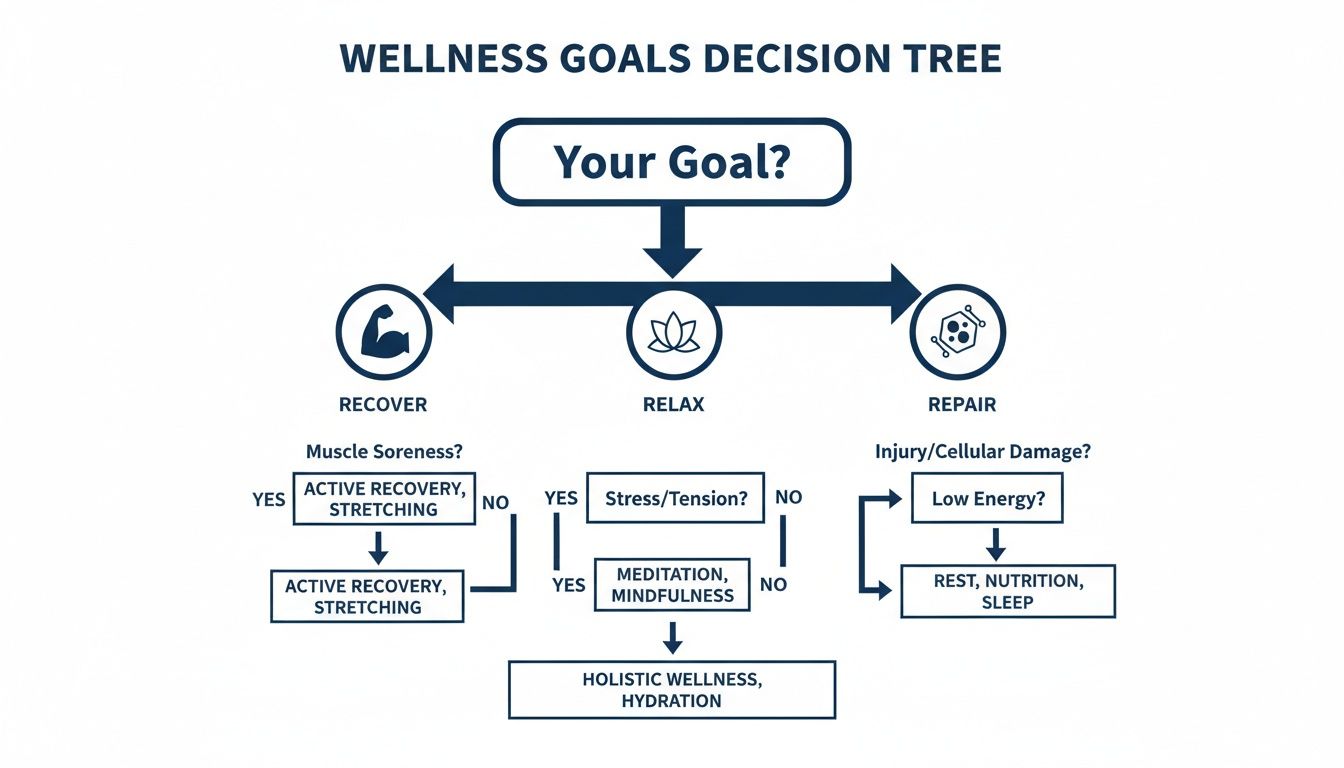
As you can see, a clear goal is your best compass for navigating the options and finding the right tools for your personal health journey.
Comparing Wellness Equipment: Home Use Vs. Clinical Grade
Let's get practical and break down the real-world differences you'll see out there. This isn't an exhaustive list, but it highlights the core trade-offs between everyday accessibility and professional-level performance.
| Equipment Type | Typical Home-Use Feature | Typical Clinical-Grade Feature | Key Consideration |
|---|---|---|---|
| Hyperbaric Chamber | Soft shell, lower pressure (1.3-1.5 ATA), portable design. | Hard shell, higher pressure (up to 2.0 ATA), medical-grade components. | Higher pressures can offer more significant therapeutic health benefits for specific conditions. |
| Cold Plunge | Smaller footprint, basic filtration, insulated tub construction. | Powerful chilling (down to 37°F), advanced water sanitation (ozone/UV), durable build for constant use. | A clinical model's powerful chilling and sanitation are crucial for frequent, multi-user environments. |
| Infrared Sauna | Carbon heaters, simple controls, compact size for 1-2 people. | Full-spectrum heaters, advanced controls, non-toxic materials (e.g., hypoallergenic wood). | Clinical saunas deliver more targeted therapeutic wavelengths and ensure a cleaner, non-toxic experience. |
| Red Light Therapy | Smaller panels, lower light irradiance (power output). | Large, full-body panels, high irradiance for deeper penetration and shorter session times. | For targeted home use, a smaller panel is great. For more comprehensive benefits, you can explore powerful red light therapy at home systems. |
Ultimately, it comes down to asking one fundamental question: "Am I looking for a tool to support a healthy lifestyle, or do I need a powerful instrument to drive specific, measurable physiological changes?" Your answer will point you directly to the right grade of equipment.
For the dedicated biohacker or a family truly committed to long-term wellness, investing in clinical-grade equipment for the home can offer an incredible return through sheer convenience and superior results. For clinics and wellness centers, it's non-negotiable—durability and client outcomes absolutely depend on it.
Integrating Wellness Equipment Into Your Daily Routine
Owning a piece of high-tech wellness gear is the easy part. The real game-changer is weaving it into the fabric of your daily life so it becomes a non-negotiable habit. It's about turning these powerful tools from something you do occasionally into a core part of who you are.
The secret is creating simple, repeatable protocols that are tailored to your specific wellness goals and lifestyle.
Think of it like planning your workouts. You wouldn't just show up at the gym and randomly pick up weights, right? You follow a structured plan designed to get you stronger, faster, or leaner. The same logic applies here. By intentionally "stacking" different therapies, you create a powerful synergistic effect that fast-tracks your health benefits.
This isn't about adding another stressful task to your to-do list. It’s about building restorative rituals that your body and mind actually start to crave. A routine is only successful if it feels good, not like a chore.
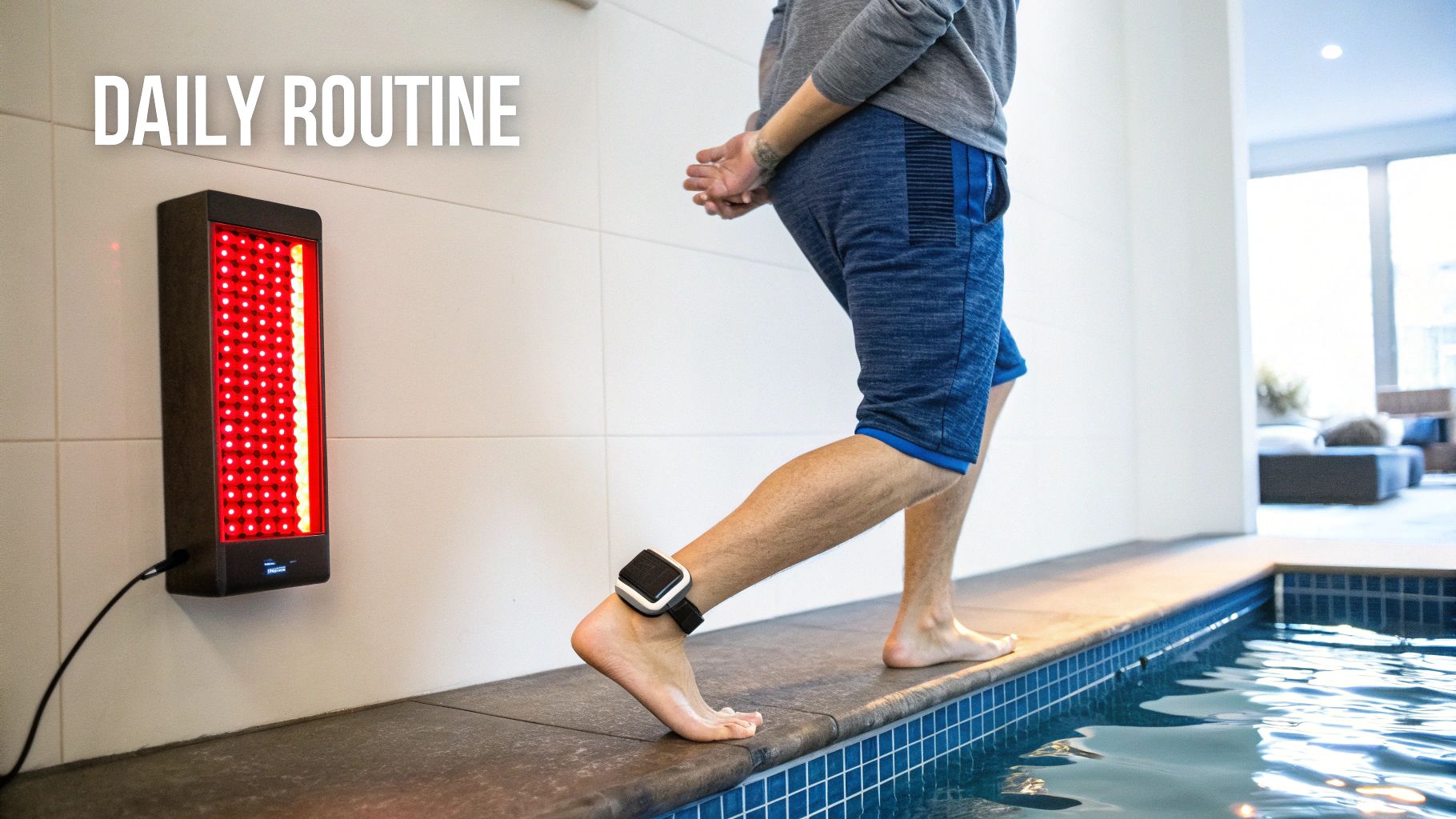
Building Your Wellness Protocols
A protocol is just a fancy word for a routine—a specific sequence of actions you take to achieve a specific outcome. By mapping out a few core protocols, you eliminate the guesswork and make consistency effortless. First, pinpoint your primary goal. Is it faster workout recovery, less stress, or deeper sleep?
Here are a couple of examples showing how you can combine different pieces of wellness equipment into powerful, goal-oriented stacks.
-
The Athlete's Workout Recovery Stack: This one-two punch is designed to crush post-workout inflammation and kickstart muscle repair.
- Post-Workout: Right after you train, spend 10-15 minutes with a red light therapy panel targeting the muscles you just worked. This infuses your cells with the energy they need to rebuild.
- Cold Plunge: Within an hour of finishing your workout, hit the cold plunge for 2-4 minutes. This powerful vasoconstriction helps flush out metabolic waste and slams the brakes on inflammation.
-
The Stress-Reduction Ritual: This is your perfect evening wind-down routine, designed to quiet your nervous system and prep your body for incredible sleep.
- Evening Sauna Session: About 60-90 minutes before bed, step into an infrared sauna for 20 minutes. The deep, penetrating heat melts muscle tension and helps lower cortisol.
- Massage Chair Cool-Down: Immediately after, sink into a zero-gravity massage chair for a 15-minute session. This deepens the relaxation and sends a clear signal to your body that it's time to shut down and recover.
Use these as a launchpad. The best protocols are always the ones you tweak and perfect for your own body, schedule, and wellness goals.
Listening to Your Body and Tracking Your Progress
While having a structured plan is huge, the number one rule is to listen to your body. Some days might call for a longer sauna session; on others, a quick cold plunge is all you need. Remember, consistency beats intensity every time, especially when you're starting out.
"The most advanced biofeedback device you own is your own body. Wellness equipment gives you the tools to have a more intelligent conversation with it. Pay attention to how you feel, and adjust your routines accordingly."
To truly see the ROI on your investment, you need to track your biometrics. This is where the magic happens. Using a wearable like a Whoop strap, Oura Ring, or Garmin watch lets you see the hard data behind how you feel.
Keep an eye on these key metrics to gauge your health benefits:
- Heart Rate Variability (HRV): A higher HRV is the gold standard for a recovered, resilient nervous system. You want to see this number trend upward over time.
- Resting Heart Rate (RHR): As your cardiovascular health and recovery improve, your RHR should slowly but surely drop.
- Sleep Scores: Don't just look at total time. Zero in on the duration of your deep and REM sleep. These are the most restorative stages, and your wellness protocols should noticeably improve them.
When you start monitoring the data, you can draw a straight line from your new evening sauna habit to a measurable jump in your sleep quality and recovery scores. This creates an incredibly powerful feedback loop, reinforcing your commitment and proving the real-world value of integrating wellness equipment into your life.
For more wellness strategies and equipment insights, be sure to visit the MedEq Wellness Journal.
Setup, Maintenance, And Safety Best Practices
Buying a top-tier piece of wellness equipment is just the starting line. Learning how to properly care for it is what unlocks its long-term value and ensures every session is safe and effective.
Don’t worry, this isn’t nearly as complicated as it sounds. Modern equipment is built with the user in mind, making ownership surprisingly straightforward. With a few simple habits, you can protect your investment and keep your gear running like new for years to come.
Foundational Setup And Electrical Considerations
Getting the setup right from day one prevents a world of headaches later. This process actually starts before your equipment even shows up.
One of the most crucial first steps is confirming the electrical requirements, especially for power-hungry units like saunas or high-performance cold plunges. Many of these require a dedicated circuit to run safely. We can't stress this enough: bringing in a certified electrician to handle this is non-negotiable.
Once it arrives, follow the manufacturer’s assembly guide to the letter. Taking shortcuts here isn’t just a safety risk—it can also void your warranty. Make sure to place your equipment on a level, stable surface and give it plenty of breathing room, particularly for any units that produce heat.
Routine Maintenance For Longevity
Consistency is everything when it comes to maintenance. While every machine has its quirks, a few universal rules will keep things in peak condition.
- Water Quality is Paramount: For gear like cold plunges, clean water is your top priority. Get in the habit of testing the water chemistry and swapping out filters on the recommended schedule.
- Keep it Clean: A simple wipe-down goes a long way. Regularly clean all surfaces on your equipment—especially high-contact areas on saunas and massage chairs—with manufacturer-approved solutions to stop bacteria in its tracks.
- Inspect and Tighten: Every so often, do a quick visual check of all the hardware, connections, and power cords. Look for any signs of wear and tear and tighten anything that’s come loose.
Following a simple maintenance schedule turns small, easy tasks into a powerful strategy for extending the life of your equipment and ensuring it’s always ready for your next recovery session.
Safety Protocols And Smart Usage
Safety should always be front and center. The first thing you should do is read the user manual from cover to cover. Seriously. It’s the best way to understand the specific operational guidelines, safety warnings, and proper startup and shutdown procedures for your device.
This discipline is becoming more critical as our wellness tools get smarter. The global home fitness equipment market, valued at $12.26 billion in 2024, is expected to climb to $19.79 billion by 2032. At the same time, fitness app downloads have blown past 5 billion, showing a clear trend where our physical gear and digital tracking are merging into one cohesive ecosystem. Keeping your equipment reliable ensures the data you’re tracking is based on safe, effective use.
Finally, and most importantly, listen to your body. Never push past your limits, always stay hydrated, and talk to a healthcare professional before starting a new therapy—especially if you have any pre-existing health conditions.
You can find more health and wellness insights on our blog, the MedEq Wellness Journal.
Your Questions, Answered
Jumping into the world of high-performance wellness gear can bring up a lot of questions. We get it. To help you move forward with confidence, we've put together answers to the most common queries we hear. Think of this as your practical guide to investing in long-term health and recovery.
How Do I Know Which Piece Of Wellness Equipment Is Right For Me?
The best piece of equipment is always the one that solves your biggest problem. It really is that simple. So, first, get crystal clear on what health benefits you want to achieve.
If you’re constantly battling post-workout soreness and want to accelerate your workout recovery, a cold plunge or a red light therapy panel is your best bet. If your goal is to manage stress, flush out toxins, and give your heart a healthy boost, an infrared sauna is a perfect fit. And for those looking to tap into advanced cellular repair, heal faster, or sharpen cognitive function, a hyperbaric chamber is the most powerful tool for the job.
The secret is to match the technology to your primary goal. Once you’ve dialed in on what matters most—whether it’s deeper sleep, faster recovery, or less stress—you can find the equipment that delivers on that promise and fits your space and budget.
Can I Combine Different Wellness Therapies Like A Sauna And Cold Plunge?
Absolutely. In fact, you should. Combining different modalities, a practice often called "stacking," is one of the smartest ways to get more out of your sessions. When therapies work together, the whole is often far greater than the sum of its parts.
A classic example is contrast therapy—alternating between a hot sauna and a cold plunge. This powerful protocol is a great way to improve workout recovery by sending blood flow into overdrive and putting a serious dent in systemic inflammation.
Here are a few stacks our clients love:
- Contrast Therapy: Jump in the sauna for 15 minutes, then hit the cold plunge for 3 minutes. Repeat a few times to really get your circulation firing.
- Muscle Repair Stack: After a tough workout, hit sore muscles with a red light therapy panel, then settle into a massage chair to deepen relaxation and clear out metabolic junk.
The number one rule? Always listen to your body. Stay hydrated (especially with heat!), and introduce new combinations slowly to see how you respond.
Is Professional-Grade Wellness Equipment Worth The Investment For Home Use?
For anyone serious about their health and performance, the answer is a resounding yes. While the upfront cost of professional-grade gear is higher, the long-term return is massive. You're paying for superior engineering, rock-solid durability, and much higher therapeutic output for greater health benefits.
Pro-grade units are built to withstand constant, heavy use. They also give you precise control—like locking in an exact temperature in a cold plunge or delivering a specific atmospheric pressure in a hyperbaric chamber. That precision is what leads to consistent, measurable results. Ultimately, the convenience of having clinic-quality recovery just steps away, 24/7, is a game-changer for dedicated athletes, biohackers, and anyone prioritizing their family's well-being.
What Are The Best Metrics To Track To See If My Equipment Is Working?
To really know if your investment is paying off, you need to look at two things: how you feel (subjective) and what the data says (objective). Tracking both gives you the full story.
Objective data from a wearable like a Whoop, Oura Ring, or Garmin gives you the hard numbers. Key metrics to watch are:
- Heart Rate Variability (HRV): A rising HRV trend is a fantastic sign that your nervous system is becoming more resilient.
- Resting Heart Rate (RHR): A lower RHR over time points directly to improved cardiovascular fitness and better recovery.
- Sleep Quality: Look specifically at the time you spend in deep and REM sleep. That's where the real magic happens.
At the same time, check in with yourself. Are you less sore? Do you have more gas in the tank during the day? Is your mood more stable and your focus sharper? When your subjective feelings line up with positive data trends, you have undeniable proof that your equipment is working.
Find more answers and in-depth articles on our blog, the MedEq Wellness Journal.


